
There is nothing quite like staring down into a canyon. Not just for the sweeping views, but for the ancient landscape that hold incredible stories of the earth’s past.
And by this, I mean millions of years of relentless flowing rivers, volcanic action, and tectonic plate shifts carving these rugged valleys into canyon masterpieces. These rock-carved valleys weren’t just shaped overnight.
Most of North America’s canyons are clustered around the West and Southwest, where Mother Nature took the most brutal beatings.
If deep canyon views, adventurous hikes, and river rafting hit the spot for you, you’ll want to check out the most beautiful canyons in the USA.
17. Ruth Glacier, Alaska

Up north in Alaska’s Denali National Park, Ruth Glacier doesn’t play by the normal canyon rules. Instead of dusty trails and sunlit walls, it consists of 4900-foot-high icy granite walls carved through rugged snow-capped peaks.
As glaciers do, this one moves through the earth at a rate of three feet per day. The main gorge in the glacier is called the Great Gorge, which is technically higher than the Grand Canyon (around 9000 feet deep – to be precise).
Denali is the closest city to the park (though calling it a ‘city’ is a bit generous), but Anchorage is the nearest major airport. The park itself is affordable to visit, but getting to the glacier is a bit tricky and expensive. Most take a short air taxi flight with an operator allowed to land on the glacier itself.
16. Oneonta Gorge, Oregon

Picture this: moss-covered walls rise above you, a stream winds around your kayak, and an emerald green glow reflects off the water. This is Oneonta Gorge, hidden along the Oneonta Trail in the Columbia River Gorge area of Oregon.
It’s so serene here that it almost feels like a secret garden. Shady, lush, and overflowing with life, it’s home to many ferns, mosses, and lichens. But there is a good reason it feels so peaceful and serene. It’s not so simple to get to.
Accessing this slice of heaven requires wading through the slot canyons, scrambling over some logs, and maybe even swimming a bit — depending on the water levels. But getting there is all part of the fun. Think of it as less of a hike and more of an adventure through the wilderness.
15. Red Rock Canyon, Nevada

Las Vegas has its fair share of lights and thrills, but the Red Rock Canyon, just 17 miles from the city, offers a different kind of excitement. Forget the casino glitz; this canyon is fringed with red cliffs, rocky spires, and wild landscapes that look a bit like another planet.
Labeled as Nevada’s first conservation area, it includes miles of hiking trails, climbing rocks, horse riding, mountain biking, and nature observation centers. If you’re only interested in a few snaps of the views, the conservation area even has a scenic loop road.
The canyon is especially dramatic around sunset when the red rocks look like they catch fire in the dimming light. I recommend visiting during spring or fall. The summer heat is no joke and absolutely not an option if you want to hike.
14. Letchworth State Park Canyon, New York

Letchworth State Park Canyon in New York’s scenic Finger Lakes region is often dubbed the Grand Canyon of the East. The park’s centerpiece is the 550-foot-deep canyon, which was dramatically carved into the landscape by the Genesee River.
But this park is home to more than just an impressive canyon. It also boasts three massive waterfalls and countless miles worth of hiking trails.
It’s not too far from Buffalo in Western New York and is one of the best areas in the state for river rafting and waterfall hikes. You can thank the Genesee River for that, too. Since it’s covered by a thick forest layer, it’s also one of the most impressive places to view the fall colors come to life.
13. Buckskin Gulch, Utah

You might know The Buckskin Gulch by its photograph instead of its name. It’s the longest and deepest continuous slot canyon in the world. Running for 16 miles through a tunnel-like space that can only be defined as surreal, it is considered the holy grail of slot canyons.
Totally hidden from view, just a few slithers of light manage to hit the ground level of the canyon each day. It’s so narrow you can just about touch both sides with your hands at once. It’s both fascinating and eerie – as if you’re walking through an ancient dry riverbed (and technically, you are).
Since the canyon is on the Utah-Arizona border, the closest cities to the canyon are Kanab, Utah, and Page, Arizona.
12. Santa Elena Canyon, Texas

Big Bend National Park is no hidden gem. But not many know that it is home to one of the most impressive (and least touristy) canyons in the U.S.
The Santa Elena Canyon was carved by the flowing Rio Grande River, which, millions of years ago, brought in a wealth of dinosaurs and vertebrates. Some of their remains still lie on the canyon floor and walls.
Today, the canyon is one of the best in the world for river rafting, with impressive rapids, including the Rock Slide Class IV classified rapid. As you paddle down the river along this natural Mexico-U.S border, you’ll be able to gaze up to 1500-foot limestone cliffs that seem to amplify every tiny sound.
11. Royal Gorge, Colorado

For our grand finale, the Royal Gorge is often referred to as Colorado’s hidden wonder. Located close to Canon City just south of Colorado Springs, this gorge is most well known for being home to the highest suspension bridge in the U.S. While the 995-foot-high pedestrian bridge is absolutely impressive, it only shows one perspective of this stunning natural wonder.
The canyon itself is 1250 feet deep and very narrow – only 50 feet at the base and 300 feet towards the tip. It was eroded away by the Arkansas River, which still trickles through the canyon.
Some of the best ways to experience it are by kayak, on the Royal Gorge Gondola, or even on a two-hour train ride along the Royal Gorge Railroad.
10. Hells Canyon, Idaho and Oregon

Hells Canyon is more than just rugged beauty. It’s officially the deepest canyon in North America — quite a feat considering the size of this country. The Snake River sliced its way deep into the landscape along the borders of Idaho and Oregon.
The area has a fascinating history, too. It’s been inhabited by Native American tribes for thousands of years. When European settlers arrived, they attempted to map the canyon multiple times without success. Eventually, they settled on ‘Hells Canyon’. Fitting, right?
Recreational activities are virtually limitless here. You can jet boat or kayak on the river, drive along the Hells Canyon Scenic Byway, or hike along the edge.
9. Grand Canyon of Yellowstone, Wyoming

Nope, it’s not the Grand Canyon in Arizona, but Yellowstone National Park’s equivalent packs its own punch. Formed over thousands of years of movement from the Yellowstone River, this canyon’s multicolored walls, from sulfur-stained yellows to iron-tinged reds, are some of the most vibrant you’ll see.
Artists Point is the centerpiece of the canyon. It’s the pinnacle, which offers an iconic view of the Lower Falls thundering down over 300 feet into the river. Even though it’s relatively easy to access, tourism seems light here compared with other canyons.
8. Canyon de Chelly, Arizona
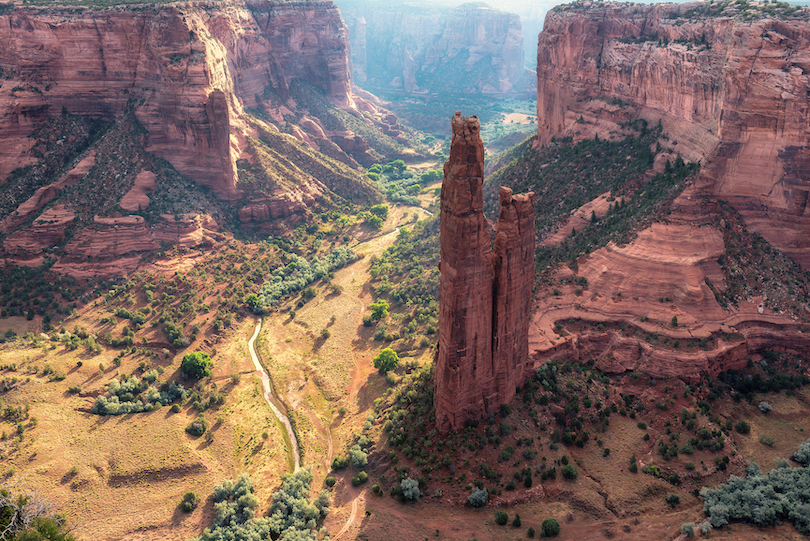
This one might be the most astonishing on the list. It’s owned by the Navajo Nation and really feels like taking a step back in time. It’s made up of massive sandstone walls, some towering 1,000 feet overhead, and ancient cliff dwellings and petroglyphs from Ancestral Puebloans.
To experience nature, culture, and history in all their glory, I recommend joining a Navajo-led tour. Self-guides aren’t available past certain points, so having a knowledgeable guide not only enhances your experience but also helps support the canyon’s heritage.
7. Kings Canyon, California

Kings Canyon is often overshadowed by its nearby neighbor, Yosemite. But it is absolutely worth a visit in its own right. Located in California’s Kings Canyon National Park, it is packed with ancient sequoia trees, waterfalls, and sweeping views.
Most visitors arrive via Highway 180. However, if you have the time, the Rae Lakes Loop is an incredible hiking and camping route leading right into the canyon.
Something that makes this canyon unique is its lush greenery. It’s also less crowded than other canyons, which means it really feels like the wilderness.
6. Glen Canyon, Utah

Glen Canyon brings a new level of excitement to this list. Why? It’s located in the enormous Glen Canyon National Recreation Area, which is packed with otherworldly landscapes and canyons waiting to be explored.
The main event here is Horseshoe Bend, but there is a lot more to explore around the 1.2-million acre national recreation area that crosses the Utah-Arizona border.
It’s also famous for its natural bridges. In fact, it’s home to Rainbow Bridge, the largest natural bridge in the world. Spanning 234 feet across the canyon, this ancient marvel was sculpted by wind and sand over 200 million years back.
5. Antelope Canyon, Arizona
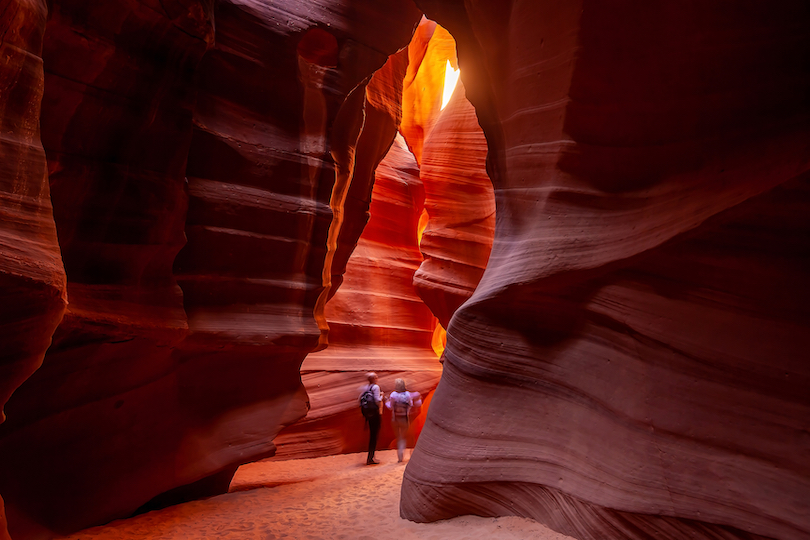
The Grand Canyon might be the most famous canyon in Arizona, but it isn’t the only one. Antelope Canyon is technically part of the Glen Canyon National Recreational Area mentioned above. It’s a section of the canyon carved out by flash floors along the Colorado River over millennia, and is possibly one of the most popular slot canyons for photographers.
Once you visit, you’ll understand why. Imagine stepping into sandstone corridors lit up with fiery red hues as sunlight filters through the canyon’s narrow crevices.
This canyon can only be accessed with a guide and is known for being a bit touristy. It’s all worth it for a glimpse of this otherworldly beauty.
4. Black Canyon of the Gunnison, Colorado

Stretching out along a 53-mile gorge, the flowing Gunnison River below has slowly carved out the Black Canyon of the Gunnison River. This place is all about big rocks, cliffs, dramatic walls, and craggy spires. It’s aptly named for its dark rock formations.
The best part? It’s officially the least visited national park in Colorado, which means you won’t need to deal with the tourists and crowds common at Rocky Mountain National Park. The park’s lack of tourists is partly because it doesn’t have too many hiking trails, but the stunning views make up for it.
3. Waimea Canyon, Hawaii

Known as the ‘Grand Canyon of the Pacific’, Waimea Canyon on Hawaii’s island of Kauai feels worlds away from the red-rock sandstone of mainland USA. It’s lush and green, packed with vibrant colors of oranges and reds.
It was formed by volcanic activity and erosion, which has created one of the most colorful canyons on the planet. One of the best ways to experience its beauty is to drive along the Waimea Canyon Drive. And, if you’re up for it, hike the Cliff Trail or the Canyon Trail for closer views.
2. Zion Canyon, Utah

Utah’s Zion Canyon is pure desert magic. It’s the centerpiece of Zion National Park, carved into the landscape by the Virgin River. It only stretches around 15 miles long but boasts plenty of exquisite landscapes in this small area.
Most impressively, its sandstone cliffs tower up to 2640 feet into the sky. It’s great because there are different trails and ways to experience it for all fitness levels. The Narrows, where you literally have to wade through a shallow section of the river with sheer walls rising on either side of you, is an unforgettable experience.
1. Grand Canyon, Arizona

The Grand Canyon has rightfully earned its spot at the top of this list. It’s named for its massive size, and I can confirm that this bucket list canyon sure is grand.
Carved into the Arizona landscape over millions of years by the Colorado River, it stretches as far as the eye can see. What is most fascinating to witness are the layers of rock in the walls, each revealing another story of geological history.
You can do it all here – hike into the canyon, take a helicopter tour, whitewater raft through tricky rapids, or just bask in the view from the rim.