
At dawn, Vietnam’s markets wake before the cities around them. Motorbikes hum past pyramids of dragon fruit, knives thud rhythmically on chopping blocks, and the air fills with the perfume of herbs, smoke, and strong coffee. This is where Vietnam shows its truest face—not in polished museums or postcard beaches, but in the daily choreography of buying, bargaining, cooking, and connecting. Wander these markets and you’ll taste the country’s history, hear its many dialects, and feel its pulse up close.
Hoi An Central Market
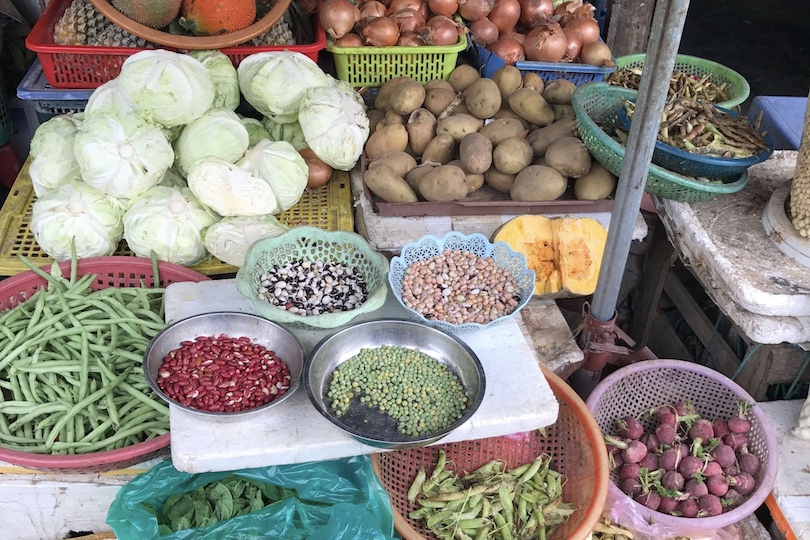
No trip to Vietnam is complete without a visit to some of the country’s bustling local markets. When I traveled through Vietnam, my first port of call in each big city was the central marketplace. And by this, I don’t mean the tourist hub markets where you’ll find fake Gucci bags and cheaply made souvenirs; I mean a truly authentic food and goods market where local residents do their daily shopping.
Safe to say, I was not disappointed, as I explored some of the most enchanting markets in Vietnam. Browsing hand-woven materials, shoulder to shoulder with locals going about their daily chores, as scents of rich spices and fresh tropical fruit wafted through the air, there are few places that make me as happy as a market!
The Hoi An Central Market of Chợ Hội An wasn’t the biggest market I visited in Vietnam, but it did leave one of the biggest impressions.
Dating back to the 15th century, it has been a buzzing trading hub for over four centuries, standing strong over the rise and fall of the empires around it. Hoi An was once a prominent trading port along the Silk Road, and the market reflects this as a commercial and cultural center. Since then, it has been damaged by wars and lovingly rebuilt and restored to feature its original historic architecture.
You can find a treasure trove of goods ranging from traditional handicrafts, including silk, textiles, and handmade lanterns, to local produce, spices, and the custom-made tailor shops that Hoi An is so famous for.
Exploring the Market
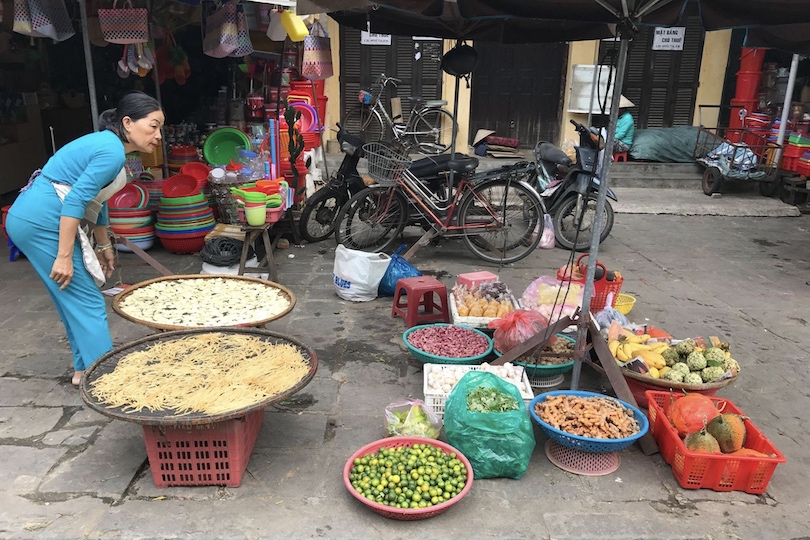
As I walked into the mustard yellow building, I was greeted by the scent of fragrant spices. Under a high vaulted ceiling held up by yellow pillars, there are rows upon rows of merchants.
As wonderful as this indoor marketplace was, it was the outside vendors and informal stalls that caught my attention. Lining the edges of the building, you’ll find every type of lean bean, giant pineapple, and tropical litchi displayed in brightly colored plastic containers, being peeled by women wearing traditional leaf-woven hats.
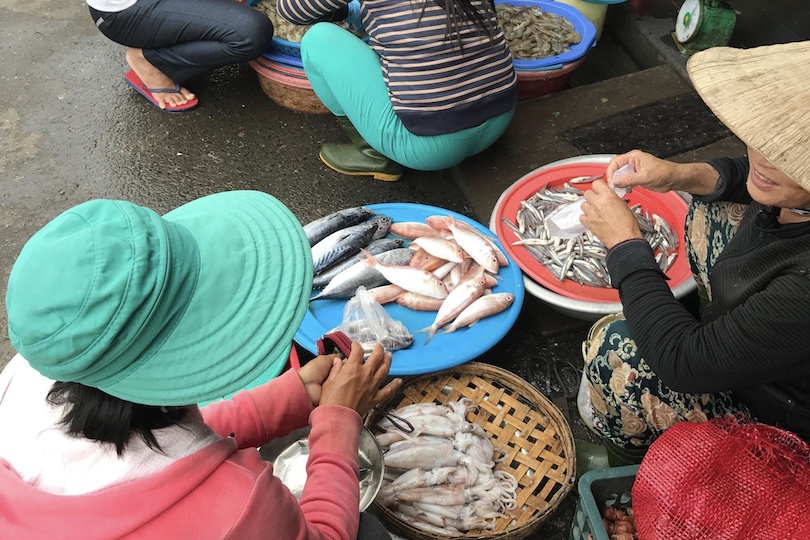
Since I was only visiting the village for a few days and was staying in a hotel, I wasn’t able to purchase as much fresh produce as I would have liked to. That said, I did buy a few loose fruits and snacks to eat throughout the day.
Getting to the Market
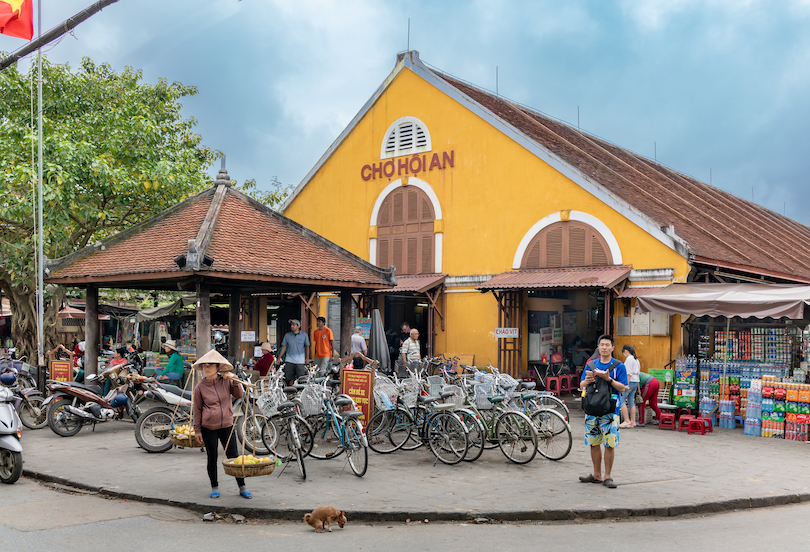
Nestled in the heart of the ancient town of Hoi An along the Thu Bon River, the market is easy to access by foot or bike. In fact, the entire historical town is vehicle-free, which means there are no taxis or cars. I spent an entire morning exploring this buzzing riverside marketplace.
If you’re visiting the town from elsewhere, you can take a taxi or shuttle. Transport will drop you around the crossroads of Nguyen Hue and Phan Chu Trinh or between Hoang Dieu and Tran Phu, since you won’t be able to drive directly to the market.
Things to Know Before Visiting
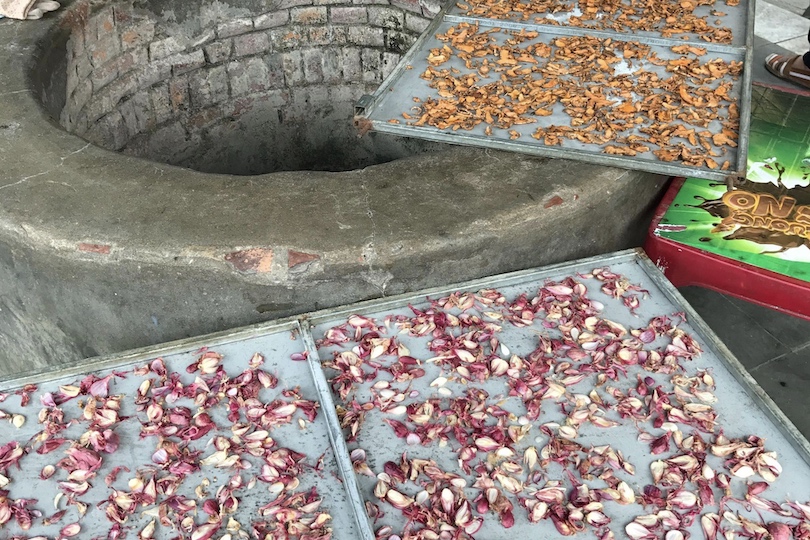
The building is split into four major sections: prepared foods, spices and cooking utensils, fresh meat and vegetables, and fish. You’ll typically enter on Tran Phu Street past the fresh-water well and exit the building along the Thu Bon River.
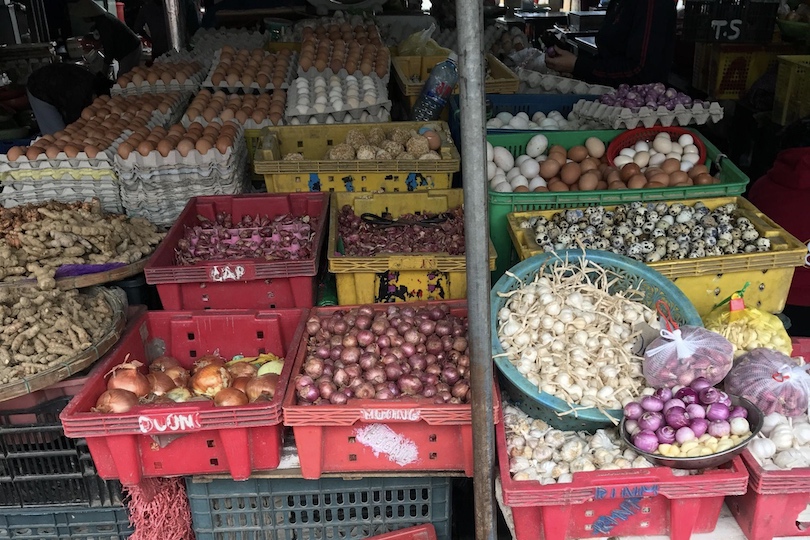
The market is open between 6 am until around 6 pm. If you’re visiting for the produce, the best time to go is early in the morning when stock is high, produce is fresh, and crowds are minimal. However, for a vibey atmosphere, do yourself a favor and visit in the early evening.
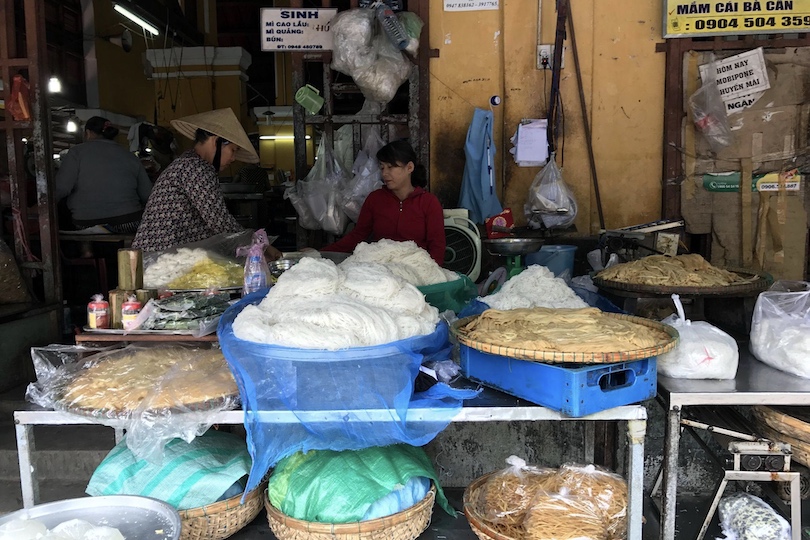
Looking at the prices, you can expect to spend around 200 thousand Vietnamese Dong (VND) for a handmade lantern and between 500 thousand and 1 million VND for an item of personalized, tailored clothing.
Ben Thanh Market in Ho Chi Minh City
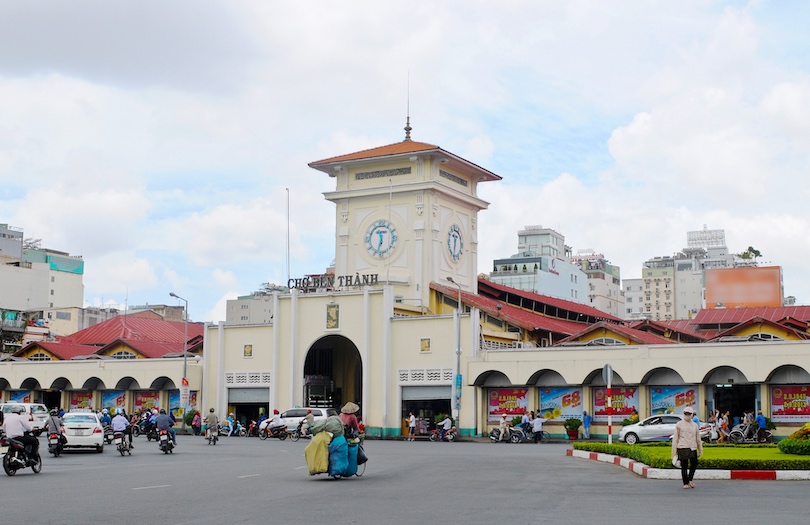
Located in the historic District One of Ho Chi Minh City, Ben Thanh Market is considered the largest retail market in Vietnam. With close to 1450 stalls and 6000 traders selling a range of goods from food produce to luxury products, there is good reason this is one of the busiest in the country.
The market was first established in the 17th century but has undergone multiple relocations and renovations as the city developed.
Inside the Four Quarters
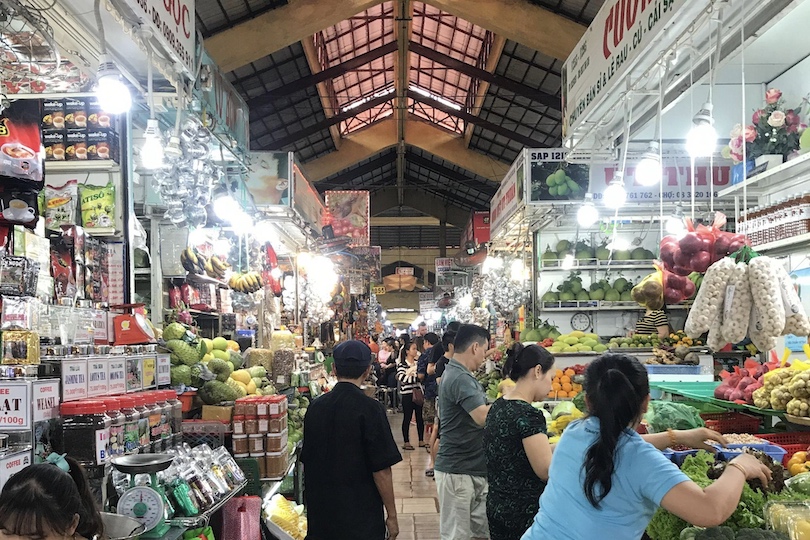
There are four main gates that you can enter from: The South Gate is where you’ll find clothing, fabrics, and dry foods. The North Gate trades fruit and fresh produce. The East Gate is the best way to access high-end cosmetics and confectionary products, and the West Gate is the best entrance for freshly prepared food, drinks, and souvenirs.
I must confess, I spent most of my time around the South Gate, where I purchased some dried fruits, coffee, and snacks. But from what I did experience, I can highly recommend it to anyone visiting the city.
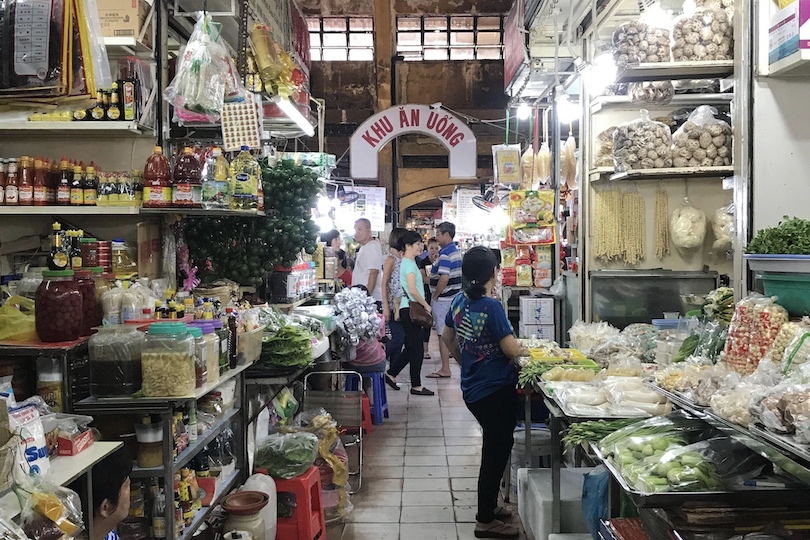
After bargaining my way through the market, I stopped by Che Be, a dessert shop that sells traditional Vietnamese dessert soups. The stall had over 40 years of sweet soup making under its belt and prepared an impeccable bowl of creamy sweet soup filled with gelatinous balls.
Things to Know Before Visiting
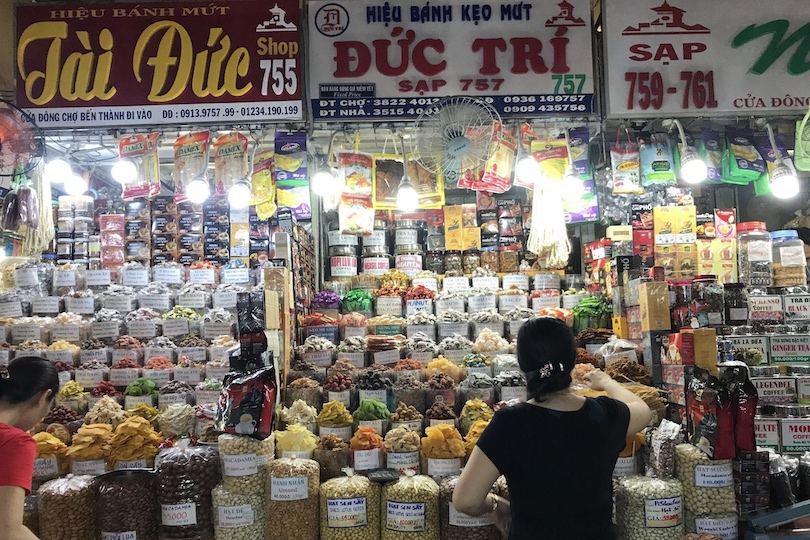
The market is around 500 meters from Ben Thanh Station, which is the largest bus stop in the city. It’s right in the city center, which is where we were staying. I had a private driver drop me off and collect me from the market, but technically, I could have walked the 20 minutes from my hotel.
It’s just a 12-minute walk from Bui Vien Walking Street and an 11-minute walk from the Nguyen Hue Pedestrian Plaza. The Notre Dame Cathedral of Saigon is also just a 13-minute walk away.
Like most markets, it opens its doors at 6 am and closes around 6 pm. However, some sections, like the food hall, stay open for a night market, which can get super busy! I visited in the early morning when it wasn’t overcrowded and too hot, and I can advise you to do the same.
Dong Ba Market in Hue
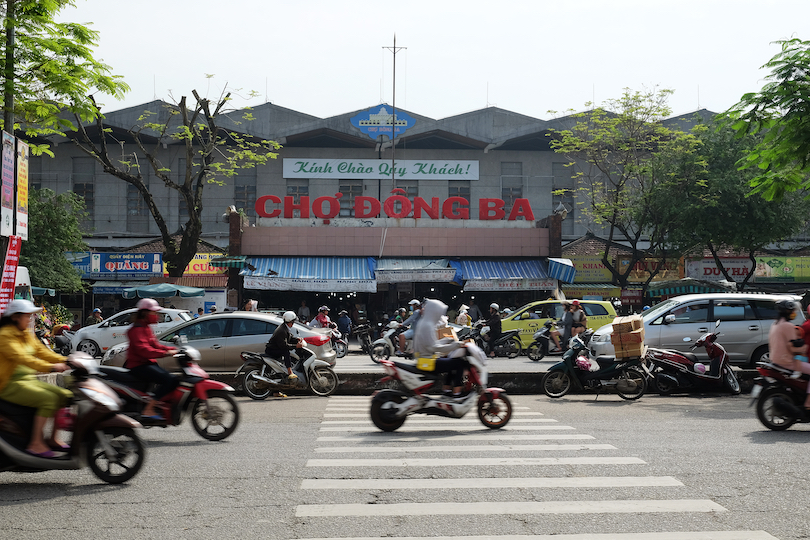
If there is any one place that can make you feel totally immersed in the culture and daily life of a new country, it would be a market. Every country has its own equivalence, and each is totally unique from one another. Not only does visiting a market allow you to taste produce that might be foreign to you, but it’s also a way to absorb and experience everyday living in a new country.
While the Dong Ba Market is a lot of things, laid-back isn’t one of them. You’ll need to come with high energy to match the buzzing atmosphere, not to mention a pair of comfortable (preferably closed) shoes.
This market boasts a history as colorful as its stalls. It was rebuilt in 1887 on the site of a market that was previously burned down in the Battle of the Hue Imperial City. Commissioned by King Dong Khanh, the market was once a royal marketplace catering exclusively to the imperial court. Today, Dong Ba has evolved into a multifaceted public trading center for food, materials, and clothing.
The Three Sections of the Market
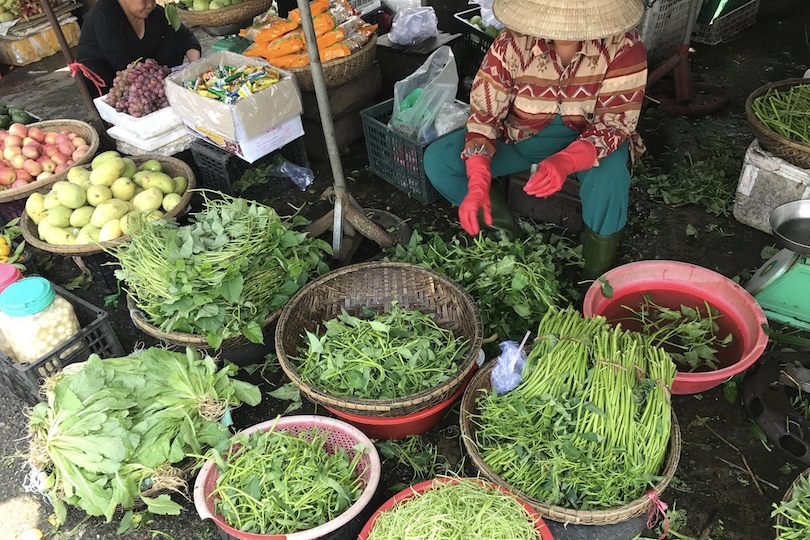
The three-story market building is split into three sections. The ground floor, or food section, sells everything from prepared street food and take-out meals to spices, dried fish, noodles, and fresh produce.
The produce spills out onto the street, where plenty of fresh food stalls are shaded by large umbrellas. One of my favorite parts of this market was the utensils section, located under a corrugated iron roof and filled to the brim with Chinese tea sets, plastic crockery, and other exciting kitchen utensils you never knew you needed.
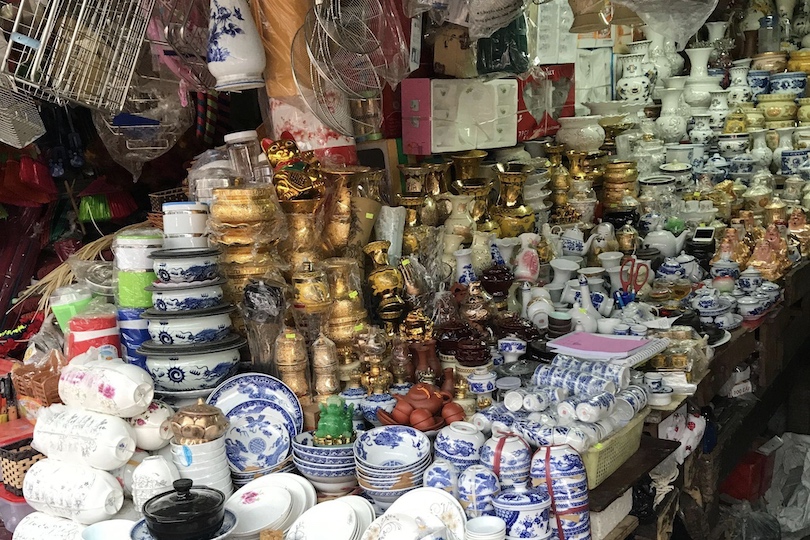
The handicraft area is located on the second floor. I strolled endless stalls of souvenirs, local handicrafts, eye-catching jewelry, traditional cone hats, and art stacked from floor to ceiling. Since this is usually the most touristic part of the market, you’ll want to research how to bargain your way to a reasonable price here respectfully.
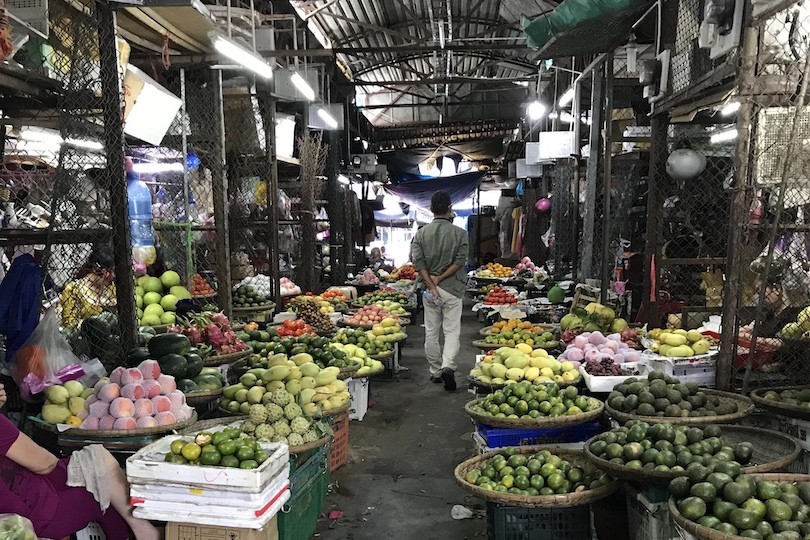
The top floor of the market is dedicated to all things clothing. Since this was the first market I visited with a vast selection of local clothing, jewelry, and fabrics, this easily stood out as my favorite section. I strolled through narrow passageways that seemed neverending, lined with colorful hanging fabrics, folded clothing, and stacked footwear. There really was more to see here than my eyes could absorb.
I finished my visit with a traditional Bun Bo Hue (Hue Noodle Soup with Beef) from the food hall, which cost the equivalent of $2 for a meal so big I struggled to finish. Like many street cafes in the country, seating is shared and on small children-sized tables and chairs, something I came to love during my time in Vietnam.
Things to Know Before Visiting
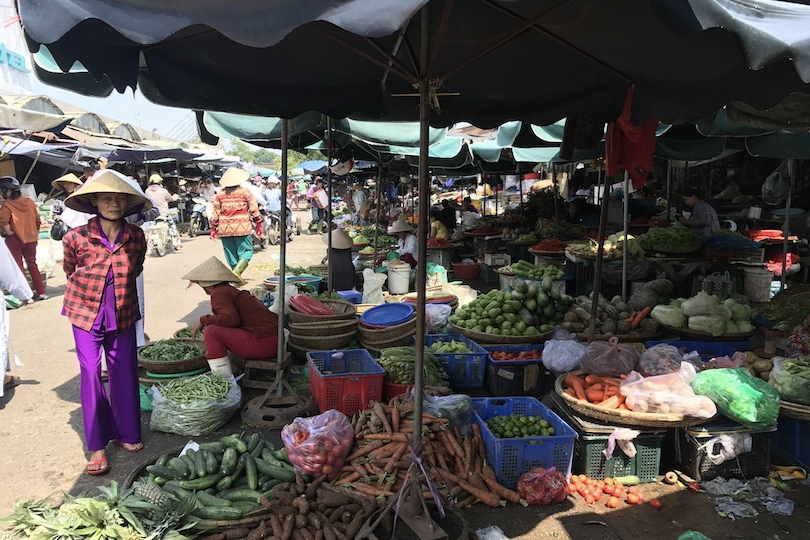
This market was like a labyrinth of alleyways, spanning 16 thousand square meters along the Perfume River. It is just a short stroll from the Truong Tien Bridge and the Imperial City and is super easy to visit by car or on a Perfume River tour.
I went full-tourist and caught a cyclo from the city center. Cyclos are basically cycle rickshaws that are usually intricately painted with traditional art.
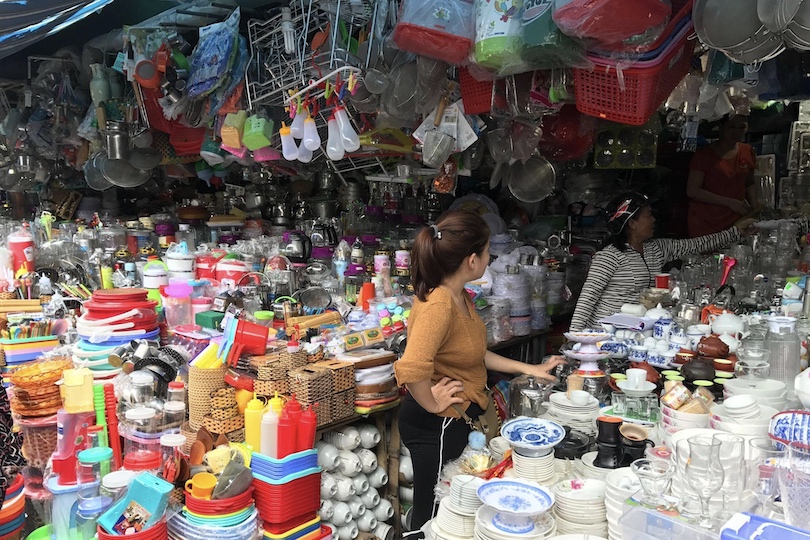
Dong Ba Market is open from 6 am and heaves with activity until 6 pm. If you intend on bargaining your way through the market, visit after 3 pm, when vendors start to lower their prices before closing time. Since the market is located indoors, it can get super hot, so I strongly advise avoiding a midday visit.
I advise you to budget around 100 thousand VND for some jewelry and between 20 thousand and 100 thousand VND for a variety of snacks. I have to say, I regret not purchasing an Ao Dai (traditional Vietnamese dress), which might have cost around 400 thousand VND.



Leave a Reply