
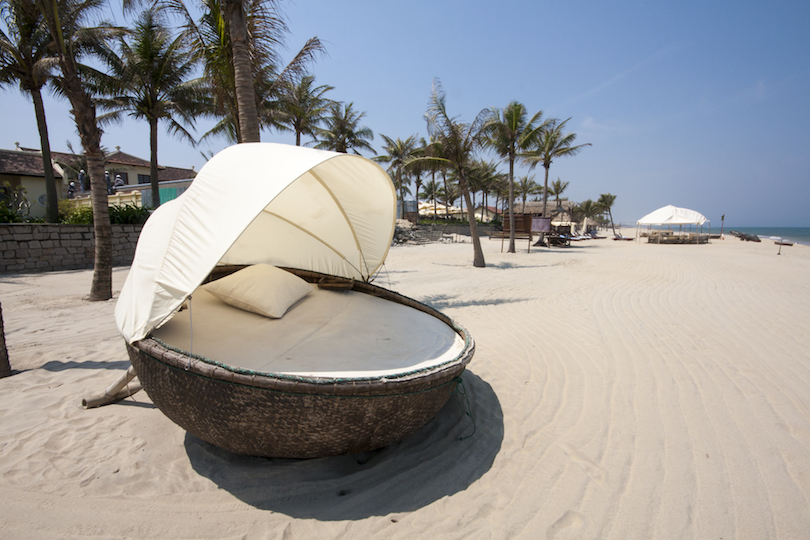
Vietnam as a beach destination has been a relatively recent development, but it sure has taken off incredibly quickly. External perceptions of the once strictly communist country – which has now adopted a more capitalist approach to its economy – meant that only intrepid backpackers were able to see the beauty of Vietnam’s coast.
Nowadays, tourists from all over the world visit Vietnam for its beaches – not only from the Western world, but Russia too, and more recently China. Domestic tourism has also helped a boom in the coastal cities of Nha Trang and Da Nang. From tropical islands that once housed political prisons, to out-of-the-way fishing villages hiding remote slices of paradise, the best beaches in Vietnam are varied and yours to explore.
10. Tran Phu, Nha Trang
 © Nata / Dreamstime
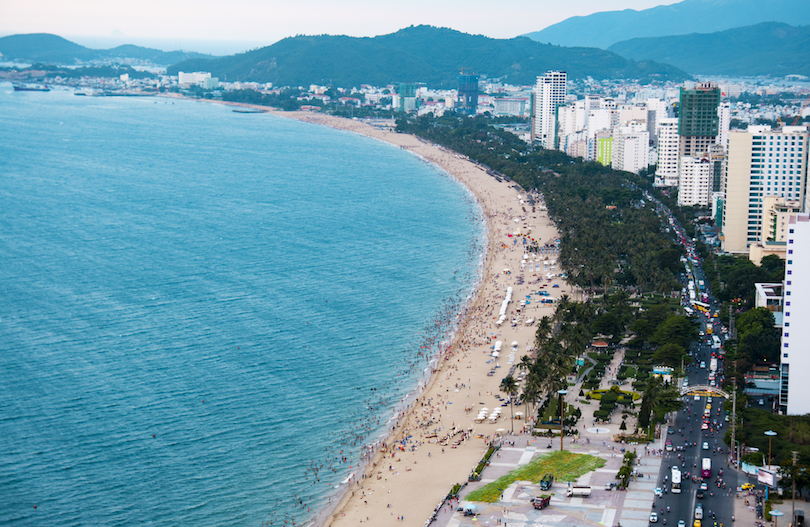
When it comes to a central city beach in Vietnam, you can’t come much closer to the center of action than the beach that lines the long Tran Phu Street in Nha Trang. The city of Nha Trang itself is often referred to as the Riviera of the South China Sea – for good reason.
Tran Phu is backed by a plethora of restaurants, bars, and plenty of opportunities for shopping that will keep visitors to the beach busy even when they’ve had enough of the heat. It’s popular, however, that popularity is evidenced in the cigarette butts and empty bottles that often get left on the beach. If you’re looking for somewhere in the city to lounge around on the sand that’s still near civilization, Tran Phu is a good choice.
9. Ky Co Beach, Quy Nhon, Binh Dinh
 © Chuotnhatdesigner / Dreamstime
Situated on the peninsula that hems in the Thi Nai Marsh opposite the coastal city of Qui Nhon, the beach of Ky Co is very far from the atmosphere and amenities of any city beach that Nha Trang can offer.
Instead, this secluded slice of paradise lies slightly south of a 5-star, luxury resort development, and comes as a welcome change once you’ve passed all the newly constructed buildings. The feeling here is much more like that of a beach you might discover on a must-visit tropical island; the sand is soft, the water is clear and pure azure blue, and there are even a number of large rocks protruding from the water – making it seem like a mini Ha Long Bay.
This is the ideal place to kick back with a mid-road-trip picnic. It’s even possible to camp here, given its out-of-the-way location.
8. Cui Dai Beach, Hoi An
 © Khellon / Dreamstime
Another beach for those who aren’t fans of crowds, Cui Dai Beach is your typical palm-fringed curve of white-sand-meets-turquoise-sea, complete with views of the Cham Islands. Since it’s somewhat off the tourist trail that arguably reaches its peak at the famously beautiful and historical city of Hoi An, the tourists at this beach are limited. However, given its proximity to such a famous city in Vietnam, it means a few amenities – several hotels, rentable inflatables, and a charge to park your motorbike.
A few years ago, it seemed as if this beautiful beach would disappear, as erosion that began showing itself in 2004 suddenly accelerated, forcing the beach’s custodians to use sandbags and various other methods to stop Cui Dai from slipping away. Now, after much work was done on this beach, it’s thankfully back to normal.
7. Cham Islands
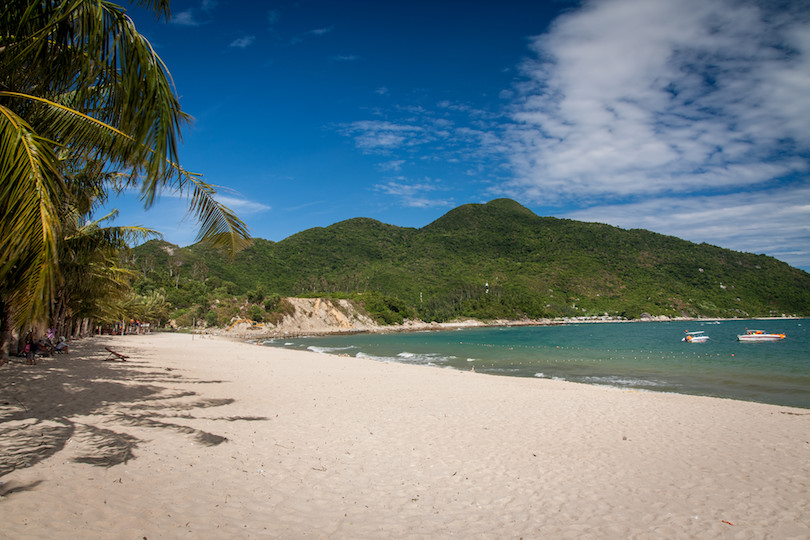
The Cham Islands is a small archipelago of eight islands just off the coast of the much-visited Hoi An – it is therefore easily reachable by boat from nearby Cua Dai Beach. Formerly popular only with backpackers, the backpacking crowd has remained strong, but are joined by life-jacketed domestic and international tourists now come to stay on the island for day trips and longer sojourns – so much so that these tiny parcels of land now seem rather overloaded.
First inhabited over 3,000 years ago by the Cham people, these islands saw much trade with neighboring countries through the ages, and there are a few old buildings left dotting the area.
Today, the beautiful white sands and sparkling blue waters – as well as delicious seafood, friendly fisherman and ample opportunities for snorkeling – are what keep people coming to this collection of islands.
6. My Khe Beach, Da Nang
 © Teerawattanakul / Dreamstime
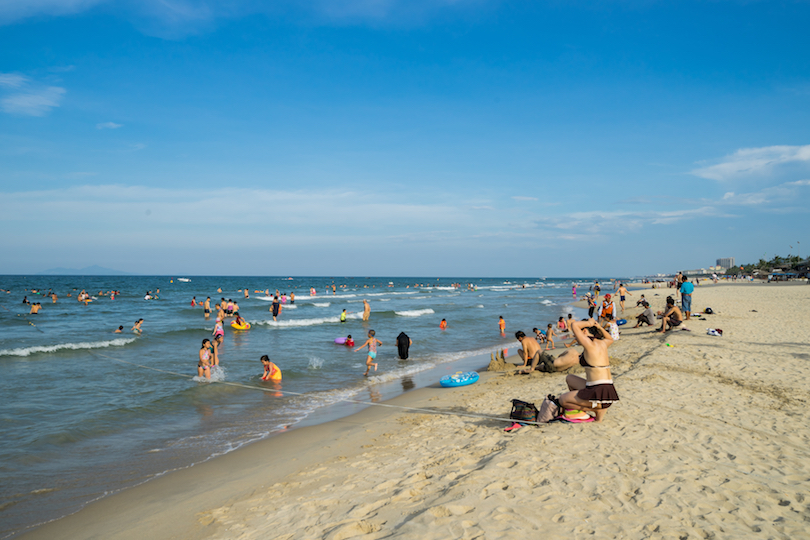
Often cited as Vietnam’s most picturesque beach is this fabulous stretch of sand-and-sea that is My Khe Beach. It’s located in Da Nang – Vietnam’s fourth-largest city and a firm favorite with domestic tourists due to attractions like Dragon Bridge (shaped like a dragon and lights up at night) and the general vibe of a modern city.
Arguably, what transformed the fortunes of Da Nang was the beach of My Khe, named China Beach by American soldiers who arrived here for R&R during the Vietnam War. You can see why this spot was chosen; the wide, 20-mile-long white-sand beach is so vast and pretty that it’s impossible to not feel impressed at the sight of it.
Today, there are a lot of high-end resorts in the area, and in September, the surf is perfect for those looking to ride some waves.
5. Con Dao Islands
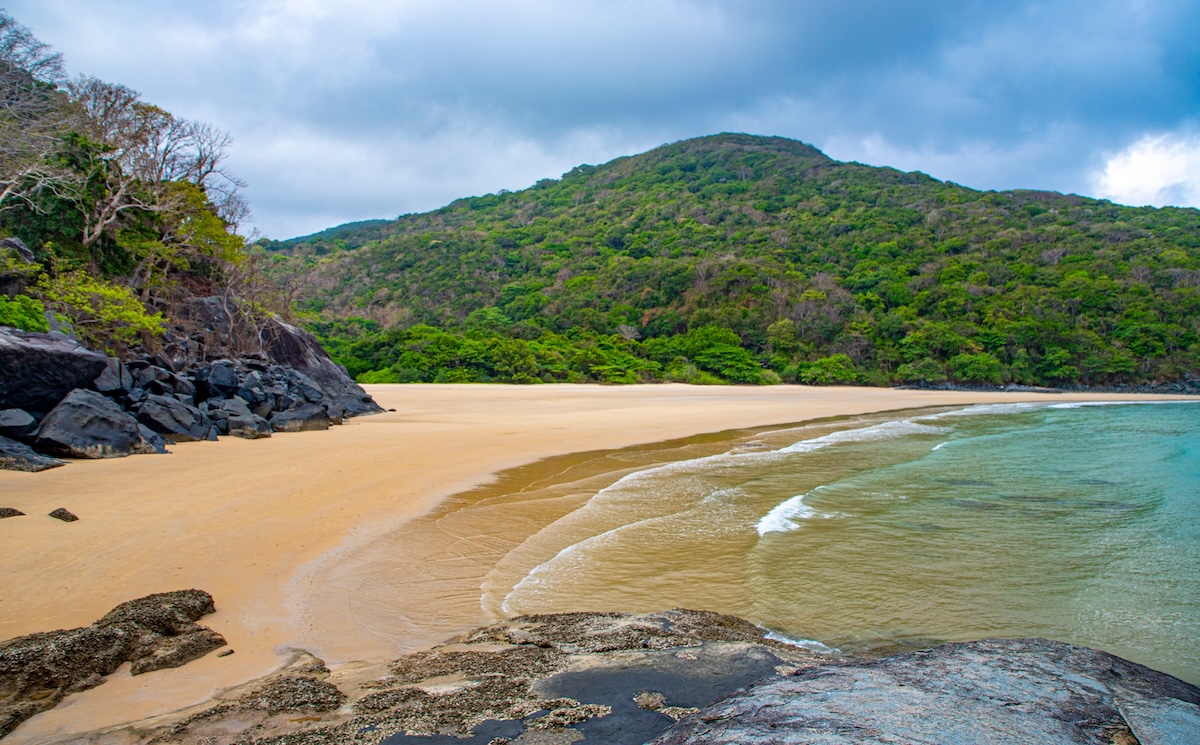
Part of the Khmer Empire until Vietnamese settlers arrived in the 17th Century, the Con Dao Islands off the southeastern coast are known for their isolation as much as their dramatic beauty. During French colonial rule in Vietnam, political prisoners were sent here, and during the Vietnam War, captured Viet Cong would be held here. But today, this isolation puts this archipelago of 16 islands in good stead to be a fantastic beach destination.
Many of the islands were given protected status in 1984 when they were collated into the Con Dao National Park – as you’d expect, it’s a haven for wildlife, including dugong, dolphins and sea turtles.
There are several hotels on the main island of Con Son, as well as scenic beaches such as An Hai – large enough to find a slice all to yourself. There’s also some impressive hiking to be had on Con Son.
4. Dai Lanh Beach, Khanh Hoa
 © Phuongphoto / Dreamstime
Located in southern Vietnam’s Khanh Hoa province, some 80-kilometers north of the popular beach city of Nha Trang, is the little known Dai Lanh Beach. It’s a gently curving slice of white-sand beauty that has been known domestically as a pristine spot for many years, but thankfully it remains undeveloped and is usually only seen by tourists from the window of their train or coach.
It’s a good stopping point for anyone on one of the Saigon-to-Hanoi road-trip routes, with several budget guesthouses and roadside stalls making this not a completely out-of-the-way destination.
With a little bit of infrastructure, combined with the secluded feel of Dai Lanh – practically deserted and overlooked by tall mountains on all sides – you could feel at home very quickly at this beautiful beach.
3. Doc Let Beach, Hon Khoi Peninsula
 © Kolesnikov / Dreamstime
Whilst many tourists find themselves sunbathing and splashing around in the bustling resort city of Nha Trang just a few kilometers to the south, Doc Let Beach sits as a haven of solitude on the nearby Hon Khoi Peninsula.
The hotels here are more atmospheric than they are in many busier beachside locales in Vietnam, meaning that the feeling of being on an exclusive couples getaway is much easier to summon.
Doc Let is 18-kilometres of chalk-white sands and can be summed up in three parts: the north is where most of the resort and tourist action is to be found; the mid-section of this beach is unfortunately home to a huge Hyundai factory; the relatively empty south is backed by woodland and offers the most Robinson Crusoe feeling. The beauty of this Vietnamese beach is quite something, that’s for sure.
2. Mui Ne Beach, Phan Thiet
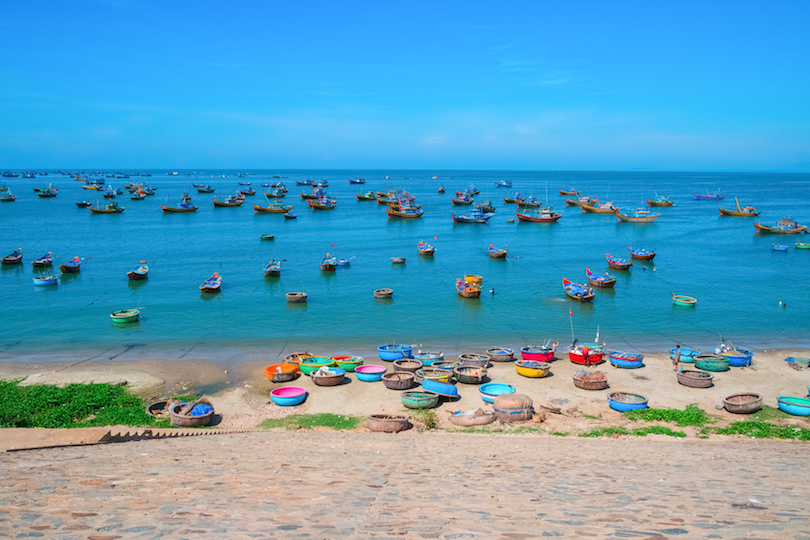
200-kilometres north of Ho Chi Minh City lies the fishing village of Mui Ne. However, there are a number of things about this wonderful location – other than its simply stunning and serene beach – that mean its fortunes are fast-changing. Vast, white-sand dunes nearby – which include lakes and swamps in the midst of the terrain – make for a captivating backdrop to hot-air balloon rides.
Ruins of the Cham culture, native to southern Vietnam until it was defeated by the Vietnamese in the 15th Century, lie at nearby Phu Hai. And plenty of fisherman going about their daily business make for an interesting slice of daily life. Resorts have been popping up along the coast, but so far, the incredibly local atmosphere at this best beach location in Vietnam remains unchanged.
1. Long Beach, Phu Quoc
 © Ivan Kishchenko / Dreamstime
Phu Quoc is Vietnam’s secret weapon when it comes to beach destinations – an island where so many beautiful beaches are found that it’s difficult to select the best one. We’ve managed to do so! Long Beach is located on the southeast coast of this beautiful island; it’s a spectacular 20-kilometer stretch of sand which is the focus of tourist and local activity on the island.
Foreigners wanting to visit the island can do so thanks to a government initiative that allows 30-days visa-free, meaning tourism has positively flourished here. Phu Quoc officially became Vietnamese territory thanks to a boundary line drawn by the French colonial powers in 1939, but Cambodian claims to the island – known in Khmer as Koh Trol – remain a reality.