
Some cities treat color like an option, sticking to beige and gray like they’re afraid of offending anyone. Then there are places where residents grabbed every paint can in the hardware store and went absolutely wild, turning ordinary streets into open-air art galleries that make children and adults squeal with equal delight.
These rainbow-bright thoroughfares prove that urban planning doesn’t have to be boring. Whether the colors come from centuries-old traditions, artistic movements, or pure creative rebellion against municipal monotony, these streets deliver visual experiences that say “millennial gray, who?”
15. Rue Crémieux — Paris, France
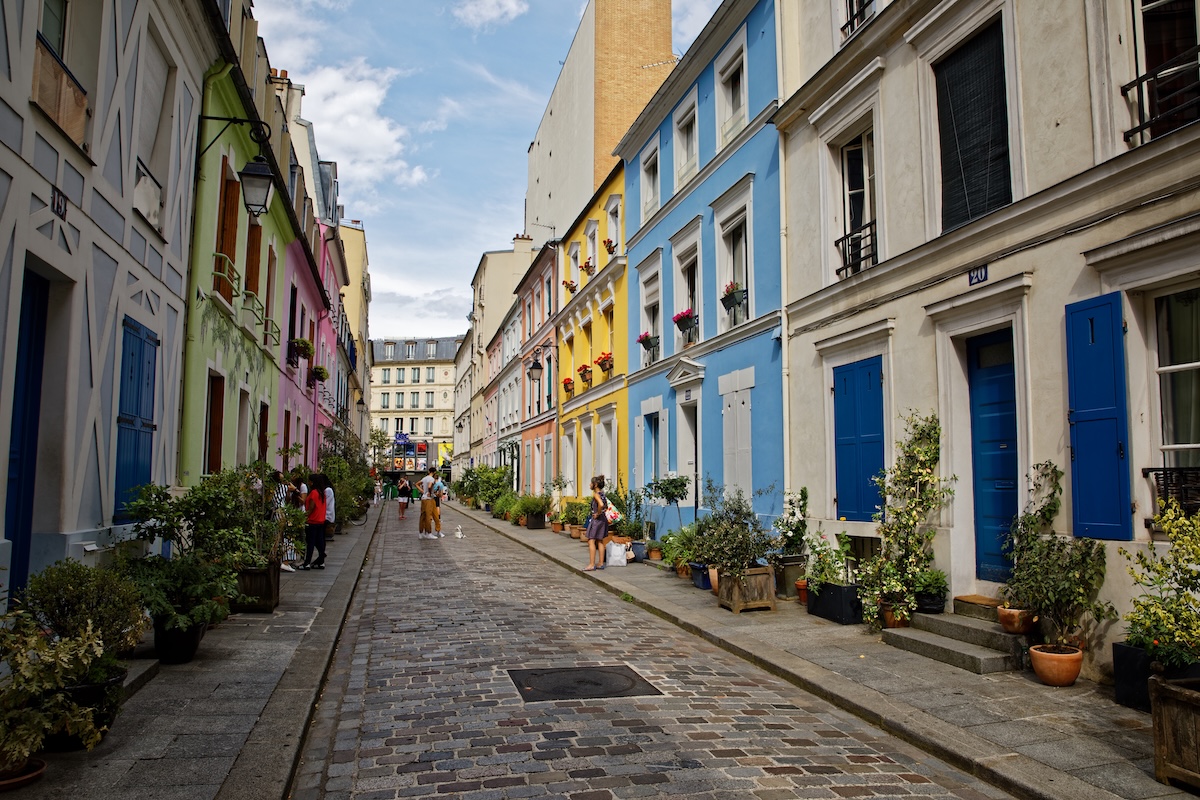
Hidden in Paris’s 12th arrondissement, this cobblestone is a far cry from the muted tones of traditional Parisian architecture. Pastel houses in mint green, bubblegum pink, and sunny yellow create visual gold that locals are getting pretty tired of posing tourists blocking their front doors.
The 144-meter residential street became social media famous when travel bloggers discovered its rainbow charm, turning a quiet neighborhood into a must-see destination. Local residents have started posting signs asking tourists to respect their privacy, but the colorful facades remain irresistible to anyone with a camera.
14. Wellington Row – St John, Canada

These Victorian-era row houses overlooking St. John’s harbor painted themselves into maritime legend with bold reds, blues, and yellows that pop against Newfoundland’s frequently gray skies. The wooden houses date back to the late 1800s when merchants wanted their homes visible to ships entering the harbor.
Newfoundland weather beats the hell out of exterior paint, so maintaining these bright colors requires serious commitment and regular touch-ups. Local homeowners have embraced their street’s photogenic reputation, with some coordinating paint choices to maintain the rainbow effect. The elevated location provides harbor views that make the colorful houses even more striking against the Atlantic backdrop.
13. Calle San Sebastián — San Juan, Puerto Rico
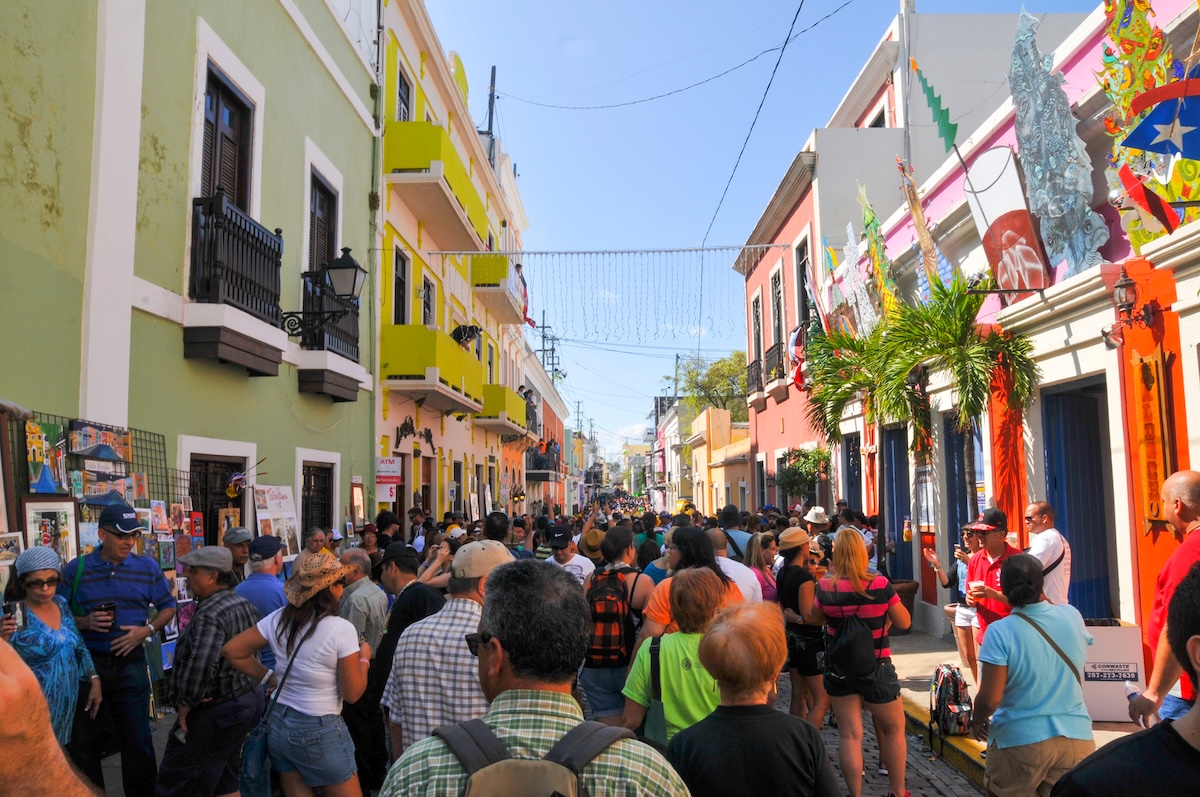
Old San Juan’s cobblestone streets feature rainbow-colored colonial buildings that survived centuries of hurricanes, pirates, and urban development. Spanish colonial architecture gets the tropical treatment with Caribbean blues, sunset oranges, and lime greens that reflect Puerto Rican cultural vibrancy.
The historic district’s color palette follows traditional Caribbean building practices where bright paint protected against tropical weather while expressing individual personality. Local businesses have maintained the colorful tradition, with restaurants, shops, and galleries contributing to the street’s artistic atmosphere. The combination of 16th-century architecture and bold modern colors creates uniquely Puerto Rican urban beauty.
12. Haji Lane – Singapore

This narrow street in Singapore’s Arab Quarter exploded with street art and rainbow shophouses that transformed a sleepy area into the city’s hippest cultural destination. Independent boutiques, quirky cafes, and vintage shops occupy colorful buildings that tourists treat like personal photo studios.
What started as urban decay became artistic renaissance when local artists and entrepreneurs moved into affordable spaces and painted everything in sight. The lane’s transformation from forgotten backstreet to must-visit destination happened organically through creative community investment rather than government planning. Weekend evenings bring out Singapore’s alternative crowd seeking authentic local culture away from sanitized shopping districts.
11. Rainbow Row, Charleston, USA

Charleston’s famous pastel houses stretch for 13 blocks along East Bay Street, creating America’s longest cluster of Georgian row houses painted in every sherbet shade imaginable. These 18th-century buildings survived the Civil War, earthquakes, and hurricanes while maintaining their candy-colored charm.
Local preservation laws now protect the color scheme that originally developed when Caribbean merchants painted their homes in bright tropical hues. Each house maintains its individual personality within the coordinated palette, creating visual harmony without boring uniformity. The waterfront location provides perfect lighting conditions that make the pastel colors glow during golden hour photography sessions.
10. Burano Streets, Venice, Italy

This Venetian island takes colorful seriously and local law requires residents to paint their houses in approved bright colors following a traditional system that helps fishermen identify their homes through morning fog. The rainbow village creates one of Italy’s most photographed destinations where every canal turn reveals new color combinations.
Lace-making traditions continue in shops occupying ground floors of the multicolored houses, adding cultural authenticity to the visual spectacle. The island’s isolation from Venice proper keeps tourist crowds more manageable while preserving the authentic fishing village atmosphere. Local restaurants serve fresh seafood on terraces overlooking canals where colorful houses reflect in dark water like paint bleeding into silk.
9. Callejón de Hamel — Havana, Cuba
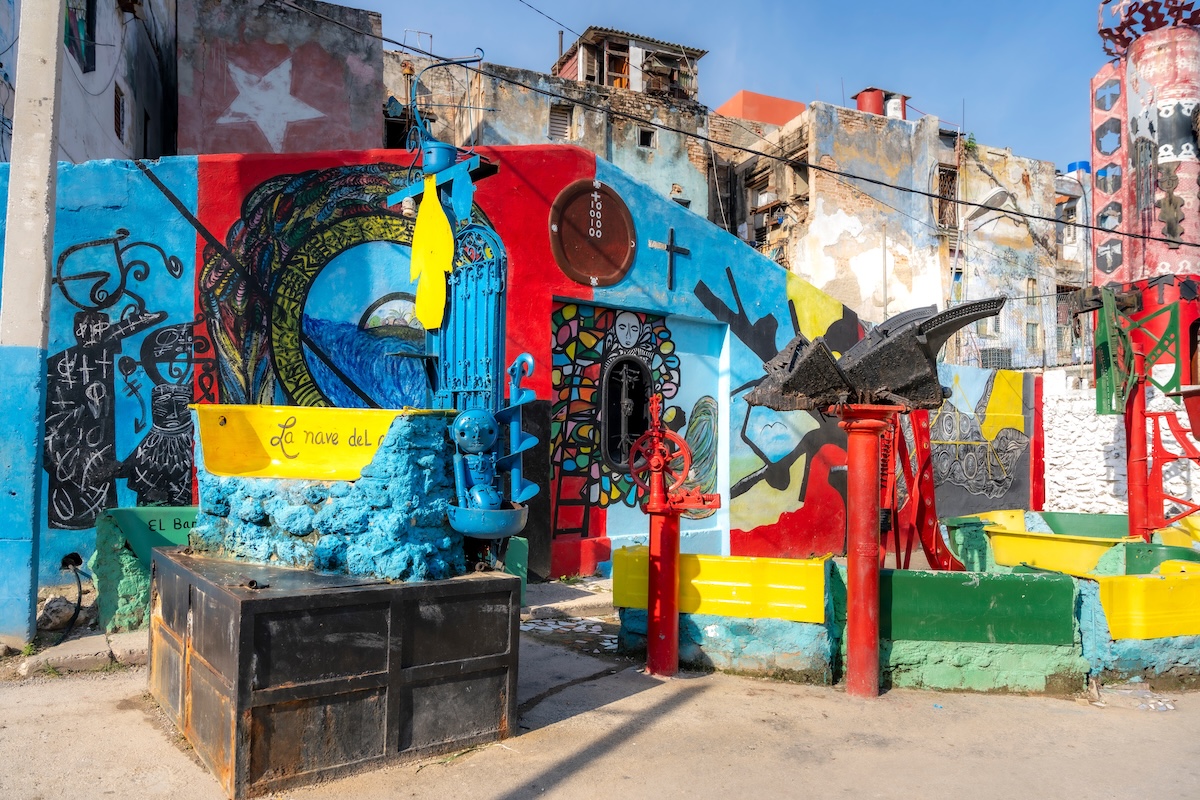
Cuban artist Salvador González Escalona transformed this ordinary Havana alley into an explosive Afro-Cuban art installation where every surface celebrates Caribbean culture through murals, sculptures, and found-object art. The narrow street pulses with colors that reflect salsa rhythms and Caribbean sunshine.
Sunday afternoon rumba performances turn the alley into an impromptu cultural center where locals and tourists dance together under artistic installations that celebrate Cuban African heritage. The community-created space demonstrates how art transforms urban environments when residents take creative control of their neighborhoods. Revolutionary slogans mix with abstract art creating political and aesthetic statements that define contemporary Cuban street culture.
8. Chefchaouen Streets — Morocco

Morocco’s blue city covers nearly every building surface in varying shades of azure, creating a monochromatic wonderland that feels like walking through a living watercolor painting. The tradition reportedly began with Jewish refugees who painted buildings blue to represent the sky and heaven.
Narrow medina streets create canyon-like passages where blue walls rise overhead, intensified by North African sunlight that makes the colors practically glow. Local residents regularly refresh the blue paint, maintaining the city’s ethereal appearance that attracts photographers from around the world. The mountain setting adds dramatic backdrop while traditional Moroccan architecture provides perfect canvas for the artistic community effort.
7. Notting Hill’s Portobello Road — London, UK

Victorian terraced houses painted in bright pastels turn this London street into a rainbow that defies British weather stereotypes. The colorful facades became internationally famous through romantic comedies, but locals were rocking the rainbow aesthetic decades before Hollywood arrived.
Portobello Market adds to the color chaos with vintage clothing stalls, antique dealers, and food vendors creating a kaleidoscope of merchandise that complements the architectural backdrop. The gentrification that followed film fame brought expensive boutiques and chain stores, but Saturday markets maintain the authentic eclectic atmosphere that made the area special originally.
6. Bo-Kaap Streets — Cape Town, South Africa

Cape Town’s historic Malay Quarter explodes with colors that celebrate Cape Muslim heritage through bright pink, orange, blue, and green houses climbing the hillside below Signal Hill. The tradition began when former slaves gained property ownership and painted their homes in vibrant colors expressing freedom and cultural identity.
Cobblestone streets wind between 18th-century architecture where residents maintain traditional Cape Malay cooking and craft traditions alongside the colorful building maintenance. The neighborhood’s cultural significance extends beyond aesthetics, representing South African diversity and resilience through architecture that tells stories of community survival and celebration.
5. Rainbow Village – Taichung, Taiwan
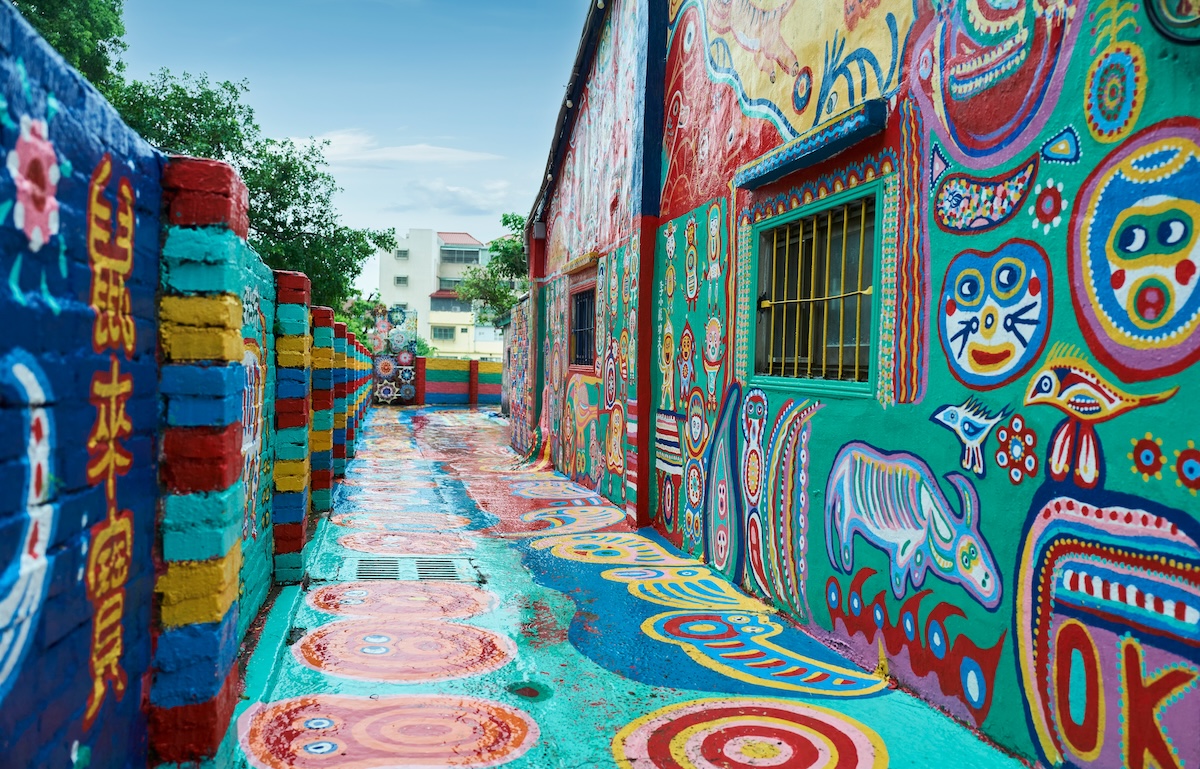
One determined pensioner saved his military dependents’ village from demolition by painting every available surface in psychedelic colors and whimsical characters that transformed condemned housing into accidental art installation. Huang Yung-fu’s creative rebellion turned scheduled urban renewal into cultural preservation.
The grassroots art project attracted international attention that forced city officials to reconsider demolition plans, proving that sometimes unauthorized creativity succeeds where official channels fail. Visitors now contribute to the ongoing art project while supporting the small community that refused to disappear quietly. The village represents successful community resistance through artistic expression and creative urban activism.
4. Callejón de los Sapos — Puebla, Mexico
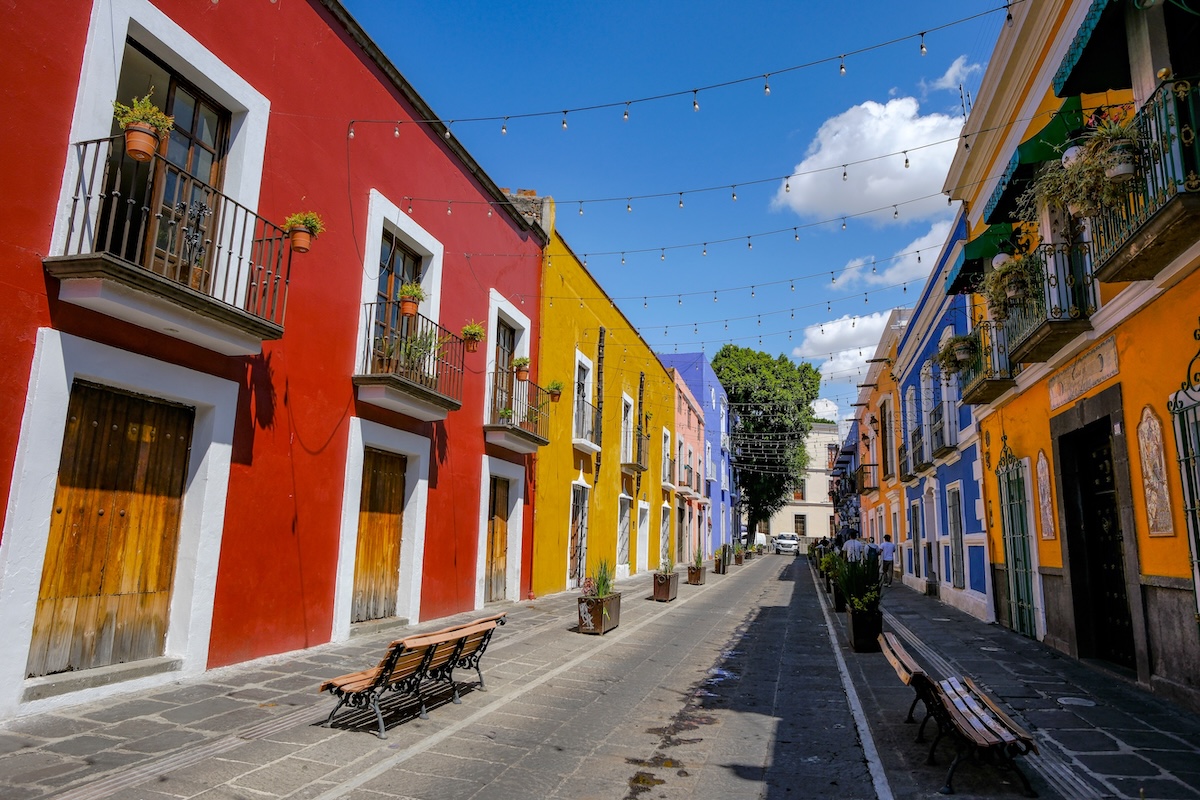
Mexican colonial architecture gets the full color treatment on this historic Puebla street where every building competes for attention through bold paint choices that celebrate indigenous artistic traditions. The narrow cobblestone alley hosts weekend antique markets where vintage treasures complement the architectural eye candy.
Traditional Talavera pottery shops occupy colorful buildings, creating visual harmony between local crafts and architectural decoration. The street name translates to “Alley of the Frogs,” referring to bronze frog sculptures rather than amphibian residents, adding whimsical elements to the cultural experience. Weekend cultural events include folk dancing and traditional music performances that bring the colorful street to life.
3. Victoria Street — Edinburgh, Scotland

Scotland’s capital surprises visitors with this gently curving street where colorful Victorian buildings create Edinburgh’s most photogenic non-castle attraction. The architectural rainbow reportedly inspired J.K. Rowling’s descriptions of Diagon Alley, adding literary fame to the visual appeal.
Independent shops occupy the ground floors of candy-colored buildings, creating an alternative shopping experience away from Edinburgh’s chain store-dominated Princes Street. The medieval Old Town location provides dramatic backdrop while the curved street design creates constantly changing perspectives as you climb toward Edinburgh Castle. Local businesses have embraced the street’s fame while maintaining authentic Scottish character.
2. Calle Jaén — La Paz, Bolivia

La Paz’s best-preserved colonial street features colorful buildings climbing steeply through the historic center at 3,500 meters above sea level, making it one of the world’s highest rainbow streets. The narrow cobblestone passage connects colonial churches and museums while doubling as ultra-photogenic backdrops.
Altitude affects more than breathing – the thin air intensifies colors and creates lighting conditions that make photographs pop with unusual vibrancy. Traditional Bolivian textiles and crafts sold in street-level shops complement the architectural colors while local restaurants serve traditional food in buildings that date back centuries. The street represents perfectly preserved Spanish colonial urbanism enhanced by Bolivian cultural additions.
1. Nyhavn — Copenhagen, Denmark

Copenhagen’s most famous street features 17th-century townhouses painted in every bright color imaginable, creating a harbor-side rainbow that defines Danish hygge culture. The historic port district where Hans Christian Andersen lived and wrote fairy tales now hosts canal boat tours and outdoor dining that celebrates Scandinavian summer optimism.
Sailing ships moored along the canal add maritime authenticity while restaurants extend outdoor seating directly to the water’s edge during brief Danish summers. The colorful facades reflect in canal water creating doubled visual impact, while the pedestrian-friendly atmosphere encourages lingering over coffee and pastries. The street is pure visual joy, making this Europe’s most beloved colorful street.