
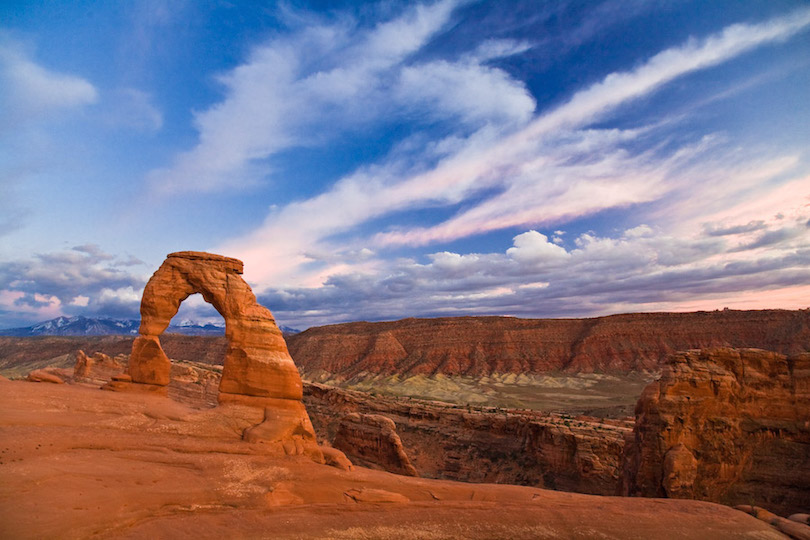
Rock formations are created by the elements such as heat, wind, rain, and erosion. What nature has done with these tools on the palette of the earth is both breath taking and mind boggling.
These incredible natural rock formations were created slowly over millions of years using the hardest materials. Thankfully for us, nature is a patient artist. An overview of the most incredible natural rock formations on the planet:
23. Arbol de Piedra
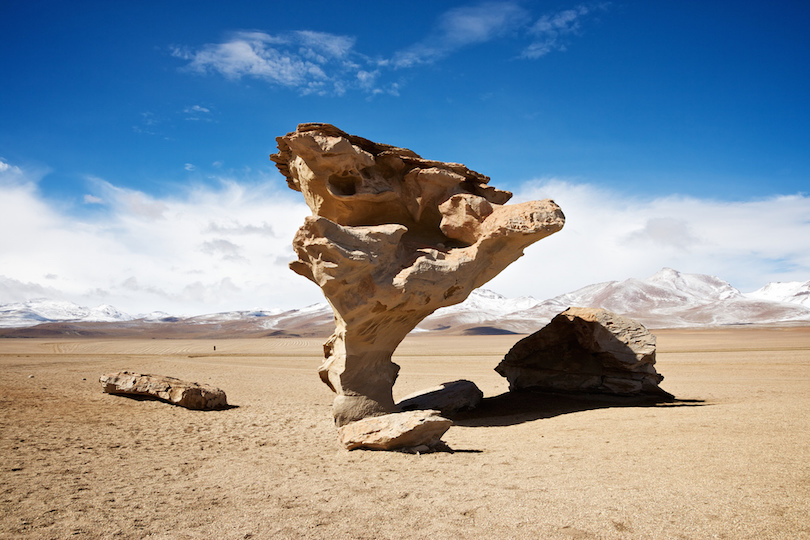
Árbol de Piedra is an isolated rock formation in the Eduardo Avaroa Andean Fauna National Reserve in southwest Bolivia. Known as the “Stone Tree,” it is shaped like a stunted tree about 7 meters (23 feet) high. Its shape is caused by strong winds carrying sand and eroding the soft sandstone.
22. Externsteine
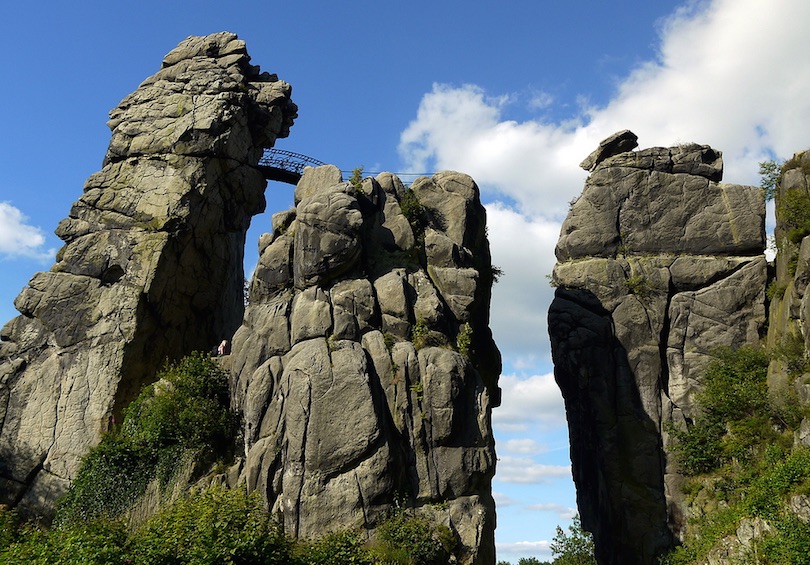
Externsteine, in northern Germany, has been a sacred site since prehistoric times, first used by pagans and later on by Christians. Externsteine consists of five enormous limestone pillars that are in astronomical alignment.
Sometime around the end of the eighth century, monks took up residence in the caves, carving staircases and religious reliefs in the rocks. Externsteine is in a highly scenic setting, today drawing a lot of New Age followers. A chapel sits atop one of the pillars; it is reachable by footbridge.
21. Twyfelfontein Organ Pipes
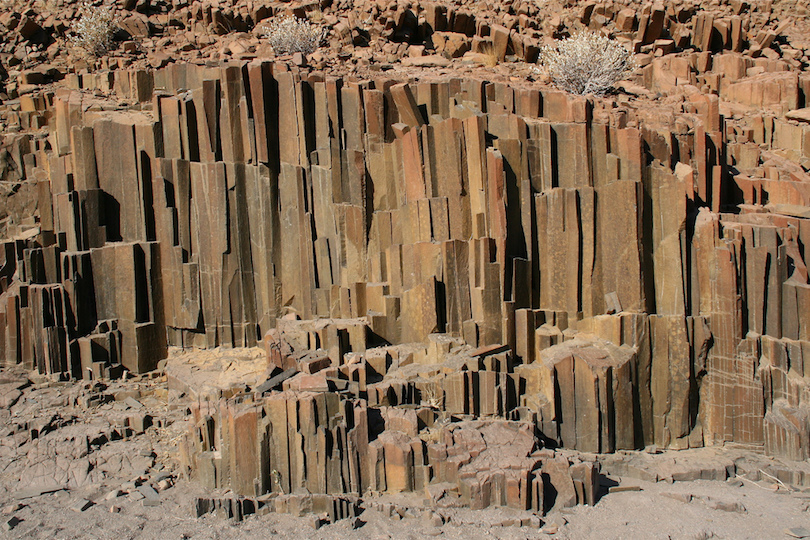
Travelers who are into geology will enjoy a visit to Organ Pipes near Twyfelfontein, Namibia. The dolerite columns that line the sides of a small valley resemble a pipe organ, though slightly more unusually shaped, such as triangles and hexagons, and date back 120 million years when volcanic activity was the norm. Organ Pipes makes a good stop over between Twyfelfontein, with its ancient rock engravings, and Burnt Mountain, known for its piles of blackened limestone.
20. Man Pupu Nyor
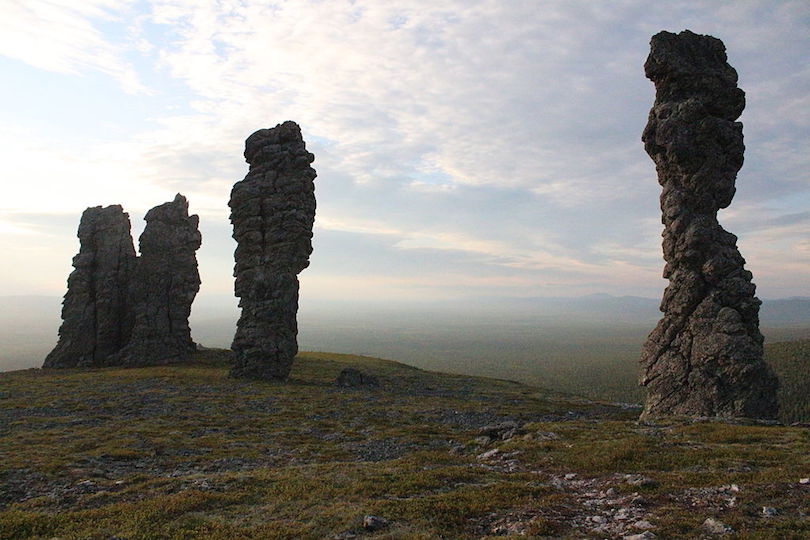
Man Pupu Nyor, which translates as “little mountain of the gods,” is a geological wonder located deep in Russia’s Ural Mountains. They’re actually seven formations ranging in heights up to 42 meters (137 feet).
These awe-inspiring Seven Giants, as they’re called, reign over a flat plateau. Local legend says they were created when a shaman cast a spell, turning these evil giants into stone. Only the most intrepid travelers are likely to visit here, since they’re accessibly mainly by snowmobiles or helicopters.
19. Wave Rock
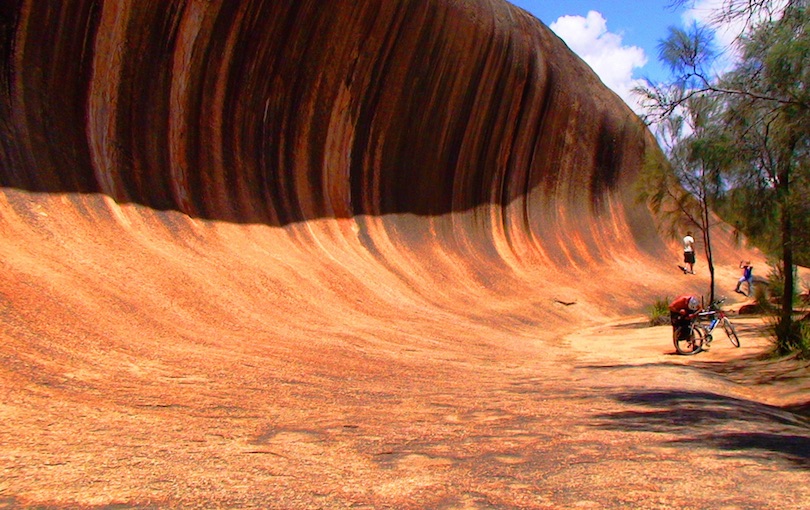
Wave Rock in Western Australia is so named because that is exactly what it looks like: an ocean wave. It forms one side of a hill that is known as Hyden Rock. The granite rocks date back 2.63 billion years. Wave Rock is known as a flared slope because of its curving shape. Both Wave and Hyden rocks are located in Hyden Wildlife Park, a nature preserve.
18. Devil’s Town
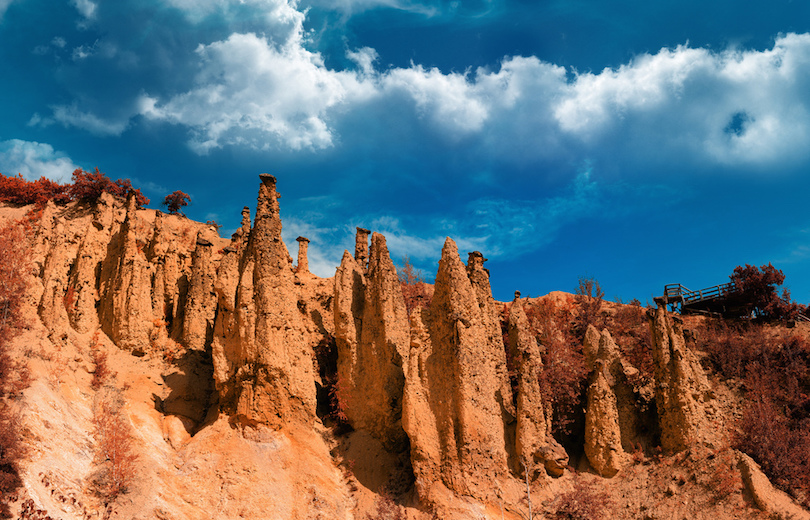
Devil’s Town in south Serbia is filled with natural rock formations that resemble spindles and spires that are reminiscent of the hoodoos at Utah’s Bryce Canyon National Park. The 202 rock formations, created by erosion, range from 2 to 15 meters (6 feet to 49 feet) high.
The earthen figures, which started with volcanic action eons ago, are both picturesque and mystical. One local legend says the figures are remains of churches that were destroyed by the devil.
17. Domes de Fabedougou
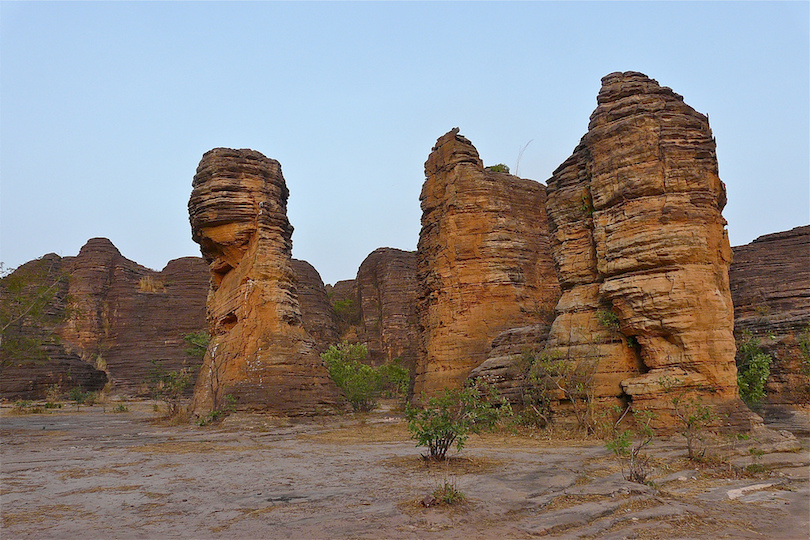
The Domes de Fabedougou in south-western Burkina Faso are another of Mother Nature’s wonders, with each rock formation in a different shape. Some are tall and slender, others are short and fat, or vice versa; they can be close together or sometimes not.
Some of the formations are shaped like rocks, others like pointing fingers. The limestone formations date back 1.8 billion years when the area was under water. Travelers who enjoy rock climbing will treasure this spot, as climbing on the domes is permissible.
16. Basaltic Prisms of Santa Maria Regla
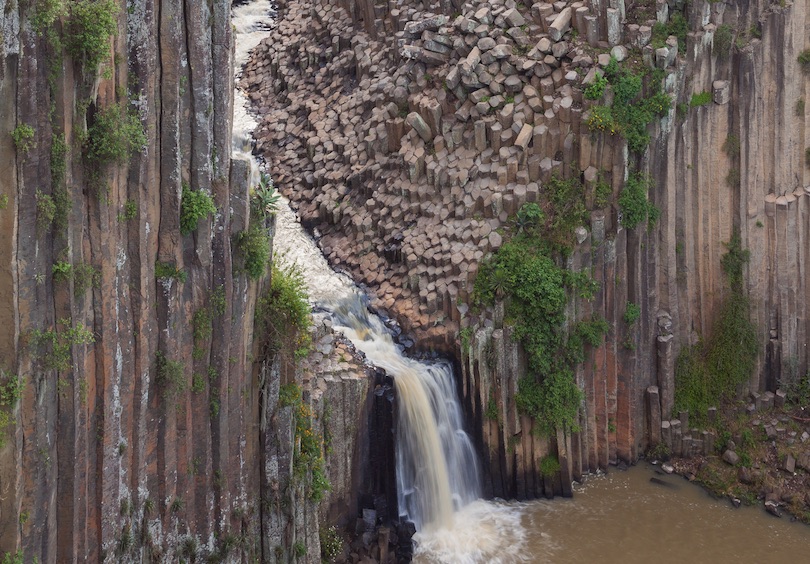
The basaltic prisms, in Santa Maria Regla in Hidalgo state, are one of Mexico’s natural wonders. The columns, up to 30 meters (98 feet) high, were created by cooling lava. The formations’ beauty is marked by water from a dam flowing over them. Wandering around the rocks is permissible, but travelers should expect to get their feet wet in the waterfalls. Bridges and other walkways are available for close-up looks, too.
15. Yehliu Geopark
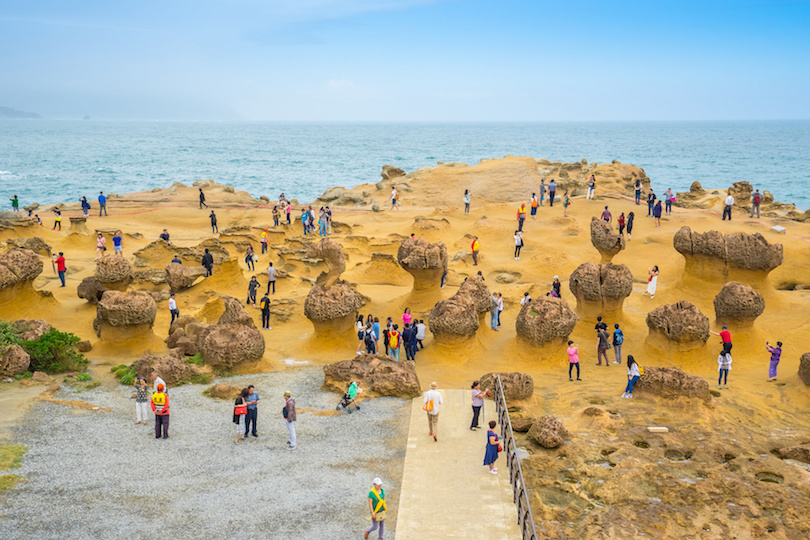
Yehliu Geopark in northern Taiwan seemingly offers a rock formation for everyone. One of Taiwan’s most popular tourist destinations, Yehliu is a cape that juts out into the ocean. The mile-long wonder was formed when geologic circumstances forced a mountain out of the sea. The geopark’s most famous formation is Queen’s Head, perhaps because it resembles the bust of Queen Nefertiti. Other rock formations include Camel, Mushroom, Fairy Shoe and Sea Candles.
14. Ennedi Desert
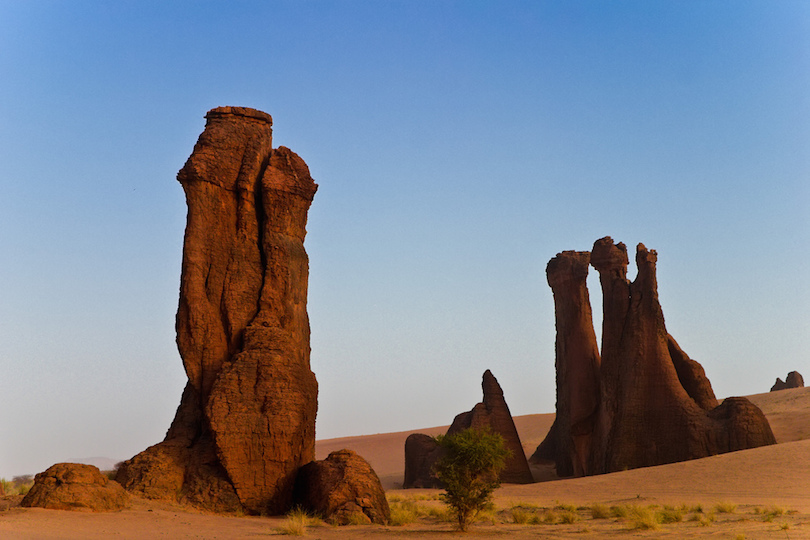
The Ennedi Desert is located in north-eastern Chad in one of the most inaccessible region of the Sahara. The plateau is full of interesting sandstone formations including many hundreds of natural stacks and arches. One of the arches, the Aloba Arch has a height of nearly 120 meters (400 feet) and is one of the most spectacular arches in the world. Apart from the geological attractions petroglyphs and rock paintings can also be found in the area.
13. Svartifoss
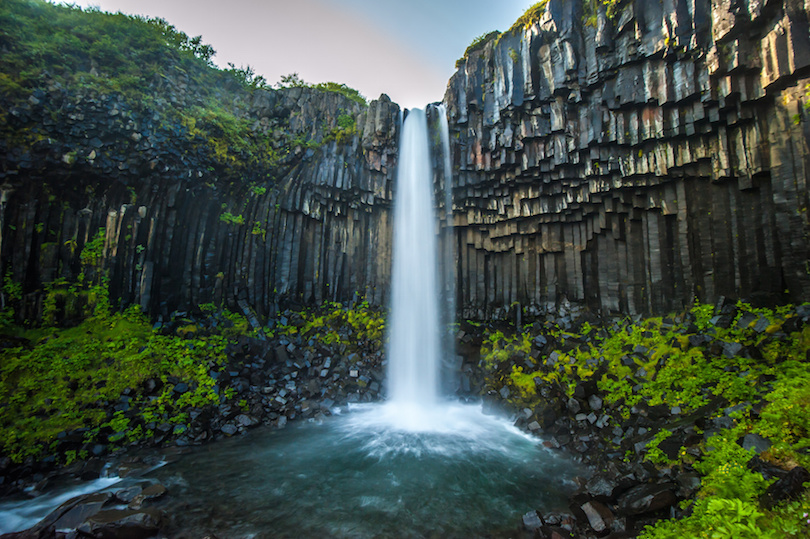
The waterfall Svartifoss is one of the most visited sites in Vatnajökull National Park in southern Iceland. Also known as Black Fall because of its unusual lava columns that seem layered, Svartifoss has sharp rocks at the base. These rocks break off faster than the rushing waters can wear them down. It’s possible to hike to the top of the 20-meter (65-foot) high waterfall, starting from the Skaftafell visitor center, but it’s mostly an uphill hike.
12. The Wave
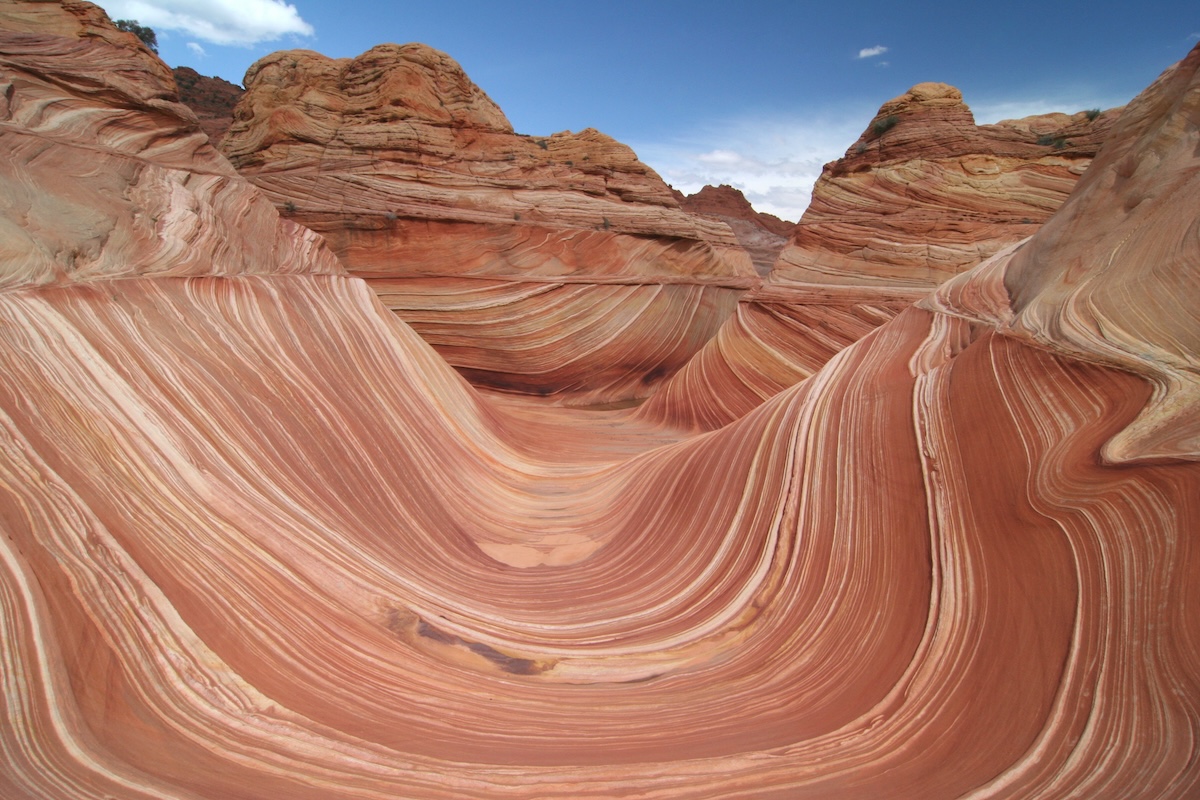
The Wave is a spectacular rock formation that swirls across northern Arizona. The Wave undulates across the landscape like a river of chocolate, instead of the Navajo Sandstone they’re made up. Alas, this phenomenon of nature is not accessible to everyone as the U.S. Bureau of Land Management only allows 20 permits a day into this area of Coyote Buttes. For those lucky enough to win the permit lottery, mid-day is the best time to get pictures.
11. Acacus Mountains
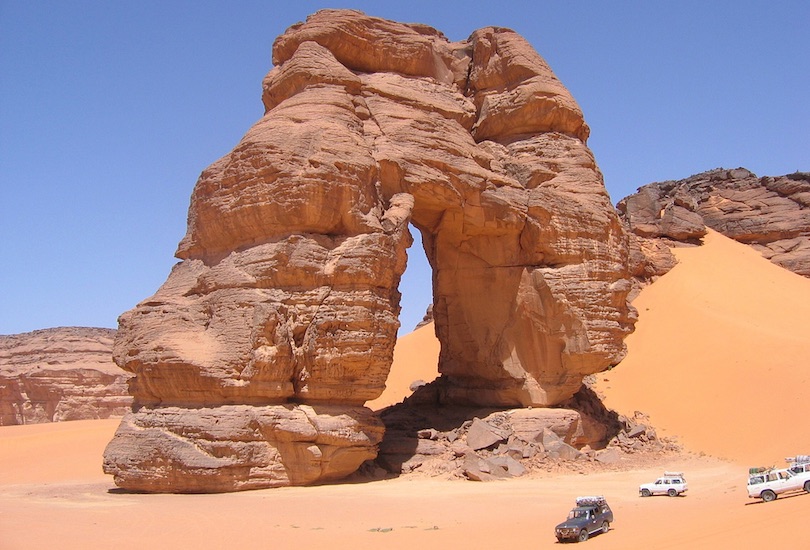
Acacus Mountains or Tadrart Acacus is a mountain range in the Sahara Desert in western Libya. The Acacus Mountains have a large variation of landscapes, from differently colored sanddunes to arches, gorges, isolated rocks and deep ravines. Major landmarks include the arches of Afzejare and Tin Khlega. The area is also well-known for its prehistoric rock art.
10. Tsingy de Bemaraha
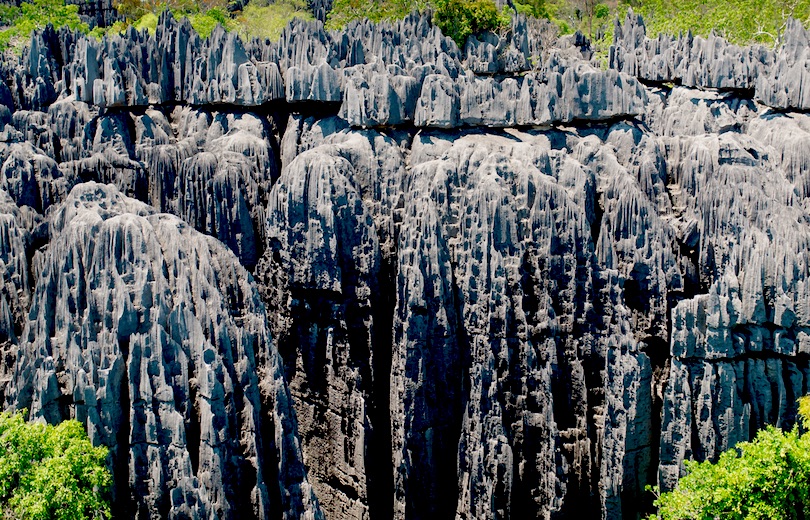
Located close to the western coast of Madagascar, the Tsingy de Bemaraha reserve is a karstic landscape of sharp limestone pinnacles called tsingy. The spectacular canyon of the Manambolo river and rolling hills cut through the tsingy creating a diverse landscape. The undisturbed forests, lakes and mangrove swamps of the national park are the habitat for rare and endangered lemurs and birds.
9. Shilin Stone Forest
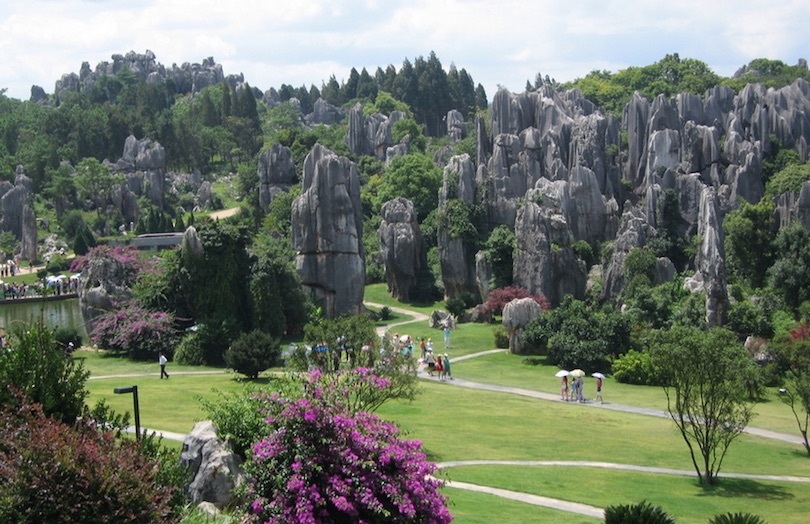
Shilin, which means “Stone Forest” in Chinese, is a set of karst formations in southwest China. The stones jut from the earth similar to the way a stalagmite does in a cave. These stones are thought to be 270 million years old. The area was an ocean floor and the flow of water created the majestic pinnacles. The stone forest receives over 2 million visitors a year.
8. White Desert
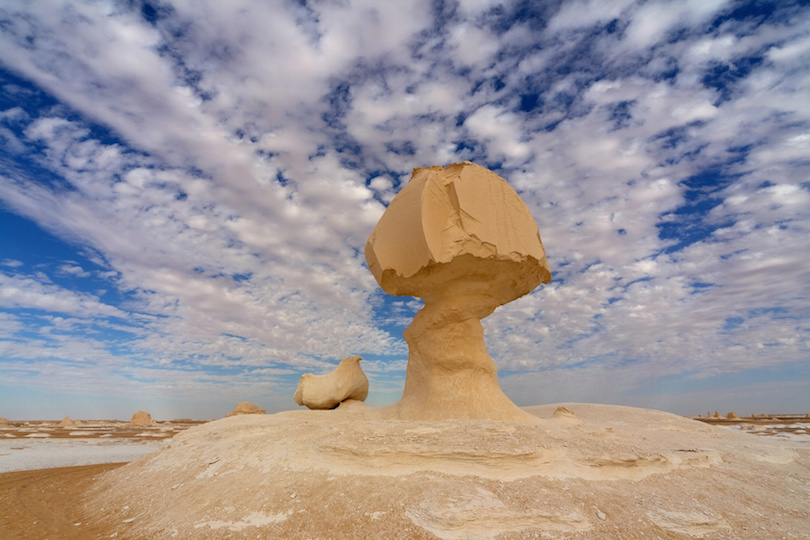
Situated about 45 km north of the Farafra oasis in the vast Western Desert of Egypt, the White Desert is made of oddly shaped chalk formation. In clear contrast with the yellowish brown of the surrounding desert, the White Desert is stark white reminding of an Arctic landscape.
The soft chalk material, at the mercy of the elements has been contoured into amazing shapes. A few of the shapes resemble marshmallows, camels, and mushrooms. The imagination goes wild in this very remote spot.
7. Bryce Canyon National Park
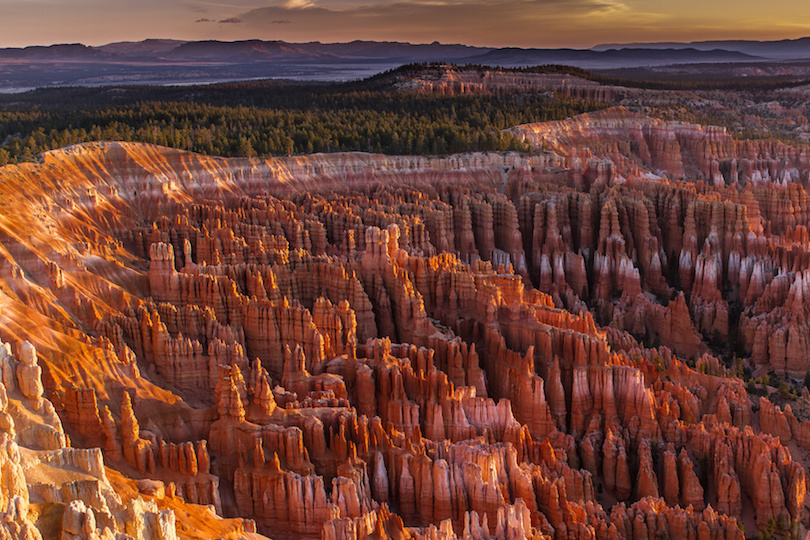
Despite the name, Bryce Canyon National Park is actually not a canyon, but rather a series of giant amphitheaters filled with colorful pinnacles. The natural rock formations were caused by wind and water erosion on limestone.
The colors of red, orange, and white provide an ever changing visual treat. The pinnacles are also known as hoodoos and reach up to 61 meters (200 feet) high. Bryce Canyon is recognized for its great air quality and visibility can be up to 200 miles.
6. Bungle Bungle Range
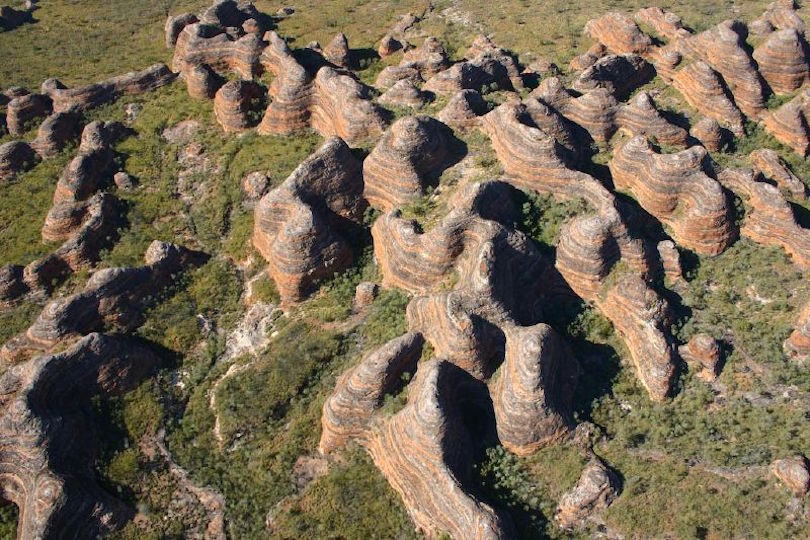
The Bungle Bungle Range is located in Purnululu National Park in western Australia. The range rises up to 578 meters (1896 feet) above sea level and consists of distinctive sandstone domes striped with alternating orange and grey bands.
The banding of the domes are due to differences in clay content and porosity of the sandstone layers. The orange bands are a thin layer of iron oxide while the grey banding is cyanobacteria which grows on the layers where moisture accumulates.
5. Giant’s Causeway
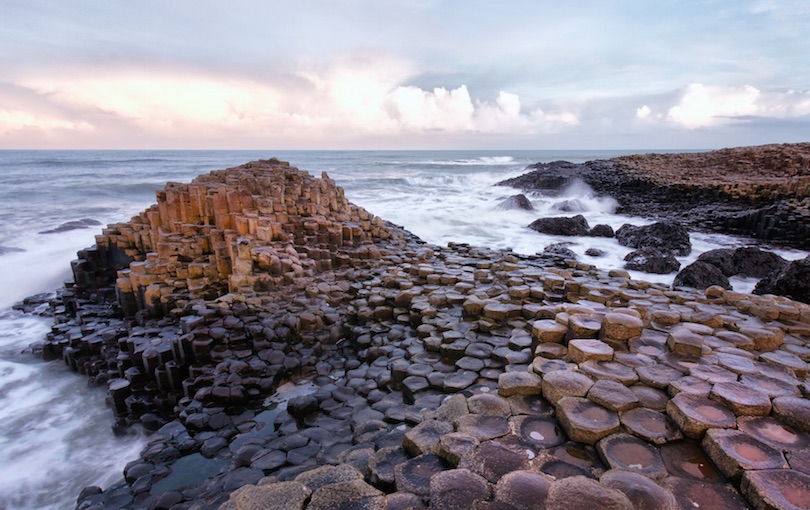
Located on the Northeast coast of Ireland, The Giant’s Causeway is a spectacular rock formation consisting of basalt columns formed 50 to 60 million years ago. As volcanic activity pushed the basalt through chalk, the columns shot in vertical direction. As they cooled, they cracked forming a hexagonal shape.
Although the columns rise up to 12 meters (36 feet) high and are marvels to view, this causeway has another amazing feature. Many of the columns have eroded until only the tops are visible. This creates an intricate cobblestone type natural walkway, so detailed that it appears as if stone masons laid them.
4. Arches National Park
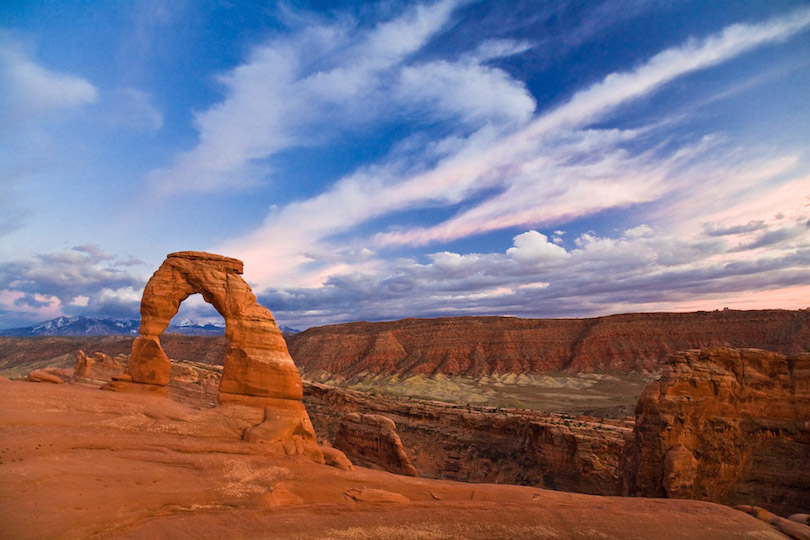
Another piece of nature’s artwork found in Utah, the Arches National Park is known for its inspiring natural arches. Salt beds deposited 300 million years ago from the receding ocean helped form the more than 2000 arches in the park.
As the salt shifted, the rock layered on top began to move creating domes and fins. As rain and ice found its way into crevices, it eroded the top Entrada and Navajo sandstone. Add wind to the mix and over the course of millions of years, the amazing arches formed.
3. Chocolate Hills
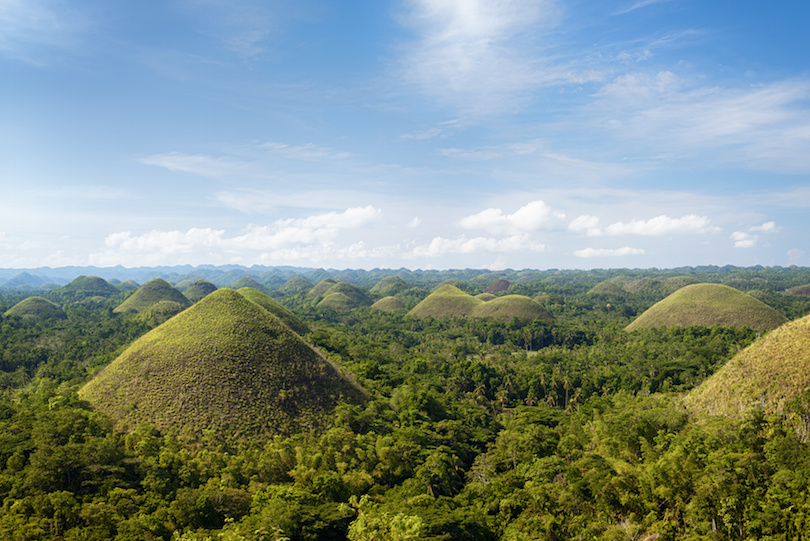
The Chocolate Hills are unusual geological formations that consists of at least 1,268 individual mounds scattered throughout the interior of the island of Bohol in the Philippines. The almost symmetrical and same-sized formations range from 30 to 50 meters (98 to 164 feet) high and are covered in green grass.
During the dry season the grass turns brow, hence the name. Geologists have not reached any consensus on how these giant mole hills were formed. One theory holds that the Chocolate Hills are the weathered rock formations of a kind of marine limestone on top of a impermeable layer of clay.
2. Monument Valley
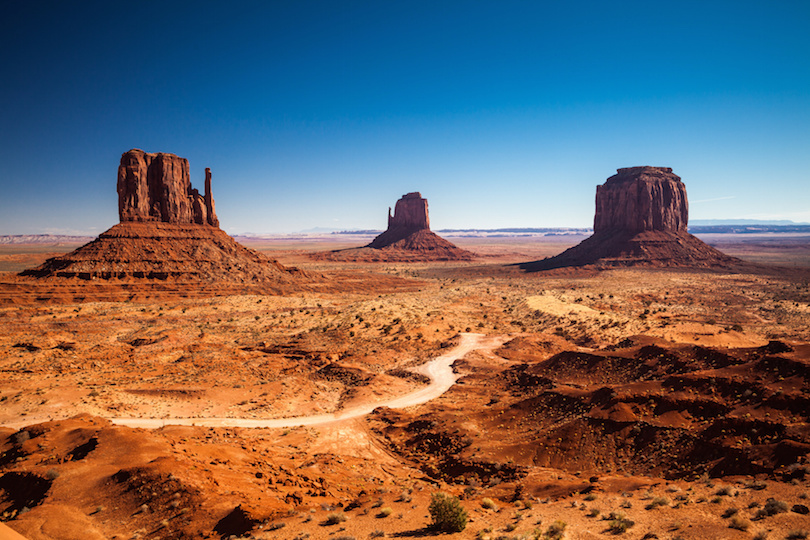
Up to 300 meter (1000 foot) sandstone buttes and mesas make up the Monument Valley which is located on the border of Utah and Arizona. Probably the most famous example of the classic American West landscape the area has been the backdrop for numerous western movies, ranging from Stagecoach starring John Wayne to Back to the Future II.
Technically it is not a valley at all, but a wide flat landscape interrupted by the crumbling rock formations. The buttes are all that is left from the sandstone layers that once covered the entire region and have vivid red tones from the iron oxide.
1. Goreme Fairy Chimneys
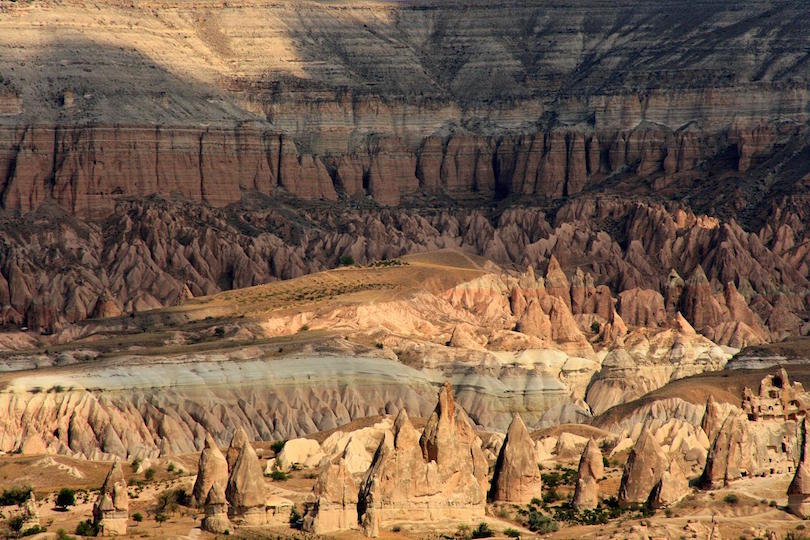
Cappadocia, a region famous for its weird and wonderful natural rock formations and one of the top attractions in Turkey. One of the best places to see these strange formations is the town of Göreme, which is located among a large number of tuff cones, termed fairy chimneys. The fairy chimneys have been formed as the result of wind and water erosion of two different volcanic layers.
A thick layer of tuff (consolidated volcanic ash) covered by a thin layer of basalt that is more resistant to erosion. Due to the ease of carving into the tuff, many of the fairy chimneys have been hollowed out over the centuries to create houses, churches and storage facilities.