
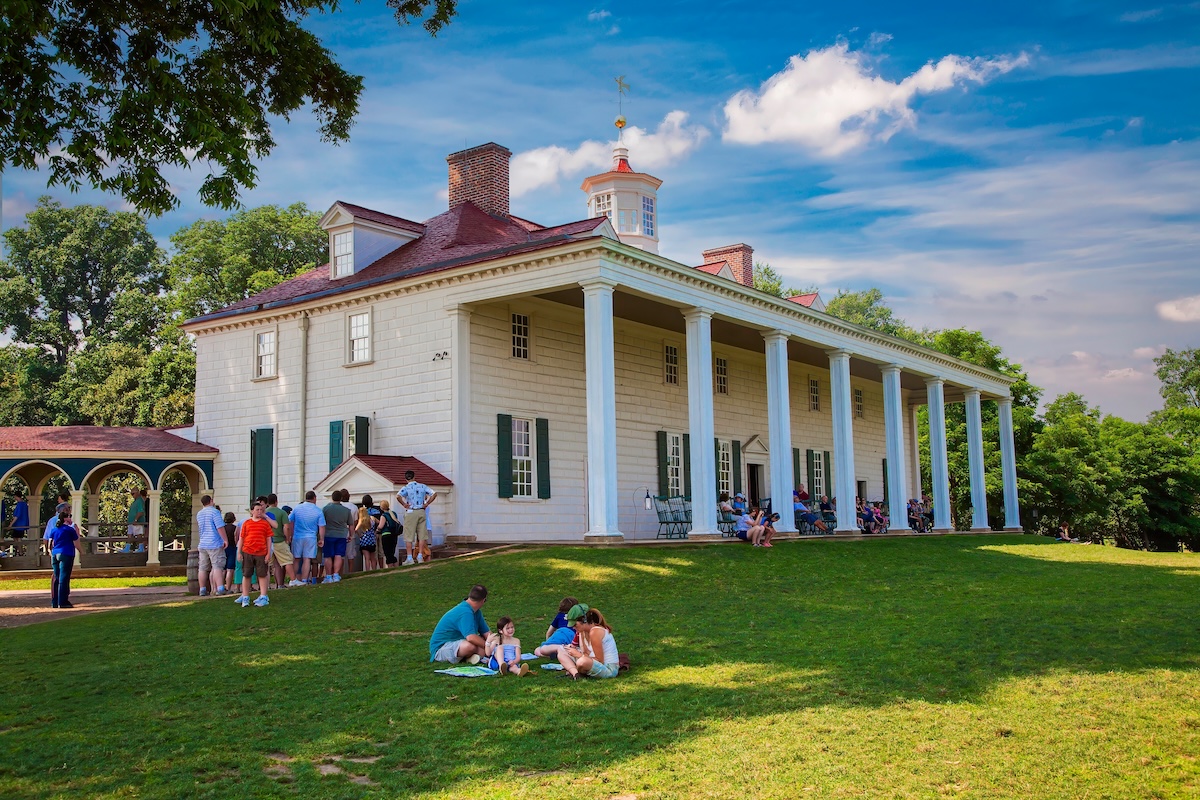
Somewhere along the Potomac River, about fifteen miles south of the National Mall, a white-columned mansion sits on a bluff with a view that’s barely changed in two centuries. You can stand on the piazza, gaze east across the water into Maryland, and catch the same breeze George Washington might’ve felt after a long day wrangling crops, livestock, and a mountain of correspondence. That blend of a preserved home, a working landscape, and a real sense of place draws over a million visitors a year to Mount Vernon, Virginia.
Most first-timers are surprised by the scale. This isn’t just a house tour. The estate sprawls across roughly 500 acres of gardens, woods, farm fields, museum galleries, and outbuildings. You might squeeze your visit into two hours, or you could easily spend a full day wandering from the mansion’s restored rooms to the riverside tomb, a working distillery, and a four-acre demonstration farm.
George Washington’s Home And Legacy
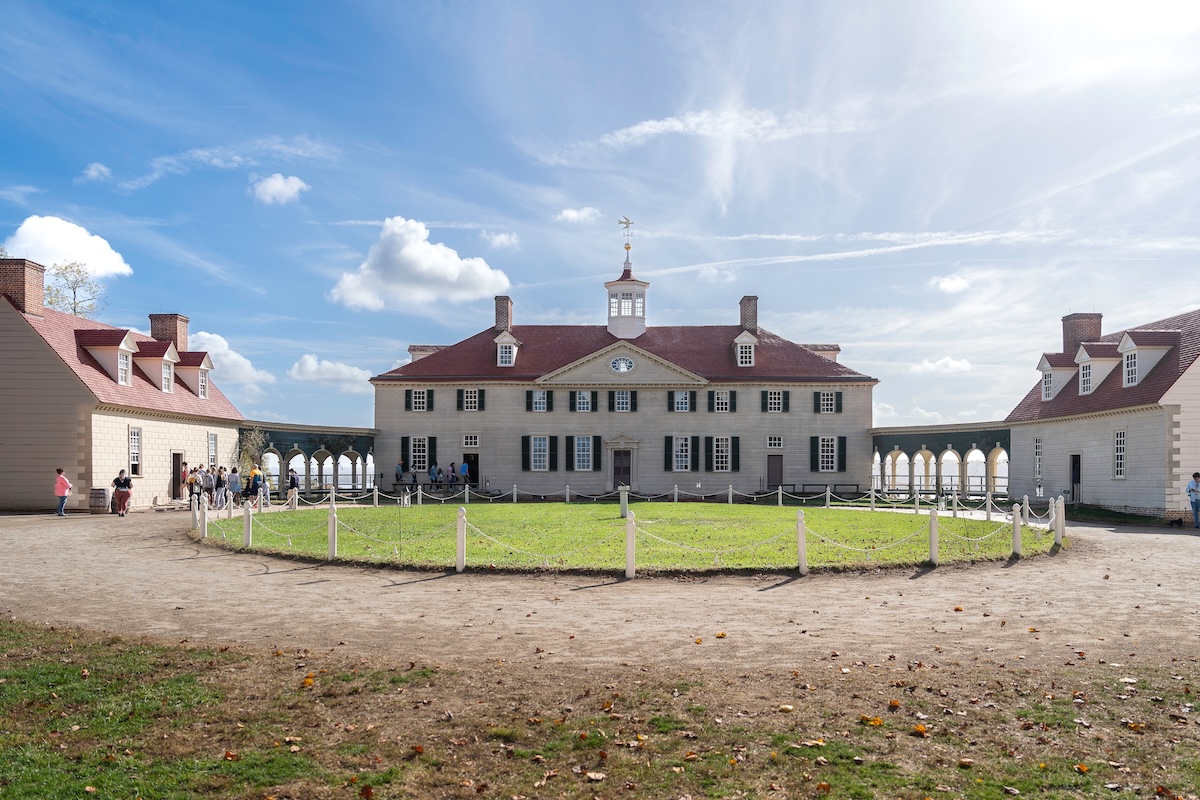
Mount Vernon’s story goes way back—farther than most folks realize. In 1674, George Washington’s great-grandfather, John Washington, secured the original land grant. The property stayed in the family for generations before George took over in 1754, at just 22.
Over the next three decades, you can actually trace Washington’s transformation from ambitious Virginia planter to Revolutionary War commander to the country’s first president right through the estate itself. He expanded a modest farmhouse into an 11,000-square-foot mansion, reworked the grounds, and ran five working farms totaling around 8,000 acres. By 1799, 317 enslaved men, women, and children lived and labored here—a reality the estate now addresses directly with exhibits and interpreted spaces.
Mount Vernon isn’t stuck in a single moment. You can see the choices Washington made across his whole adult life: the rooms he added, the trees he planted, the crops he rotated, the views he framed. His will included a provision to free the people he personally enslaved, a complicated legacy that the estate doesn’t shy away from.
After Washington died in 1799, the property slid into decline until the Mount Vernon Ladies’ Association stepped in and bought it in 1858. That same private nonprofit still runs the estate today—one of the longest-running preservation efforts in American history. When you visit, you’re actually helping keep that work going.
The Mansion And Main Estate
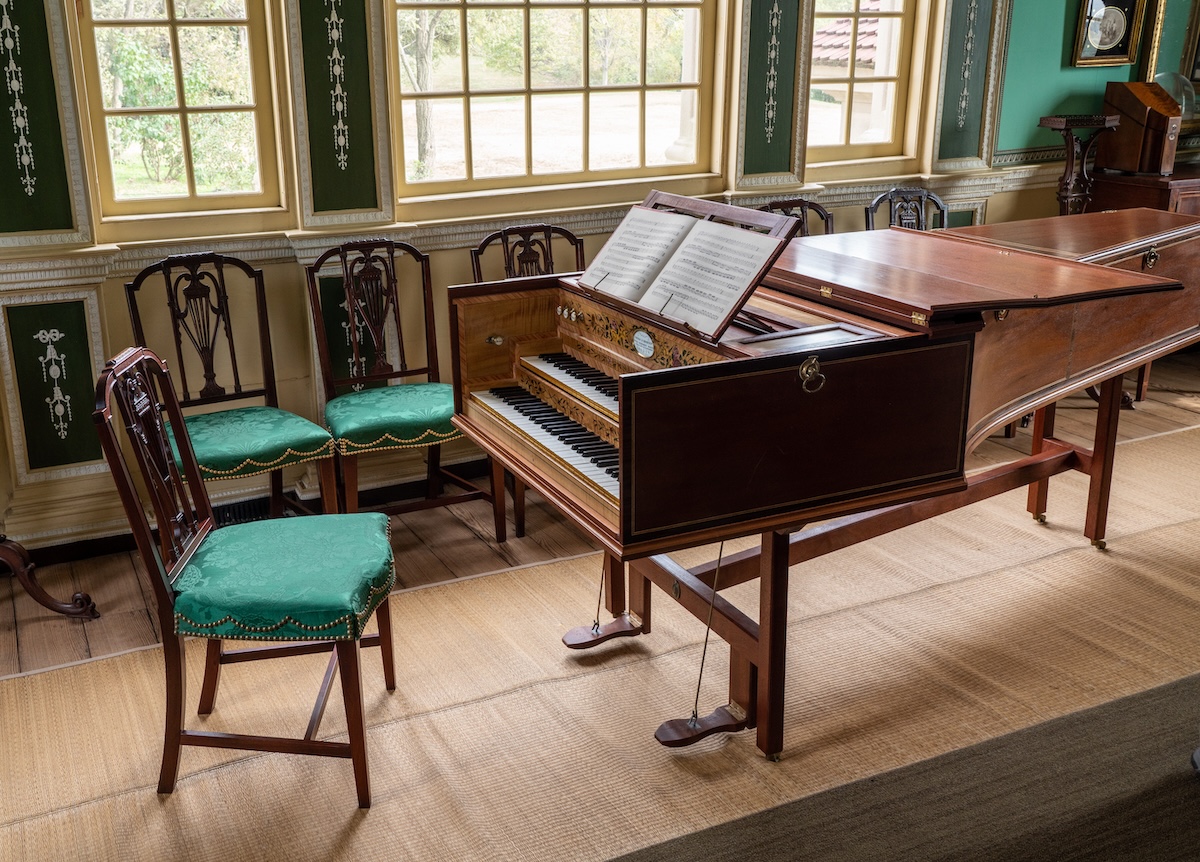
The mansion anchors everything, but the estate around it is where the visit really expands. After the $40 million restoration finished in late 2025, the first and second floors look closer to Washington’s era than they have in ages. You walk through rooms filled with original and period-accurate pieces, including the study where Washington managed his farms and the bedroom where he died in December 1799.
Step outside and the grounds just open up. Washington actually designed the landscape himself, leaning into that naturalistic English style—serpentine paths, groves of native trees, and wide bowling green lawns stretching out toward the river. Four gardens still remain, including a walled upper garden with boxwood hedges and seasonal plantings that echo Washington’s own layout. It’s easy to lose track of time wandering here.
Past the gardens, original outbuildings line the path—places where enslaved workers processed food, made tools, and cared for livestock. The blacksmith shop, spinning house, and kitchen all tell the stories of the people who worked there, with details that bring their daily lives into sharper focus. If you keep walking, you’ll reach the tomb of George and Martha Washington, which feels quieter than most spots on the property.
The museum and education center add even more to take in: 23 galleries, over 700 artifacts, and some surprisingly immersive films. The new education center, which opened in 2026, tries to reframe Washington’s story for today’s audience with interactive exhibits and updated scholarship. There’s also a working farm and a riverside distillery and gristmill. If you want to see the major areas without rushing, you’ll want to give yourself at least three hours.