
You probably know the world’s made up of a ton of countries, but ever catch yourself wondering which ones take up the most space? Some nations sprawl so far, their borders practically touch multiple time zones and climates, covering millions of square miles.
Diving into the world’s largest countries gives you a glimpse into how geography shapes everything—cultures, weather, even the news headlines. These huge places are packed with natural wonders, people, and lifestyles you might not expect. Honestly, they’re just plain interesting to learn about.
10. Algeria (919,595 sq mi)

Here’s one that surprises a lot of folks: Algeria is Africa’s biggest country by area—about 919,595 square miles. Most of it? Pure Sahara Desert, so you get endless sand and rocky stretches.
Algeria hugs the northern edge of Africa, with a long coast along the Mediterranean. The capital, Algiers, sits right by the water.
Head inland and the landscape flips fast—from green coastal areas to dry, endless desert. Even though Algeria’s wide from east to west, the whole country sticks to just one time zone. Not sure why, but it works for them.
People here mostly speak Arabic and French. There’s a cool mix of African and Mediterranean culture, and the food and music reflect that.
9. Kazakhstan (1,052,089 sq mi)

On the map, Kazakhstan jumps out as the world’s biggest landlocked country—over a million square miles, putting it ninth overall for size.
It’s mostly in Central Asia, with a tiny sliver in Europe. You’ll spot endless grasslands, deserts, and some pretty serious mountains.
Kazakhstan doesn’t have a sea coast, but it borders the Caspian Sea, the world’s biggest lake. There’s a mix of modern cities and small villages spread out across all that space.
Lots of different ethnic groups call Kazakhstan home. If you ever go, you’ll notice huge empty spaces and some wild natural scenery.
8. India (1,269,345 sq mi)

India takes up a massive chunk of South Asia, ranking seventh in the world by size. Check the map and you’ll see it stretches from the snowy Himalayas down to sunny beaches in the south.
There’s a bit of everything: deserts, thick forests, mountains, winding rivers. India borders a lot of countries—China, Pakistan, Nepal, Bhutan, Bangladesh, and Myanmar. It’s a busy neighborhood.
As you travel through India, the landscape changes constantly from state to state. With so much ground to cover, you get all sorts of weather, cultures, and languages depending on where you are.
7. Argentina (1,446,338 sq mi)

On a South America map, Argentina really stands out—second largest on the continent. It’s famous for its wide grassy Pampas and those dramatic Andes mountains.
Argentina stretches from the warm north all the way down to chilly, windswept spots near Antarctica. The weather and scenery here can change a lot.
Buenos Aires is the capital, and folks speak Spanish. Argentina shares borders with Chile, Brazil, Paraguay, Bolivia, and Uruguay, and it’s got a long Atlantic coastline, too.
The country’s known for steak, soccer, and natural wonders like Iguazu Falls and Patagonia. If you’re into food or adventure, it’s kind of a dream spot.
6. Australia (2,969,906 sq mi)

When you picture Australia, you might think of beaches and the outback. It’s actually the largest country in Oceania, almost 3 million square miles.
Most of the land is dry outback, but there are rainforests, mountain ranges, and lively cities, too. Kangaroos, koalas, and all sorts of wildlife call it home.
Australia’s both a country and a continent. Cities like Sydney, Melbourne, and Brisbane line the coast, where nearly everyone lives.
The center? Pretty empty and dry. Traveling across the country, you’ll see everything from forests to reefs. It’s a long haul, but the scenery’s worth it.
5. Brazil (3,287,955 sq mi)
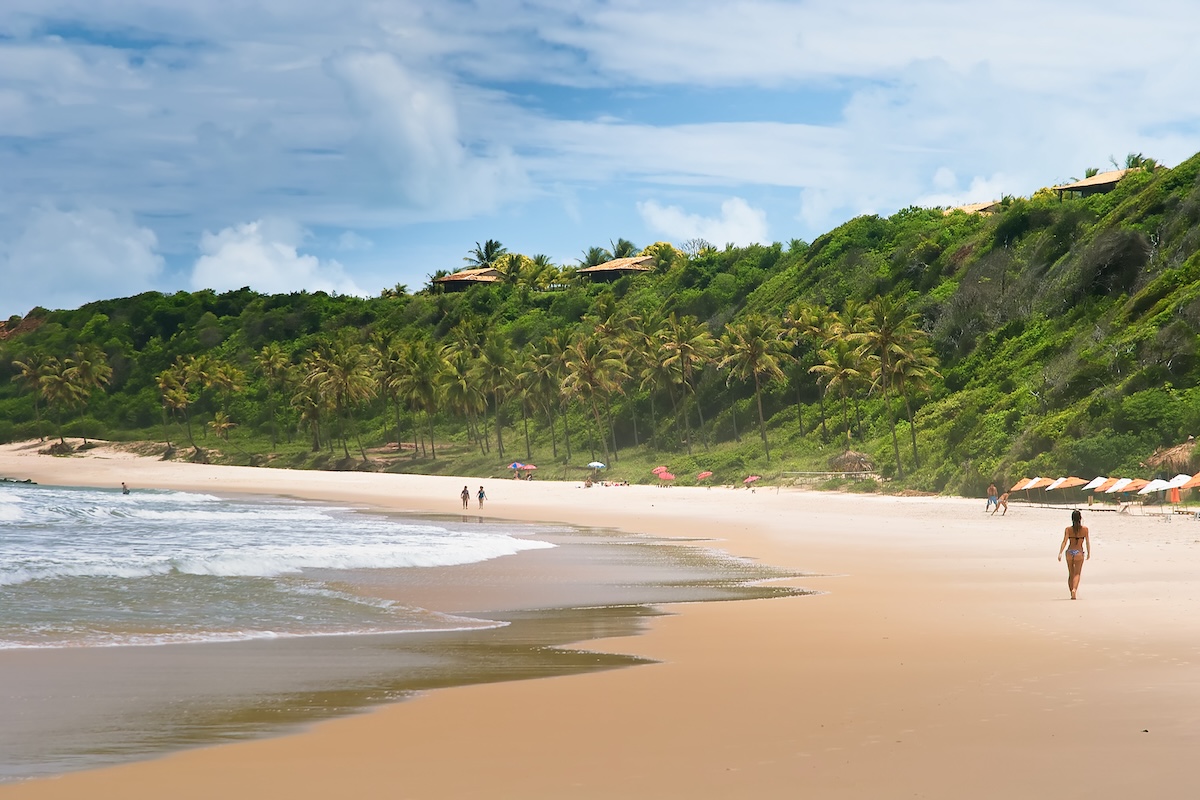
Brazil’s hard to miss on any map—it’s the biggest country in South America, covering almost half the continent.
With about 3,287,955 square miles, Brazil packs in thick rainforests, winding rivers, and massive cities like São Paulo and Rio de Janeiro.
The Amazon Rainforest is probably the most famous part, with plants and animals you won’t see anywhere else. But Brazil also has farmland, beaches, and mountains.
Traveling here, you’ll get a mix of tropical scenery, buzzing cities, and quiet rural spots. Every region’s got its own vibe, weather, and traditions. There’s always something new to discover in Brazil.
4. United States (3,618,783 sq mi)

The United States covers a lot of ground—stretching from the Atlantic to the Pacific, with just about every landscape you can imagine: deserts, forests, plains, mountains.
The climate flips from snowy up north to hot and sunny down south. The US shares borders with Canada and Mexico, and Alaska’s the biggest state by far. Texas and California are massive, too.
Each state feels different, so you’ll notice tons of variety in geography and culture. Some states are packed with people and skyscrapers, others are wide open and quiet. There’s a little bit of everything.
3. China (3,747,877 sq mi)

China ranks third in the world for area—about 3,747,877 square miles. It stretches from the Pacific coast all the way to western deserts.
The country’s packed with different landscapes: the Himalayas, plains, big rivers, and endless farmlands.
China borders 14 countries—more than anyone else. As you travel, you’ll feel the climate shift from frigid up north to tropical down south.
There are huge cities like Beijing and Shanghai, but also quiet villages and countryside. China’s size means you’ll always find something new, wherever you go.
2. Canada (3,855,101 sq mi)

Canada’s massive—second biggest in the world, actually. It covers around 3,855,101 square miles, taking up a huge part of North America.
Traveling across Canada, you’ll pass forests, lakes, mountains, and stretches of icy tundra. The country’s famous for wide open spaces and loads of natural beauty.
Canada’s made up of ten provinces and three territories. You’ll hear both English and French, especially in places like Quebec.
Most people live near the southern border with the US. The north is pretty wild and empty—just pure wilderness for miles.
1. Russia (6,601,665 sq mi)

Look at a map and you can’t miss Russia—it’s massive. At over 6.6 million square miles, it’s easily the world’s largest country.
Russia sprawls across both Europe and Asia, which means you’ll run into all sorts of scenery. There are thick forests, rugged mountains, and stretches of icy tundra.
It covers about 11% of all land on Earth. If you try to cross Russia, you’ll zip through a bunch of time zones and a wild mix of regions.
Most Russians stick to the west, around Moscow and St. Petersburg. Head east and things get quieter—way quieter. Still, there’s a ton of oil, gas, and minerals out that way.