

There are hundreds of lakes around the world that hold claim to the title of the largest lake of some kind – either by volume, surface area, or a plethora of other defining qualifiers and caveats.
For the purpose of this article, we’ve listed the largest lakes in the world when measured by total surface area, from the smallest to the largest. From the Great Slave Lake in North America to the Caspian Sea that spreads across the continents of Europe and Asia, these are some of the biggest water sources on Earth.
19. Lake Nicaragua (8,264 km2)
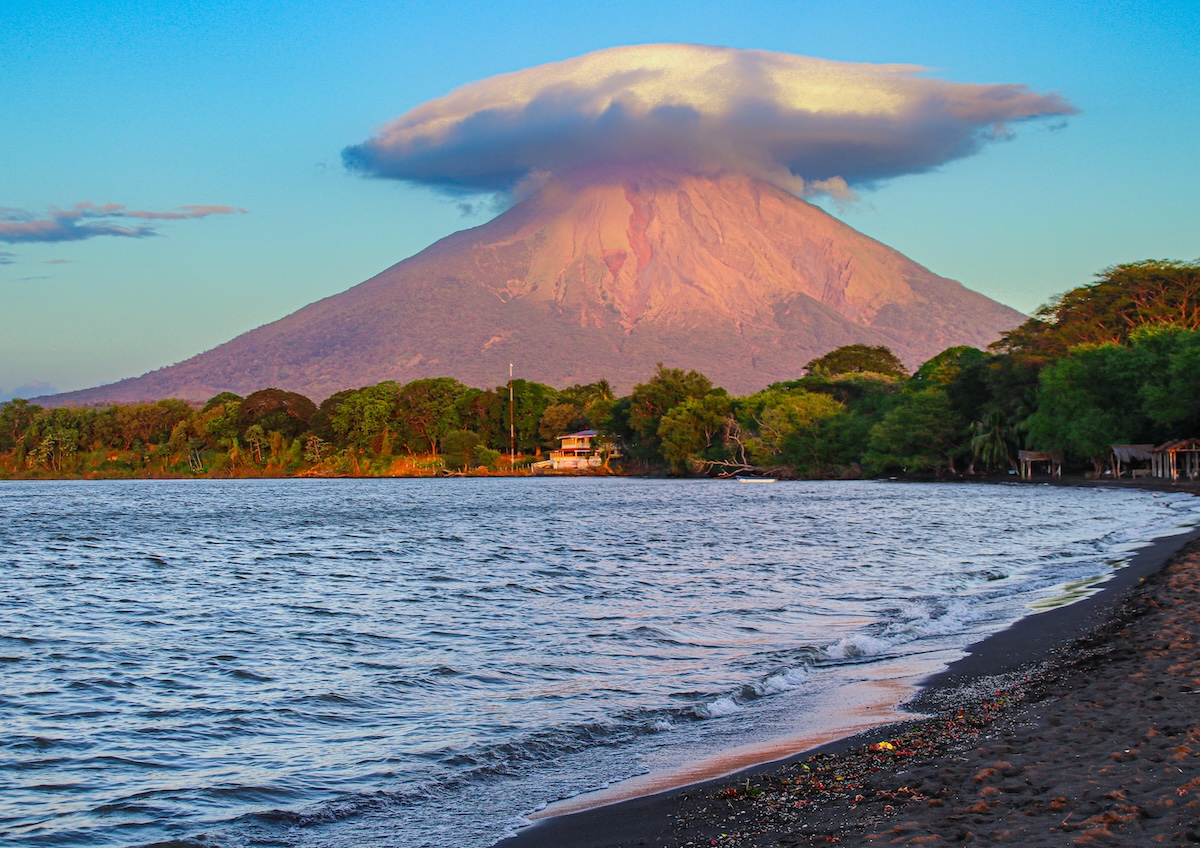
Lake Nicaragua sprawls across southwestern Nicaragua and stands out as the country’s most significant physical feature. It covers 8,264 square kilometers, making it the largest freshwater lake in Central America.
The lake carries a few different names. Locals call it Cocibolca, while Spanish colonizers dubbed it Mar Dulce, both meaning “sweet sea.” Some folks know it as Lago de Granada too.
Tectonic activity—not glaciers or rivers—formed this lake. It reaches depths of 26 meters and sits 32.7 meters above sea level. On the world stage, it ranks as the 19th largest by area. Lake Nicaragua is a touch smaller than Lake Titicaca but still holds the title of tenth largest lake in the Americas. Its freshwater makes up a slice of the planet’s limited supply of drinkable water.
18. Lake Titicaca (8,372 km2)
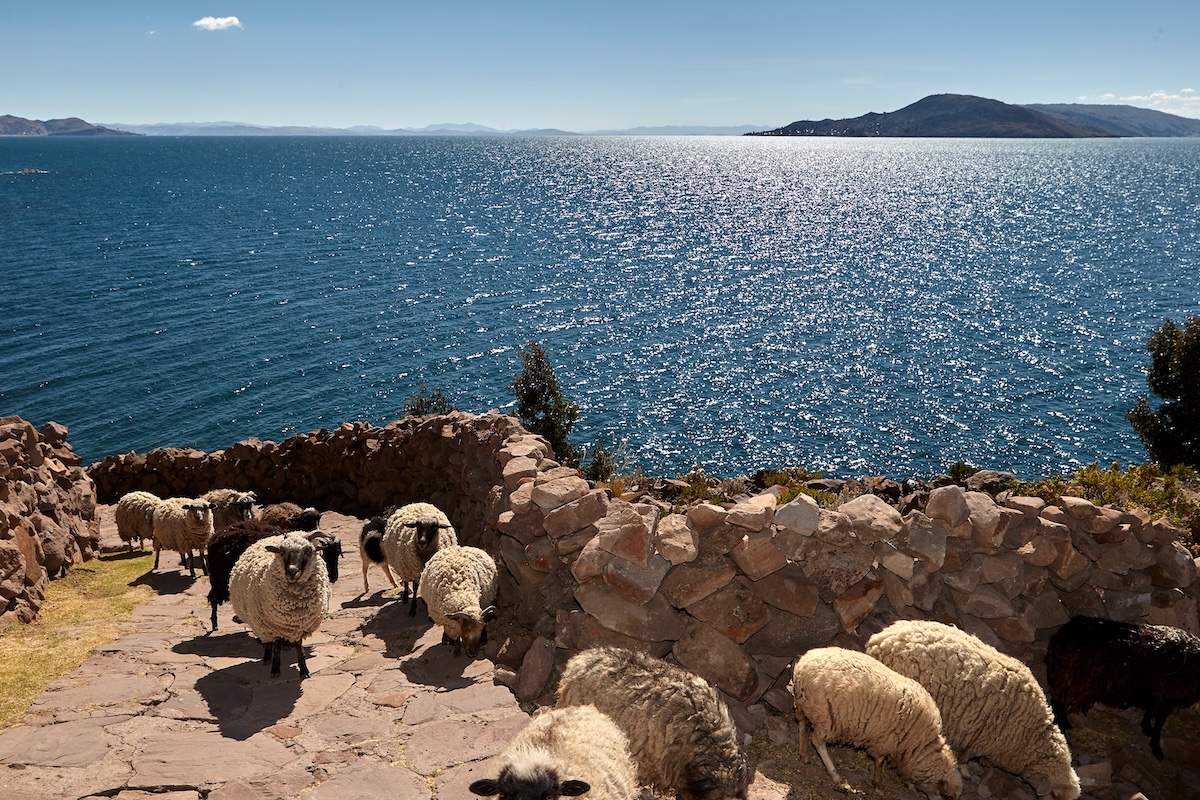
Lake Titicaca sits high up in the Andes, straddling the border between Peru and Bolivia. It covers 8,372 square kilometers and claims the crown as South America’s largest lake by water volume.
This lake’s elevation really sets it apart. At 3,812 meters above sea level, it’s the highest navigable lake in the world for large commercial boats.
It stretches about 230 kilometers long. The water tastes slightly salty, even though most people call it a freshwater lake. Two main sections make up Titicaca, with a deeper basin linked to a shallower one. You can visit from either Peru or Bolivia. The lake holds 41 islands and gets water from several rivers, including some fed by nearby glaciers.
17. Lake Onega (9,700 km2)
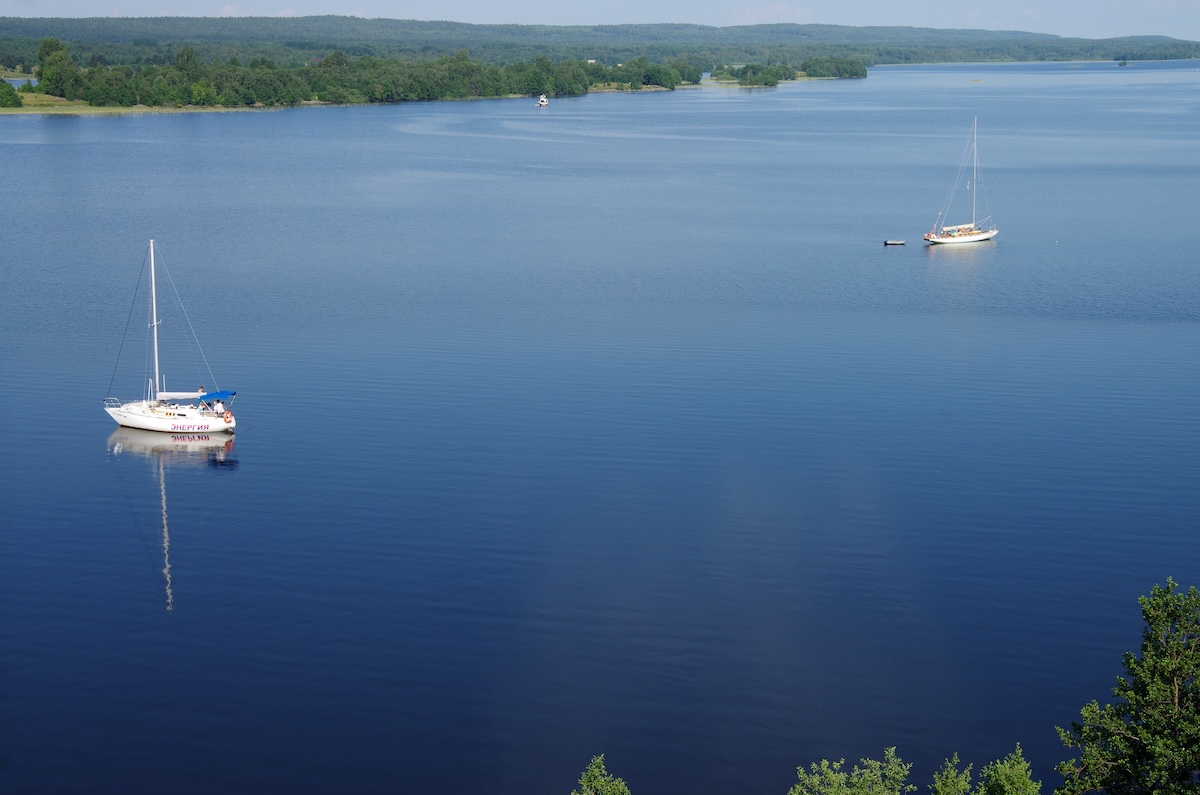
Lake Onega lies in northwestern Russia, stretching across three regions. It’s Europe’s second-largest lake, right after Lake Ladoga. The lake runs about 248 kilometers long and 80 kilometers wide at its broadest. Depths vary from 30 meters to a maximum of 120 meters.
More than 1,600 islands dot its surface. The Suna, Vodla, and Shuya rivers feed into it, while the Svir River carries water out and links Onega to Ladoga.
Glaciers from the last ice age carved out the lake over 9,000 years ago. The north shore is rocky and rugged, but the southern banks stay mostly flat and gentle.
16. Lake Vostok (12,500 km2)

Lake Vostok hides deep beneath Antarctica’s ice, about 2.5 miles below Russia’s Vostok Station. This enormous freshwater lake stretches 150 miles long and 31 miles wide. It’s the biggest of Antarctica’s 675 subglacial lakes, holding nearly 1,300 cubic miles of water—comparable to Lake Ontario.
Lake Vostok’s isolation is wild. The ice above has sealed it away for about 15 million years. Scientists suspect it might harbor strange forms of life adapted to its harsh, dark world. The lake sits roughly 500 meters below sea level, while the ice sheet above rises over 11,000 feet above sea level.
15. Lake Balkhash (16,400 km2)
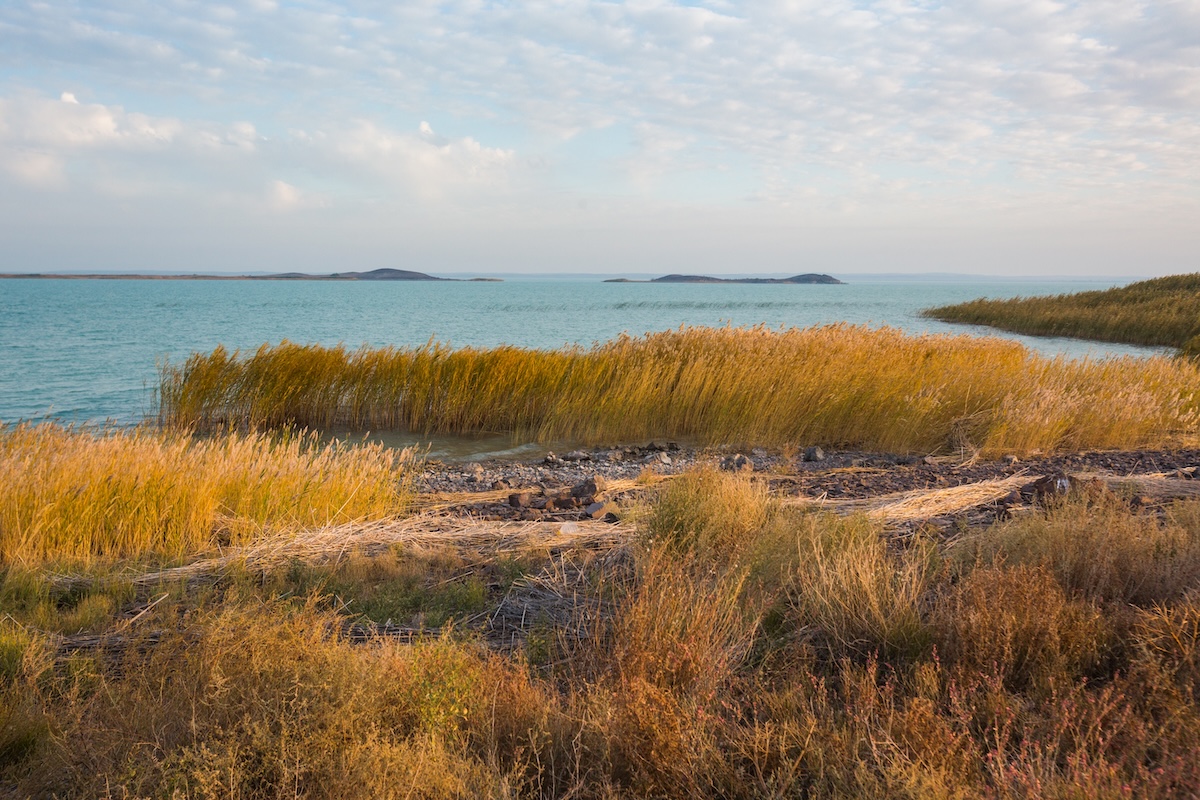
Lake Balkhash sits in southeastern Kazakhstan, ranking among Asia’s largest lakes and taking the 15th spot worldwide. This lake is unusual—its western half contains fresh water, but the eastern half is salty. A slim peninsula divides the two sides.
Balkhash sits in an endorheic basin, so water flows in but never out to the ocean. Seven rivers feed it, with the Ili River being the most important. Melted snow and mountain ice provide most of the water. Its crescent shape stands out even from space. The lake stretches across the Kazakh steppes at an elevation of about 1,122 feet above sea level.
14. Lake Ladoga (17,700 km2)

Lake Ladoga lies in northwestern Russia, just east of Saint Petersburg, and holds the title of Europe’s largest lake.
The lake runs 219 kilometers long and up to 138 kilometers wide. Its surface area covers about 17,700 square kilometers, not counting the 660 or so small islands scattered across it. With the islands included, the total area bumps up to 18,135 square kilometers.
Average depth hits 51 meters, but some spots drop down to 230 meters. In total, the lake holds about 908 cubic kilometers of water. Ladoga sits in both the Republic of Karelia and Leningrad Oblast, separated from the Baltic Sea by the Karelian Isthmus. It ranks as Russia’s second-largest lake after Baikal, and it’s the world’s 14th largest freshwater lake.
13. Lake Ontario (18,970 km2)

Lake Ontario sits at the eastern tip of the Great Lakes chain. It’s the smallest of the five by surface area, but don’t let that fool you—it packs a punch. The lake covers about 19,000 square kilometers, making it the 14th largest lake on Earth. You’ll find it squeezed between New York State and Ontario, Canada.
Despite being the smallest Great Lake in area, Ontario holds more water than Lake Erie. Its deepest point drops to 244 meters, which is nothing to sneeze at.
Follow the shoreline, including the islands, and you’ll cover about 1,146 kilometers. The lake connects right to the St. Lawrence River, so water here flows straight to the Atlantic. It’s the final stop in the Great Lakes system.
12. Lake Winnipeg (24,514 km2)

Lake Winnipeg sits in the middle of Manitoba, Canada, about 55 kilometers north of Winnipeg city. This vast lake ranks as the world’s 10th or 11th largest freshwater lake, depending on who you ask, and it’s Canada’s sixth-largest overall.
It stretches 264 miles long and can be up to 68 miles wide. Two main basins, joined by a narrow channel called The Narrows, make up the lake. The northern basin is larger, about 100 kilometers wide, while the southern one measures around 40 kilometers across.
For such a big lake, it’s surprisingly shallow—most spots are just a few meters deep, though some reach a bit farther down. Over 70 fish species call it home, which draws anglers and supports a busy fishing industry.
11. Lake Erie (25,667 km2)

Lake Erie sits on the border between the United States and Canada as the tenth largest lake in the world. You’ll find it covers about 9,910 square miles of surface area.
It’s the smallest and shallowest of the five Great Lakes. The water here only goes down about 210 feet at its deepest point. That makes it way different from its neighboring lakes.
Warm, shallow water here gives fish a great environment. Around 107 fish species swim through its waters—no wonder anglers love this place. Some even call it one of the biggest freshwater fisheries anywhere. The lake touches four US states: Michigan, Ohio, Pennsylvania, and New York. On the Canadian side, it borders Ontario. Its shoreline winds for 871 miles around all these areas.
10. Great Slave Lake (27,000 km2)
 © Serge Skiba / Dreamstime
Great Slave Lake is the second largest lake in the Northwest Territories of Canada, overtaken only by Great Bear Lake. Reaching a staggering depth of over 600 meters, it is the deepest lake in North America. Stretching nearly 300 miles long and over 100 miles wide, it is the tenth-largest lake on Earth.
Various towns sit on the edge of the lake; these include Yellowknife, Fort Resolution, and Hay River, to name a few. Due to its location south of the Arctic Circle, the lake freezes over in winter and maintains a temperature so cold that the residents are able to carve an ice road through it, creating a shortcut between Yellowknife and Dettah.
The rest of the year, the lake is a hotspot for sailors and anglers, who enjoy trying their luck fishing for pike and trout in the lake or Arctic grayling in its tributaries.
9. Lake Malawi (29,500 km2)

Spreading across Tanzania, Malawi, and Mozambique along Africa’s East Coast, Lake Malawi – also known as Lake Nyasa – is the third largest lake on the African continent. One of the African Great Lakes, sprawling Lake Malawi has many claims to fame.
It is the fourth largest lake on Earth by volume, the ninth-largest by area, and the second deepest lake in Africa. It is not simply its sheer size that makes Lake Malawi special, but also the life it sustains.
Lake Malawi is home to more fish species than any other known lake – specifically, hundreds of cichlid fish. While fishing is permitted in some places, various sections have been designated as marine reserves to protect these creatures.
8. Great Bear Lake (31,000 km2)

Located in Canada’s Northwest Territories on the Arctic Circle, the Great Bear Lake is the eighth largest lake on the planet. It is also the largest freshwater lake located entirely within the borders of Canada, and the fourth largest in North America.
Plunging over 440 meters at its deepest point, the lake is fringed by boreal forest and tundra and known for its crystal-clear water. While the lake is home to speckled trout and several other species of marine life, it has the fewest variety of fish species of all of Canada’s Great Lakes.
7. Lake Baikal (31,500 km2)

Lake Baikal in Russia is the largest lake on Earth when measured by volume. Plunging over 1,632 meters deep, it is both the deepest and the oldest lake in the world, with many arguing that it should be deemed a sea.
This is backed up by the fact that it is one of the only lakes with enough oxygenated water to sustain life at its most profound depths. The lake is home to around 1,700 species of plant and animal species.
A total of 27 islands can be found in Lake Baikal, the majority of which are uninhabited. It also has hundreds of streams and rivers flowing into it and one river – just the Angara – that flows out of it and makes its way towards the Arctic Ocean.
Lake Baikal is one of the clearest lakes on Earth, filled with snowmelt from the Siberian mountains. On a good day, the visibility is as deep as 39 meters!
6. Lake Tanganyika (32,600 km2)
 © Kuznetsov / Dreamstime
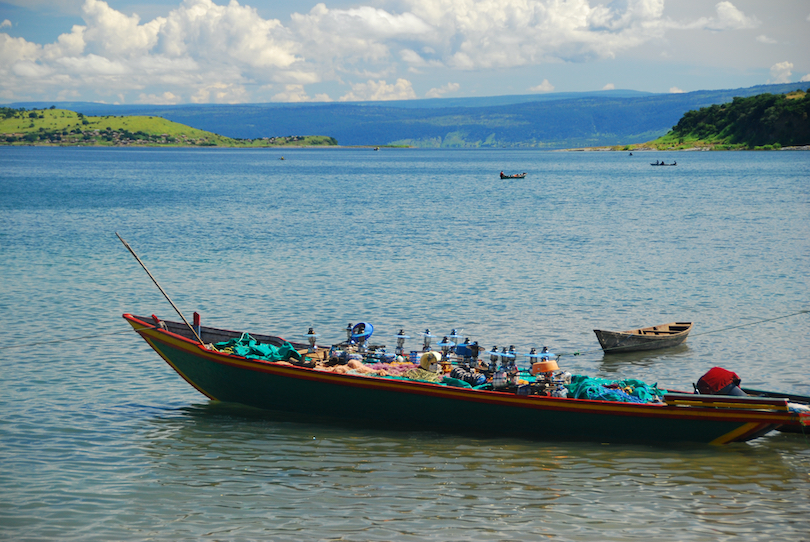
Another one of the African Great Lakes, the aptly-named Lake Tanganyika – which means ‘the great lake spreading out like a plain’ – is the world’s longest, second oldest and second deepest freshwater lake. It is also the second-largest lake when measured by volume.
Flowing between the four countries of Tanzania, Burundi, the Democratic Republic of Congo, and Zambia, Lake Tanganyika eventually flows into the Atlantic Ocean. Forming one of the Rift Valley lakes, swimming in the lake is not recommended as Nile crocodiles are known to lurk beneath the surface in some places.
5. Lake Michigan (58,000 km2)
 © Susan Morris / Dreamstime
Lake Michigan, which means ‘Great Water,’ is one of North America’s five Great Lakes. It is the second-largest by volume and the third-largest by surface area.
Extending to a maximum depth of 280 meters, it is the only one of the Great Lakes to be found wholly within the borders of the United States – spreading across Michigan, Indiana, Illinois, and Wisconsin from east to west.
Swimming in Lake Michigan is risky for several reasons. Not only is its shoreline prone to dangerous rip currents, but the bottom is often uneven with holes and deep drop-offs while few beaches have lifeguards.
4. Lake Huron (59,600 km2)

Connected to Lake Michigan by the Straits of Mackinac, Lake Huron is the 4th largest lake in the world. It is also the second-largest by surface area and the third-largest by volume of the five Great Lakes of North America.
Stretching for over 3,800 miles, the coastline is the longest of all the Great Lakes and encompasses over 30,000 islands.
Lake Huron is most infamous for its many shipwrecks. Thousands of battered ships lie wrecked off the coastlines here; Fathom Five National Marine Park is home to 22 wreck sites alone.
3. Lake Victoria (68,870 km2)
 © Yurasova / Dreamstime
One of the African Great Lakes, Lake Victoria is the largest freshwater lake in Africa, spreading across Tanzania, Uganda, and Kenya. It is also the largest tropical lake on Earth and the second largest freshwater lake by surface area – beaten only by Lake Superior.
The main reservoir of the Nile River, Lake Victoria is home to more than 200 different species of fish, including Tilapia, which provide a livelihood for thousands of people who live on and near its shoreline.
Named after Queen Victoria of England by John Hanning Speke, who first documented the lake in the 1850s, Lake Victoria is recorded as the most dangerous lake in the world. It sees the most deaths of any lake each year, caused by black spots, changeable weather conditions, and crocodile attacks.
2. Lake Superior (82,100 km2)

Lake Superior is the largest freshwater lake in the world by surface area, the third-largest by volume, and the largest, deepest, and coldest of North America’s Great Lakes. It is also Canada’s largest lake, bordering the US states of Minnesota, Wisconsin, and Michigan.
Lake Superior, which means ‘Big Sea Water’ is a prominent hotspot on the Great Lakes Waterway, ferrying goods and materials across the water. However, as it measures more than 400 meters deep in some places and is prone to riptides, it is one of the most dangerous lakes to swim in on Earth.
1. Caspian Sea (371,000 km2)
 © Malyshev / Dreamstime
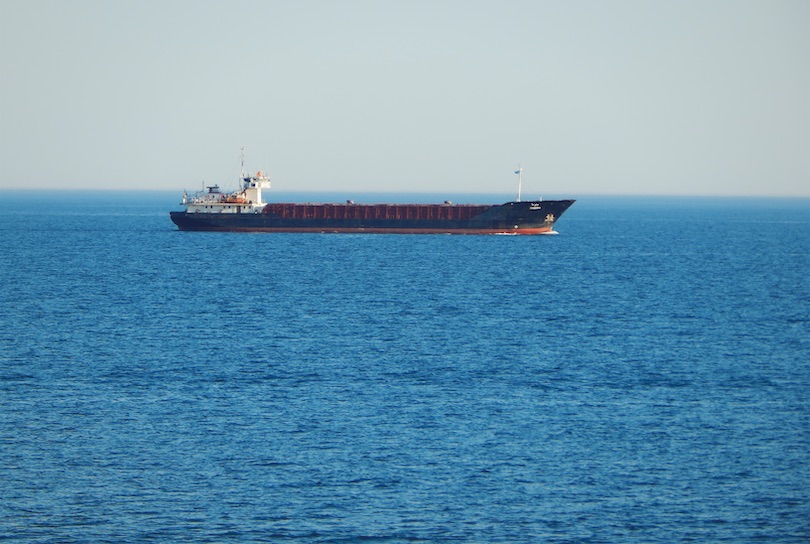
Despite its misleading name, the Caspian Sea is actually a lake as it is entirely landlocked – the world’s largest lake or body of water, in fact. Located between the continents of Europe and Asia, this inland sea is bordered by Russia, Kazakhstan, Azerbaijan, and Turkmenistan.
Interestingly, the lake is not fresh water; it is partially salty, albeit only a third as salty as seawater, because it once formed part of the ancient Paratethys Sea. Today, the sea is celebrated for its amazing caviar and prominent oil industry.