
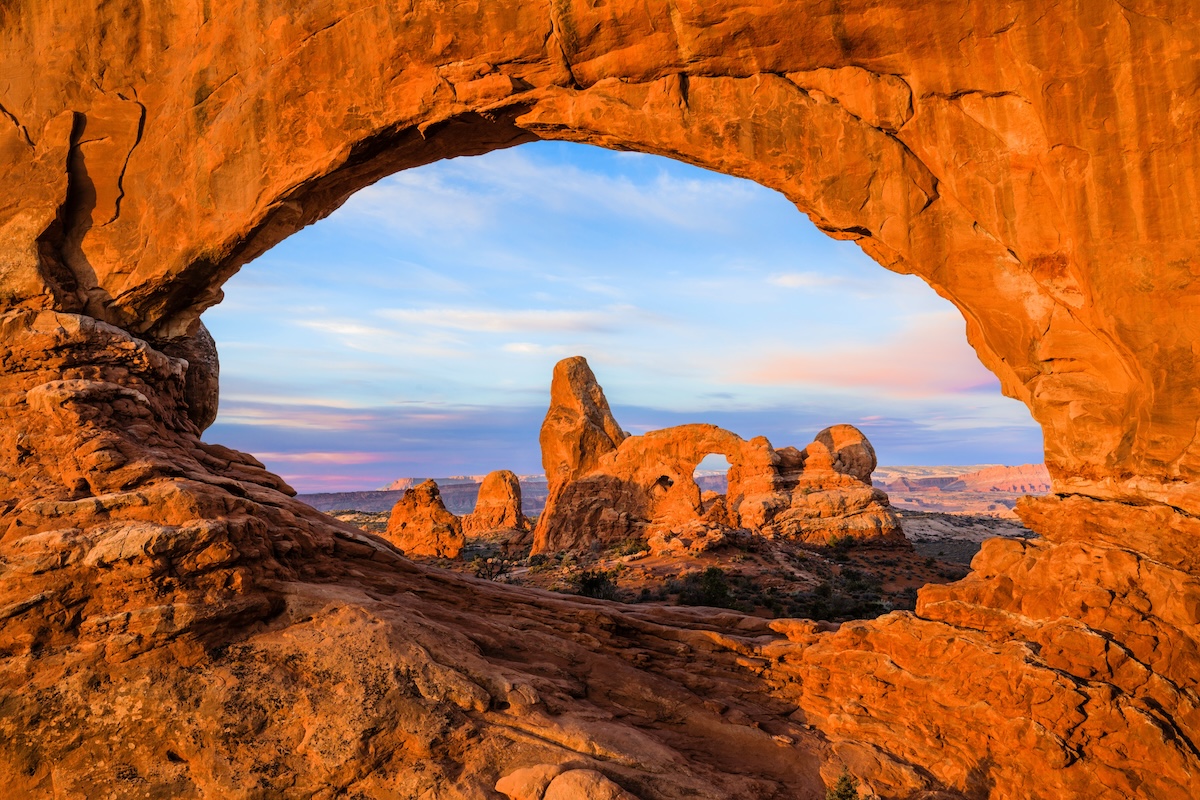
Towering sandstone arches, glowing red rock formations, and vast desert landscapes make this one of the most striking national parks in the American Southwest. Almost every viewpoint feels surreal, as though the scenery belongs on another planet.
Located near Moab in eastern Utah, Arches National Park protects more than 2,000 natural stone arches shaped by millions of years of erosion. A scenic road winds through the park, linking trailheads, overlooks, and many of its most famous formations.
While the hiking here is often short and accessible, the landscapes themselves leave a lasting impression, with enormous arches, balanced rocks, hoodoos, and sweeping desert vistas appearing around nearly every bend.
Broken Arch
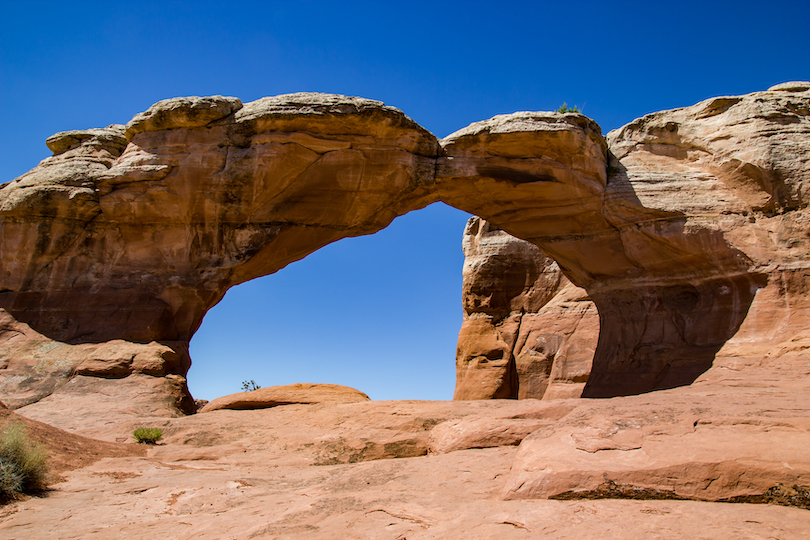
Quick, easy and beautiful, the trek to Broken Arch is popular with hikers young and old. The trail is relatively steady through the 1.2 mile journey. Sturdy underfoot, you’ll enjoy amazing desert landscapes and the odd welcoming sight of vegetation.
Keep in mind that the trail, like many others in Arches National Park, has little shade. Bring along plenty of water and a hat. The culmination of the brief trek is a closeup view of the impressive sandstone arch that rises above the desert floor.
Because Broken Arch shares the same trailhead with Sand Dune Arch, it is common for hikes to combine both trails into one. This would lead to a memorable 1.8 mile round trip.
Arches Visitor Center
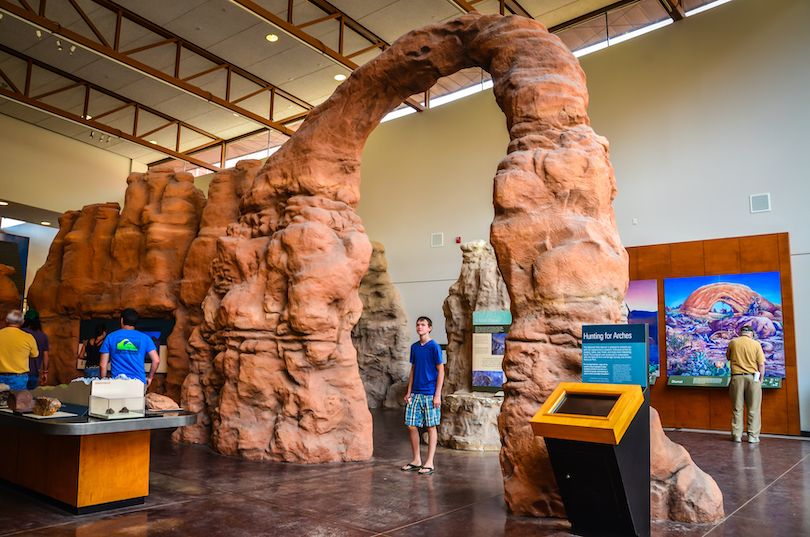
No trip through the national park would be complete without exploring the Arches Visitor Center. A great place to begin your travels through the spectacular region. The center will provide you with up-to-date details on trail openings and advice to help you make the most of your adventure.
The visitor center is also home to a variety of exhibits that go into great detail about the park’s history and geography. Ranger-led programs begin here and many park tours depart from this spot. Before heading out, be sure to fill up your water bottles and grab an insightful map.
Park Avenue Trail
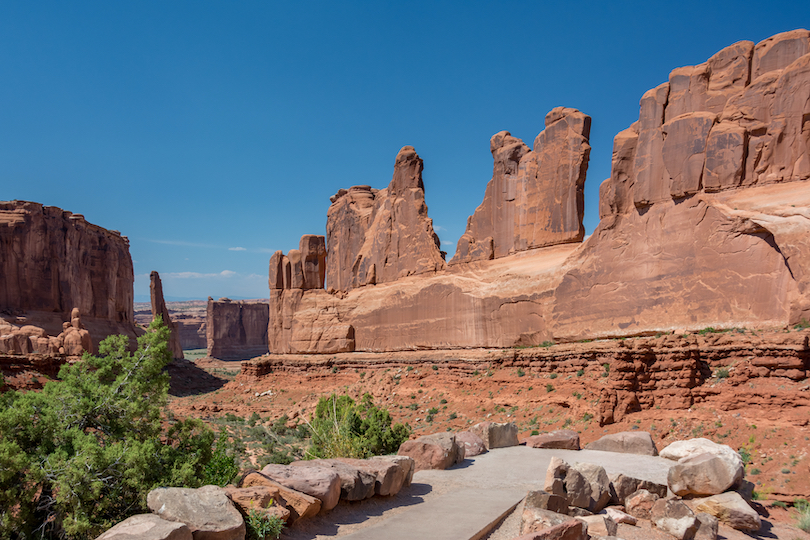
Many of the hikes in Arches National Park feature the best of the region’s unique natural arches. The Park Avenue Trail, however, steers away from that, offering you a different taste.
The hiking trail is one of the most dramatic in Arches, showing off the immense cliff walls that shoot up from the valley. The moderate and brief 2-mile out-and-back hike will make you feel minuscule among the rocky giants. As you drive through the park, you’ll notice the cliff faces, but nothing compares to standing alongside them.
Each direction you hike offers a slightly different view, allowing the return journey to be just as interesting. Pass such formations as the Three Gossips and the Courthouse Towers.
Double O Arch
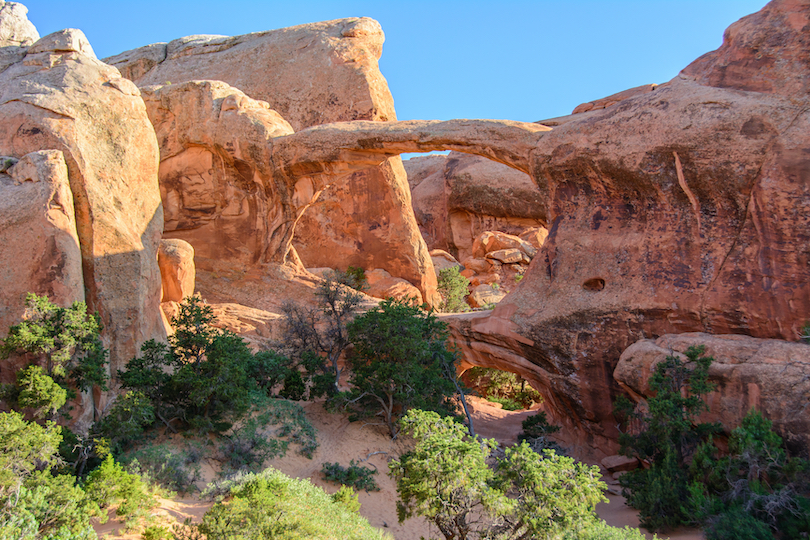
Inside Devils Garden, Double O Arch (not to be confused with Double Arch) is the second biggest arch in this part of the park. Just as the name suggests, hikers will discover two arches.
The smaller arch, which is 21ft wide, is in fact holding up its much larger sibling, which spans 71ft. All told, the dark sandstone formation soars 150ft toward the heavens.
To make the view even more rewarding, those who make the journey will be able to see the Double O Arch and Dark Angel at the same time. In order to reach Double O Arch you’ll need to venture down the Devils Garden Loop for a 4 mile round trip.
If you feel like going further afield, join the Primitive Loop, which adds on an extra mile. The primitive section is undeveloped, providing some awe-inspiring and remote hiking.
Windows Section
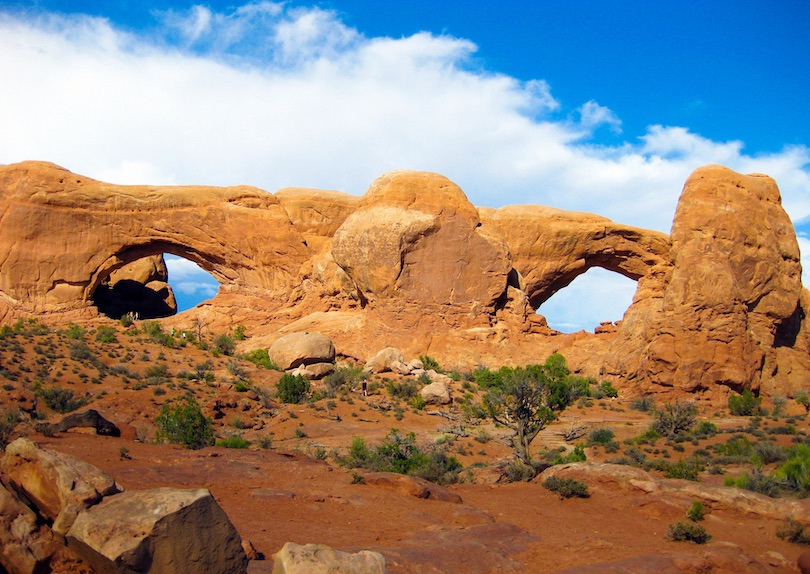
An iconic part of Arches National Park, the Windows Section is a popular short hike and great for families. As you drive towards the trailhead, you will be able to enjoy a magnificent view of the attraction from afar. However, you can’t top seeing the Windows up close.
From the car park, soak in the views as you walk ever closer. The entire Windows Section Loop Trail is only a mile long and features a strong concentration of classic sandstone arches. They all combine to create the window effect. First you’ll pass the north window, then the south. From there you can return to your car or continue on to Turret Arch.
There is also another primitive trail beyond the Windows Section. This will add on a further 0.7 miles but gives you a different perspective of the mesmerizing environment.
Sand Dune Arch
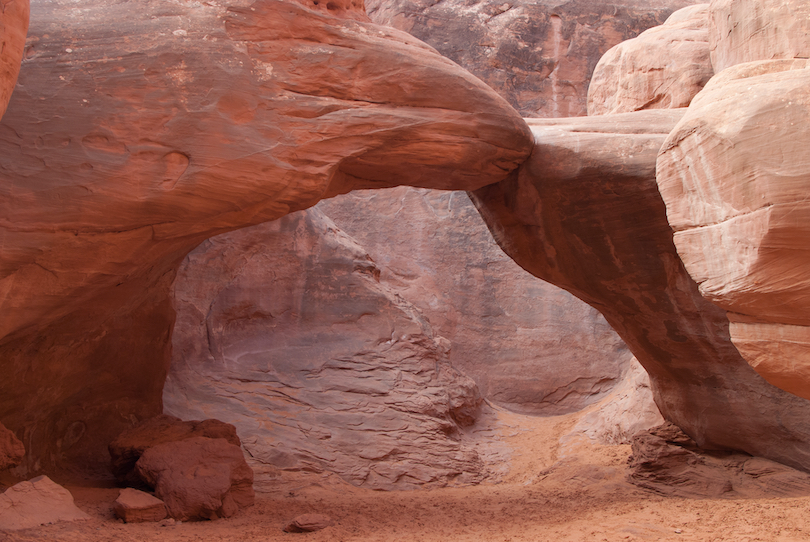
Providing a beautiful point of difference to other arches, the Sand Dune Arch is a memorable landscape to explore. The dramatic trail meanders along the dunes through narrow canyons on its way to a gorgeous arch.
Akin to walking through a slot canyon, the towering walls envelope you, giving you only two directions to walk. In and out. Along with the striking beauty, the walls create shade, leading to a cooler hike than elsewhere in Arches National Park.
The short half mile trek takes little time to complete but it will stick around in your memory for a lot longer. Combine this trek with Broken Arch for an exciting hour-long adventure.
Fiery Furnace
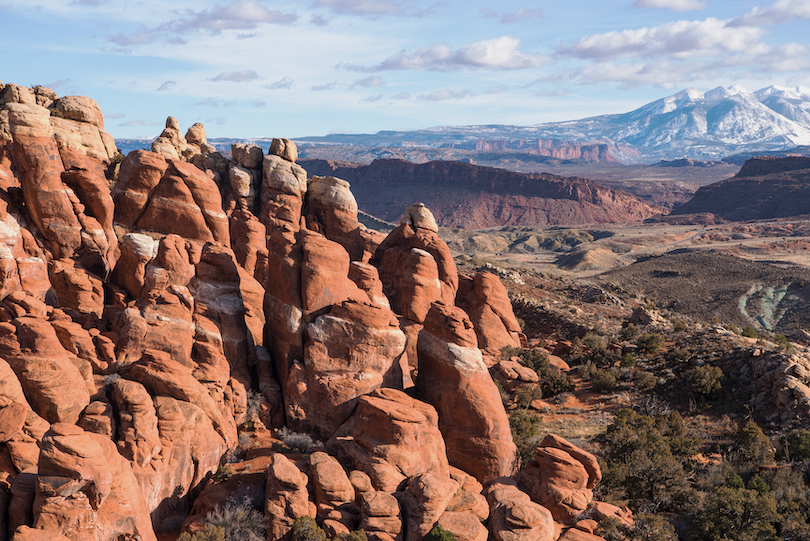
In a park full of stunning arches, switch things up by exploring a natural labyrinth. Full of narrow passages and rising sandstone formations, the Fiery Furnace is a different kind of hiking experience.
First, you can admire the rock fins and sandstone spires from the Fiery Furnace Overlook. The breathtaking view grants a fascinating insight into the unique layout. But the real adventure begins when you walk into the furnace on your own two feet.
Popular, and allowing limited access, hikers who want to experience Fiery Furnace will have to apply for a permit or join a guided tour. Because the hike is an elaborate natural maze, it pays to have an expert come along for the ride who will take you to the best spots and make sure you don’t get lost.
Permit holders will need to watch a video prior to their application being accepted.
Double Arch
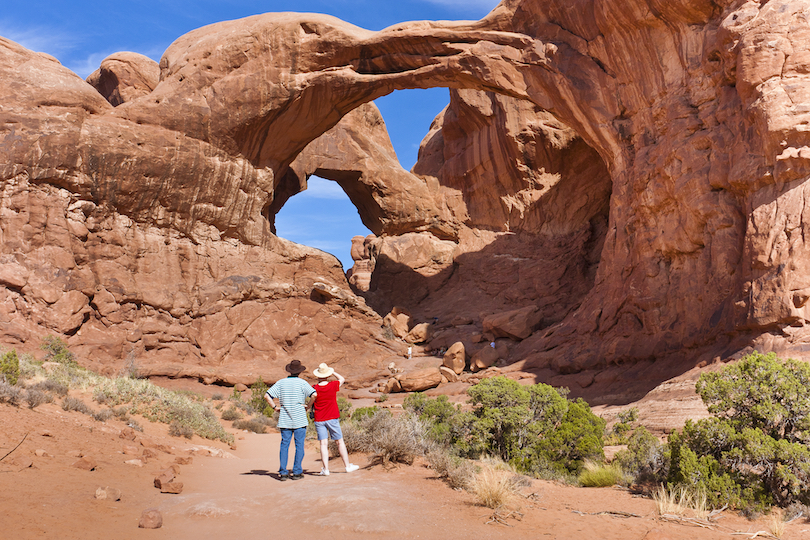
Distant views of Double Arch might not inspire, but the initial views belie its status as the tallest arch in Arches National Park. The hike to Double Arch is a quarter mile long and begins at the end of Windows Road.
The size and easy access are only two of the reasons people choose to explore Double Arch. Strong and sturdy, the hike offers one of the few places in the national park where you can scramble on the rocks placed under the arch.
The trail is suitable for families and starts off relatively easy before turning into a scamper across the ancient boulders. Although getting up close to Double Arch is a thrilling experience, the best view of the arch is from halfway along the trail.
Balanced Rock
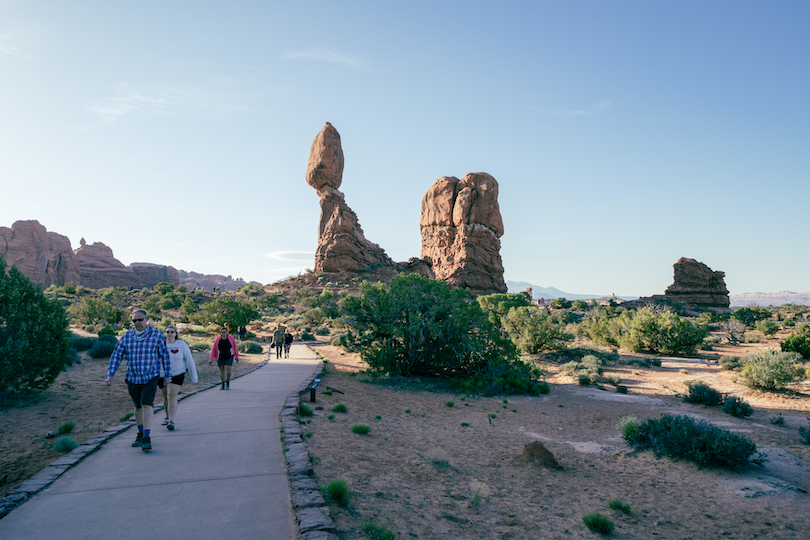
Balanced Rock is a towering rock spire. Like the name suggests, the bottom half has eroded away over the centuries, leaving behind a huge sandstone boulder perched well above the ground. The rock looks as if a stiff wind could blow it over, but it stays strong.
Already striking on its own, Balanced Rock is placed within a sparse section of Arches National Park. This only helps it stand out more among the flat landscape and desert flora.
Although there is a brief hiking trail that leads you to Balanced Rock, many prefer to view it from the comfort of their car in the local parking area.
Devils Garden Trailhead
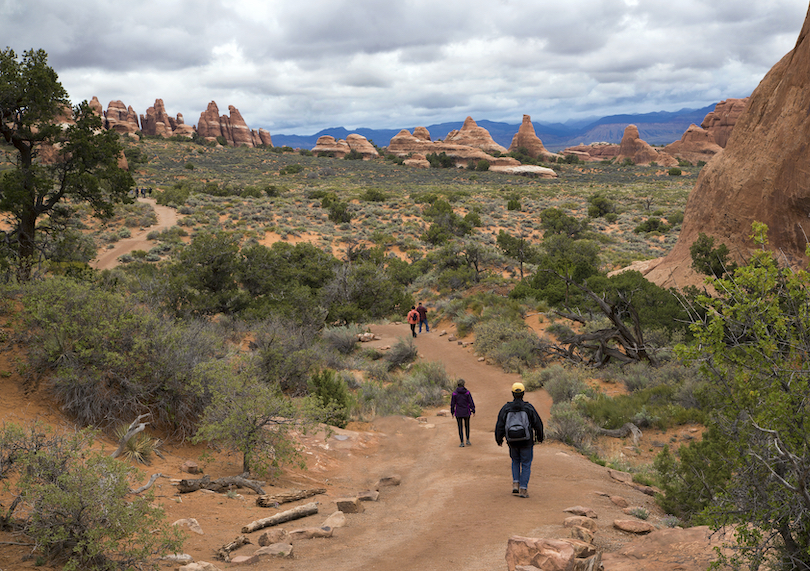
At the end of the picturesque 19-mile Arches Scenic Drive, Devils Garden Trailhead unlocks a bevvy of glorious hiking trails for you to enjoy. From the trailhead you can venture off on the 7.2 mile Devils Garden Primitive Loop that features eight of the best arches in the park.
Unlike some of the short trails in Arches, this one is best left for cooler days. With plenty of exposure and some tricky rock scrambles, you’ll want to be well-prepped before venturing out.
There are several less extreme hikes in the area including loop treks to Navajo Arch, Landscape Arch and Double O Arch.
Landscape Arch
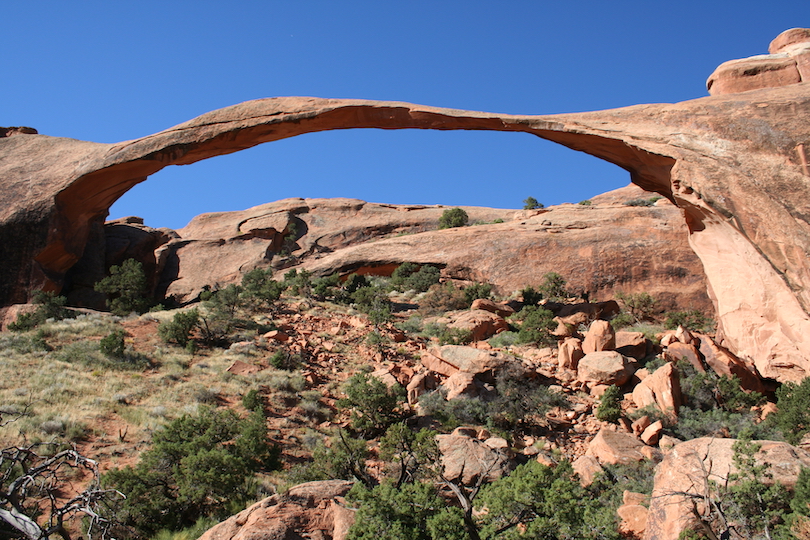
One of the best things to do in Arches National Park is to see the Landscape Arch with your own two eyes. Not only is it the biggest in the park, but also the entire world. Landscape Arch spans the length of an entire football field.
It’s no shock that the hike here is one of the most popular in Arches National Park. The trailhead parking lot fills up quickly, so it may be best to get an early start or return once the crowds have dimmed.
The trek to Landscape Arch features little elevation and is straightforward being just under a mile one way. Once the hike you will also pass Pine Tree Arch and Tunnel Arch.
Delicate Arch
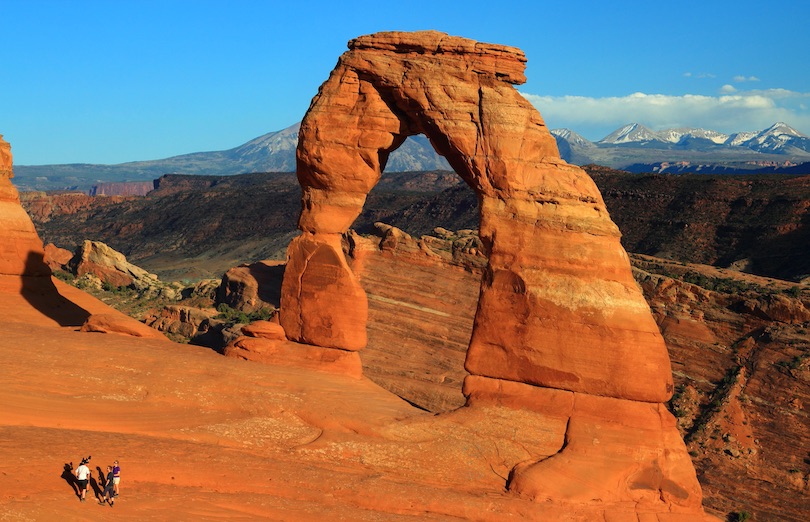
Others may be bigger and some may be wider but none are more famous than Delicate Arch. Unlike other arches in the park, Delicate Arch is freestanding. It reaches a height of 52ft, standing like a small archway at the end of the wedding aisle.
Adding to the unforgettable experience is the three mile hike to the arch which comes with an elevation gain of almost 500ft. From the arch you’ll have amazing views of the distant deserts and the valley below.
Naturally, this is a popular hike. Many choose to come at sunset when the colors are at their peak. Sunrise, however, brings fewer crowds and pleasant temperatures.