
Just a short train ride from Germany’s bustling capital lies a city steeped in elegance rather than upheaval. While its famous neighbor is known worldwide for modern history and political power, this quieter counterpart is celebrated for its royal legacy and refined Prussian past.
Once home to kings and queens, Potsdam is defined by grand palaces, exquisitely landscaped gardens, and a tranquil countryside setting. It stretches along the River Havel and serves as the capital of the Brandenburg region, bordering Berlin yet feeling worlds apart.
As expected, the city is a rich tapestry of palaces, parks, and cultural landmarks, making it a standout destination for lovers of history, architecture, and leisurely exploration.
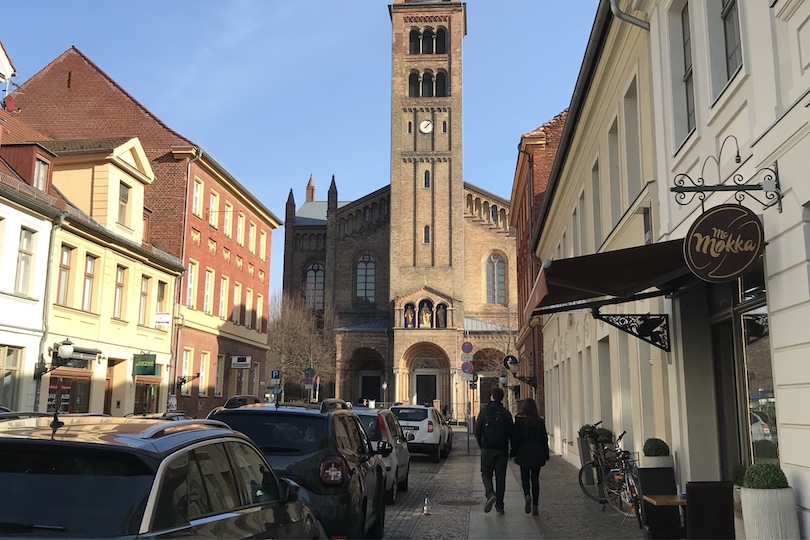
I did this particular day trip with a group of friends who I was studying with, but it’s a great trip to do solo, too. Once we reached Potsdam, we explored the entire city on foot. Of course, this meant we missed out on a few further-out attractions, including the Cecilienhof Palace and Park Babelsburg, both of which are highly recommended.
This walking day trip starts and ends at the Potsdam Hauptbahnhof. The entire walk is two and a half hours worth of walking (close to 10 km), yet we probably ended up walking double that with all the exploring we did within each location. I recommend grabbing a bite to eat for breakfast in Berlin so you can arrive ready to explore.
Getting from Berlin to Potsdam
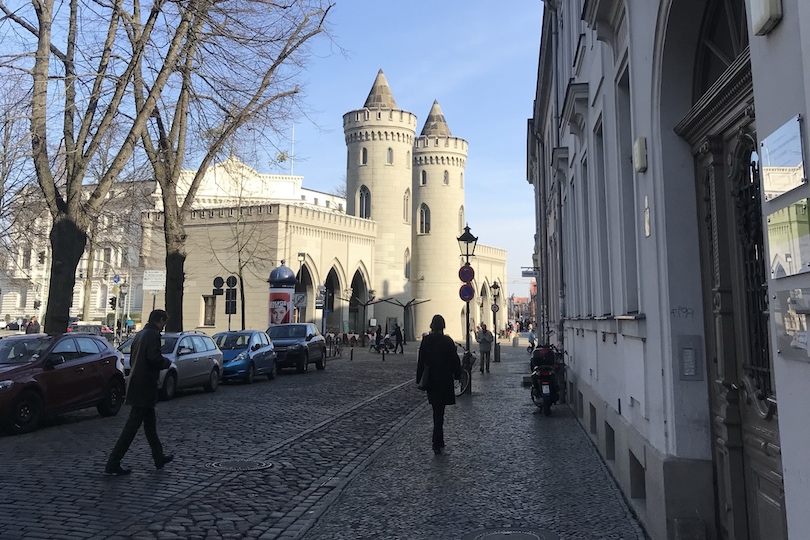
What was once one of Europe’s most impressive royal cities is now home to one of the continent’s best universities. I was living and studying in Berlin when I took multiple day trips to visit the historic city.
No matter where you’re staying in Berlin, the region’s efficient public transport network ensures that Potsdam is a short train ride away. There are a few ways to get to Potsdam, with the most recommended being the regional train or the S-Bahn (which is Berlin’s extensive overground system).
We caught the Deutsche Bahn RE1 from the Berlin Hauptbahnhof and traveled around 25 minutes to the Potsdam Hauptbahnhof. There are a staggering 141 trains that make this journey each day, so you won’t have to worry about missing the train.
The only difference between the regional train and the S-Bahn is that the S7 makes many more stops, while the RE1 makes only two stops. The train costs €4.40 in each direction.
Public transport, known as Berliner Verkehrsbetriebe or BVG, is the most efficient and affordable way to get around Berlin. A single ticket costs €3.50 or €2.40 for a trip of three stops or less. If you plan to explore the city, I recommend purchasing an unlimited ticket.
A 24-hour ticket costs €9.90, or a Berlin Welcome Card for 28 hours costs €26. Welcome Cards extend for up to 6 days and include up to half-price entrance fees to over two hundred attractions across the city. While the AB card is limited to travel within Berlin, the ABC Card allows you to travel as far as Potsdam.
Coffee Break at Buena Vida Coffee Roasters
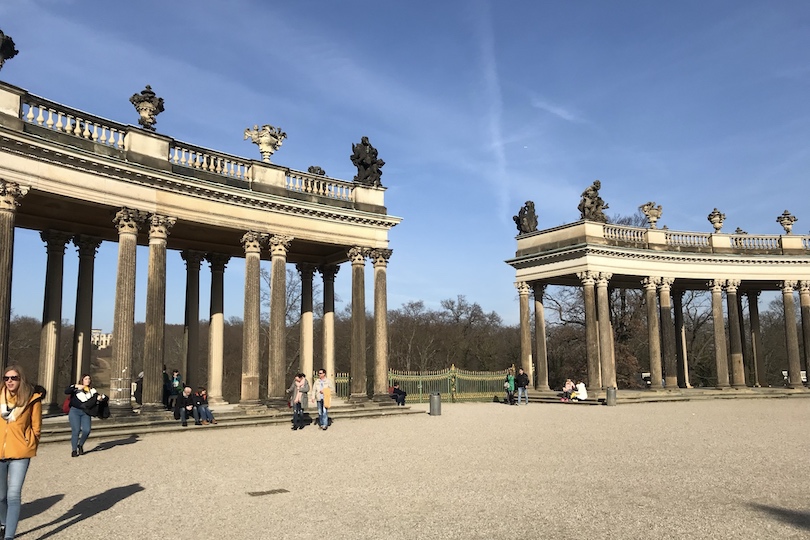
After a quick and comfortable train ride through the residential lake district surrounding Berlin, we arrived at a much quieter city than the one we had come from. First things first, we headed to the hub of the Potsdam coffee scene, Buena Vida Coffee’s Cafe Am Bassin, just 20 minutes into the old town.
This local roastery was the first coffee house of a now successful chain and is located right in the historic city center. It opens between 9 am and 6 pm (or from 10 am on Sundays). We each ordered a specialty coffee for around €3.50 and enjoyed it in the morning sunshine outside. They also sell delicious tarts and cakes for around €4 each.
Brandenburg Gate
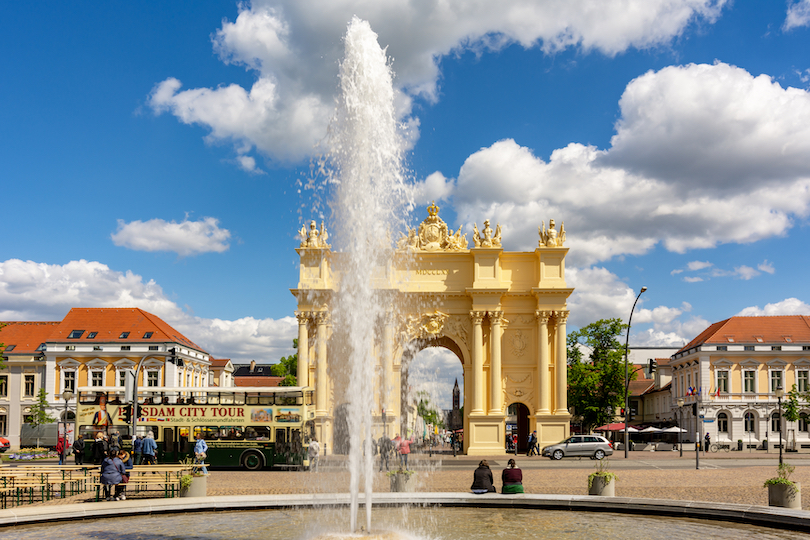
Now in Potsdam Old Town, we headed down the city’s most iconic street, Brandenburger Street, towards the Brandenburg Gate. And before you tell me I’ve mixed up Berlin with Potsdam, Potsdam also has its very own (smaller) Brandenburg Gate. It may be smaller, but it’s actually older than Berlin’s equivalent, dating back to 1770 when Prussia won the Seven Years War.
In fact, this is just one of three remaining gates to the city. If you have more than just one day, visiting all three gates is a great sightseeing activity. However, we were on a bit of a time crunch.
A Stroll Around Sanssouci Palace and Park
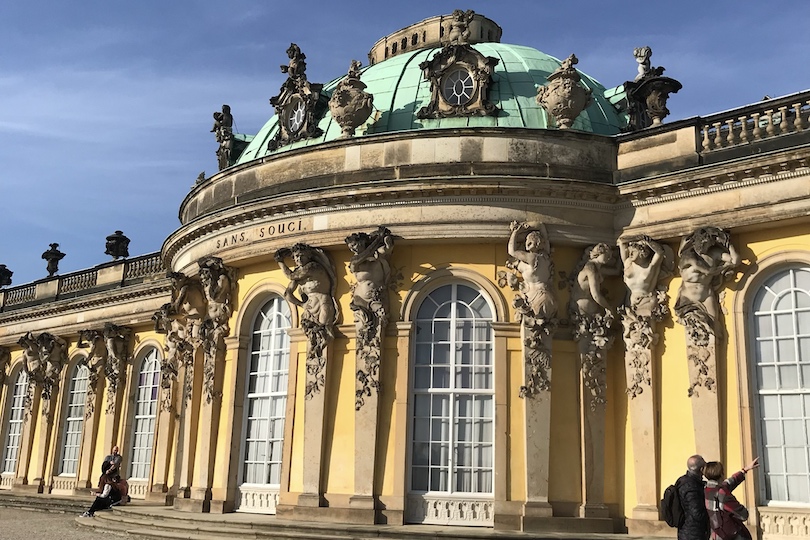
We then walked north through Sanssouci Park to the iconic Palace. Walking through the glorious manicured gardens, you could say this was more of a slow and leisurely twenty-five-minute stroll.
Sanssouci Park is home to three hundred hectares of gardens and parks, as well as over ten historic buildings and palaces. We walked up the iconic terraced garden towards the main palace, which sits at the top.
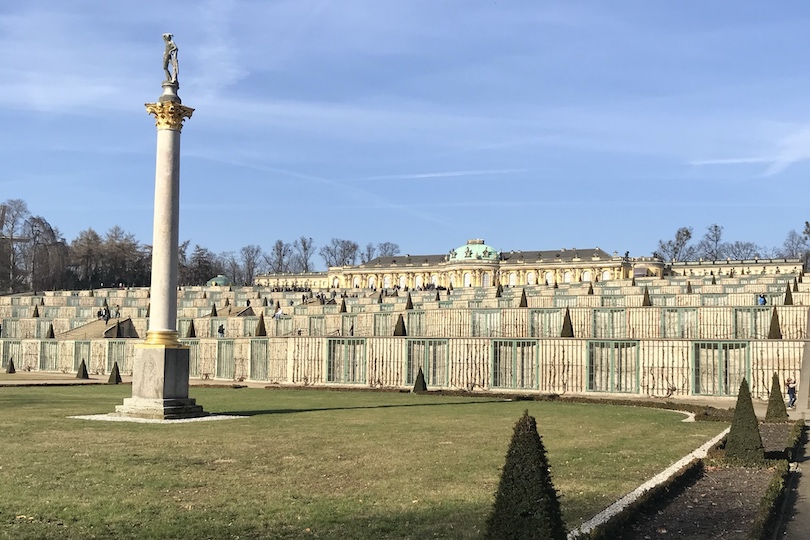
The palace, which was the former summer residence of the King of Prussia, Frederick the Great, is beautifully kept with fresh yellow paint and opulent interiors. Just behind this palace is a surprisingly dominant old Dutch windmill.
The Historic Mill of Sanssouci was built in 1737 from wood and is one of the best-known in the country. You can even buy a loaf of bread made with Sanssouci flour from the museum shop.
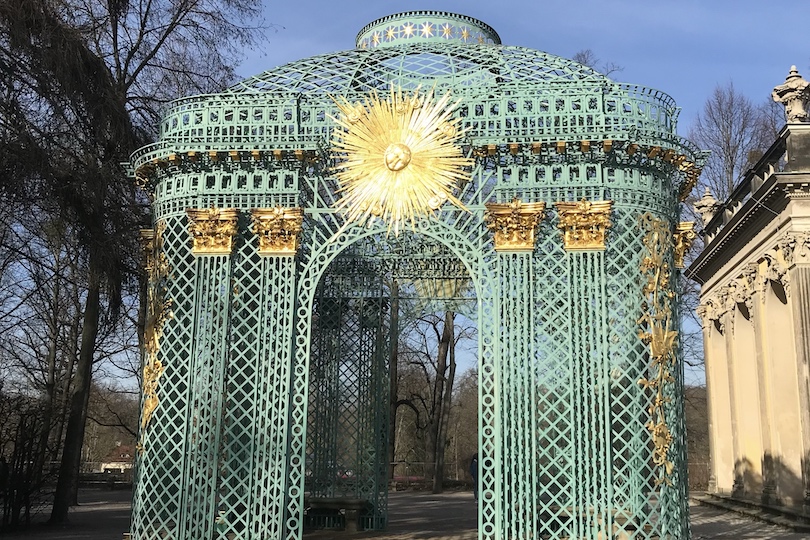
While visiting the park is free, you’ll have to purchase a ticket to enter the palace. The Sanssouci + Combined Ticket costs €22 and allows you one-time access to all the Prussian castles and palaces in Potsdam within one day. If you enjoy a guided tour, there are endless options on Viator and Get Your Guide.
Visiting the Neues Palais
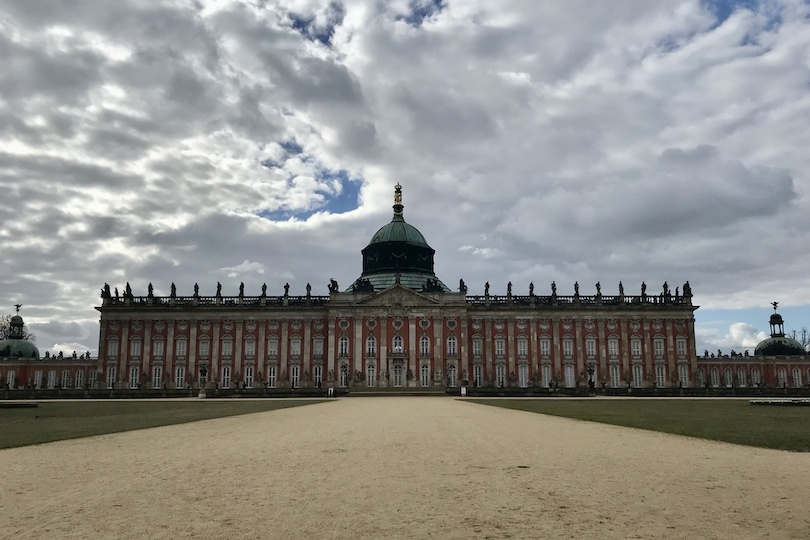
From Sanssouci, we headed northwest through the stunning archways and rose gardens of the park towards the Neues Palais (New Palace), an extravagant Baroque palace built by the same King of Prussia. This is the biggest palace on the grounds, with a stunning facade and more than two hundred rooms, including breathtaking ceremonial rooms and a lavish Marble Hall.
The palace was built in 1763 and was only occasionally visited by the king himself. Instead, it was used to host royal guests. It’s a colossal structure compared with the smaller, more modest Sanssouci Palace across the park.
His intention in building it was to show the power and prestige of Prussia at the time, and one look at it, and you’ll agree that he succeeded. We didn’t enter the palace but would recommend spending an hour and a half exploring its pompous interiors for a show of Prussia’s old glory.
To enter, you need to buy a timed entry ticket at the ticket office close to the palace entrance. Even if you have a Sanssouci + pass, you will need to visit the ticket office to reserve your time slot.
Lunch at Assaggi
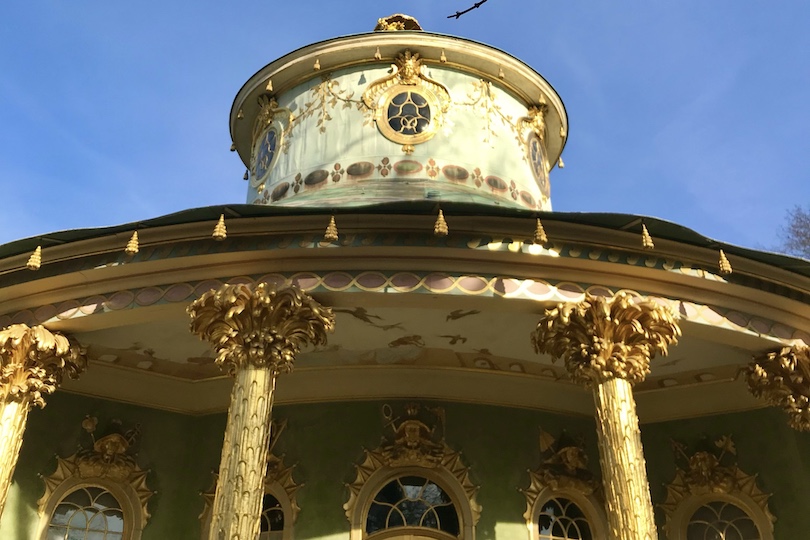
The rest of your time in this expansive park should be spent exploring the Orangery Palace (a Renaissance Italian palace), the small pavilion at the Chinese House, and the New Chambers, all of which are scattered throughout the park and included in the Sanssouci + Pass.
Once we had seen what we wanted, we headed towards our lunch spot, a cozy restaurant just outside the boundaries of the park called Assaggi. It was around a twenty-minute direct walk through the gardens from the New Palace.
The restaurant served traditional Italian cuisine, which was just the carbo-load we craved after a few hours on our feet. Assaggi is only open for lunch and dinner, from 12 pm to 12 am. They require reservations; however, we were lucky to walk in and get a table since it was outside of the tourist season.
I opted for a classic spaghetti puttanesca and had a tiramisu for dessert. My meal came to just under €20 without tip – well worth it for the authentic meal!
Another recommendation for lunch is Zur Historischen Muhle Restaurant, which is located just behind the Sanssouci Palace. This stunning restaurant has a sunny terrace, a Palm Hall conservatory, a traditional German beer garden, and is child-friendly.
The Dutch Quarter and Potsdam Old Town
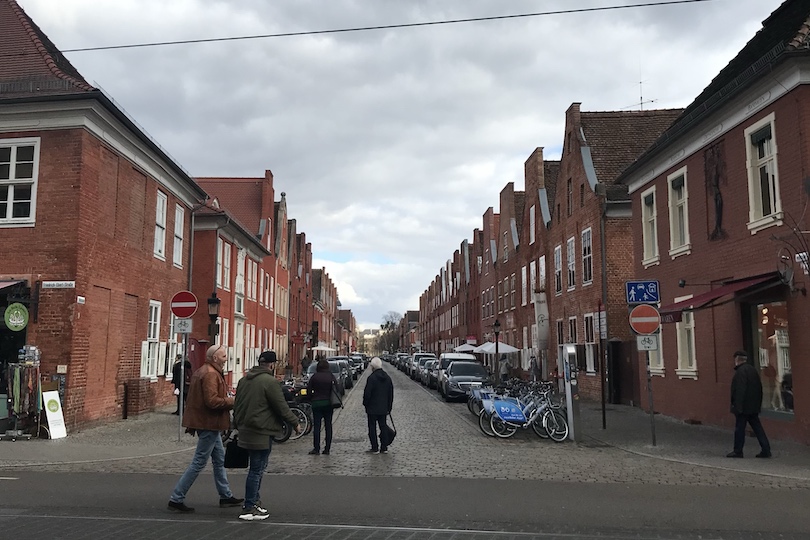
After a much-needed hour off our feet, we headed towards the Old Town of Potsdam to explore the local shops and boutiques. We walked for twenty minutes or so through the residential part of the city, back down past the Brandenburg Gate, before we reached the main center.
Dotted with historic buildings, quaint streets, and buzzing squares, this might even have been the highlight of my day. We passed landmarks, including the St. Nicholas Church, the Potsdam Museum of Art and History, Museum Barberini, and the City Palace, before stopping for traditional Dutch pancakes in the Dutch Quarter.
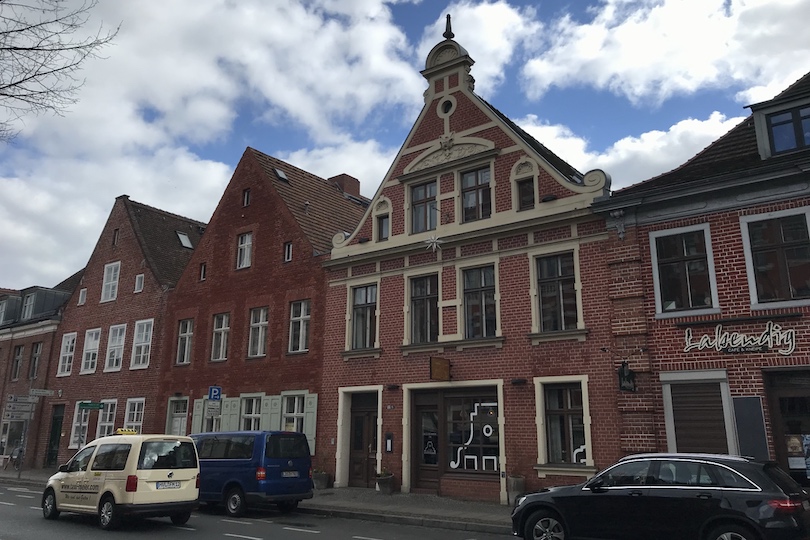
The Dutch Quarter was built in the early 1700s when Dutch craftsmen worked in the city. Luckily, they brought not only their craftsmanship but also their fine cuisine with them. Poffertjes en Pannekoeken was the final stop on our day trip, serving up decadent Dutch specialty pancakes in a cozy atmosphere.
There was no better way to end a day than with a buttery poffertje before we rolled our well-fed selves back to the Hauptbahnhof to catch our return train.



I LOVE Potsdam – thanks for your blog on this. One more thing to add would be a visit to the New Garden and Cecilienhof Palace, where the Potsdam Conference took place. Also, a coffee stop at Café Heider!