
Back before most churches existed, early Christians would gather in neighbourhood homes known as house churches. In fact, the word ‘church’ was also used to describe the Christian community as a whole – the word itself means ‘assembly’ in Greek.
By the 1st-century AD, there were already several religious centers in the Holy Land but most of the Christian churches as we know them today began to spread across the globe after the 2nd century. From the world-famous St. Peter’s Basilica in the Vatican City to the birthplace of Jesus Christ in Bethlehem, these are the oldest churches in the world.
24. Mor Gabriel Monastery (397)
 © Resul Muslu / Dreamstime
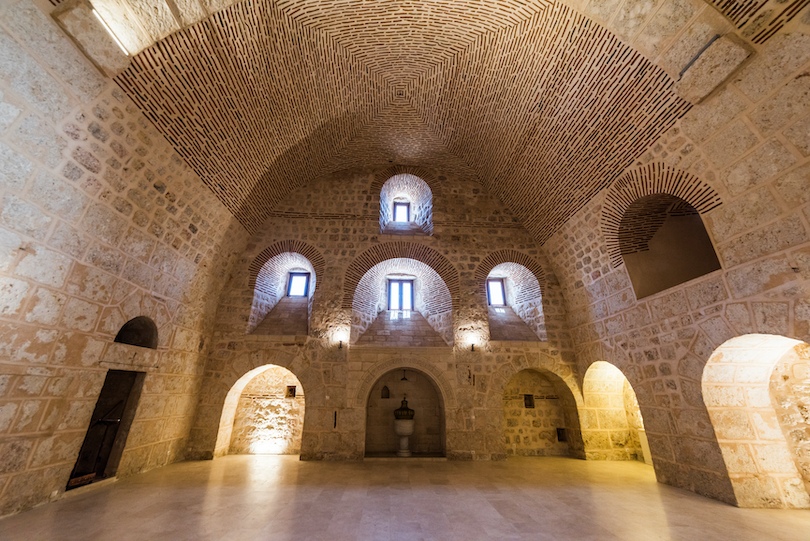
Dating back to 397, the Mor Gabriel Monastery is the oldest functioning Syriac Orthodox monastery left on Earth. Perched on the Tur Abdin plateau amongst rolling orchards and olive groves in south-eastern Turkey, this Christian church and the fortress-like compound has long served as a place of refuge.
The monastery, also known as Deyrulumur, has provided a home and sacred space for thousands of Coptic monks and at one stage even had its own diocese. In the 14th-century it was invaded by Timur Mongols, and in the 1990s, hundreds of monks were discovered buried in caves beneath the building.
Today, Dayro d-Mor Gabriel is still home to a handful of dutiful monks and nuns and is the seat of the metropolitan bishop of Turabdin. It’s open to visitors during daylight hours, and there is an opportunity to stay overnight, but only with advanced permission.
23. Kasagh Basilica (Armenia, 4th century)

If you ever wander into Kasagh Basilica in Aparan, Armenia, you’re stepping right into one of the country’s oldest churches. The building dates back to the 4th or 5th century, when Armenia was among the first nations to adopt Christianity.
The church’s design stands out with its three naves and tall stone pillars. Light sneaks in through small windows, making the inside feel both simple and powerful.
Kasagh Basilica kept its original stonework for centuries. Even now, you can run your hand along stones that have survived so many years.
The church sits just off the main road in Aparan. It’s open year-round and doesn’t cost anything to visit. If you’re into history or old architecture, you’ll spot details here that you just don’t find in newer churches.
22. Church of Our Lady Mary of Zion (Ethiopia, 4th century)

Look at the Church of Our Lady Mary of Zion and you’re seeing one of Africa’s oldest Christian churches. It’s in Axum, a historic town up in northern Ethiopia. Built in the 4th century, this church has watched centuries roll by.
Locals say the Ark of the Covenant is hidden here. Only one guardian gets to see it, so the rest of us just have to wonder. The church has been rebuilt a few times after invasions and age took their toll, but each time, people tried to keep the spirit of the original alive.
You’ll spot its distinct Ethiopian Orthodox style. The connection to ancient emperors and early Christianity makes it a cornerstone for Ethiopian faith and history. Standing here, you’re where some of the world’s earliest believers once gathered.
21. Basilica of Saint-Pierre-aux-Nonnains (Metz, 380)

If you’re in Metz, France, you can check out the Basilica of Saint-Pierre-aux-Nonnains. It started as a Roman building in the 4th century. At first, it wasn’t even a church—more like a gymnasium or part of a Roman bath complex.
Later on, people turned it into a Christian place of worship. The building changed as Metz grew from a Roman city into a medieval town. Some old Roman walls still stand, so you get this wild mix of ancient and medieval styles.
Now, it’s not really a regular church anymore. They use it for concerts or art events. You can see over 1,500 years of history in one spot, right in the middle of Metz.
20. Basilica of Sant’Ambrogio (Milan, 379)

Walk into Milan and you can step into one of its oldest churches—Basilica of Sant’Ambrogio. St. Ambrose, the bishop of Milan, built it between 379 and 386.
He chose a spot where many Christian martyrs were buried. That’s why its first name was Basilica Martyrum.
The church is known for its Romanesque style, though some parts go all the way back to the 4th century. Inside, you’ll see three naves, bright mosaics in the dome, and a golden altar. Every corner seems to hold a piece of history.
It’s not Milan’s biggest church, but its age and meaning make it stand out. If you’re into old buildings and stories, you’ll find a lot to like here.
19. Mor Mattai Monastery (Iraq, 361)

Think about ancient churches and Mor Mattai Monastery definitely comes to mind. You’ll find it perched high up on Mount Alfaf, about 20 kilometers from Mosul in northern Iraq.
Mar Mattai, known for his religious devotion, started this Syriac Orthodox monastery in 361. He escaped persecution and, with a handful of followers, set up this remote sanctuary.
The monastery stands as one of the world’s oldest Christian sites still in use. Over the years, people have come here to pray, study, and find peace.
If you visit, you’ll notice the views are stunning thanks to the mountain location. Pilgrims still come, and the place keeps up traditions that go back over a thousand years.
18. Monastery of Saint Macarius the Great (Egypt, 360)

Head to the Wadi El Natrun area in Egypt and you’ll find the Monastery of Saint Macarius the Great, a Christian landmark that started in 360 AD. It’s about 92 kilometers northwest of Cairo, right in the desert.
Saint Macarius founded it, and soon monks from all over gathered here. In its early days, more than four thousand monks lived at the site.
You’ll see ancient features, like the arc built during Pope Benyameen I’s time and the old Myron dome. These connect you straight to early Christian history.
The monastery is still active. The blend of old stonework and quiet courtyards gives you a real sense of the long tradition and the spiritual life that continues here.
17. Monastery of Saint Anthony (356)
 © Danilo Mongiello / Dreamstime
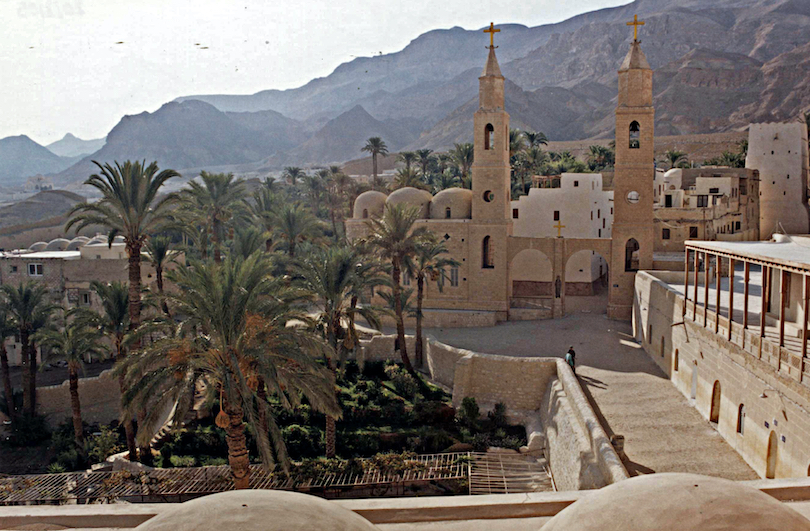
The Monastery of Saint Anthony dates back to the 4th-century. It had humble beginnings as an informal gathering of the followers of Saint Anthony – the first Christian monk – who gathered in a small cave at the foot of Gebel Al Galala Al Qibliya in Egypt’s Eastern Desert. Slowly, the compound expanded to include five historic churches, a bakery, library, and garden oasis within fortified walls.
Today, the monastery is home to over 100 monks, who have chosen a life of meditation and prayer in the isolation of the desert. They live in cells inside the complex and still practise the traditions set out by the original followers of Saint Anthony thousands of years ago.
Several of the original churches have been restored. The Monastery of St Anthony is the oldest building, and the main reason for visiting this remote part of the globe. Built over the saint’s tomb, it’s home to a collection of age-old medieval Coptic wall paintings.
Visitors can join hundreds of pilgrims visiting daily on a tour led by resident monks through the fortified walls of the monastery.
16. Santa Maria in Trastevere (340)
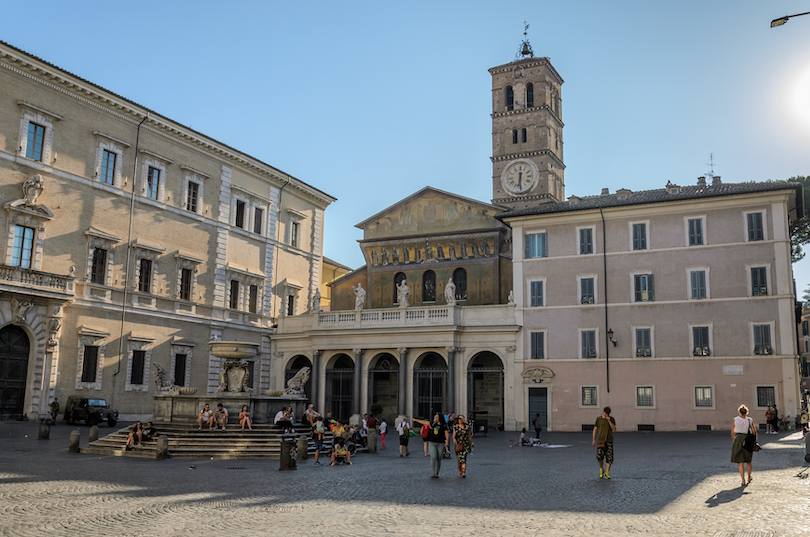
Hailing back to 340, Santa Maria in Trastevere, Rome, is one of the earliest churches in Rome dedicated to the Virgin Mary.
While the oldest parts of the church date back to the 3rd-century, additional features were added in the 12th-century. These include the Romanesque bell tower, a series of interior mosaics, and a beautiful golden façade. The portico was added in the 18th-century.
There are many captivating highlights tempting historians and pilgrims from all over the world to this Roman church. Indubitably, the 12th-century mosaics are the pinnacle – a series of six spectacular mosaics by Pietro Cavallini that document the life of the Virgin Mary.
15. Cathedral of Trier (340)
 © Sergii Figurnyi / Dreamstime
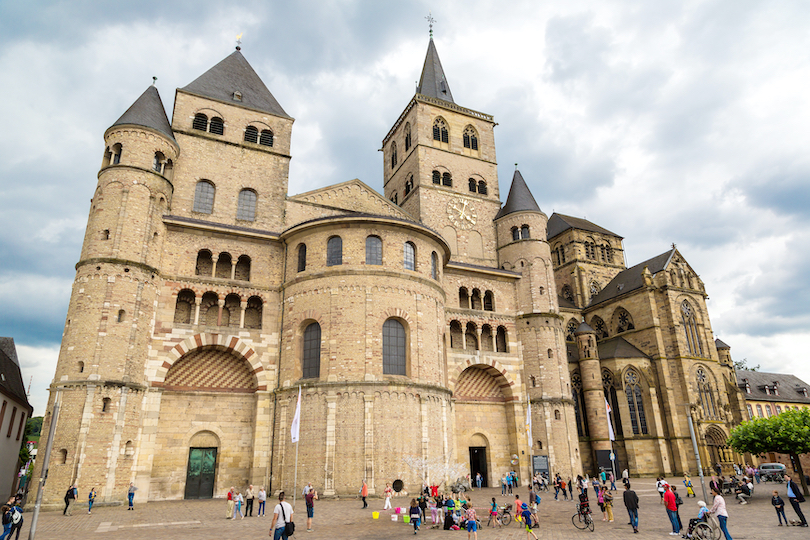
Originally built in the 4th-century, the Roman Catholic Cathedral of Trier has been expanded over the course of thousands of years. It remains the oldest bishop’s church in Germany and the largest religious building in Trier. Located above a former palace that was later converted into an ancient Christian church, one of the first Early Christian rooms north of the Alps can still be found beneath the cathedral.
The pride and joy of the Cathedral of Trier is the sacred ‘Holy Robe’ found here that is believed to contain fragments of the tunic of Christ. First mentioned by religious scholars in the 12th-century, it was discovered hundreds of years later when the high altar was opened. This ancient Christian relic remains locked away in an annex and is only revealed on very special occasions.
Apart from the exceptional Romanesque and Gothic architecture, another important relic to be seen in the cathedral is the Holy Nail, believed to have been used during the Crucifixion.
14. Church of Saint George (Sofia, early 4th century)

You’ll find the Church of Saint George tucked into the heart of Sofia, Bulgaria. It’s a round, red-brick building that’s been standing since the early 4th century. This place actually started out as Roman baths.
Later, people turned it into a Christian church inside the old Roman city of Serdica. You can still spot bits of ancient Roman streets around it.
The church’s interior shows off layers of frescoes painted over centuries. Some are from the 10th century, hidden beneath newer artwork.
Sofia has changed a lot, but the Church of Saint George is still here. It’s the oldest building in the city—a rare glimpse of early Christian architecture in Bulgaria.
13. Church of the Nativity (Bethlehem, 339)
 © Antonella865 / Dreamstime
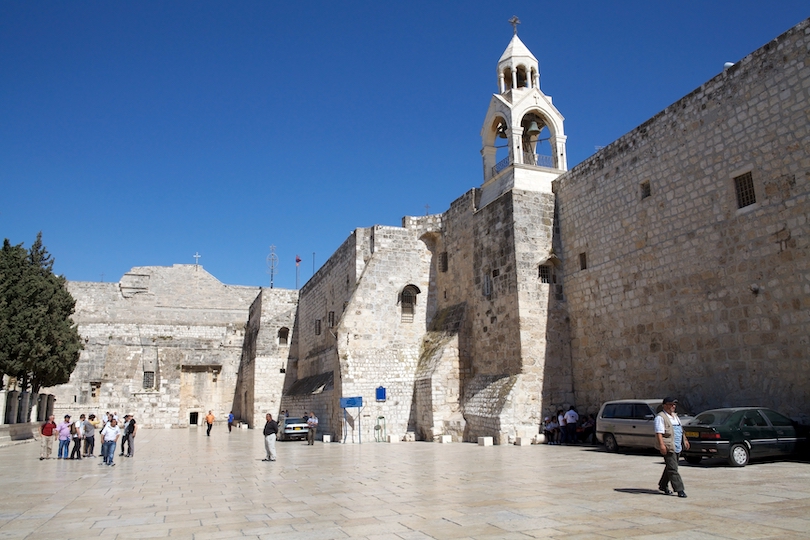
Bethlehem’s Church of the Nativity is widely believed to be the birthplace of Jesus. Located at the end of the well-trodden pilgrimage route – visited by millions of people every year – the Church of the Nativity is one of the holiest places of Christianity on Earth, and the oldest Christian church still in use.
Built at the mouth of an ancient cave to replace an original church destroyed during a 6th-century revolt, the new church still contains the original red-and-white limestone columns and floor mosaics.
Accessed via a low entranceway known as the Door of Humility (resized to stop looters getting inside on horseback), the church still provides entry to the lantern-lit Grotto of the Nativity. Here, the Chapel of the Manger and the 14-pointed silver star mark the spot where Jesus is said to have been born.
12. Monastery of Paromeos (Egypt, 335)

Travel through Egypt’s Nitrian Desert and you’ll stumble upon the Monastery of Paromeos, one of the world’s oldest active monasteries. Saint Macarius the Great founded it around 335 AD.
The name Paromeos means “of the Romans,” thanks to Saints Maximus and Domitius, who supposedly were sons of a Roman emperor and lived here.
This monastery is the most northern of the four main ones in the Scetes area, about 4 km north of the Monastery of Saint Pishoy.
Inside, you’ll find ancient churches and relics, including those of Saint Moses the Black. The oldest church here dates back to the sixth century and still stands today.
11. Church of the Holy Sepulchre (Jerusalem, 335)
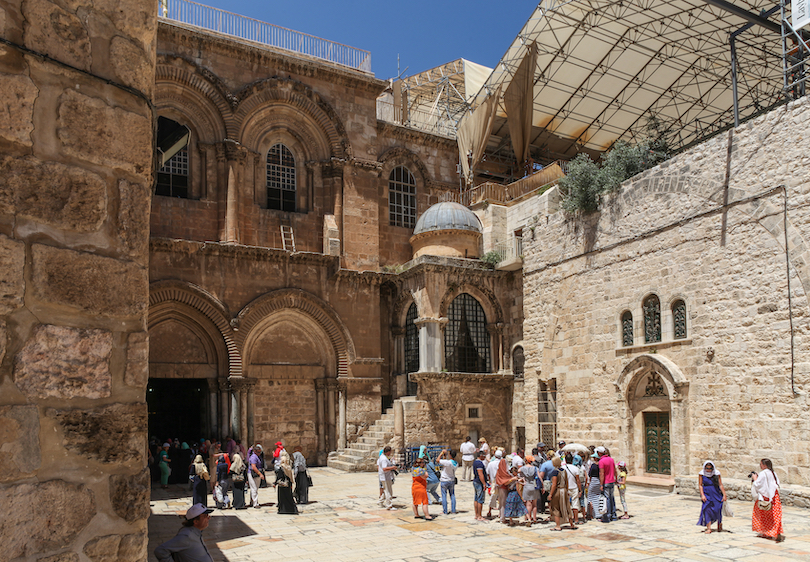
Crafted out of wood and stone, the beige-coloured Church of the Holy Sepulchre in Jerusalem is marked by a series of striking arches adorned with Crusader crosses. Consecrated in 335, it’s built over two of the most famous sites in Christianity’s history – the biblical Rock of Cavalry (Golgotha) where Christ was nailed to the cross, and the Tomb of the Sepulchre.
Also known as the Church of the Resurrection, the church is one of the most popular pilgrimage sites on Earth with millions making their way here every year. The last four to five stations of the Via Dolorosa, which portray the final episodes of the Passion of Jesus, can be found here.
Out of the four (debatably five) stations, the most famous is the 12th – the Rock of Cavalry, with its protective glass Altar of the Crucifixion through which visitors can touch the sacred rock, and the 14th – the Tomb of the Holy Sepulchre, where Jesus was buried and resurrected. Due to its major religious significance, visitors should dress conservatively to gain entry to the church.
10. St. Peter’s Basilica (Rome, some remains 333)
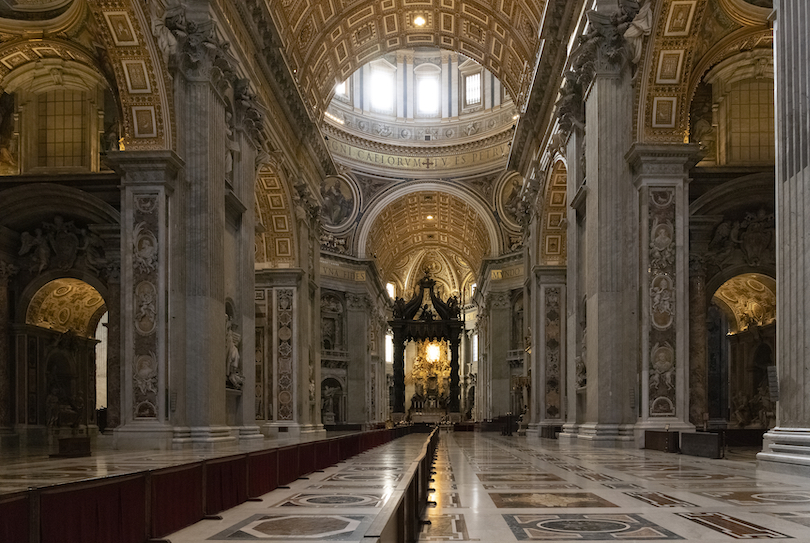
Located within a city-state within a city revered for its churches and religious buildings, St. Peter’s Basilica in the Vatican City is by far the most impressive. Dating back to 333 albeit rebuilt in the 16th-century, it’s the largest – and one of the oldest – basilicas in Rome and believed to have been built over the tomb of St. Peter.
Highlights include the central balcony, known as the Loggia della Benedizione, where the Pope speaks to the public on special occasions, and the impressive façade with its 13 statues, including St. John the Baptist and Christ the Redeemer. Within the walls of the enormous church, there are some extraordinary works of art – most notably Michelangelo’s riveting Renaissance sculpture, Pieta (meaning ‘Pity’) that represents the Madonna mourning the loss of the son she holds in her lap – a sculpture worth hundreds of millions.
There’s also Bernini’s Baldachin crafted out of bronze from the Pantheon, and above that, Michelangelo’s dome. Visitors can climb to the rooftop for amazing views over the Vatican and beyond.
9. Stavrovouni Monastery (Cyprus, 327-329)
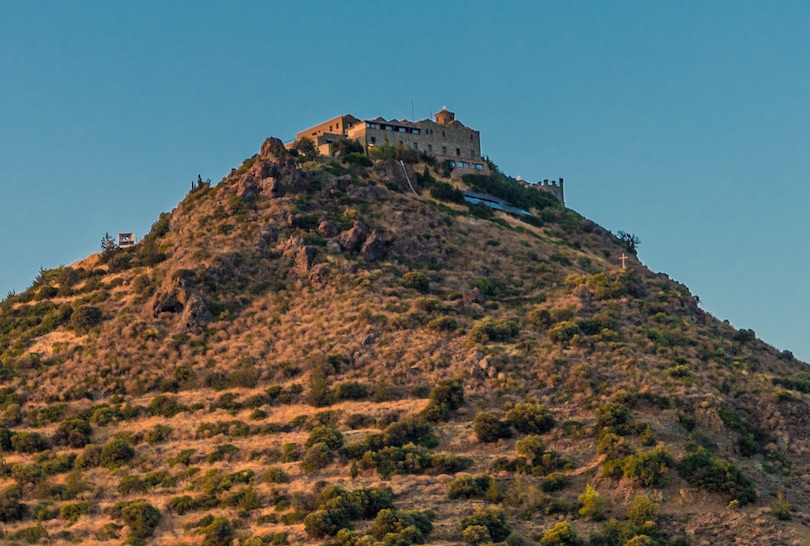 © Chris Mouyiaris / Dreamstime
The Stavrovouni Monastery is perched precariously at the top of Stavrovouni, the ‘Mountain of the Cross’. Built sometime between 327 and 329, this ancient monastery is believed to be the oldest on the island of Cyprus.
The main reason pilgrims make the steep journey up to this mountain monastery is because of the piece of the Holy Cross preserved within solid silver inside the church. It was supposedly brought back by St. Helena – the mother of Emperor Constantine – after her travels to Jerusalem.
While women are not permitted to enter the monastery, the trip is worth it for the views of the Mesaoria plain alone, stretching towards the Mediterranean in the distance. While male visitors explore the monastery with its bell tower and arched cloisters, female visitors can visit the smaller Church of the All Saints just outside.
8. Panagia Ekatontapiliani (Greece, 326)
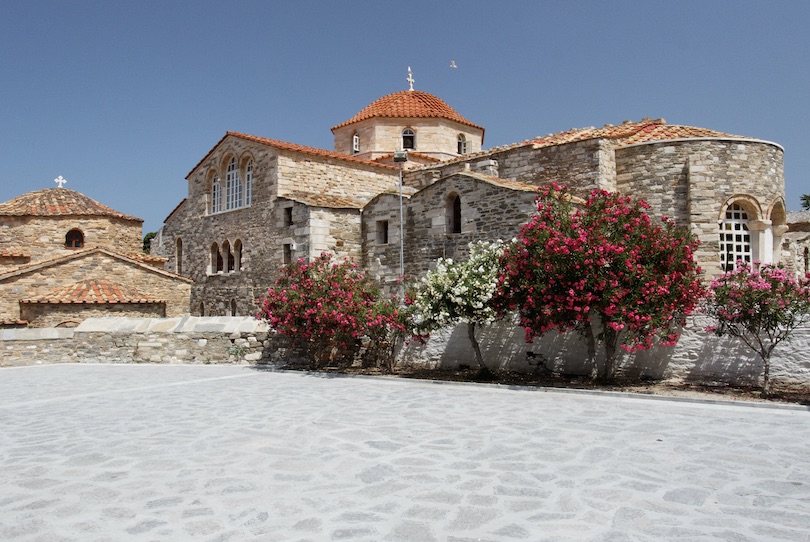 © Fagundes / Dreamstime
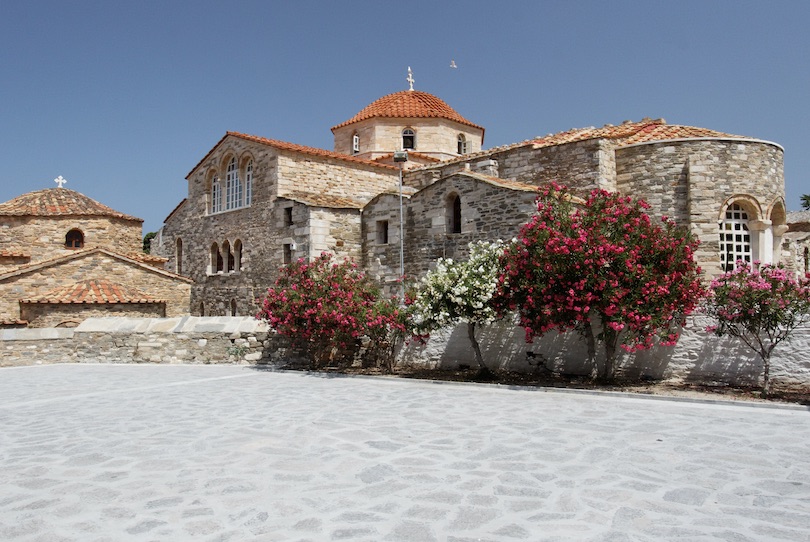
The Panagia Ekatontapiliani, which means ‘the Church with a Hundred Doors,’ is one of the most incredible Paleo-Christian monuments of the Cyclades. Located on the island of Paros in Greece, the complex of Ekatontapiliani encompasses a series of churches and chapels, some of which date back to 326 AD.
According to legend, there are 99 doors within the complex. The last, a secret door, will open when the church of Hagia Sofia in Constantinople is once again Orthodox. Explore the main church of the Virgin Mary, Agios Nikolaos – the largest – with its enormous Parian marble columns and the ancient Baptistery.
7. Archbasilica of Saint John Lateran (Rome, 324)

Visit Rome and you’ll probably hear about the Archbasilica of Saint John Lateran. Built around 324 CE, it’s among the oldest churches anywhere.
It sits near Mount Celio, standing out with its size and unique history. This was Rome’s first official church—called the “Mother and Head of all Churches.”
For centuries, every pope officially sat here instead of at St. Peter’s. The basilica even has a special baptistery, once the only one in Rome.
Today, the Pope leads big events here, like the Holy Thursday Mass. Its age, art, and long papal connection make it a must-see for anyone interested in early Christian history.
6. Etchmiadzin Cathedral (Armenia, 301)
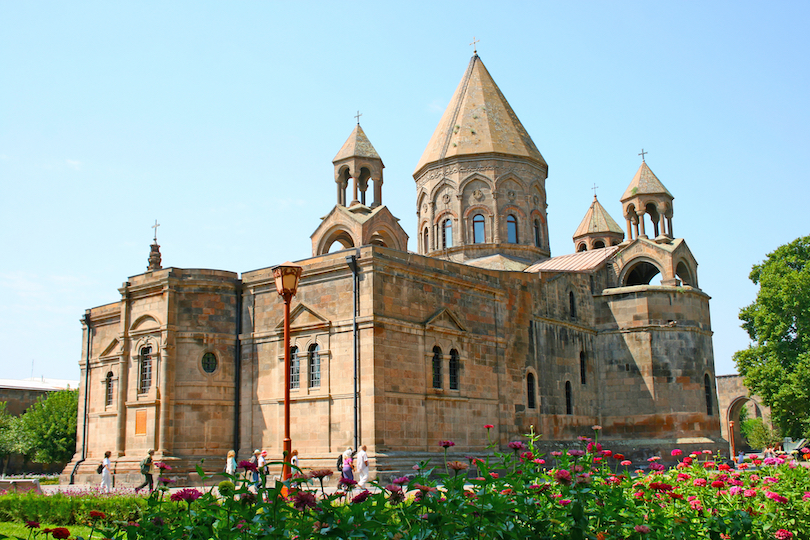 © Arutyunyan / Dreamstime
Consecrated in 301 AD, the Etchmiadzin Cathedral is believed to be the oldest Christian cathedral on Earth, and the Vatican of the Armenian Apostolic Church.
The original church was built over a pagan temple at a time when Christianity became the state religion as enforced by King Tiridates III but later fell into disrepair. It has been rebuilt several times throughout different centuries – therefore showcasing a mixture of several styles of Armenian architecture.
Today, the main cathedral is tucked within manicured hedges and lawns surrounded by more modern buildings from the 19th-century. The cathedral itself consists of a central cupola adorned with glorious, glittering frescoes, and a Treasury where a series of holy relics such as the Holy Lance and a remnant of Noah’s ark can be found.
The cathedral hosts the Catholicos, the administrative head of the Armenian Church, and served as a refuge for Turkish Armenian refugees during the Armenian Genocide. Today, a Genocide Monument can be found within the cathedral’s beautifully landscaped gardens.
5. Aqaba Church (Jordan, late 3rd century)

When you talk about ancient churches, Aqaba Church in Jordan jumps out. Built in the late 3rd century, it’s one of the earliest purpose-built Christian churches around.
The site sits in Aqaba, near the Red Sea. Archaeologists found its remains in 1998, which really changed what people thought about early church buildings here.
You can spot features that show early Christian architecture—totally different from later styles. Researchers dug up pottery and other clues that helped them date the church to around 300 AD.
Even though its community didn’t last long, Aqaba Church gives you a rare peek at how early Christians gathered and worshiped thousands of years ago.
4. Abu Mena Basilica (Egypt, late 3rd century)

You’ll find the ancient ruins of Abu Mena Basilica out in the desert, about 50 kilometers southwest of Alexandria. This place grew up around the tomb of St. Mena, an early Christian martyr.
Pilgrims used to travel great distances to visit Abu Mena for healing and worship. The area became a big Christian center, with not just the basilica, but also a monastery, churches, and Roman baths.
Walk around Abu Mena and you’ll see old stone walls and columns. Archaeologists uncovered a baptistery and dormitories, showing how many people once lived or stayed here. Now, the ruins remind you just how important Abu Mena was for early Christian communities in Egypt.
3. Monastery of Saint Thaddeus (Iran, 3rd century)

If you make the trek to the mountains of West Azerbaijan, Iran, you’ll find the Monastery of Saint Thaddeus. Some call it the “Black Church” because of its dark basalt walls. People believe it dates to the 3rd century.
The setting feels remote and peaceful. The monastery stands at a spot where many think the Apostle Thaddeus was either buried or martyred.
The building changed a lot over the years. People added new sections in later centuries, but some parts are truly ancient. Today, you can still spot its unique mix of Armenian and Persian designs.
This site is a draw for history buffs and anyone curious about ancient Christian culture. Being here, you can’t help but think about how long people have gathered at this spot.
2. Megiddo Church (Israel, 3rd century)

One of the oldest remains of a church building is situated in Israel, at a site called Megiddo. This ancient church goes back to the 3rd century, a time when Christians still faced persecution under the Roman Empire.
If you visit today, you’ll find parts of a big mosaic floor. One Greek inscription mentions a woman named Akeptous, who gave a table to “God Jesus Christ.” Seeing a dedication to Jesus from that early on? That’s pretty wild, honestly.
The whole place sits close to Megiddo Prison, since workers stumbled across it during a construction project there in 2005. Coins and pottery at the site let experts put the church around AD 230.
1. Dura-Europos Church (Syria, 241)

The church sits near the Euphrates River, in a city that once belonged to the Roman Empire. Archaeologists stumbled across it in the 1920s while poking around the ruins of Dura-Europos—imagine their surprise.
Step inside and you’ll find plain rooms, a few with early wall paintings showing Bible scenes. Early Christians held baptisms and worshipped here, hiding since Christianity wasn’t legal yet.
It’s a fascinating peek at how early believers met in private homes, way before grand cathedrals were even a thing.