
The study of Buddhism has inspired some of the world’s most beautiful contributions to the world of art, most notable in the form of statues known as Buddharupa (literally, the form of the Awakened One) that adorn Buddhist temples of worship. Listed here are ten of the world’s most famous and beautiful statues celebrating the Awakened One and his message of peace.
Some of these Buddha statues are among the largest in the world.
10. Hussain Sagar Buddha Statue
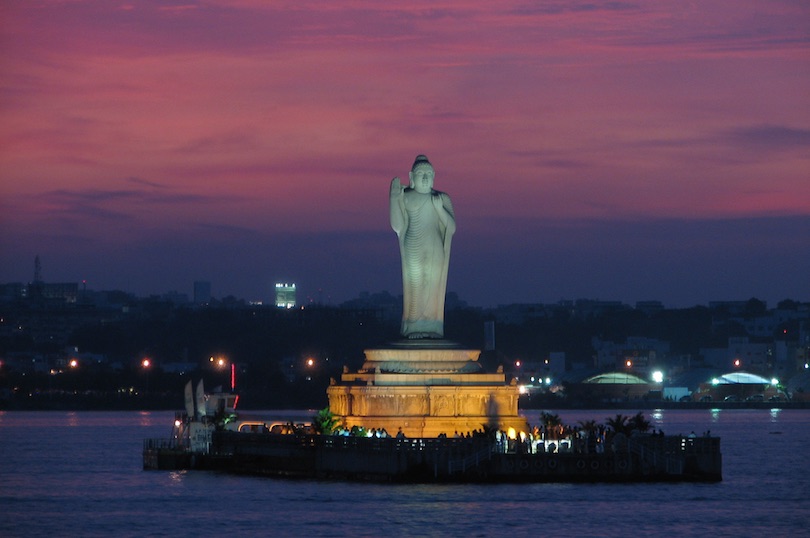
The Buddha statue situated at the center of an artificial lake in the city of Hyderabad is one of India’s most famous Buddha statues. This figure stands at a full 17 meters (56 feet) tall and weighs 320 tons. The single largest monolithic statue in all of India, it was sculpted by a group of artisans from a single piece of stone.
Tragically, during the statue’s installation in 1992 the figure tipped over and fell into the lake, causing the death of 8 workers. The government recovered the statue and restored it to its full height and stature.
9. Tian Tan Buddha Statue
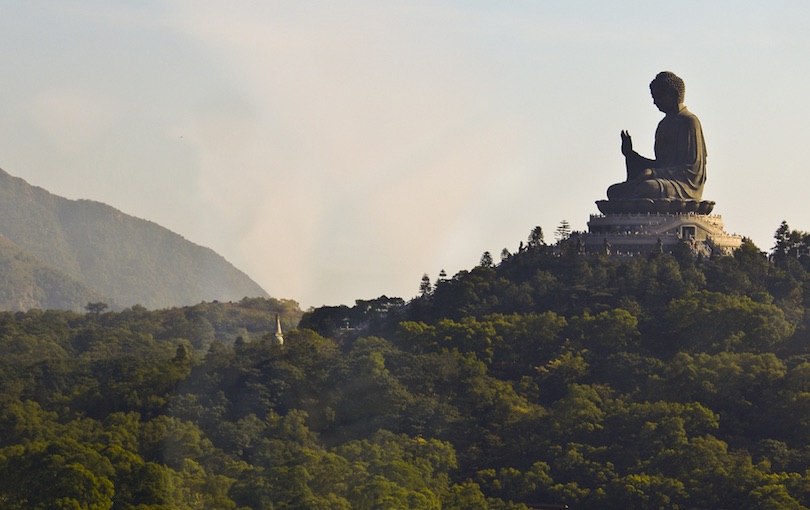
Tian Tan Buddha sometimes locally referred to as the Big Buddha, is located on Lantau Island, in Hong Kong. Fashioned of bronze and completed in 1993, The statue is the main feature of the Po Lin Monastery, symbolizing harmony between man, nature, people and religion. The statue is named Tian Tan Buddha because its base is a replica of Tian Tan, the Temple of Heaven in Beijing.
The statue sits on a lotus throne on top of a three tiered altar. At 34 meters (110 feet) tall, the Tian Tan Buddha is presented in a posture of serenity. His right hand is raised to remove affliction. His left hand rests on his knee, representing happiness.
8. Monywa Buddhas
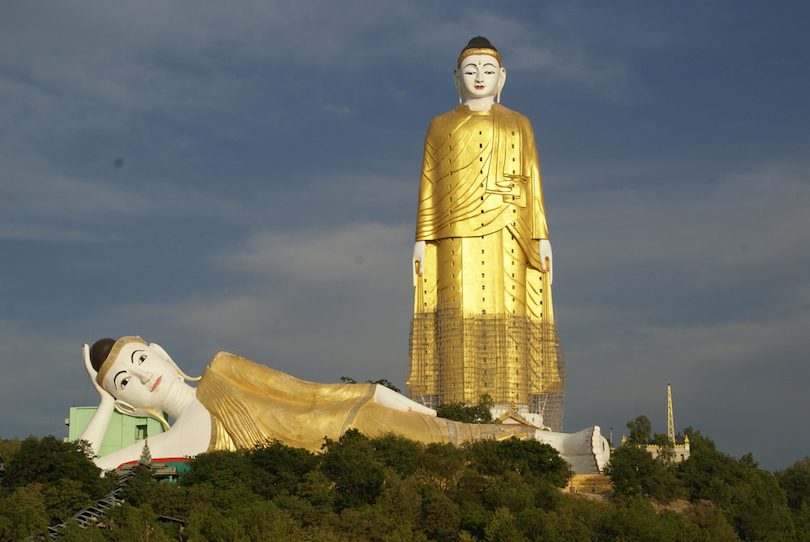
Monywa is a city in central Myanmar located on the banks of the Chindwin River. Just east of the city is the Po Khaung Taung, a range of hills where you can see the Monywa Buddha– the largest reclining Buddha statue in the world.
This colossal figure measures 90 meters (300 feet) in length. The head alone is 60 feet high. The Monywa Buddha was constructed in 1991 and is hollow inside, allowing visitors to walk along from the head to the feet. Inside the figure are 9,000 one-foot-high metal images of the Buddha and his disciples, depicting various representations of important events in the Buddha’s life.
Recently a gigantic standing Buddha statue was built on top of Po Kaung Hills. At 132 meter (433 feet) high it is one of the largest Buddha statues in the world.
7. Ayutthaya Buddha Head
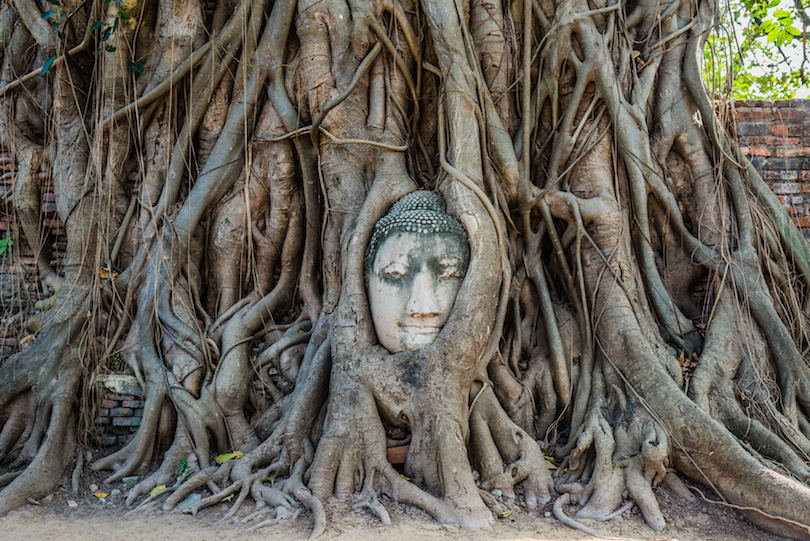
Thailand’s city of Ayutthaya is the location of one of the world’s most unusual Buddhist statues. Among the ruins of Wat Mahathat (The Temple of the Great Relic) is the remains of a sandstone statue of the Buddha whose body has been lost to the ages but whose head rests appropriately in the climbing roots and vines of a tree.
Around this famous figure are many other stature of the Ayutthaya period which have survived the ravages of time.
6. Gal Viharaya
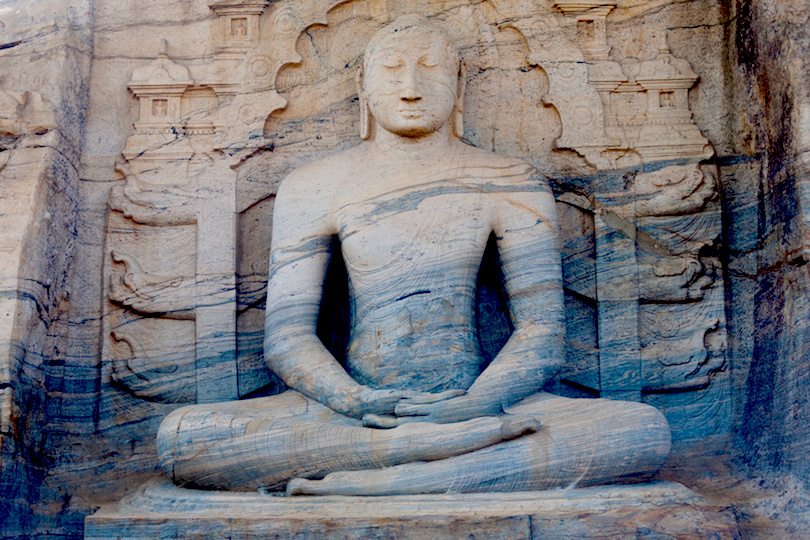
Located in north central Sri Lanka, Polonnaruwa is the site of one of the most breathtaking of the world’s representations of the Buddha – the Gal Gal Viharaya. This massive rock temple was constructed by Parakramabahu the Great in the 12th century.
The central attraction of the temple are 4 large Buddha statues carved into the face of a granite boulder. Among these giant stone figures are a reclining statue of the Buddha that measures 14 meters (46 feet) in length and a standing figure measuring 7 meters (23 feet) high.
5. Ushiku Daibutsu
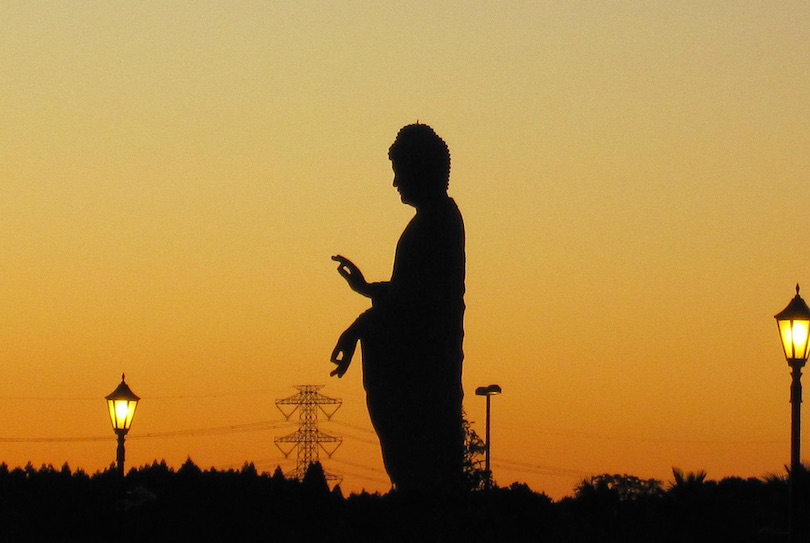
The Ushiku Daibutsu is located in the city of Ushiku in Japan. Finished in 1995, the figure is one of the world’s tallest statues, standing a total of 120 meters (394 feet) high including the 10m (30 foot) base and 10m high lotus platform.
Visitors to the Buddha statue can take an elevator to a platform where an observation deck is situated. The bronze-plated figure depicts Amitabha Buddha, and is also known as Ushiku Arcadia.
4. Temple of the Reclining Buddha
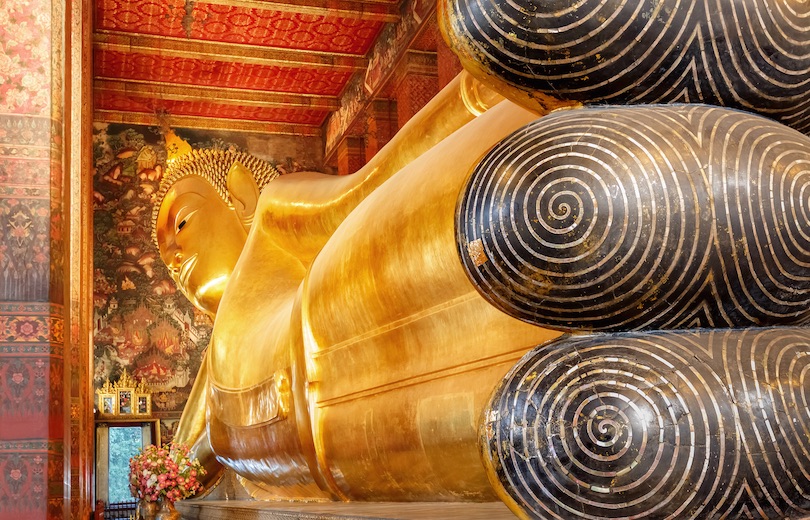
Located in Bangkok, Wat Pho is famous for the huge Reclining Buddha statue it houses. It is one of the largest temples in Bangkok and also one of the oldest, constructed nearly 200 years before Bangkok became Thailand’s capital.
Wat Pho holds the distinction of having both Thailand’s largest reclining Buddha image and the largest number of Buddha images in Thailand. The gold-plated Reclining Buddha statue is 46 meters long and 15 meters high, and commemorates the passing of the Buddha into Nirvana. The statue’s eyes and feet are decorated with engraved mother of pearl, the soles of the feet displaying the 108 auspicious characteristics of the true Buddha.
3. Great Buddha of Kamakura
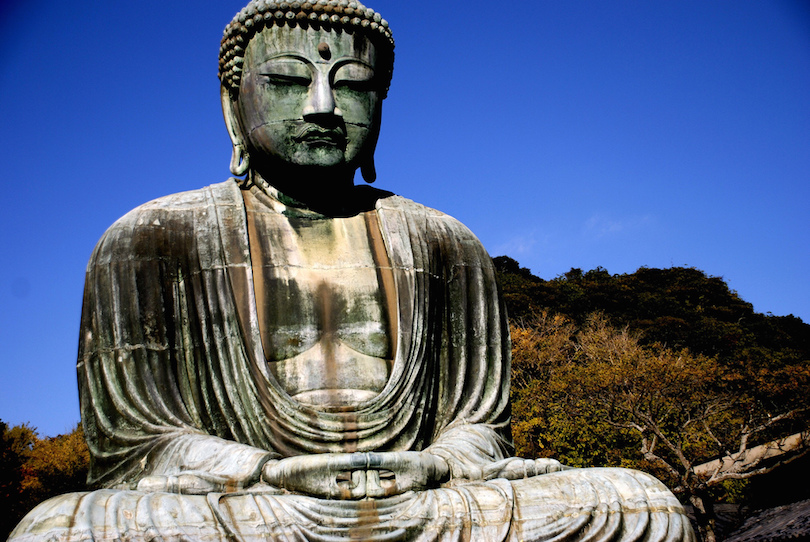
The Kotoku-in is a Buddhist temple of the Jodo shu sect located in the city of Kamakura in Japan. The temple is famous for its great Buddhist statue (or daibutsu). a colossal outdoor representation of Amida Buddha, one of Japan’s most celebrated Buddhist figures. Cast in bronze, the Great Buddha stands at over 13 meters (40 feet) high and weighs nearly 93 tons.
The statue reportedly dates from 1252 and is generally believed to have been cast by the Buddhist monk Joko, who also collected donations to build it. Although it originally was housed in a small wooden temple, the Great Buddha now stands in the open air as the original temple was washed away in a tsunami in the 15th century.
2. Temple of the Emerald Buddha
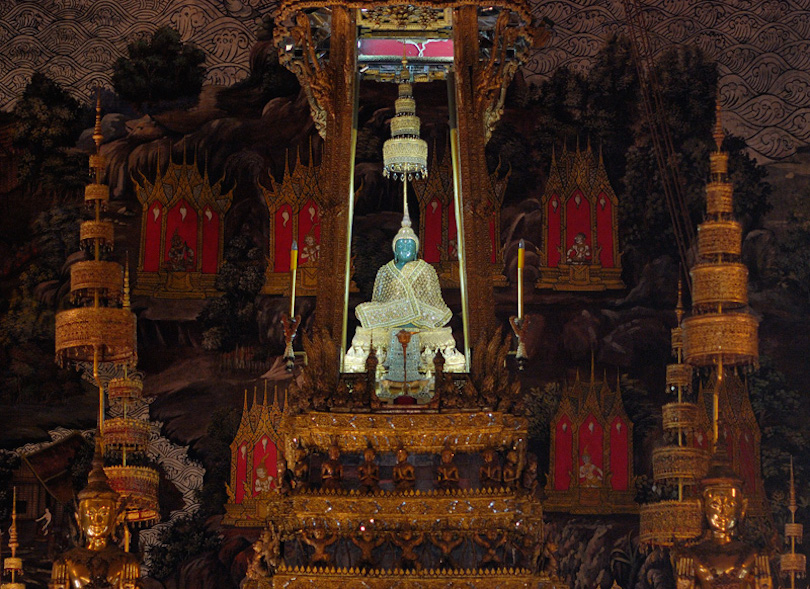
Another of Bangkok’s Buddhist temples is Wat Phra Kaew, the Temple of the Emerald Buddha, located within the grounds of the Grand Palace. The main building is the central ubosoth, which houses The Emerald Buddha, one of the oldest and most famous Buddha statues in the world.
A jade statue adorned in gold clothing, the Emerald Buddha was, according to legend, created in India in 43 BC in the city of Pataliputra, where it remained for 300 years. In the 4th century AD it was taken away to Sri Lanka by Buddhist monks to save it from destruction by war.
Eventually the statue made its way to Thailand and was moved to Wat Phra Kaew in 1779. The statue has three different sets of gold clothing, which are changed by the King of Thailand in a ceremony at the changing of the seasons.
1. Leshan Giant Buddha
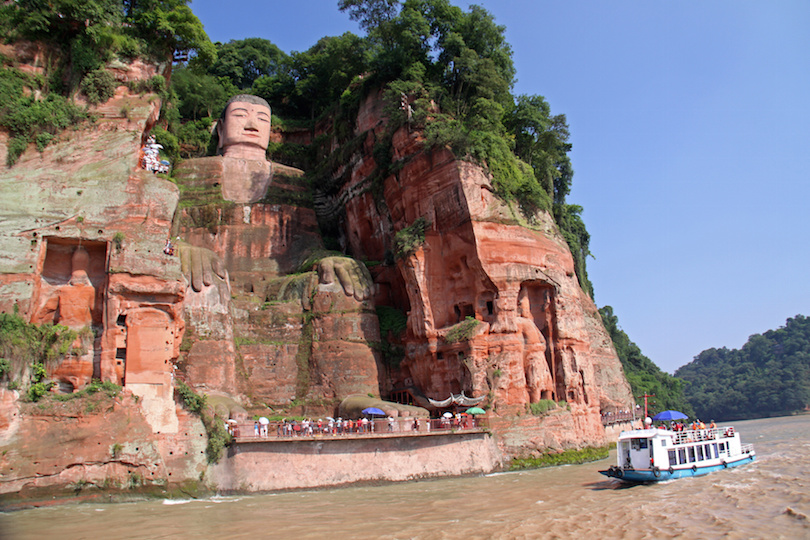
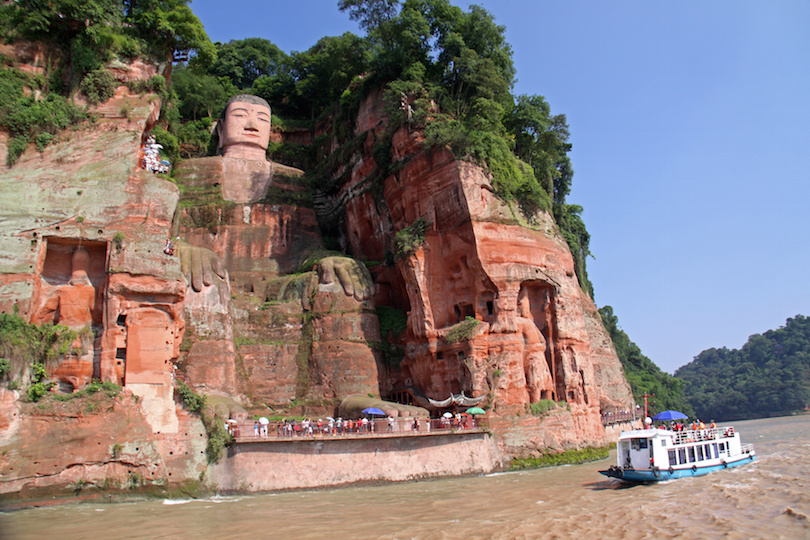
The Giant Buddha of Leshan is a gigantic Buddha statue carved out of a cliff face in Sichuan, western China. The great sculpture is a figure of Maitreya — a Bodhisattva traditionally represented in sitting posture.
Begun in the year 713 during the Tang Dynasty, the statue was not completed until the year 803, and was the effort of thousands of sculptors and workers. As the biggest carved stone Buddha in the world, the Leshan Giant Buddha is featured in poetry, song and story. The sculpture stands about 71 meters (233 feet) high and has three meter (11 feet) long fingers on each of its enormous resting hands. Today it is a popular tourist attraction in China.