
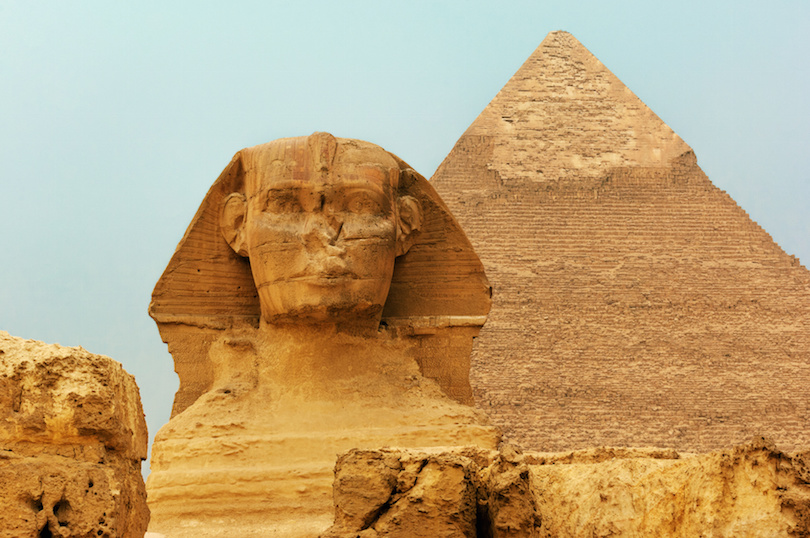
One of the greatest civilizations the world has ever seen, the Ancient Egyptians ruled over the lower reaches of the Nile for millennia. After a unified kingdom arose around 3100 BC, a series of dynasties and pharaohs built ever-bigger pyramids and temples before falling to the Roman Empire in 30 BC.
During this incredible long era the ancient Egyptians produced some of the most famous monuments in the world of which many have survived the ages. Many of the massive monuments were dedicated to various deities or the pharaohs themselves and were adorned with rich decorations, such as striking statues and detailed reliefs.
Such was the ingenuity and engineering prowess of the Ancient Egyptians, many of these amazing ancient monuments are still standing today. Here’s a look at the most amazing ancient Egyptian monuments:
10. Temple of Hatshepsut
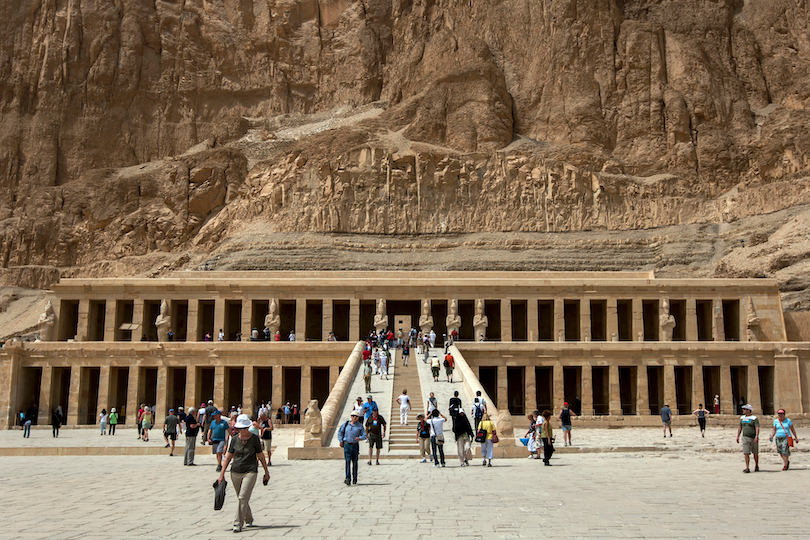
Not far from the famed Valley of the Kings lies another of Egypt’s incredible ancient sights; the Mortuary Temple of Hatshepsut. Located at the foot of towering cliffs that rise dramatically above the desert floor is a massive, almost modern-looking monument.
Built for the female Pharaoh Hatshepsut who died in 1458 BC, the temple boasts three layers of terraces, all of which are lined by colossal colonnades. Once surrounded by lush gardens, they are connected by long ramps with well-preserved and colourful reliefs of animals, plants and people to be found alongside huge statues of Osiris.
9. Bent Pyramid
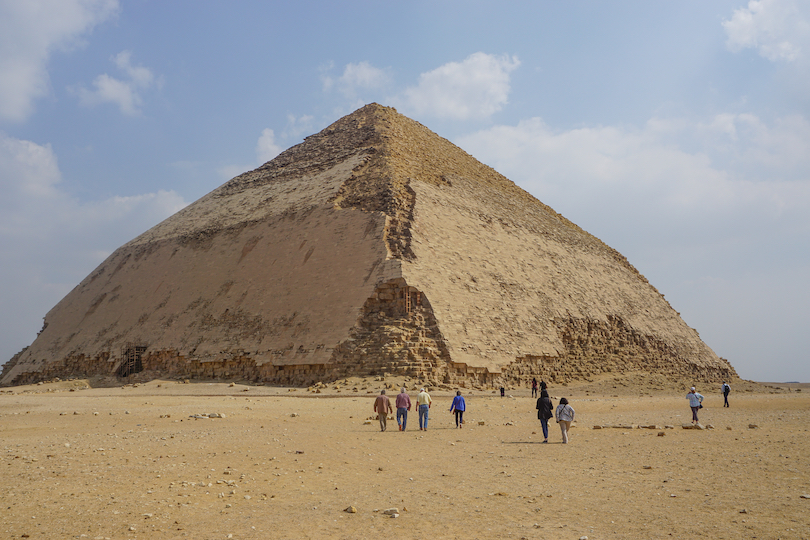
The Bent Pyramid located at Dahshur was the second pyramid built by pharaoh Sneferu. Mysteriously, the pyramid rises from the desert at an angle of 55 degrees and then suddenly changes to a more gradual angle of 43 degrees.
One theory holds that due to the steepness of the original angle the weight to be added above the inner chambers and passageways became to large, forcing the builders to adopt a shallower angle. It is the only pyramid in Egypt of which the outer casing of polished limestone is still largely intact.
8. Step Pyramid of Djoser
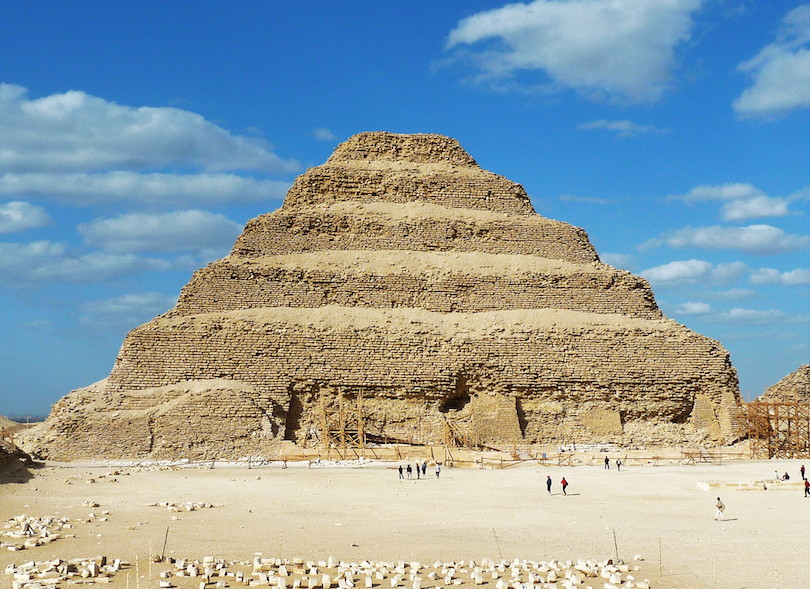
The Step Pyramid of Djoser at the Saqqara necropolis was the very first pyramid built by the ancient Egyptians. It was constructed during the 27th century BC for the burial of Pharaoh Djoser by his Vizier Imhotep.
The ancient monument began as a traditional, flat-roofed mastaba but by the end of Djoser’s reign it had risen to a six stepped layer Pyramid and stood 204 feet (62 meters) high. As in earlier mastaba tombs, the burial chambers of the Step Pyramid are underground, hidden in a maze of tunnels.
7. Luxor Temple
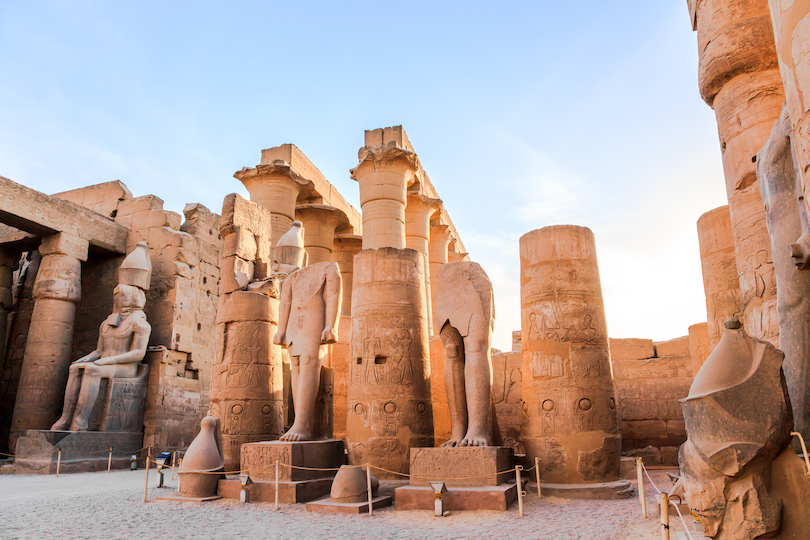
The Luxor Temple is located on the east bank of the River Nile in the ancient city of Thebes and was founded in 1400 BC during the New Kingdom. The temple was dedicated to the three Egyptian gods Amun, Mut, and Chons.
The ancient temple was the center of the festival of Opet, Thebes’ most important festival. During the annual festival the statues of the three Gods were escorted to the temple of Luxor along the avenue of sphinxes that connect the 2 temples.
6. Great Sphinx
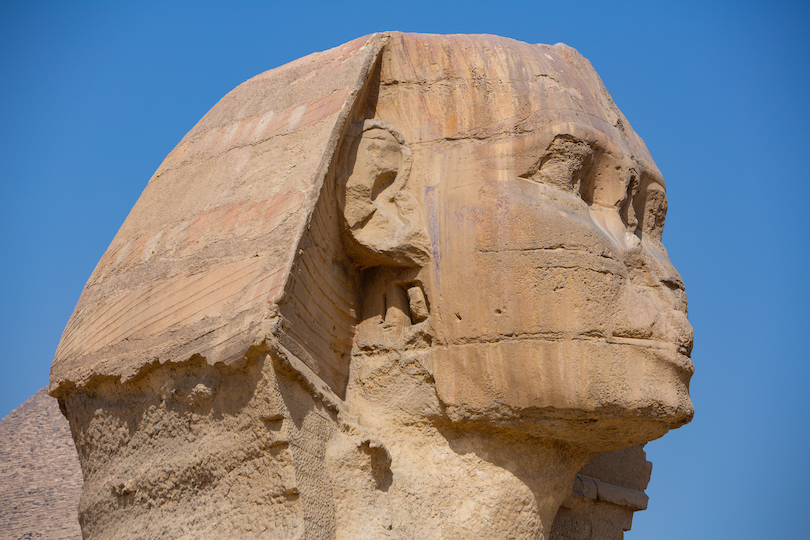
Located at the Giza Plateau, The Great Sphinx is one of the largest and oldest monuments in the world, but basic facts about it, such as who was the model for the face, when it was built, and by whom, are still debated. It is the largest monolith statue in the world although it is considerably smaller than the Pyramids around it.
Despite conflicting evidence and viewpoints over the years, the traditional view held by modern Egyptologists at large remains that the Great Sphinx was built in approximately 2500 BC by the pharaoh Khafre, the supposed builder of the second pyramid at Giza.
5. Red Pyramid
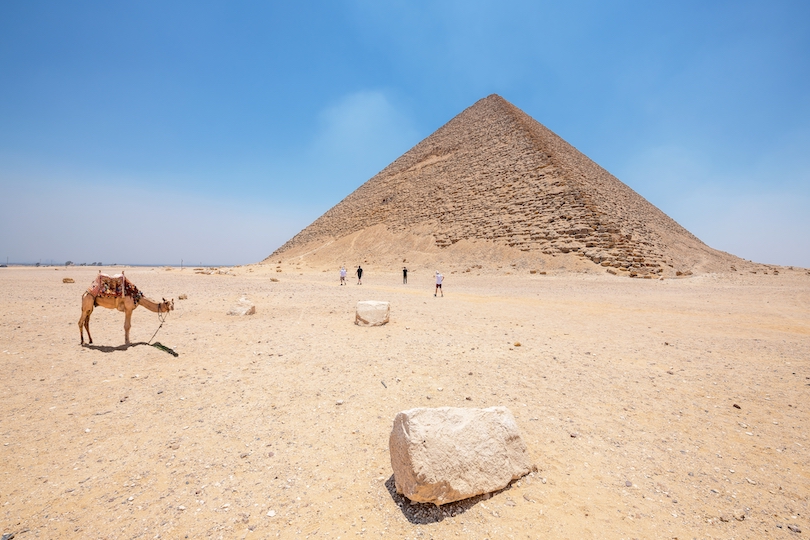
Built by Pharaoh Sneferu, the Red Pyramid is the world’s first successful attempt at constructing a “true” smooth-sided pyramid. At 104 meters it is the 4th highest pyramid ever built in Egypt. What really makes the Red Pyramid special today is the lack of crowds that plagues the Giza Plateau and the comparatively unregulated interior access.
4. Valley of the Kings
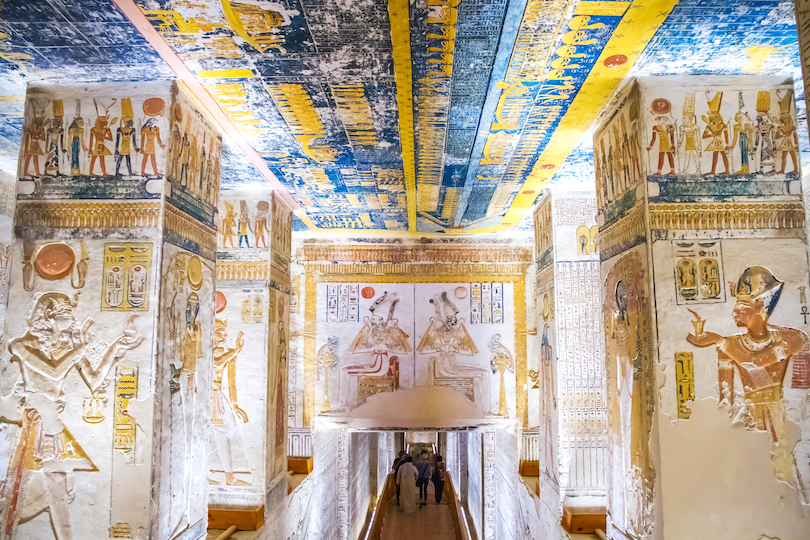
The Valley of the Kings is a valley in Egypt where, for a period of nearly 500 years from the 16th to 11th century BC, tombs were constructed for the kings and privileged nobles of the New Kingdom. The valley contains 63 tombs and chambers, ranging in size from a simple pit to a complex tomb with over 120 chambers.
The royal tombs are decorated with scenes from Egyptian mythology and give clues to the beliefs and funerary rituals of the period. All of the tombs seem to have been opened and robbed in antiquity. Only the famous tomb of Tutankhamun was spared from the worst of the tomb depredations.
3. Abu Simbel
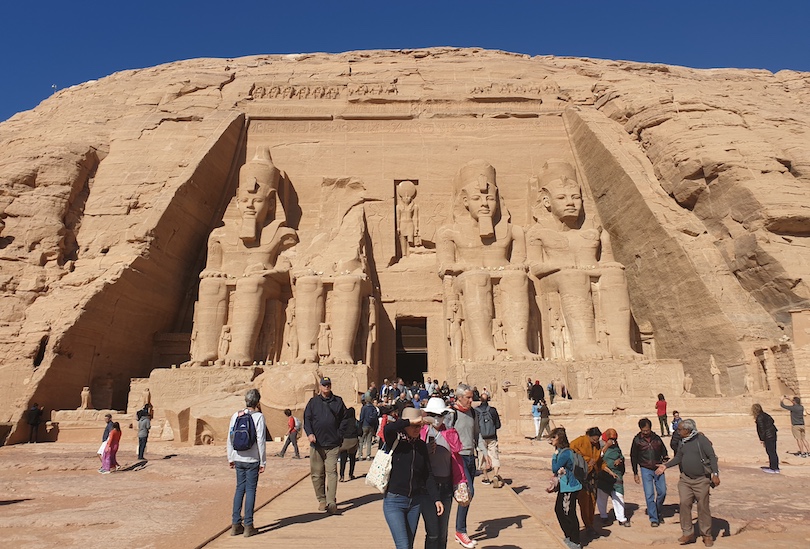
Abu Simbel is an archaeological site comprising two massive rock temples in southern Egypt on the western bank of Lake Nasser. The twin temples were originally carved out of the mountainside during the reign of Pharaoh Ramesses The Great in the 13th century BC, as a lasting monument to himself and his queen Nefertari.
The complex was relocated in its entirety in the 1960s to avoid their being submerged during the creation of Lake Nasser, the massive artificial water reservoir formed after the building of the Aswan High Dam on the Nile River.
2. Karnak
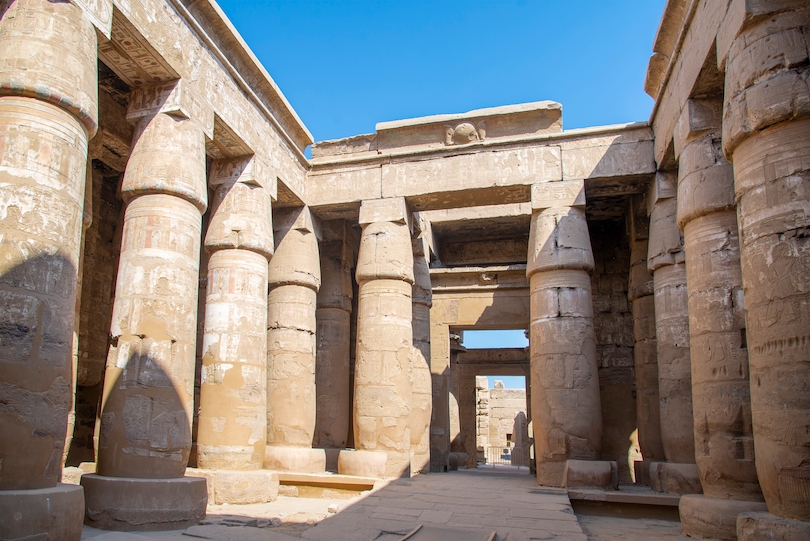
Other than the pyramids, the most popular place to visit in Egypt is the captivating Karnak Temple complex which lies in Luxor on the banks of the river Nile. Built over millennia, this site has everything from colossal colonnades and chapels to sumptuously sculpted sanctuaries, sphinxes and obelisks.
Although construction began around 2000 BC, later pharaohs added their own flourishes making Karnak now the largest ancient religious site on earth. As such, exploring the archaeological area is an incredible experience with such spellbinding sights as the Great Hypostyle Hall in the Temple of Amun-Ra.
1. Pyramids of Giza
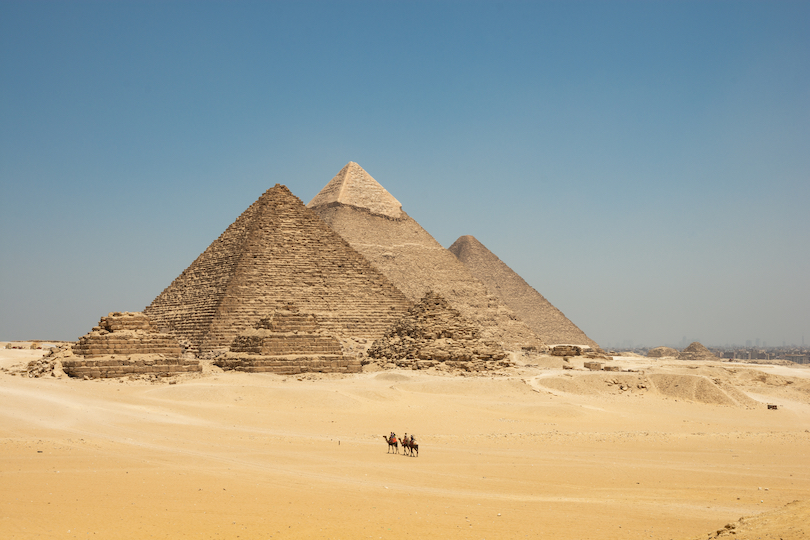
Arguably the world’s most famous landmark, the Pyramids of Giza lie on the outskirts of Cairo, looking out over the endless sands of the Sahara. The pyramids in Giza were built over the span of three generations – by Khufu, his second reigning son Khafre, and Menkaure. The Great Pyramid of Khufu is the oldest and sole remnant of the Seven Wonders of the Ancient World.
Over 2 million blocks of stone were used to construct the pyramid, during a 20 year period concluding around 2560 BC. The pyramid is an awe-inspiring 139 meters (455 feet) high making it the largest pyramid in Egypt, although nearby Khafre’s Pyramid appears to be larger as it is build at a higher elevation.