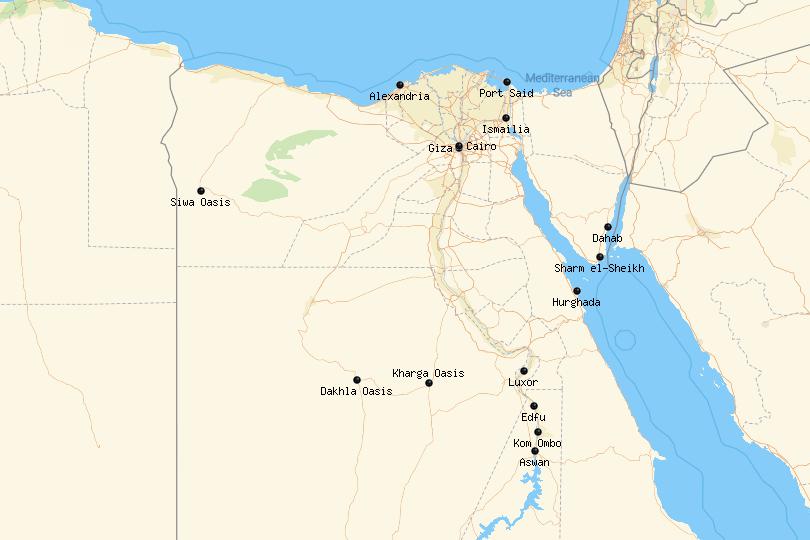
Egypt houses some of the world’s most famous, enigmatic and astonishing ancient monuments, with a history of culture and civilization that dates back thousands of years. The Egypt of today has seen much political and social upheaval in recent years, but it’s through its ever-changing, yet time-worn cities that Egypt’s true heart, extraordinary strength and incredible ancient civilizations are exhibited.
Cairo
 © Sergiy Gushchak / Dreamstime
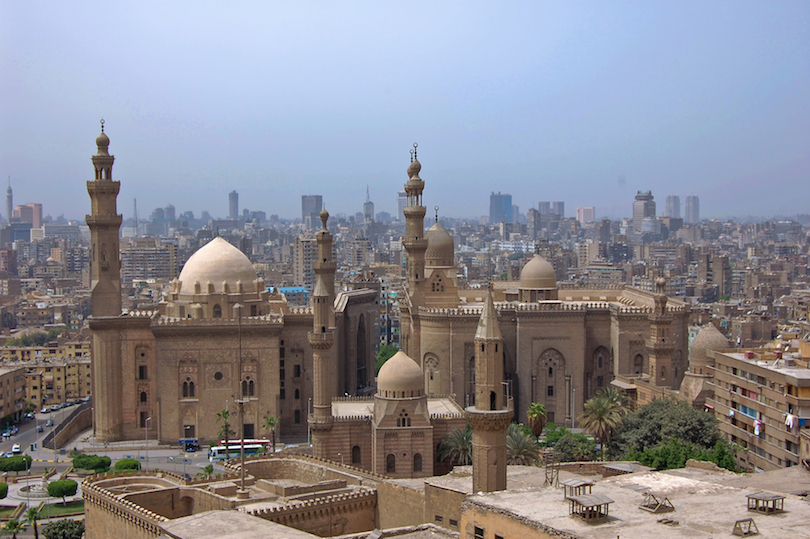
Dusty and dirty, Cairo is a challenging and tough city to travel to – but this doesn’t mean your efforts won’t be rewarded. The 22-million or so people that call Cairo home pack its busy streets daily. Touts will hassle you, motorbikes will beep into the night and the dirt will cling to your skin – but Cairo truly is a charming place with world-class sights to see.
The city sits on the ethereal River Nile and is the location of the medieval Islamic city and Coptic architecture in the old city. The world-famous Egyptian Museum boasts an incredible collection of ancient Egyptian artifacts.
Alexandria
 © E. Fesenko / Dreamstime
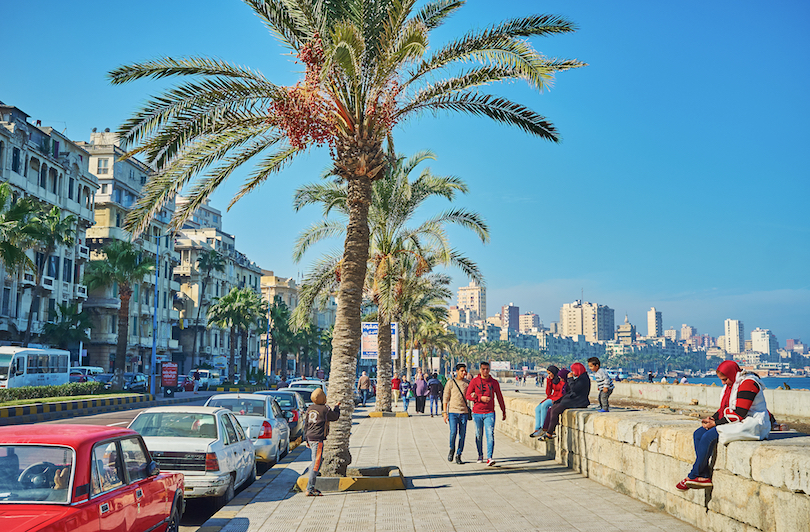
What was once one of the greatest cities in the world, with an incredible collection of books in its library and a huge lighthouse, Alexandria was founded by its namesake – Alexander the Great. A city of epic historical proportions, much of its integral beauty and cultural importance has faded, but it is still possible to glimpse its past glory.
The dusty coastal town is thronged with people; its streets, port and beaches are constantly ebbing and flowing with the stream of life – modern city living takes place alongside ancient wonders. Its infusions of various cultures are a legacy of Alexandria’s many conquerors that the Citadel of Qaitbay was built to protect the city from.
Luxor
 © Rovira / Dreamstime
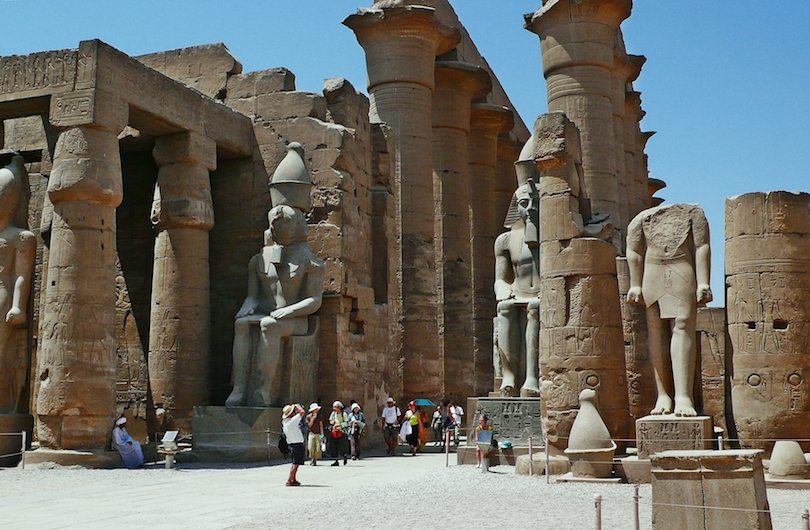
Luxor’s lush and luxurious landscape is the setting for incredible ancient monuments. The Nile slowly snakes its way through the area, with the modern day city of Luxor sitting on the East Bank and the ancient capital of Thebes on the West Bank. The once resplendent city of the ancient world is like a modern-day, open-air museum for visitors and many of the most famous tourist attractions in Egypt can be found here.
The land here is strewn with history, relics and ancient treasures, which have been practically stitched into the land and have stayed incredibly intact for millennia. The Temple of Karnak and the numerous tombs that dot the West Bank of the river are easily accessible from the city center, with its hotels, restaurants and museums.
Giza
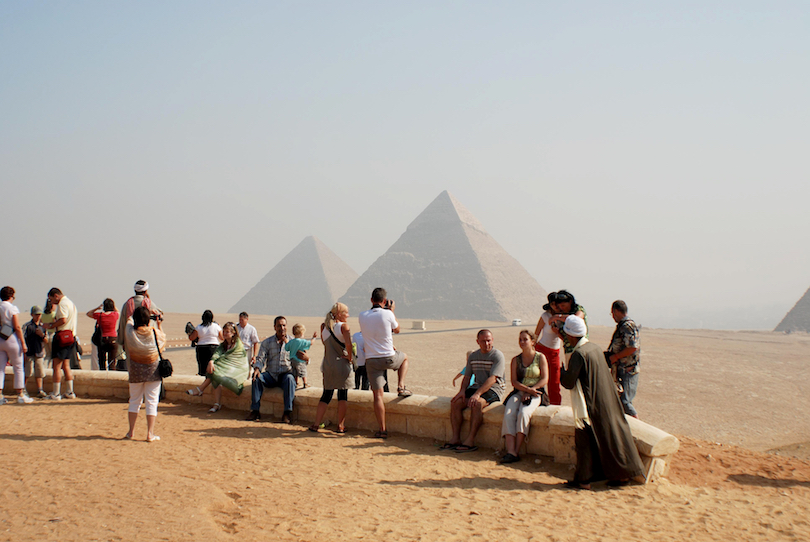 © Meunierd / Dreamstime
What was once a city in its own right has been sucked up into the sprawling urban landscape of Egypt’s capital. Giza’s iconic Great Pyramids, which were the tallest structures in the world before the arrival of skyscrapers, sit on the desert plateau against a backdrop of the ever-encroaching hazy city skyline. The pyramids are one of the world’s most iconic ancient wonders, representing Egypt and its links to historic civilization.
It is a shame, then, that the civil unrest in Egypt and surrounding countries, combined with the threat of terrorist attacks, have resulted in fewer and fewer visitors to the city. Nevertheless, Egypt’s turmoil does not take away from the importance and beauty of the 4,500-year-old edifices, which took 100,000 people to build. Somewhat incredibly, the pharaohs tombs with their chambers and corridors are open to the public.
Kom Ombo
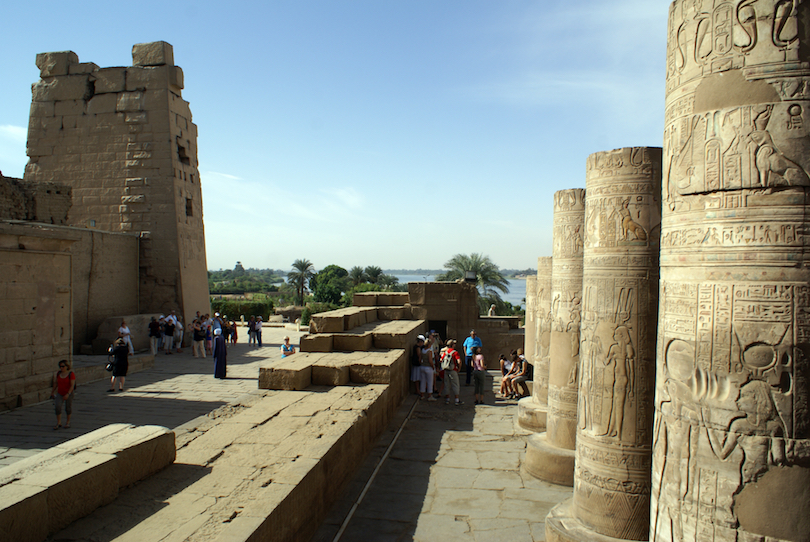 © Valery Shanin / Dreamstime
The age-old farming town of Kom Ombo is built on the site of the ancient Egyptian City of Gold. It is home to the Temple of Kom Ombo, a fascinating 2nd Century temple that is unique in its double style – this means that the temple is duplicated for two sets of gods.
The city of Kom Ombo itself sits on the temple’s ancient foundations, however, much of it is yet to be excavated. Perhaps in the future this city will unveil its hidden secrets, but for now, it is a fairly sleepy city whose main focus is farming sugar cane and corn.
Ismailia
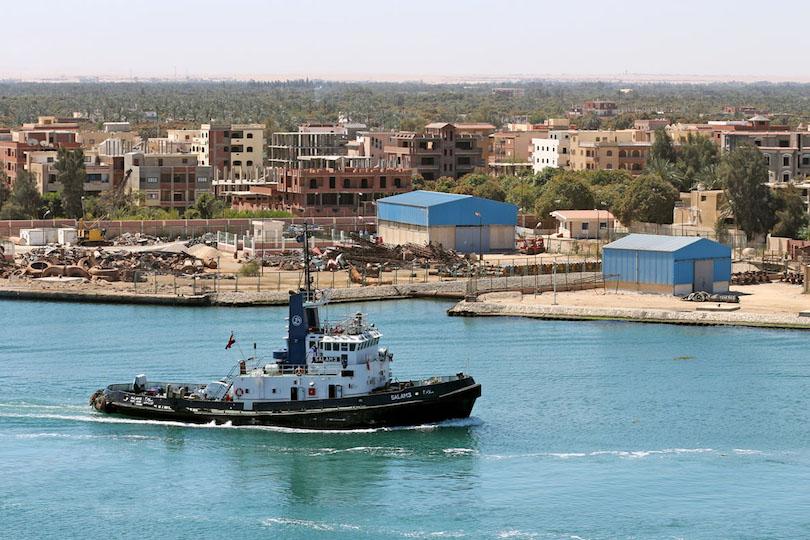
Located on the Temsah Lake on the Suez Canal, Ismailia developed as the canal was being built. The city has a distinctly European style; many of its buildings were influenced by the French and British during the construction of the canal and have shaped the style of the city today.
With a good climate and a couple of interesting cultural sights, Ismailia is a pleasant place to spend a few days.
Dakhla Oasis
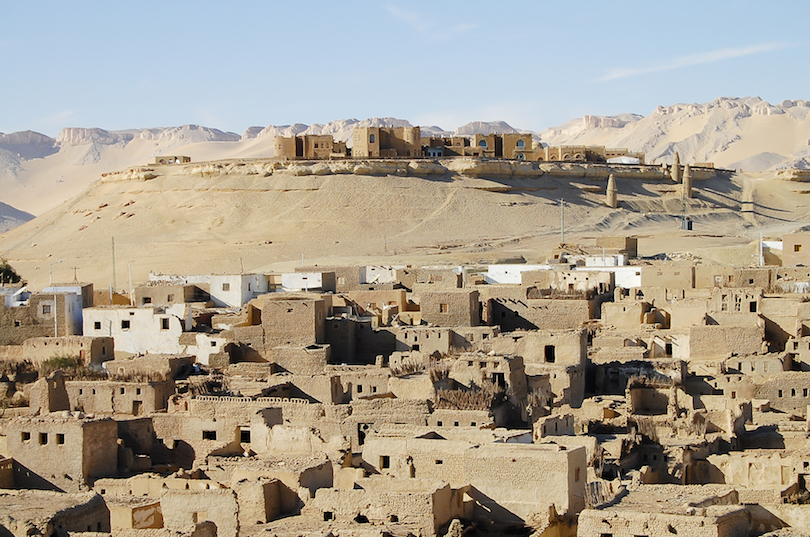 © Adwo / Dreamstime
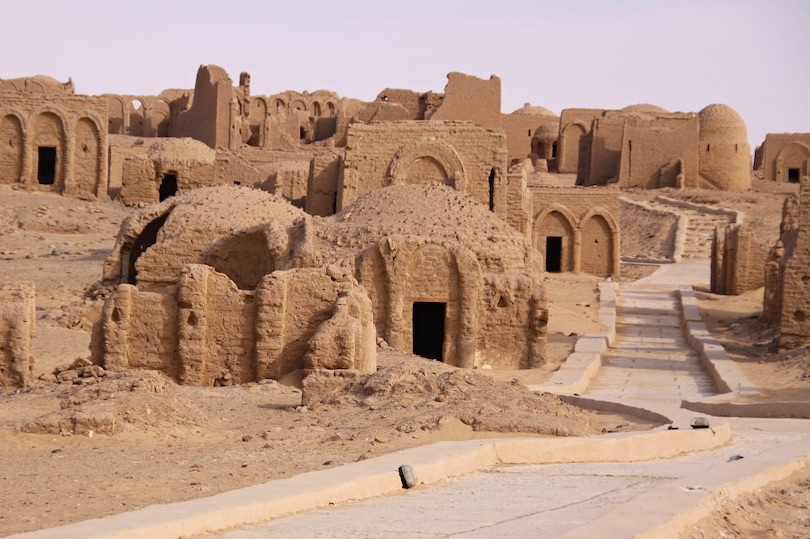
The Dakhla Oasis springs from the surrounding barren desert – green and teeming with life. Hamlets sprinkle this area, with buildings made of mud bricks and narrow lanes that reveal hidden treasures.
Only a handful of tourists make it this far into the desert, but their efforts are rewarded with medieval structures, tombs, monasteries and unbelievably friendly, welcoming locals.
Edfu
 © Thomas Wyness / Dreamstime
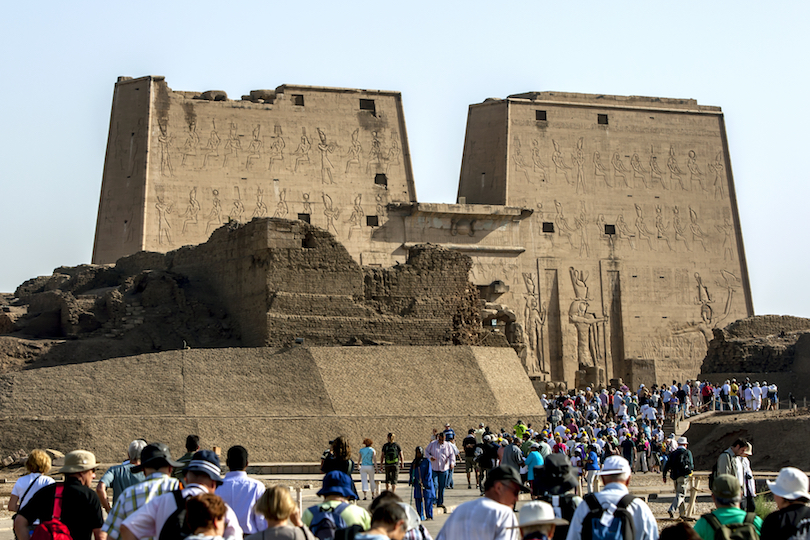
Tucked away in upper Egypt, on the fertile banks of the river Nile, Edfu is a farming town that does not see a huge amount of tourists. The city itself is modest, but can offer an insight into everyday Egyptian life. Most people are drawn to the town to visit the incredibly well preserved Temple of Edfu.
Dedicated to Horus, the temple has survived thousands of years – thanks to the surrounding desert sands. As such, it is one of the best-preserved ancient buildings in Egypt.
Dahab
 © Chuanwentao / Dreamstime
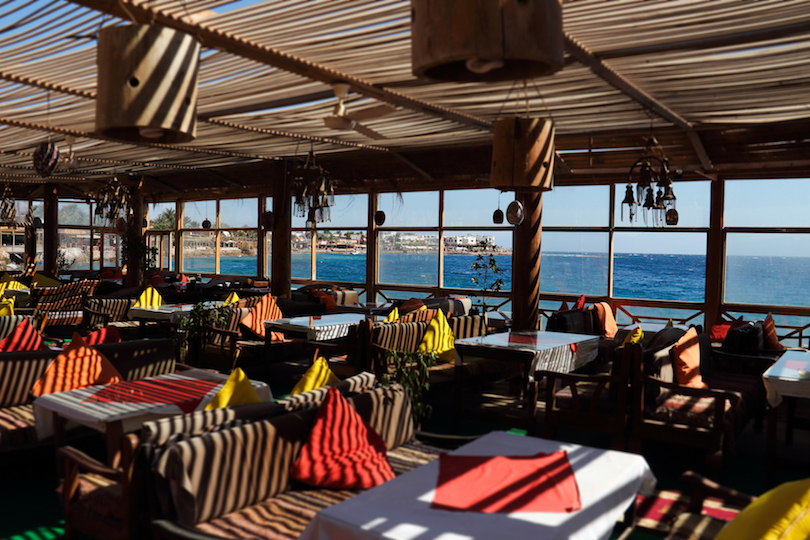
Idle and sleepy, Dahab is a slow city whose main attraction is its palm-lined beaches. The resort city has risen from the shadow of its former self – from a dusty outpost to a chic tourist town.
With the influx of tourism, money and development, Dahab may have lost a little of its simple charm, but if you want to spend some time kicking back in a family-friendly city and try some world class windsurfing, go scuba diving or trek in the desert with the Bedouin then this is the place for you.
Kharga Oasis
 © Jnerad / Dreamstime
Like an image from ancient times, the Kharga Oasis sits in Egypt’s Western Desert but is now an modern enclave. The ancient town, which was often used as a lookout post by the British, is no longer – modern development has truly taken over here. However, Kharga is also surrounded by abundant palm and acacia trees, and there are some interesting archaeological sites on the road to Cairo.
Port Said
 © Look67 / Dreamstime
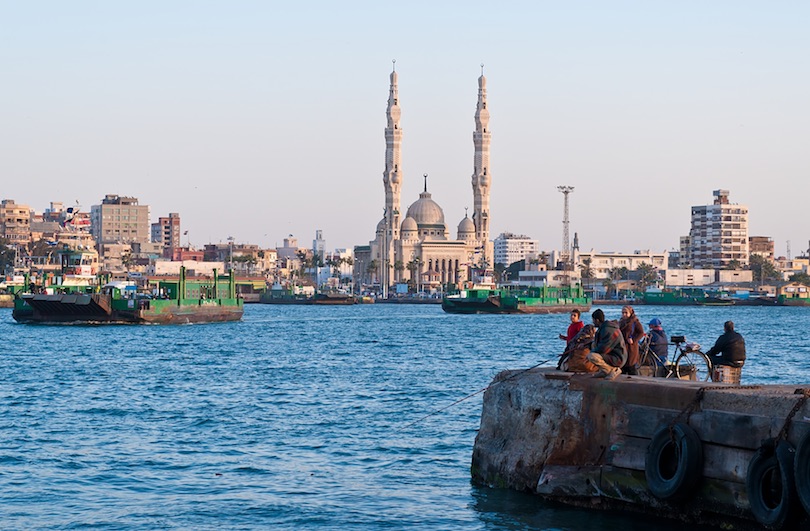
Built out of dust from the construction of the Suez Canal, Port Said was a strategic settlement for trade in the area. Once a seedy city laden with brothels and underhanded trading – the type that’s normal for a busy port town – the city now attracts visitors with its romantically crumbling, grand architecture.
Walk along the raised waterfront boulevard that shows off the grandeur of the Suez Canal and take in the incredible feat of human engineering as tankers make their way towards the Med. If you’d like to head out onto the water, there’s also the chance to take the only passenger ship on the canal.
Siwa Oasis
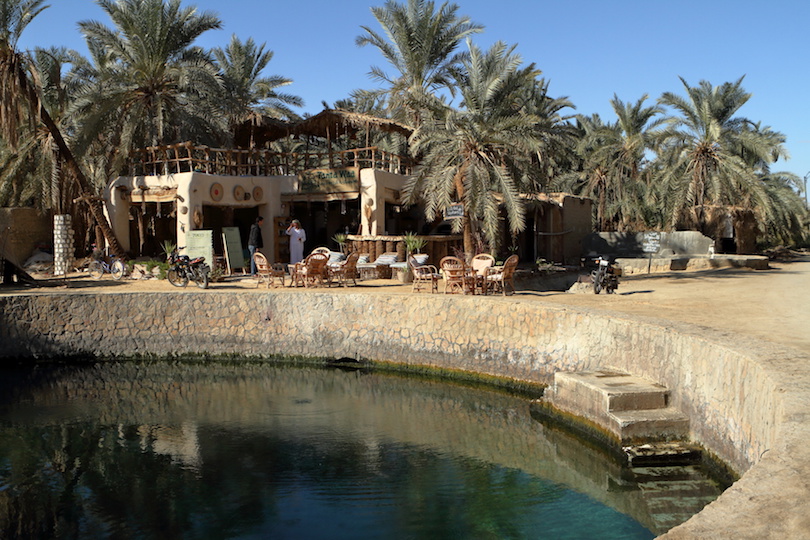
Most people would picture an oasis as a patch of lush heaven in the middle of the desert, and that’s exactly what Siwa Oasis is. Overflowing with palms, olive trees and shady lanes, the city is scattered with sparkling fresh-water springs.
This ancient town is a real-life time capsule; donkeys amble along the old roads and mud houses sit on the edge of the desert. It’s not easy to reach this cut-off settlement, but your efforts will be greatly paid off.
Hurghada
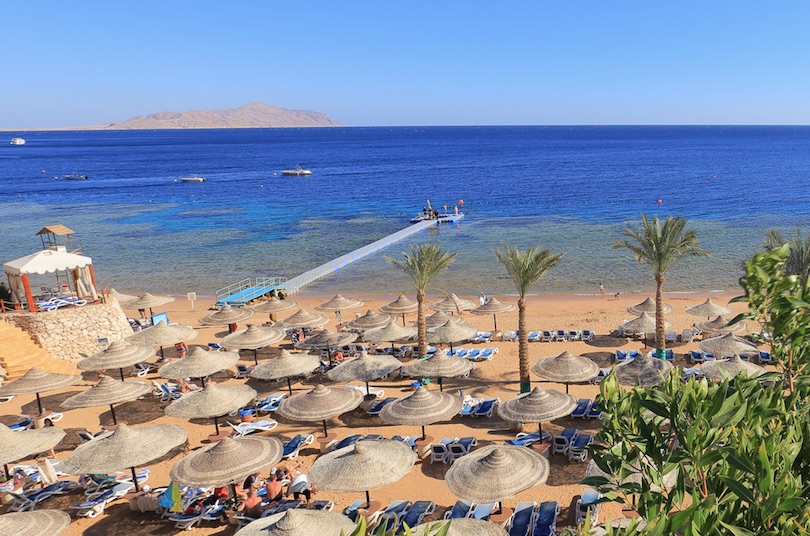
Colorful coral reefs and picturesque sandy beaches make Hurghada the ideal city for a summer break. An urban area where old meets new, Hurghada is Egypt’s premier holiday resort destination, with tourists drawn there to linger on the soft sands, enjoy the many delicious restaurants and explore a slice of history.
The old town of El Daha reveals real Egyptian life, with its mosques, markets and network of narrow lanes.
Aswan
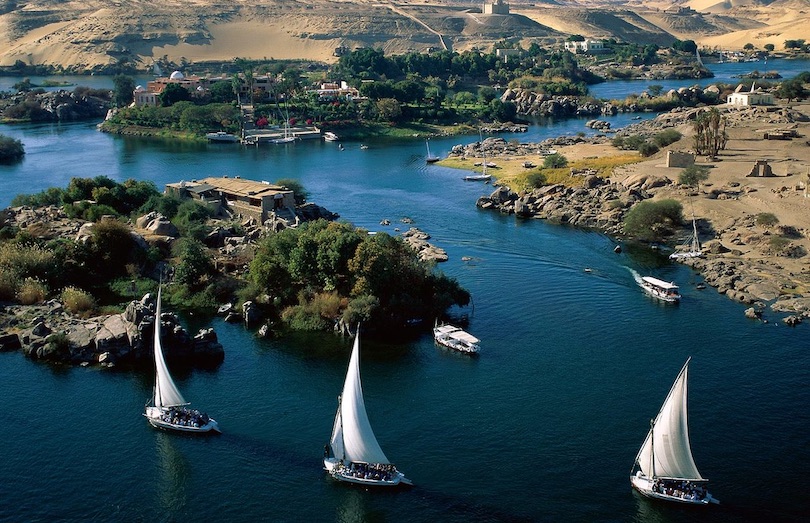
One of three tourist cities in Egypt that sit along the banks of the Nile, Aswan is a beautiful ravine area with palm trees and a warm climate. An ancient military base and important garrison, the quarries here provided the essential granite used in many of its ancient structures – and there are a lot to see here.
This languorous and beautiful stretch of the Nile provides arable land for many Nubian villages that rely on the river. With relics of ancient times still apparent in the area, you can easily spend a few lazy days relaxing in a riverside guesthouse at Aswan and take time to explore the islands and temples.
Sharm el-Sheikh
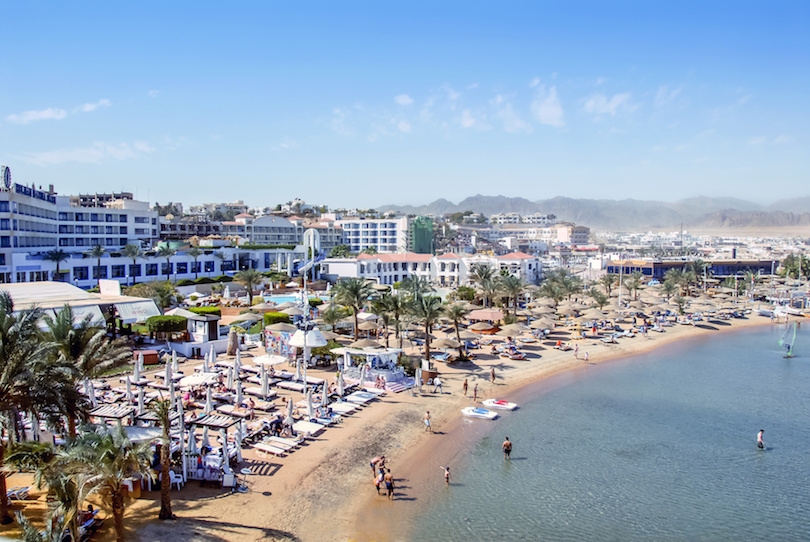
The resort city of Sharm el Sheikh was once a top tourist destination, labelled ‘the jewel of the Red Sea’; Europeans used to flock to its beautiful beaches looking to catch a tan, have a good time and get value for money.
In recent years, the city has seen a huge decline in tourism – a 70 percent decline in fact. Political developments have seen the UK place a flight ban to Sharm el Sheikh, and as a result, the once buzzing city is akin to a ghost town.
Hotel rooms are now easy to come by and you won’t have to scramble for space on the sand anymore. Accommodation, food and drink prices are cheap. If you are able to catch a flight, you can have a low-cost beach break at Sharm el Sheikh.