
College campuses belong to a travel category most people never consider, which is a genuine shame. These places were designed with unusual care, occasionally by famous architects with unlimited budgets and something to prove. And they’re almost always open to the public, free of charge, ready to be wandered at whatever pace you prefer.
The campuses here span Gothic stone to Spanish tile, Neoclassical brick to sandstone arches, mountain backdrops to urban centers. They share one quality: each was built to make a specific architectural argument about what learning should feel like, and each one lands it.
17. Rollins College, Winter Park, Florida
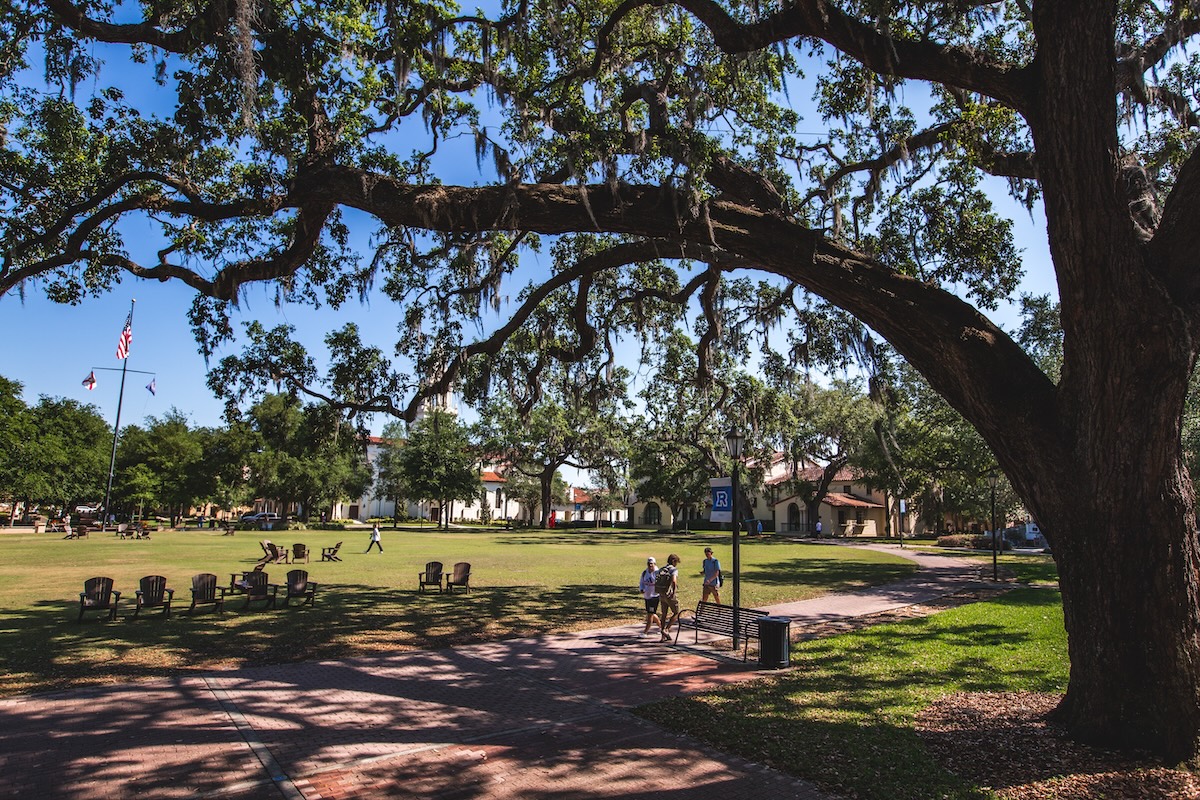
Rollins College sits on the shores of Lake Virginia in Winter Park, about half an hour from downtown Orlando. Founded in 1885, it’s Florida’s oldest recognized college.
Spanish-Mediterranean Revival architecture sets Rollins apart from the usual college look. You’ll wander through charming courtyards, shaded walkways, and peaceful lakeside paths. One of Florida’s most celebrated architects designed many of the buildings here. America has recognized Rollins as one of its most beautiful college settings. When you’re there, it’s easy to see why students and visitors rave about the grounds and those unique colonial Spanish buildings.
If you’re in the Orlando area, you can explore the historic buildings and lakefront views—Rollins welcomes guests. There’s also a public art gallery that’s worth a look if you’re into that sort of thing.
16. Wellesley College, Wellesley, Massachusetts
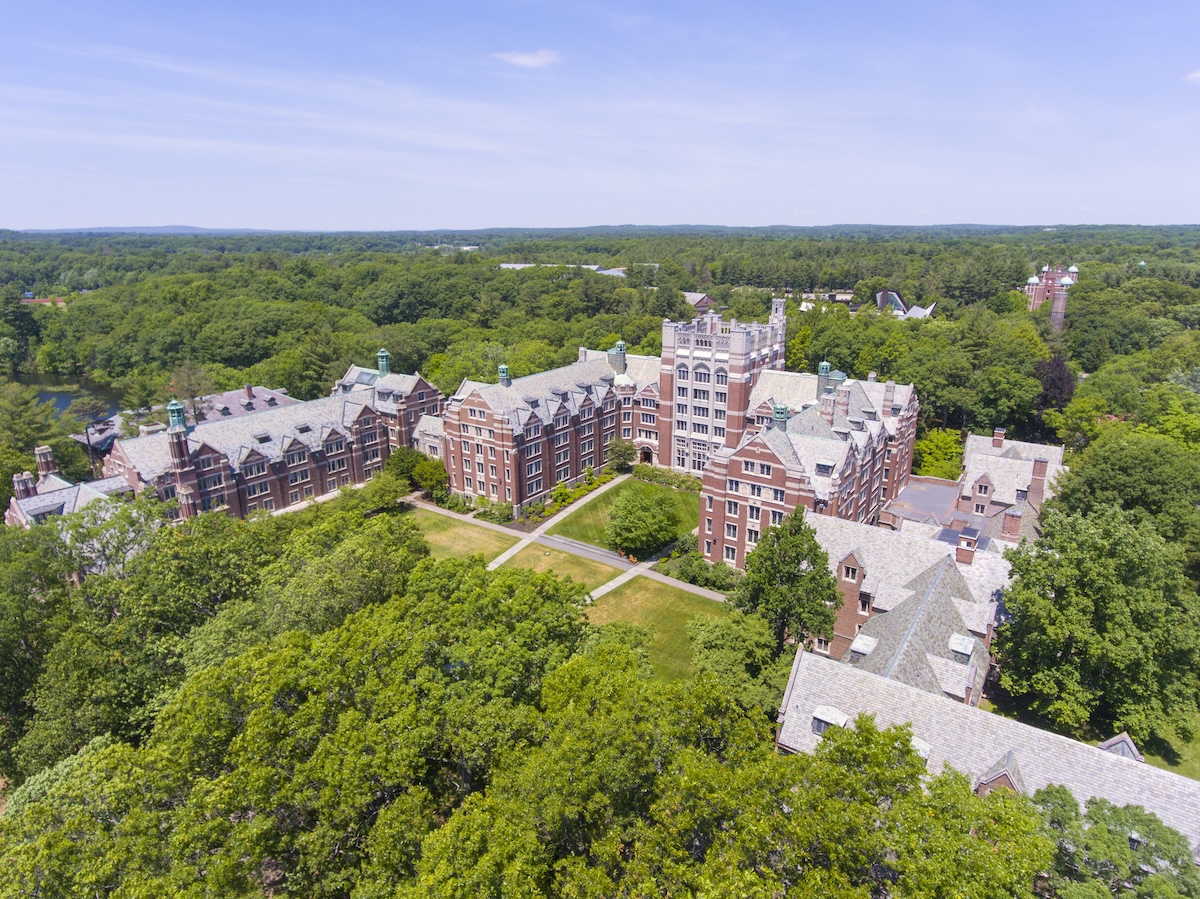
Wellesley College sits just outside Boston on a campus that’s honestly stunning. This women’s liberal arts college has been around since 1870 and keeps popping up on lists celebrating beautiful campuses.
With fewer than 3,000 students, Wellesley feels close-knit. Travel + Leisure recently called it the 19th most beautiful college campus in America. You get to pick from 56 different departments and majors here.
The town of Wellesley adds a lot, too. About 30,000 people live there year-round, and it mixes classic New England charm with that college town energy. The campus gives you a place where learning actually feels inspiring. Wellesley is also part of the Seven Sisters Colleges, a group of historic women’s colleges in the Northeast.
15. Vassar College, Poughkeepsie, New York
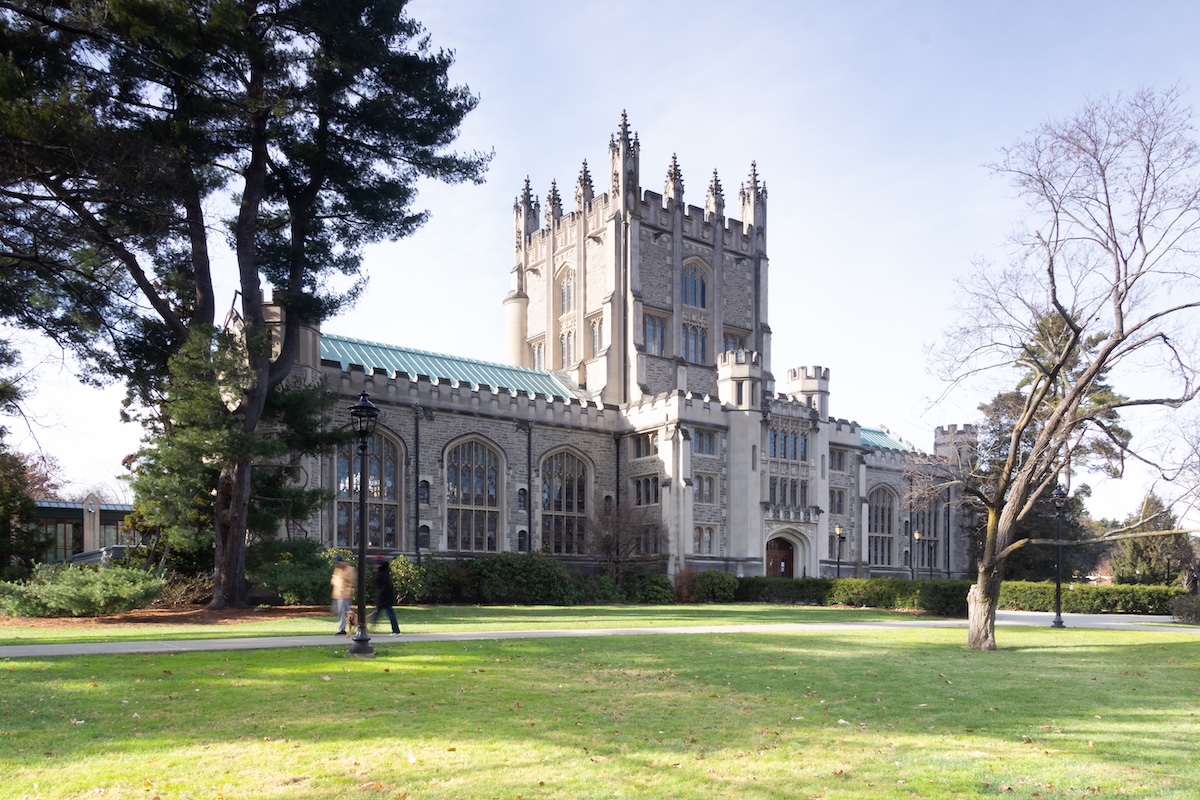
Vassar College covers 1,000 acres in Poughkeepsie, tucked into the scenic Hudson Valley. The school’s campus is a dedicated arboretum with more than 200 species of trees and plants. There’s a blend of natural beauty and historic architecture that’s hard to ignore.
The Main Building really grabs your attention. It’s the original structure from 1861, with Second Empire architecture that landed it on the National Register of Historic Places. As you walk around, you’ll see interesting buildings mixed with open green spaces.
Fall might be the best time to visit. The trees light up with color, and Vassar Lake and Sunset Lake both offer peaceful places for a walk. And you’re only about two hours from New York City by train—so you get a quiet campus, but the city’s not far if you want it.
14. Bryn Mawr College, Bryn Mawr, Pennsylvania
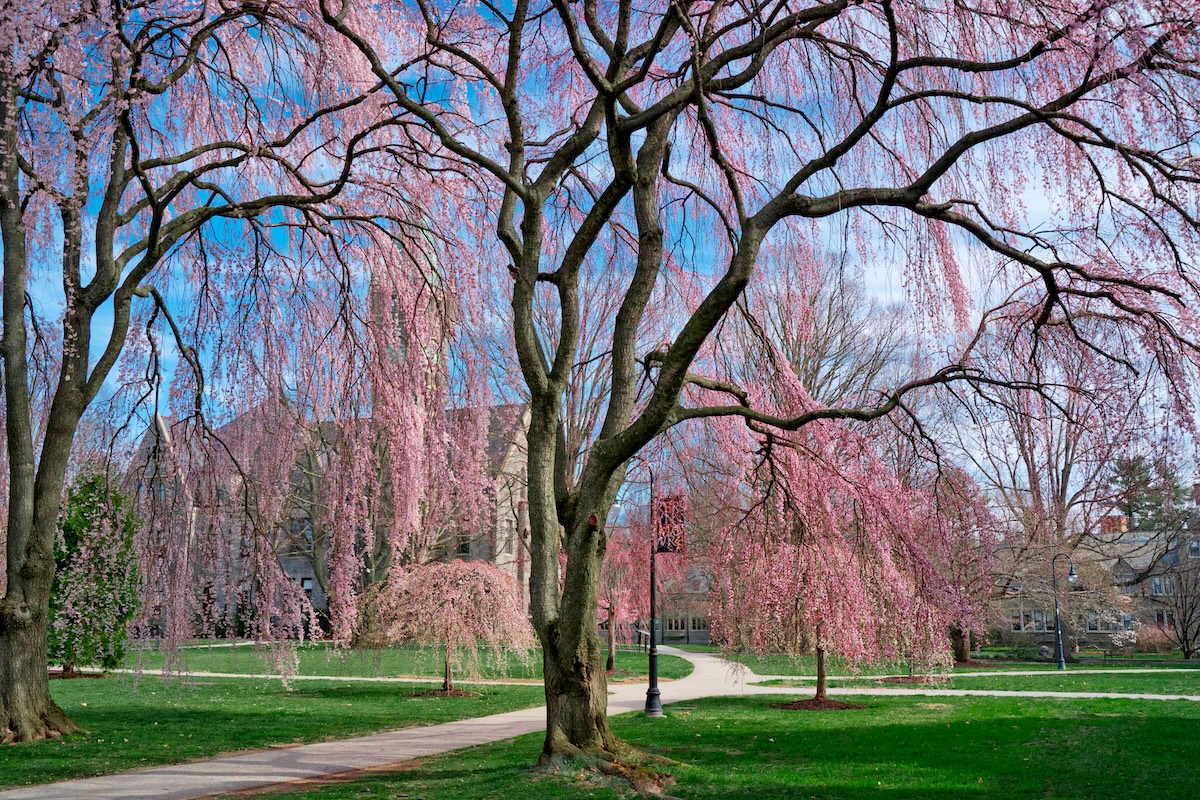
Bryn Mawr College sits on 135 acres just outside Philadelphia. The campus features Gothic architecture inspired by Oxford and Cambridge in England. You’ll see 40 buildings spread across grounds that double as an official arboretum. College Hall stands out as a National Historic Landmark and really shows off that classic Collegiate Gothic style. The Great Hall borrows design cues straight from Oxford’s historic structures.
Spring brings blooming weeping cherry trees all over campus. The tree-lined paths make for some great walks between classes.
Bryn Mawr started in 1885 as a Quaker institution and now operates as a private women’s liberal arts college. The campus mixes old historic buildings with newer, more sustainable ones. You can stroll the grounds and see how the school keeps its historic charm while adding modern touches.
13. Mount Holyoke College, South Hadley, Massachusetts
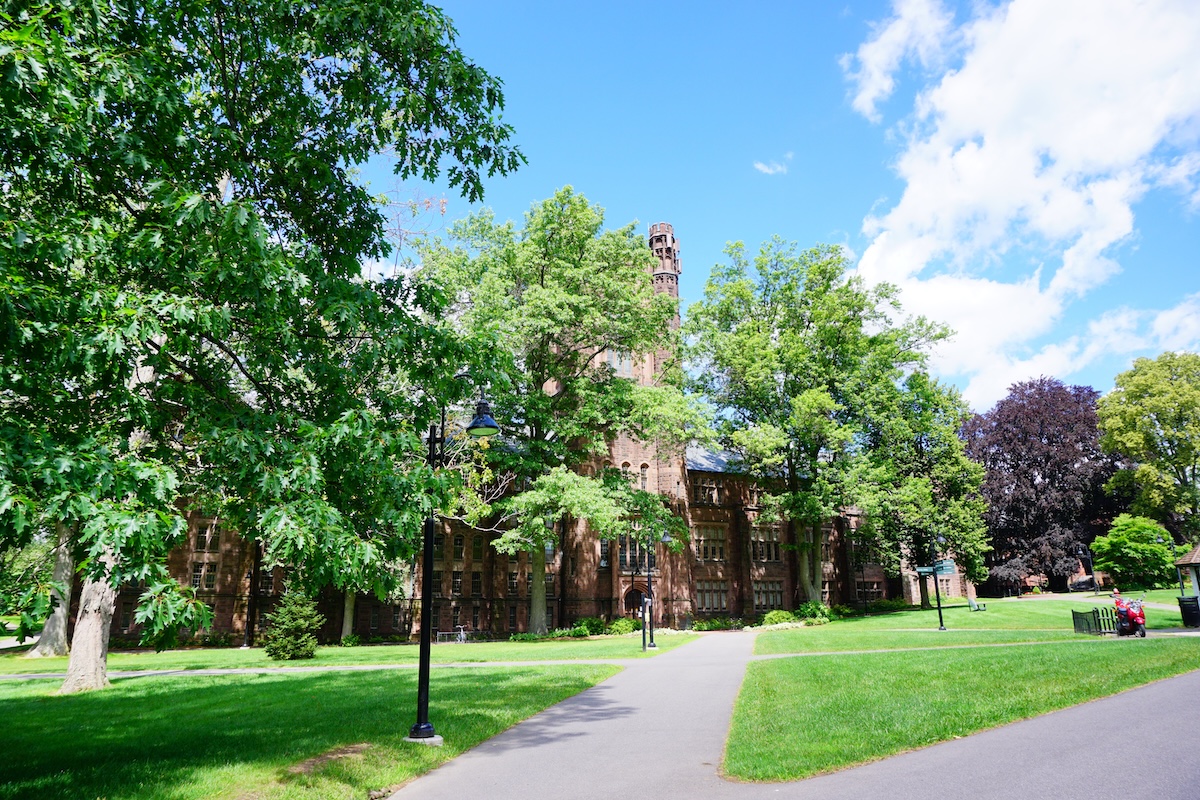
Mount Holyoke College stretches over 700 acres in South Hadley, Massachusetts. The campus shows off stone architecture built between 1896 and 1960, giving it that classic New England look.
There are two lakes on campus, with walking trails winding around them. The grounds include waterfalls and carefully kept gardens. You’re tucked between the Connecticut River and the Mount Holyoke Range—pretty ideal if you ask me.
Princeton Review put Mount Holyoke among the most beautiful campuses in the country. Founded in 1837 as a women’s liberal arts college, it’s also the oldest of the Seven Sisters colleges. When you visit, you can explore the waterfront and watch the seasons transform the landscape. The campus feels like a retreat, but you’re still connected to the nearby Five College Consortium.
12. Berry College, Rome, Georgia
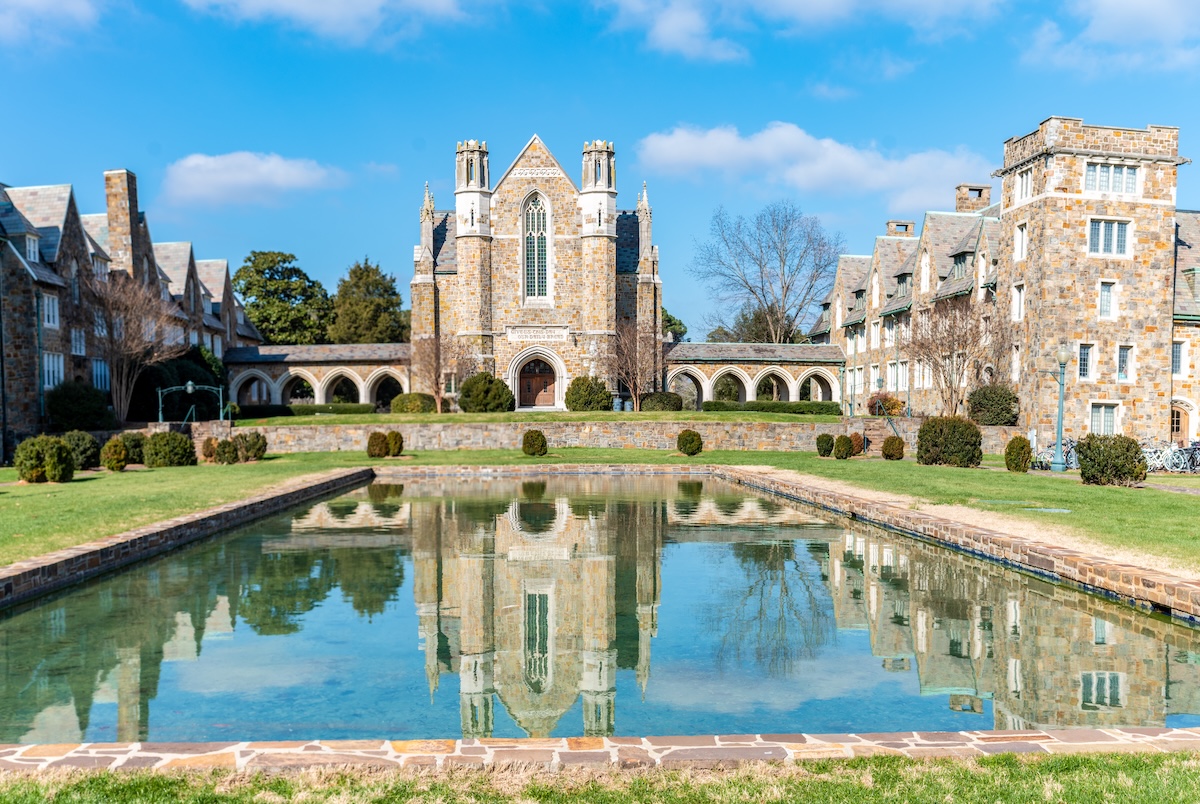
Berry College sits on more than 27,000 acres in Rome, Georgia, making it the nation’s largest contiguous college campus. You’ll find sprawling fields, quiet forests, pristine lakes, and rolling mountains across the grounds.
The campus shows off English Gothic architecture that gives it a bit of a European vibe. Historic buildings blend right into the surrounding landscape. Travel and Leisure ranked Berry as the second most beautiful college campus in America, just behind Stanford. The school pops up on plenty of other lists for prettiest campuses, too.
When you visit, you’ll notice how the huge acreage creates its own little worlds and ecosystems. This setup gives students hands-on learning you just don’t get at most colleges. The campus landmarks and all that natural beauty really make Berry stand out among Georgia’s schools.
11. Colgate University, Hamilton, New York
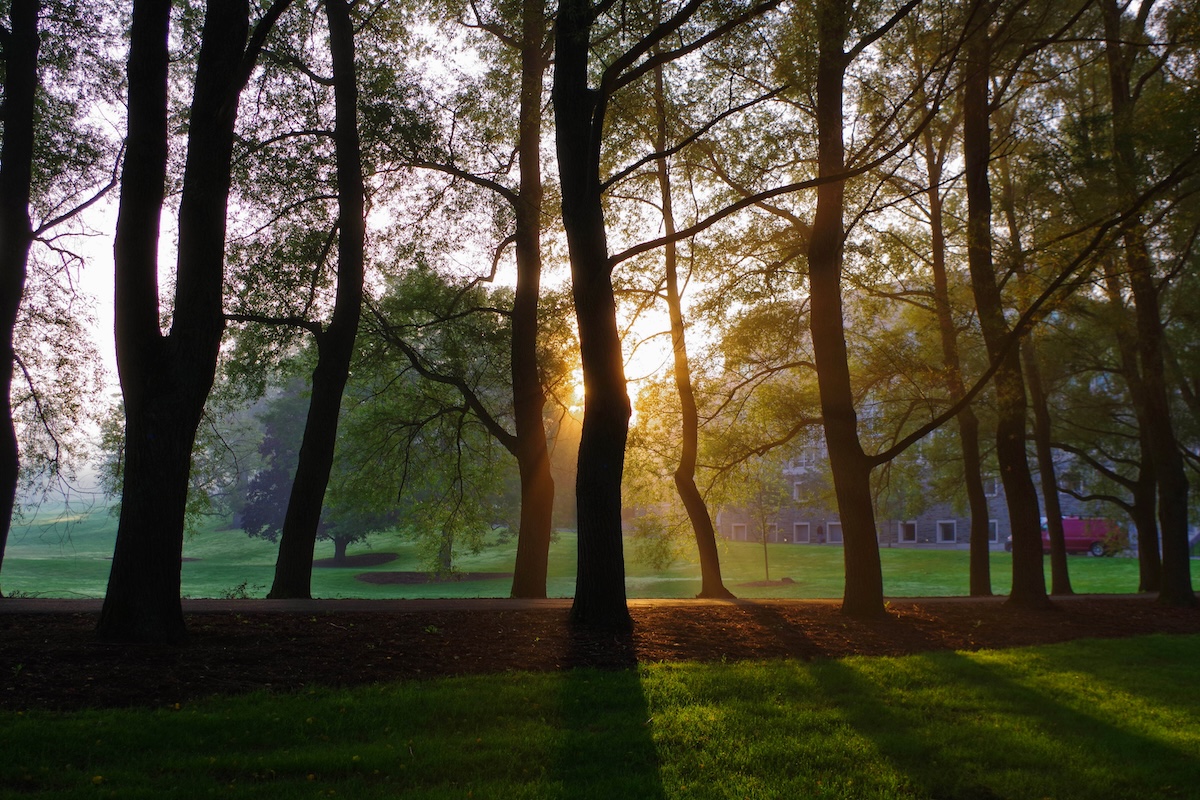
Colgate University sits tucked away in the scenic Chenango Valley in central New York. The campus stretches across about 575 acres, dotted with more than 88 buildings that mix historic charm and updated spaces.
The Princeton Review actually called Colgate the most beautiful campus in America back in 2010. With roughly 2,300 trees scattered around, the place feels alive year-round—especially when the leaves change or fresh snow falls. If you wander around, you’ll spot old stone buildings with surprisingly modern interiors. There’s a planetarium, a natatorium, and honestly, a lot more than you’d expect for a campus this size.
The Village of Hamilton sits right next door and really adds something special. Forbes once said it was one of the friendliest towns in America, and you can feel that vibe as soon as you arrive.
10. University of Colorado Boulder, Boulder, Colorado
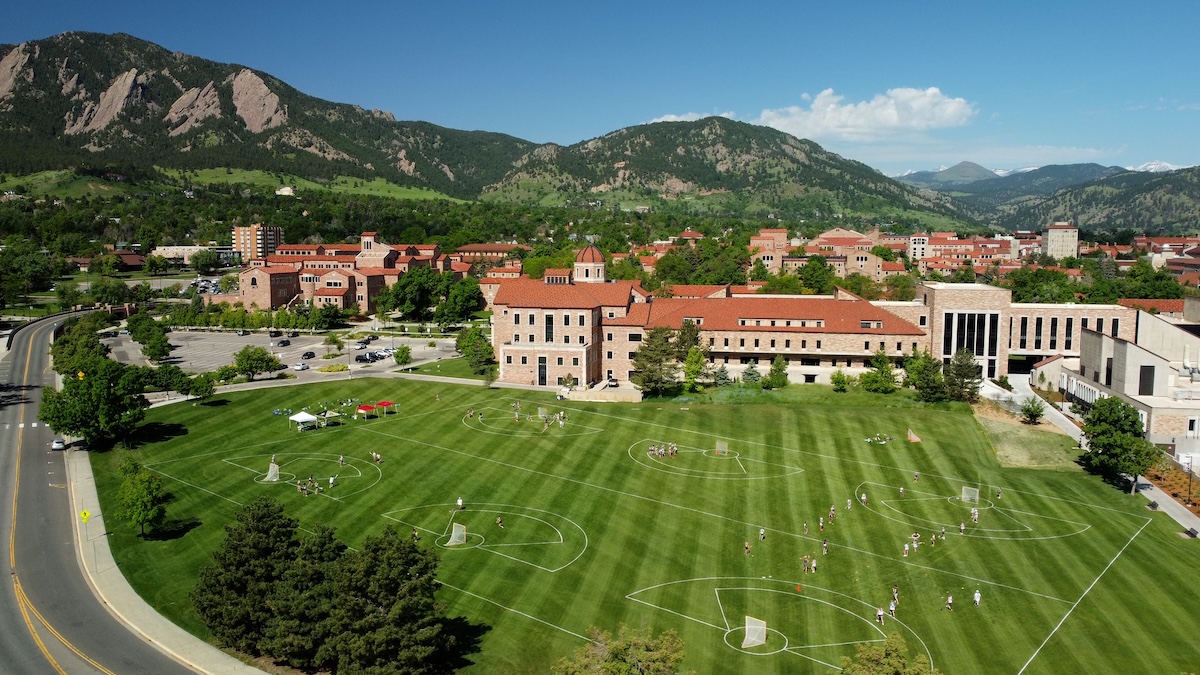
CU Boulder’s campus sits at the base of the Flatirons, angled sandstone formations that hover above campus as active participants, not mere backdrop. The architecture is Tuscan Gothic Revival, which sounds like a style invented by a committee that couldn’t agree, but in practice produces warm sandstone buildings with red tile roofs that look completely intentional against the Colorado sky.
Boulder itself does considerable heavy lifting here. The Pearl Street Mall, hiking access directly from the campus edge, and the outdoor industry vibe of the surrounding city give CU Boulder a contextual advantage few campuses on this list enjoy.
9. Pepperdine University, Malibu, California
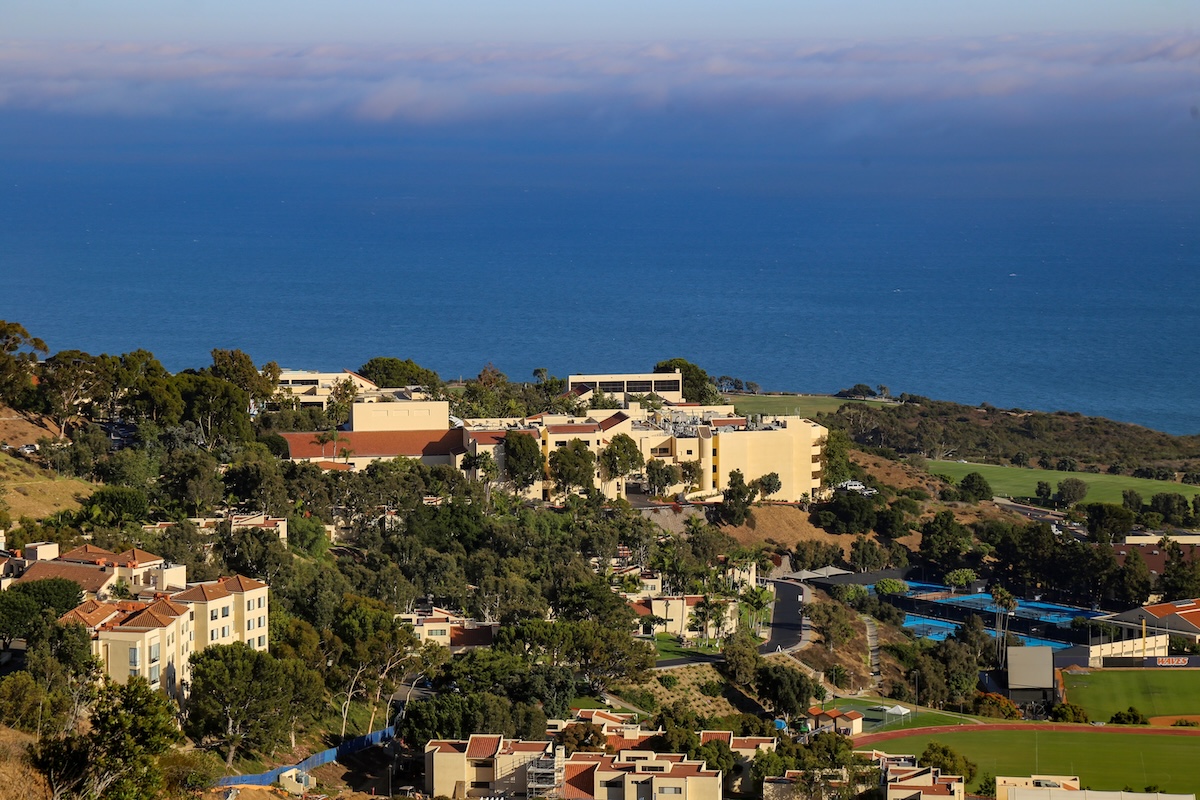
Pepperdine’s campus in Malibu sits on a bluff above Pacific Coast Highway, which means students attend class with an ocean view that would cost roughly four thousand dollars a night at the resort next door. The architecture is Spanish Colonial so you have white stucco, red clay roofs, which all perform well against both the Pacific and Santa Monica Mountains.
The gardens are meticulously maintained, the amphitheater faces the ocean, and there are more fountains per square foot than strictly necessary. As a place to study, it’s arguably too distracting. As a place to visit on a clear October afternoon, it’s excellent.
8. University of Washington, Seattle, Washington
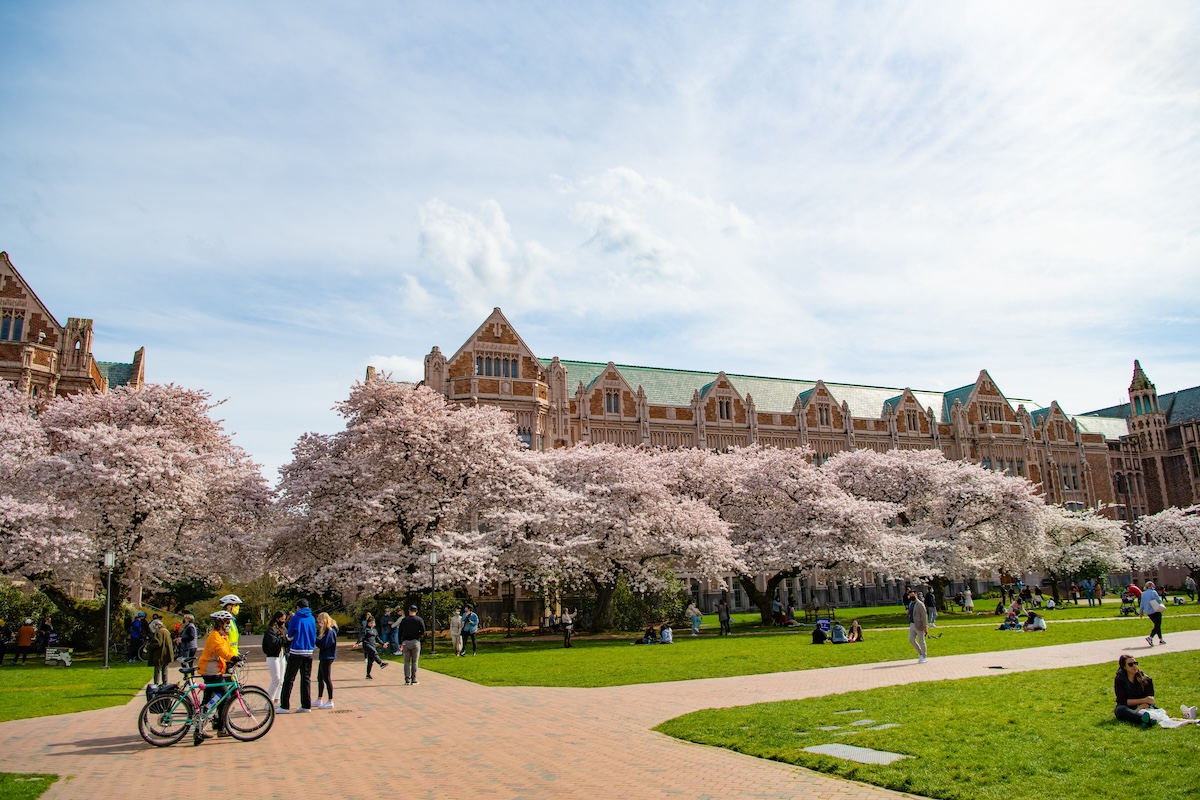
The University of Washington’s main campus in Seattle sits between Lake Union and Lake Washington, a geographic situation that most city universities can only envy quietly. The centerpiece is Rainier Vista, a tree-lined walkway framing Mount Rainier on clear days, and in the Pacific Northwest. Clear days are specific events you start actively planning around.
The Collegiate Gothic buildings anchoring the central quad, particularly Suzzallo Library with its vaulted ceilings and stained glass reading rooms, lend UW a gravitas its California counterparts don’t quite manage. Cherry blossom season in early April is an additional, persuasive annual argument for a visit.
7. Cornell University, Ithaca, New York
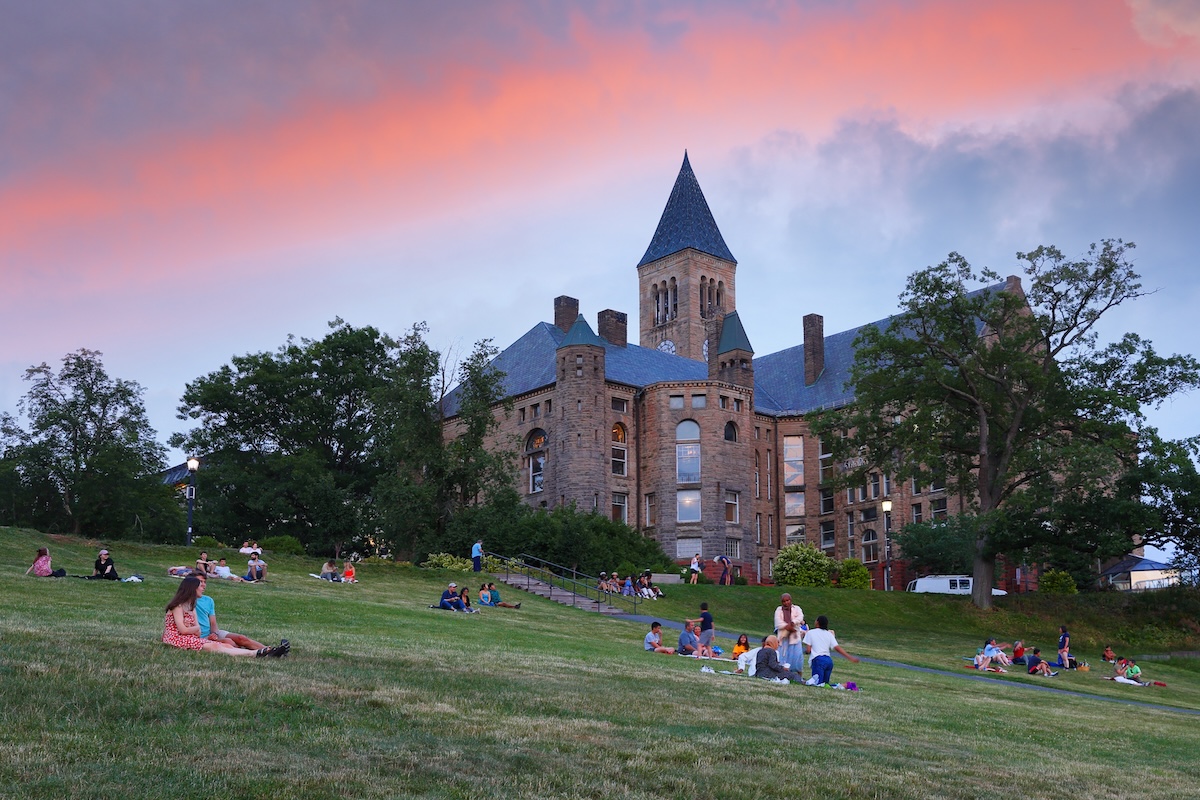
Cornell occupies 2,300 acres of gorge-carved land in the Finger Lakes region of upstate New York, which sounds manageable until you realize that “gorge-carved” means actual waterfalls and deep ravines cutting through the middle of campus. It is dramatically, almost theatrically situated on a hill above Ithaca with Cayuga Lake below.
The architecture spans Collegiate Gothic, Romanesque, and thoroughly modern, a range that shouldn’t cohere but somehow does, held together by the landscape’s insistence on being the dominant visual element. The suspension bridge crossing Fall Creek Gorge remains one of the more memorable ten-second walks in all of American academia.
6. University of Notre Dame, Notre Dame, Indiana
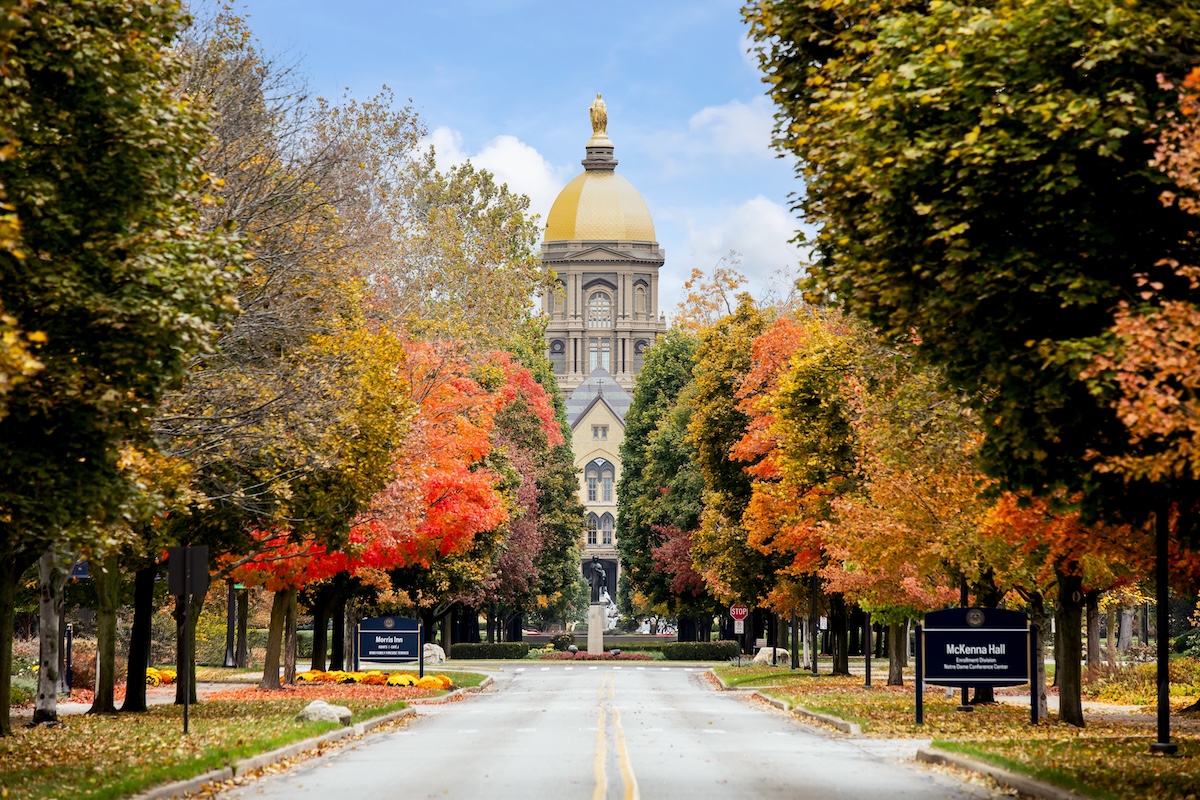
Notre Dame’s campus in northern Indiana works harder architecturally than its flat, landlocked geography suggests any campus needs to. The Golden Dome is covered in actual gold leaf and topped with a statue of the Virgin Mary, serving as an orientation point from nearly anywhere on campus. The limestone buildings arranged around two man-made lakes give the whole place a formal, intentional quality.
The Basilica of the Sacred Heart is among the finest religious buildings in the Midwest. For football Saturdays in fall, when the whole campus mobilizes as a single organism, there is nothing comparable in collegiate America.
5. Duke University, Durham, North Carolina
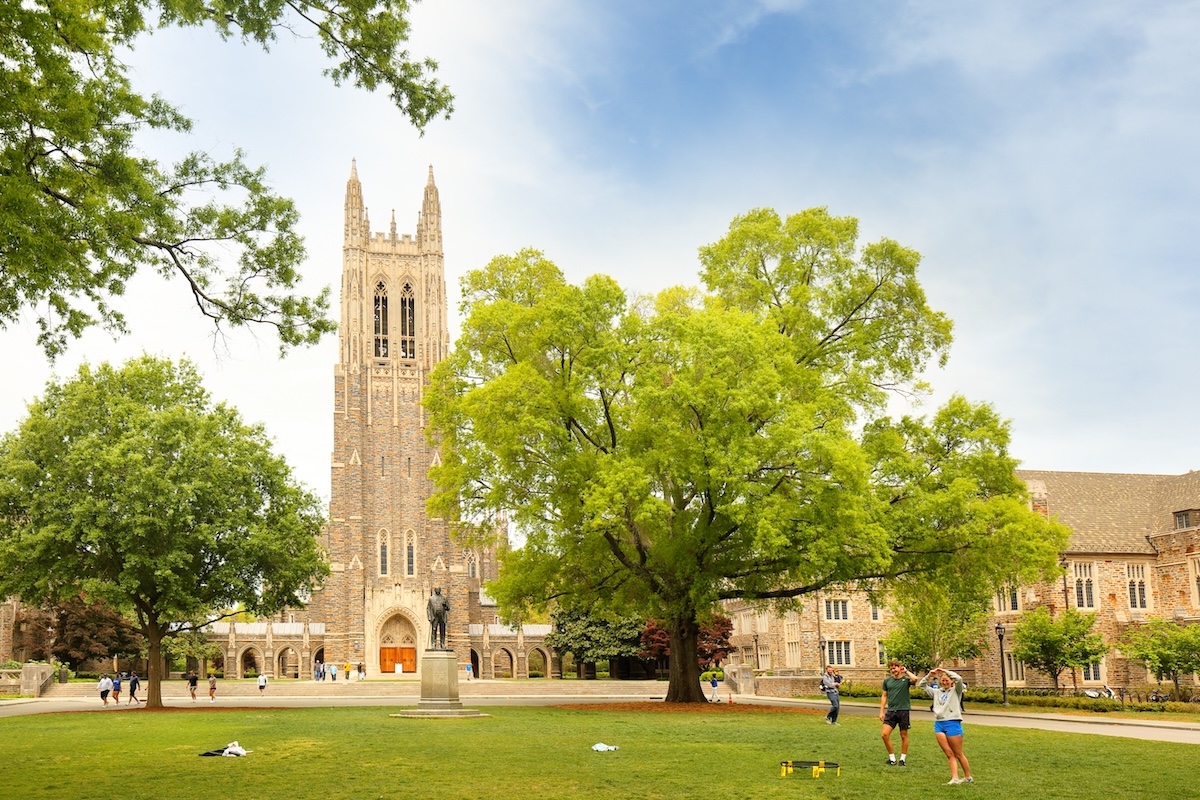
Duke’s West Campus in Durham is essentially a Duke Chapel expansion project that got out of hand. The chapel, completed in 1935 and modeled loosely on Canterbury Cathedral, stands 210 feet tall and anchors a Gothic stone campus whose origin story reads like a cautionary tale about tobacco industry wealth.
The quadrangles and stone archways are maintained with a precision that borders on competitive. The adjacent Sarah P. Duke Gardens is 55 acres of formal and informal plantings, a separate, considerable reason to visit that has nothing to do with the university.
4. University of Virginia, Charlottesville, Virginia
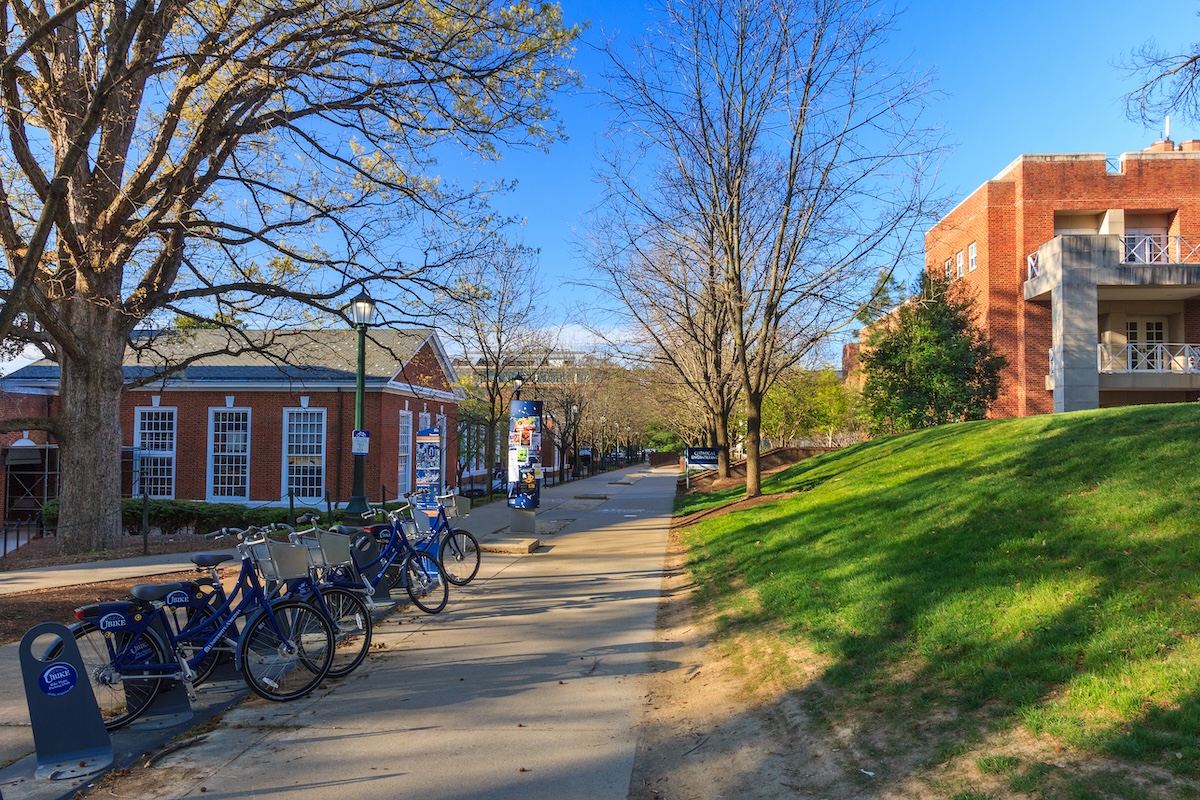
Thomas Jefferson designed UVA’s Academical Village (a term he coined) and did not underestimate the assignment. The Rotunda, modeled after the Roman Pantheon and placed at the head of a lawn lined with pavilions and student rooms, was Jefferson’s vision of a living, working campus. He valued it enough to include on his tombstone alongside the Declaration of Independence, with two terms as president conspicuously absent.
The Lawn remains a working residence for senior students, keeping the Neoclassical buildings from feeling like a preserved exhibit. Charlottesville in October, when the foliage reaches full volume, makes the campus considerably more compelling.
3. Stanford University, Stanford, California
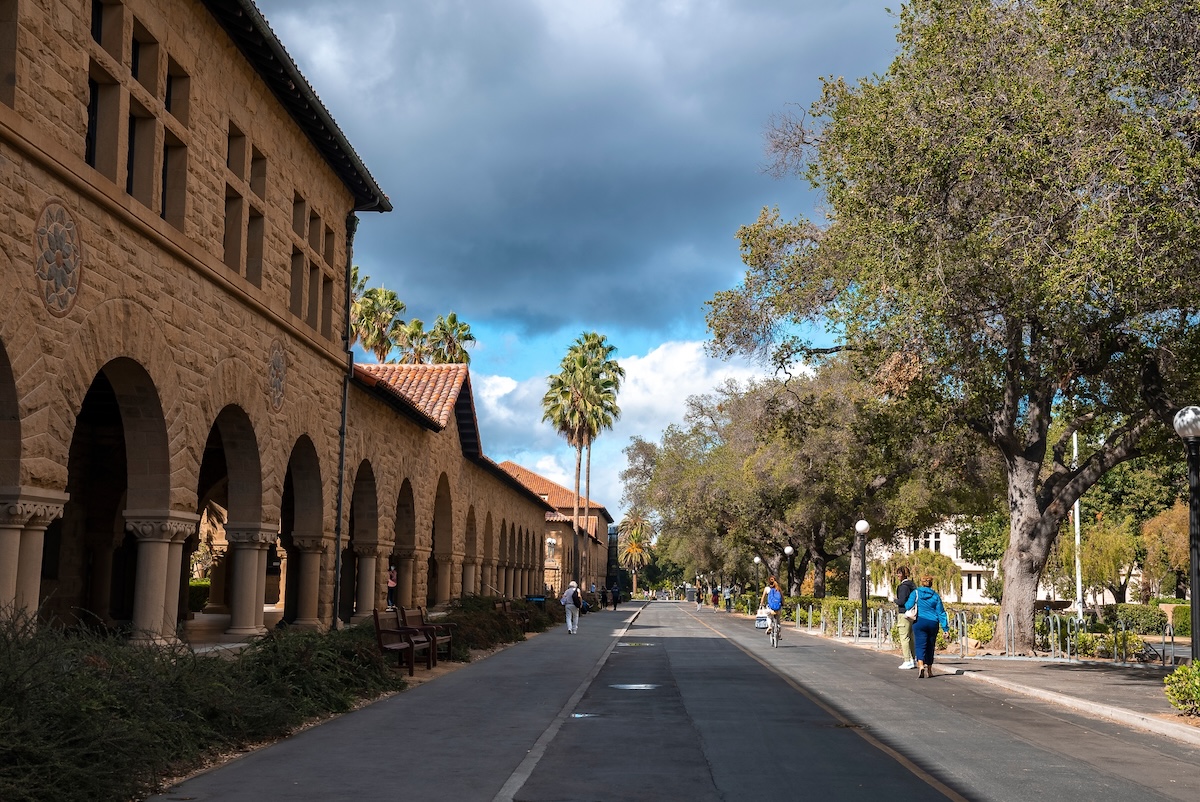
Stanford’s 8,180-acre campus in the Santa Clara Valley is less a campus and more a small self-sufficient city that happens to contain a university. The core is Spanish Colonial Revival that shines through its sandstone arcades and red tile roofs. The Memorial Church’s mosaic facade is among the most elaborate found on any American campus and it anchors the central quad.
The palm-lined pedestrian mall and the Rodin sculpture garden near the Cantor Arts Center give the place a cultural density that exceeds most actual cities. The weather is, frankly, ridiculous, mild and sunny for a disproportionate number of days each year.
2. Yale University, New Haven, Connecticut
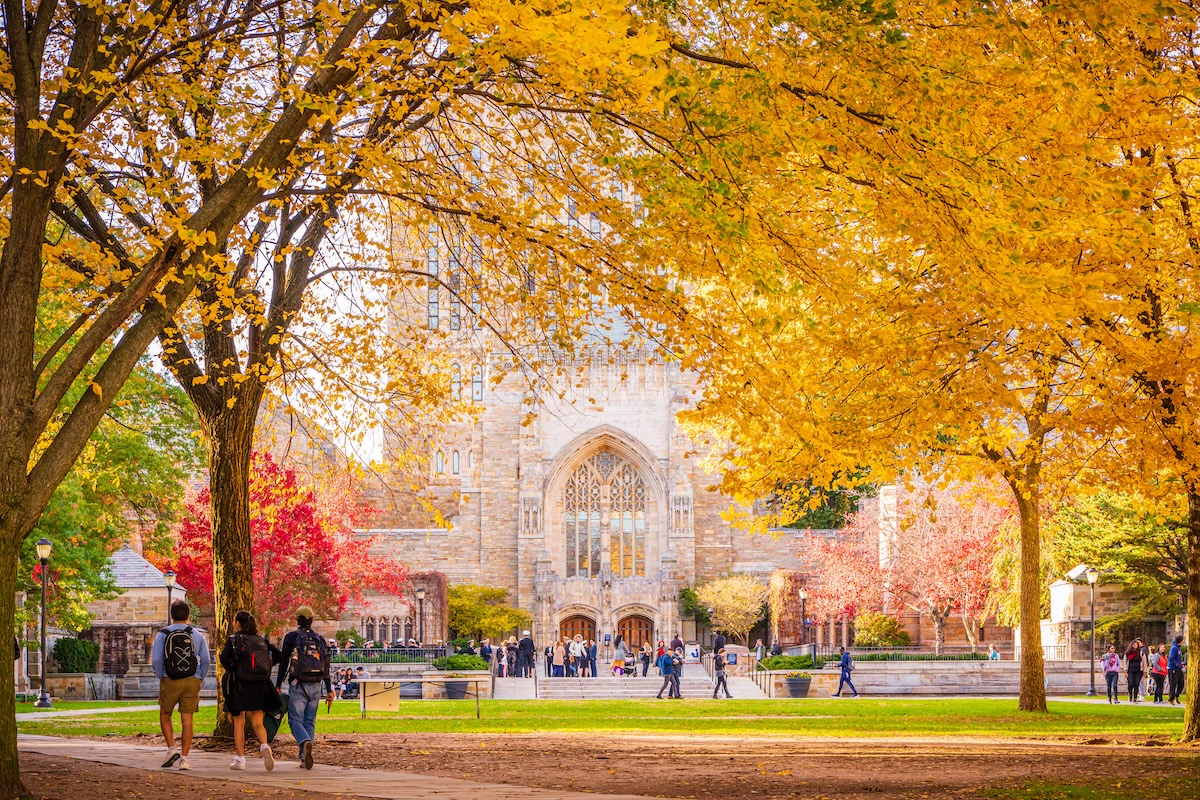
Yale’s campus in downtown New Haven manages the difficult trick of occupying a mid-sized city’s center without feeling isolated from it or consumed by it. The residential colleges are twelve Gothic stone quadrangles built primarily in the 1930s. They are the main architectural event, each with its own dining hall, courtyard, and carefully accumulated institutional personality.
Harkness Tower at dusk, when the carillon plays, is one of the better small experiences in American collegiate architecture. Sterling Memorial Library, designed to resemble a cathedral with the card catalog positioned where the altar would be, is either brilliant or deeply strange, possibly both.
1. Princeton University, Princeton, New Jersey
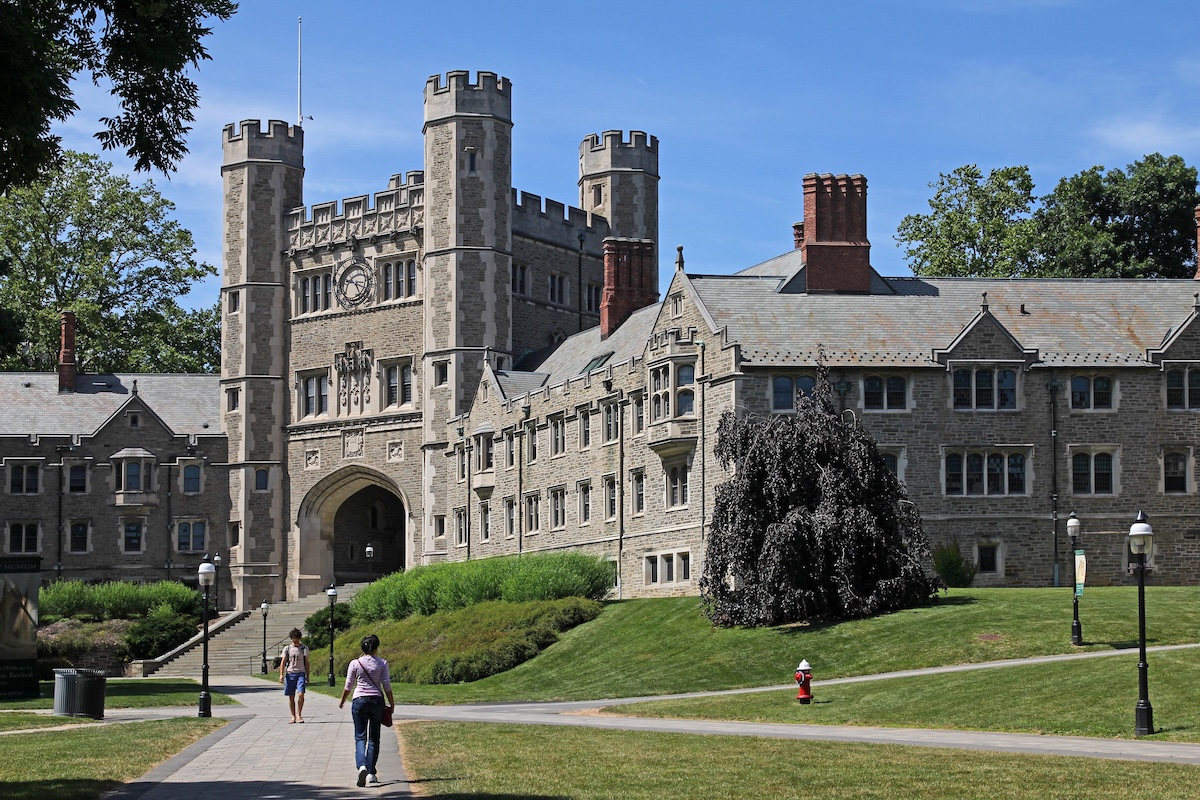
Princeton’s campus in central New Jersey is the one every other Collegiate Gothic campus in America gets compared to, usually unfavorably. The combination of Gothic and Romanesque buildings arranged across 600 acres of mature trees and thoughtfully placed open spaces creates an environment that functions as well in January as it does in May.
Nassau Hall, built in 1756, briefly served as the U.S. Capitol. Blair Arch is where every senior class photograph has been taken since photographs existed. The Art Museum’s permanent collection would be the envy of many regional institutions that simply lack a great university attached.