
Covered bridges used to be an architectural standard in the USA. These timber bridges with a pitched roof and sides were built to protect the wood from the elements, usually in areas with extreme weather. At one point in the 19th century, there were thousands scattered across the country. Today, less than one thousand remain.
Covered bridges have since become a symbol of rural American life. Each bridge has its own unique story and timeless charm – indeed, these structures feel like portals into a bygone era. Think Gold Rush adventures, red barns dotting the countryside, and a time when road travel was less about convenience and more about the luxury of the journey.
15. Humpback Covered Bridge (Covington, Virginia)
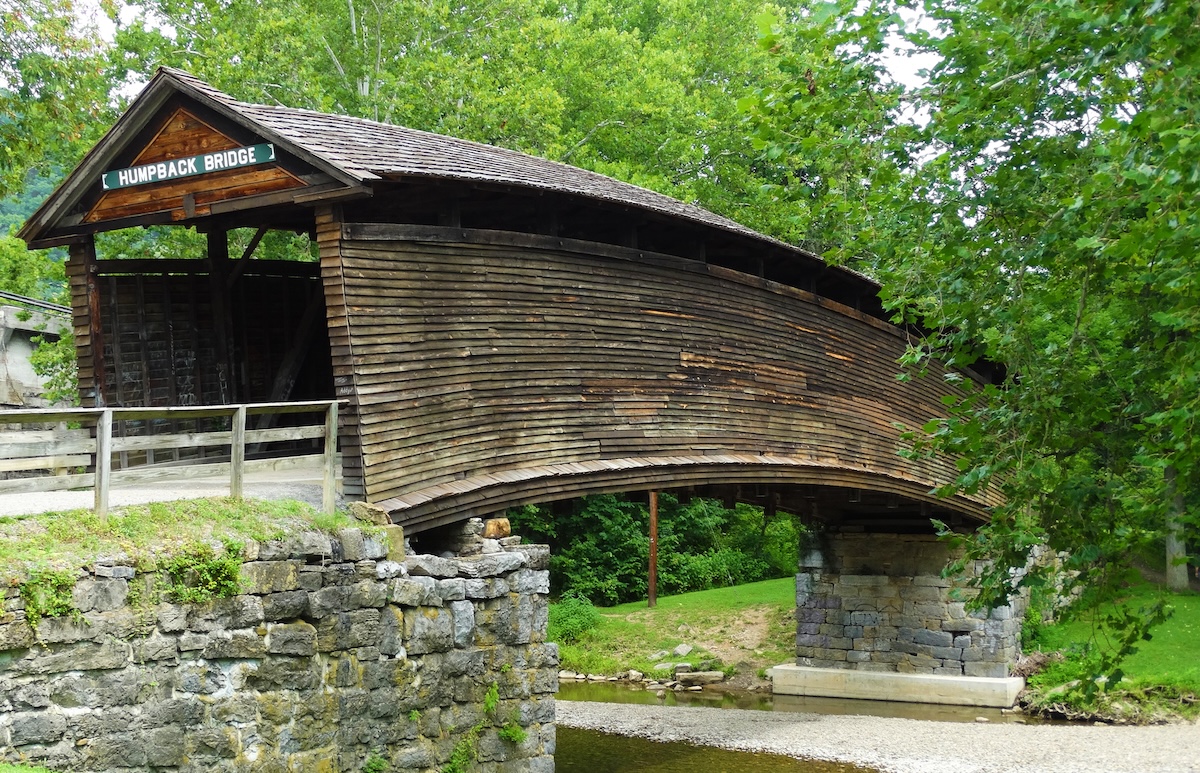
As one of the oldest remaining covered bridges in Virginia, the Humpback Covered Bridge in Covington is a testament to 19th-century bridge engineering. Built in 1857, it features a distinctive humpback design that allows water to pass underneath it during heavy floods.
It crosses Dunlap Creek inside a five-acre wayside park, offering visitors a glimpse into the past in one of the most peaceful settings imaginable. Technically, it’s the only remaining covered humpback bridge in the entire country.
14. AM Foster Covered Bridge (Cabot Plains, Vermont)
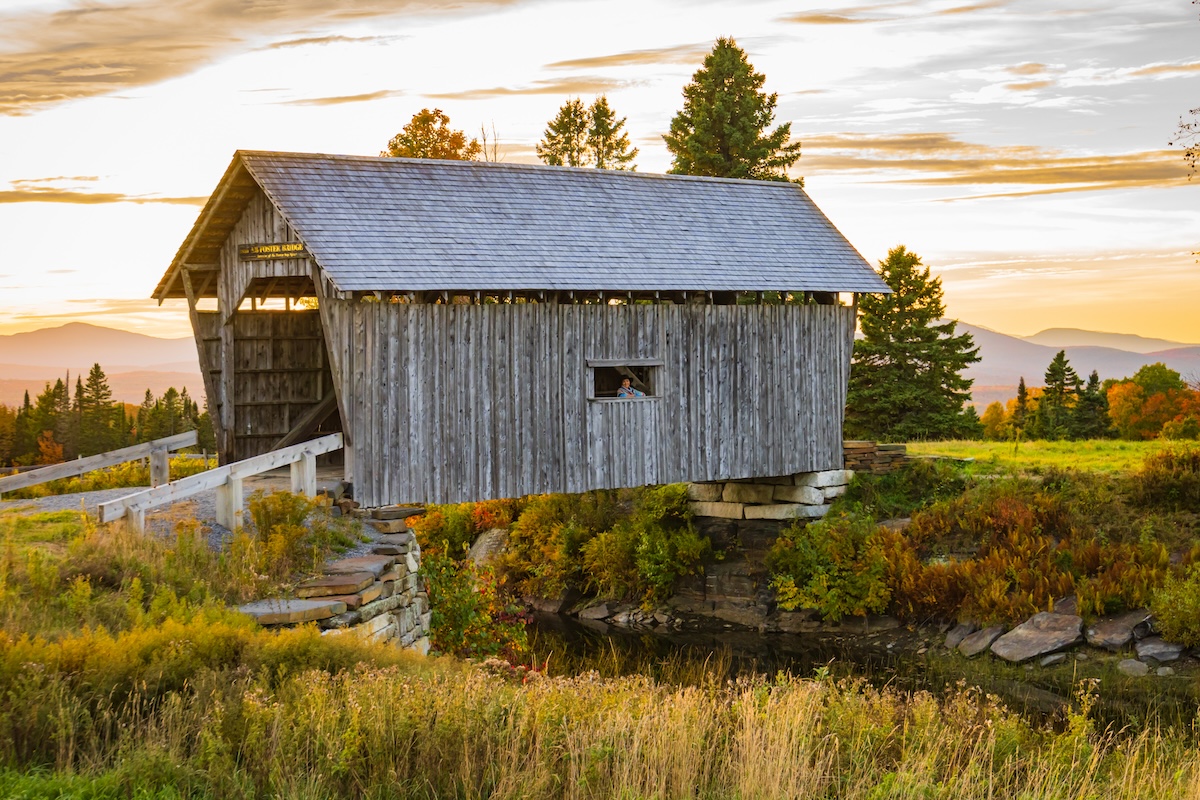
Tucked away in the stunning landscapes of Cabot Plains, Vermont, the AM Foster Covered Bridge is relatively new, considering how old-school it looks. It was built in 1998 by Richard Spaulding on his private land – simply because he loved covered bridges.
Instead of connecting roads, the bridge is placed over a pond fed by a natural spring on Spaulding’s land. The property, which is accessible to the public today, is part of Vermont’s famous cheese trail.
13. Horton Mill Covered Bridge (Blount County, Alabama)
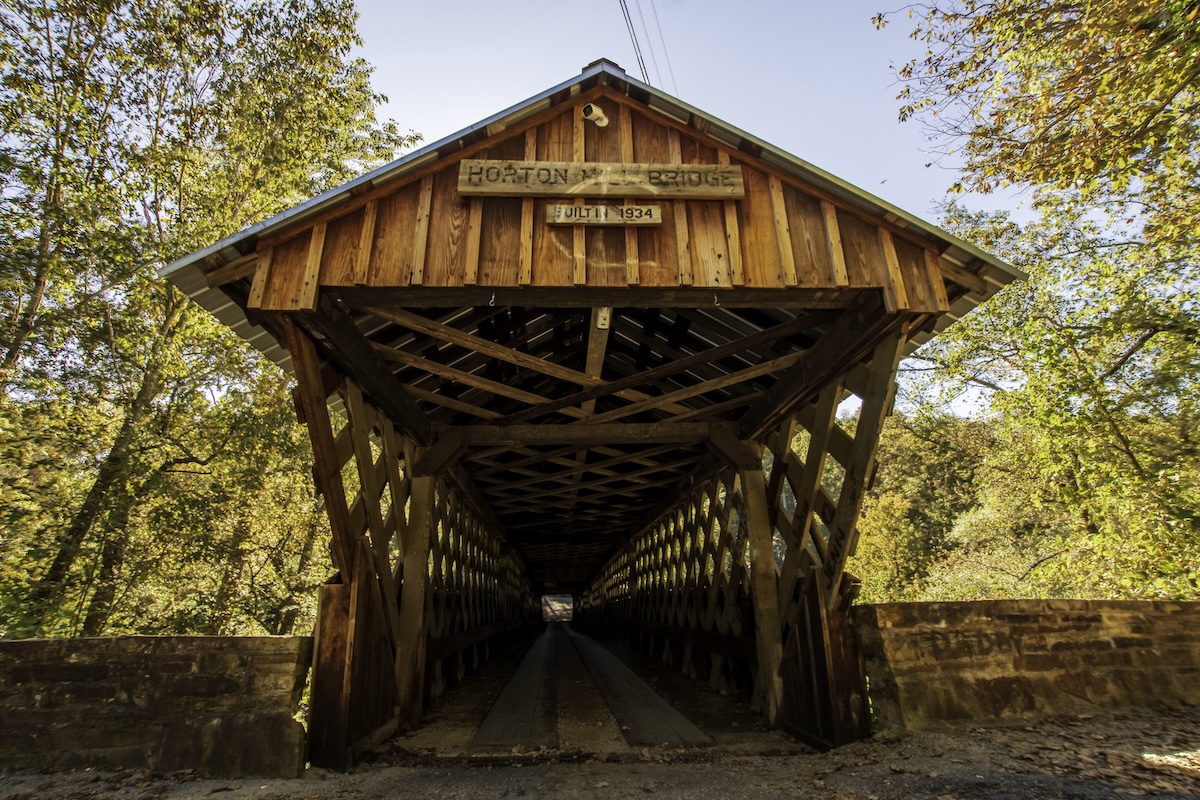
Built in 1934, the Horton Mill Covered Bridge is a great example of an early to mid-century bridge design. It’s the highest covered bridge covering a waterway in the U.S., towering 70 feet above the Little Warrior River.
The bridge stretches 203 feet across the river and underwent its most recent restoration in 2013. It’s famous for its wooden lattice truss design, which became a popular style for covered bridges built in the early 20th century.
12. Wawona Covered Bridge (Yosemite National Park, California)
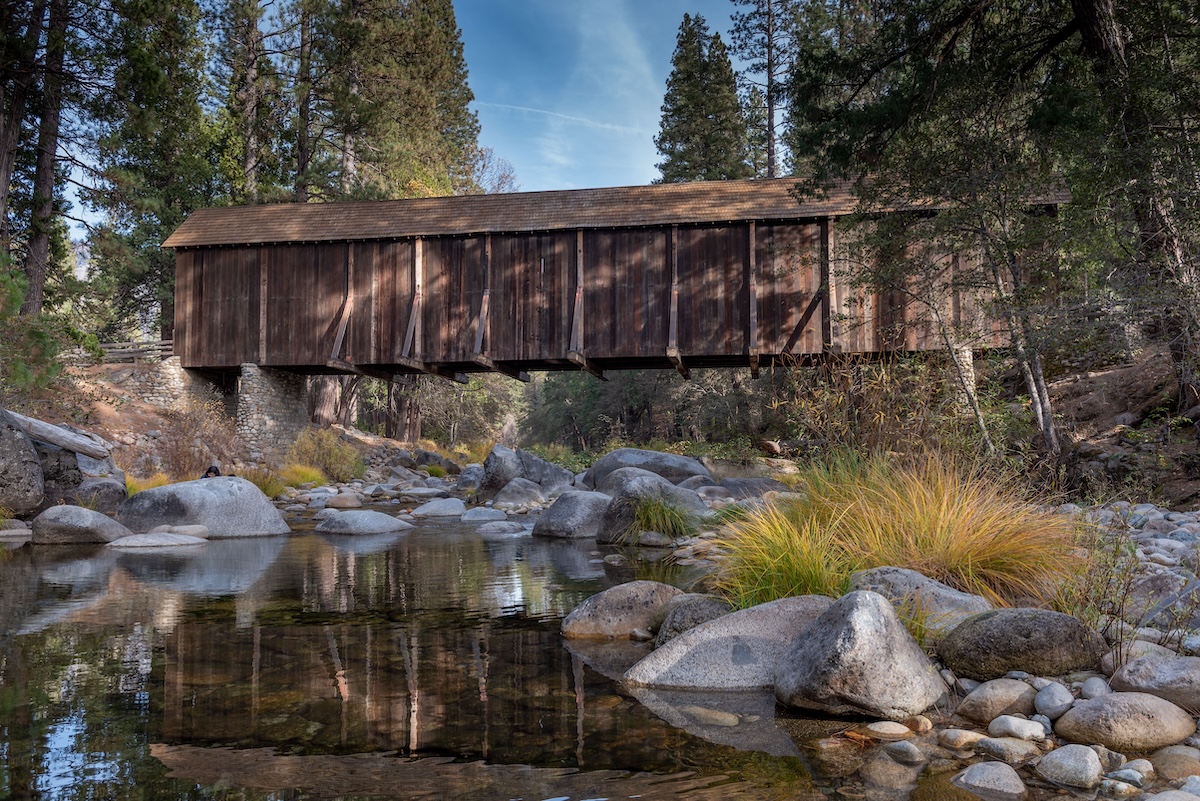
Yosemite might be famous for its huge rock faces and waterfalls, but it also has a claim to fame in the world of covered bridges. The Wawona Covered Bridge was once the only way to cross the South Fork of the Merced River into the park, making it a crucial part of Old Wawona Road.
It was built in 1857 but only got its famous cover in 1879. Today, it still stands as a historical landmark and gives a good idea of the early days of Yosemite exploration.
11. Goodpasture Covered Bridge (Lane County, Oregon)
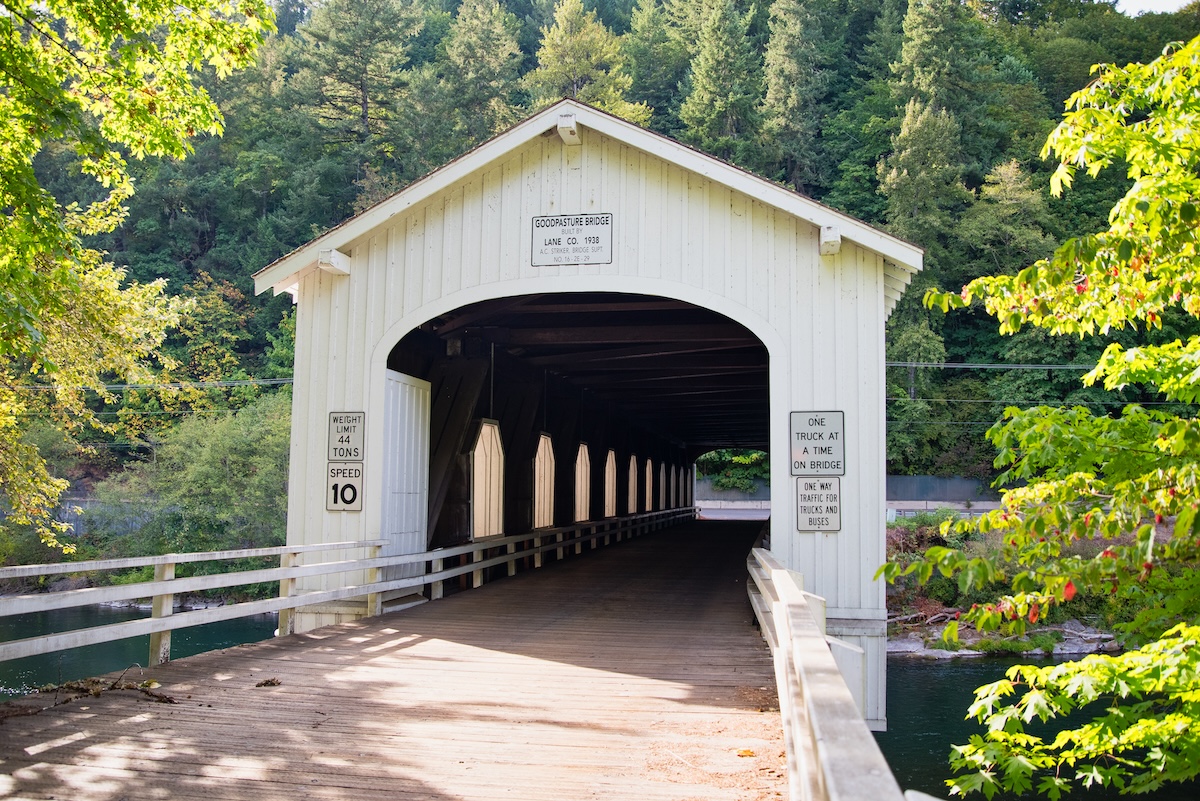
Stretching 165 feet across the McKenzie River, the Goodpasture Covered Bridge is Oregon’s second-longest. It’s also one of the most photographed, and it’s not hard to see why. Instead of the traditional slack wood designs common on covered bridges, this one features a unique Gothic style with windows on either side.
Because of its windows and covering of white paint, it looks a bit like an elongated house stretched across the river. But it’s still used to connect the town of Vida, Oregon, to the nearby farmlands across the river.
10. Horton Bridge (South Range, Wisconsin)
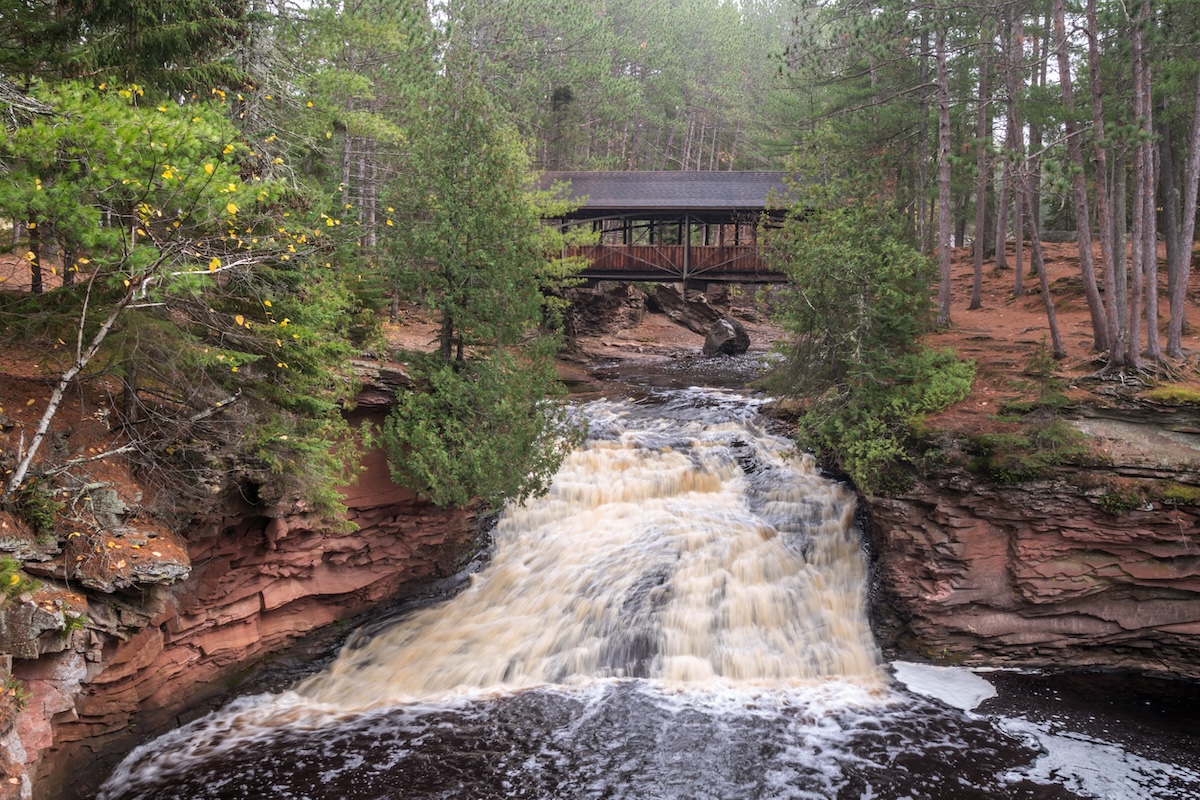
The Horton Bridge in South Range, Wisconsin, was built in 1899 as part of a highway serving traffic crossing the Amnicon River.
But wait: in 1930, this bridge was moved from its original location crossing the highway to where it sits today – inside Amnicon Falls State Park. It only received its cover in 1939.
Today, it’s a pedestrian bridge in the stunning park, with near-perfect views of a waterfall below.
9. Sunday River Bridge (Newry, Maine)
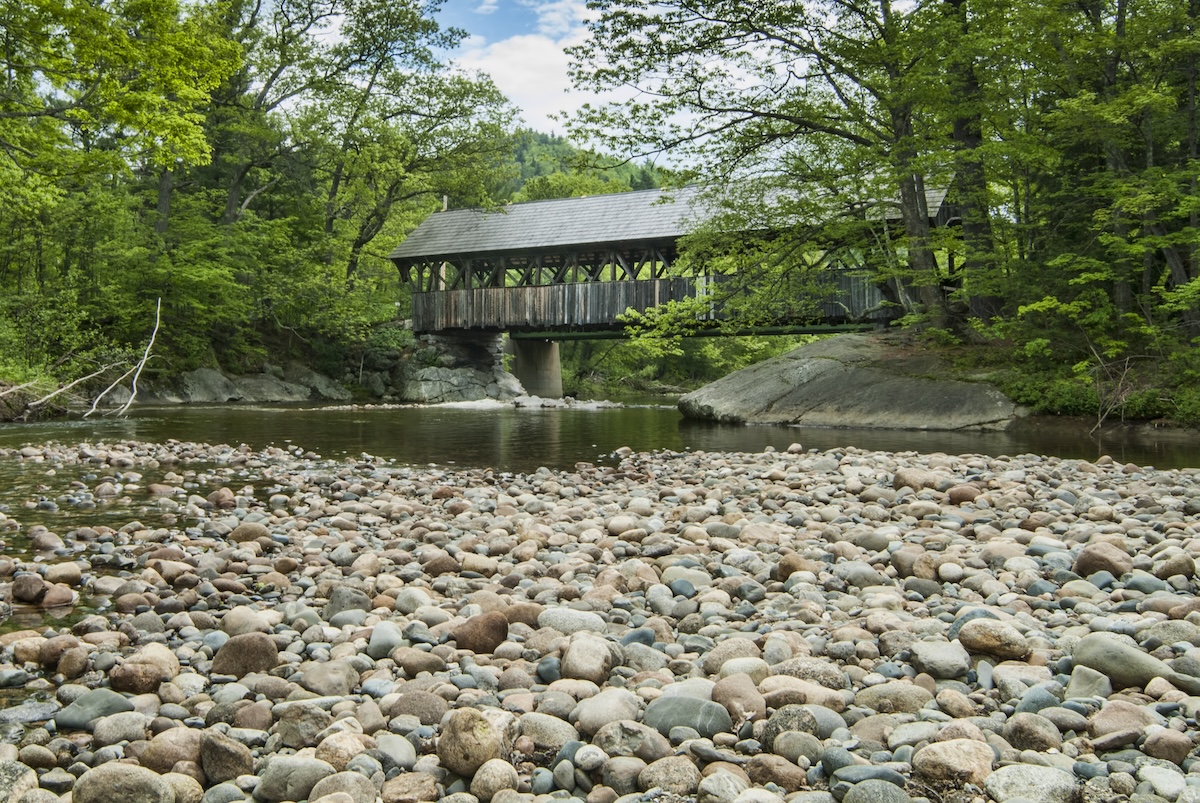
Nicknamed ‘The Artist’s Bridge,’ the Sunday River Bridge has inspired painters and photographers since its construction in 1872. Before it paved the way across the Sunday River, another bridge built in 1811 sat in its place until a great flood in 1869.
It’s a classic Paddleford truss bridge, stretching 100 feet across the river at a height of 22 feet. The design features a series of crossed trusses between King posts. Its clever design meant it was able to outlast many other bridges in the area that were taken out by flood waters in the early 20th century.
8. Sachs Bridge (Gettysburg, Pennsylvania)
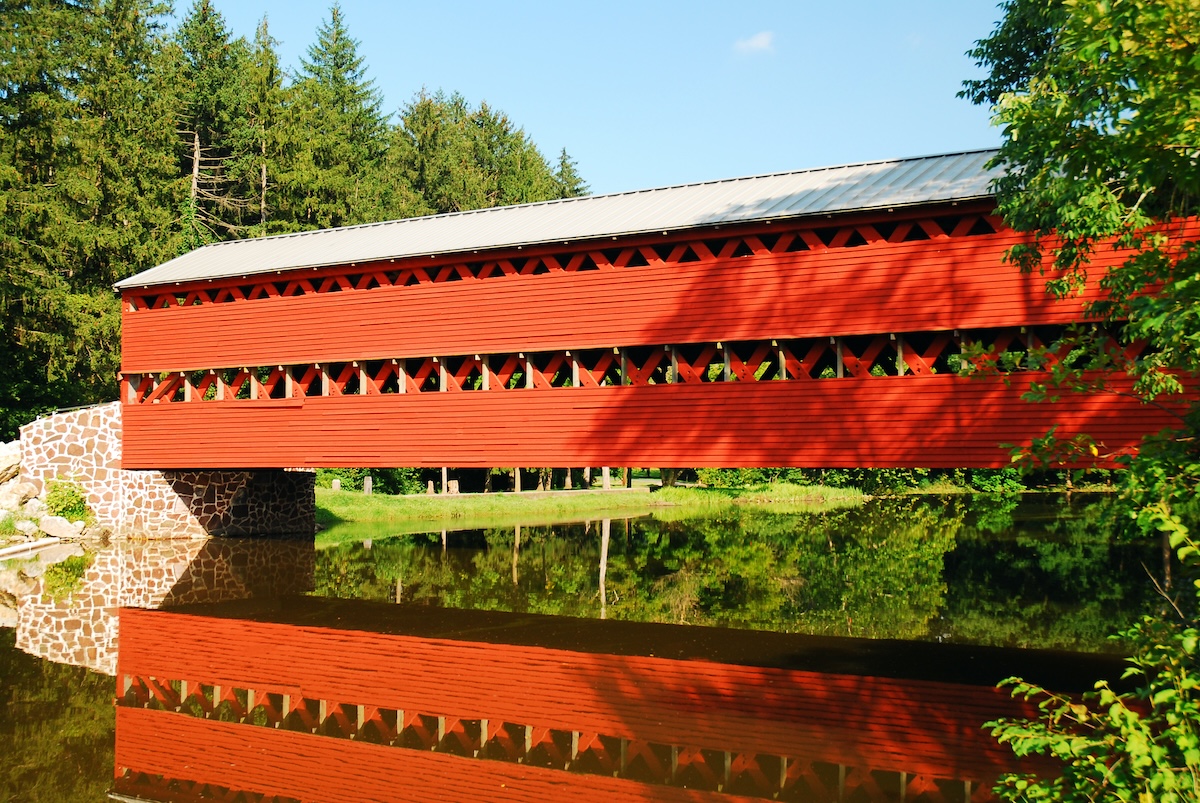
Pennsylvania has more covered bridges than any other state—213, to be exact. The Sachs Bridge is one of the oldest in the state. Built in 1852 across Marsh Creek just outside of Gettysburg, this historic bridge has proven to be more than just a pedestrian and vehicular crossing.
During the Civil War, Union Army and Confederate soldiers used the bridge as a shelter and to reach a field hospital on the other side. After an intense three-day battle known as the Battle of Gettysburg, the Confederate Army retreated across the bridge in defeat.
7. Bridgeport Covered Bridge (Nevada County, California)
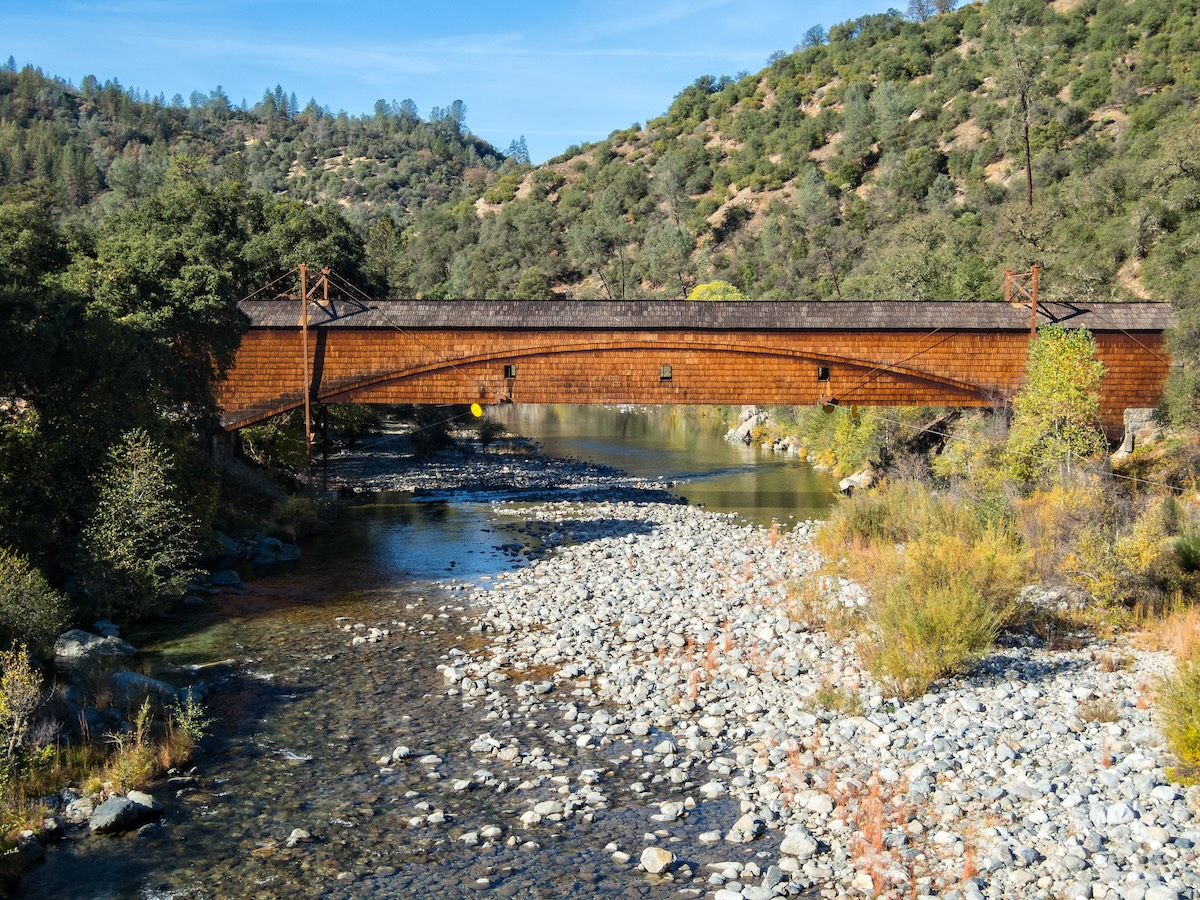
Recognized as the longest wooden covered bridge in the world, the Bridgeport Covered Bridge is a real show-stopper. It seems to defy gravity, with its weighty wooden body crossing a staggering 233 feet across the South Yuba River.
It’s not just fascinating to look at. Dating back to 1862, it was also a functional bridge responsible for transporting goods and people through California during the Gold Rush era. It’s recently been restored as a pedestrian bridge, and walking across it feels like entering a time portal.
6. Cilley Covered Bridge (Tunbridge, Vermont)
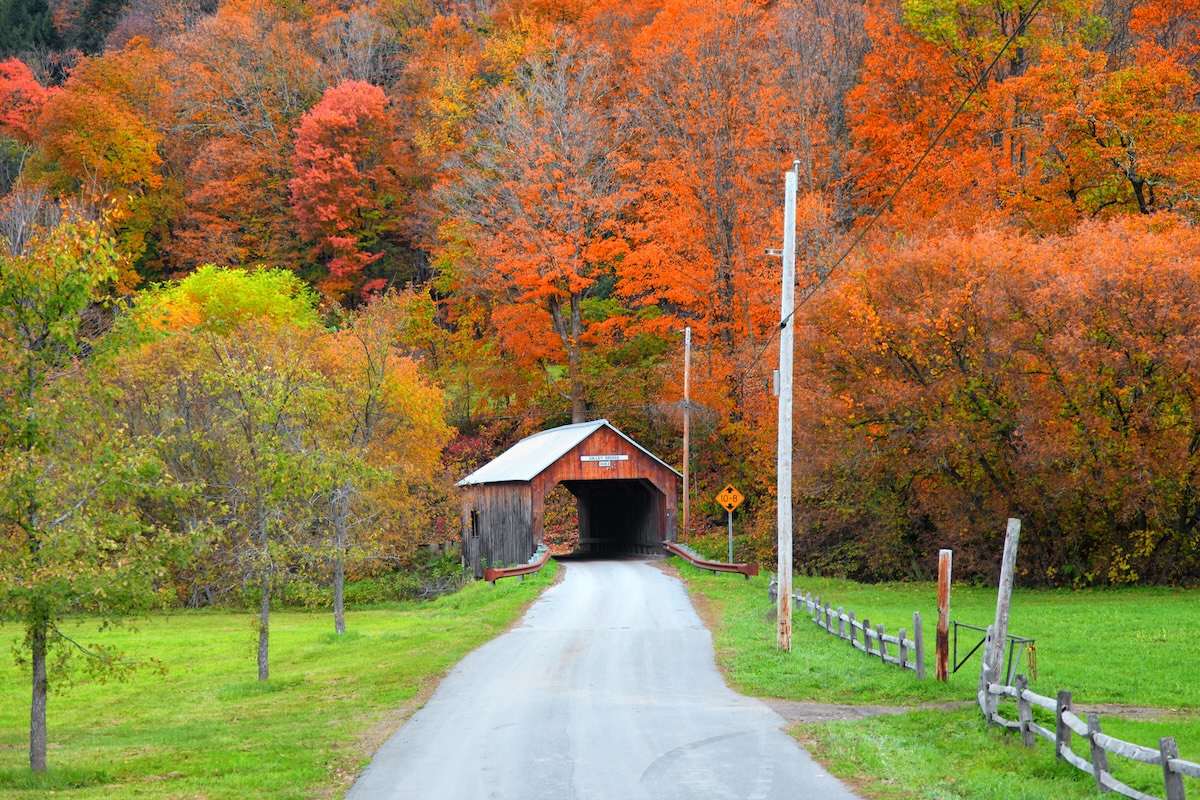
With a society dedicated entirely to covered bridges, Vermont takes its historic bridges seriously. The Cilley Covered Bridge is a prime example. When it was built in 1883 across the first branch of the White River, the construction cost just $525.
Today, it remains largely as it was when it was built in the 17th century. It’s a perfect example of a King-post truss structure and is one of many 19th-century bridges in Tunbridge.
5. Campbell’s Covered Bridge (Landrum, South Carolina)
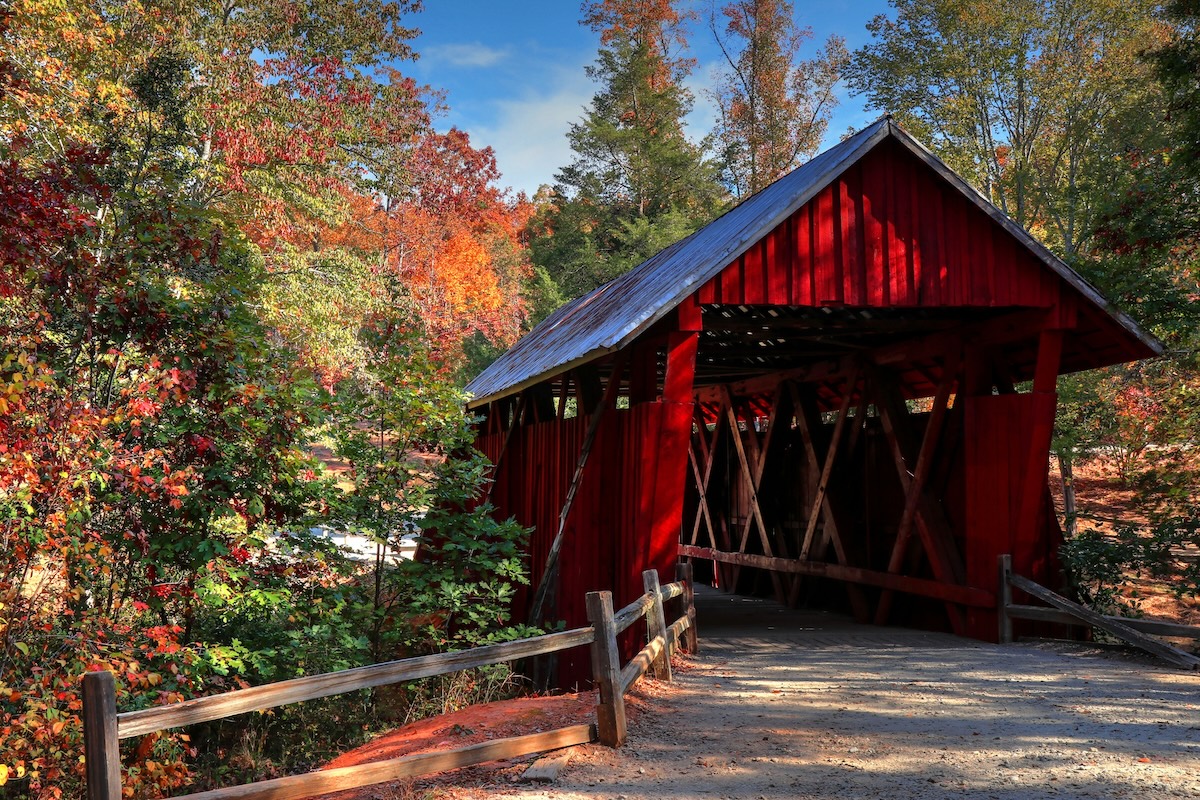
While Vermont is packed with covered bridges, Campbell’s Covered Bridge is the only remaining one in South Carolina. Constructed between 1909 and 1911 to cross Beaverdam Creek, the bridge made it possible to cross the river in one hour instead of a full-day detour.
While it might be the last in the state, the brightly colored red pinewood bridge stands as a reminder of an era past in a stunning public park setting.
4. Flume Covered Bridge (Lincoln, New Hampshire)
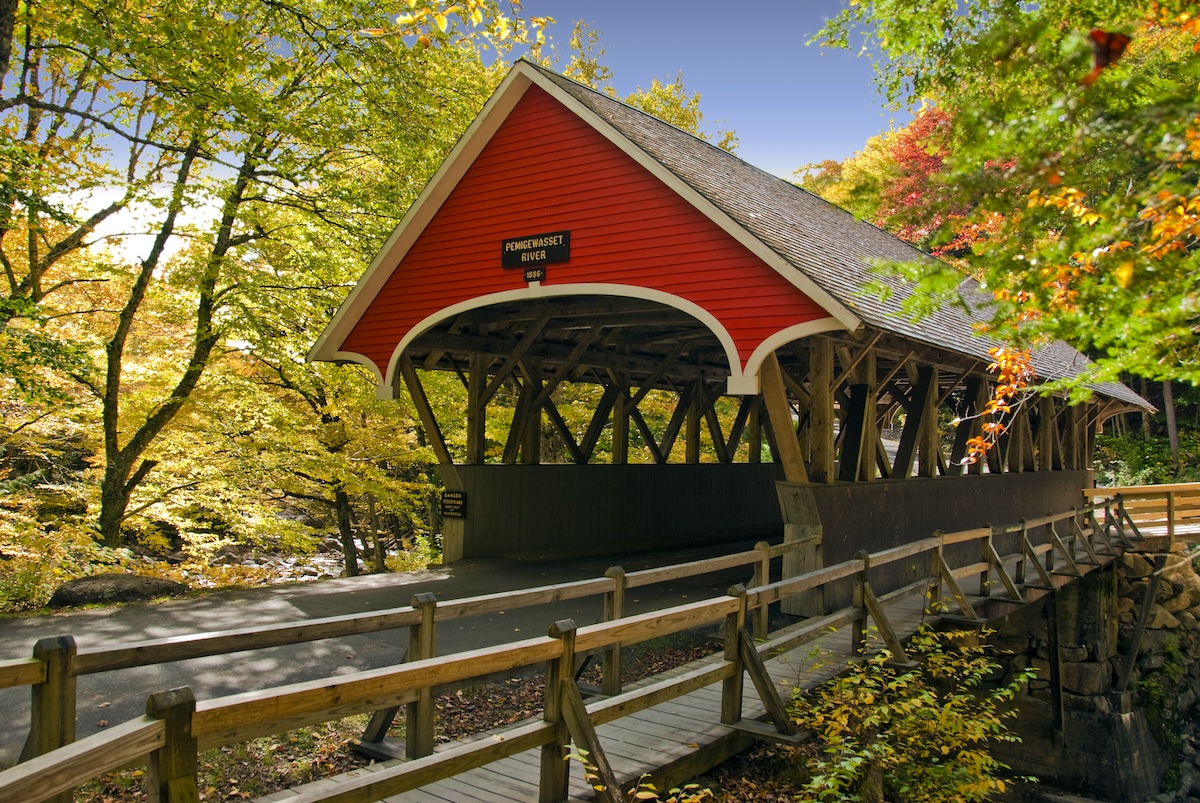
If you’ve ever considered a hike through Franconia Notch State Park, you’ll be familiar with the Flume Covered Bridge. It’s located at the beginning of the Flume Gorge Loop and is one of the most picturesque covered bridges in the state.
One of the oldest bridges in New Hampshire, it was built in 1886 and cuts a perfect pedestrian path across the Pemigewasset River.
The bright red pedestrian bridge is a marvel of human engineering among a million-year-old landscape. And once you visit, you’ll realize that both are equally as beautiful.
3. Arthur A. Smith Covered Bridge (Colrain, Massachusetts)
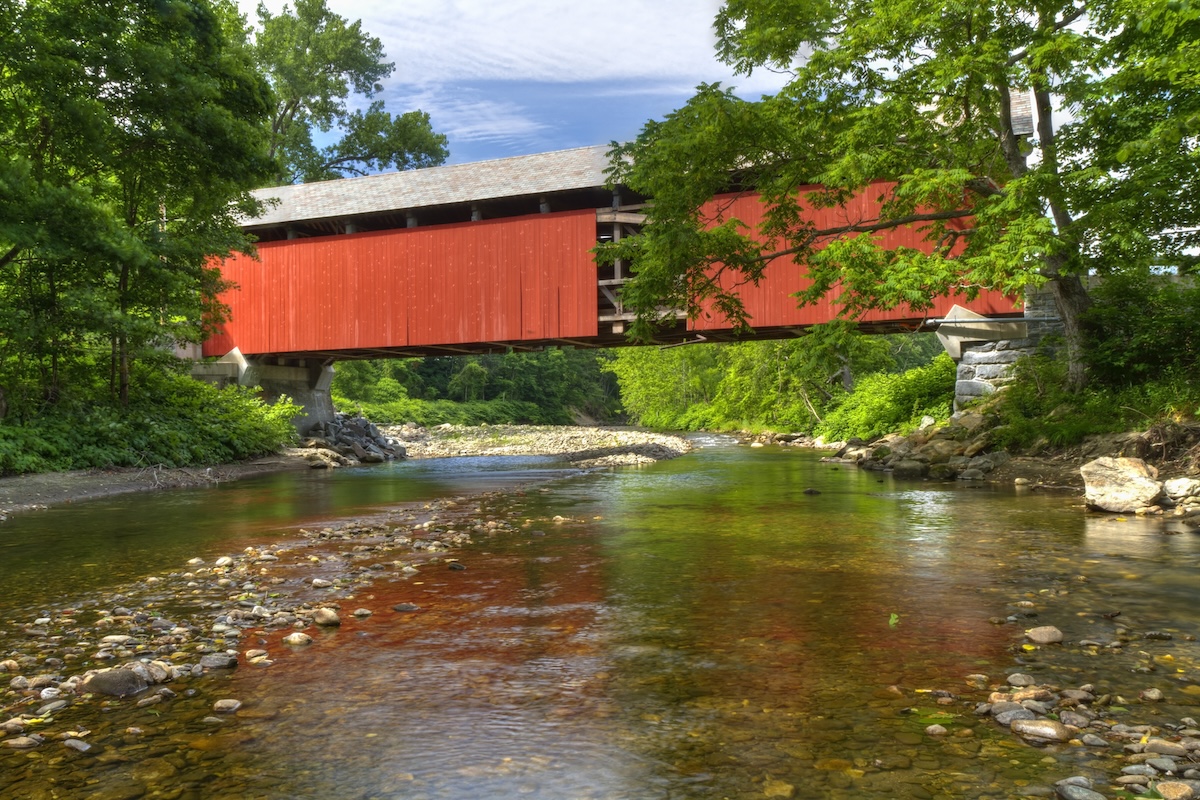
This one might be small, but where it lacks in size, it more than makes up for in charm. Built in 1869, the Arthur A. Smith Covered Bridge is Massachusett’s last surviving arch-truss bridge.
It was initially built to cross the North River between Shattuckville and Griswoldville, but it has since moved several times before finding its current home in Colrain.
2. Newfield Covered Bridge (New York)
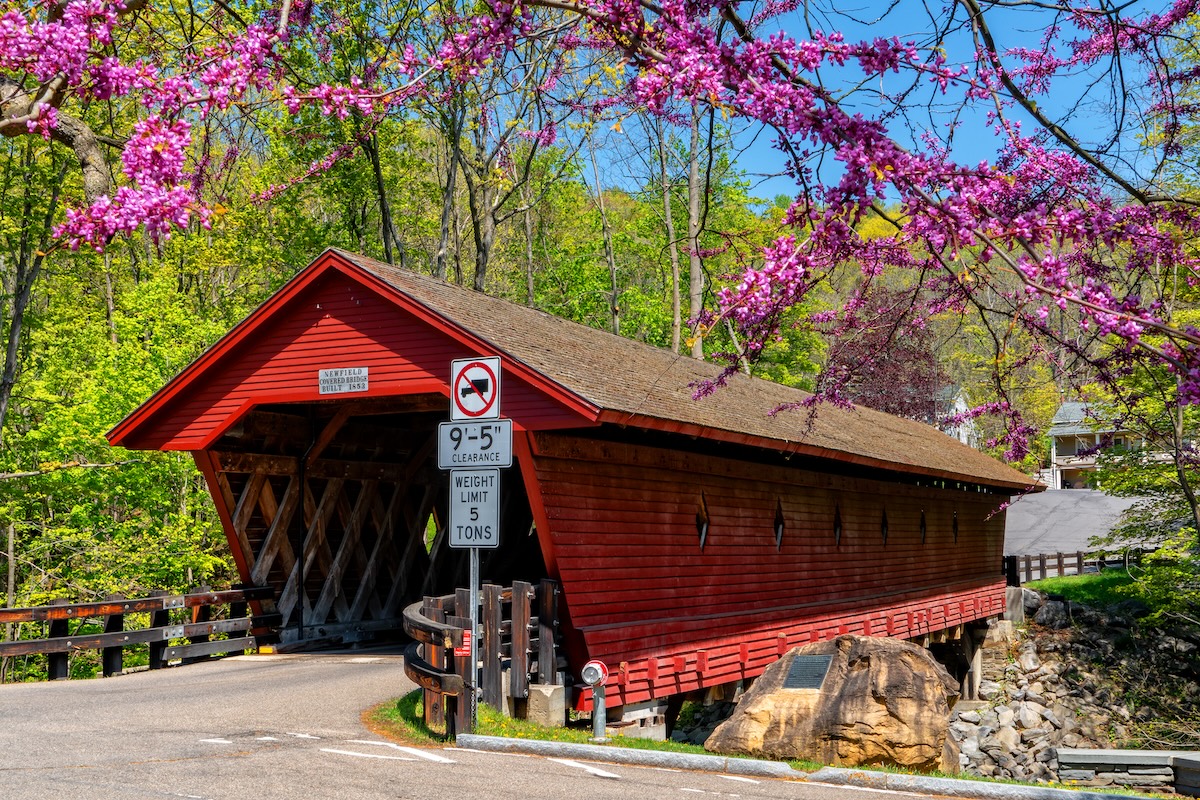
New York is home to 34 covered bridges, and ironically, the Newfield Covered Bridge is its oldest. It was built in 1853 across the Cayuga Inlet, just southwest of Ithaca.
If you’ve got the Finger Lakes wine region on your radar, it’s best you add this bridge to your itinerary. Do yourself a favor and visit during fall, when foliage paints the surrounding landscape in reds and oranges.
1. Roseman Covered Bridge (Winterset, Iowa)
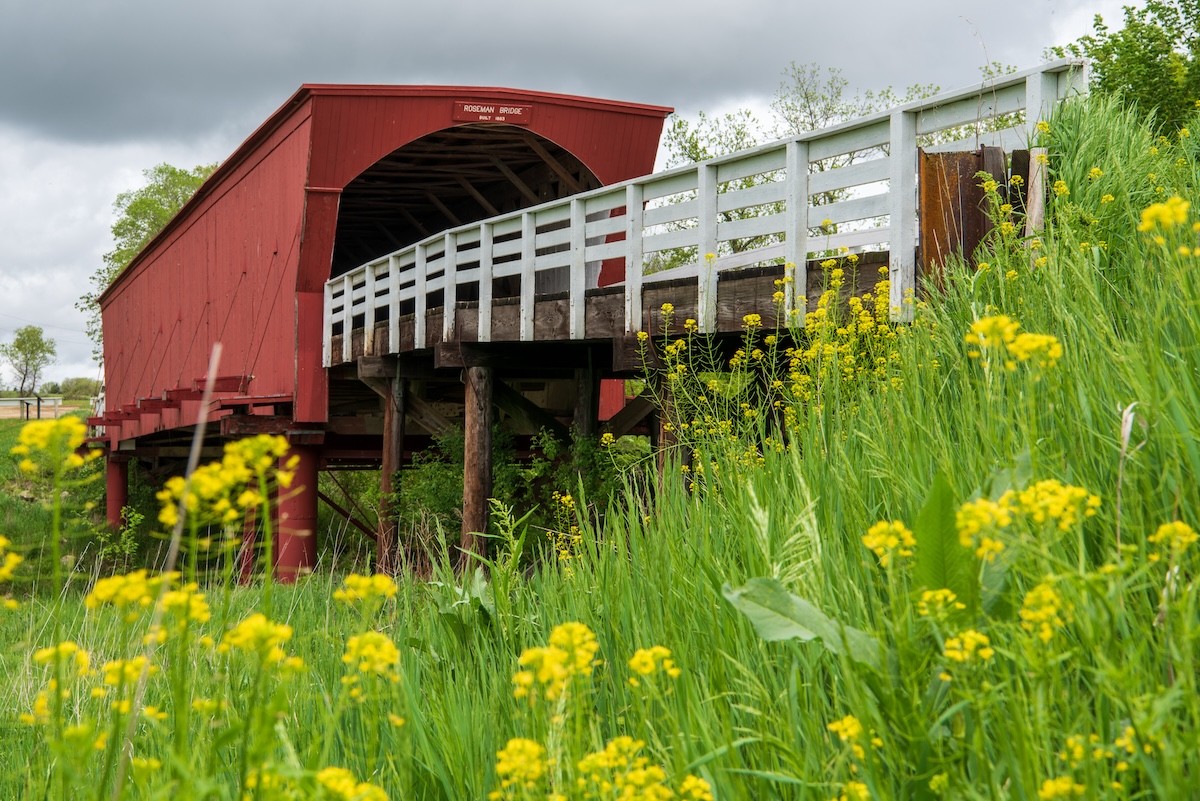
If the Roseman Covered Bridge feels familiar, it might be because you recognize it from ‘The Bridges in Madison County.’ Built in 1883, it’s one of the most famous landmarks in Iowa. Today, it is one of six famous bridges remaining in this county and undoubtedly the most famous.
It is beautifully built with a lattice truss structure and painted a deep red. Besides its association with Meryl Streep and Clint Eastwood, this eye-catching bridge is known for being haunted. Local legends say it’s haunted by a spirit who mysteriously disappeared here in the 1800s.