
There’s a unique thrill about standing at the top of a skyscraper, gazing down at a city from a bird’s-eye view. From these lofty observation decks, cars look like toys, people shrink to ants, and other skyscrapers resemble Lego blocks.
Just about every impressively tall building has one. And not only do they showcase brilliant views, but they’re also testaments to human engineering and achievement.
Who would have thought a few centuries ago that we would rise through the skies in superfast elevators to sip coffee on the 100th floor of a skyscraper?
Here are the tallest observation decks in the USA.
8. US Bank Tower, Los Angeles (974 feet)

LA might be known for its beaches and superstars, but its downtown skyline deserves a spotlight, too. Enter the US Bank Tower of Los Angeles, the city’s second tallest building and an architectural icon of the city center.
Its observation deck is called OUE Skyspace, and it offers 360-degree vantage points over the city. The coolest thing about it is that it’s open-air and can be rented as an event venue.
You might have heard of this building because of its SkySlide. Yes, it used to contain a 45-foot slide that allowed visitors to pass through a glass-enclosed chute attached to the side of the building. It is no longer in operation, but what a thrill that would have been!
7. One Vanderbilt, New York (1017 feet)
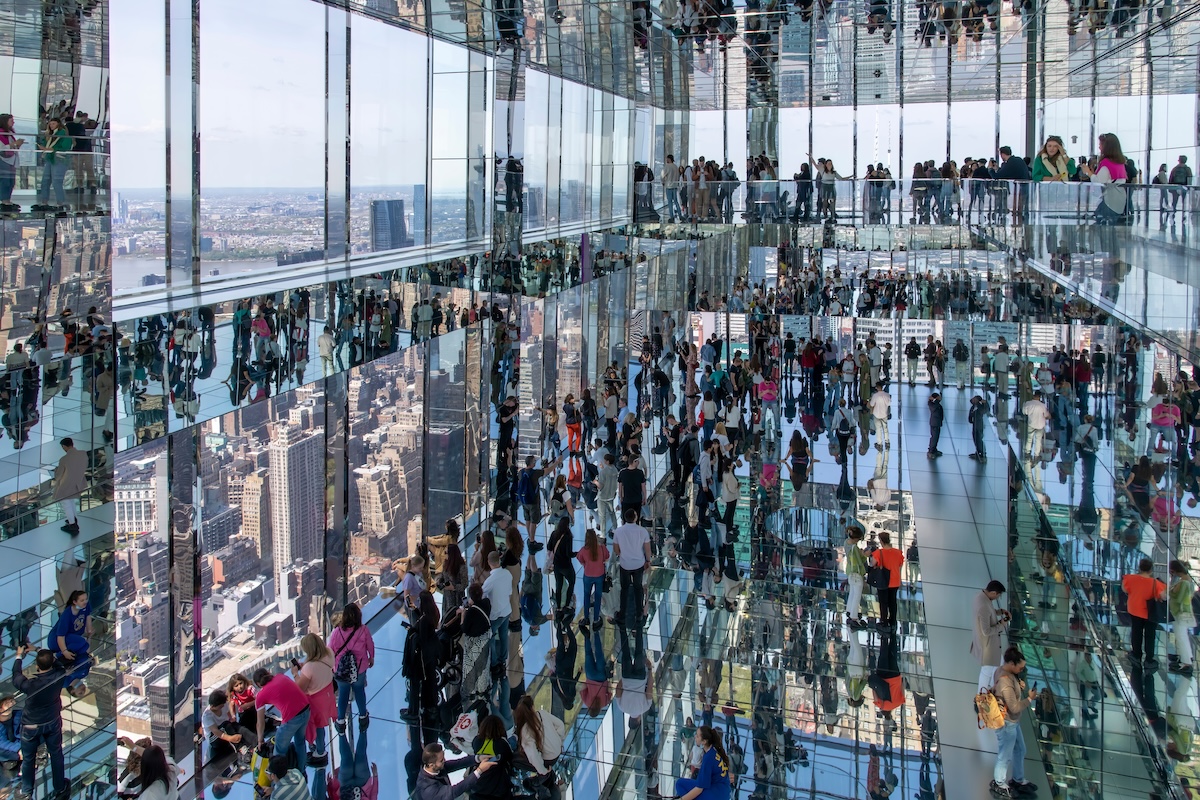
New York sure does have its fair share of high buildings with observation decks. But can you imagine standing over 1000 feet above Manhattan, gazing out towards Times Square in one direction and the East River in the other?
One Vanderbilt’s Summit Observation deck is about more than just views; it’s an interactive and immersive experience that makes you feel like you’ve jetted into another dimension. Think glass and mirrored walls and floors, creating an endless illusion of the sky beneath your feet. It’s a three-level multisensory experience with art installations and immersive lights.
And to get to the top, you’ll need to take a ride in Ascent – the world’s biggest glass-bottomed elevator.
6. John Hancock Center, Chicago (1030 feet)
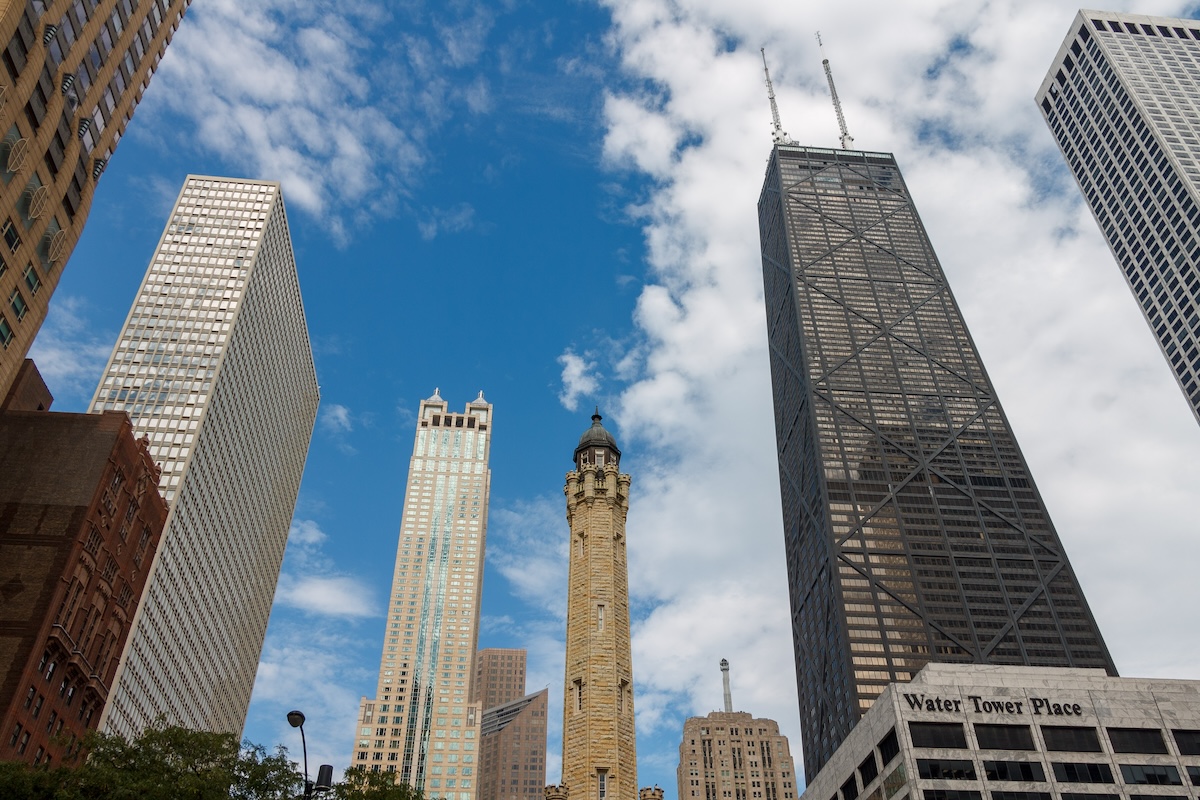
Chicago’s iconic 360 CHICAGO observation deck sits on the 94th floor of the John Hancock Center. It’s said to have some of the best views of the city and Lake Michigan – just without the overwhelming crowds of Willis Tower. But you’ll have to read to the end for that one…
But this deck has more to show than just epic lake views. It’s home to Tilt – a thrilling experience that literally tilts you over the edge of the building over Michigan Avenue. It gives you a once-in-a-lifetime downward view that is equally as exciting as it is terrifying.
After a dizzying Tilt experience, reward yourself with a coffee or a cocktail at the CloudBar on the 94th floor, the city’s highest cocktail bar.
5. 30 Hudson Yards, New York (1115 feet)
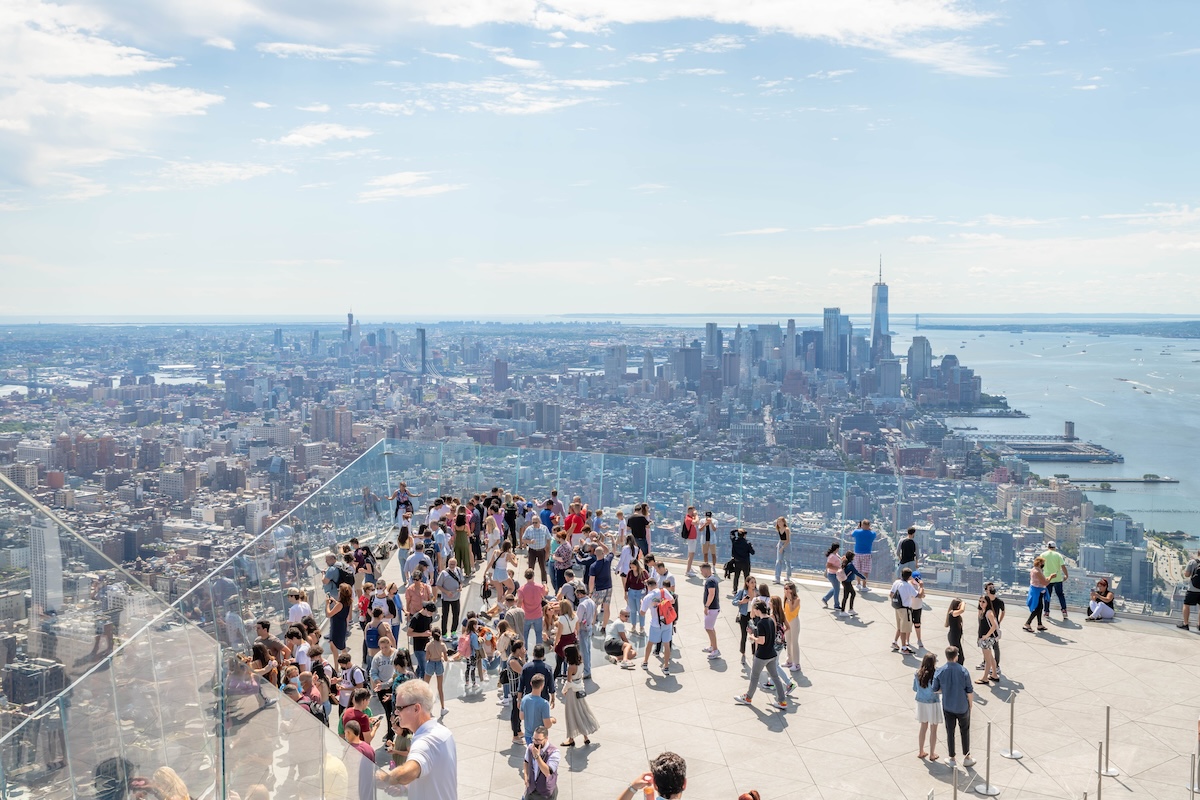
If you’ve done your research on New York, chances are you’ve already seen photos of Edge, the incredible observation deck at 30 Hudson Yards. Perched 1115 feet above the ground, this impressive open-air observation deck is suspended in space mid-air above the skyline.
While its glass floor gives the feeling that you’re standing on a floating platform above the city, it also offers 360-degree views of the city and river. Its views are spectacular, particularly the uninterrupted view of the Empire State Building. And getting to the platform is just as exciting. A super-fast elevator shoots you 100 stories into the sky in under a minute.
4. The Strat, Las Vegas (1148 feet)
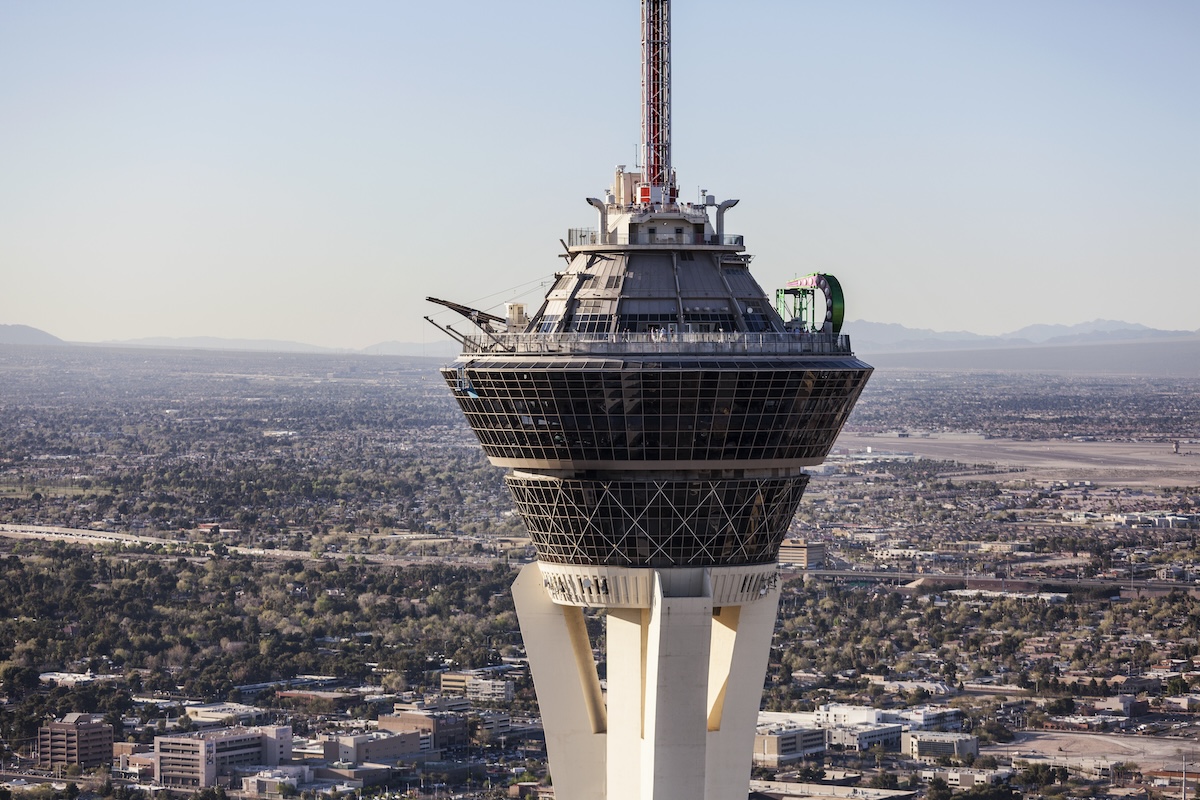
Vegas has plenty of high-rise observation decks, but the Stratosphere Tower at The Strat takes the win. At 1148 feet, the deck offers views stretching from the vast desert to the luminous Vegas Strip.
In true Las Vegas style, the observation deck alone takes up ten tower floors. You can get married in the Chapel and dine at a revolving restaurant on the 106th level. But here’s the kicker: the 108th to 112th floors have been turned into a mini amusement park.
Here, you can literally ride on a rollercoaster, get hurled up into the sky, or brave a controlled fall that plummets through the air at 40mph. It’s one of those places that only Vegas could pull off.
3. Empire State Building, New York (1210 feet)
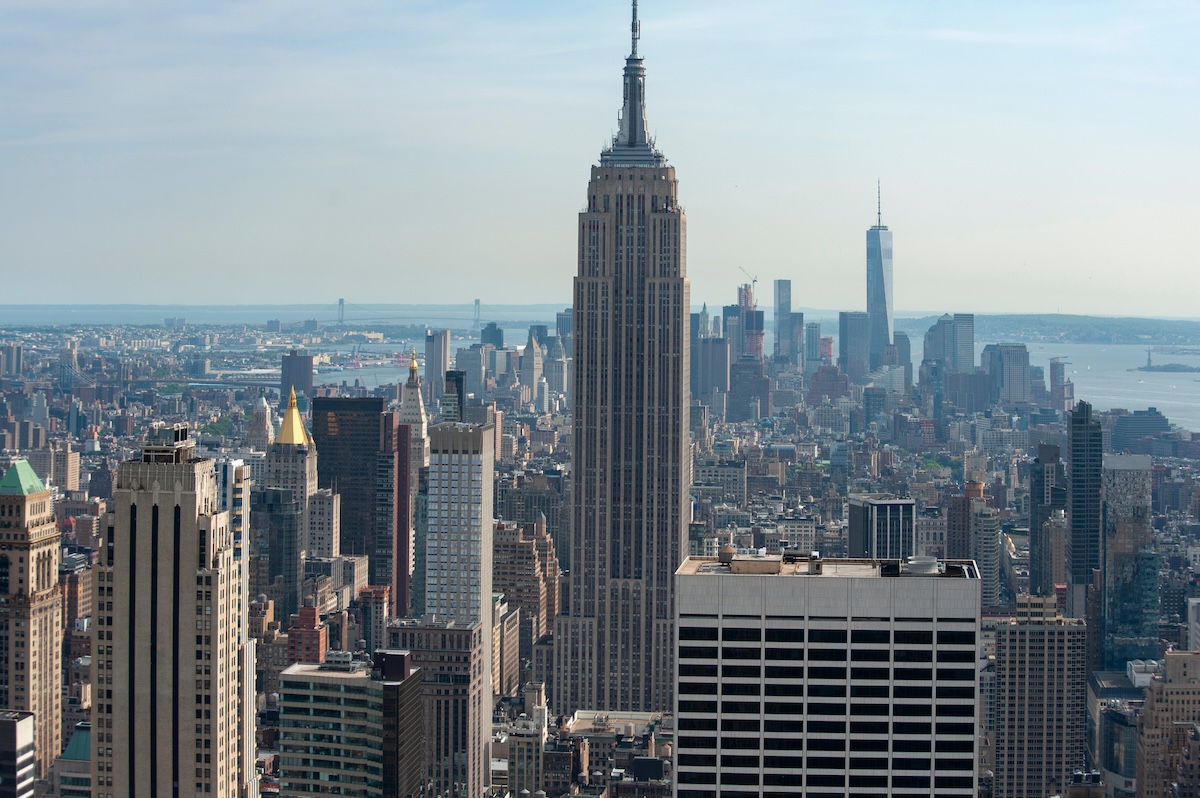
The Empire State Building knows a thing or two about being iconic, so it’s no surprise it houses the third-highest observation deck in the U.S. This deck is a true classic, paying homage to the golden age of New York skyscrapers (and timeless Art Deco architecture).
And its views of the Statue of Liberty and Central Park are just as iconic as the building itself. While the main observation deck is on the 86th floor, the real thrill-seekers can head up to the 102nd floor for an even higher vantage point. In fact, on a (very) clear day, the building is high enough to gaze across six different U.S. states!
It’s not cheap, but this top deck is enclosed with floor-to-ceiling windows, so you won’t have to worry about the icy wind.
2. One World Trace Center, New York (1268 feet)
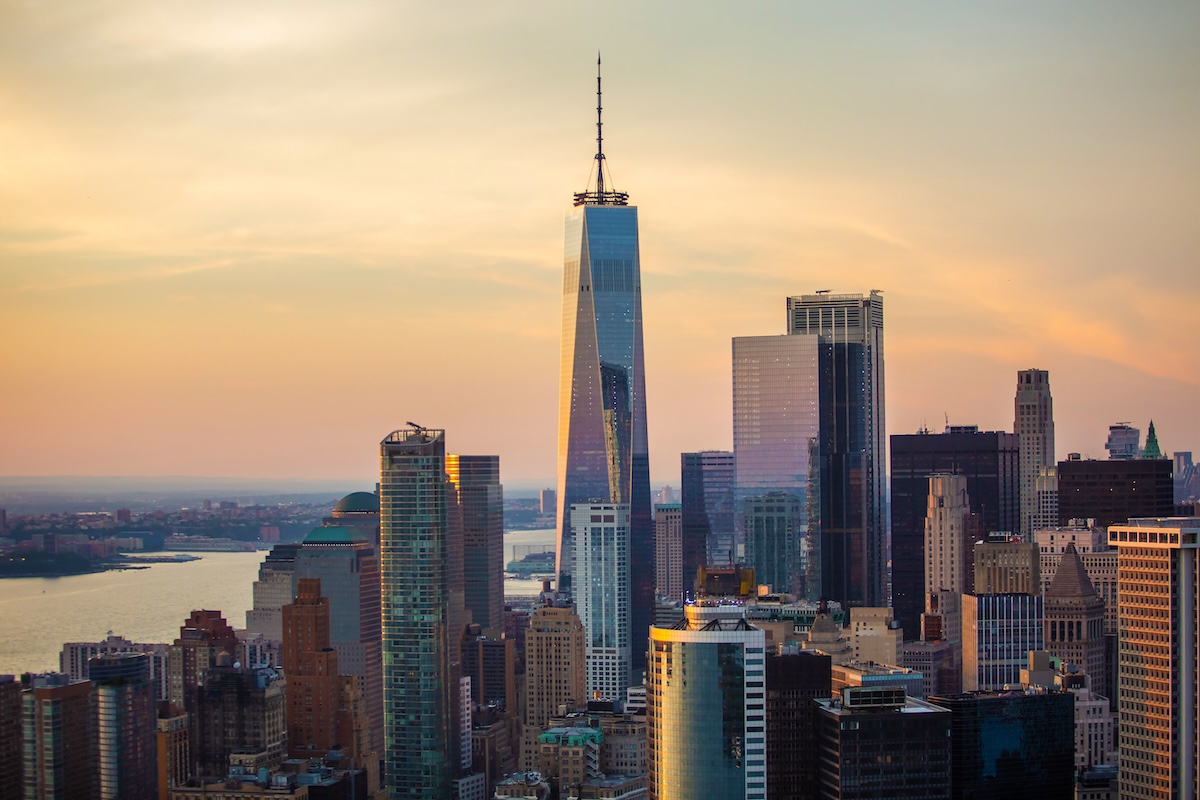
Rising high above Lower Manhattan’s streets, the One World Observatory at the One World Trade Center isn’t just a deck but a tribute to those fallen on 9/11. From the 102nd floor, you get a full 360-degree view of New York City.
One of its highlights is the Sky Pod elevators, which take you on a visual history ride through the New York skyline as you soar into the sky. Once at the top, interactive screens make it possible to learn about the city skyline in real time.
1. Willis Tower, Chicago (1354 feet)
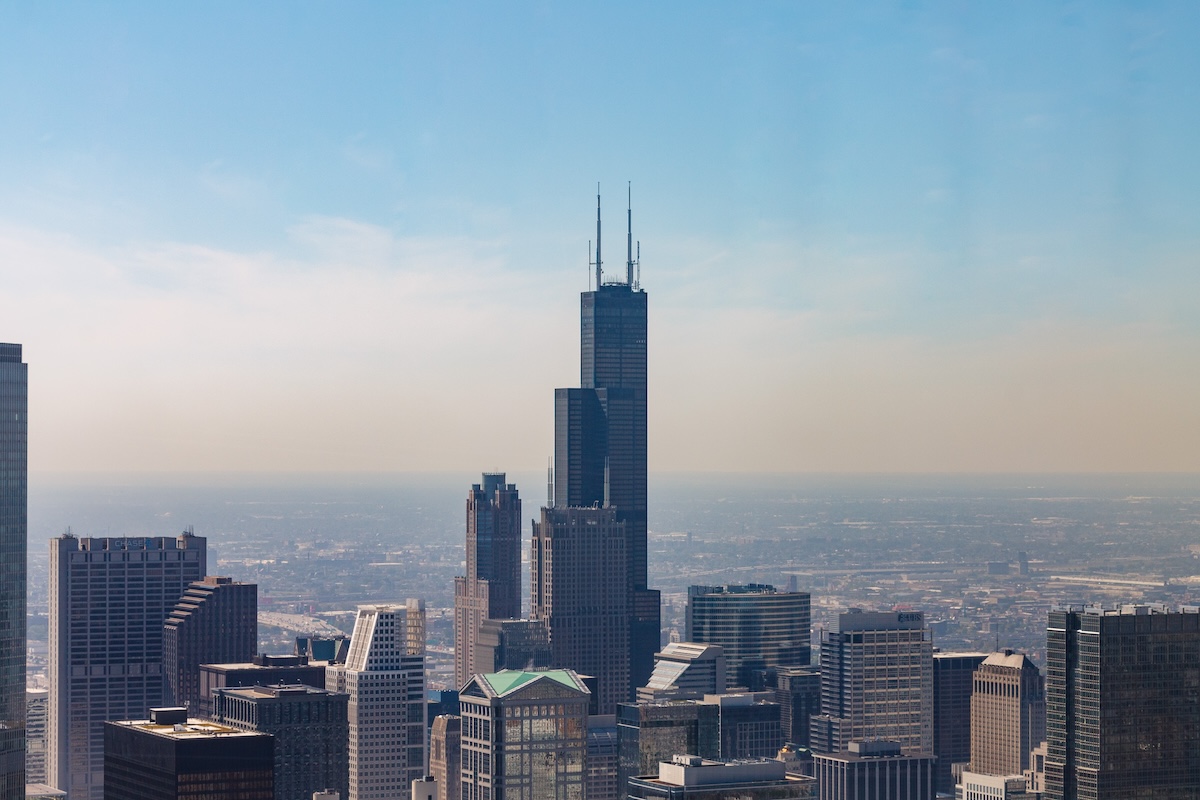
No conversation about observation decks is complete without mentioning the Willis Tower. Formerly known as the Sears Tower, this Chicago building is the centerpiece of the city’s skyline — quite a feat for a city known as the birthplace of skyscrapers.
Its prestigious observation deck sits on the 103rd floor. It’s so high up that on a clear day, visitors can spot up to 50 miles out across four states. If you’re up for a thrill, The Ledge is a floating glass ledge offering a unique city view from a floating perspective. This is not recommended for those with a fear of heights!