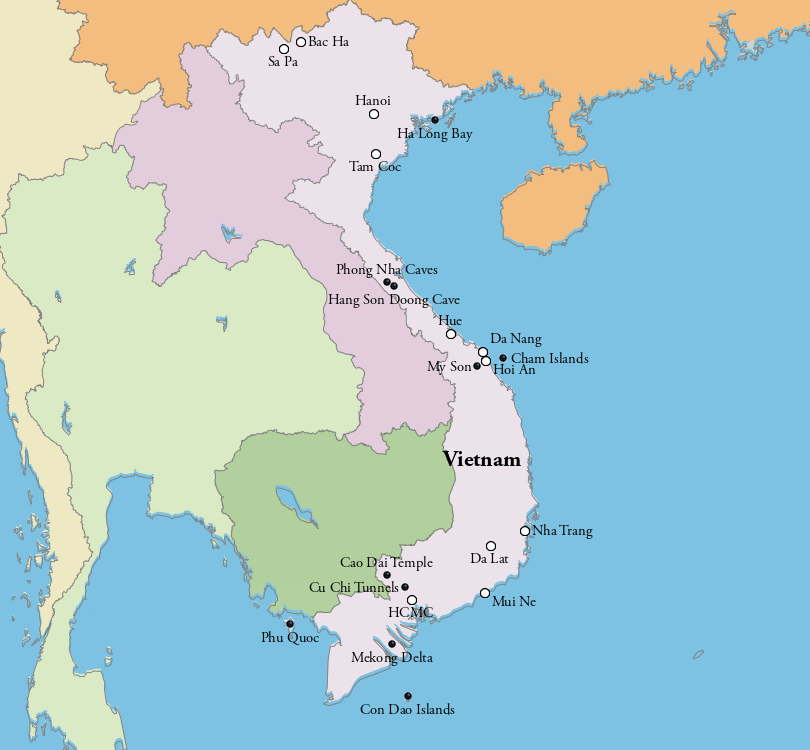
Most travelers to Vietnam are attracted by the country’s wonderful natural beauty: From the green rice fields in the north to the fascinating bustle of the Mekong Delta in the south. Vietnam however is also a country with a long history and ancient traditions.
While its history is one of war, colonization and rebellion, the Vietnamese are very friendly and welcoming and are rightfully proud of their country. Aside from learning about the rich culture and cuisine in its cities, you can also visit remote hill tribes for a completely different experience.
The landscapes are just as varied as untouched mountain ranges and terraced rice fields give way to lovely islands, beaches and coastline. With Buddhist temples, serene hill towns and huge caves, this country offers visitors a wide range of things to do. For ideas on the best places to visit check out our list of the top tourist attractions in Vietnam.
25. Khai Dinh Tomb in Hue
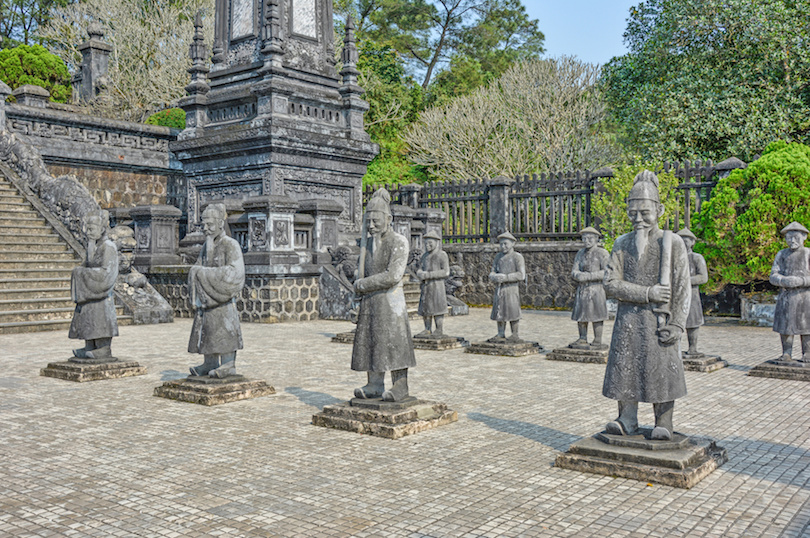
Blending both Vietnamese and European design elements, the architecture of the Khai Dinh Tomb in Hue has been described as Buddhist as well as Roman Gothic. Constructed in the 1920s, the tomb was commissioned by the Emperor of Vietnam as his own future tomb.
The entrance of the complex leads to the Honour Courtyard, and then on to the main building called the Thien Dinh. Khai Dinh’s final resting spot is clearly marked by a bronze statue surrounded by beautiful murals.
24. Con Dao Islands
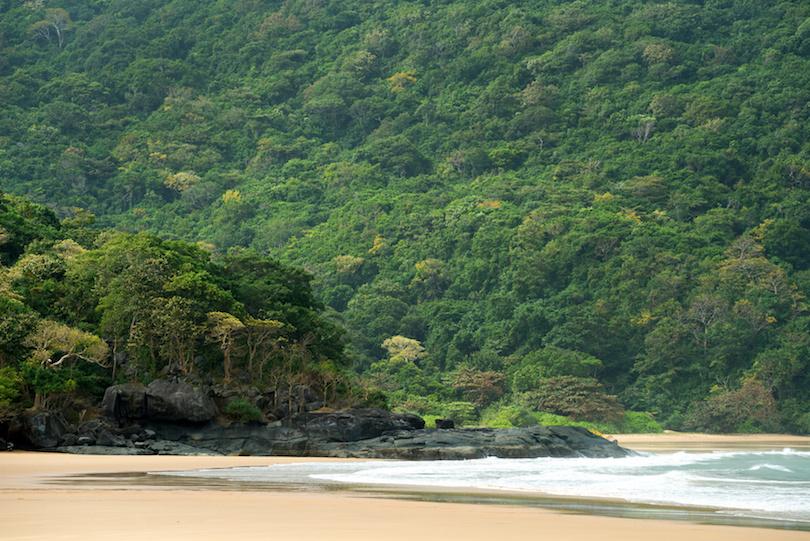
Under French rule, the Con Dao Islands were known as the Devil’s Island of Indochina, a place where thousands of prisoners of war were kept. Today, this group of 16 islands off the southern coast of Vietnam has a completely different purpose.
Visitors come for the beautiful beaches while scuba diving and snorkeling are also popular things to do. However, the history of Con Dao can still be explored at some of the prison buildings that still stand.
Aside from visiting the camps and seeing the notorious ‘tiger cages’, most come to lounge on soft sandy beaches or scuba dive and snorkel. From Con Son, its largest island, you can take unforgettable trips to see dugongs, dolphins and sea turtles.
23. Marble Mountains
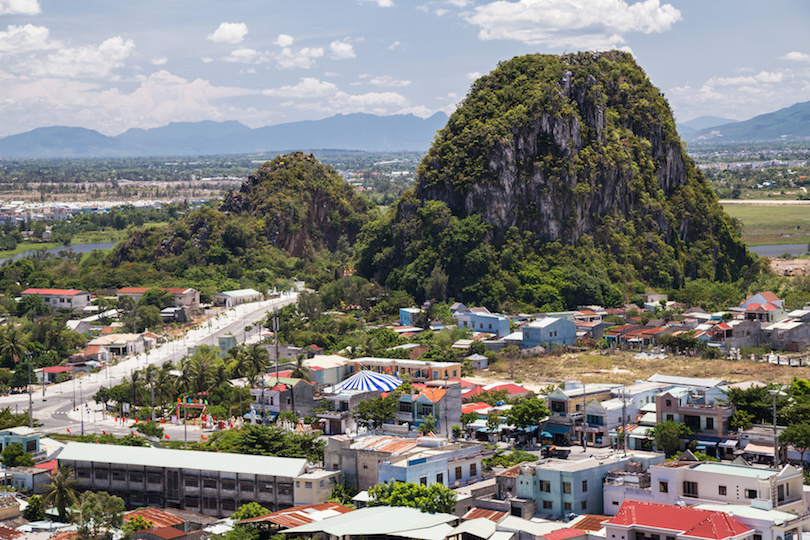
South of Da Nang, are the Marble Mountains. These five peaks are named after the five elements of earth, water, wind, fire and wood. The mountains are picturesque on their own, but they are also home to countless caves, some of which house incredible Buddhist sanctuaries. Some caves contain Confucian or Buddhist shrines, and others were used as sanctuaries and hospitals during the Vietnam War.
After hiking up to Am Phu or Non Nuoc, there are plenty of expertly carved Buddhist statues and soaring pagodas to wander around. Very special and atmospheric, the Marble Mountains also offer some wonderful views over the surrounding area.
22. Notre Dame Cathedral in Saigon
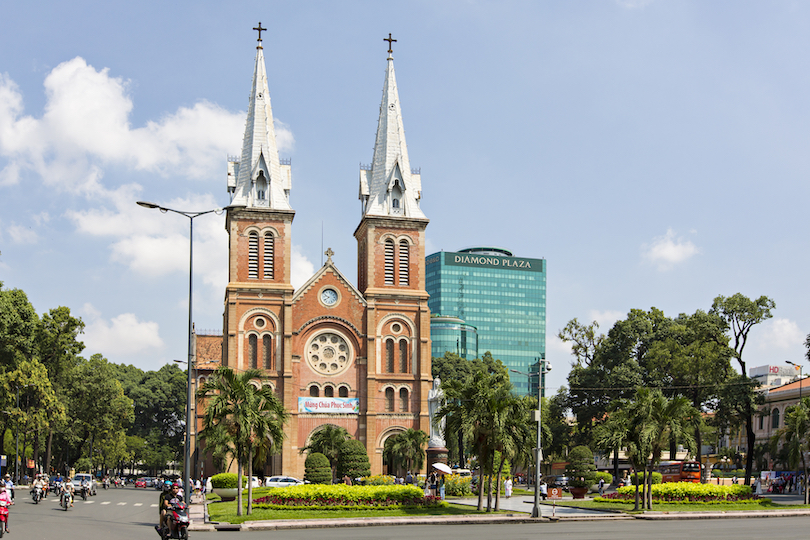
In Ho Chi Minh City, or Saigon, stands the stunning Notre Dame Cathedral. Built in the late 19th century, the cathedral is brick, neo-Romanesque and clearly influenced by European architecture of the same time period. In fact, many of the materials used in construction were imported directly from France.
While the exterior is impressive, the interior is also worth exploring. Look for the surviving stained glass panels as well as carved tiles and a statue of the Virgin Mary.
21. Tam Coc
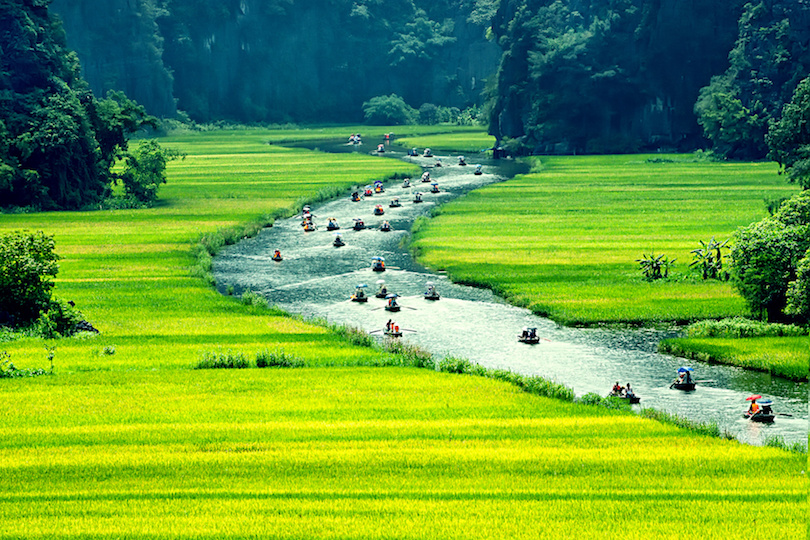
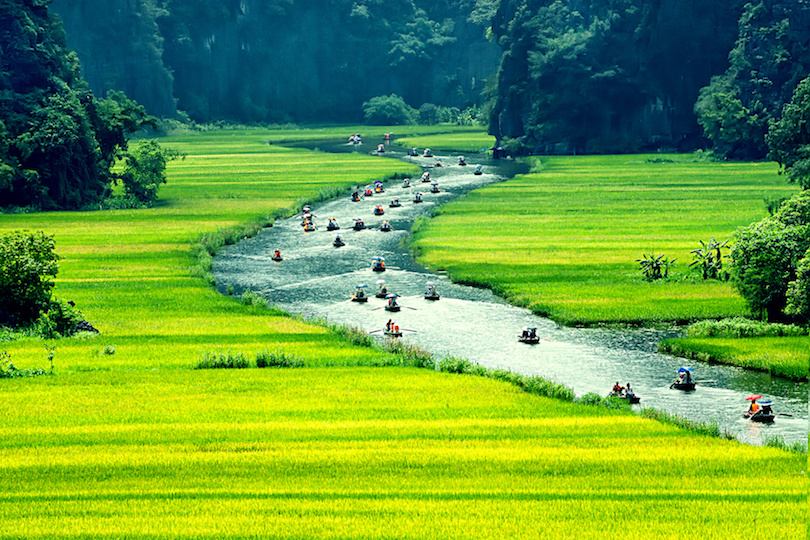
In the Ninh Binh province of Northern Vietnam near is Tam Coc, which translates to English as three caves. The three caves are nestled in a scenic landscape of limestone cliffs and rice paddies, and the river winds through the region.
The caves are called Hang Cả, Hang Hai, and Hang Ba, and they serve as the area’s main attraction. Guided boat tours take you to the caves and along the Ngo Dong River, which is often dotted with floating vendors capitalizing on the tourist visiting on a day trip from Hanoi.
20. My Khe Beach
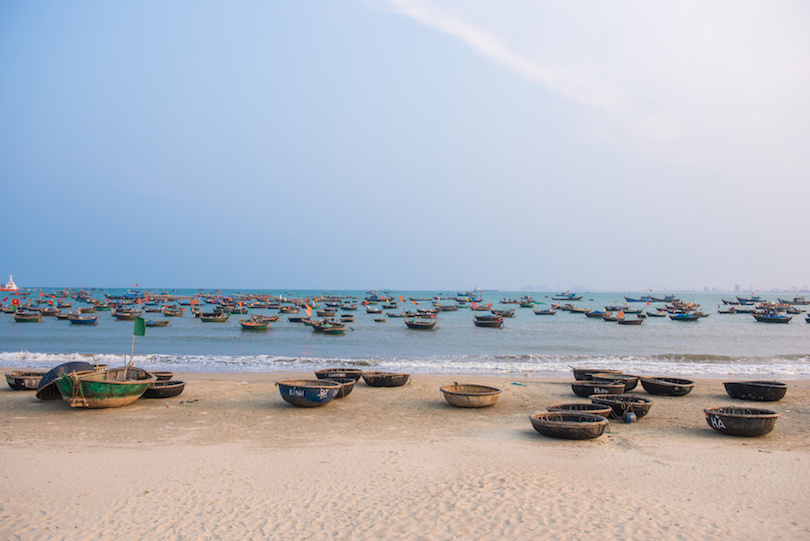
The most scenic spot in Da Nang is arguably My Khe Beach. Also known as China Beach, this was where US servicemen were helicoptered in for R&R during the Vietnam War. These days people come here however for tis pristine white sand, blue water and sunny skies.
Visitors can rent a lounge chair on the sand, relax in the shade under a thatched umbrella or rent a kayak from nearby vendors. Many hotels and cafes are within walking distance of My Khe Beach, making it a hub for visitors as well as locals in search of incredible views.
19. Hang Son Doong Cave
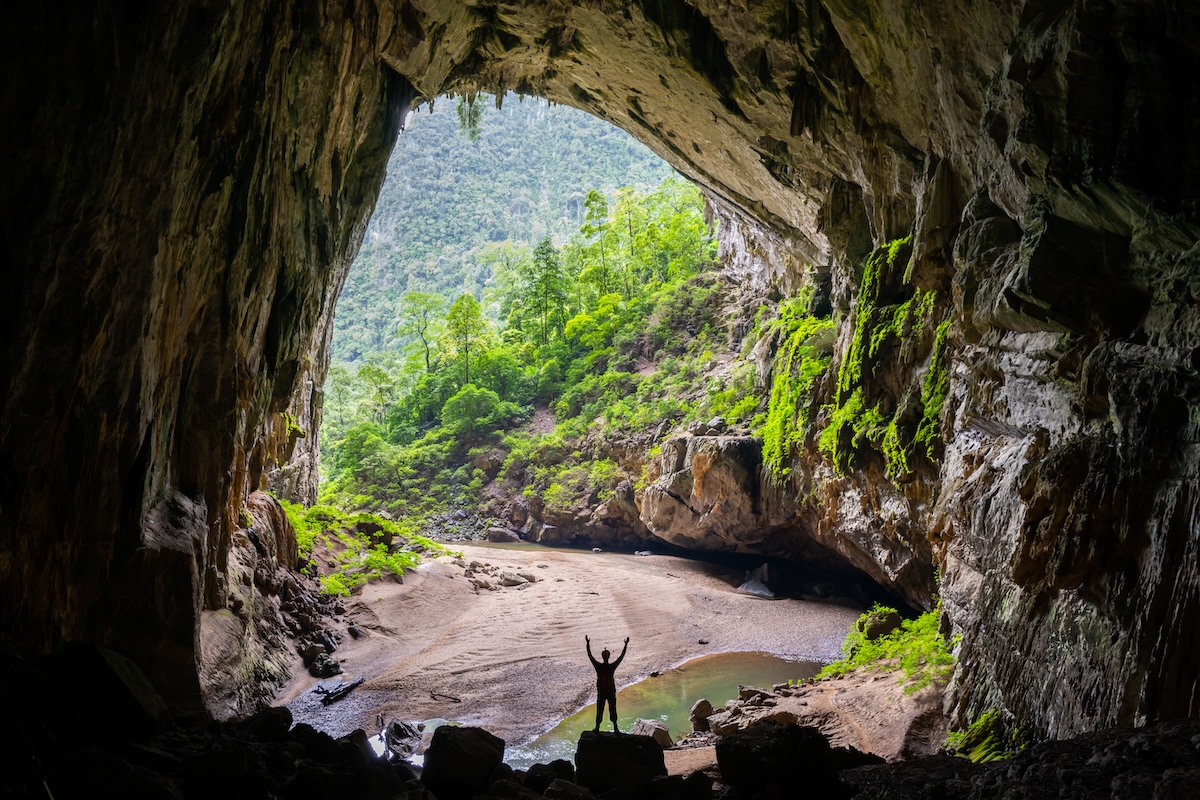
One of the largest caves in the world, and certainly the largest in Vietnam, is Hang Son Doong. Approximately three million years old, Hang Son Doong Cave is an incredible destination unlike anywhere else on the planet. The cave is enormous, and it is possible for dozens of people to camp within it at a time.
Bright blue water pools are located in the cave, and a river runs through it. Lush greenery lines the walls, thanks to erosion that lets in beams of sunlight. The cave is ethereal, and guided tours are available to best explore this amazing landmark.
18. Temple of Literature in Hanoi
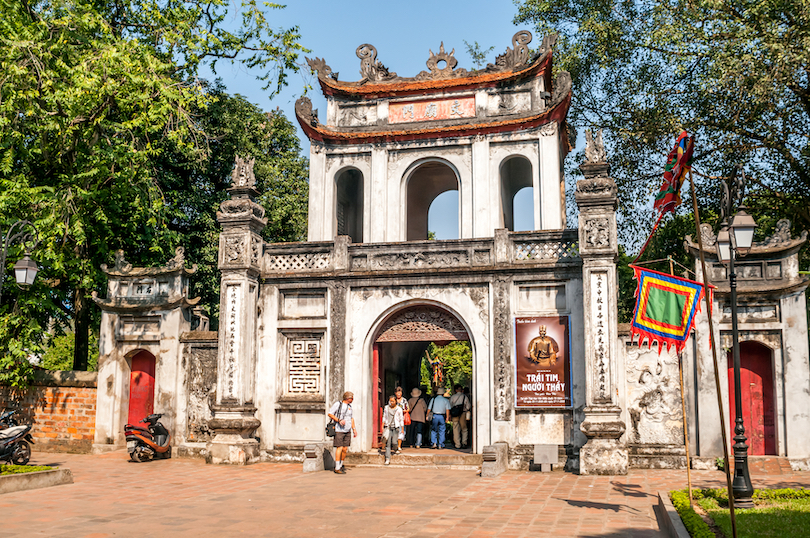
The first university founded in the country, the magnificent Temple of Literature impressively dates back to 1070. Lying amidst gorgeous grounds and courtyards in the centre of Hanoi, it has numerous altars, shrines and an imposing entrance gate to admire.
Dedicated to Confucius, sages and scholars, its grand pavilions and gold-decked ceremonial halls all exhibit some fine traditional architecture. Most striking, however, are the hundred or so stone-carved turtles which honour all students to have passed the royal exam.
Dotted about the complex are tons of informative wall-hangings that explain more about its age-old history. During Tet – the Vietnamese New Year – countless calligraphists assemble outside the temple and write well wishes for people to take home with them.
17. Bac Ha Market
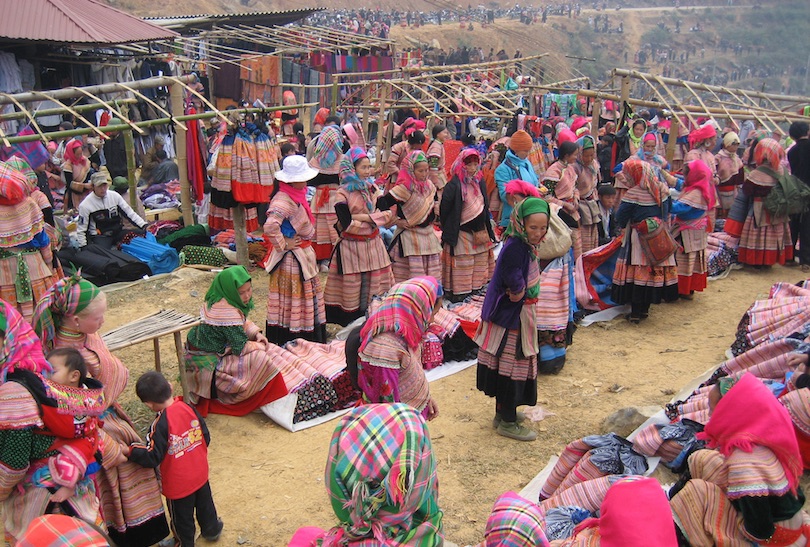
Once a week, the quiet town of Bac Ha becomes a hub of culture and trade in Northwest Vietnam. Residents from the surrounding villages and valleys flock to Bac Ha, and the roads are filled with buses packed with tourists.
Visiting on a Sunday means watching locals in their traditional ethnic dress, sipping the juice from fresh coconuts and browsing countless stalls. Shoppers can find everything for sale in Bac Ha, including water buffalo, delicious Hmong and Thay cuisine, brightly colored fabrics and fragrant spices.
16. Cham Islands
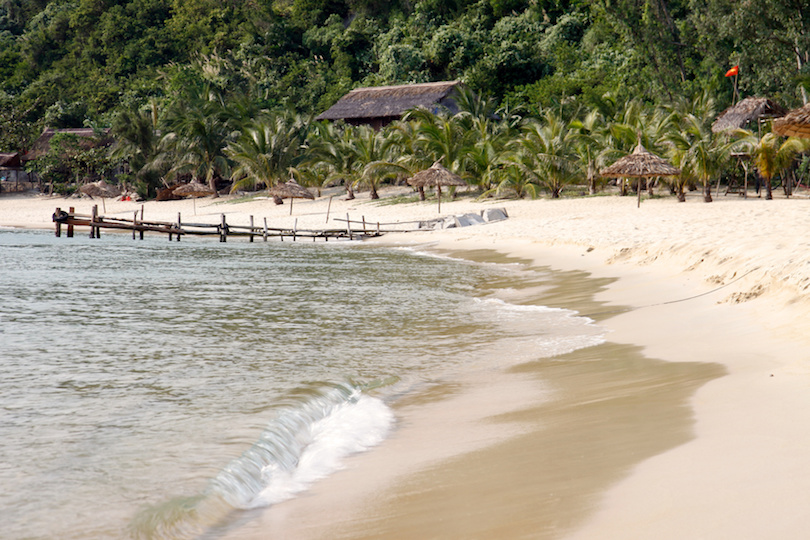
Several miles off the coast of Hoi An is a cluster of mountainous isles known as the Cham Islands. Primarily granite, these islands were once restricted but are now open to the public. The main island Hon Lao, the largest and the only one inhabited, is less than two hours’ away by speed boat.
Visitors can come for the day and go birdwatching, snorkel through the surrounding reefs or just enjoy the scenery of the beautiful beaches. Overnight stays are limited, but can be an incredible experience for the intrepid traveler.
15. Hang Nga’s Guesthouse in Da Lat
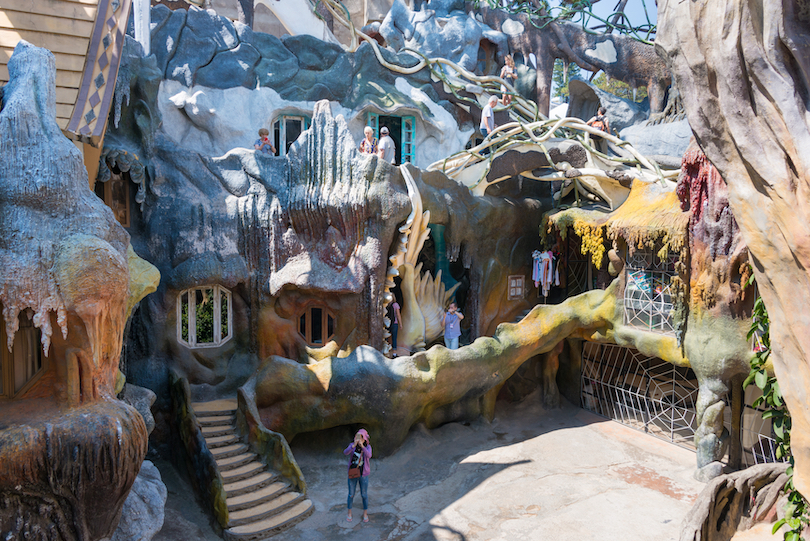
While it may be a bit unusual to include a guest house on a list of a country’s top attractions, Hang Nga’s ‘Crazy House’ in Da Lat definitely warrants its spot. A mix of Dali meets Disney, its extraordinary architecture and equally unique interior create some incredible photo ops.
Inspired by Catalonia’s Gaudi, the phenomenal five-story building was designed by Vietnamese architect Dang Viet Nga in 1990. Resembling a banyan tree, it is decorated with natural shapes that look like caves and mushrooms or tangled plants and spider webs.
Other than exploring its maze of small passageways and narrow staircases, you can actually stay in some of its fun-themed rooms. Fittingly described as a ‘fairytale house’, it really is a must-visit when in Da Lat.
14. Cao Dai Temple
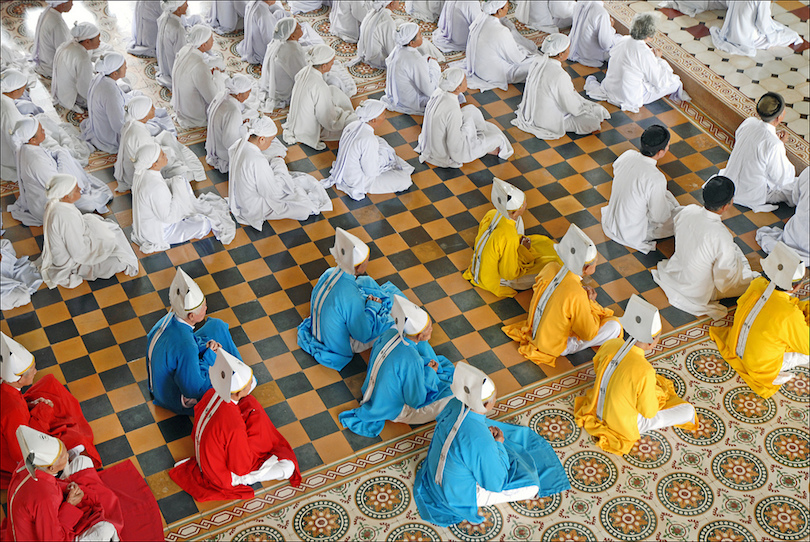
One of the most sacred attractions in Vietnam is the Cao Dai Temple, which was constructed in the 1930s. Caodaism is a uniquely Vietnamese religion that is influenced by elements of Confucianism, Buddhism, Taoism and even Roman Catholicism.
In the main building of the Cao Dai Temple, there are four prayers conducted daily, and visitors can watch or even participate in the ceremonies. In addition to the temple, which boasts beautiful murals, the complex is home to many additional residences, administrative buildings and even a hospital.
13. Imperial Citadel in Hue
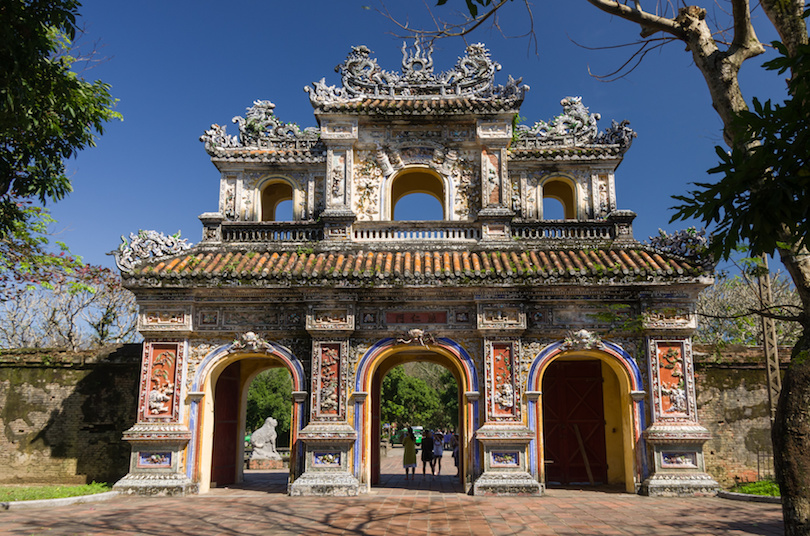
For nearly 150 years until World War II, the Imperial Citadel of Hue served as the capital of Vietnam’s Nguyen dynasty. In the very center of these secure walls was the Purple Forbidden City, an area reserved exclusively for the royal family.
The enormous Imperial Citadel was also a strategic hold during the Vietnam War, as it stands very close to the demilitarized zone that separated North and South Vietnam. This destination is significant for all those who are interested in the history of the nation.
Highlights include the majestic Meridian Gate and the colourful Mieu temple complex. As you stroll about its grounds, you’ll also find several interesting museums to stop at.
12. My Son
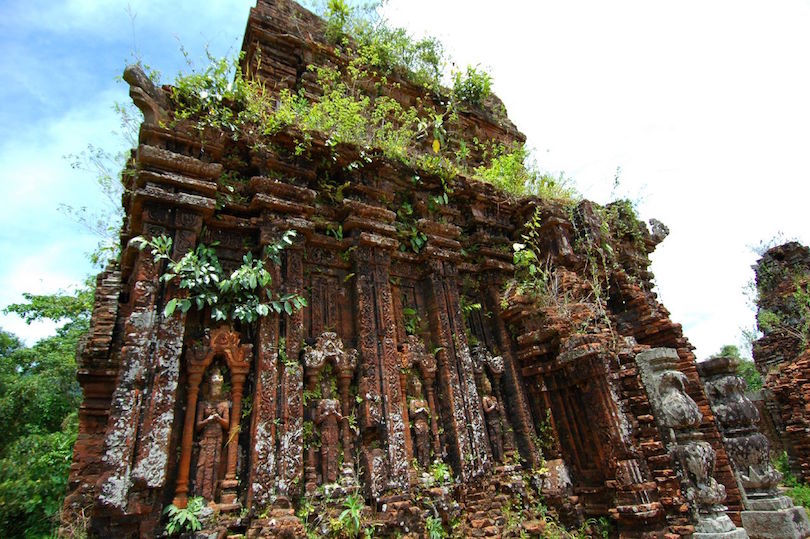
More than 1,600 years ago, the Chan people of Vietnam began construction on dozens of Hindu temples near the village of Duy Phú. Under the shadow of Cat’s Tooth Mountain, and surrounded by a green valley, several of these temples still stand.
Constructed between the 4th and 14th century, the humongous Hindu complex served as an important religious center and burial site for the Kings of Champa. At its zenith, there were over 70 temples dedicated to Shiva and Vishnu dotted about the valley.
Known collectively as My Son, most of the temples are now ruins. However, that only adds to the atmosphere. Visiting My Son is like stepping back in time, thanks in part to its secluded location and the lack of touristy infrastructure.
11. Phong Nha Caves
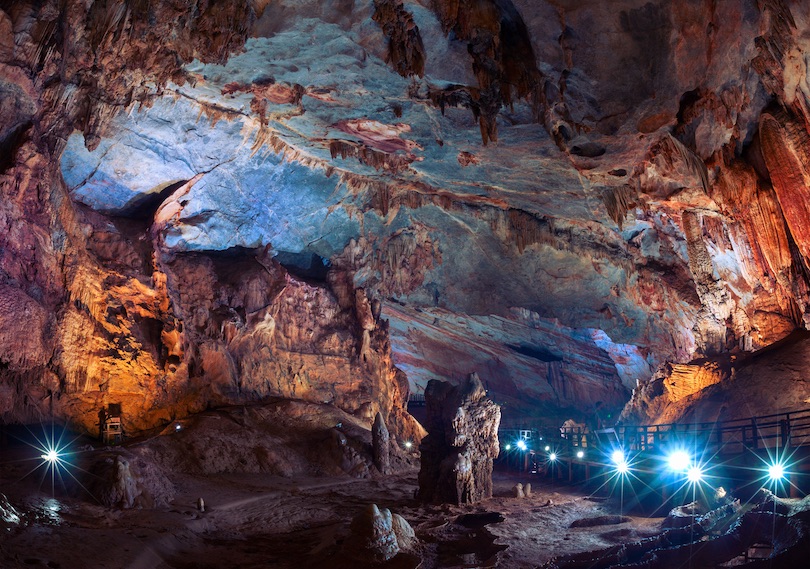
Phong Nha-Ke Bang National Park boasts many attractions, but none is so popular as its caves. The Phong Nha Caves are made up of hundreds of cave systems, many of which are large enough to hold entire city blocks.
Formed throughout millions of years, its endless mountains and forests contain over 300 caves and grottos. Some, such as Son Doong and Phong Nha, are among the largest in the world.
Entering their cavernous confines is unforgettable as spectacular stalactites and stalagmites are on show wherever you look. What’s more, there are even underground rivers, rainforests and beaches to see.
A gateway to the caves is Son Trach, a growing village that is home to several transport links throughout Vietnam, local restaurants and meeting points for guided tours to the caves.
10. Nha Trang
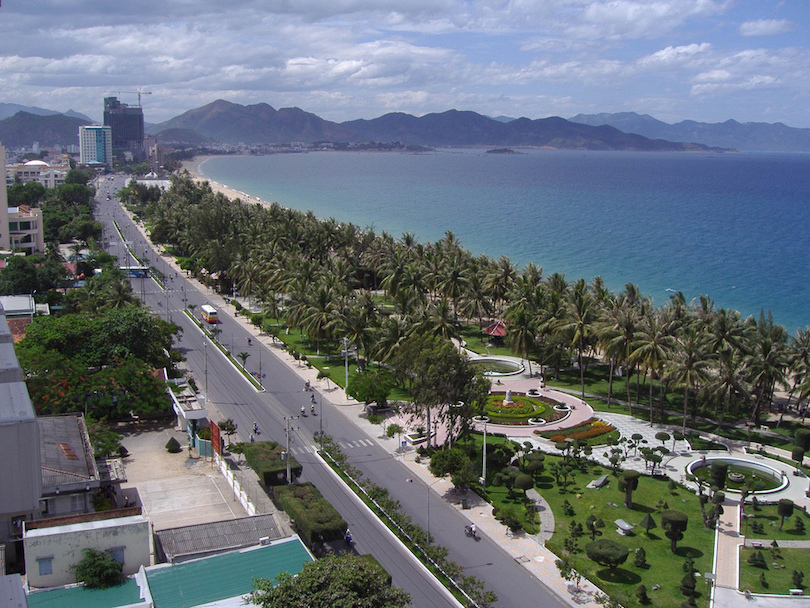
Nha Trang is Vietnam’s most popular seaside resort town located along the second most beautiful bay in the country. It features beautiful beaches with fine and clean sand and clear ocean water with mild temperatures.
The city has about 300,000 inhabitants and is more lively and urban in character than other beach destinations like Mui Ne and Phu Quoc. It’s also the scuba diving center of Vietnam.
Besides its wonderful beaches and water parks, there are a couple of museums and historic sights to see. The city is also renowned for its splendid seafood and vibrant nightlife scene.
9. Cu Chi Tunnels
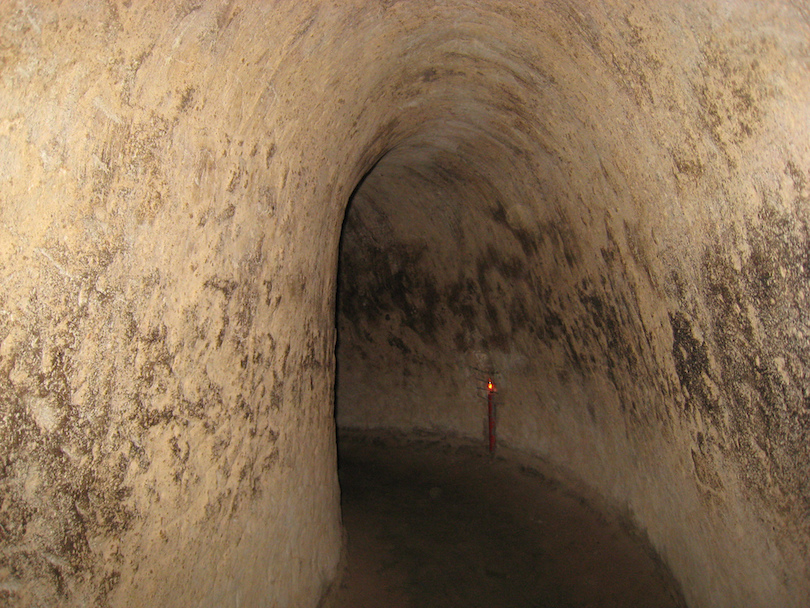
The Cu Chi Tunnels are an immense network of connecting underground tunnels located about 40 km northwest of Ho Chi Minh City (Saigon). The tunnels were used by Viet Cong guerrillas as hiding spots during the Vietnam War, and were the base of operations for the Tết Offensive in 1968
Stretching a staggering 250 kilometers in total, their oppressive tunnels and chambers were hollowed out by hand using only simple tools. Here, thousands of fighters lived in absolutely horrendous conditions alongside ants, snakes, scorpions and spiders.
The tunnels have become a popular tourist attraction, and visitors are invited to crawl around in the safer parts of the tunnel system.
8. Mekong Delta
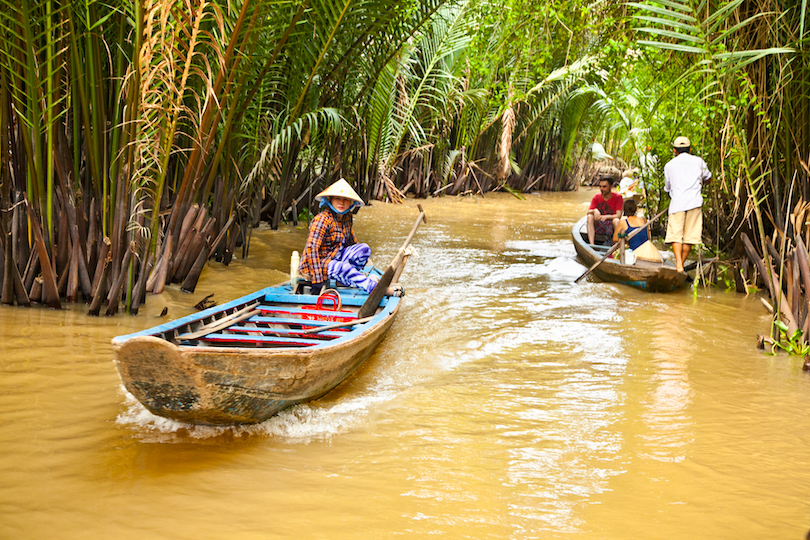
Fittingly nicknamed the ‘Rice Bowl of Vietnam’, the Mekong Delta’s many murky waterways cover a massive area immediately west of Ho Chi Minh City. Both fascinating and fun to boat about, the remote region is full of pretty paddy fields, mangroves and floating markets.
Since as early as the 4th century BC, the vast maze of rivers, swamps and islands has been an important source of agriculture and aquaculture. Impressively enough, it produces more rice than Japan and Korea combined.
As you paddle about in little wooden canoes, you’ll pass fruit orchards and cattle farms and learn about everyday life in the delta. There are also numerous nature reserves with floating markets like Phong Dien and Cai Rang always being popular stops.
7. Sand Dunes in Mui Ne
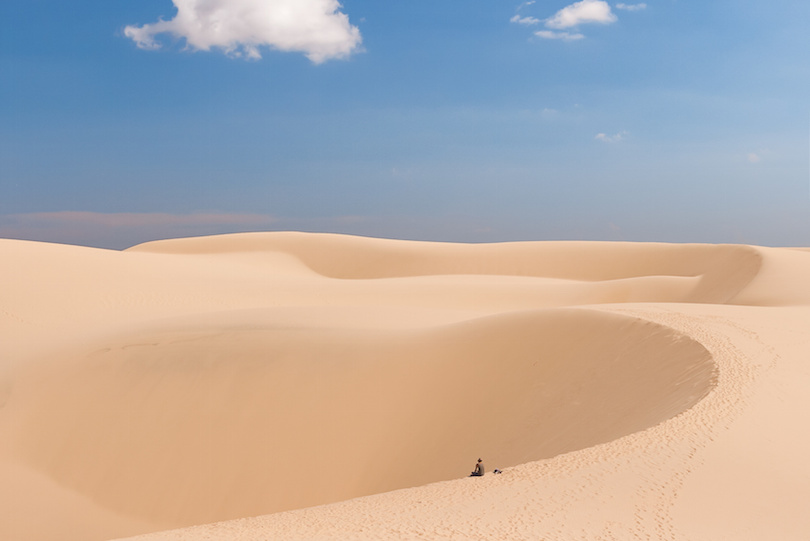
The formerly little-inhabited beach south of the fishing village of Mui Ne has seen some serious development in the last 20 years. Due to strong sea breezes it is a popular destination in Vietnam for kite- and windsurfing.
The town is still most known though for its sparkling dunes that wouldn’t look out of place in the Sahara. Towering over 10 metres in height, they make for a phenomenal sight with lots of people either sledding or quad biking about them.
While the red sand dunes lie quite close to town overlooking the sea, the white ones are a bit further away. Both look particularly epic at sunrise and sunset with some even taking hot air balloon rides above them.
6. Terraced Rice Fields In Sapa
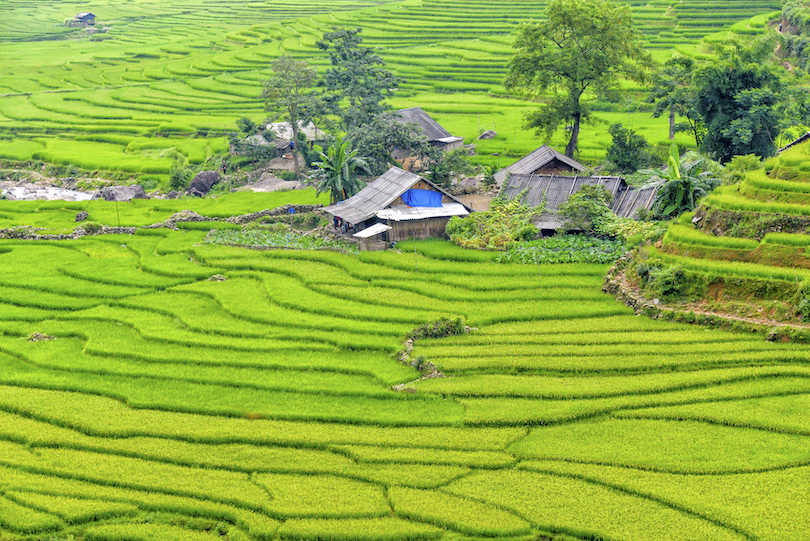
Some of Vietnam’s most famous and photogenic landscapes, however, have to be the scenic Terraced Rice Fields around Sapa. Nestled away right in the northwest of the country, their sweeping valleys and vivid green hues make for unbelievable views.
Located not far from the Chinese border, the popular and picturesque town lies right by the 3,143 metre-high Fansipan; the tallest peak in Southeast Asia. In between them are all the romantic terraced rice fields of Muong Hoa Valley.
For many centuries now, local hill tribes have constructed and maintained these engineering marvels, cultivating rice amidst the region’s harsh mountain climes. Other than enjoying its arresting views, you can also trek about the verdant fields and visit all the small villages.
5. Phu Quoc
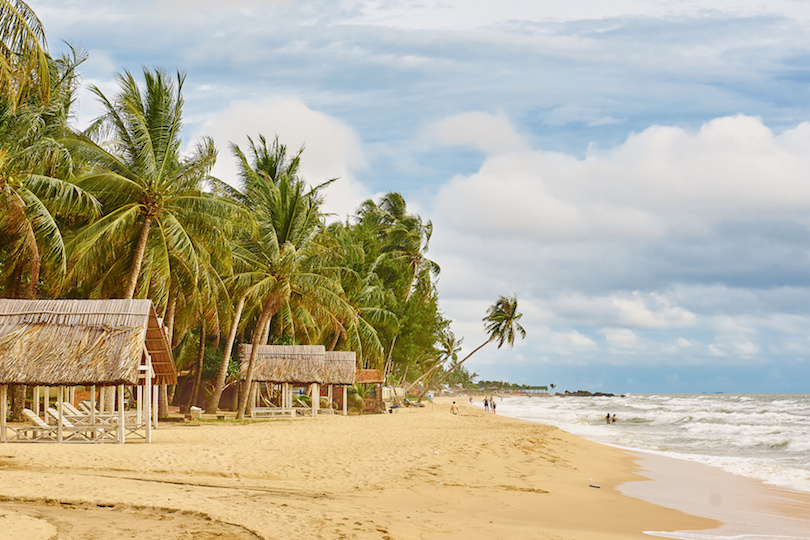
Although it is the largest island in Vietnam, the gorgeous Phu Quoc lies just off the coast of Cambodia, surrounded by the glinting Gulf of Thailand. A tropical paradise, it is famed for its wonderful white sand beaches and crystal-clear waters.
Coated in dense rainforest with mountain ridges also running through it, the idyllic isle was quite undeveloped until relatively recently. While most of it is still pristine, new restaurants and resorts are popping up all the time.
As well as sunbathing and swimming, you can always scooter around nearby fishing villages or tour pearl and pepper farms. With delicious seafood dishes to try and twinkling waterfalls to hike to, Phu Quoc really does make for a great island getaway.
4. Hoi An Ancient Town
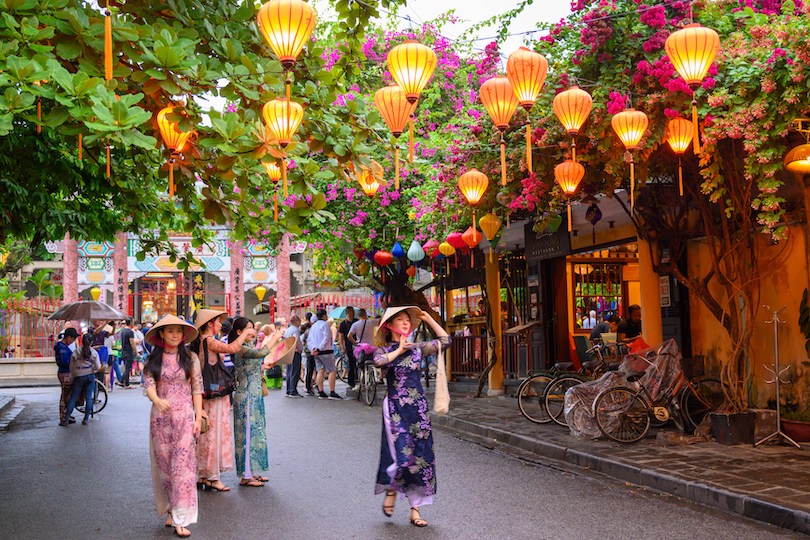
This fishing-village-turned-tourist-attraction is situated on the coast of the South China Sea. Hoi An has been an international port from the 16th century although the serious shipping business has long since moved to the city of Da Nang.
The heart of the city is still the Old Town, full of winding lanes and Chinese-styled shops. It is sometimes called the “Venice of Vietnam” because of the narrow canals that cut through part of the town.
Due to its strategic setting along the country’s central coastline, Hoi An thrived for centuries as an important trading port. Its many merchants built not just Chinese-style temples and shophouses but Vietnamese tube houses too. Later on, the French also added colonial villas.
What makes its Ancient Town even more enchanting are all the colourful lanterns strung up along its streets and riverside. In addition to taking photos of its quaint Japanese-covered bridge, you can stop for a bite to eat or shop for souvenirs at its vibrant central market.
3. Hoan Kiem Lake in Hanoi
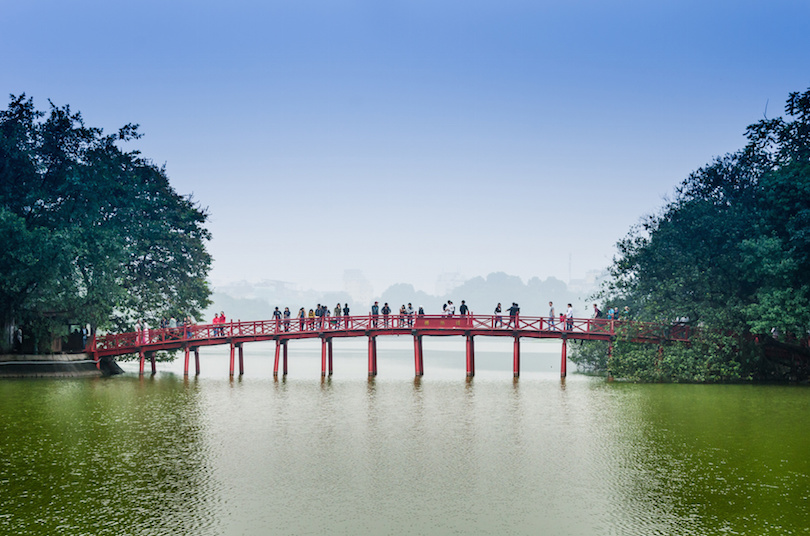
Located in the historical center of Hanoi, Hoan Kiem Lake is one of the major scenic spots in the city and serves as the locals’ favorite leisure spot. Hoan Kiem means “returned sword”, and the name comes from a legend in which King Le Loi was given a magical sword by the gods, which he used to drive out the invading Chinese. Later he returned the sword to the Golden Turtle God in the lake.
See also: Where to Stay in Hanoi
Aside from strolling along its shores taking in the scenery and views, you can also cross the bright red The Huc Bridge to the historic Ngoc Son Temple. Another of the lake’s landmarks is the iconic Turtle Tower which is set on a tiny island far offshore.
2. Thien Mu Pagoda in Hue
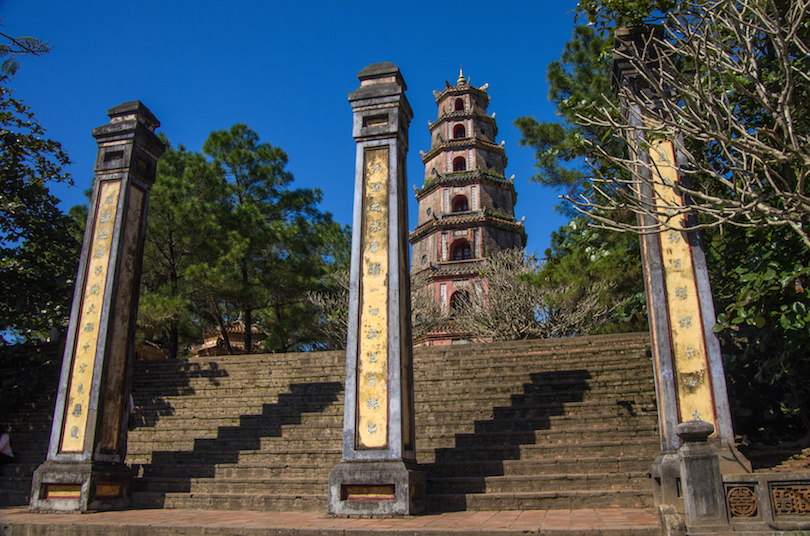
Along with the Imperial Citadel, the marvellous Thien Mu Pagoda is undoubtedly Hue’s main symbol and sight. Perched upon a hill overlooking the Perfume River, it makes for some fine photos with the lush landscaped grounds at its foot being very peaceful to wander around.
Originally erected in 1601, the pagoda was built by the first of the Nguyen lords to pray for the country’s prosperity. Now towering seven storeys in total, it houses some exquisite gold and silver images of the Buddha.
After snapping some pics of the 21-metre-high tower, make sure to explore all its gorgeous gardens along the river.
1. Ha Long Bay
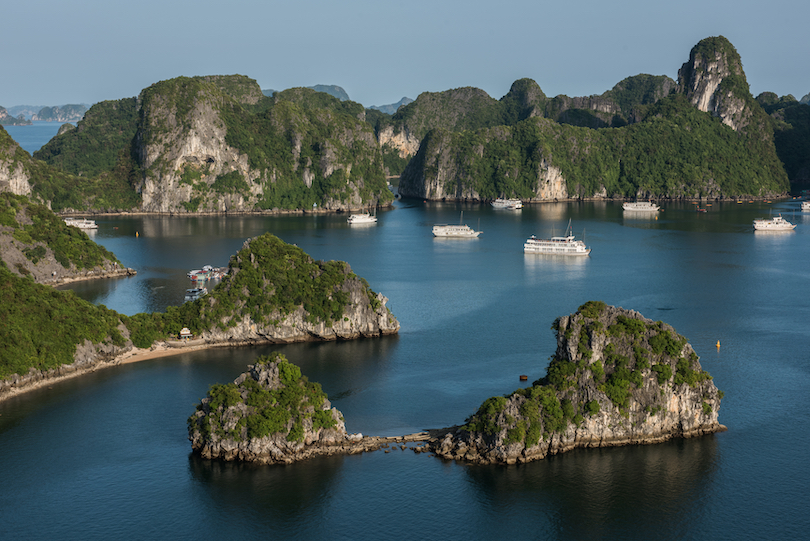
Renowned around the world for its incredible karst landscapes and emerald waters, Halong Bay is by far the most popular tourist attraction in Vietnam. Featured on the front of countless travel catalogues, it can be reached in roughly 2.5 hours from Hanoi.
Home to almost 2,000 craggy isles and looming limestone outcrops, its name means ‘Bay of Descending Dragons’ in Vietnamese. Rising dramatically above the waters around them, their rugged rocks are topped by thick jungle vegetation with sandy beaches and cool caves found at their feet.
Many people also take sightseeing cruises about the bay, stopping off at floating villages and grottoes along the way. You can also always swim and kayak or enjoy relaxing Tai Chi, yoga and cooking classes aboard the junk boats.