
Statues have been created by man since the prehistory for all kinds of reasons and in all sizes. One of the first statues, a 12 inch high sculpture called the Lion Man, was created almost 32,000 years ago. The original Seven Wonders of the World included two statues: The Colossus of Rhodes and the Statue of Zeus at Olympia. Today, statues have been erected all over the world representing everything from religious deities, historical events and influential people.
Each statue on this list offers something unique. Maybe it’s the artist’s skill, the sheer size, or the meaning behind it. You’ll find pieces from Asia, Europe, Africa, and the Americas that have drawn visitors for generations.
23. Genghis Khan Equestrian Statue
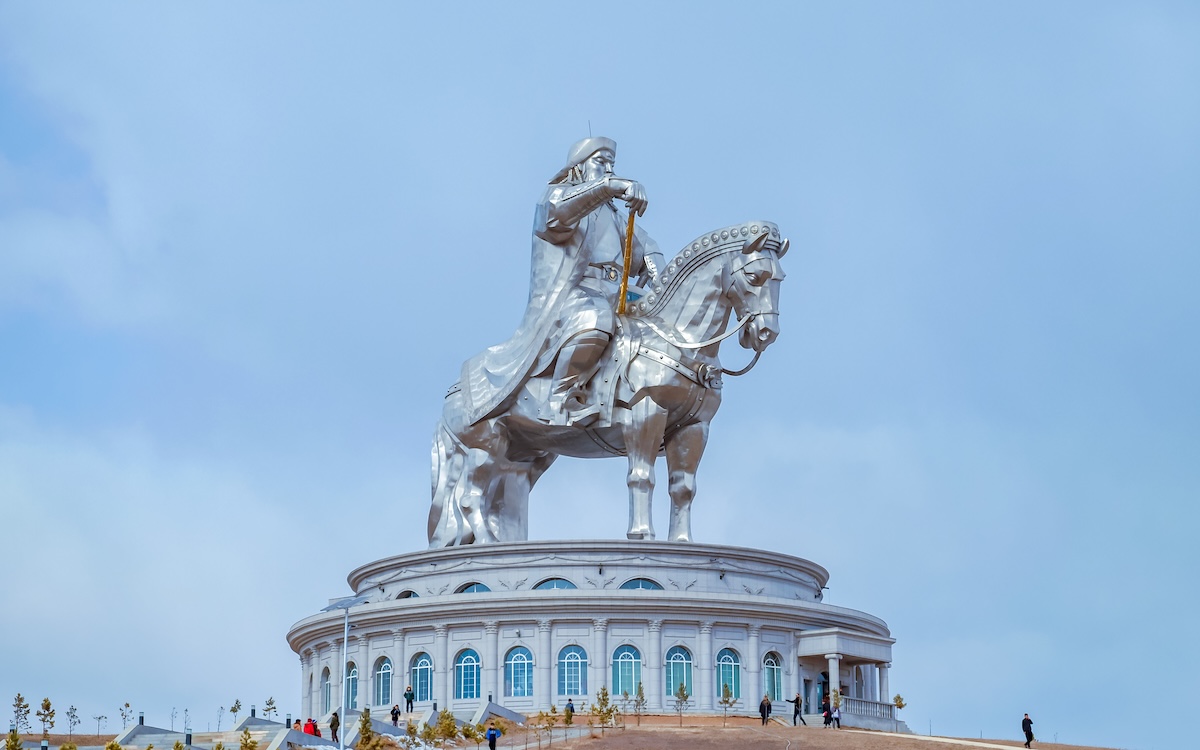
The world’s tallest equestrian statue stands 40 meters high on the Mongolian steppe. This massive stainless steel monument shows Genghis Khan on horseback, gripping a golden whip in his right hand. It sits about 54 kilometers east of Ulaanbaatar at Tsonjin Boldog, the spot where legend says Genghis Khan found a golden whip. Built in 2008, the statue marks the 800th anniversary of his birth.
You can climb up inside the horse to reach a viewing deck on top. The monument rises from a 10-meter base, making it even more impressive. It celebrates Mongolia’s most famous leader and the empire he built. The site also has museums where you can dive into Mongol history and culture.
22. Angel of the North
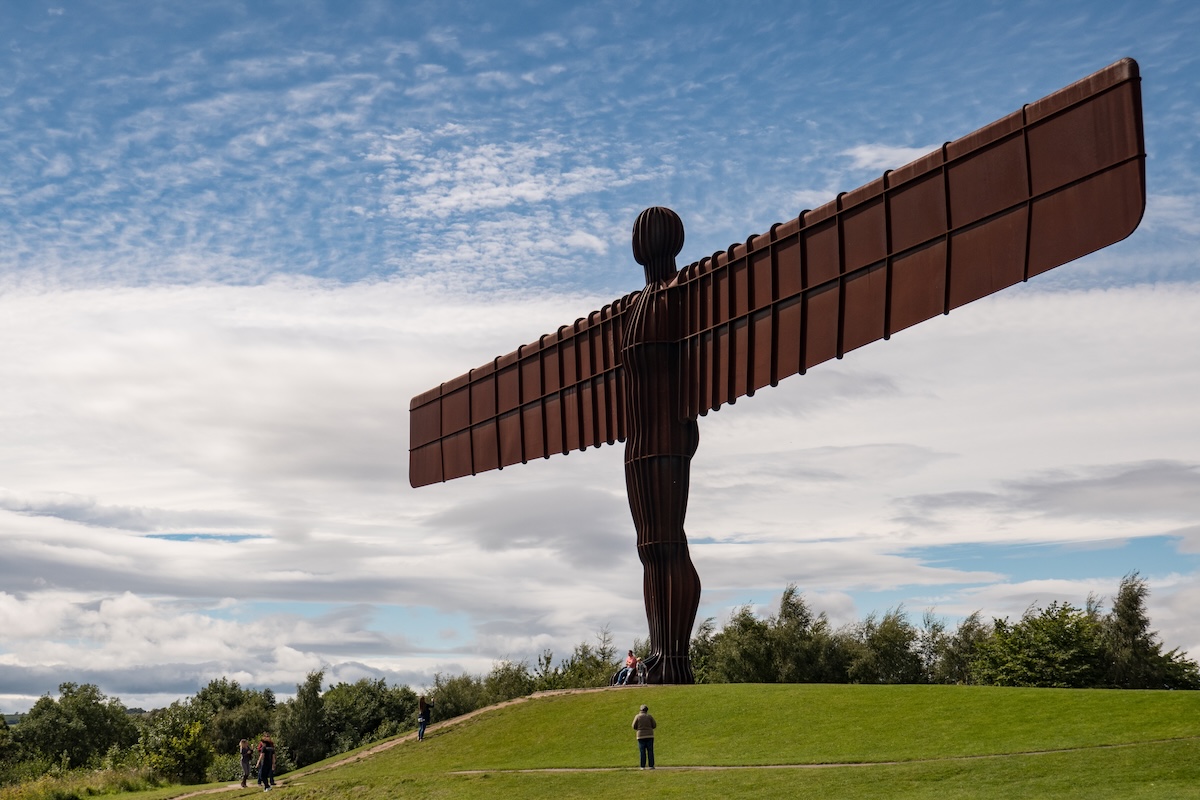
This massive steel sculpture stands on a hill in Gateshead, watching over the North East of England since 1998. Artist Antony Gormley designed this rust-colored giant to last over a century. The Angel stretches 54 meters wide and stands 20 meters tall—wider than a jumbo jet and taller than four double-decker buses stacked up.
When you drive past on the A1 motorway, you can’t miss it. About 150,000 people visit each year to see what’s become one of the UK’s most recognized landmarks. The sculpture helped kick off big changes in Gateshead, leading to other famous structures like the Millennium Bridge. What started as a controversial project is now as much a part of Gateshead as the Statue of Liberty is to New York.
21. Venus de Milo
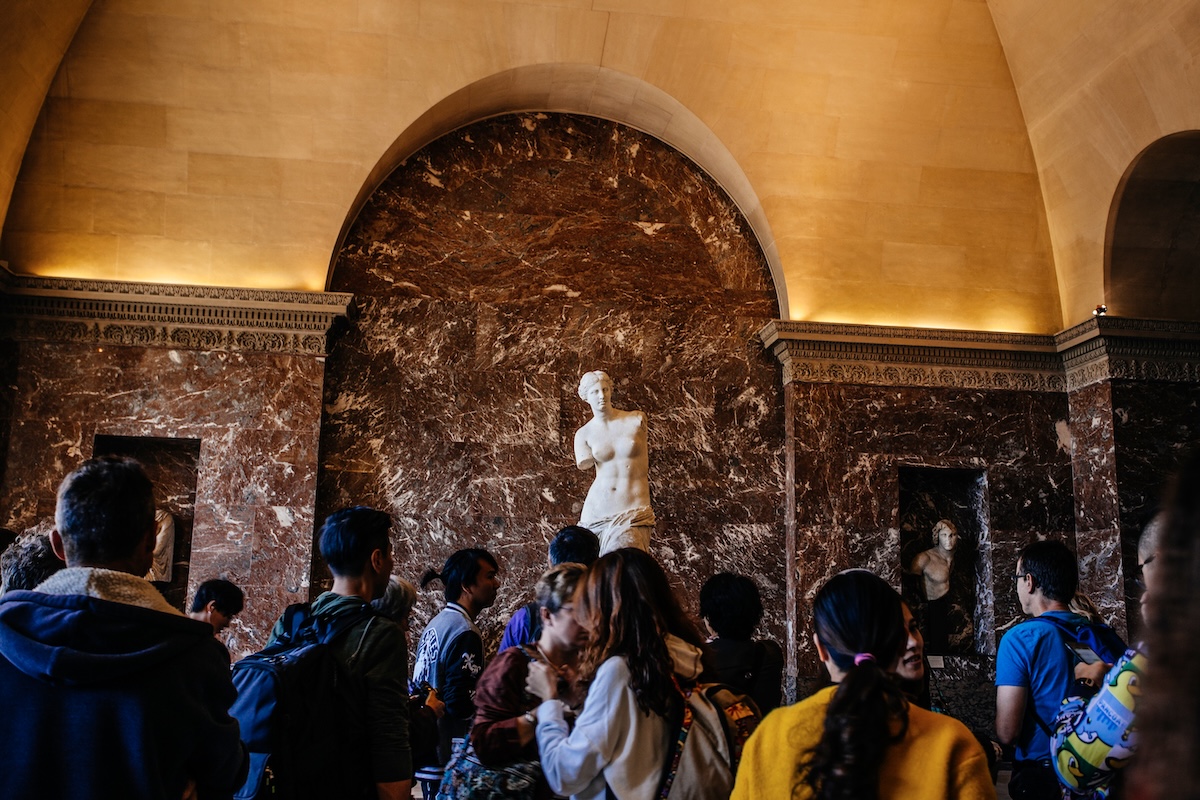
The Venus de Milo stands in the Louvre Museum, where she’s become one of the world’s most recognized sculptures. This ancient Greek statue was created around 130-100 BCE during the Hellenistic period. The marble figure shows Aphrodite, the Greek goddess of love. She’s over 6 feet tall, carved from Parian marble. What makes her instantly recognizable? Her missing arms.
When you visit Paris, you can see her displayed alongside the Mona Lisa and The Winged Victory of Samothrace. The statue was discovered on the Greek island of Melos about 2,200 years after it was made. Even incomplete, her graceful form has captivated visitors for generations. She’s easily one of the Louvre’s most popular attractions.
20. The Charging Bull
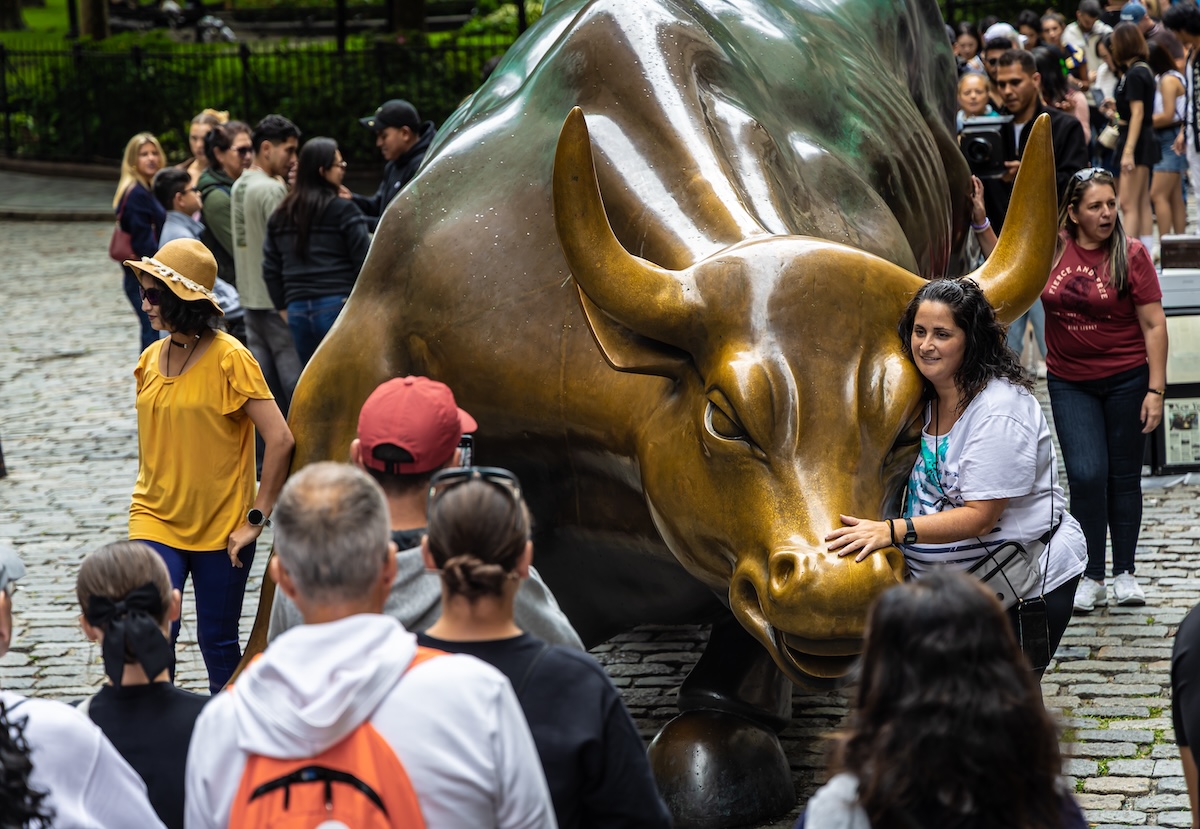
You’ve probably seen photos of this massive bronze beast, even if you’ve never been to New York City. The Charging Bull stands in Manhattan’s Financial District, just north of Bowling Green on Broadway. Artist Arturo Di Modica created this 7,100-pound sculpture after the 1987 stock market crash. He installed it in the middle of the night in December 1989 as a gift to New Yorkers. The city impounded it at first, but public demand brought it back.
The bull stands 11 feet tall and stretches 16 feet long. It represents strength and the resilience of financial markets. Now it’s one of the most photographed spots in the city. You’ll usually find a line of tourists waiting to snap pictures with it. Some even rub certain parts of the statue for good luck.
19. Moses
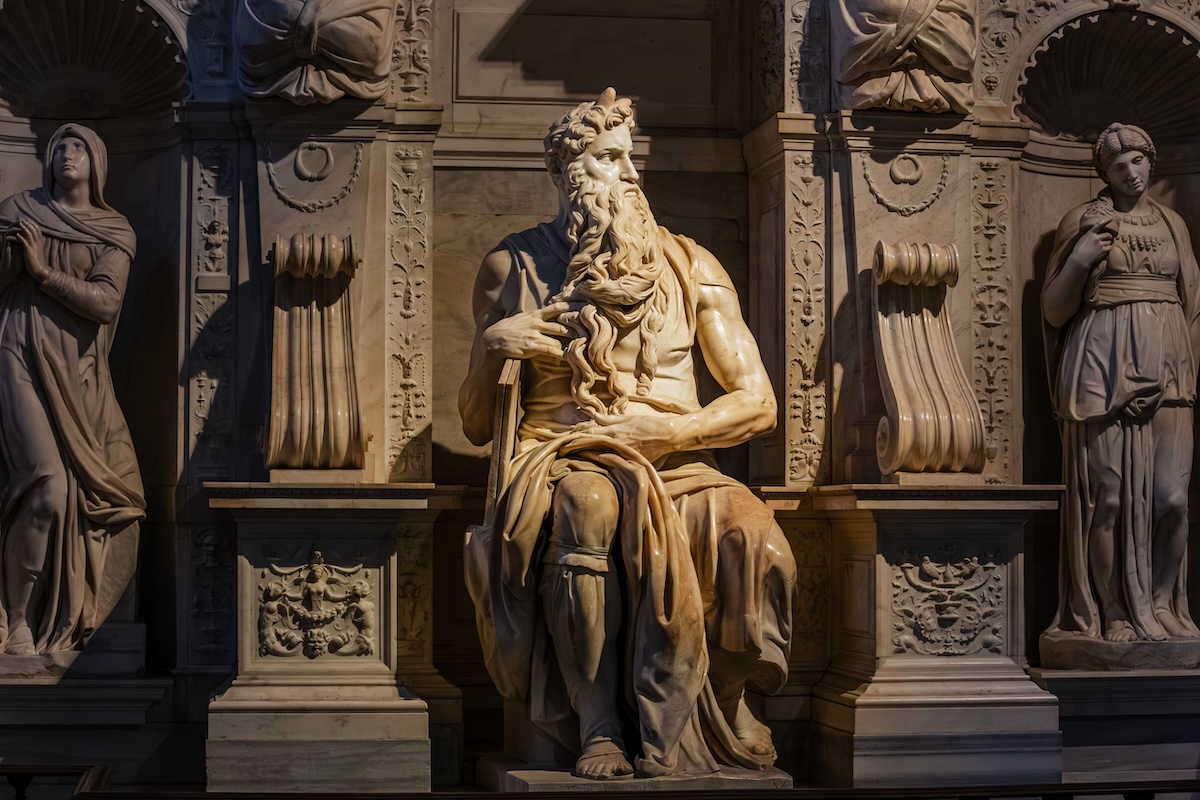
This powerful marble sculpture sits in the Basilica of San Pietro in Vincoli in Rome. Michelangelo carved it between 1513 and 1515 for Pope Julius II’s tomb. The statue shows Moses sitting in a marble chair between two decorated pillars. His pose gives him the look of a prophet. If you look closely, you’ll notice two horns on his head. This wasn’t meant to represent evil. The horns came from a Latin Bible translation that described Moses this way after he came down from Mount Sinai.
Michelangelo captured Moses in a moment of intense emotion. You can see anger in his face, as if he just discovered his people worshipping a false idol. The statue was meant to be viewed from below, which makes it even more dramatic when you stand in front of it.
18. Tian Tan Buddha
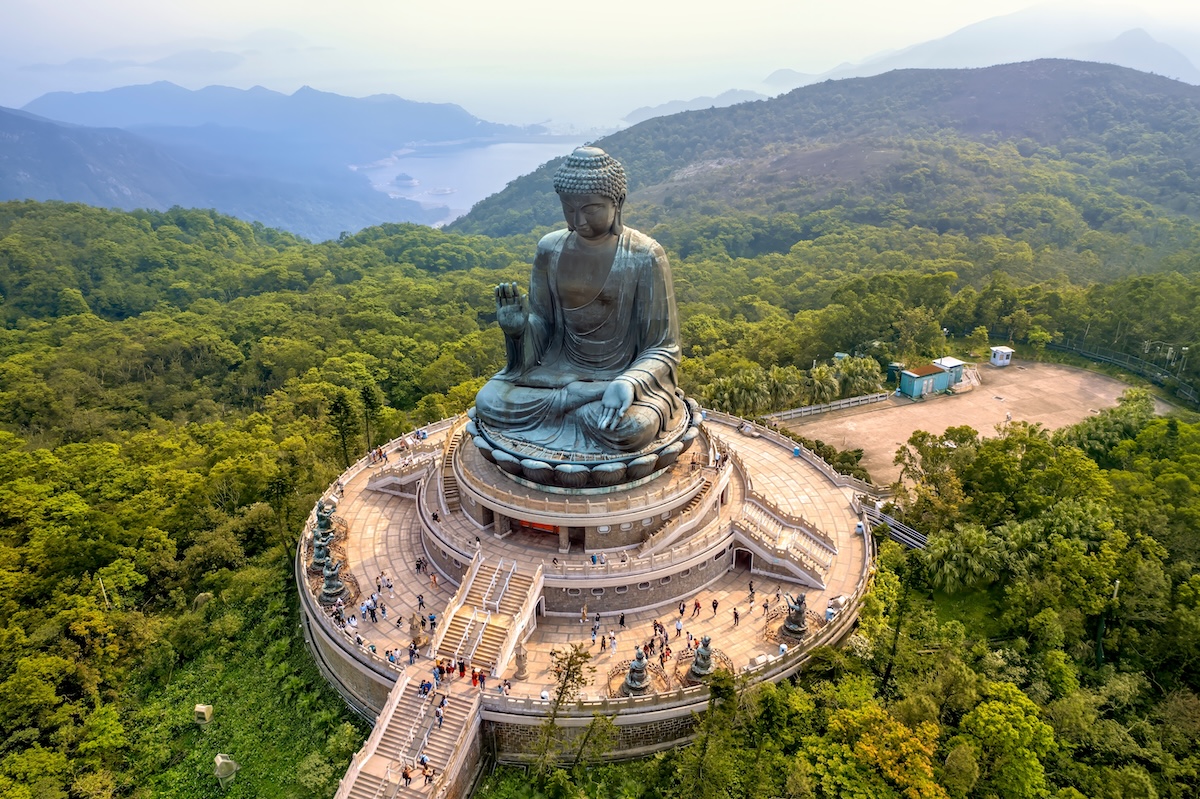
The Tian Tan Buddha sits high on Lantau Island in Hong Kong. People often call it the Big Buddha, and it’s easy to see why once you’re there. The bronze statue stands 34 meters tall and weighs over 250 tons. Workers finished building it in 1993 using 202 separate bronze pieces. It sits on top of Ngong Ping, about 482 meters above sea level.
This is one of the largest outdoor seated Buddha statues anywhere in the world. The statue shows Buddha Shakyamuni and sits on a three-story platform that you can climb up to see. The Big Buddha stands next to Po Lin Monastery. It was built to represent harmony between people, nature, and religion. Religious pilgrims and regular tourists alike visit from all over the globe.
17. Colossi of Memnon
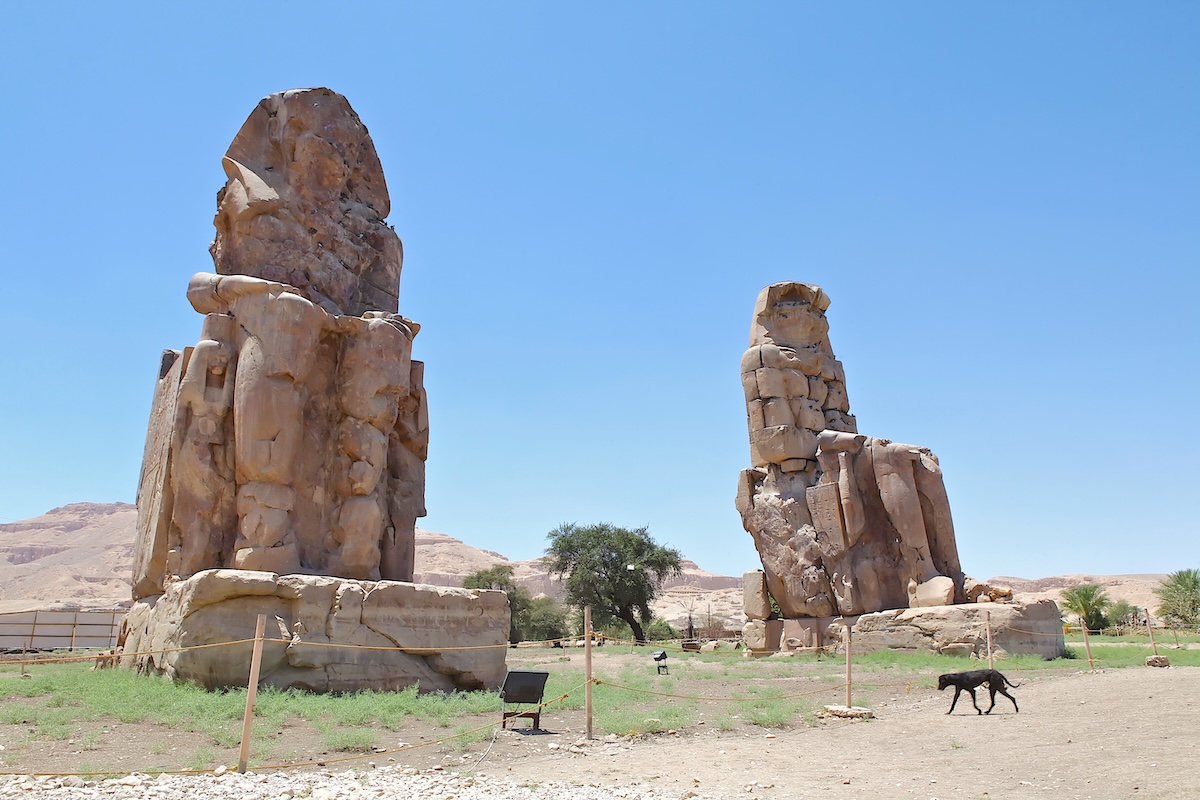
These massive stone statues stand on the west bank of the Nile River near Luxor, Egypt. They’ve watched over the landscape since 1350 BC—more than 3,000 years. The statues show Pharaoh Amenhotep III sitting on his throne. Each one reaches about 18 meters tall. They once guarded the entrance to his mortuary temple, which was the biggest temple in the area but has mostly disappeared over time.
The northern statue used to make a singing sound at dawn. Ancient Greek and Roman travelers heard it and thought it was magical. The noise actually came from cracks in the stone that reacted to temperature changes. You can visit them today as part of a trip to Luxor. They’re one of Egypt’s most popular tourist spots.
16. Atlantean Figures from Tula
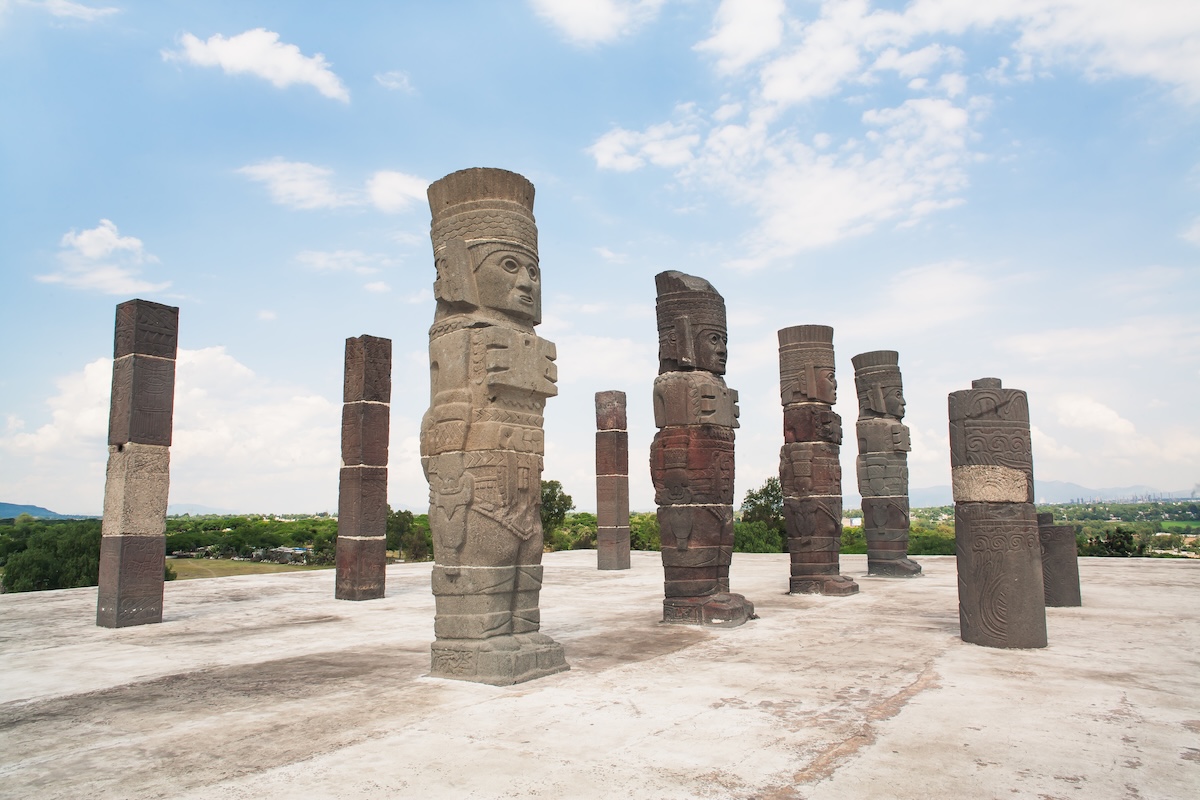
The Atlantean figures tower 15 feet above the ancient Toltec city of Tula in Mexico. These massive warrior statues stand on top of the Temple of Tlahuizcalpantecuhtli, carved from basalt and limestone around 1000 AD. Four statues make up the famous group, though they weren’t actually the first of their kind. The Olmec civilization created older versions at Potrero Noevo. Each figure wears a feathered headdress and chest plate while holding weapons.
The name “Atlantean” came after Spanish conquest. Europeans saw similarities between these figures and the Atlas statues from classical architecture. The Toltecs originally built them as guardians who protected their city and followed Quetzalcoatl, the feathered serpent god. You can still visit these warriors at the Tula archaeological site in Hidalgo, Mexico. They remain one of the most recognizable symbols of Mesoamerican art.
15. African Renaissance Monument
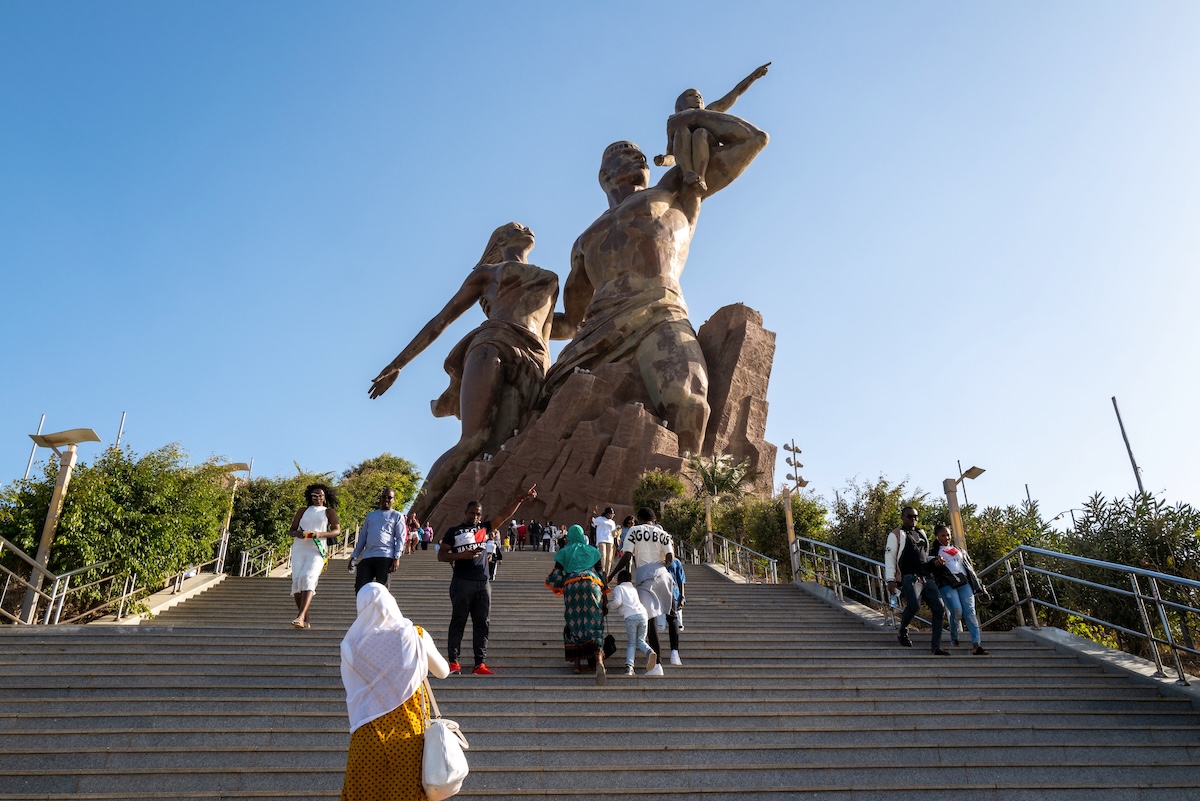
Africa’s tallest statue stands on a hilltop outside Dakar, Senegal. The African Renaissance Monument rises 49 meters into the sky as a massive bronze figure overlooking the Atlantic Ocean. The statue shows a family of three emerging together. A man points toward the horizon while holding a child on his bicep, and a woman stands beside them. This design represents Africa’s progress and hope for the future.
President Abdoulaye Wade unveiled the monument in 2010 to mark Senegal’s 50th independence anniversary. He wanted it to symbolize Africa breaking free from its difficult past.
The statue sparked debates among locals. Some felt proud of the bold statement it made. Others questioned the cost and design choices. You can climb inside to reach viewing platforms that give you sweeping views of Dakar and the ocean beyond.
14. Augustus of Prima Porta
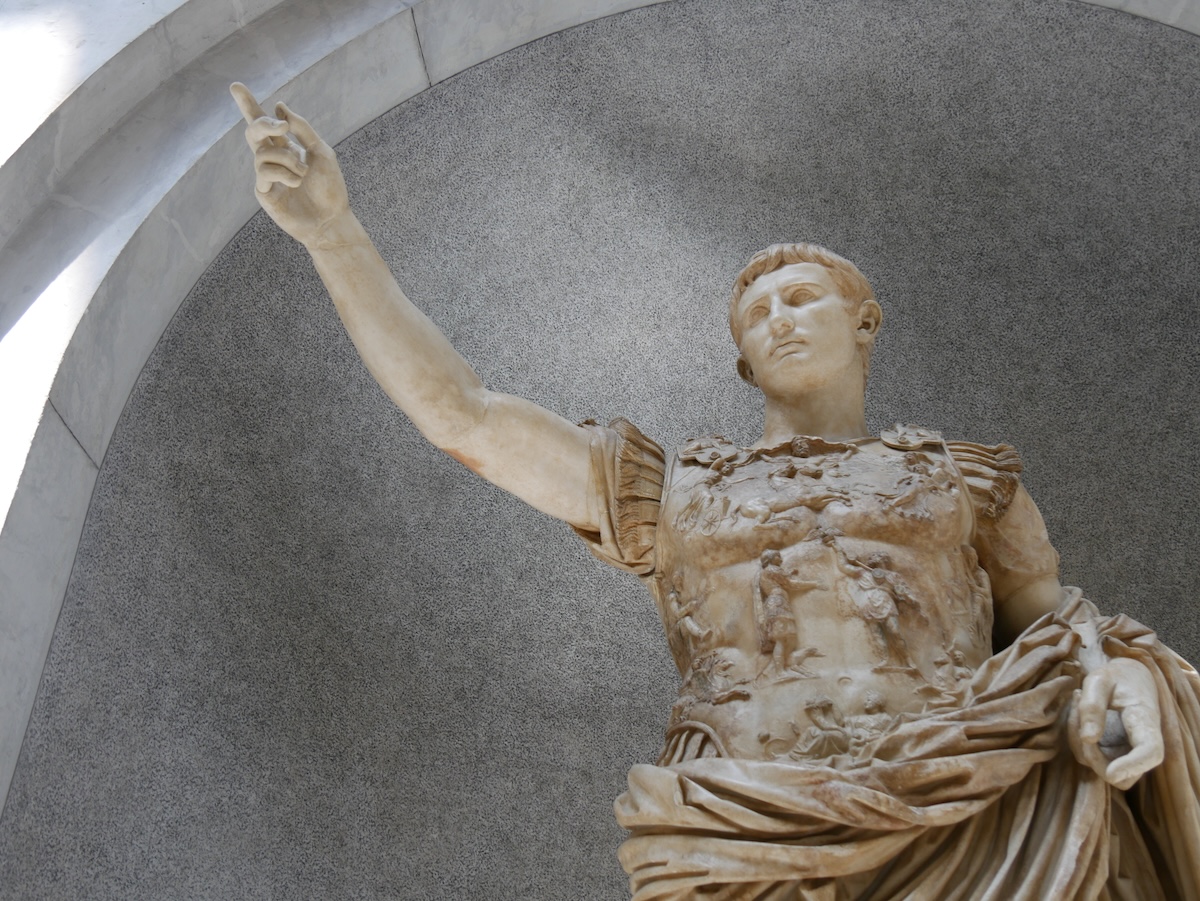
When you see the Augustus of Prima Porta, you’re looking at one of ancient Rome’s most recognized sculptures. This marble statue shows Rome’s first emperor standing over 6 feet tall in a powerful pose. It was discovered in 1863 at Prima Porta, a town outside Rome, buried in the ruins of his wife Livia’s villa.
The statue captures Augustus addressing his troops while wearing detailed armor and a cloak wrapped around his hips. He stands in a contrapposto pose, which means his weight rests mainly on one leg—a style borrowed from Greek art. The sculpture was created around 20 B.C. to celebrate Rome’s victory over the Parthians. Today you can visit it at the Vatican Museums, where it weighs in at about 2,200 pounds and keeps drawing crowds from around the world.
13. Merlion
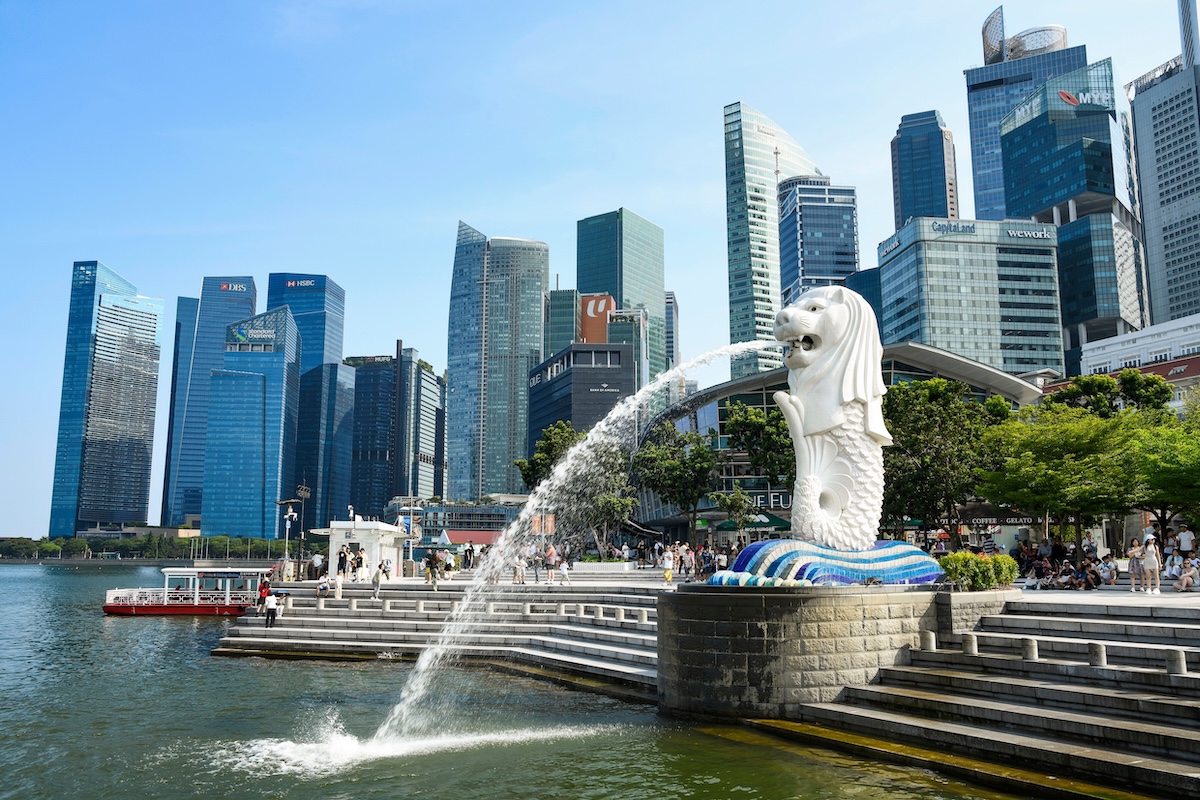
When you visit Singapore, you’ll find one of the world’s most unique national symbols waiting at Merlion Park. The statue has a lion’s head and a fish’s body, which might seem strange at first. The design came about in 1964 and tells Singapore’s story. The lion head connects to the city’s name, Singapura, which means “lion city” in Malay. The fish body represents Singapore’s roots as a small fishing village.
The main statue stands 8.6 meters tall and actually shoots water from its mouth into Marina Bay. You can’t miss it when you’re exploring the waterfront. There’s also a smaller 2-meter statue right behind it. Six official Merlion statues exist throughout Singapore, all approved by the tourism board. The creature became so popular that you’ll spot it on tourist materials and even in movies like “Crazy Rich Asians.”
12. The Thinker
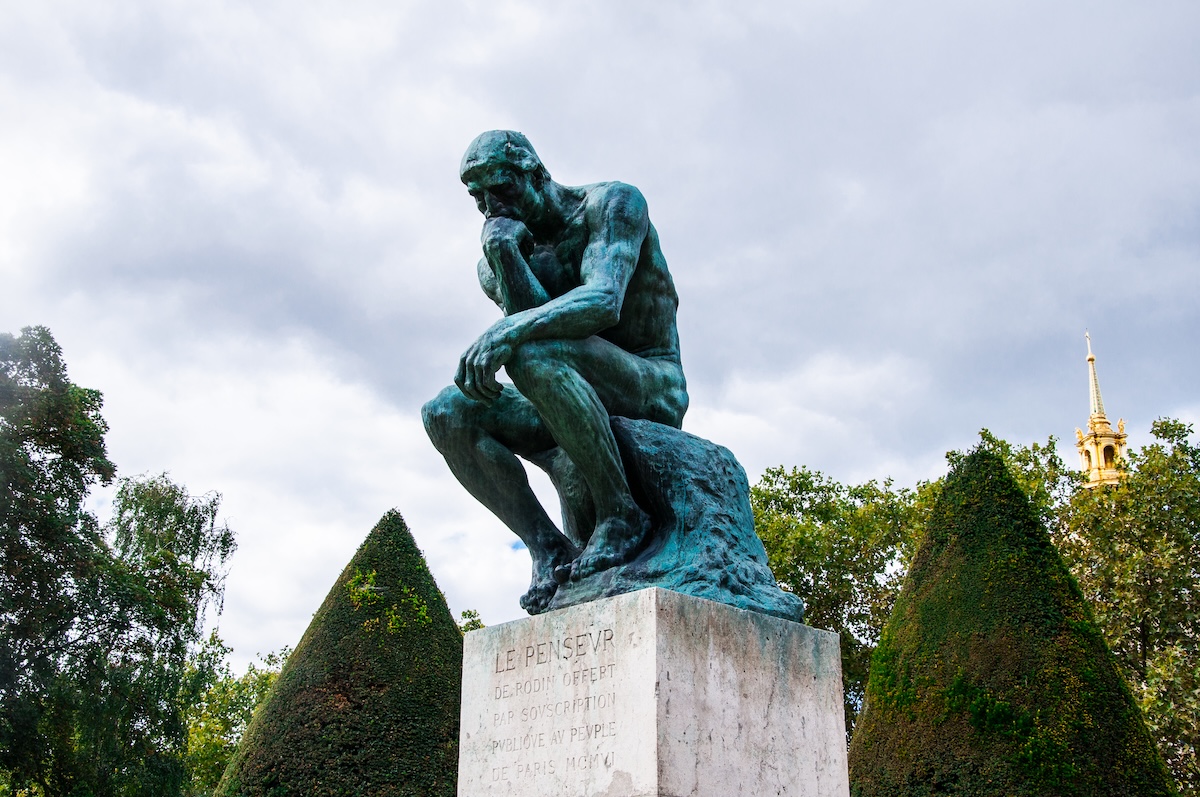
One of the world’s most recognizable sculptures sits in the gardens of the Musée Rodin in Paris. Auguste Rodin created The Thinker in 1880, though it wasn’t meant to stand alone at first. The bronze statue shows a naked man deep in thought, his chin resting on his hand. Rodin originally made this figure for the top of The Gates of Hell, where it represented the Italian poet Dante. The sculptor later separated it and displayed it as its own piece.
The famous 6-foot version you can see at the museum was cast in 1904. It sits outdoors among neat hedges, so you can walk around and view it from different angles. The peaceful garden setting fits the quiet, thoughtful mood of the sculpture itself.
11. Lincoln Memorial Statue
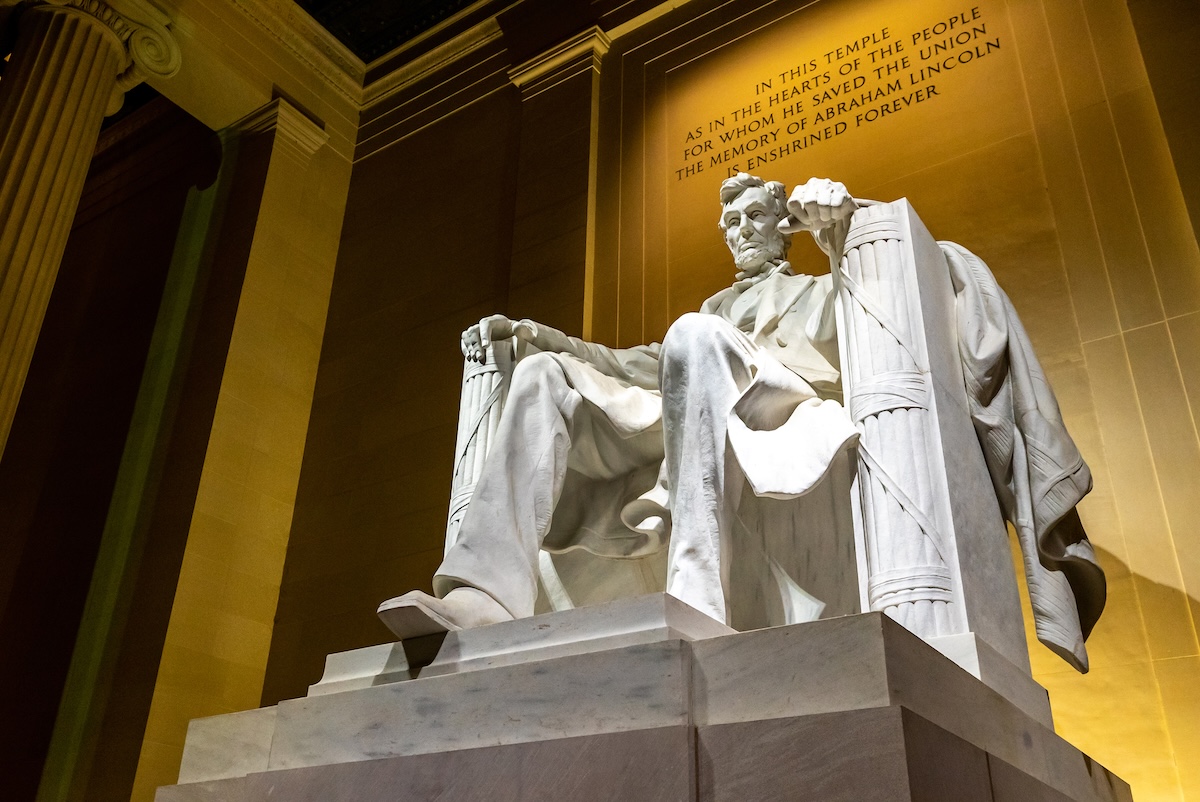
You’ll find one of America’s most recognized sculptures inside the Lincoln Memorial in Washington, D.C. Daniel Chester French made this massive seated figure of Abraham Lincoln, and the Piccirilli Brothers carved it from white marble. The statue rises 19 feet and shows Lincoln sitting in a chair, looking pretty deep in thought.
French was already 72 when the memorial opened in 1922. He ranked as the top American sculptor of his era, though honestly, most folks wouldn’t recognize his name these days—even if they’ve seen his most famous work a hundred times. Step past the tall marble columns and the statue just takes over the room. Workers spent eight years building the memorial, from 1914 to 1922. Over time, the statue’s become a powerful spot for civil rights gatherings and protests, echoing with history.
10. Little Mermaid
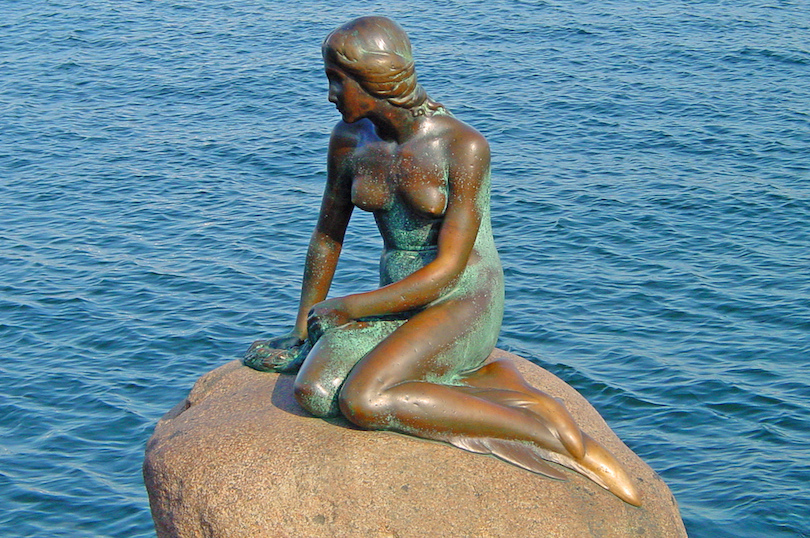
The statue of The Little Mermaid sits on a rock in the Copenhagen harbor at Langelinie in Denmark. Tourists visiting for the first time are often surprised by the relatively small size of the statue. The Little Mermaid statue is only 1.25 meters high and weighs around 175 kg.
Designed by Edvard Eriksen, the statue was erected in 1913 to commemorate a play of the Little mermaid. The poor lady has lost her head several times but has each time been restored. Copenhagen officials announced that the statue may be moved further out in the harbour, as to avoid further vandalism and to prevent tourists from climbing onto it.
9. Lions of Delos
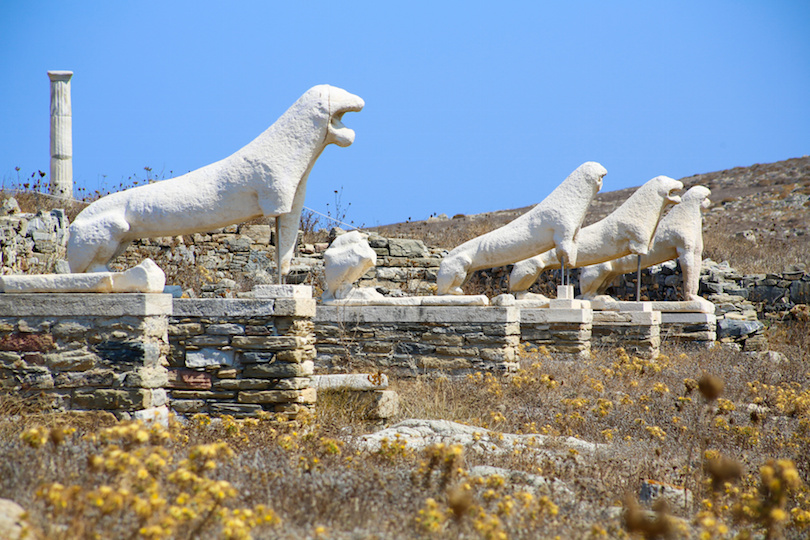
Located near Mykonos, the island of Delos is one of the most important mythological, historical and archaeological sites in Greece. Delos had a position as a holy sanctuary for a millennium before Olympian Greek mythology made it the birthplace of Apollo and Artemis.
The Terrace of the Lions was dedicated to Apollo by the people of Naxos shortly before 600 BC and had originally 9 to 12 marble guardian lions along the Sacred Way. Only 5 lions survived and from 3 lions fragments exists. The weather-battered originals were moved to the Archaeological Museum of Delos in 1999.
8. Mother Russia Statue
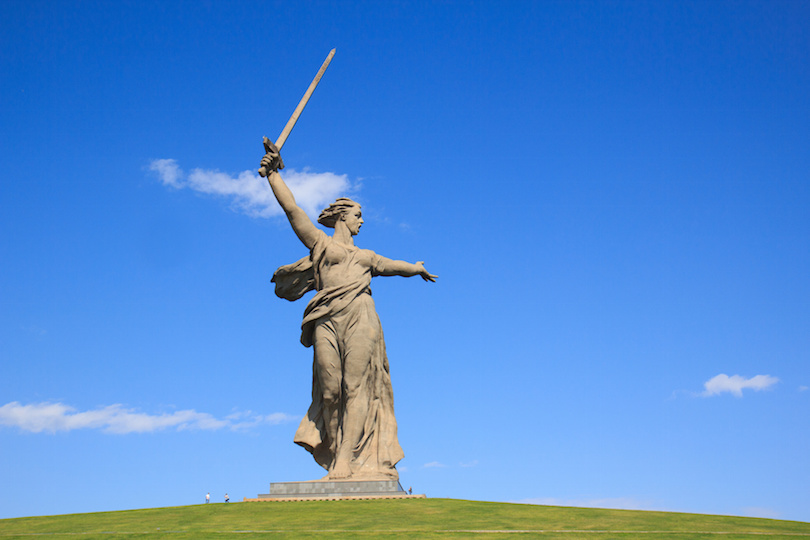
The Mother Russia statue, also called The Motherland Calls, is a famous statue in Mamayev Kurgan in Volgograd, Russia commemorating the Battle of Stalingrad. When the memorial was dedicated in 1967 it was the tallest sculpture in the world, measuring 85 meters (279 feet) from the tip of its sword to the top of the plinth. The figure itself measures 52 metres (170 feet), and the sword 33 metres (108 feet).
Two hundred steps, symbolizing the 200 days of the Battle of Stalingrad, lead from the bottom of the hill to the monument. The statue is currently leaning due to groundwater level changes causing movement of the foundations.
7. Olmec Heads
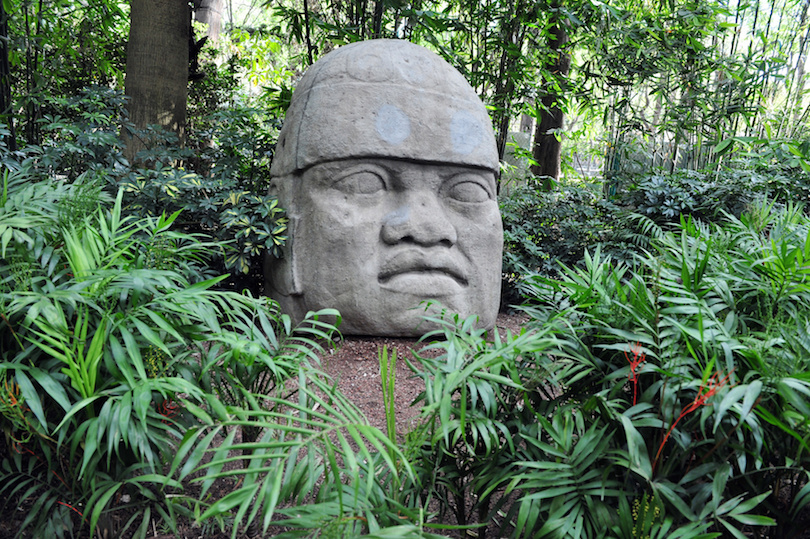
The Olmec were an ancient Pre-Columbian civilization living in the tropical lowlands of south-central Mexico, in what are roughly the modern-day states of Veracruz and Tabasco. The Olmec civilization flourished roughly from 1400 BC to about 400 BC. The most recognized aspect of the Olmec civilization are the enormous helmeted heads. The heads are thought to be portraits of rulers, perhaps dressed as ballplayers.
No two heads are alike and the helmet-like headdresses are adorned with distinctive elements. There have been 17 colossal heads unearthed to date. The heads range in size from the Rancho La Cobata head, at 3.4 m high, to the pair at Tres Zapotes, at 1.47 m.
6. Mount Nemrut
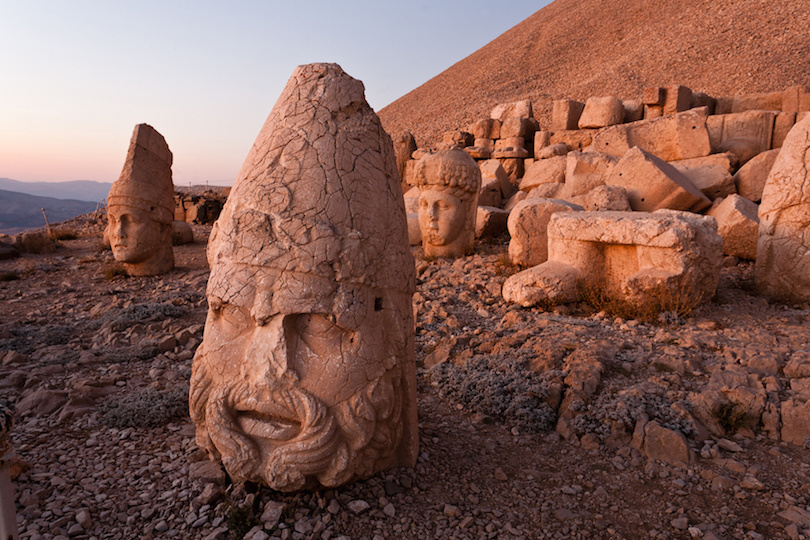
Nemrut is a 2,134 meter (7,001 ft) high mountain in southeastern Turkey, near the city of Adiyaman. In 62 BC, King Antiochus I Theos of Commagene built on the mountain top a tomb-sanctuary flanked by huge statues (8–9 m/26–30 ft high) of himself, two lions, two eagles and various Greek, and Persian gods. Since their erection, the heads have toppled from the bodies and lay scattered throughout the site.
The summit of Mount Nemrut provides a great view of the surrounding mountains. The main attraction is to watch the sunrise from the eastern terrace which give the bodyless heads a beautiful orange hue and adds to the sense of mystery of the place.
5. David Statue
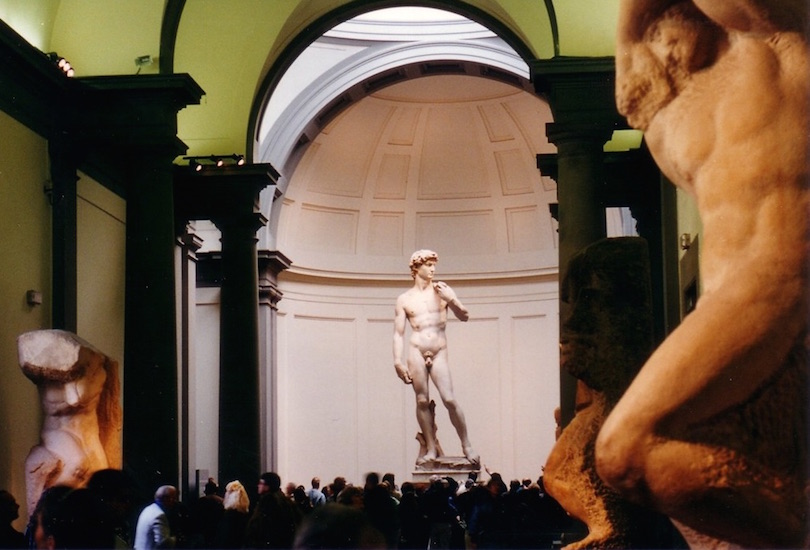
David is a masterpiece of Renaissance sculpture sculpted by Michelangelo from 1501 to 1504. The 5.17 meter (17 ft) marble statue portrays the Biblical King David in the nude. Unlike previous depictions of David which portray the hero after his victory over Goliath, Michelangelo chose to represent David before the fight contemplating the battle yet to come.
To protect it from damage, the famous statue was moved in 1873 to the Accademia Gallery in Florence in Italy, where it attracts many visitors. A replica was placed in the Piazza della Signoria, at the original location.
4. Great Sphinx
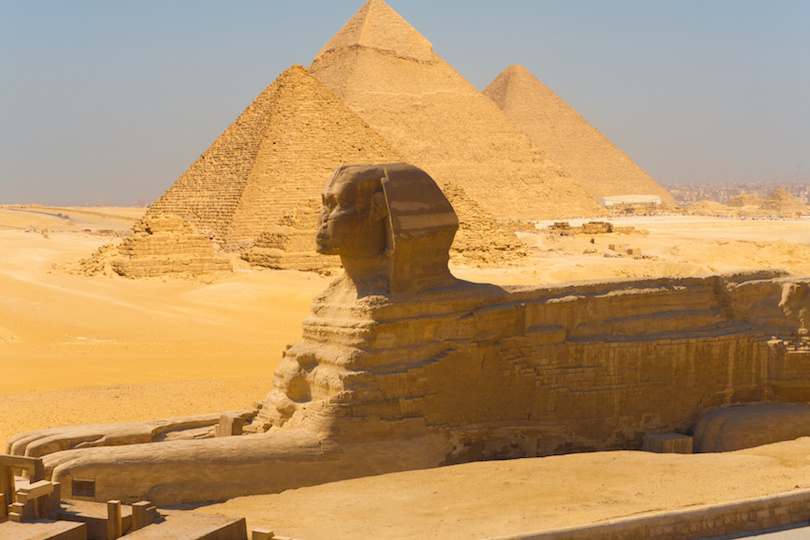
Located at the Giza Plateau near Cairo in Egypt, The Great Sphinx is one of the largest and oldest statues in the world, but basic facts about it, such as who was the model for the face, when it was built, and by whom, are still debated. It is the largest monolith statue in the world although it is considerably smaller than the Pyramids around it.
Despite conflicting evidence and viewpoints over the years, the traditional view held by modern Egyptologists at large remains that the Great Sphinx was built in approximately 2500 BC by the pharaoh Khafre, the supposed builder of the second pyramid at Giza.
3. Statue of Liberty
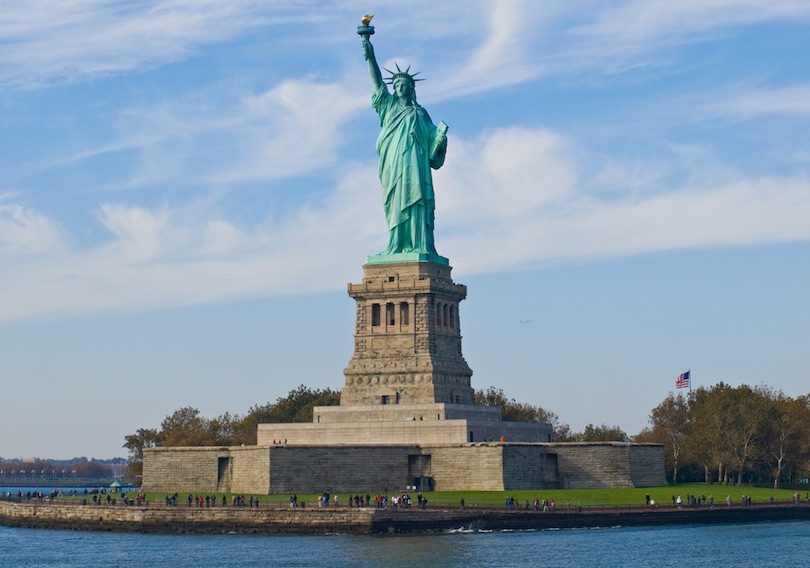
The Statue of Liberty, a gift from the people of France to celebrate the centennial of the signing of the United States Declaration of Independence, stands upon Liberty Island and is one of the most famous symbols in the world.
It represents a woman wearing a stola, a radiant crown and sandals, trampling a broken chain, carrying a torch in her raised right hand and a tabula ansata tablet. The construction of the statue was completed in France in July 1884 and arrived in New York the following year. From 1886 until the jet age, it was often one of the first glimpses of the United States for millions of immigrants.
2. Christ the Redeemer
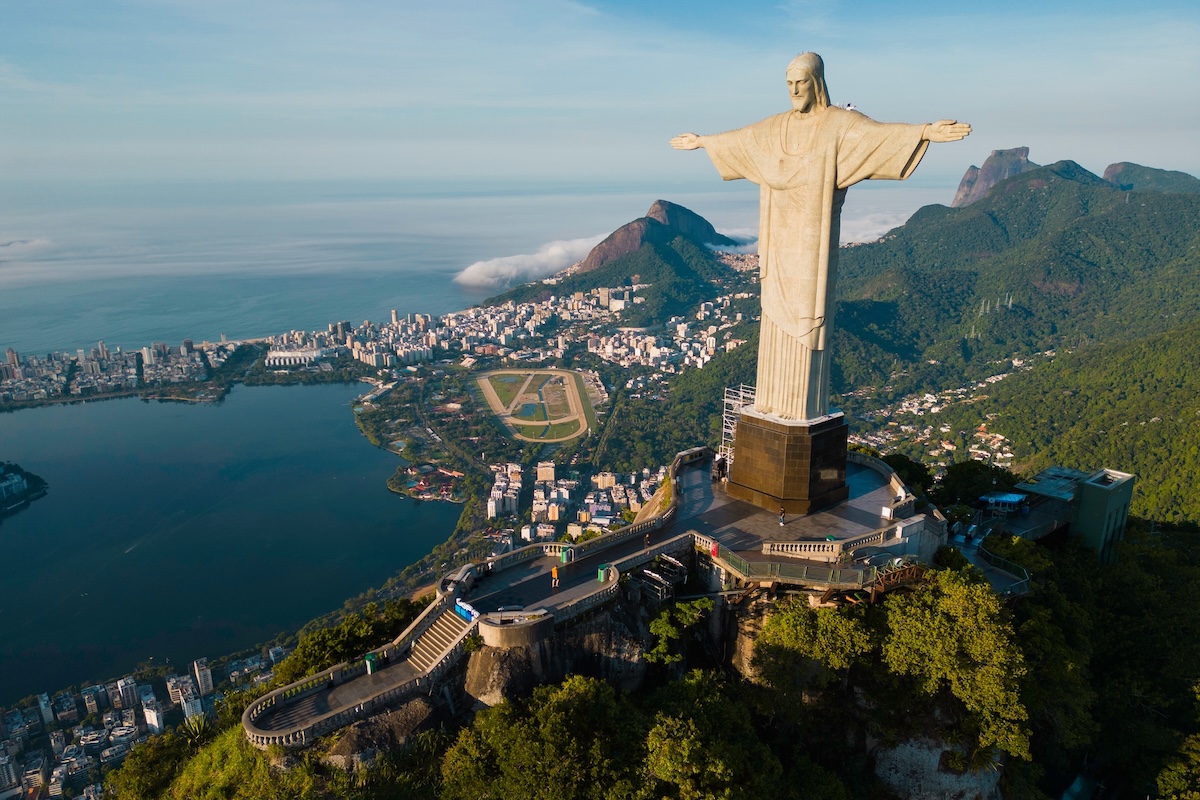
Christ the Redeemer is a statue of Jesus Christ in Rio de Janeiro, Brazil. Located at the peak of the 700 meters (2,300 ft) Corcovado mountain, it provides a sweeping panorama from the interior of Guanabara bay to the north, to Lagoa Rodrigo de Freitas to the south. The statue stands 39.6 meters (130 ft) tall, including its 9.5 meters (31 ft) pedestal, and 30 meters (98 ft) wide.
It is one of the tallest of its kind in the world though the statue of Cristo de la Concordia in Bolivia, is slightly taller. A symbol of Christianity, the famous statue has become an icon of Rio and Brazil.
1. Moai
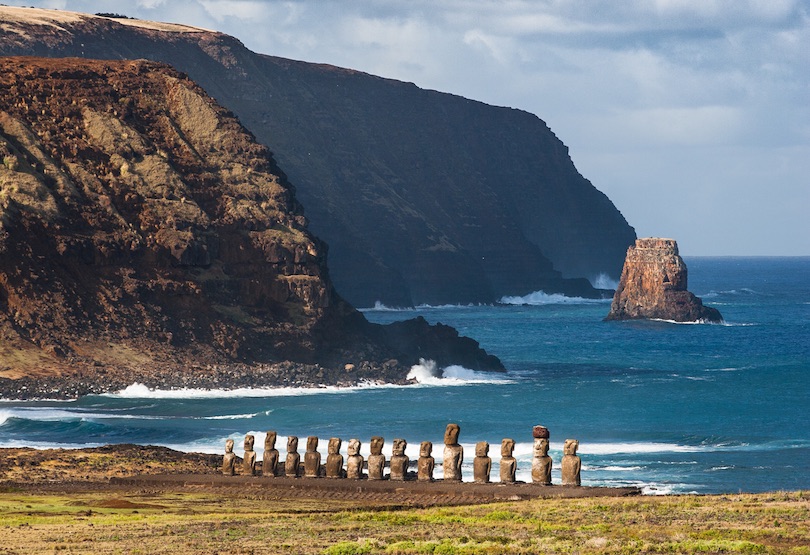
The world famous moai are monolithic statues located on Easter Island, one of the most isolated islands on Earth. The famous statues were carved by the Polynesian colonizers of the island, mostly between circa 1250 AD and 1500 AD.
In addition to representing deceased ancestors, the moai may also have been regarded as the embodiment of powerful living or former chiefs. The tallest moai erected, called Paro, was almost 10 meters (33 ft) high and weighed 75 tonnes. The heaviest erected was a shorter but squatter moai weighing 86 tons and one unfinished sculpture, if completed, would have been approximately 21 meters (69 ft) tall with a weight of about 270 tons.
The statues were till standing when Europeans first visited the island, but most would be cast down during later conflicts between clans. Today about 50 moai have been re-erected on Easter Island or museums elsewhere.