
Towers have been built by mankind since prehistoric times. The walls of ancient Jericho, one of the first city walls ever built, was complemented by a stone tower. Later civilizations often built watchtowers as part of their fortifications to provide a high, safe place from which a guard could observe the surrounding area.
In the last two millenniums all sorts of towers have been built including bell towers, clock towers, minarets and communication towers. You’ll find towers tucked away in Swiss cities, perched on cliffs, or rising above urban chaos. Each one brings something different to the table—maybe centuries of history, maybe just a killer view from the top.
25. St Mark’s Campanile
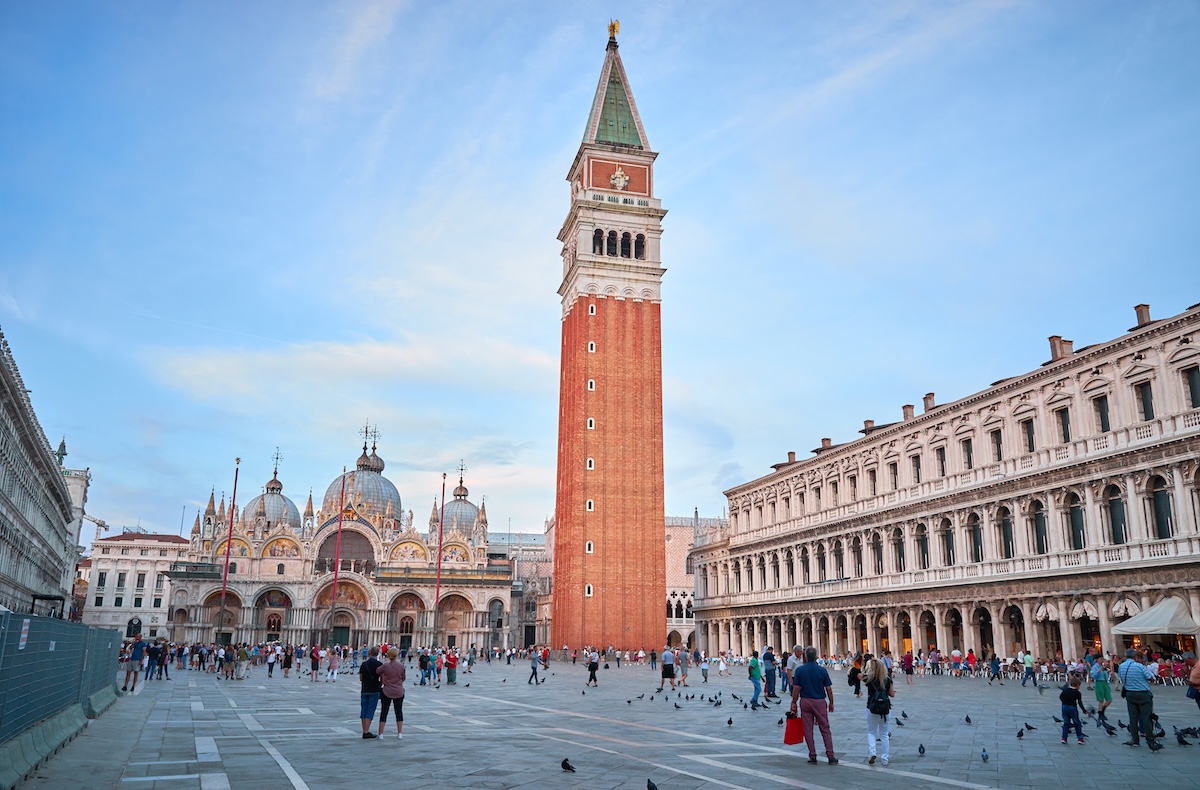
This landmark towers 98.6 meters above Venice’s St Mark’s Square—the tallest thing you’ll spot in the city. It stands right in front of St Mark’s Basilica and has dominated the skyline for centuries. Locals call it “el paròn de casa,” or “the master of the house.”
The current tower isn’t the original. The first one suddenly collapsed in 1902, and the city rebuilt it by 1912 as an exact copy. It took about 900 years for that dramatic tumble to happen. When you visit, you can ride up to the viewing platform at around 65 meters. From there, Venice’s canals and rooftops stretch out in every direction. Five historic bells sit at the top, still ready to ring out over the city.
24. Blackpool Tower
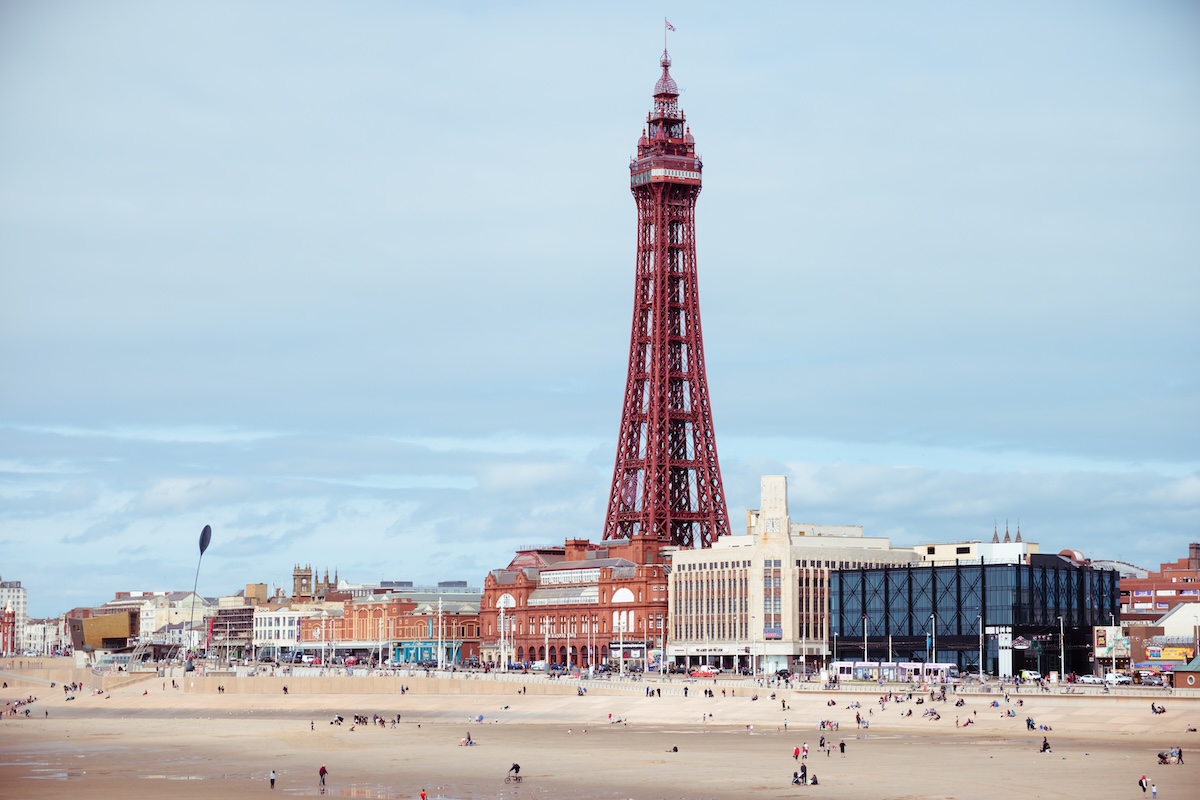
Blackpool Tower rises above the seaside town of Blackpool, England, reaching 518 feet into the sky. It opened its doors on May 14, 1894. Sir John Bickerstaffe, the town’s mayor, visited the 1889 World Fair in Paris and fell in love with the Eiffel Tower. He wanted something similar for Blackpool, so they built it. When it first opened, it was the tallest structure in the British Empire.
Inside, there’s more than just the view. The Tower Ballroom offers afternoon tea and music from a famous Wurlitzer organ. The Tower Circus has been going for over a century. The Tower Eye gives you sweeping views of the Lancashire coast. Now a Grade One listed Victorian landmark, Blackpool Tower is one of the UK’s most recognizable towers.
23. Zytglogge
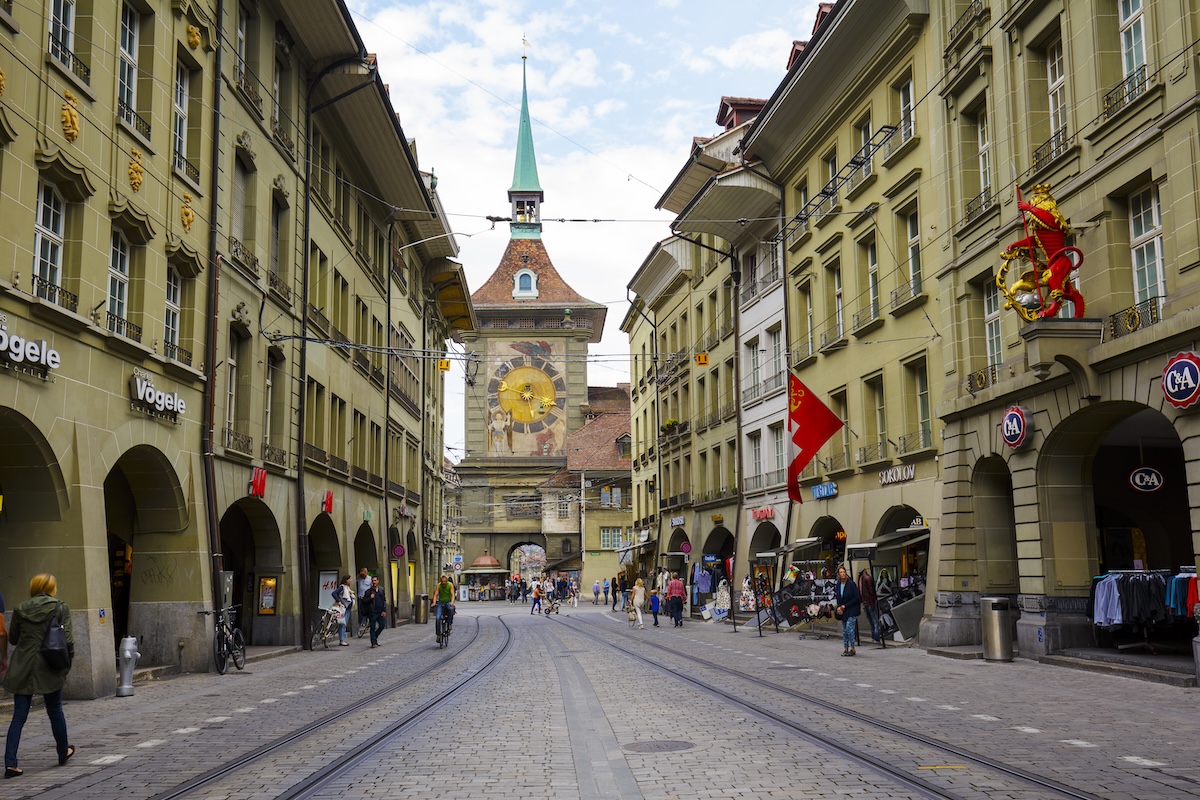
The Zytglogge stands right in the heart of Bern, Switzerland’s capital. This medieval clock tower dates back to around 1218, when it started as a simple gate tower guarding the city’s western entrance. Over 800 years, it’s served as a guard tower, a prison, and eventually became the ornate clock tower you see today. “Zytglogge” means “time bell” in Bernese German, and locals have gathered here for centuries.
When you visit, you’ll see why crowds still gather at this UNESCO World Heritage site. The astronomical clock and animated figures put on a show—bears dance, bells ring, and the mechanical masterpiece comes alive. It’s one of Bern’s most recognizable landmarks, drawing visitors from all over who want to watch time tick by in style.
22. Coit Tower
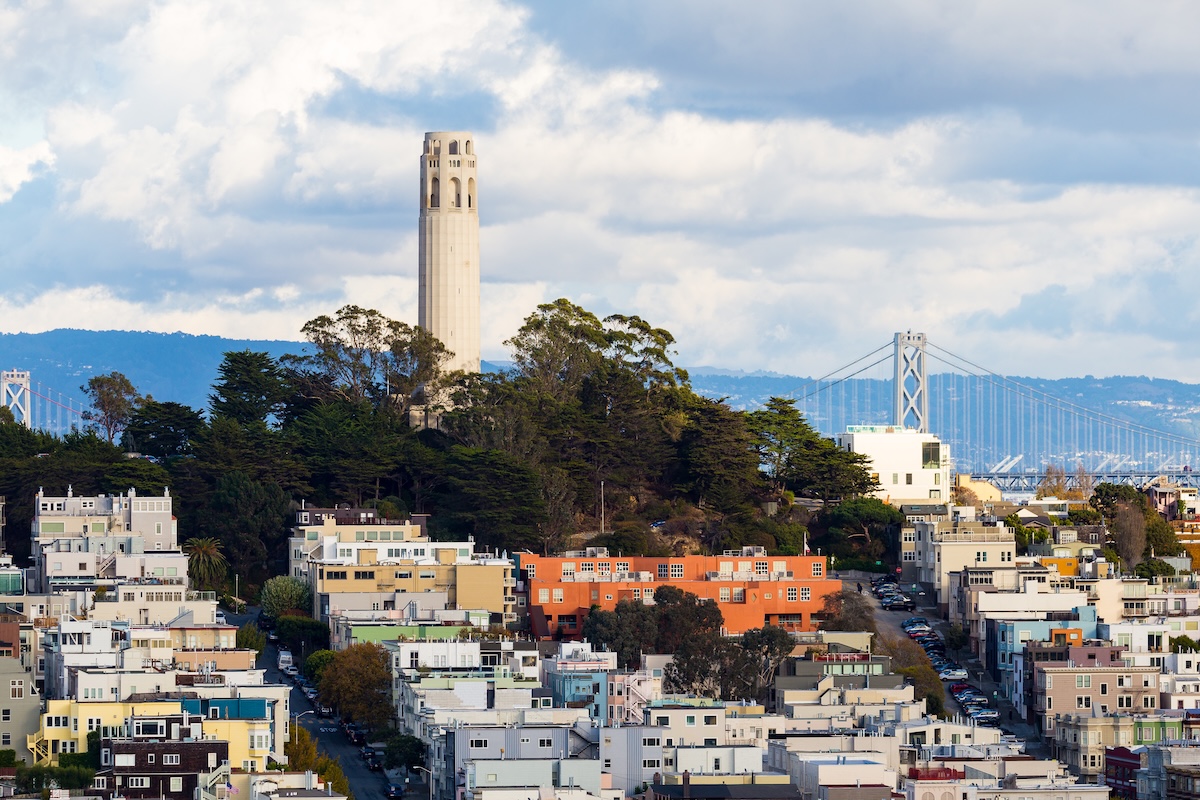
Coit Tower stands 210 feet tall on Telegraph Hill in San Francisco. Built in 1933, it’s become one of the city’s most recognizable landmarks—right up there with the Golden Gate Bridge. Lillie Hitchcock Coit, a true San Francisco character, made the tower possible. You can take an elevator up to the observation deck for views of the bay, bridges, and skyline.
Inside, murals from the 1930s cover the walls, telling stories about California life during that era. It’s like stepping back in time. Pioneer Park surrounds the tower, and if you’re lucky, you’ll hear wild parrots squawking in the trees. These birds got famous after starring in a 2005 documentary about San Francisco’s quirky residents.
21. Tower of Hercules
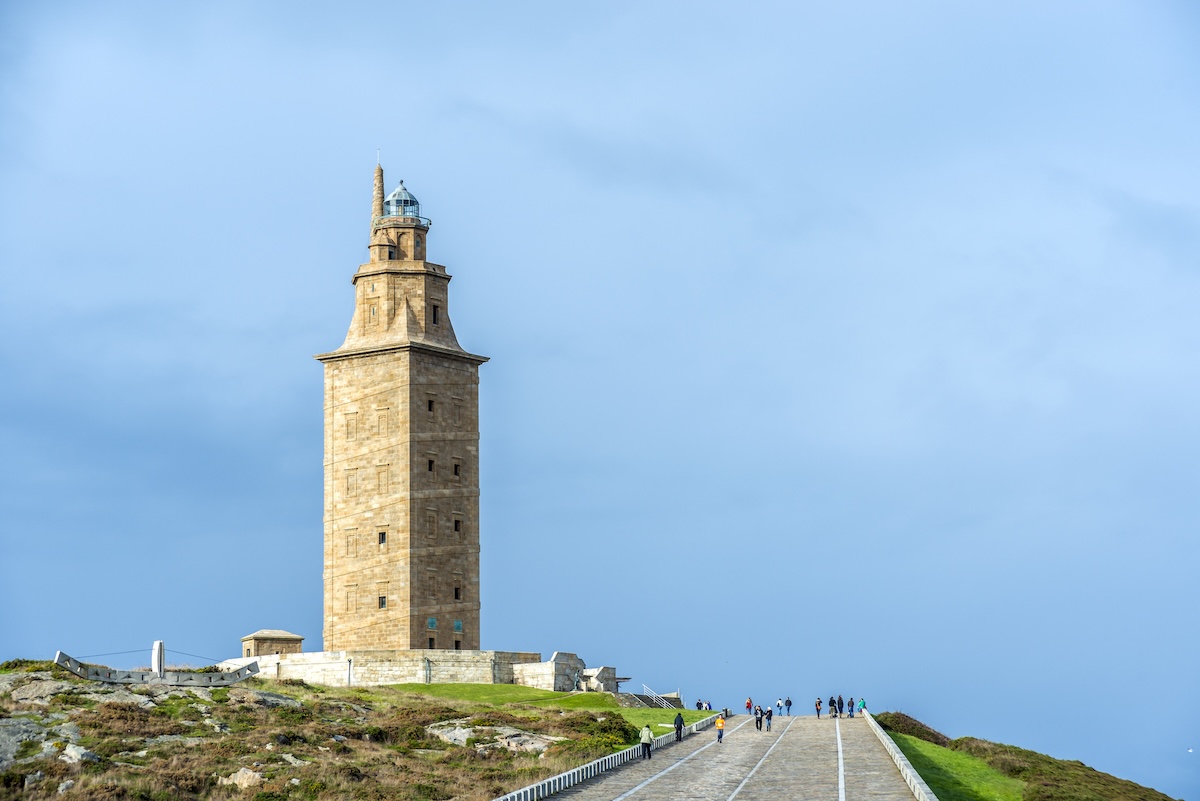
The Tower of Hercules stands on a peninsula near A Coruña in northwestern Spain. Built in the 1st century AD during Roman times, it’s the oldest lighthouse in the world that’s still working. This ancient tower has guided ships for nearly 2,000 years. The Romans called it the Farum Brigantium. It sits about 1.5 miles from A Coruña’s city center.
The name comes from the Greek hero Hercules. According to local legend, he founded the city after defeating a monster named Geryon. UNESCO designated it a World Heritage Site for its historical importance. The design probably drew inspiration from the Lighthouse of Alexandria. It’s one of Spain’s most famous lighthouses, drawing visitors eager to see this piece of Roman engineering.
20. Space Needle
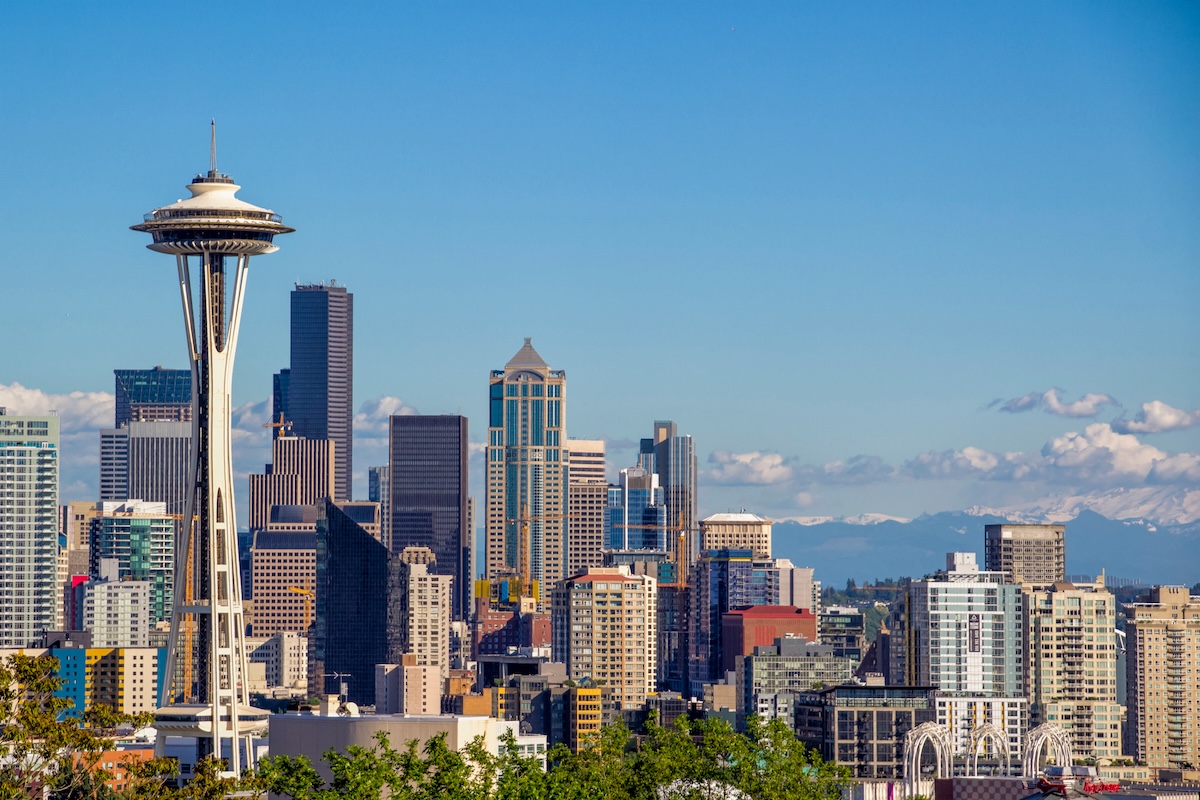
The Space Needle rises 184 meters above Seattle, Washington. They built it in 1962 for the Century 21 Exposition World’s Fair. Edward E. Carlson and John Graham Jr. designed its space-age look to match the fair’s theme of space exploration. The structure became Seattle’s most recognizable landmark almost overnight.
Head up to the observation deck for views of the city, Mount Rainier, and Puget Sound. There’s a rotating restaurant near the top that completes a full turn every 47 minutes while you eat. The Space Needle joined the World Federation of Great Towers, a group of the world’s tallest and most notable buildings. More than 60 years later, it’s still one of the Pacific Northwest’s top attractions. Millions ride its elevators every year.
19. Torre del Mangia
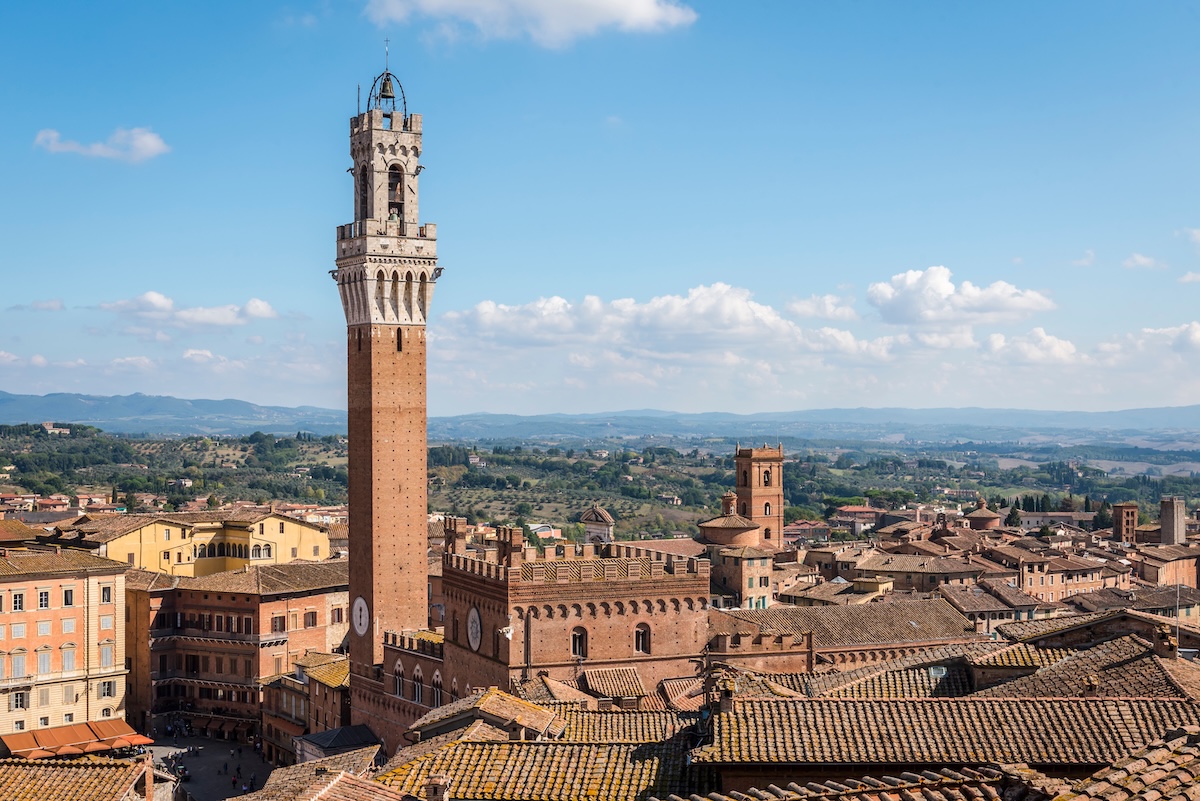
Torre del Mangia stands above Siena’s main square, Piazza del Campo. This red brick tower reaches 87 meters, making it Italy’s third tallest historic tower. They built it between 1338 and 1348 as part of the Palazzo Pubblico, Siena’s town hall. Its height was meant to show the city’s freedom from feudal rule.
Climb the 400 steps to the top—the view is worth the effort. Siena’s terracotta rooftops and the Tuscan countryside stretch out below. The tower gets its quirky name from its first bell ringer, nicknamed “Mangiaguadagni” or “profit eater” for his free-spending ways. Today, it’s one of Tuscany’s most famous landmarks and a symbol of Siena’s medieval might.
18. Hassan Tower
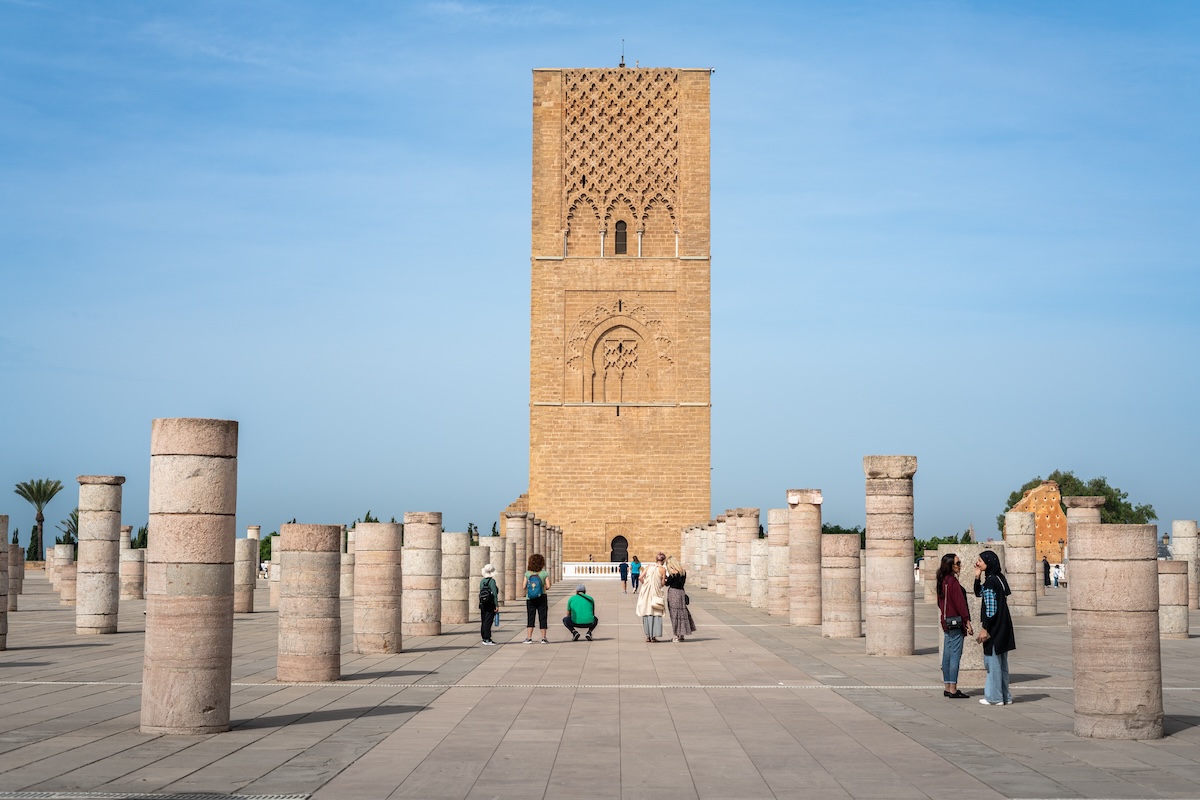
Hassan Tower stands in Rabat, Morocco’s capital. Sultan Yacoub al-Mansur ordered its construction in 1195, dreaming of the world’s largest mosque, with this as its minaret. The sultan died before workers finished, so the tower remains incomplete at 140 feet. The original plan called for it to reach much higher.
The tower, built from red sandstone, stands by the Bou Regreg River. Around 300 columns surround it—remnants of the unfinished mosque. Over 1.5 million people visit each year to see this example of 12th-century Almohad architecture. Today, Hassan Tower is one of Morocco’s most recognized landmarks and a symbol of Rabat’s history.
17. Bruges Belfry
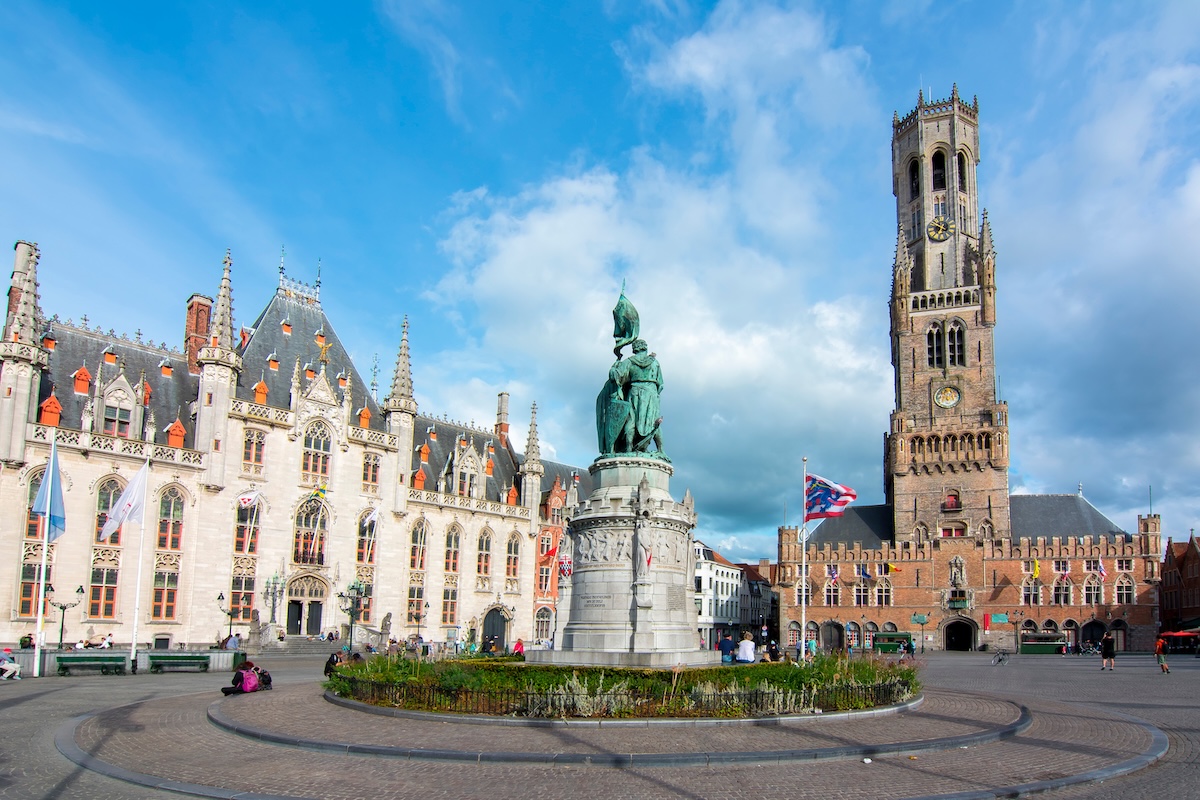
The Bruges Belfry stands 83 meters tall in the heart of Belgium’s medieval city. This 13th-century bell tower dominates the skyline alongside two other famous Bruges towers. Throughout history, city officials stored valuables, including official documents and the city seal, in its treasury room. Guards used the top as a lookout for fires and danger.
Now, visitors climb 366 steps to reach the top. The climb winds through four rooms, including the old treasury. Over 200,000 people make the trek each year. UNESCO lists the Belfry as a World Heritage Site. From the top, you get panoramic views of Bruges spread out below.
16. La Giralda
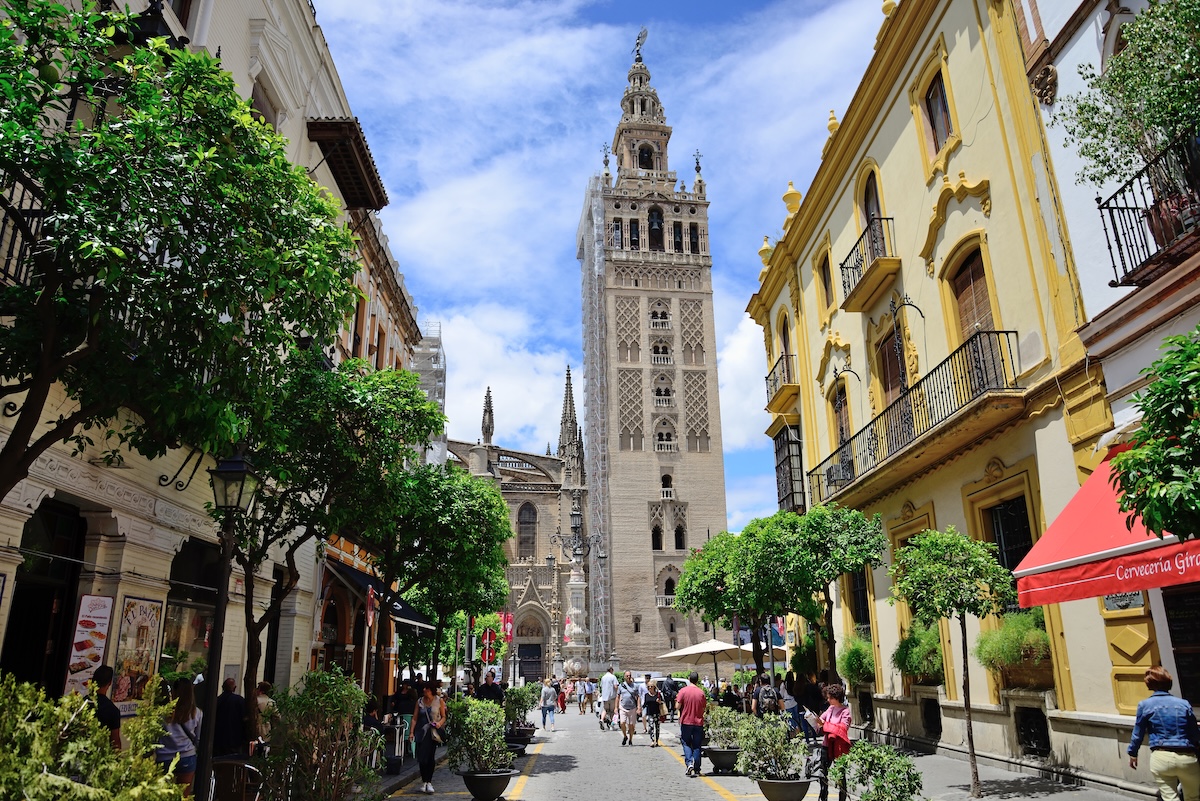
La Giralda is one of the most unique towers you’ll see. This 104-meter tower in Seville, Spain began as a minaret for a grand mosque in the 12th century. The Almohad dynasty built it between 1172 and 1198, crafting a gorgeous example of Islamic architecture.
When Christians took over Seville in 1248, they kept the tower and added their own touch. You’ll spot the Renaissance-style bell section on top, complete with a bronze statue called El Giraldillo.
The tower earned UNESCO World Heritage status in 1987. What makes the visit memorable is the climb—ramps instead of stairs, so guards could ride horses to the top centuries ago. It’s a quirky detail that sticks with you.
15. Tokyo Tower
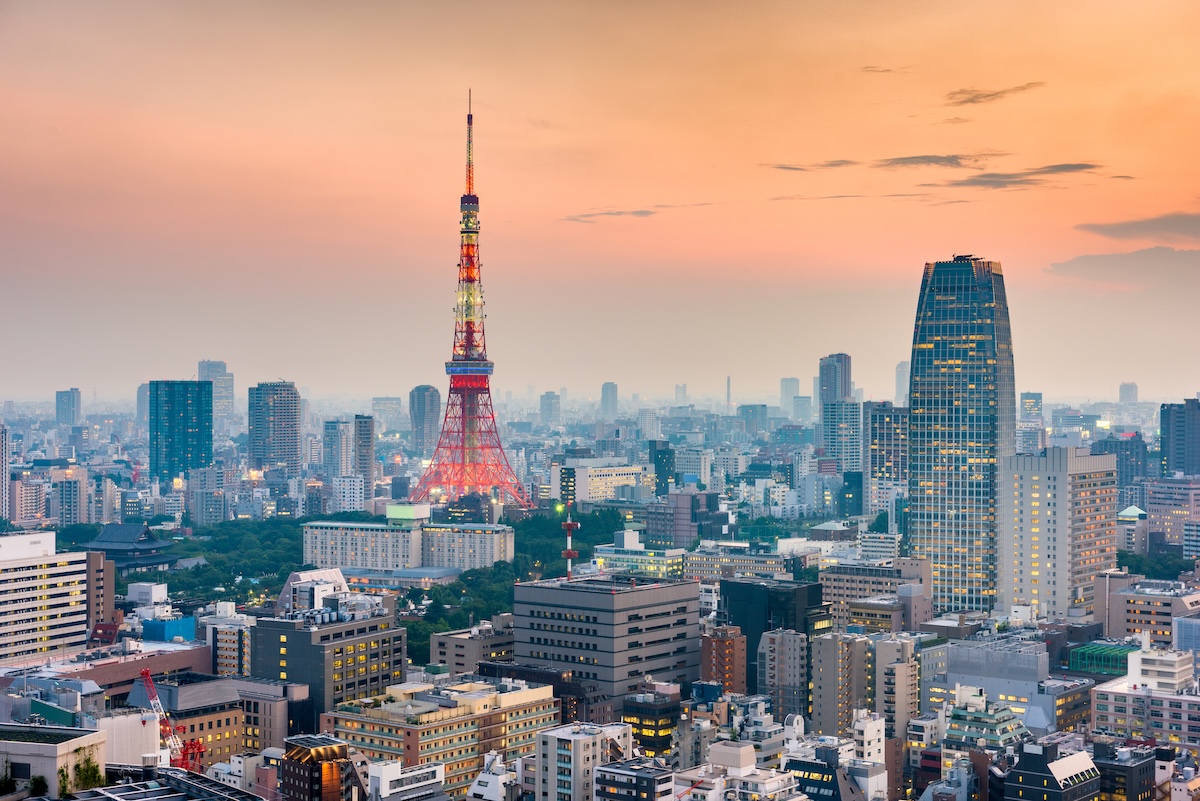
Tokyo Tower rises 333 meters above central Tokyo, and honestly, it’s hard to miss. Built back in 1958, this red and white steel tower took inspiration from the Eiffel Tower. It quickly became a symbol of Japan’s recovery after World War II—kind of a bold statement, right? You’ll spot it in the Shiba-koen district of Minato. For more than 50 years, it was the tallest thing in Japan, until Tokyo Skytree showed up in 2012 and took the crown.
If you’re visiting, you can ride up to the observation decks for some pretty wild views across the city. The tower’s bright orange and white paint really pops—you’ll see it from all over. At night, the place glows with colorful lights, adding some energy to the skyline. Sure, it’s not as tall as the newer towers, but Tokyo Tower still feels special. Locals and tourists keep coming back, drawn by its central spot and that classic, almost nostalgic design.
14. Axum Stelae
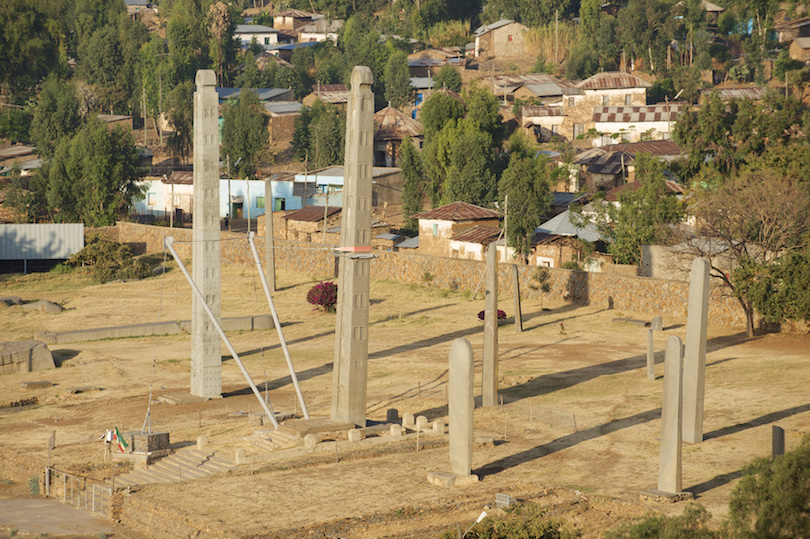
Located in northern Ethiopia, Axum was the original capital of the eponymous kingdom of Axum. Axum was a naval and trading power that ruled the region from around 400 BC to 1000 AD. The major Aksumite monuments in the town are stelae.
The tallest standing tower is the 24 meter (79 ft) King Ezana’s Stele. Another 24.6 meter (81 ft) high stele removed by the Italian army was returned to Ethiopia and reinstalled in 2008. Dating from around 300-500 AD, the stelae are believed to be funeral monuments for Axum’s ancient rulers, who may have been buried in tombs beneath them.
13. Galata Tower
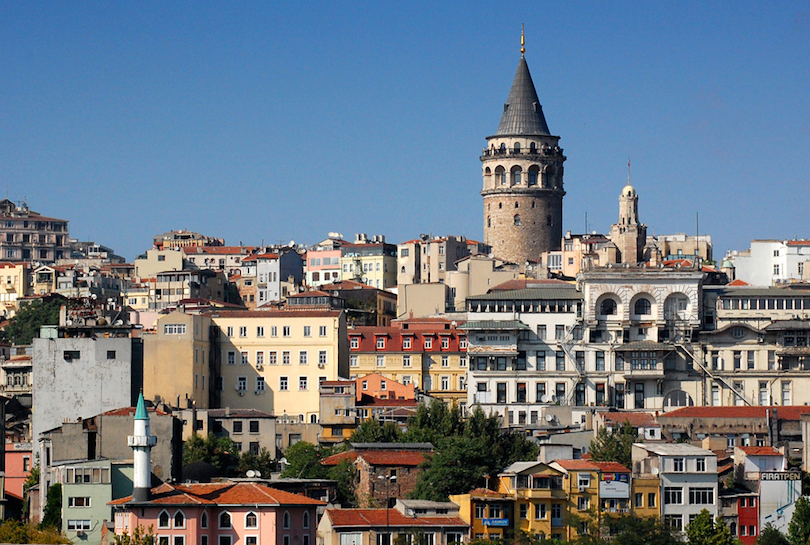
The Galata Tower is a medieval stone tower in the Galata district of Istanbul in Turkey. One of the city’s most striking landmarks, the tower is 67 meter (220 ft) high, with a cone-capped cylinder on top that dominates the skyline.
The tower was built in 1348 as part of the fortifications surrounding the Genoese colony in Constantinople. Today there is a restaurant and café on its upper floors which commands a magnificent view of Istanbul and the Bosphorus.
12. Svanetian Towers
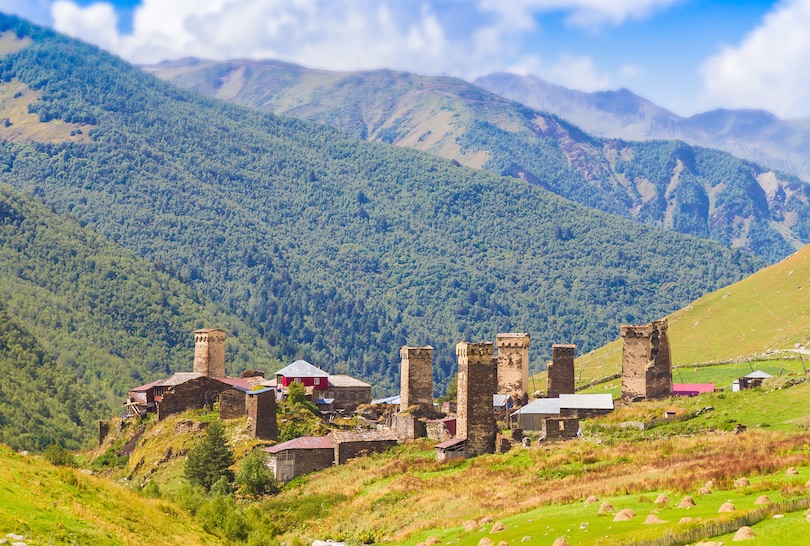
Svaneti is Georgia’s remote northern province, a land of cultivated cornfields, small villages and ancient towers. The famous towers were built for defence against northern tribes and avalanches. Each Svan family usually had its own tower.
They provided a safe retreat for everyone who climbed a rope stair, which could then be pulled up behind them. They also proved to be indispensable during heavy snowfalls. The oldest Svanetian towers date from the 9th century AD.
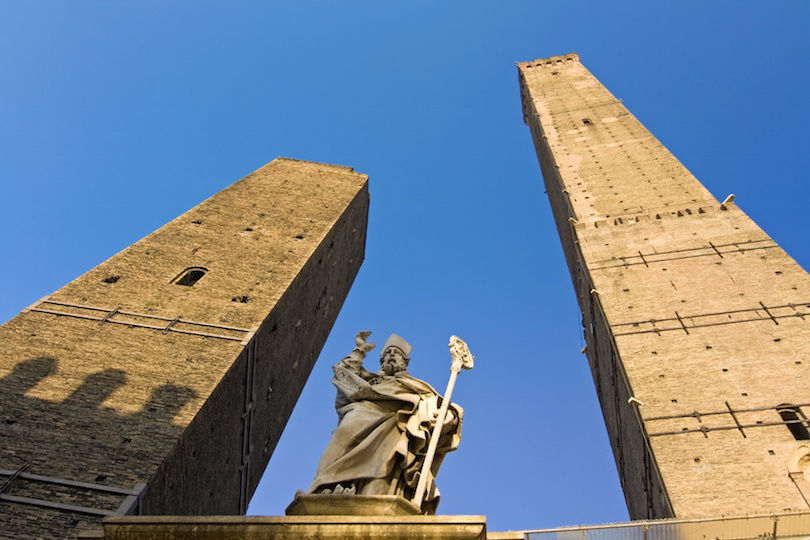
11. The Two Towers of Bologna
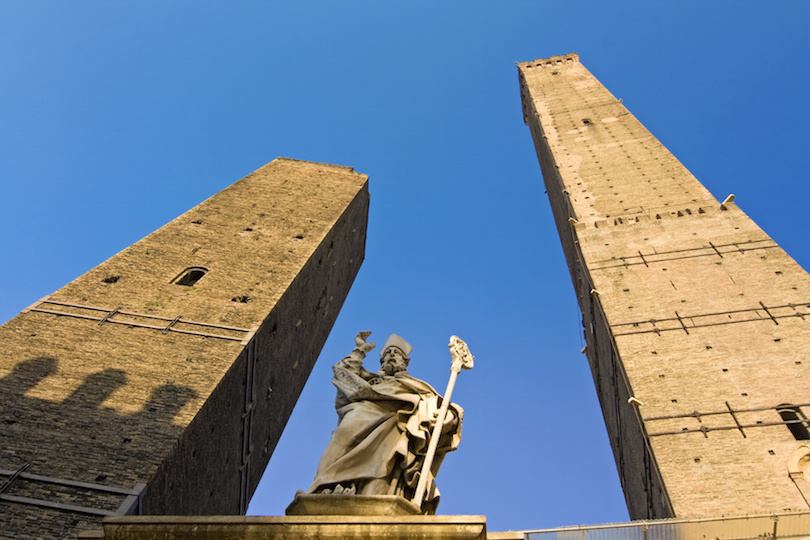
Not to be confused with the Lord of the Rings movie, The two famous towers of Bologna in Italy are named after the families who are credited for their construction between 1109 and 1119. The Asinelli Tower, with a height of 97.2 meter, is the tallest tower in Bologna. The Garisenda Tower was initially 60 meter long but was lowered in the 14th century to 48 meter in order to make it safer.
Both towers lean, but the Garisenda has a dramatic tilt that’s hard to miss. Locals even call them “the leaning towers.”. Bologna’s skyline used to be crowded with nearly 180 towers in the 12th and 13th centuries. Now, only about 22 survive. These two have become the city’s main symbol, and you can still visit them right in the heart of the old city.
10. Minaret of Jam
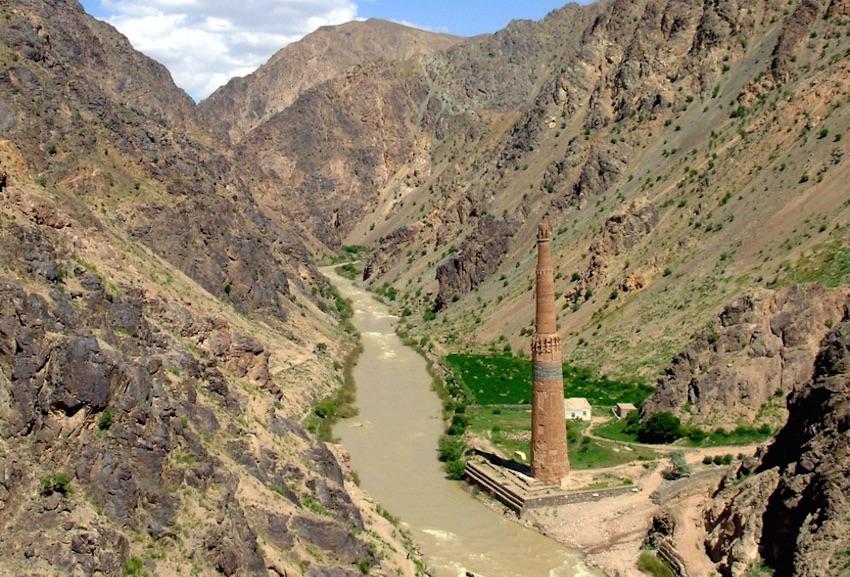
Located in a remote area of western Afghanistan, the Minaret of Jam was built in the 12th century as part of a mosque. The mosque was washed away in a flash-flood and the site around the minaret was destroyed by the Mongols some time later. Considering this and the inhospitable climate it’s a small miracle the 62 meter (203 feet) high tower is still standing.
Blue tile inscriptions circle the top. The tower made it onto the UNESCO World Heritage list in 2002, but hardly anyone gets to see it in person because of its location. It’s actually the second tallest brick tower on Earth, right after the Qutub Minar in Delhi.
9. Belem Tower
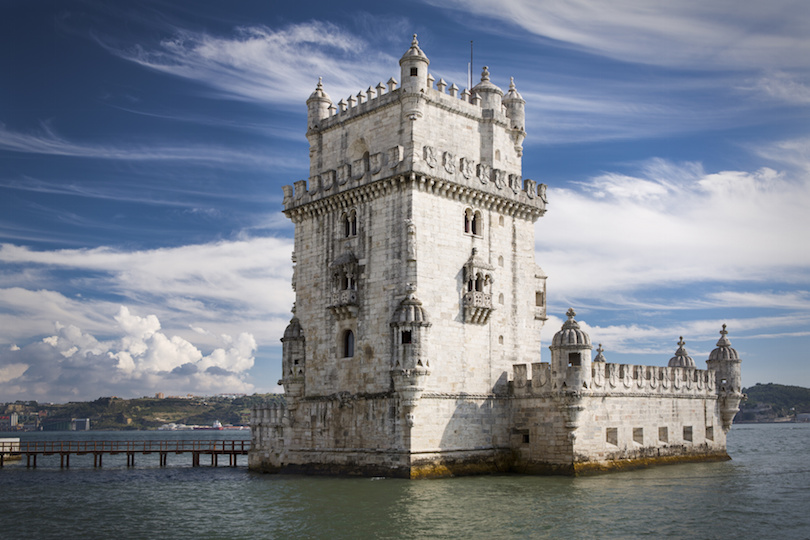
Belém Tower was built in the early 16th century as part of a defense system to protect the city of Lisbon. It was the starting point for many navigators who set out to discover new trade routes and has become a monument to Portugal’s Age of Discovery.
This UNESCO World Heritage Site really became a symbol of Portugal’s Age of Exploration. When you visit, you’ll spot a mix of rugged military features and delicate decorative details that set it apart.
8. Qutb Minar
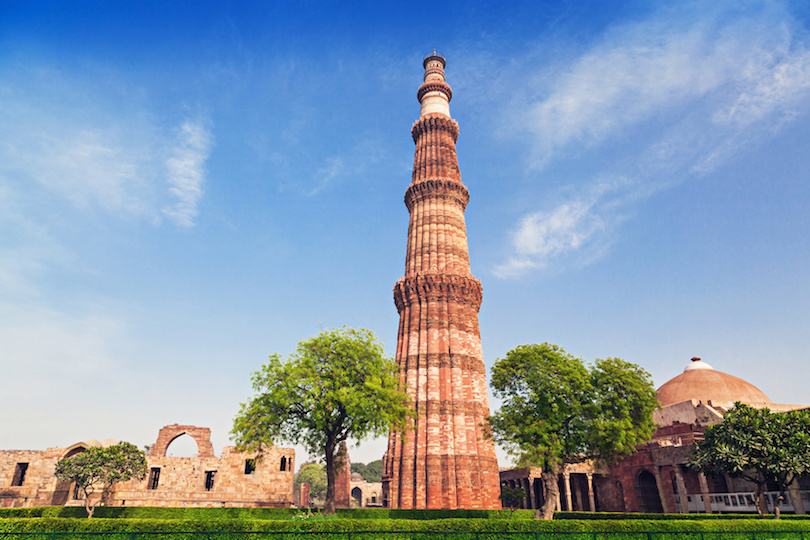
The Qutb Minar in India was commissioned by Qutb al-Din Aybak, the first Muslim ruler of Delhi, in 1193. Qutb al-Din Aybak wanted to surpass the Minaret of Jam in Afghanistan but at the time of his death only the base had been completed.
His successors continued the construction and the topmost storey was finally completed in 1386. The minaret is 72 meters high (237.8 feet) with 379 steps leading to the top making it the world’s tallest brick minaret.
7. Three Pagodas
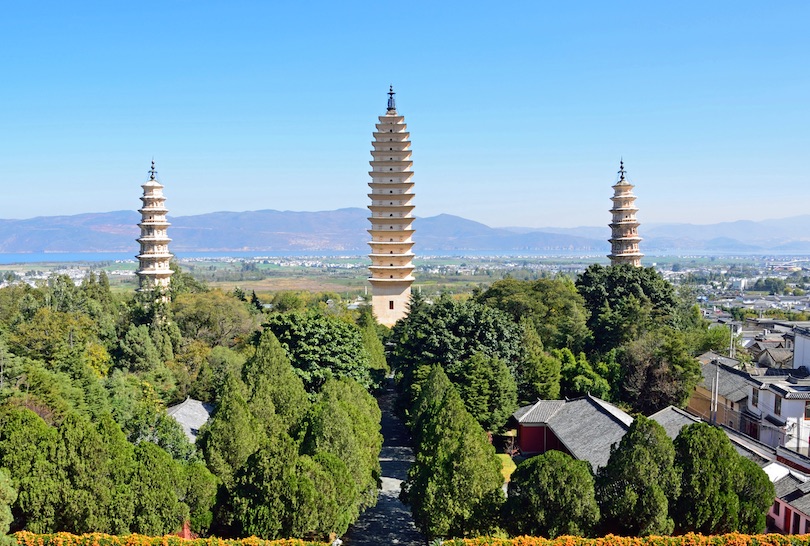
Located about 1.5 km (0.9 miles) northwest of the ancient city of Dali, The Three Pagodas are one of the best preserved Buddhist structures in China having endured several man-made and natural catastrophes.
The middle pagoda, built during 824-840 AD by king Quan Fengyou, is 69.6 meters (227 feet) high and is one of the tallest pagodas in China. The other two pagodas are built about a century later and are 42.19 meters (140 feet) high.
6. CN Tower
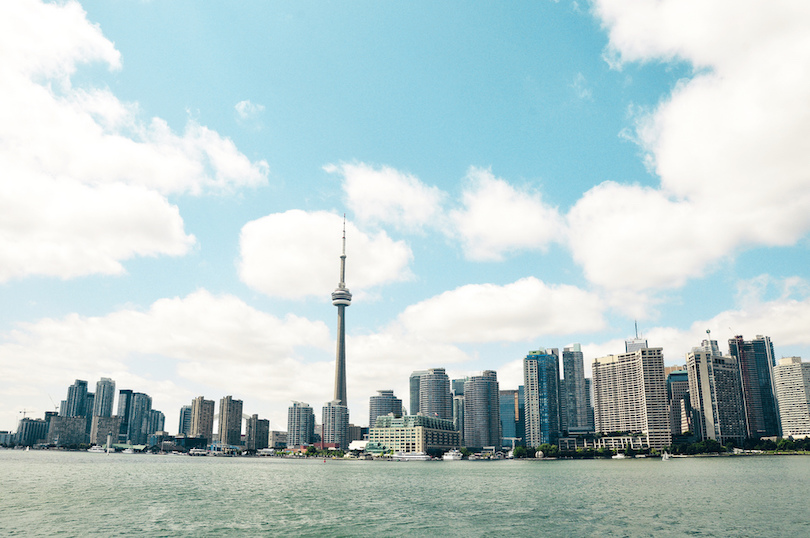
Located in the heart of Downtown Toronto, the CN Tower is Canada’s most recognizable icon. The communication tower was built from 1973 to 1976 by the railway company “Canadian National” and standing 553.33 meters (1,815.4 ft) tall was the tallest structure in the world for over 30 years until it was surpassed in height by the Burj Dubai.
Head up to the observation deck for some wild views of Toronto. If you’re feeling brave, there’s a glass floor so you can look straight down. The American Society of Civil Engineers even named it one of the Seven Wonders of the Industrial World.
5. Spiral Minaret
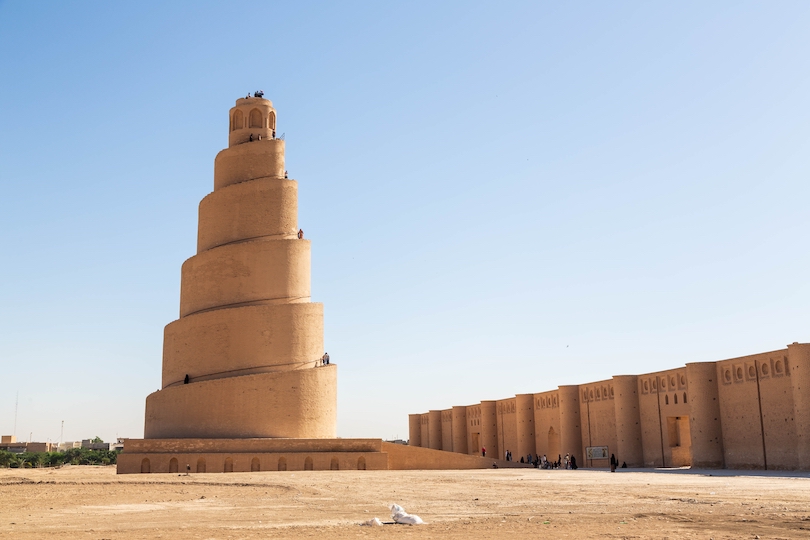
The Spiral Minaret or Malwiya Minaret is part of the Great Mosque of Samarra in Iraq. The mosque is one of the largest in the world. The minaret was originally connected to the mosque by a bridge.
The minaret or tower was constructed in 848 – 852 out of sandstone, and is unique among other minarets because of its ascending spiral conical design. The tower is 52 meter (162 ft) high. In 2005 insurgents blew up the top section of the tower leaving crumbled brick and clay.
4. Towers of San Gimignano
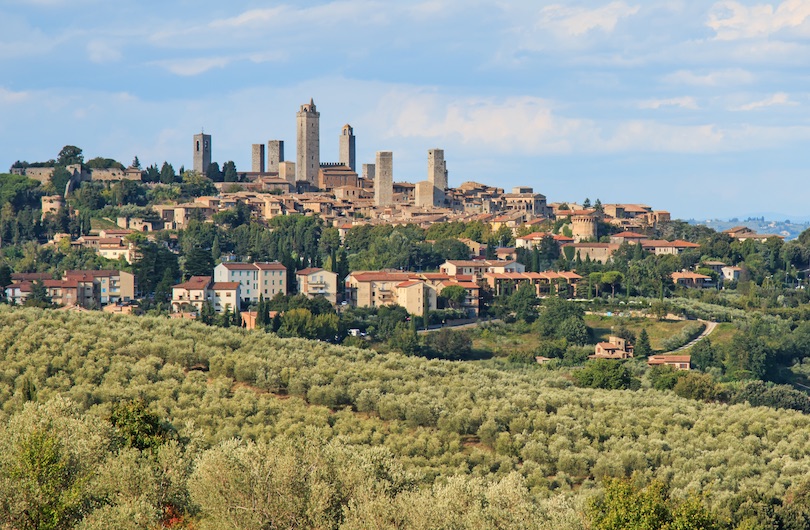
Nicknamed the medieval Manhatten, San Gimignano is a village in Tuscany famous for its 14 stone towers. At the height of San Gimignano’s wealth and power, more than 70 towers were built to defend the town against enemy attacks. After the plague devastated the city in 1348, San Gimignano’s power faded, which kept enemies away and preserved many of the city’s famous towers.
You can climb several of these stone towers for amazing views of the Tuscan countryside. The historic center is a UNESCO World Heritage site and easily one of Italy’s best-preserved medieval towns. Wandering the cobblestone streets, with towers looming overhead, you can’t help but feel like you’ve stepped back in time.
3. Big Ben
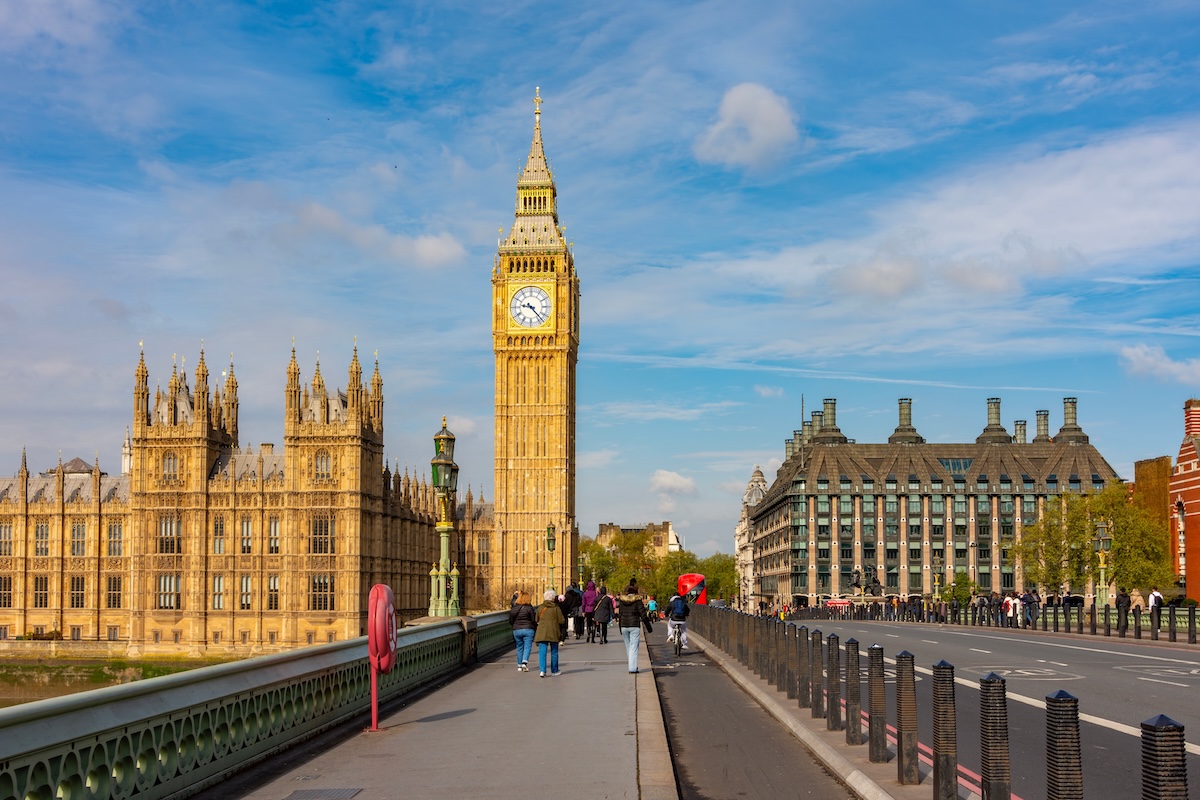
Big Ben stands tall at the north end of Westminster Palace in London. In 2012, they officially renamed the tower the Elizabeth Tower to honor Queen Elizabeth II’s Diamond Jubilee, but just about everyone still calls it Big Ben. Funny enough, the name actually refers to the massive 13-ton bell inside, not the tower itself. Sir Benjamin Hall ordered the original bell, which is probably how the name stuck. Builders finished the clock tower in the mid-1800s, after a fire wiped out parts of Westminster Palace.
You’ll spot Big Ben’s Gothic design in endless photos and movies. The clock mechanism built its reputation by keeping time almost eerily well. If you ever visit London, you’ll quickly get why people photograph it so much. The bells chime out each hour with that familiar sound—honestly, who hasn’t heard it at least once?
2. Leaning Tower of Pisa
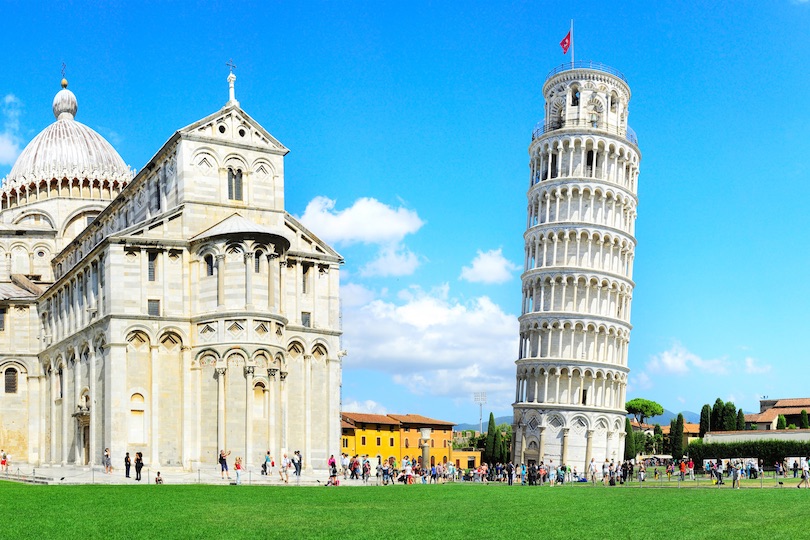
The world famous Pisa Tower was built over a period of about 177 years. Soon after the construction started in 1173 the tower began to sink due to a poorly laid foundation and was left alone for almost a century.
When the construction resumed the engineers built higher floors with one side taller than the other to compensate for the tilt and the tower was finally finished in the 2nd half of the 14th century. Since 2001, the famous tower in Pisa is again open to those wishing to climb it’s 296 steps.
1. Eiffel Tower
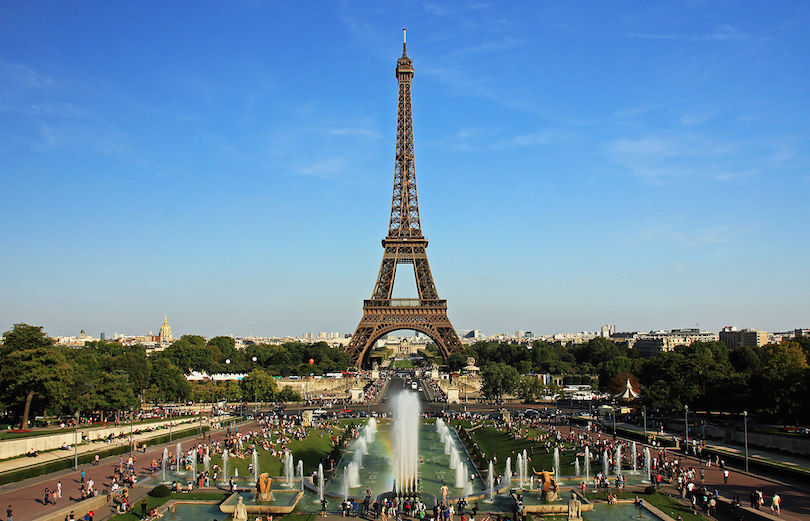
The Eiffel Tower is a symbol of Paris and France and one of the most famous landmarks in the world. The tower was built by Gustave Eiffel as the entrance arch for the International Exhibition of Paris of 1889.
With a height of 300 meters (984 feet) it was the tallest tower in the world until 1930, when the Chrysler Building in New York was completed. Since it’s construction more than 200,000,000 people have visited the Eiffel Tower making it the most visited paid monument in the world.