
Some walls divide, some protect, and others transform into living works of art. Across the globe, walls have stood as silent witnesses to history, culture, and human creativity. They’ve been painted on, fought over, walked across, and even turned into symbols of unity. Whether rising from ancient empires or bursting with modern expression, these iconic structures prove that walls aren’t just barriers—they’re storytellers made of stone, brick, and color.
10. Wall of Ston
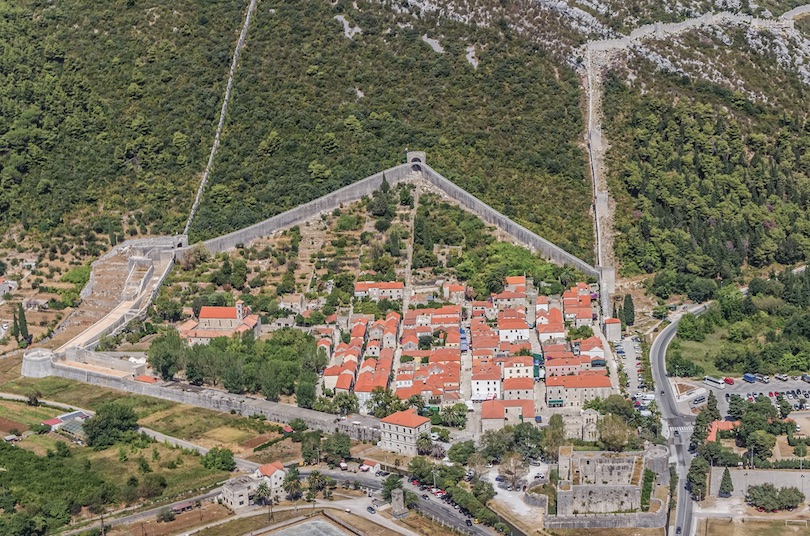
The Walls of Ston are a series of defensive stone walls situated on the peninsula Peljesac in southern Croatia. At the peninsula’s narrowest point, just before it joins the mainland, a wall was build from the towns of Ston to Mali Ston. The 5.5 kilometer (3.5 mile) long wall that links these two small communities was completed in the 15th century, along with its 40 towers and 5 fortresses.
It was meant as a second line of defense for the city of Dubrovnik and to protected the precious salt pans that contributed to Dubrovnik’s wealth. It is the second longest wall in Europe, surpassed only by Hadrian’s Wall between Scotland and England.
9. Vietnam Veterans Memorial Wall
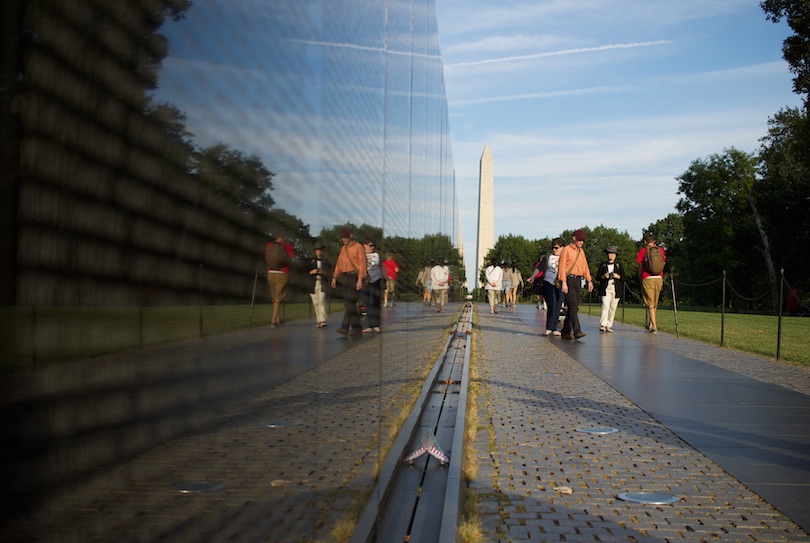
The Vietnam Veterans Memorial is a national war memorial in Washington, D.C. It is often described as the most moving memorial in the city, the Vietnam Memorial stands as tribute to those who died or went missing, intended to transcend political controversy in remembrance of the soldiers who gave the ultimate sacrifice.
Its centerpiece, the Memorial Wall designed by Maya Lin, is made up of two black granite walls engraved with the 58,256 names of each soldier.
8. Walls of Troy
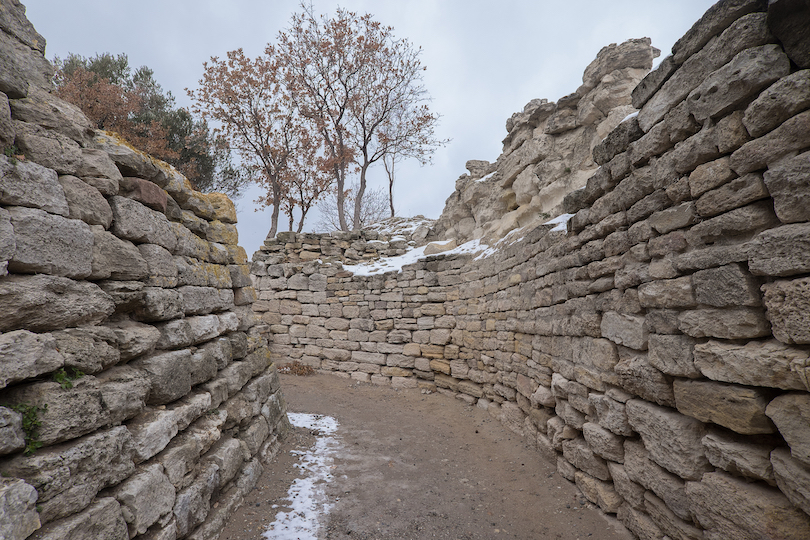
Troy is a legendary city in what is now northwestern Turkey, made famous in Homer’s epic poem, the Iliad. According to Iliad, this is where the Trojan War took place. The archaeological site of Troy contains several layers of ruins.
The layer Troy VIIa was probably the Troy of Homer and has been dated to the mid- to late-13th century BC. Portions of the famous walls of Troy are still visible. Today, a large number of tourists visit Troy each year. The visitor sees a highly commercialized site, with a large wooden horse built as a playground for children, then shops and a museum.
7. Hadrian’s Wall
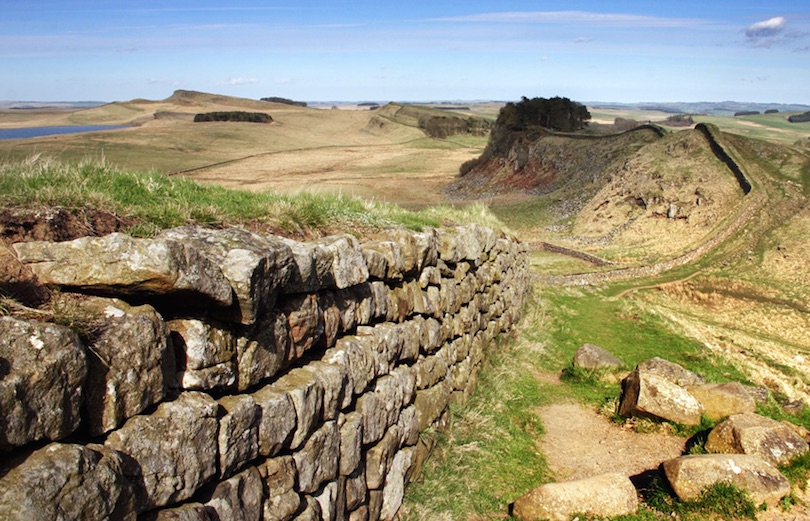
Hadrian’s Wall was built by the Romans to protect their colony Britannia from the tribes in Scotland. It stretches for 117 kilometers (73 miles) across the north of England from the Irish Sea to the North Sea. Construction started in 122 AD following a visit by Roman Emperor Hadrian, and was largely completed within six years.
The wall was garrisoned by around 9,000 soldiers, including infantry and cavalry. Although only stretches of this famous wall are still visible today it it is among the most popular tourist attractions in England. There is a national path that follows the whole length of the wall from Wallsend to Bowness-on-Solway.
6. Berlin Wall
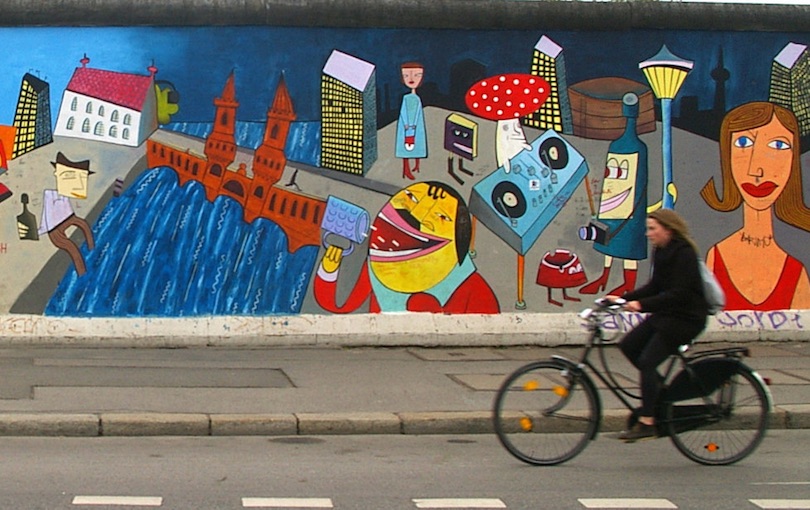
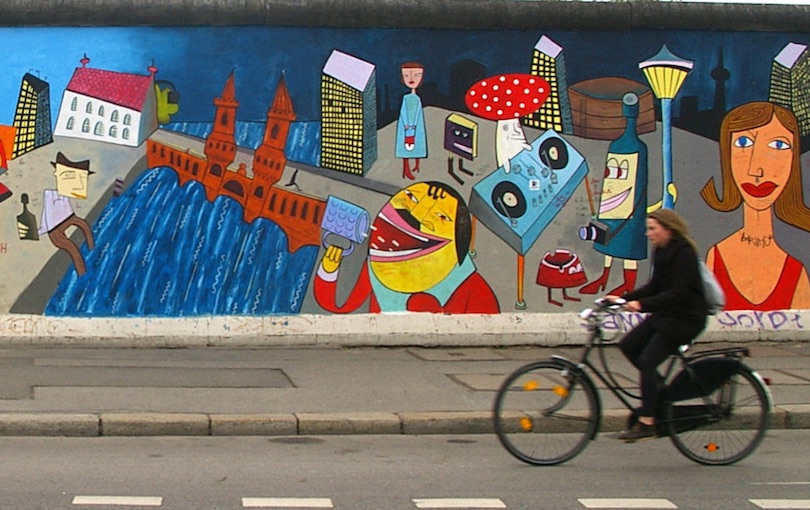
Construction of the Berlin Wall began in 1961. It was a desperate but effective move by East Germany to stop East Berliners escaping from the Soviet-controlled East German state into the West of the city, which was then occupied by the Americans, British and French.
During the Wall’s existence, around 5,000 people attempted to escape circumventing the wall, with estimates of the resulting death toll varying between 98 and 200. As the Iron Curtain cracked in 1989 hundreds of citizens began physically tearing down the concrete division. Today remnants of the famous wall in Berlin can be found at Bernauer Strasse and in front of the Neiderkirchnerstrasse, the former Prussian Parliament and current Berlin Parliament.
5. Great Zimbabwe Walls
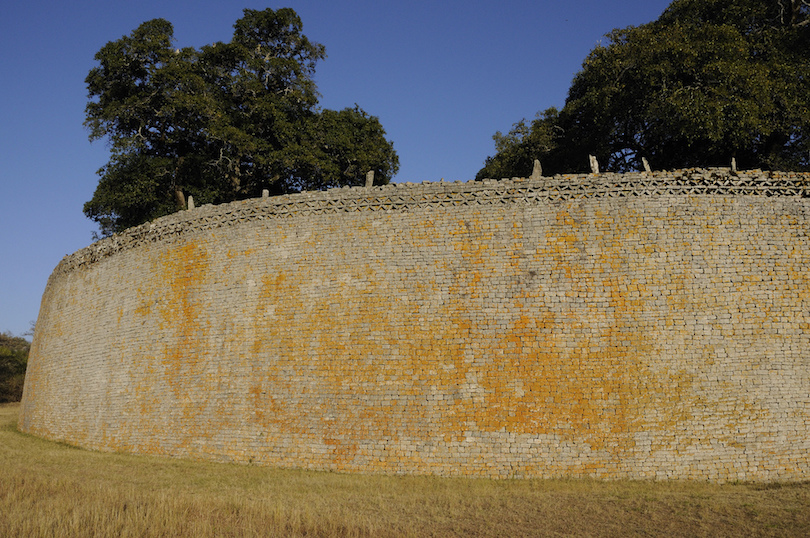
The Great Zimbabwe, is a complex of stone ruins spread out over a large area in modern-day Zimbabwe, which itself is named after the ruins. The word “Great” distinguishes the site from the many hundred small ruins, known as Zimbabwes, spread across the country. Built by indigenous Bantu people, the construction started in the 11th century and continued for over 300 years.
At its peak, estimates are that Great Zimbabwe had as many as 18,000 inhabitants. Its most formidable edifice, commonly referred to as the Great Enclosure, has walls as high as 11 meters (36 ft) extending approximately 250 meter (820 ft), making it the largest ancient structure south of the Sahara Desert.
4. Sacsayhuaman
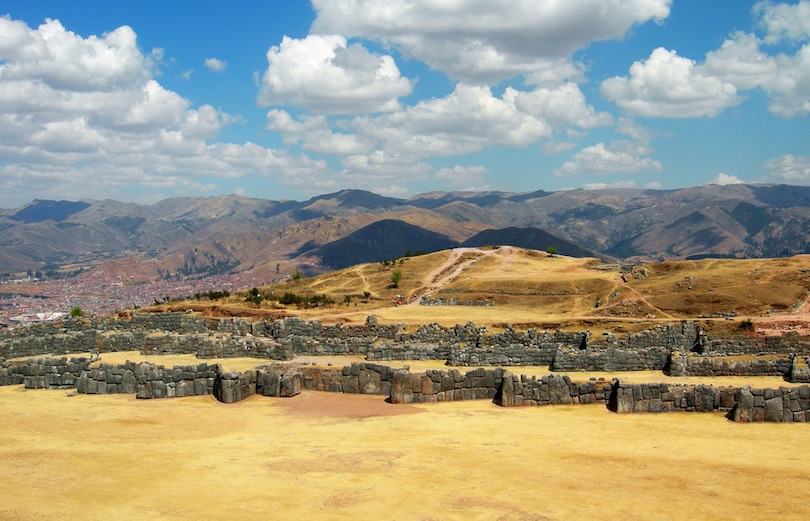
Sacsayhuamán is an Inca walled complex high above the city of Cusco in Peru. The imperial city Cusco, was laid out in the form of a puma, the animal that symbolized the Inca dynasty. The belly of the puma was the main plaza, the river Tullumayo formed its spine, and the hill of Sacsayhuamán its head. There are three parallel walls built in different levels with lime stones of enormous sizes. It is suggested that the zigzagging walls represent the teeth of the puma’s head.
The boulders used for the first or lower levels are the biggest. The largest is 8.5 meter high (28 ft) and weights about 140 metric tons. The wall is built in such a way that a single piece of paper will not fit between many of the stones. This precision, combined with the variety of their interlocking shapes, and the way the walls lean inward, is thought to have helped the ruins survive the devastating earthquakes in Cuzco.
3. Walls of Babylon
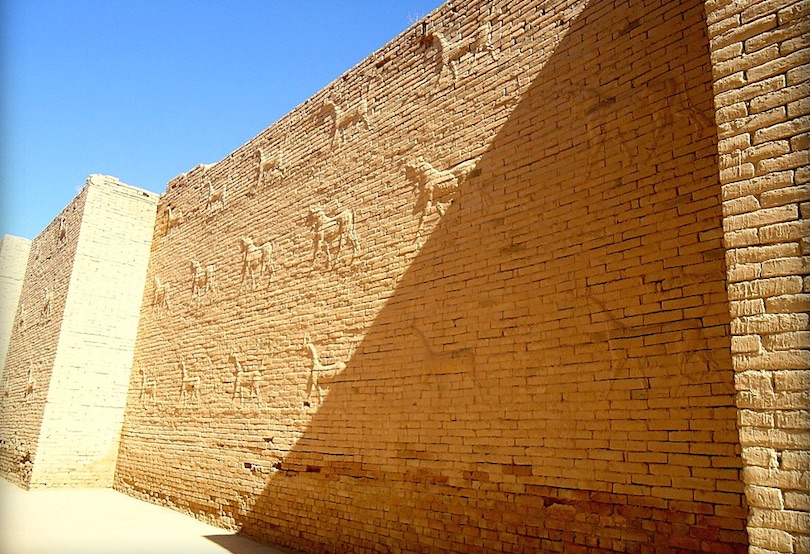
The Walls of Babylon, the city-state of ancient Mesopotamia, was one of the original wonders mentioned by Antipater of Sidon. His poem begins: “I have gazed on the walls of impregnable Babylon along which chariots may race”. Another ancient version of the Seven Wonders included the Ishtar Gate. Constructed around 575 BC it was part of the famous Walls of Babylon.
Both the gate and walls were constructed of blue glazed tiles with alternating rows of bas-relief dragons and aurochs. In 1983, Saddam Hussein started both a restoration and new constructions on top of the old ruins. If visiting Iraq sounds to risky: The Pergamon Museum in Berlin contains a reconstruction of the Ishtar Gate and walls partly made out of material excavated at Babylon.
2. Western Wall
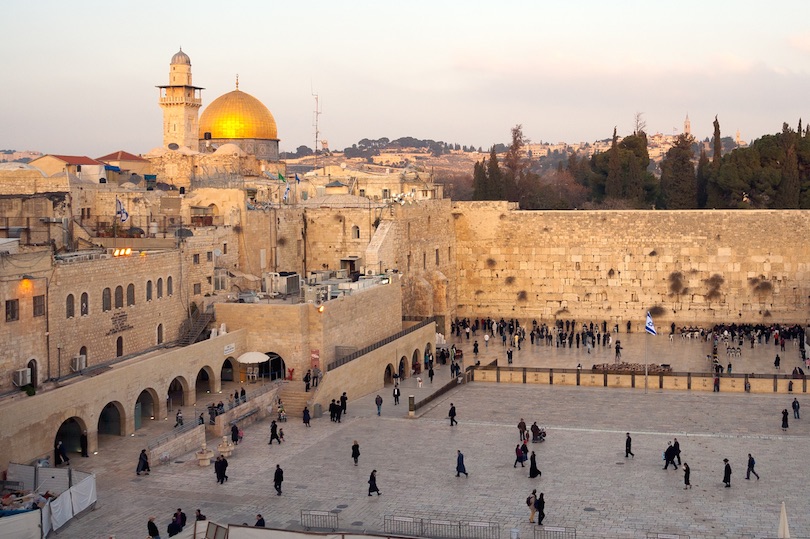
The Western Wall, sometimes referred to as the Wailing Wall is a famous Jewish religious site located in the Old City of Jerusalem. Just over half the wall, including its 17 courses located below street level, dates from the end of the Second Temple period, being constructed around 19 BC by Herod the Great. The remaining layers were added from the 7th century onwards.
In Judaism, the Western Wall is venerated as the sole remnant of the Holy Temple. It has become a place of pilgrimage for Jews, as it is the closest permitted accessible site to the holiest spot in Judaism, namely the Foundation Stone, which lies on the Temple Mount.
1. Great Wall of China
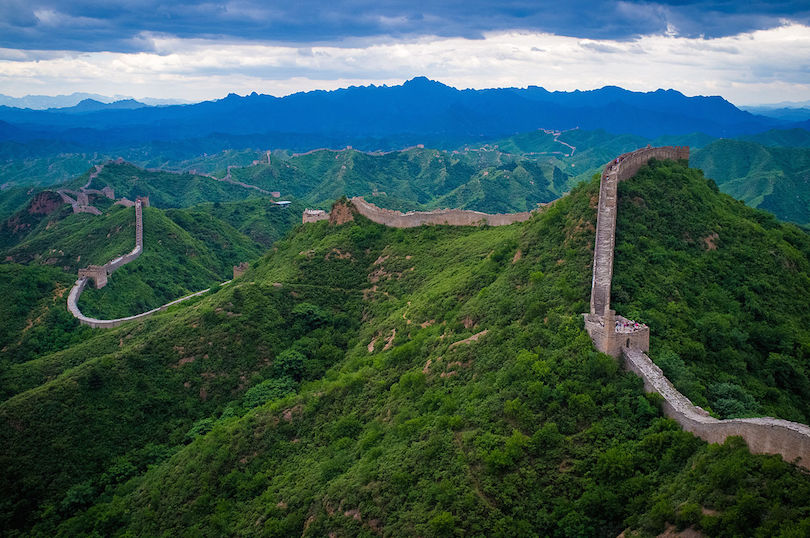
The Great Wall of China was built, rebuilt, and maintained between the 5th century BC and the 16th century to protect the northern borders of the Chinese Empire from the attacks of nomadic tribes from the north. Several walls have been built that were referred to as the Great Wall. One of the most famous wall is the one built between 220–206 BC by the first Emperor of China, Qin Shi Huang but little of that wall remains. The majority of the existing wall were built during the Ming Dynasty (1368-1644 AD).
The most comprehensive archaeological survey has recently concluded that the entire Great Wall, with all of its branches, stretches for 8,851.8 kilometers (5,500.3 miles). The condition of the Great Wall ranges from excellent to ruined. While some portions near tourist centers have been preserved and even extensively renovated, in many locations the Great Wall is in disrepair due to erosion and vandalism.