
Touropia Logo

Touropia Travel

Discover the World

  • Destinations
  • Videos
Subscribe for your daily dose of travel inspiration ✈️

The Flat-Topped Mountains That Seem Too Strange to Be Real

By Mike Kaplan · Last updated on June 13, 2026

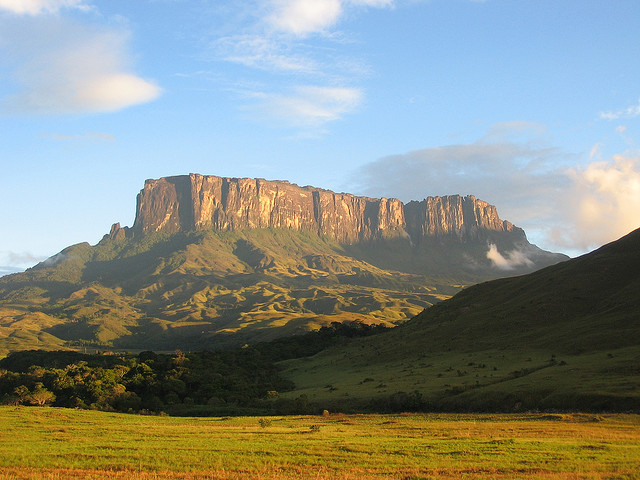
Deep inside Venezuela’s jungle lie isolated islands of table top mountains, called tepuis. The table top mountains are considered some of the oldest geological formations on Earth, dating back to some two billion years ago.

As they are completely isolated from the ground, these ”islands above the rainforest” have a large number of unique plants and animals not found anywhere else in the world. Table top mountains also exist in other parts of the world where they are called mesa, tuya, butte, amba or simply table mountain.

10. Mount Conner
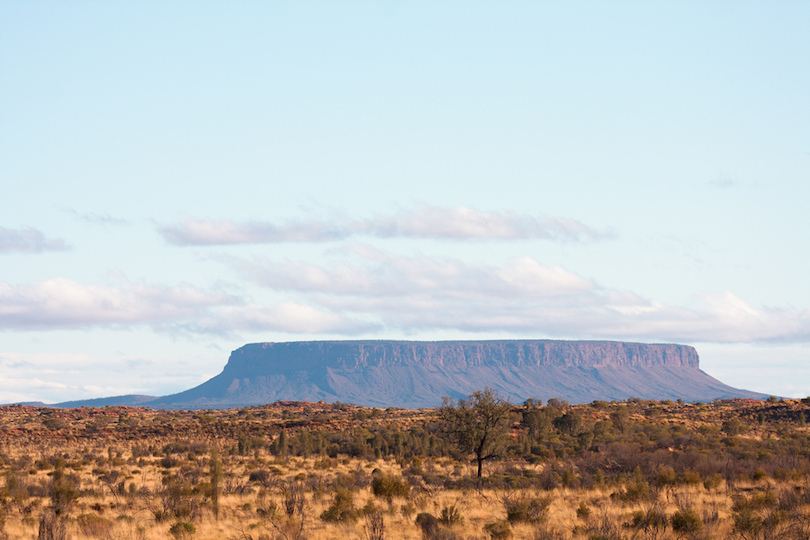
Mount ConnerF.d.W. / Flickr

Mount Conner is a flat-topped and horseshoe-shaped mountain. It is often confused with Uluru, since it can be seen from the road to Uluru and Kata Tjuta , when approaching from Alice Springs. The region’s Aborigines, who call the mountain Artilla, believe it to be the home of icemen who create cold weather.

9. Brown Bluff
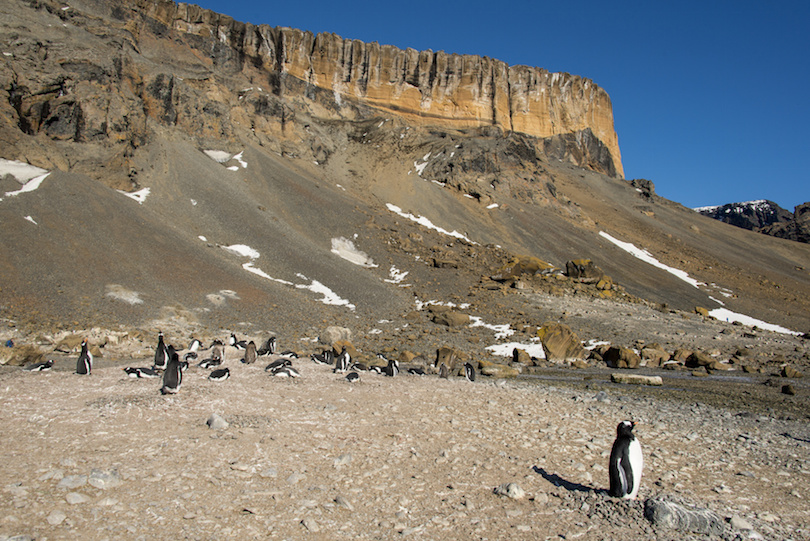
Brown Bluff

Located at the northern tip of the Antarctic Peninsula, Brown Bluff is a ice-capped, flat topped 745 meter (2,444 ft) high volcano with a prominent cliff of reddish-brown color. The shores in front of Brown Bluff are home to thousands of Adelie and Gentoo penguins.

8. Mount Asgard
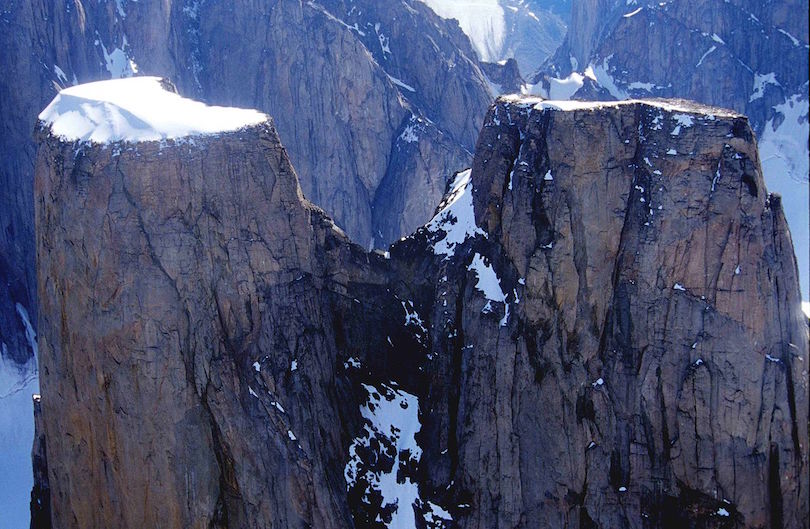
Mount AsgardAnsgar Walk / Wikipedia

Mount Asgard is a twin peaked mountain with two flat-topped cylindrical rock towers, separated by a saddle. It is located in Auyuittuq National Park in Baffin Island and is perhaps the most famous of the Baffin Mountains. The peak is named after Asgard, the realm of the gods in Norse mythology. In 1976, stuntman Rick Sylvester performed a BASE jump off the mountain for the opening sequence of the James Bond film The Spy Who Loved Me, although the fictional setting was the Austrian Alps.

7. Kukenan

Kukenan is a 2,680 meter (8,793 ft) high and about 3 km (1.9 mi) long tepui. It is located near the more famous tepui Mount Roraima. Kukenan is more difficult to climb, so it is ascended much less frequently than Mount Roraima. Cuquenan Falls, the second tallest waterfall in the world, is located at the south end of the tepui.

6. Heroubreio
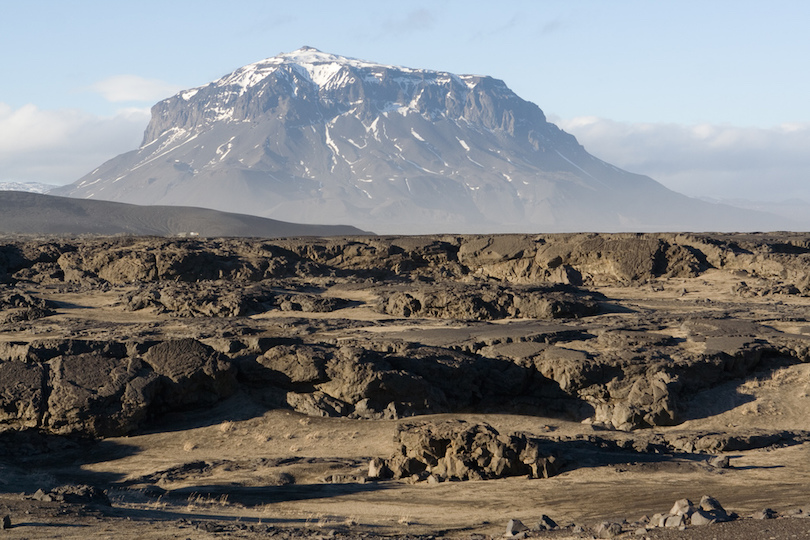
HeroubreioLudovic Hirlimann / Flickr

Situated in the Highlands of Iceland, Herðubreið is a flat-topped, steep-sided volcano which was formed after lava erupted through a thick glacier. This kind of flat topped mountain is called a tuya. Due to the mountain’s steep and unstable sides, the first ascent was in 1908 despite centuries of knowledge of its existence.

5. Debre Damo
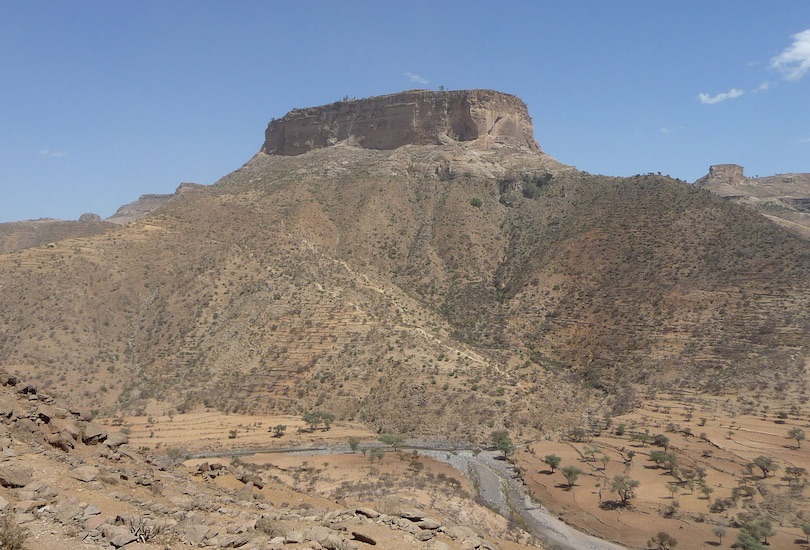
Debre DamoOndrej Zvácek / Wikipedia

Debre Damo in northern Ethiopia is the name of a flat-topped mountain and a 6th century monastery located on the top. The monastery, accessible only by rope up a sheer cliff, is known for its collection of manuscripts, and having the earliest existing church building in Ethiopia still in its original style. Tradition claims the monastery was founded in the sixth century by a Syrian monk.

4. Canyonlands
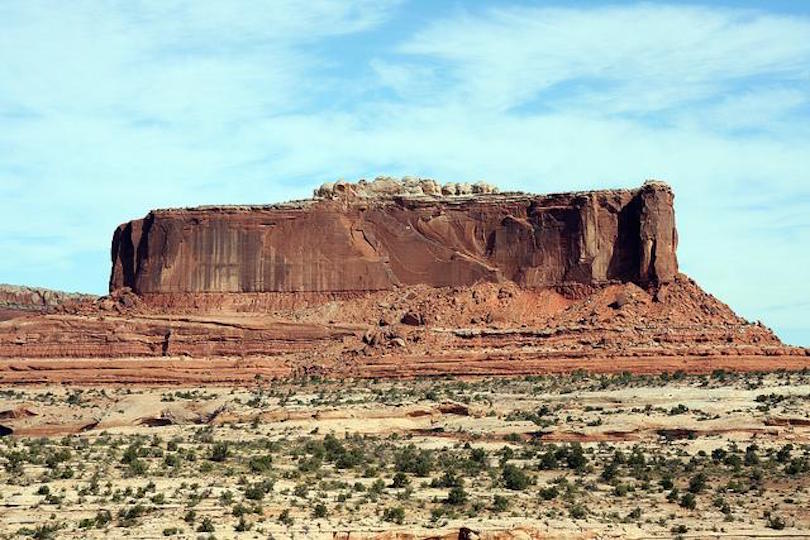
CanyonlandsRedeo / Flickr

Canyonlands in eastern Utah is a national park with a colorful landscape eroded into countless canyons, mesas and buttes by the Colorado and Green River. The rivers divide the park in several district. One district, The Island in the Sky, features a broad and level mesa with amazing views out over the surrounding country.

3. Auyantepui
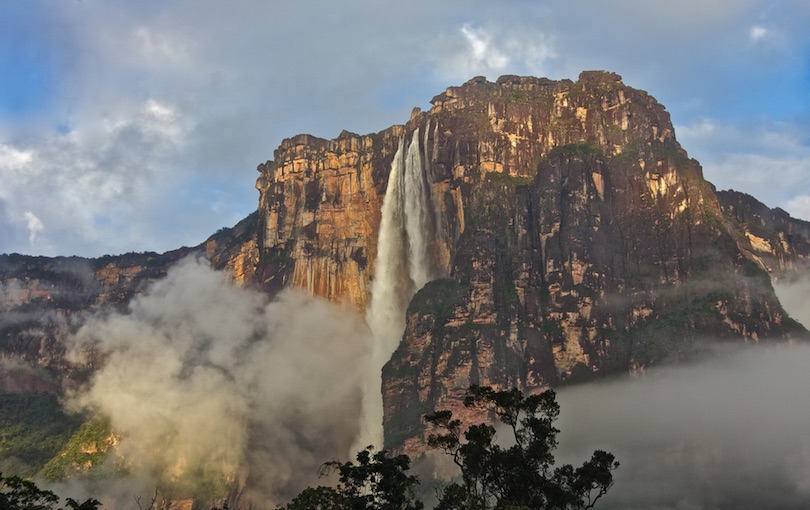
Auyantepuironbrinkmann / Flickr

Auyantepui, which means “Devil’s Mountain” in the language of the native Pemon people, is the most visited tepui in Venezuela. The world’s highest waterfall, Angel Falls, drops from a cleft near the summit of Auyantepui.

The falls were named after pilot Jimmie Angel who accidentally discovered the falls in 1933. During a return trip in 1937, Angel crashed his small plane on top of Auyantepui. It took him and his crew 11 days to descend the mountain.

2. Mount Roraima
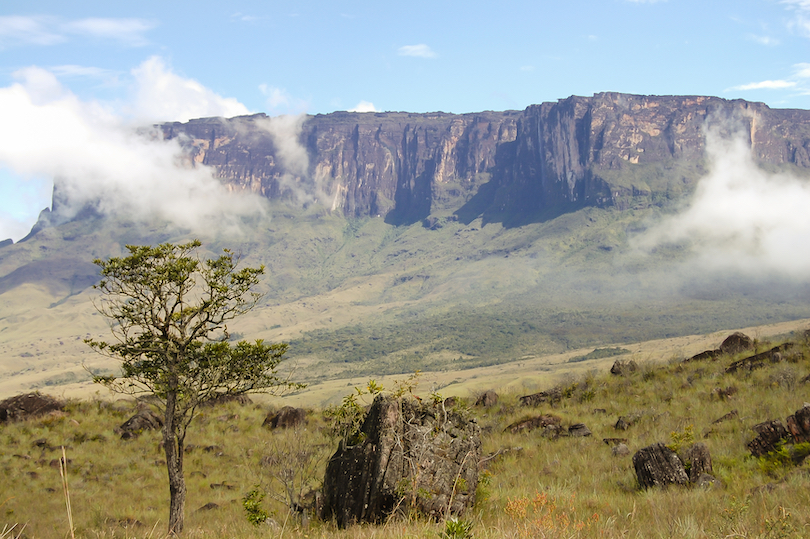
Mount Roraima

Mount Roraima is the highest (2,772m/9094ft) and most famous tepui in Venezuela. Because the mountain is completely isolated from the ground forest almost one third of the species of plant life on Roraima evolved there and are unique to the plateau. Mount Roraima was made famous in 1912 when Sir Arthur Conan Doyle wrote his fictional novel entitled The Lost World.

It describes the ascent of a Roraima-like mountain by an expedition in search of prehistoric plants and dinosaurs that were believed to live isolated and unchanged for millions of years on the mountains summit.

1. Table Mountain
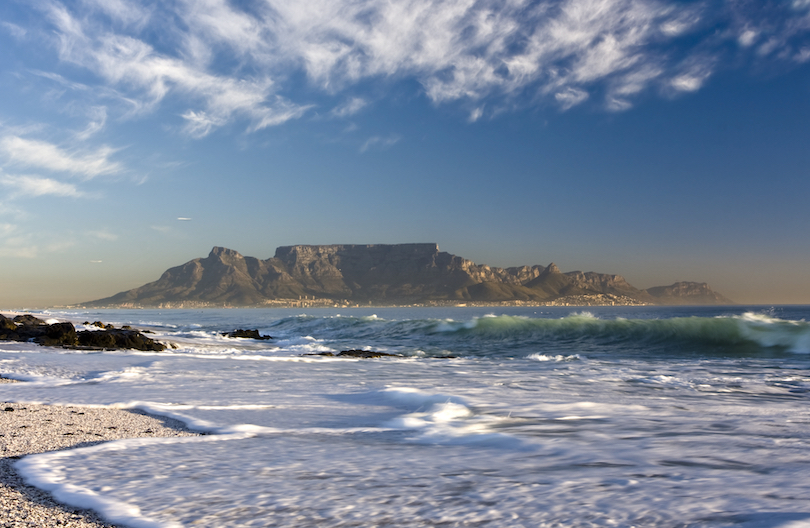
Table Mountain

Overlooking the city of Cape Town, Table Mountain is the most famous of the table top mountains in the world. It’s main feature is a level plateau approximately 3 kilometers (2 mi) from side to side, surrounded by steep cliffs. The highest point on Table Mountain is 1,086 meters (3,563 ft) above sea level.

There is a cable car that takes passengers to the top of the mountain with views overlooking Cape Town and Table Bay to the north, and the Atlantic seaboard to the west and south. António de Saldanha was the first European to land in Table Bay. He climbed the mighty mountain in 1503 and named it ‘Table Mountain’.

Primary Sidebar

Latest

Bardstown, Kentucky

Bourbon Made This Town Famous, but That’s Not What Makes It Special

George Peabody Library Baltimore Visitor Guide Most visitors don't expect to find one of the most striking interiors in America tucked behind a row of white columns in a quiet Baltimore neighborhood. You walk through the doors of the Peabody Institute in Mount Vernon, turn a corner, and suddenly you're standing beneath a skylit atrium that climbs six stories above a polished marble floor. It stops you cold. The George Peabody Library Baltimore is that kind of place. It doesn't announce itself from the street. There's no flashy signage, no grand plaza. But step inside the stack room and you'll see why people call it a "cathedral of books." Over 300,000 volumes line the walls, and the space itself feels like something pulled from a 19th-century novel you half-remember reading. Johns Hopkins University runs the place as part of its Sheridan Libraries system. This isn’t a museum replica—it’s a working research collection. You can visit for free during public hours, which makes it one of the easiest cultural stops in Baltimore. Whether you’re chasing that perfect symmetrical shot up through the iron balconies or just want a quiet ten minutes surrounded by something genuinely beautiful, the library delivers without asking much of your time or your wallet. Cast-Iron Balconies And The Soaring Atrium The first thing that hits you is the scale. Five tiers of ornamental cast-iron balconies rise from the ground floor and climb 61 feet to a massive skylight that floods the room with natural light. The effect is vertical and dramatic, like standing inside a very elegant cage made of books and ironwork. Each balcony tier is lined with gold-and-black volumes shelved behind low railings, and the repeating geometric patterns of the iron railings create a visual rhythm that photographers obsess over. Point your camera straight up from the center of the floor and you'll get that iconic symmetrical shot that's all over travel feeds. The image almost looks digitally generated, but it's real, and it's been here since 1878. The marble floor adds to the atmosphere. Sound carries differently in here. Footsteps echo softly, and conversations drop to whispers without anyone being told. The reading room on the ground level sits just off the main atrium, offering a quieter space with wooden tables and the kind of warm, worn-in feeling that modern libraries rarely manage. The light keeps the space from feeling like a museum. On a clear afternoon, sunlight pours through the skylight and shifts across the iron railings and book spines, changing the room's character every hour. You could visit twice in the same day and walk away with completely different impressions. A Quick History Of The Landmark George Peabody, a financier who got his start in Baltimore before heading off to London, founded the Peabody Institute in 1857. He wanted to give something meaningful back to the city that launched his career—a free public library, a lecture series, a music conservatory, and an art gallery. The library building itself took its sweet time, finally opening up in 1878. Baltimore architect Edmund G. Lind teamed up with Nathaniel H. Morison, the institute's first provost, to design the interior. Lind focused on that dramatic stack room—he wanted it to feel grand enough to match Peabody's vision but still practical for researchers. Local craftsmen made the decorative cast-iron balconies, and people immediately noticed the design. It stood out as one of the most distinctive library interiors on the East Coast. The collection changed hands a few times. In 1966, the City of Baltimore took over and ran things through the Enoch Pratt Free Library. Then, in 1982, Johns Hopkins University stepped in, and the library became part of the Sheridan Libraries system. These days, the focus is on 18th- and 19th-century works—architecture, religion, science, geography, literature—with gems from folks like Edgar Allan Poe and Walt Whitman. George Peabody Library Baltimore

One of America’s Most Beautiful Interiors Is Hidden in Baltimore

Mount Vernon

It’s Hard to Believe an American President Once Called This Beautiful Estate Home

Travel Inspiration

Burj Khalifa

The World’s Highest Observation Decks Offer Views That Barely Feel Real

Uummannaq

10 of the Most Northern Cities in the World

Roman Ruins

10 Incredible Roman Ruins Worth Visiting

Copyright © 2026· Touropia.com · Contact · About · Privacy Policy · Disclaimer