

Scattered across the South Pacific, this idyllic island chain is synonymous with turquoise lagoons, lush mountains, and postcard-perfect beaches. Long celebrated as a dream holiday setting, it has captured the imagination of travelers for centuries.
Society Islands are the most visited archipelago in French Polynesia and lie roughly halfway between Australia and California. The islands are divided into two groups: the Windward Islands, which include the largest island, Tahiti, and the Leeward Islands, home to the famed honeymoon destination Bora Bora.
First settled by seafaring Polynesians before the 9th century, the islands later drew global attention after Captain James Cook landed on Tahiti in 1769. Their romantic image was further cemented by the classic film Mutiny on the Bounty and its later remake, helping establish the archipelago as the ultimate tropical escape.
Volcanic in origin, the Society Islands rise steeply from the sea, cloaked in dense jungle and fringed by crystal-clear lagoons and white-sand beaches. With dramatic scenery both above and below the waterline, they continue to embody the timeless allure of the South Pacific.
8. Tahiti[SEE MAP]
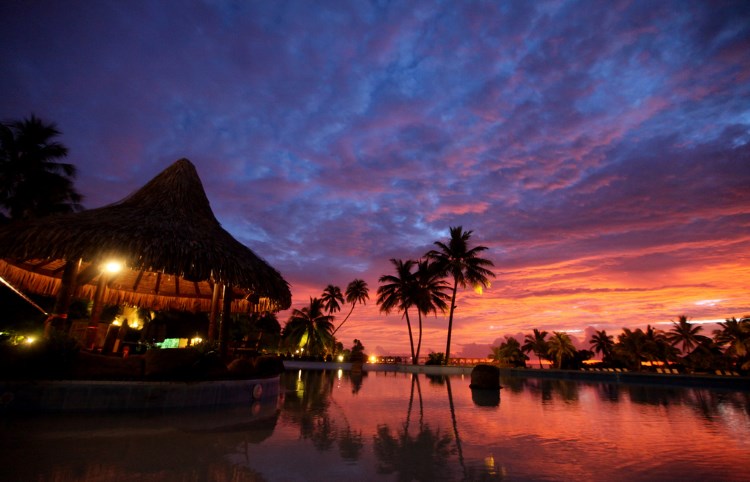
The largest island in the Windward group of Society Islands, Tahiti is also the most developed. Most visitors arrive at the island’s international airport and either head towards their resort on another island or Tahiti’s bustling capital of Papeete. The party-loving city has a vibrant nightlife scene with venues that range from rustic bars to private nightclubs. Whether it’s black pearls and shell jewelry or traditional “pareu” clothing, Papeete is the best place in the Society Islands for shopping excursions too. Cultural points of interest include the Paul Gauguin Museum and the Museum of Tahiti. Scenic mountains, tumbling waterfalls and black sandy beaches are the island’s star natural attractions.
7. Tetiaroa[SEE MAP]
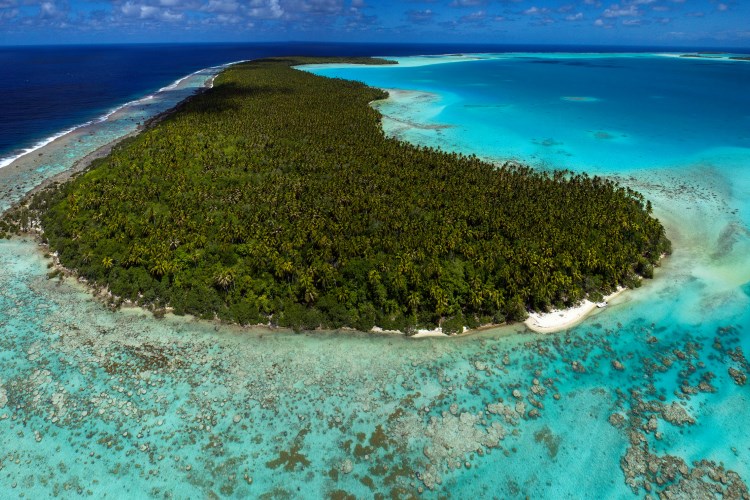
Marlon Brando, starring as Fletcher Christian in the 1962 version of “Mutiny on the Bounty,” fell in love with French Polynesia while scouting locations for the film. Brando was so enraptured with the beauty of the Society Islands that he purchased one for himself: a 2-square-mile atoll known as Tetiaroa. The island passed into the hands of a Tahitian development company after Brando’s death, and after years of planning, the Brando Resort opened to the public in July 2014. The eco-friendly upscale resort features 35 luxury villas next to a private beach. The resort offers an array of activities that range from snorkeling and paddle boarding to Polynesian dance, music and cooking lessons.
6. Maupiti[SEE MAP]
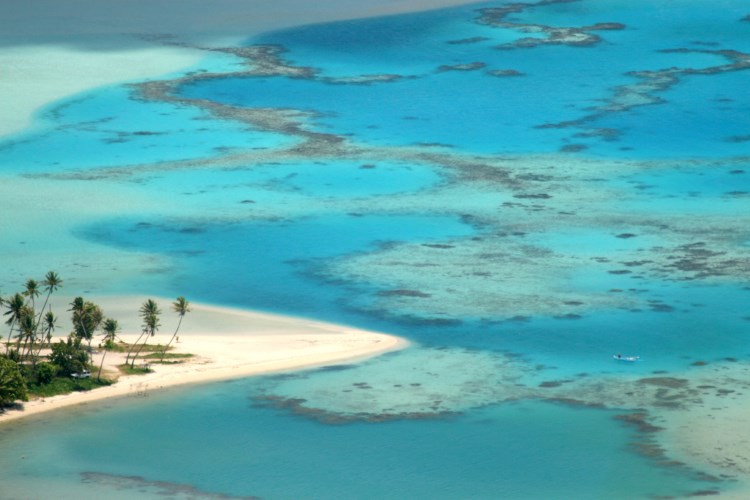
Lying 40 km (25 miles) to the west of Bora Bora, pretty little Maupiti is a miniature replica of its larger neighbor. Like Bora Bora, a coral atoll surrounds the volcanic island, but because the locals have restricted development, the landscape looks much the same as it did when it was first discovered by Europeans in the 18th century. Most visitors stay in pension-style accommodations located in Vaiea, the island’s main village. Mount Hotu Parata, a volcanic cliff that rises above the village is a migratory home to thousands of seabirds.
5. Tahaa[SEE MAP]
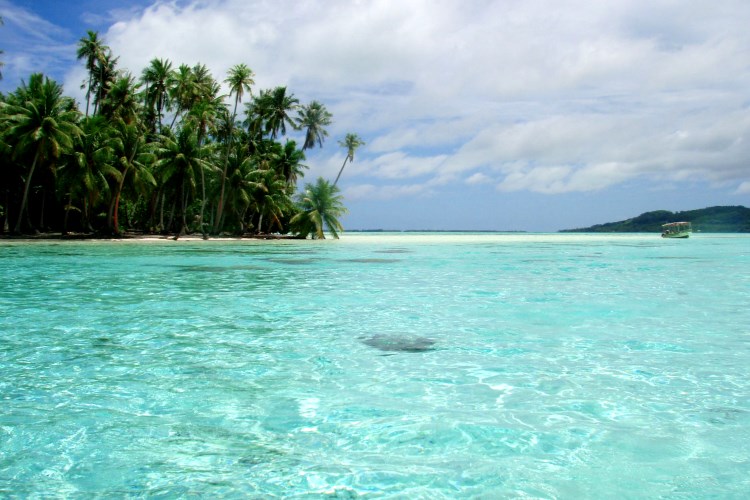
Located between the islands of Bora Bora and Huahine, Tahaa shares her encircling coral reef with the nearby isle of Raiatea. Known as the vanilla capital of French Polynesia, Tahaa has an economy that isn’t as dependent on tourism as the other Society Islands, and has only a limited number family-operated pensions and resorts. Tahaa lacks the broad stretches of powder-soft sand found on other islands as well. It’s an ideal destination for travelers interested in native Polynesian life, however, and is a great place to purchase exquisite black pearls.
4. Raiatea[SEE MAP]
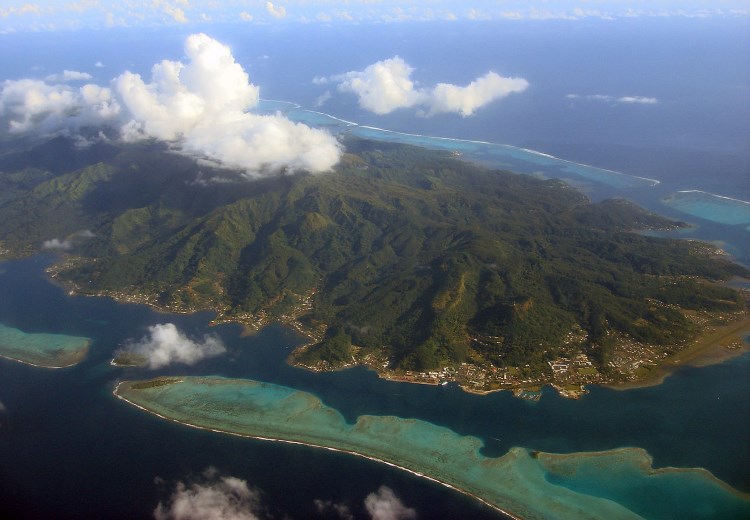
Sharing a surrounding coral reef with sister island Tahaa, Raiatea is the second largest of the Society Islands and the administrative center for the archipelago’s Leeward island group. Often referred to as the “Sacred Island,” Raiatea is believed to be the place from which outward migrations to Hawaii and other parts of East Polynesia began. Visitors can explore ancient shrines and artifacts at Taputapuatea, the best preserved historical site in French Polynesia. Legend has it that the dormant volcano Mount Temehani in northern Raiatea was the birthplace of gods.
3. Huahine[SEE MAP]
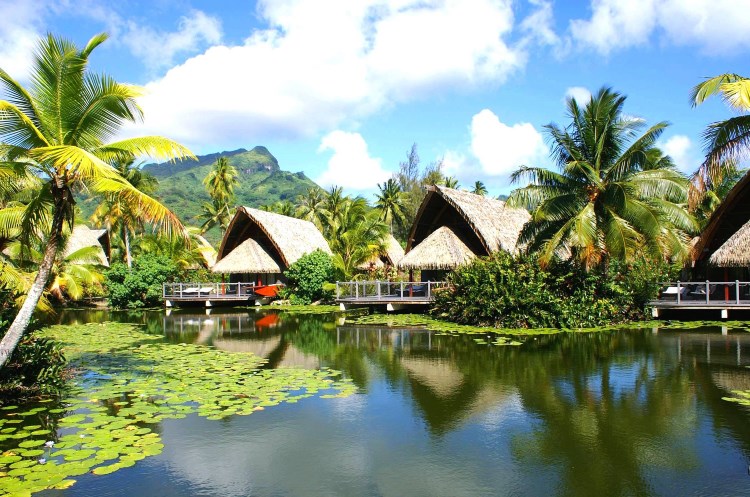
Actually two islands, Big Huahine and Little Huahine are surrounded by a coral reef and connected to each other by a short bridge. Nicknamed “Isle of the Bays,” Huahine is dotted with secluded coves, and features some of the best surfing spots in the Society Islands. Avea Bay on the southwestern coast of Little Huahine has one of the most beautiful beaches in French Polynesia with crystal-clear water ideal for snorkeling. Huahine also has many important archeological sites, including Faahia, a village first settled around 650 A.D. Informational markers invite visitors to explore the island’s history at their own pace.
2. Moorea[SEE MAP]
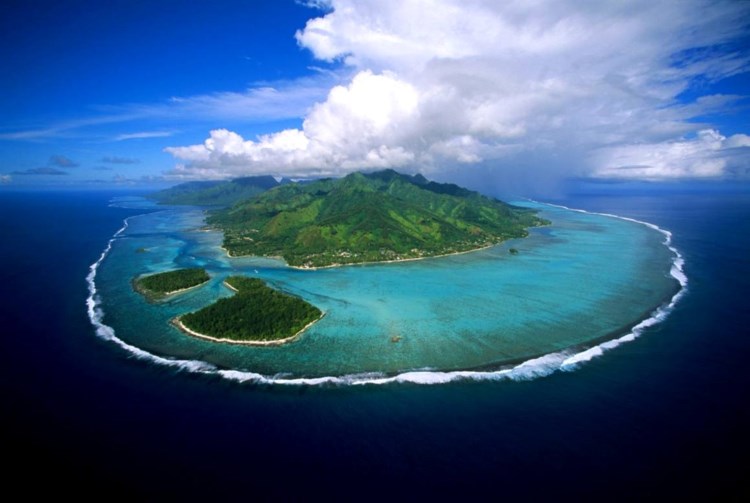
Located just a 30-minute catamaran ride away from Tahiti, Moorea boasts some of the most spectacular scenery of the Society Islands. The island’s ancient volcano, Mount Tohivea, was blown in half by a cataclysmic explosion ages ago, earning the jagged peak the nickname “Shark’s Tooth.” A hike up to Belvedere Point near the summit offers visitors breathtaking views of the surrounding mountain peaks and the island’s peninsulas with its two deep blue bays. Only 16 km (10 miles) wide from east to west, Moorea is nevertheless filled with hidden gems, including ancient Polynesian temples and small villages surrounded by brightly blooming hibiscus.
1. Bora Bora[SEE MAP]
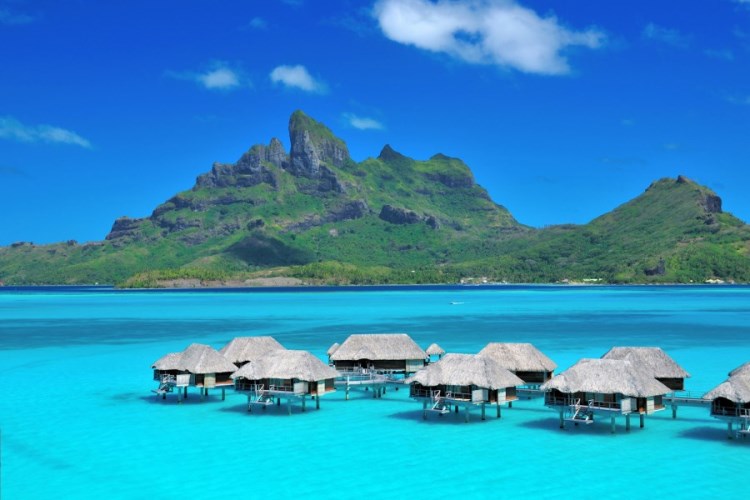 Didierlefort / Wikipedia
Idyllic Bora Bora owes its tranquil turquoise lagoon and white sandy beaches to the protective coral reef that surrounds its perimeter. Bora Bora is one of the world’s premier honeymoon destinations, but the over-the-water bungalows that perch on stilts over the lagoon offer an enchanting experience for any visitor. Snorkeling and scuba diving among the clownfish, lemon sharks, green turtles and other sea life that inhabit the coral reef are the most popular activities on Bora Bora. Some visitors prefer to spend their visit relaxing on coconut-tree-shaded sands like those found on Matira Beach.
While there are no cities on Bora Bora, the main village is Vaitape, a bustling port teeming in shops and markets selling handicrafts and souvenirs such as shell jewelry, scented soaps and black pearls. Vaitape also offers a good selection of restaurants ranging from French to international cuisine in addition to several bars and a nightclub. Vaitape is where most visitors first arrive by ferry from the airport. While there are some car and bike rentals available, there is only one primary road on the mainland. The resorts on the smaller islets offer motorboat transportation.