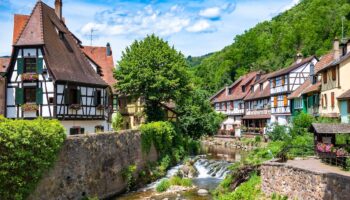
The German Wine Village Americans Don’t Have to Cross the Atlantic For
About 80 miles west of St. Louis, the Missouri River twists through limestone bluffs and rolling hills.

About 80 miles west of St. Louis, the Missouri River twists through limestone bluffs and rolling hills.

Tucked into the rolling hills of the Driftless Area, there’s a town where the buildings look like they belong in a 19th-century English mining village.

Somewhere between Myrtle Beach and Charleston, tucked along Winyah Bay where five rivers meet, sits a coastal town most travelers just breeze right past.

Tucked between steep forested ridges and the Lehigh River, there’s a small borough that feels like it wandered out of the 1800s and just never left.

Few towns along the Connecticut River feel as instantly familiar as this beautiful town. Water surrounds the little Middlesex County spot on three sides.

About 40 miles southeast of Louisville, there’s a small town where bourbon barrels probably outnumber people and the brick storefronts look like they’ve barely changed since the 1800s.

Most visitors don’t expect to find one of the most striking interiors in America tucked behind a row of white columns in a quiet Baltimore neighborhood.

Somewhere along the Potomac River, about fifteen miles south of the National Mall, a white-columned mansion sits on a bluff with a view that’s barely changed in two centuries.

Somewhere in the rolling farmland between Cincinnati and Lexington, a wooden structure rises above the Kentucky hills that stops most first-time visitors mid-sentence.

You notice it before you even know what you’re looking at.

Somewhere in the Jemez Mountains, a narrow canyon slices through a mesa of soft volcanic rock. The walls are dotted with hand-carved rooms.

Long before Europeans arrived in North America, families were building homes from earth and timber at the foot of a mountain range in what is now the American Southwest.

Few museums arrive with expectations quite this high.

One of Milan’s most visited attractions sits behind a fairly unassuming brick façade in a quiet corner of the city center.

Most people walk into this stunning museum expecting a satellite branch of the Paris original. What they find instead is something far more interesting.

Standing at the base of a 2,000-year-old Roman aqueduct, you can’t help but feel your sense of scale wobble a bit.