
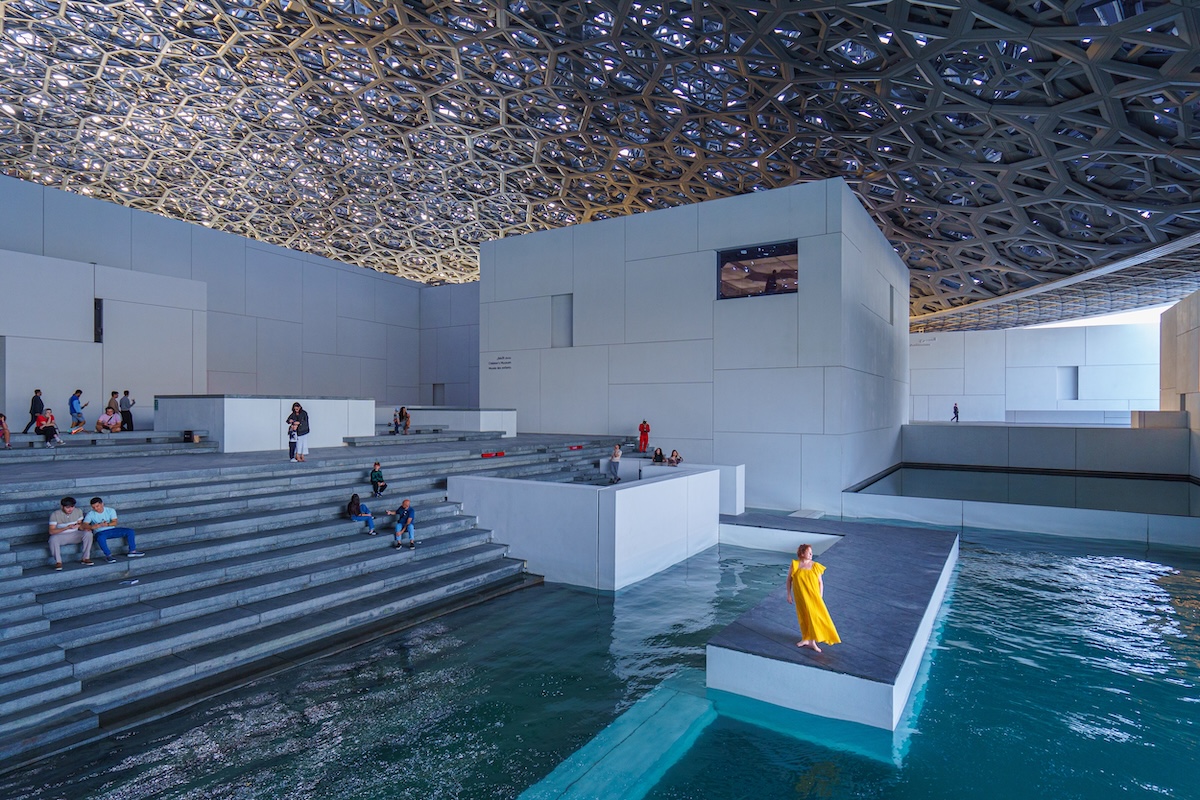
Most people walk into this stunning museum expecting a satellite branch of the Paris original. What they find instead is something far more interesting. Sitting out on Saadiyat Island in the United Arab Emirates, the Louvre Abu Dhabi tells a single story about human creativity—organized not by geography or empire, but by time. A Greek statue stands near an Indian manuscript. Renaissance oil paintings share breathing room with Islamic calligraphy. The juxtapositions are constant, and sometimes a little surprising, but they work.
The building itself is half the experience. A massive geometric dome filters Gulf sunlight into shifting patterns across the floors and water below, an effect the architects call a “rain of light.” You feel it before you fully understand it, and that sensation sets the tone for everything that follows. Since opening in November 2017, the Louvre Abu Dhabi has drawn more than five million visitors. They arrived with the same question you probably have: is it worth the trip? The short answer is yes, and here is why.
Jean Nouvel’s Vision On Saadiyat Island
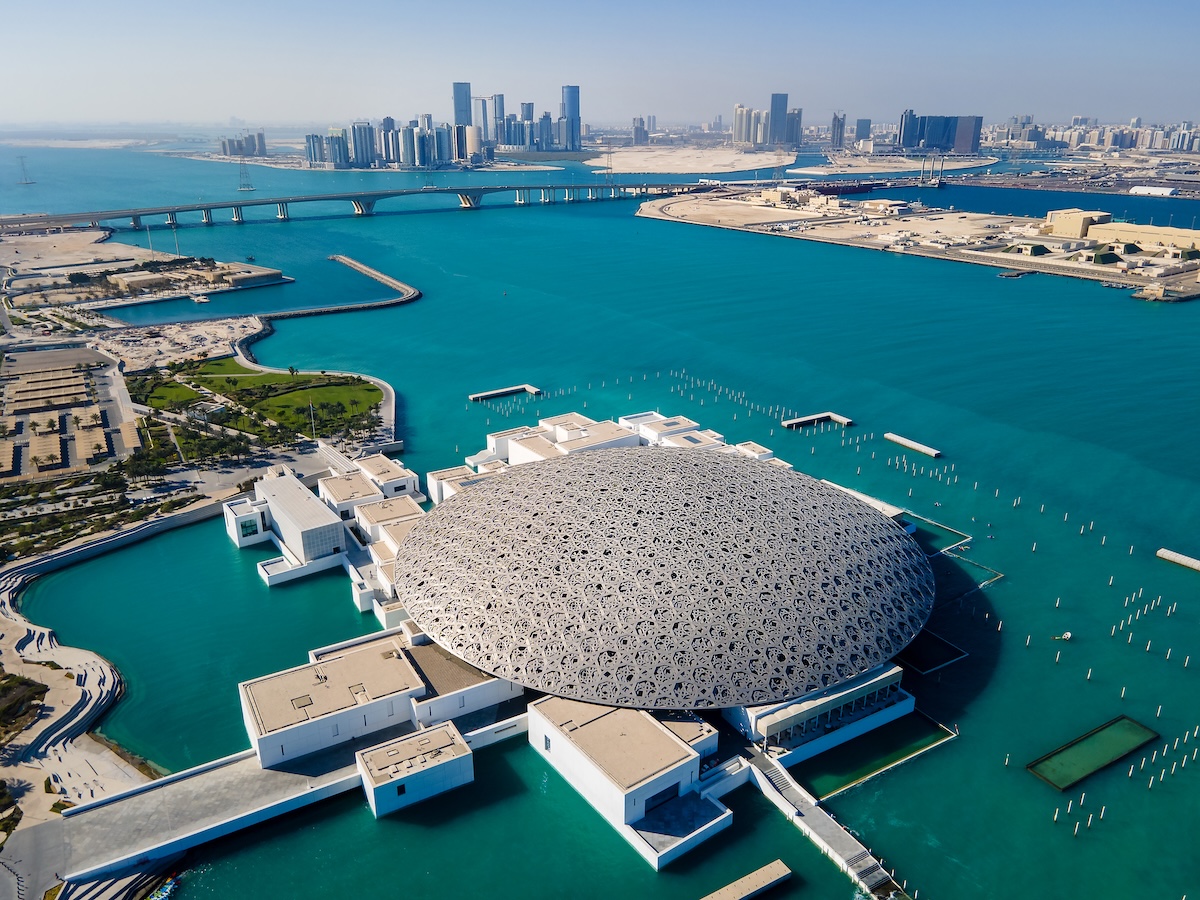
French architect Jean Nouvel designed the Louvre Abu Dhabi as a “museum city” rather than a single monumental box. Dozens of white, low-slung buildings connect by walkways, open plazas, and channels of seawater drawn straight from the Arabian Gulf. The layout borrows from traditional Arab settlement patterns, where shaded pathways wind between compact structures, and applies them at the scale of a world-class institution.
The dome is the centerpiece. It spans 180 meters in diameter, built from eight interlocking layers of geometric metal stars. Each layer is offset from the next, so sunlight passes through thousands of tiny openings and lands in constantly shifting constellations across the ground below. On a bright afternoon, you might mistake the effect for dappled light beneath a dense canopy of palm fronds; that’s exactly what Nouvel wanted you to feel.
But the dome isn’t just for show. It actually cuts down on heat in a region where outdoor temperatures regularly hit 40 degrees Celsius, so you can walk between gallery buildings in relative comfort. Water surrounds much of the complex, bouncing light upward and cooling the immediate environment.
Saadiyat Island is shaping up to be Abu Dhabi’s cultural district, with future neighbors like branches of the Guggenheim and a national history museum. For now, the Louvre sits in open space near the shoreline, which gives it a calm, unhurried quality you rarely find in major museums.
Inside The Galleries
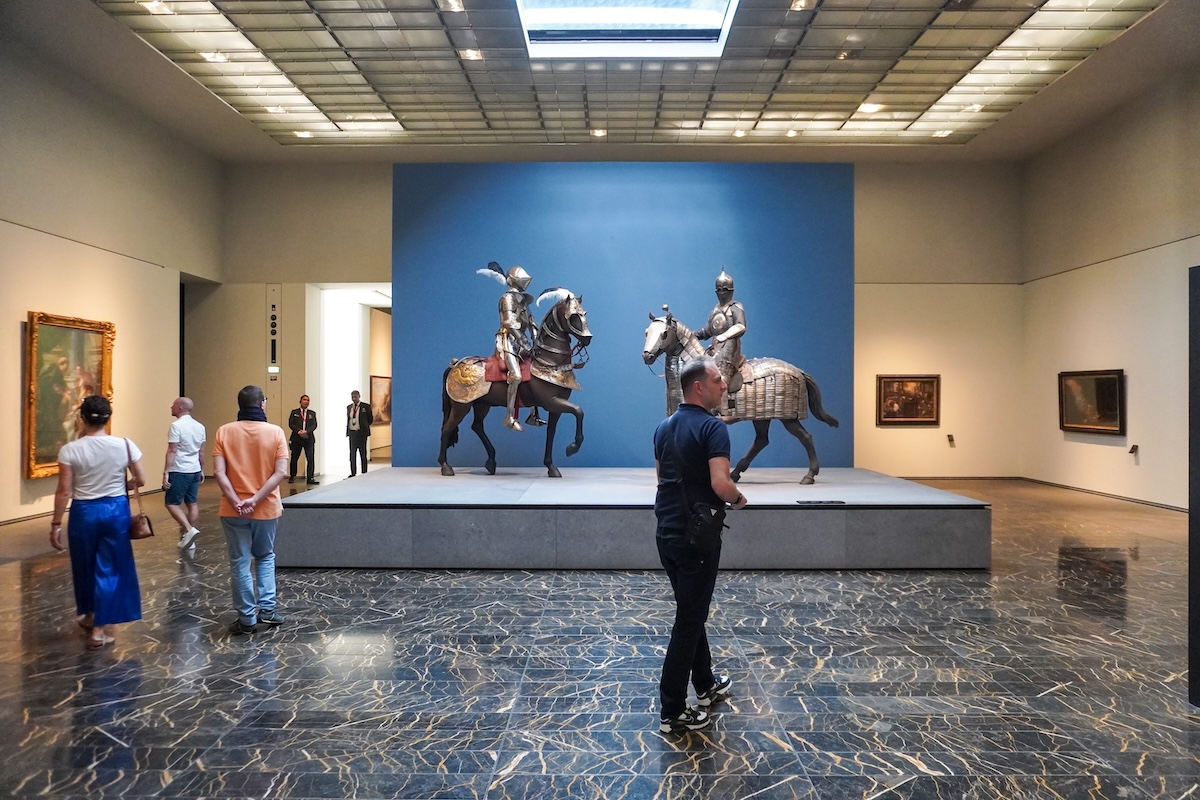
The permanent collection covers about 6,000 years and fills 23 galleries, laid out in chronological order. You’ll start with Neolithic artifacts and end up with contemporary works, passing through antiquity, medieval exchange routes, and the modern era. The museum organizes everything by theme, not nationality, so you start spotting connections between distant cultures that a standard museum layout would probably hide.
Big names? Absolutely. Leonardo da Vinci’s “La Belle Ferronnière” sometimes appears on loan from Paris. You’ll see works by Vincent van Gogh, Paul Gauguin, Pablo Picasso, and René Magritte, all mixed in with pieces from African, Asian, and Middle Eastern traditions. These juxtapositions feel intentional, not just thrown together. For example, a Mondrian composition hangs near a Japanese screen, nudging you to make your own connections about abstraction across cultures.
Lighting changes from room to room—sometimes soft and indirect, other times bright enough that you can really see the brushstrokes up close. A few galleries open onto water views, which is a relief when you need a breather before diving back in.
Temporary exhibitions change about four times a year, usually in partnership with places like the Musée d’Orsay. Recent shows have explored Post-Impressionism and global cartography, among other things. These special exhibitions definitely give you a reason to come back. Still, the permanent collection is more than enough on its own. If you want to get through the whole timeline without hurrying, you’ll probably want to set aside two or three hours.