
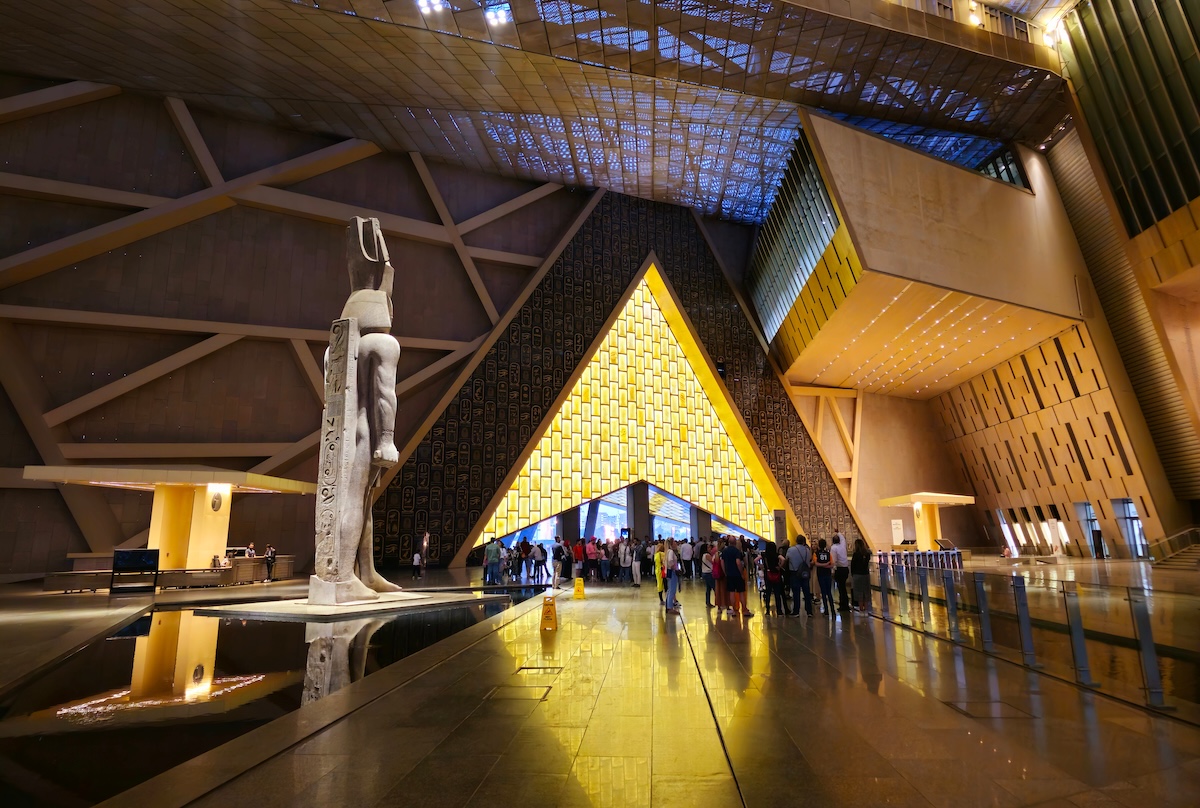
Few museums arrive with expectations quite this high. After decades of planning, construction delays, and a price tag that climbed into the billions, Egypt finally unveiled a cultural project designed on a scale rarely seen anywhere in the world. Standing just a short distance from the pyramids at Giza, it houses a collection so vast that most visitors struggle to grasp its size until they step inside.
The Grand Egyptian Museum sits just two kilometers from the Great Pyramid of Khufu and now holds more than 100,000 artifacts spanning over 5,000 years of history. If you’re visiting Cairo, don’t think of the museum and the pyramids as competing attractions. Together, they tell a far richer story than either could alone.
But it’s not just about scale. For the first time, visitors can see the complete Tutankhamun collection under one roof. Twelve exhibition halls trace the story of ancient Egypt from prehistoric times through the Roman era, while the building itself frames views of the pyramids from inside the galleries. It’s the kind of place that manages to impress history buffs and casual travelers at the same time.
Location Beside The Giza Plateau
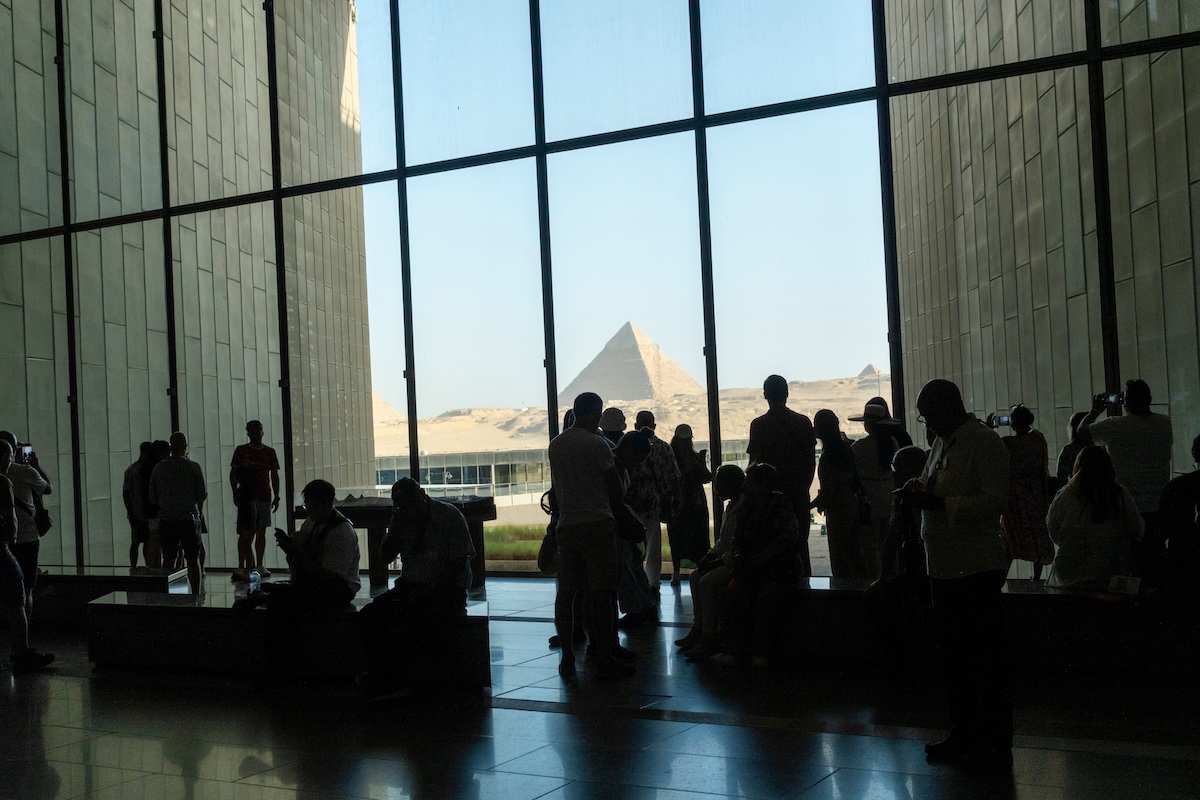
You’ll find the Grand Egyptian Museum at El Remayah Square, right off the Cairo-Alexandria Desert Road on the western edge of greater Cairo. It sprawls across about 120 acres on the first desert plateau, just over a mile from the pyramids. That’s not a coincidence.
The site sits where the Nile’s floodplain meets the desert shelf, with a natural 50-meter elevation change. That same boundary shaped where people settled in ancient Egypt for thousands of years. Heneghan Peng Architects, based in Dublin, designed the building with sharp angles that line up with the pyramid complex, so as you move through the museum, you keep catching glimpses of that ancient skyline. It’s a subtle but powerful connection.
Driving out from central Cairo takes 30 to 45 minutes, depending on how Cairo’s infamous traffic treats you. If you’re coming from the Giza Pyramids entrance, it’s maybe a 10-minute drive. There’s talk of an electric train connecting the two sites in the future, which would make things even easier. Whether you’re staying downtown or near the pyramids, the museum fits right into your plans without much hassle.
The facade uses triangular panels made from translucent alabaster and Egyptian stone, so it feels modern but still grounded in the landscape. As you walk through the entrance piazza, you pass under a huge suspended statue of Ramesses II—a bit dramatic, but in a good way. It’s a moment that shifts you from the glare of the Giza sun into a space where five thousand years of history unfold, not all at once, but at a pace you can actually enjoy.
Highlights Of The Collections
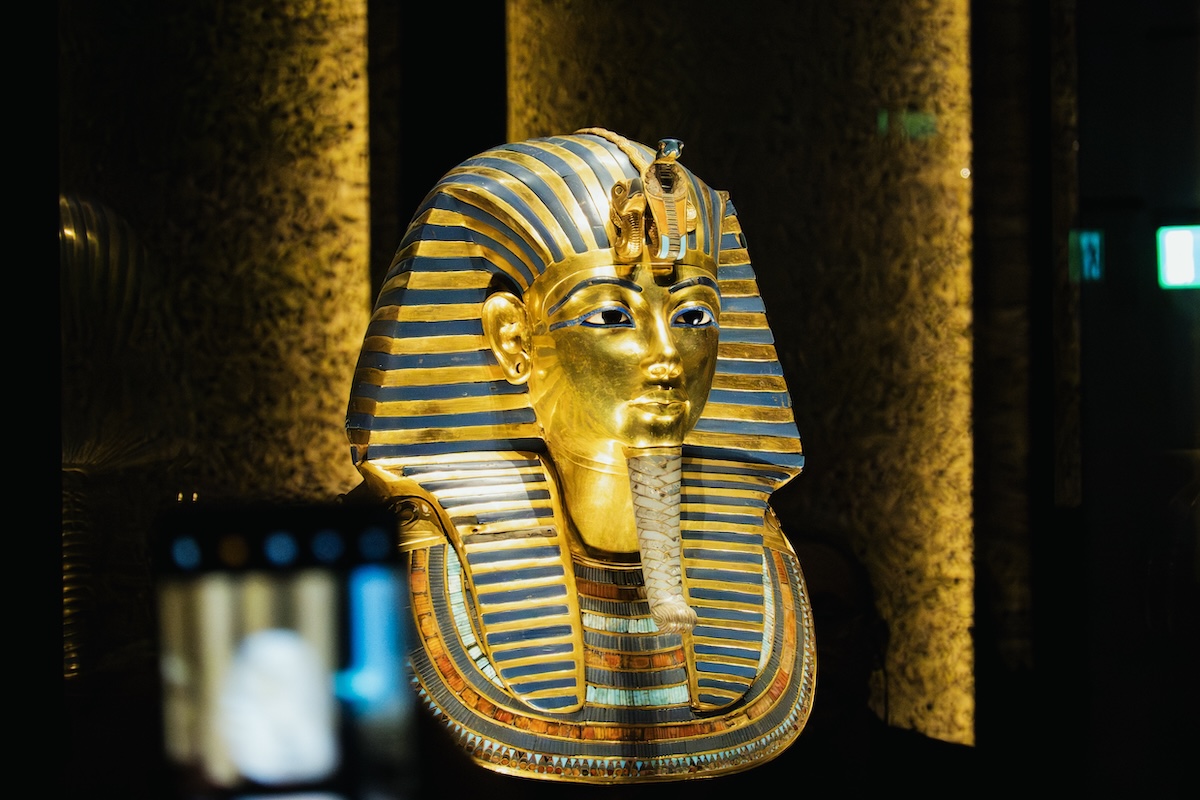
Everyone talks about the Tutankhamun gallery, and for good reason. For the first time, you get to see the entire collection of artifacts pulled from the young pharaoh’s tomb—over 5,000 objects crammed into one dedicated space. The golden funerary mask steals the spotlight, but there’s so much more: chariots, jewelry, furniture, and ritual items that, until now, barely made it out for public viewing.
But it’s not just about Tutankhamun. Twelve permanent exhibition halls walk you through Egyptian history, starting way back around 700,000 BC and moving all the way up to 394 AD. You weave through prehistoric tools, Old Kingdom sculptures, Middle Kingdom coffins, and New Kingdom reliefs—no awkward backtracking or getting lost in the timeline. The layout actually helps the story of Egyptian civilization unfold as you go, which feels a lot more natural than the patchwork approach some smaller museums take.
The Grand Staircase catches your eye right away. Monumental statues flank the walkway as you climb, and they get older the higher you go. Near the entrance, a massive granite statue of Ramesses II—about 83 tons, if you can believe it—sets the tone and scale for everything else inside.
Some galleries break from the royal focus and dig into daily life. You’ll stumble into rooms dedicated to ancient society, agriculture, crafts, and religious practices. These displays lean on context and newer presentation styles, so the objects actually feel tied to real people’s lives, not just locked away as museum oddities.