
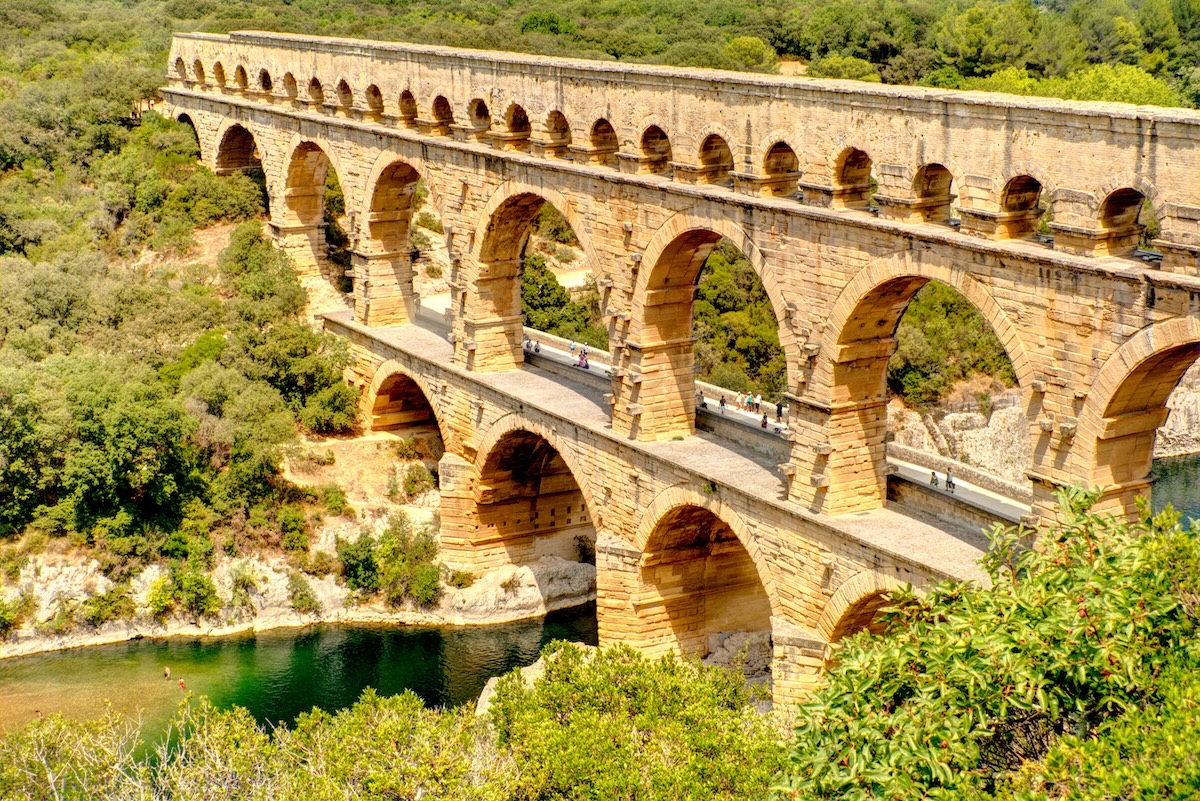
Standing at the base of a 2,000-year-old Roman aqueduct, you can’t help but feel your sense of scale wobble a bit. The Pont du Gard in southern France towers nearly 49 meters above the Gardon River, its three tiers of golden limestone arches stacked with a precision that still baffles. The Romans built it around 19 BCE, during Augustus’s reign, to carry water over 50 kilometers from springs near Uzès to the fountains, baths, and homes of Nîmes.
These days, Pont du Gard France draws crowds as one of the country’s most visited ancient monuments—and it’s easy to see why. It snagged UNESCO World Heritage status back in 1985, and unlike some Roman ruins that make you squint and imagine, this one just stands there, making its case. The site sits in a protected stretch of the Gardon gorges where hiking trails, kayak routes, and quiet riverside beaches make the visit feel less like a museum stop and more like a proper day out in Provence.
Roman Engineering Up Close
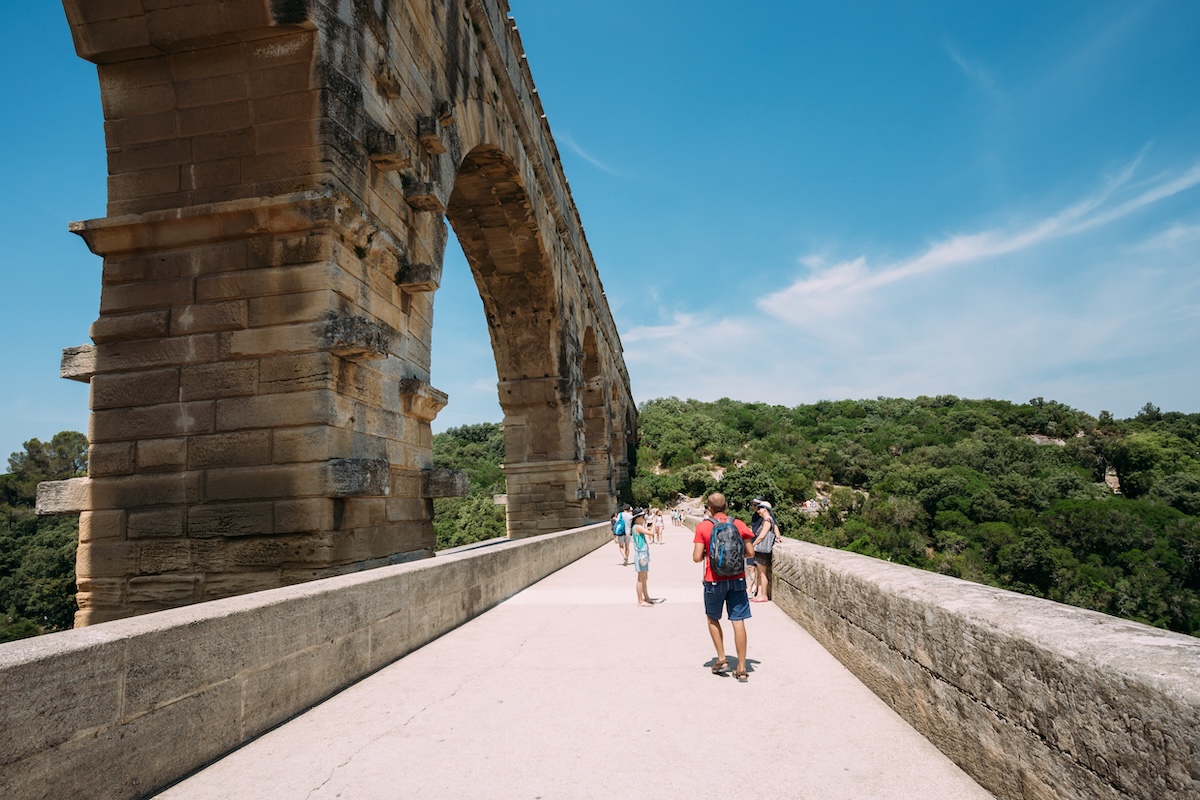
The sheer mass hits you right away. The Pont du Gard stretches 275 meters long and weighs somewhere around 50,000 tons. The Romans didn’t use mortar for this—each limestone block was cut, shaped, and jammed together so tightly that gravity and friction alone have kept them in place for two thousand years. You can still spot the protruding bosses on the stones—basically the handles—where workers hooked up their lifting gear.
Walking across the lower tier, you’ll notice the arches widen toward the center, where the river’s at its broadest. The biggest arch spans nearly 25 meters. Up on top, the enclosed water channel carried a slow, steady flow, dropping just 17 meters over the entire 50-kilometer route. That’s a slope of about 1 in 3,000—even now, that’s some wild surveying.
If you head along the left bank, a footpath winds past remnants of the bigger aqueduct system. You’ll see smaller arched sections and buried channels, hinting at the full network that once kept Nîmes supplied. The on-site museum does a pretty good job explaining how the Romans built all this and managed their water, but it doesn’t drown you in details. You come away with a better sense of just how ambitious and organized this whole public works project really was.
The Gardon River Setting
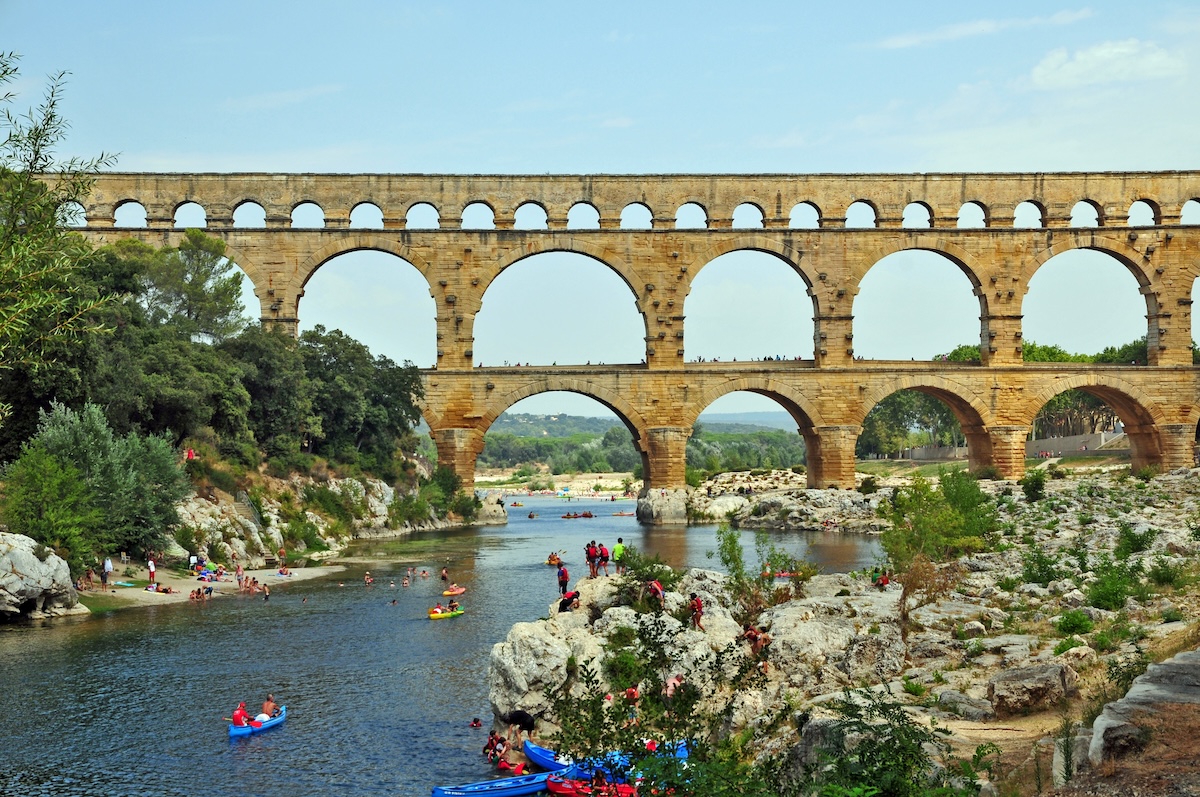
The Gardon River is half the reason Pont du Gard feels so special. Clear, green water slips through a limestone gorge, where scrub oaks and wild herbs cling to the banks. The aqueduct rises right at a pinch point—a spot where the valley squeezes in just enough to make the crossing work. The Romans picked this place on purpose, and it almost feels like the monument grew out of the cliffs themselves.
When it’s warm, you can swim under the arches or rent a kayak upstream in Collias for a paddle down to the bridge. That stretch is about 8 kilometers—maybe two hours if you take your time. You’ll see the structure from the water, which is a whole different experience than just standing on the bank. The river’s mostly calm, with a few gentle rapids and lots of places to pull over for a swim or just to drift for a bit.
If you’d rather walk, several marked trails wind through the garrigue. One of the favorites starts on the left bank and passes old mill ruins, then climbs to viewpoints that show off the aqueduct from fresh angles. The paths stay in good shape and don’t get too steep, so families or anyone just out for a stroll won’t have trouble.
Villages nearby—like Castillon-du-Gard and Vers-Pont-du-Gard—bring their own kind of charm, with narrow stone lanes, cozy restaurants, and a pace that invites you to slow down. Uzès is about 14 kilometers north; it’s perfect for lunch or wandering a morning market. With the river, the trails, and these villages, you’ll find it’s surprisingly easy to spend a whole day here and not feel like you’ve rushed anything.