
Around the world, visionary architects have pushed boundaries to create modern masterpieces that defy both gravity and imagination. And although ancient pyramids or crumbling coliseums remain marvels in their own right, we are here to celebrate a new era of architecture.
With features that challenge reality, these structures represent the absolute pinnacle of contemporary design. They are where engineering meets art, creating spaces that must be experienced to be believed. Ready for some serious architectural eye candy? Let’s explore these modern wonders that are redefining what buildings can be.
7. Heydar Aliyev Center, Azerbaijan
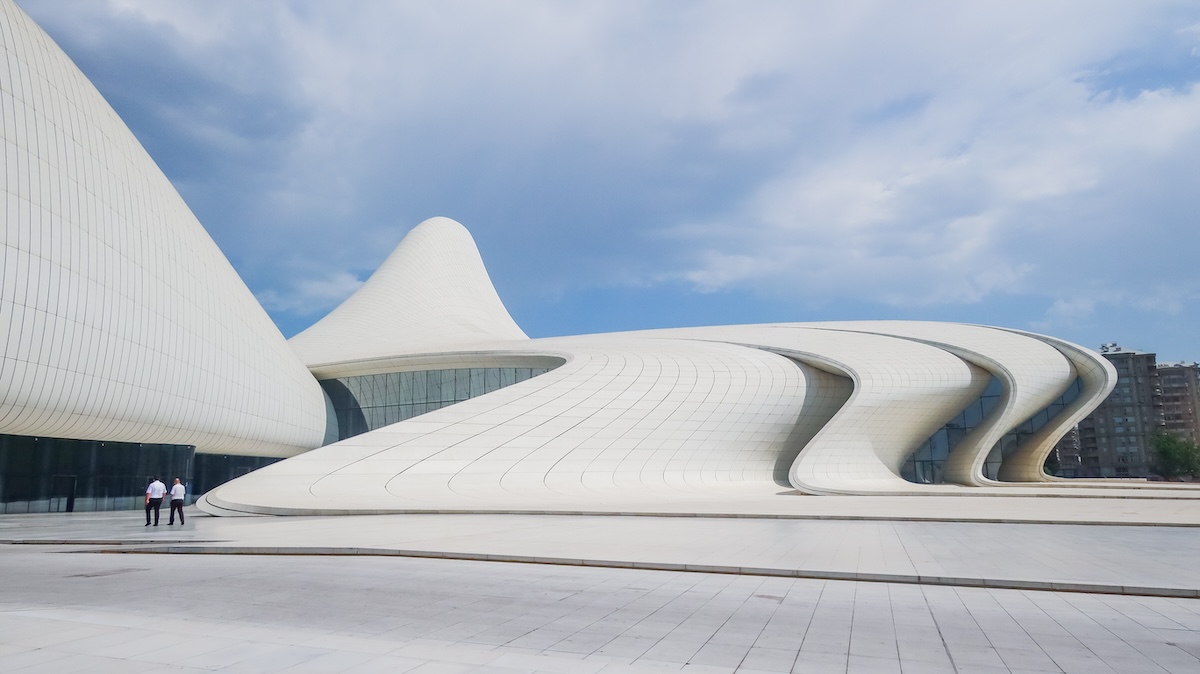
In Baku, the Heydar Aliyev Center rises from the ground like a giant wave frozen in time. Designed by architectural superstar Zaha Hadid, this cultural center completely rejects straight lines and sharp angles in favor of smooth, flowing curves that seem impossible to build. The building appears different from every angle, with a gleaming white exterior that creates a stark contrast against the blue Azerbaijani sky.
Inside, the fluid design continues with walls that flow seamlessly into ceilings, creating spaces that feel organic rather than constructed. The center hosts exhibitions, conferences, and performances in spaces that melt into one another. What makes this structure truly revolutionary is how it challenged the Soviet architectural style that dominated the region for decades. Instead of imposing concrete blocks, Hadid created a building that feels like it’s in constant motion.
6. Louvre Abu Dhabi, United Arab Emirates
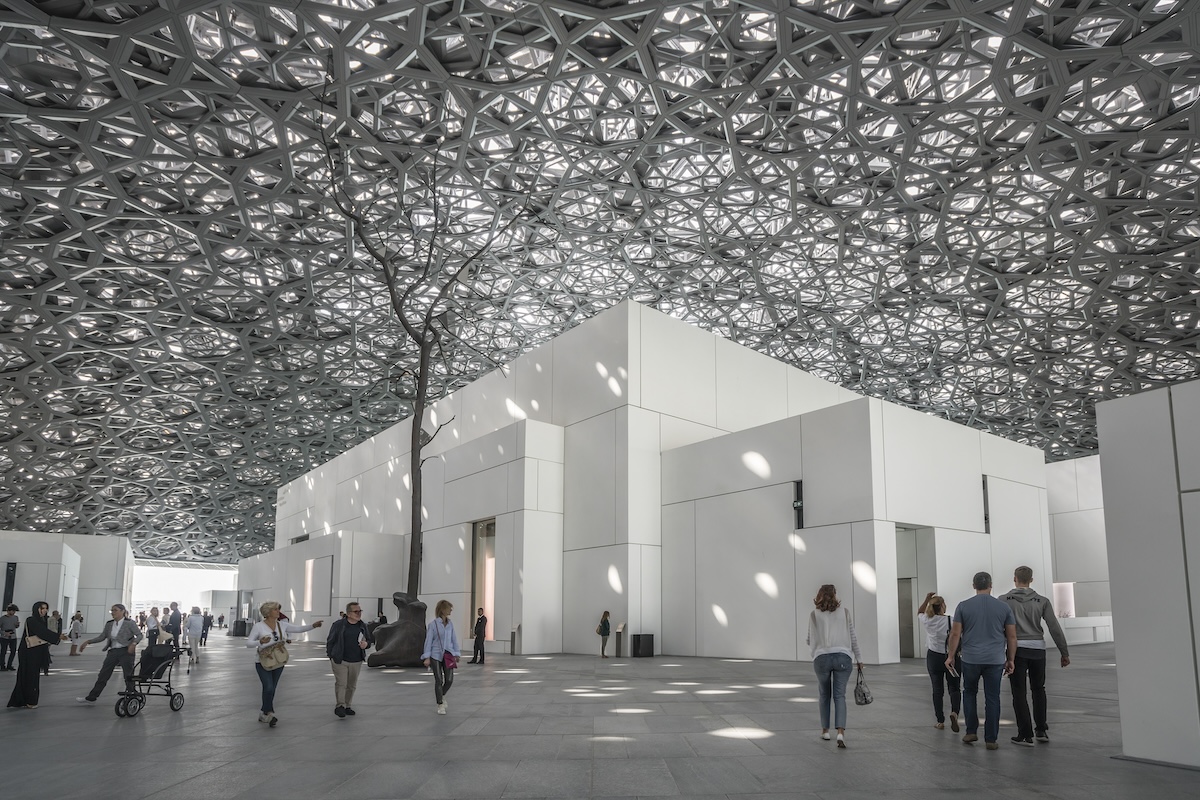
Although its Parisian big sister is incomparably famous, Louvre Abu Dhabi doesn’t hold back. Architect Jean Nouvel created a 180m-wide dome that appears to float over the museum’s galleries, where it brings a “rain of light.” The pattern is so intricate that visitors experience different light shows depending on the time of day – a living artwork covering the actual artworks.
The museum itself has parts of the structure extending into the sea, creating a “museum city” of interconnected buildings and waterways. Unlike its European counterpart, this Louvre embraces its waterfront setting, with the Arabian Gulf becoming part of the visitor experience. The contrast between the ultramodern dome and the traditional Arabic architectural influences creates a space that feels both futuristic and timeless. It’s perhaps the only museum where the building competes with the priceless art collection for your attention – and often wins.
5. World Trade Center Station, USA
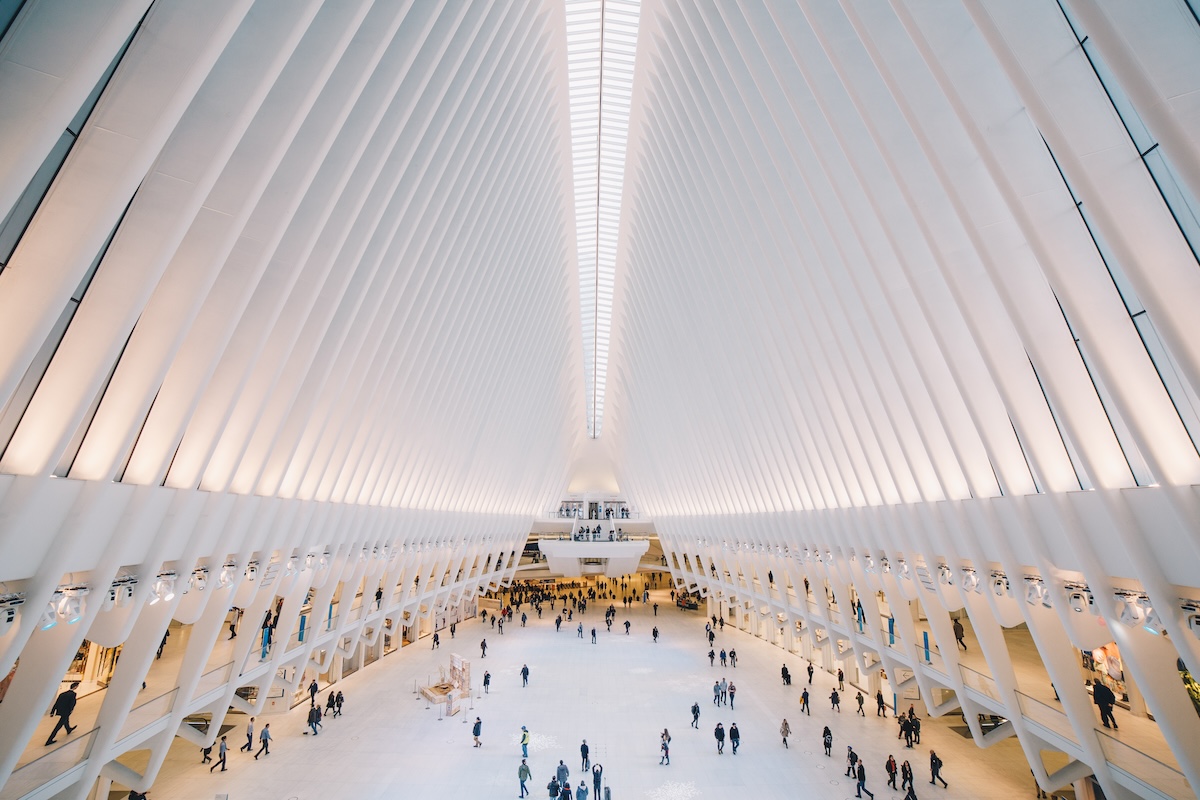
Rising from the sacred ground of Lower Manhattan, the World Trade Center Transportation Hub (nicknamed the Oculus) looks like a giant dove taking flight and was designed by Santiago Calatrava as a memorial and a monument to resilience. The massive white ribs of the structure stretch upward, creating a cathedral-like space that transforms a mundane subway station into something transcendent.
Inside, the soaring central hall is flooded with natural light from the glass spine that runs along the roof. On September 11th each year, this skylight opens creating a dramatic beam of light at the exact time the first plane hit. Though controversial for its hefty price tag, the station offers something rare in bustling New York: a moment of pause and reflection. It proves that even the most utilitarian spaces – like subway stations – can be transformed into something extraordinary.
4. Marina Bay Sands, Singapore
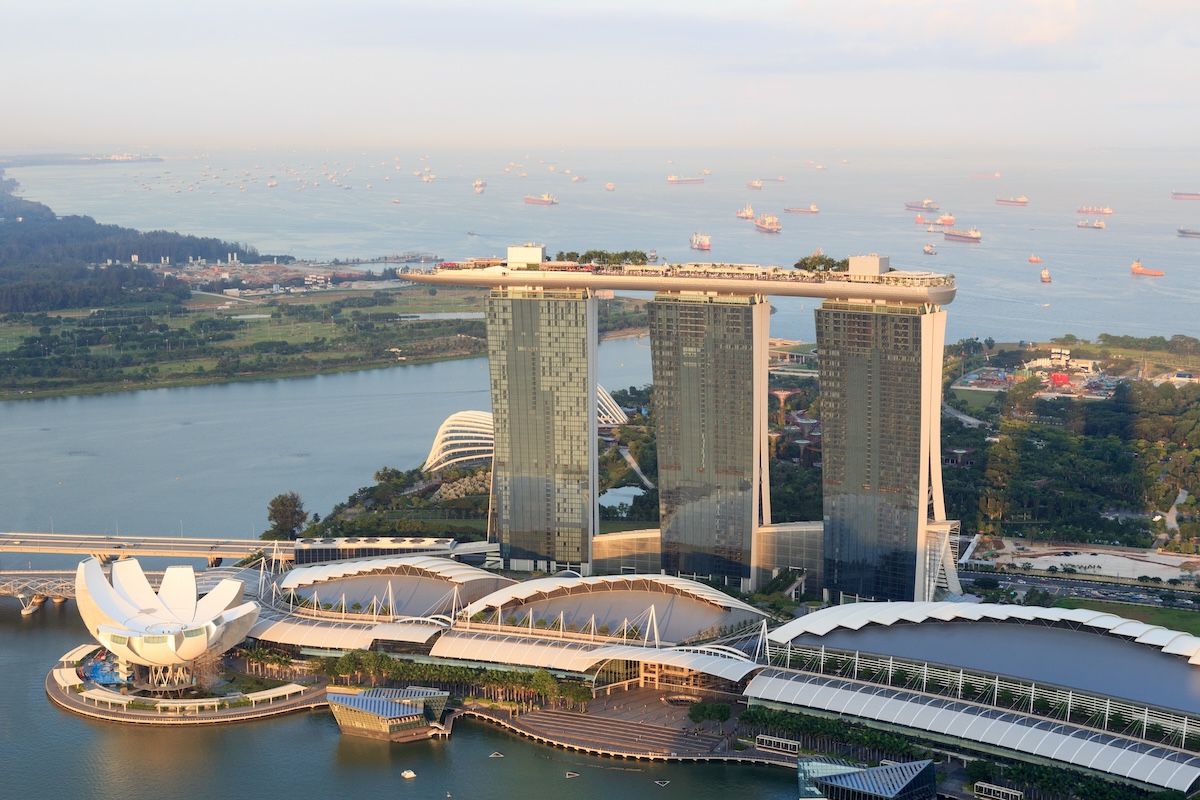
This hotel is to the Singapore skyline what the Burj Khalifa is to Dubai. The structure features three 55-story hotel towers connected at the top by the SkyPark – a 340-metre-long platform that extends beyond the towers, seemingly defying physics. This aerial plaza houses one of the world’s most photographed infinity pools, where swimmers can paddle to the edge and gaze across Singapore’s skyline (no thanks!).
Below, the complex houses a massive casino, luxury shopping mall, convention center, museum, theaters, and countless restaurants. The building completely transformed Singapore’s waterfront and has become the city-state’s defining landmark. What makes Marina Bay Sands truly special is how it created usable space where none should exist; in gaps between towers! It’s architecture that makes you question whether the laws of gravity were merely suggestions all along.
3. Sydney Opera House, Australia
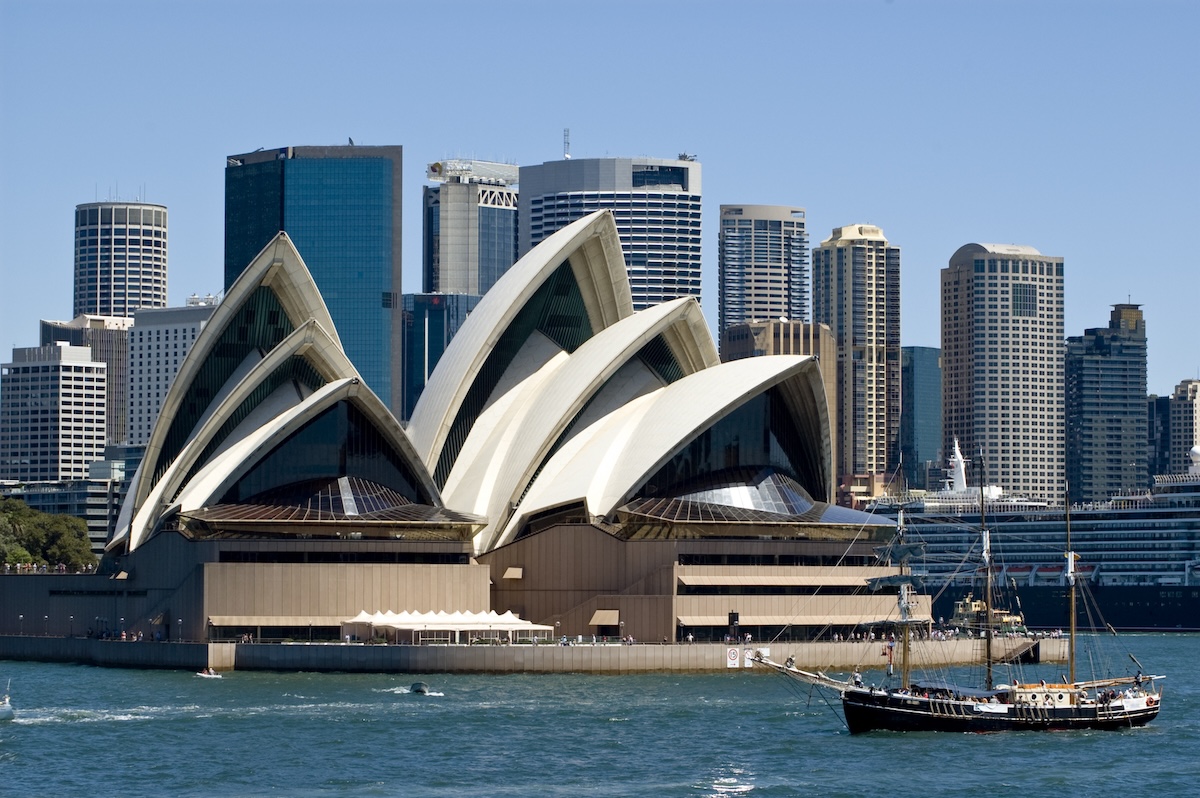
Sometimes a building becomes so iconic that it’s impossible to separate it from its city, and nothing says “Sydney” like those gleaming white sails perched at the edge of the harbor. The Opera House, designed by Danish architect Jørn Utzon, was revolutionary when completed in 1973 and remains just as striking today. Those distinctive shell-shaped sails aren’t just aesthetic and they also solve complex acoustic and spatial challenges while creating one of the world’s most recognizable silhouettes.
What many visitors don’t realize is that the Opera House looks different depending on your vantage point – from some angles, the shells appear as separate elements; from others, they seem to flow together as one cohesive structure. Despite being one of the older structures on this list, the Opera House remains thoroughly modern in its approach to integrating architecture with its dramatic harbor setting, creating a building that feels like it couldn’t possibly exist anywhere else in the world.
2. National Centre for the Performing Arts, China

In Beijing, a giant egg floats on an artificial lake. This is the National Centre for the Performing Arts, locally known as “The Giant Egg,” a titanium-and-glass dome surrounded by water on all sides. Designed by French architect Paul Andreu, this 212-metre-long ellipsoid structure appears to hover above the reflecting pool, accessible only via an underwater corridor that gradually brings visitors from the busy streets of Beijing into a serene artistic space.
What makes this structure particularly striking is its bold placement near the ancient Forbidden City and Tiananmen Square, creating a dialogue between China’s imperial past and its modern ambitions. At night, the transparent dome glows from within, turning the entire structure into a massive lantern reflecting on the surrounding water.
1. Guggenheim Museum, Spain

Before the Guggenheim, Bilbao was a struggling industrial that very few tourists could place on a map. After the Guggenheim, it became architectural shorthand for how one building can transform an entire city’s fortunes. Frank Gehry’s masterpiece looks like no museum you’ve ever seen – a swirling composition of titanium curves that catch the light like fish scales. The structure seems to change shape as you walk around it, with no clear front or back, just continuous flowing forms that somehow work together despite seeming random.
Inside, massive gallery spaces allow for art installations that wouldn’t fit in conventional museums, while the atrium soars nearly 50 meters upward, creating a cathedral-like space for contemporary art. The “Bilbao Effect” has inspired cities worldwide to invest in statement architecture, but few have achieved what the original did: creating a building so extraordinary that people travel thousands of kilometers just to see the container, regardless of what art it contains.










Leave a Reply