
Around the world, visionary architects have pushed boundaries to create modern masterpieces that defy both gravity and imagination. And although ancient pyramids or crumbling coliseums remain marvels in their own right, we are here to celebrate a new era of architecture.
With features that challenge reality, these structures represent the absolute pinnacle of contemporary design. They are where engineering meets art, creating spaces that must be experienced to be believed. Ready for some serious architectural eye candy? Let’s explore these modern wonders that are redefining what buildings can be.
23. Niterói Contemporary Art Museum, Brazil
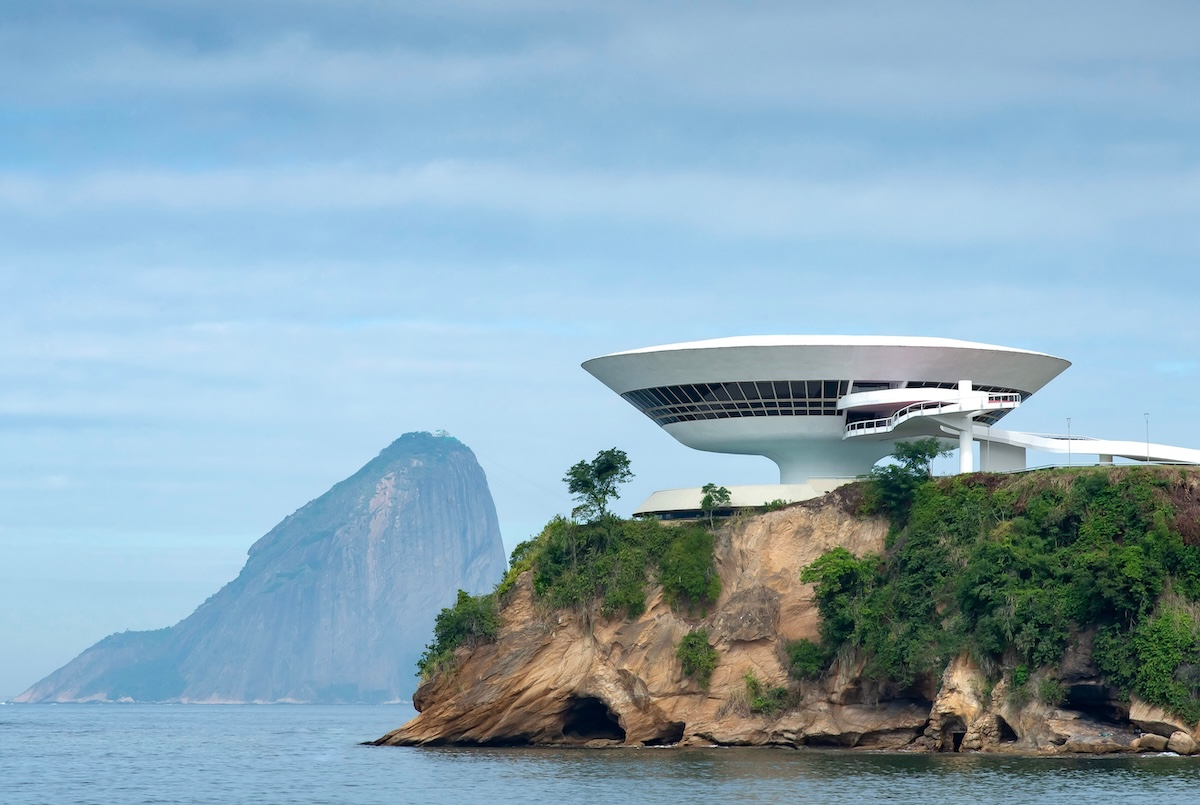
This saucer-shaped museum sits on a clifftop in Niterói, across the bay from Rio de Janeiro. Oscar Niemeyer, a legend in Brazilian architecture, designed it and wrapped up construction in 1996. The museum almost floats above the rocky coast, looking a bit like a spaceship that just landed. Its white curves and cylindrical base cut a dramatic figure against Guanabara Bay and Sugarloaf Mountain.
You’ll walk up a winding red ramp to reach the main gallery. The floor-to-ceiling windows offer 360-degree views—honestly, the scenery is as much a draw as the art inside. Niemeyer wanted the building to echo the surrounding landscape, and you can see how the circular form mirrors the bay’s curves. It’s become a symbol of Niterói and a classic example of Niemeyer’s bold, environment-focused modernism.
22. Palau de les Arts Reina Sofía, Valencia, Spain
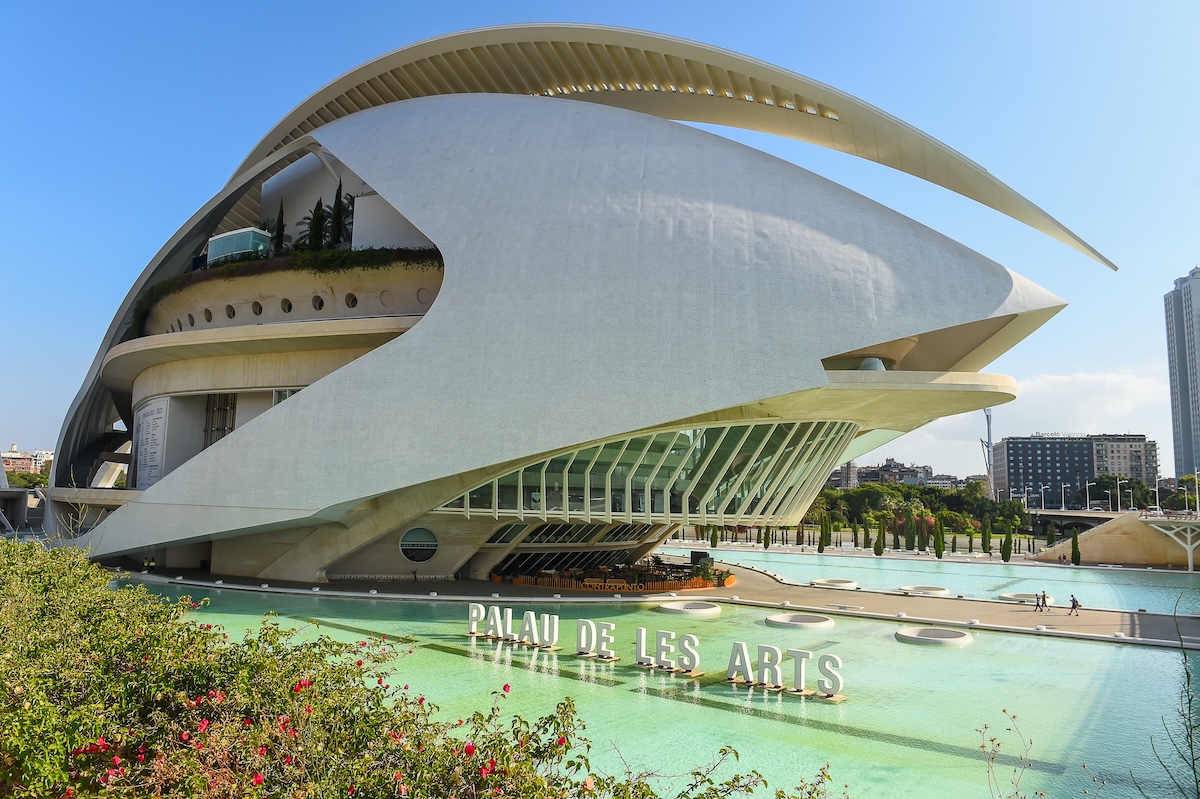
This opera house rises from Valencia’s City of Arts and Sciences like some gigantic white sculpture. Santiago Calatrava designed it, finishing in 2005. The sweeping concrete shells and helmet-like profile dominate the skyline, reaching up over 230 feet—making it one of the tallest opera houses anywhere.
Inside, you’ll find four main performance spaces, each tailored to a different kind of show. The main auditorium seats about 1,700, and Calatrava’s dramatic curves and bright white surfaces make everything feel larger than life. If you visit at night, the building glows under strategic lighting, becoming a beacon across Valencia’s cultural district.
21. Millau Viaduct, France
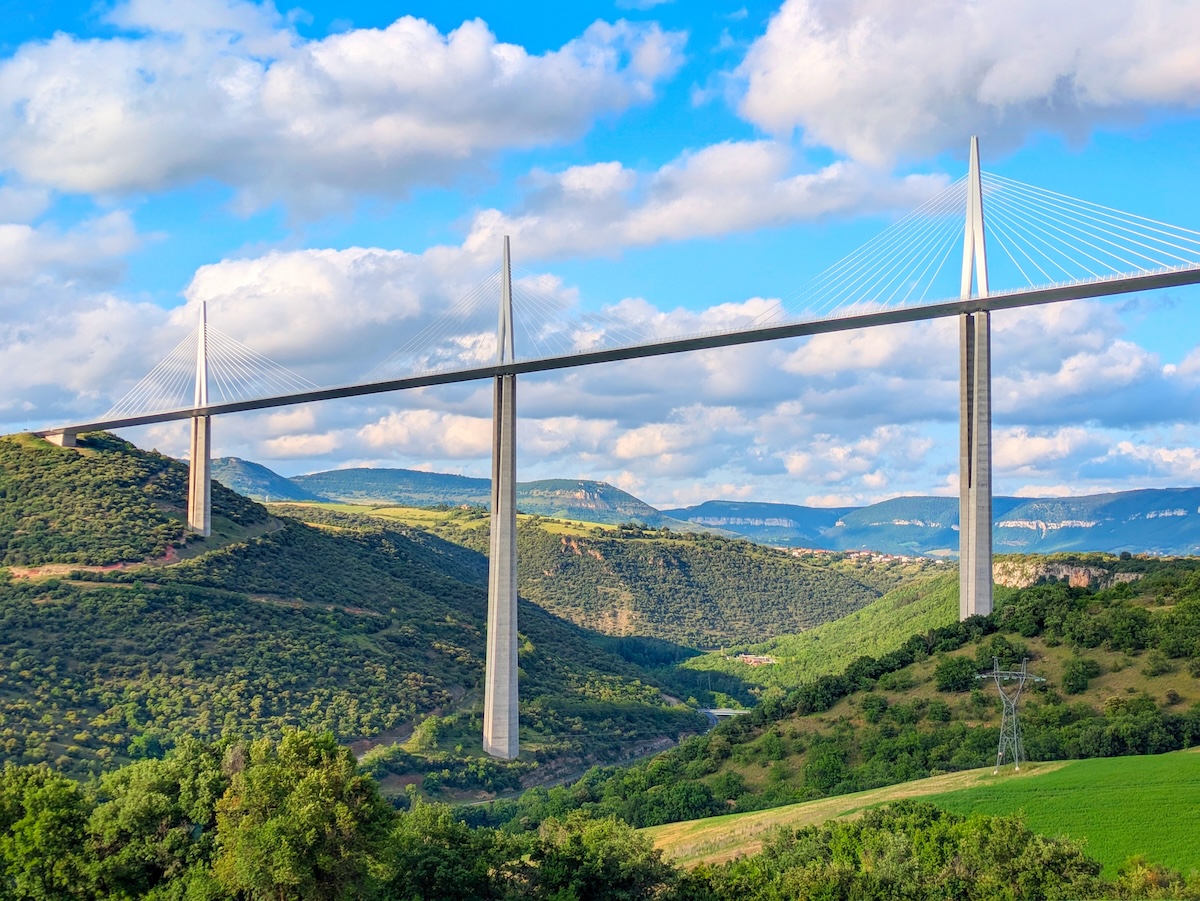
The Millau Viaduct soars above the Tarn Valley in southern France, stretching like a delicate ribbon across the landscape. At its tallest point, it stands 343 meters high—yep, that’s taller than the Eiffel Tower. Norman Foster designed this cable-stayed bridge, and crews finished it in 2004 after three years of construction.
Drive across its 2,460-meter span, and you’re gliding over what used to be a major traffic bottleneck between Paris and the Mediterranean. The seven slender pillars barely seem to touch the valley floor, giving the bridge an almost weightless feel. From the hills nearby, you can watch the viaduct float above the morning fog—a sight that’s honestly hard to forget.
20. Museo Soumaya, Mexico City, Mexico
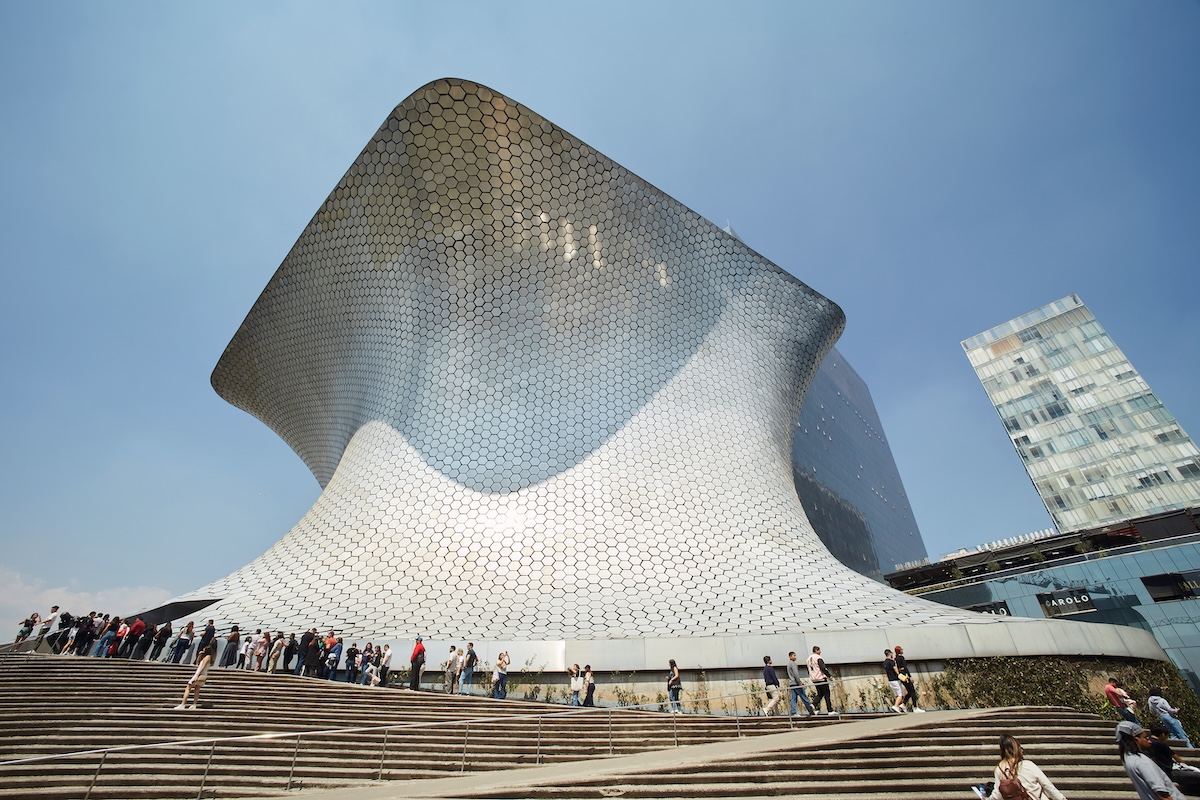
In the Polanco neighborhood, the Museo Soumaya stands out as one of Mexico City’s most eye-catching buildings. Fernando Romero designed it, and it opened in 2011. The museum’s six stories are wrapped in 16,000 hexagonal aluminum tiles that shimmer as the light changes. Its irregular, asymmetric shape doesn’t follow any old rules—it’s now a fixture in the city’s modern skyline.
Inside, you’ll wind your way up through galleries via curved ramps instead of straight corridors. The museum houses more than 66,000 works, from European painters to Mexican modernists. Carlos Slim named it after his late wife, and it’s free to visit. The structure relies on an internal support system that skips traditional columns, making the exhibition spaces surprisingly open and flexible.
19. Gardens by the Bay, Singapore
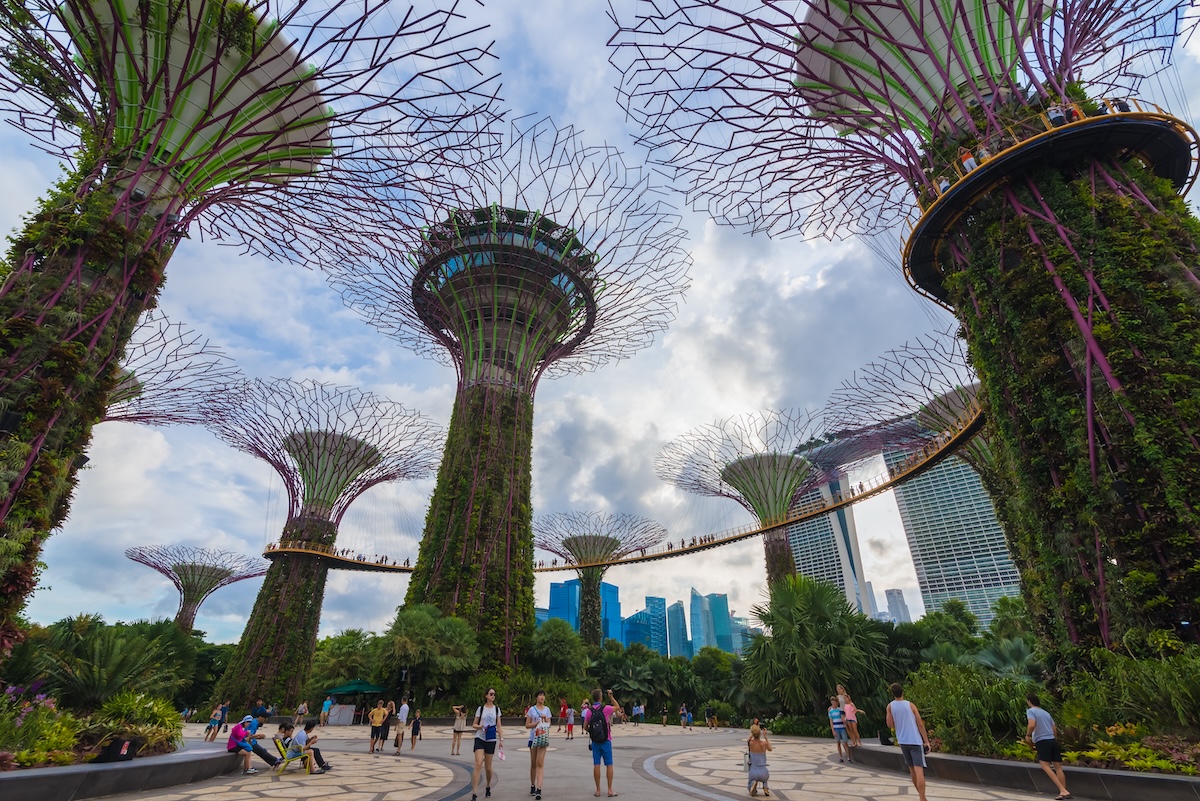
In Marina Bay, Gardens by the Bay turns 250 acres of reclaimed land into a botanical playground straight out of a dream. The Supertrees—vertical gardens up to 160 feet tall—collect rainwater and generate solar power. At night, they light up with a show that’s honestly worth the trip all by itself.
You’ll want to visit the climate-controlled conservatories, especially the Cloud Forest and Flower Dome. The Cloud Forest has the world’s tallest indoor waterfall, while the Flower Dome recreates Mediterranean and semi-arid climates for plants from five continents. These glass biomes use advanced cooling that cuts energy use by 30% compared to standard systems. Since opening in 2012, the gardens have become a model for how cities can weave nature and architecture together—something more places could probably use.
18. Auditorio de Tenerife, Spain
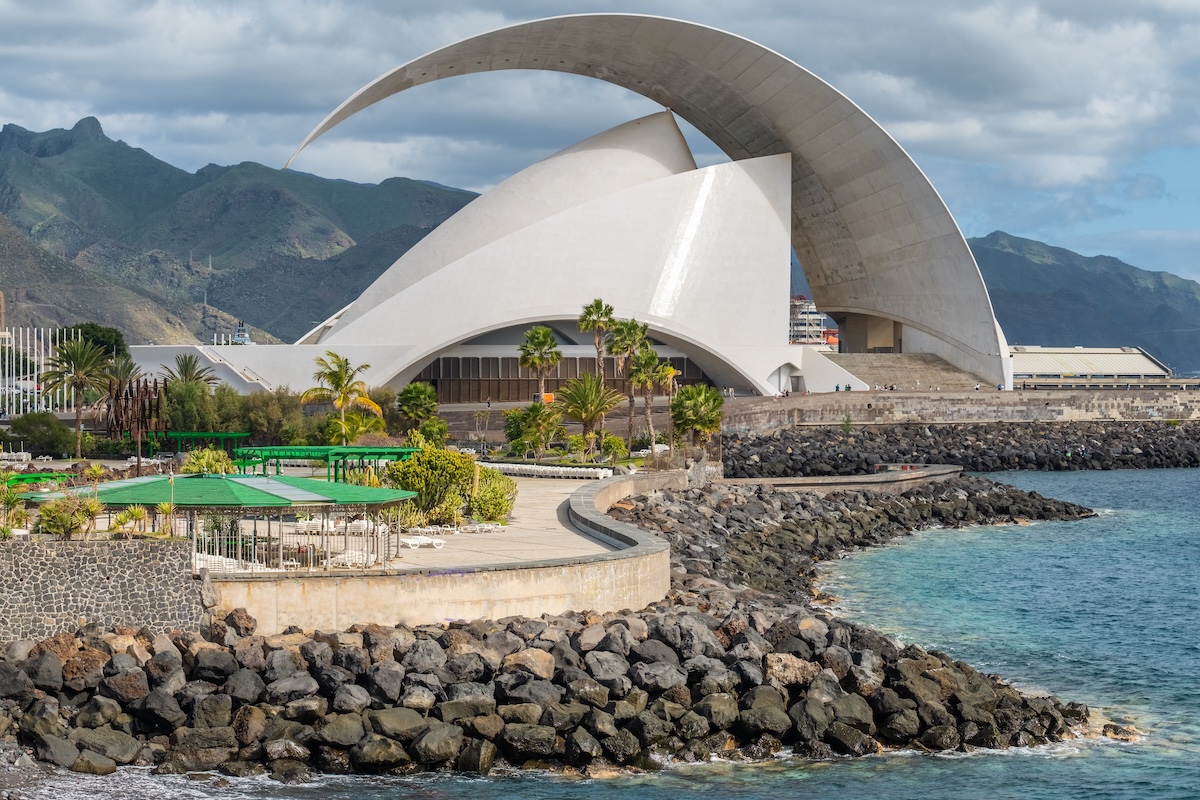
On the Atlantic edge in Santa Cruz de Tenerife, this concert hall stands as one of Spain’s most recognizable modern landmarks. Santiago Calatrava designed it, finishing in 2003. The building’s dramatic roof arcs overhead like a massive wave—or maybe a sail, depending on your mood. Its white concrete shell and sweeping lines make a bold silhouette against the island’s blue skies.
You can catch everything from classical symphonies to contemporary gigs in its two main halls. The larger auditorium fits about 1,600 and is home to the Tenerife Symphony Orchestra. There’s also a smaller chamber hall for more intimate shows. The outdoor terraces and plaza give you stunning views of the harbor and Mount Teide, so you don’t even need a ticket to enjoy the setting.
17. Fondation Louis Vuitton, Paris, France
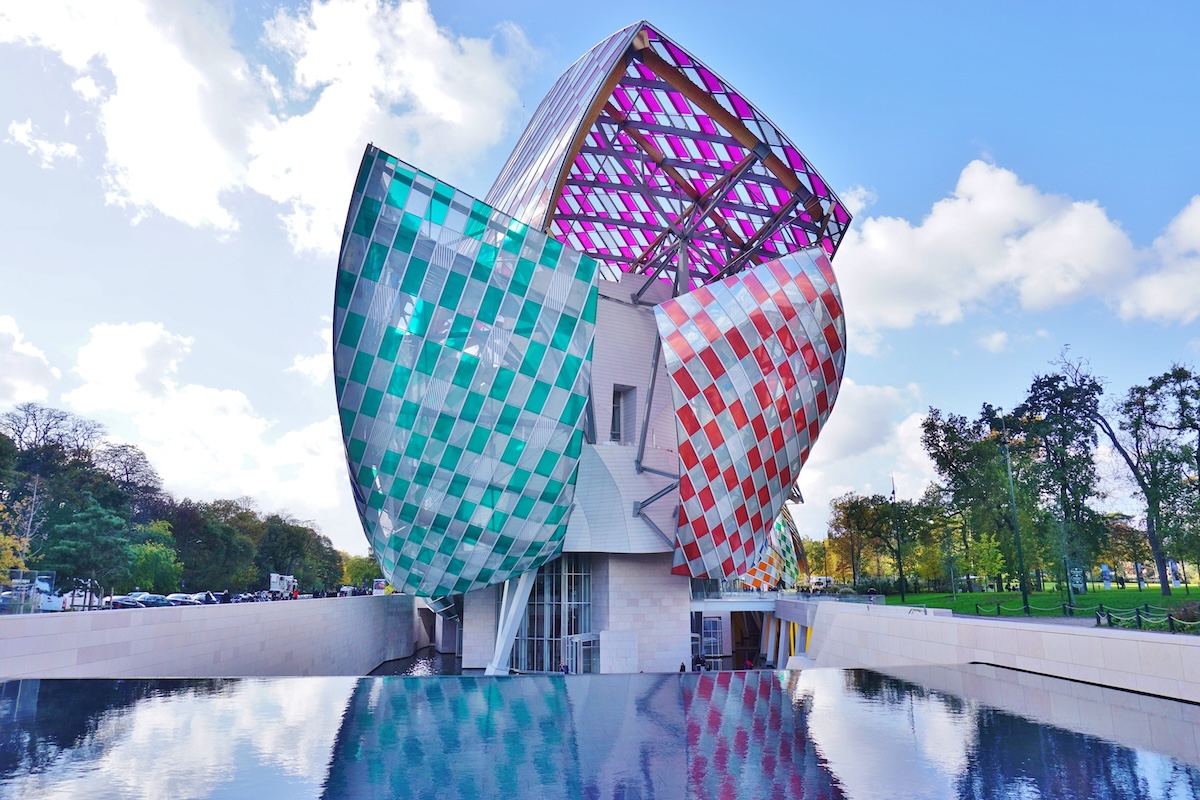
In the Bois de Boulogne, Frank Gehry left his mark with this contemporary art museum. Twelve glass sails billow and twist, making the whole building look like it’s in motion, especially as the daylight shifts. Gehry used 3,600 glass panels held up by wooden beams and steel frames to create this ship-like effect.
Inside, eleven galleries spread across several levels show off both permanent collections and rotating exhibitions. The museum opened in 2014 and quickly became a favorite for photographers. The transparent walls blur the line between inside and outside, giving you glimpses of the gardens and city as you wander through.
16. Walt Disney Concert Hall, L.A., USA
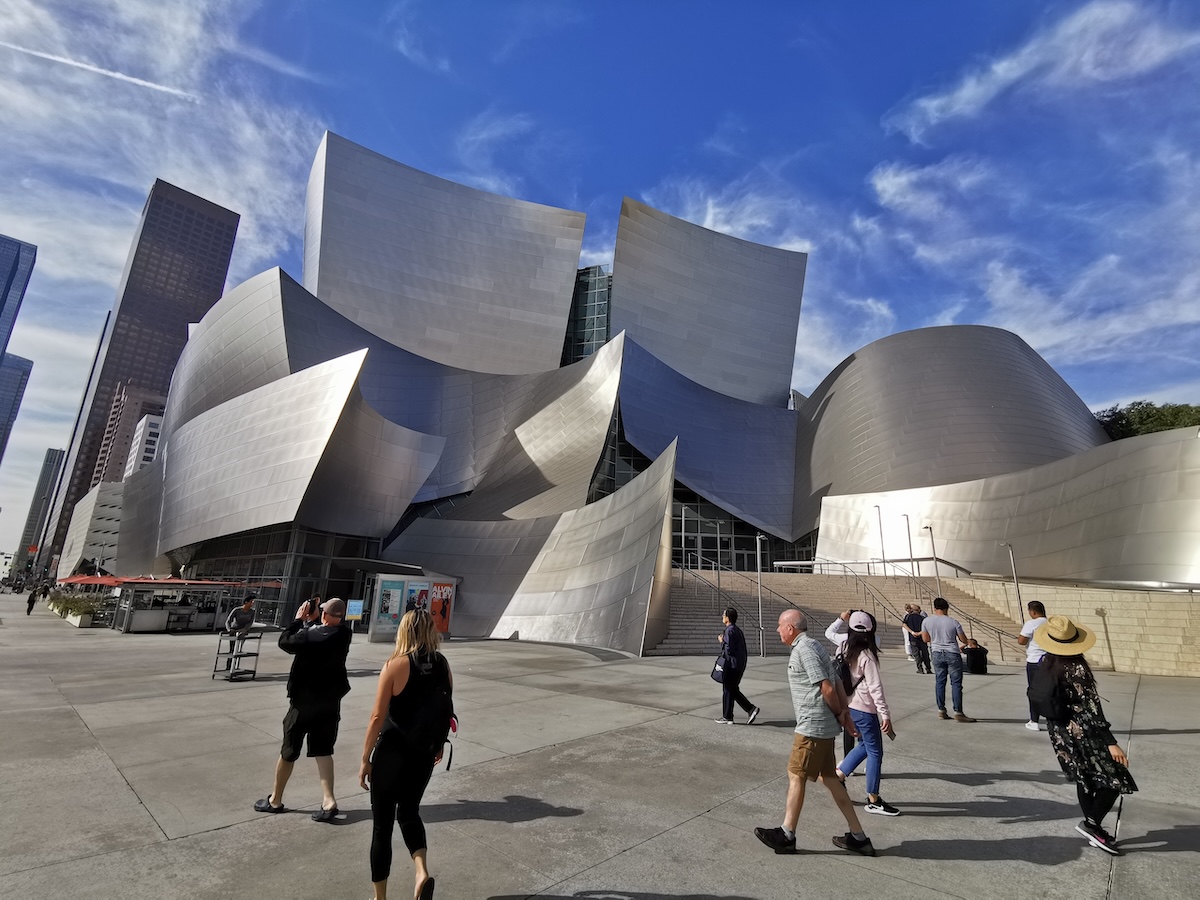
Downtown Los Angeles is home to this stainless steel marvel, designed by Frank Gehry and finished in 2003. The building’s metallic curves catch the light in new ways every hour, making it a living part of the city’s skyline. Step inside, and you’ll find a 2,265-seat auditorium wrapped in Douglas fir, creating acoustics that musicians and critics rave about.
The Los Angeles Philharmonic calls it home, and since opening, it’s reshaped LA’s cultural scene. You can take a guided tour or just wander around the gardens and exterior. The Blue Ribbon Garden, with its fountain honoring Lillian Disney, offers a quiet spot and some pretty unique views of the architecture.
15. Burj Al Arab, Dubai
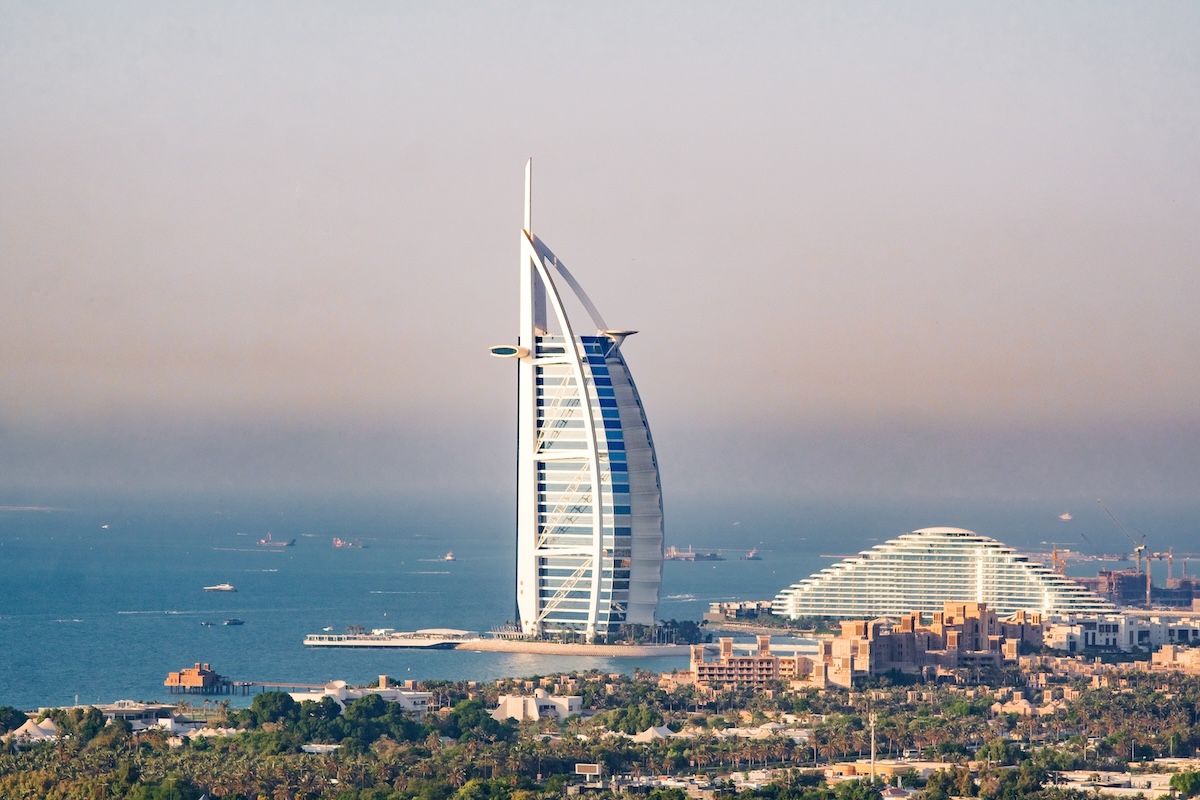
You’ve seen the sail-shaped tower in photos, but in person, the Burj Al Arab’s engineering is even more impressive. Rising 321 meters from its own artificial island, it’s one of Dubai’s most famous landmarks. The curved design isn’t just for show; it stabilizes the building against fierce coastal winds. The double-skinned facade, covered in Teflon-coated fiberglass, keeps the heat at bay during the day and turns into a glowing canvas at night.
Inside, the atrium stretches the full height of the building, making it one of the tallest hotel interiors anywhere. There’s a cantilevered helipad 27 meters out from the edge, which has hosted everything from tennis matches to publicity stunts. The tower sits 280 meters offshore, connected by a private bridge, so the approach gives you sweeping views of the Gulf and the city.
14. Elbphilharmonie, Hamburg, Germany
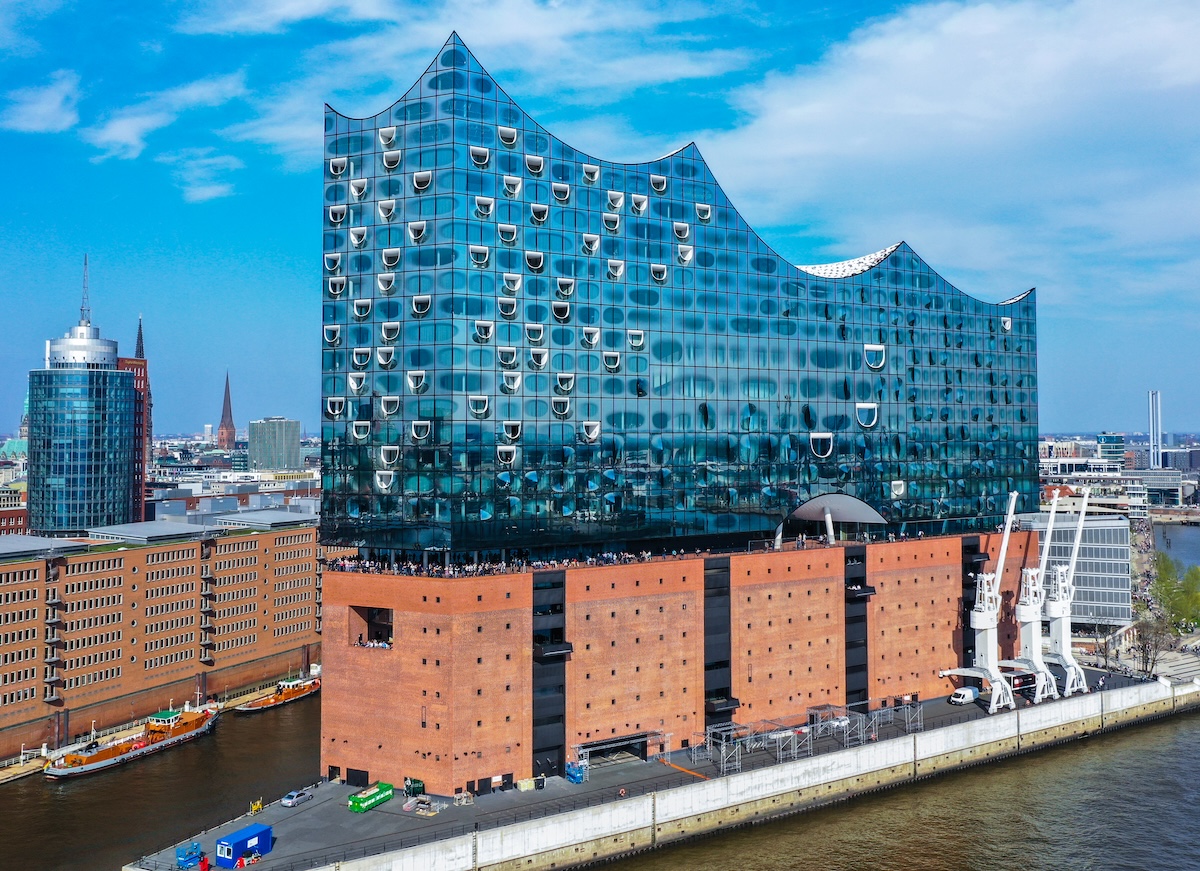
Hamburg’s Elbphilharmonie rises above the city’s old warehouse district, right on the Elbe River. The building stands 110 meters tall, with a wavy glass structure set atop a former cocoa warehouse from the 1960s. When you walk up, you’ll see how the design blends old brick with new glass—kind of a meeting of past and present. The concert hall opened in 2017 after a long construction saga and instantly became a Hamburg icon.
Inside, the main hall seats 2,100, and the acoustics are so well engineered that no seat is more than 30 meters from the conductor. The building also includes a smaller recital hall, a hotel, apartments, and a public viewing platform called the Plaza. From 37 meters up, you get panoramic views of the city and harbor. Musicians and architecture fans from all over the world flock here, and with good reason.
13. Beijing Daxing International Airport, China
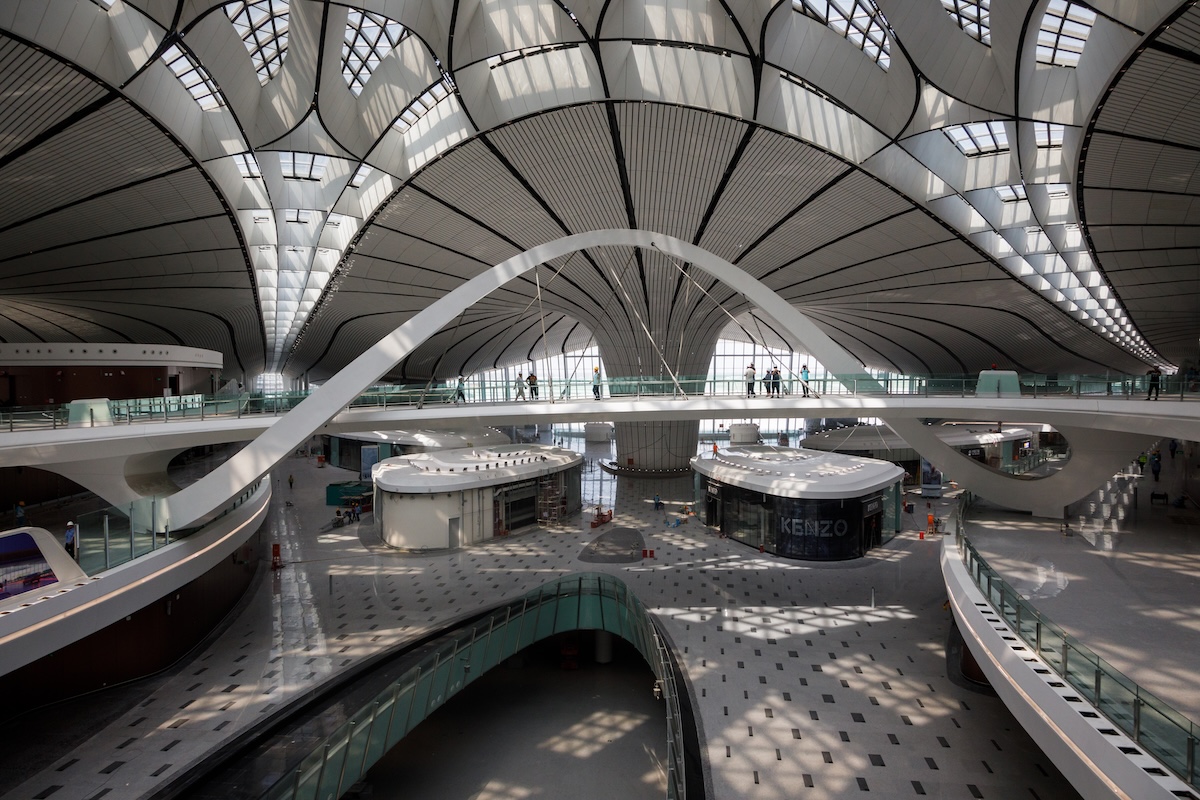
Seen from above, Beijing Daxing International Airport looks like a giant starfish spreading out south of the city. The late Zaha Hadid designed it, and the airport opened in 2019. Her signature curves give the terminal a futuristic vibe—it feels more like a sculpture than an airport. Six arms radiate from a central courtyard, so you can walk to the farthest gate in just eight minutes.
The terminal’s roof is one of the world’s largest single pieces, held up by just eight columns, which keeps the space open and airy. Skylights flood the place with natural light, cutting down on the need for artificial lighting. The airport can handle up to 72 million passengers a year, with plans to go even higher. If you’re passing through, the design makes even a layover feel like an experience, not just a wait.
12. Lotus Temple, India
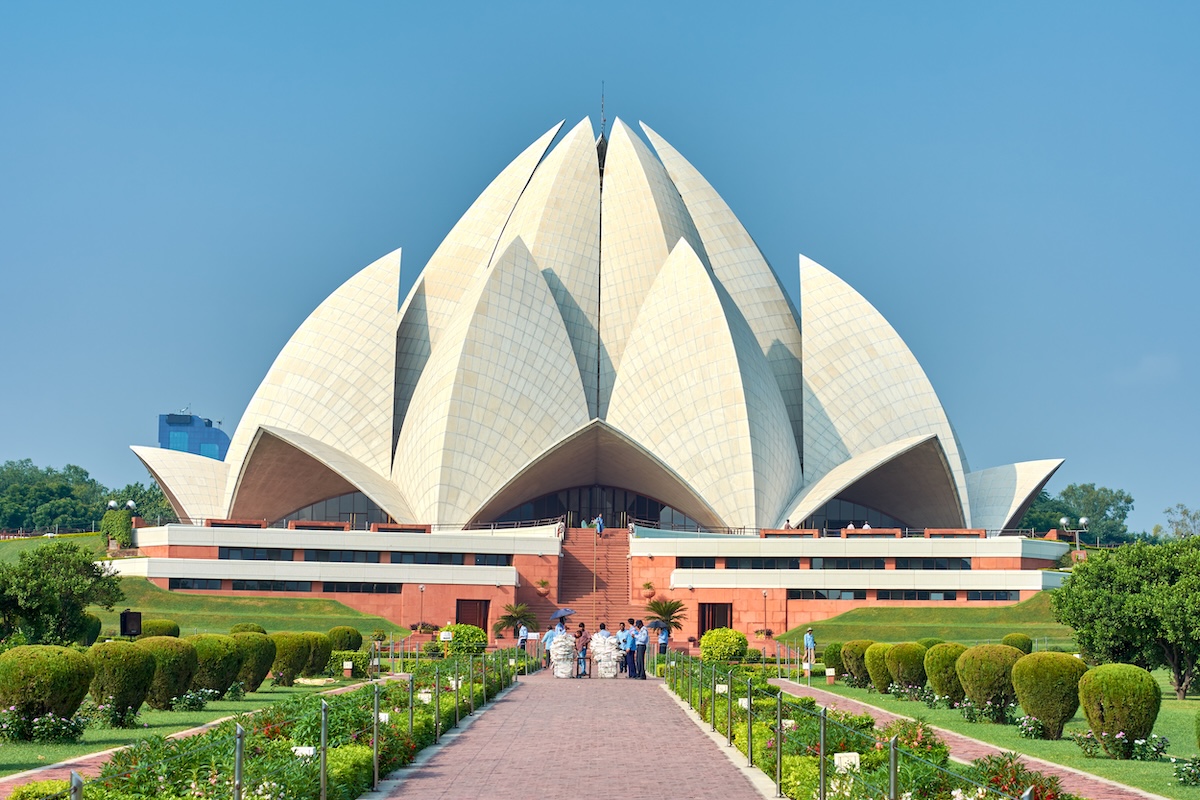
In New Delhi, the Lotus Temple rises from reflecting pools with 27 white marble petals. Finished in 1986, this Bahá’í House of Worship welcomes people of all backgrounds to meditate in silence. The building’s nine sides stand for unity and inclusion, and its marble stays cool even in the brutal Indian heat, thanks to some clever passive cooling.
Inside the 40-meter-high auditorium, you join millions who come for the peaceful vibe. The 26-acre grounds feature nine pools that mirror the lotus shape. There are no sermons or religious symbols—just a quiet space for reflection. The temple has picked up plenty of architectural awards and, believe it or not, draws more annual visitors than the Eiffel Tower or Taj Mahal.
11. Museum of the Future, Dubai
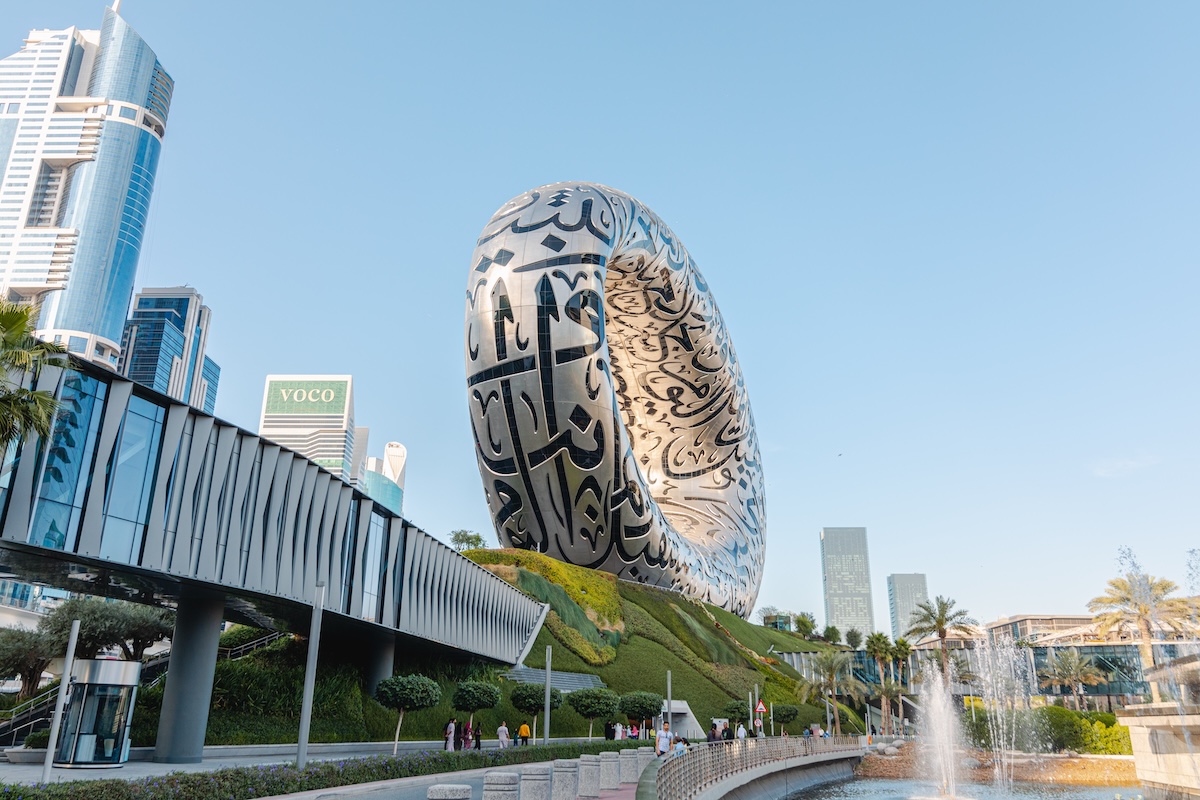
On Sheikh Zayed Road, the Museum of the Future stands out as one of Dubai’s boldest contemporary buildings. The torus-shaped structure rises 77 meters, its stainless steel skin etched with Arabic calligraphy by Mattar bin Lahej—quotes from Sheikh Mohammed bin Rashid Al Maktoum about the future. No traditional columns hold it up; engineers used an innovative approach to create this open, futuristic space.
Inside, exhibitions focus on future tech, climate solutions, and space exploration. Seven floors immerse you in what humanity might face (or invent) over the next 50 years. You can interact with displays about AI, biotech, and sustainability. The oval void in the center represents the unknown future, while the green mound beneath stands for Earth. It’s not your typical museum; the experience feels more like stepping into a sci-fi story about what’s next.
10. CCTV Headquarters, Beijing, China
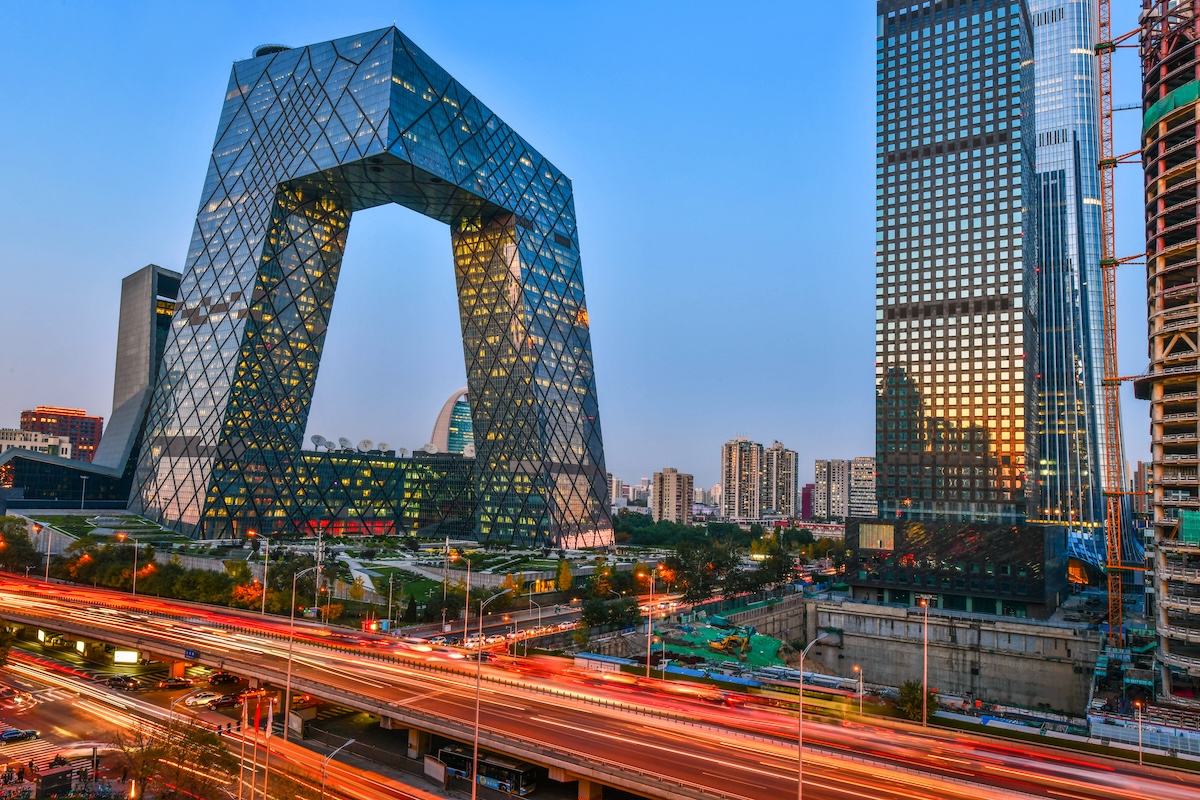
In Beijing’s Central Business District, the CCTV Headquarters rises up—it’s hard to miss. This building doesn’t care much for the usual rules of skyscraper design. Instead, it bends two towers at sharp angles and connects them at both the top and base, forming a giant loop that looks like it shouldn’t even stand. Finished in 2012, the 234-meter-tall structure almost dares you to rethink what “skyscraper” means.
Rem Koolhaas and Ole Scheeren of OMA dreamed up this so-called “twisted doughnut” (or “giant loop,” depending on who you ask) for China’s state television broadcaster. The whole thing is wrapped in an irregular grid—an exoskeleton that actually holds the weight, not just a fancy pattern. From all over Beijing, you can spot this landmark. It’s a bold, almost rebellious piece of architecture, and honestly, it’s tough not to admire the sheer ambition behind it. China was changing fast, and this building wanted everyone to notice.
9. Metropol Parasol, Seville, Spain
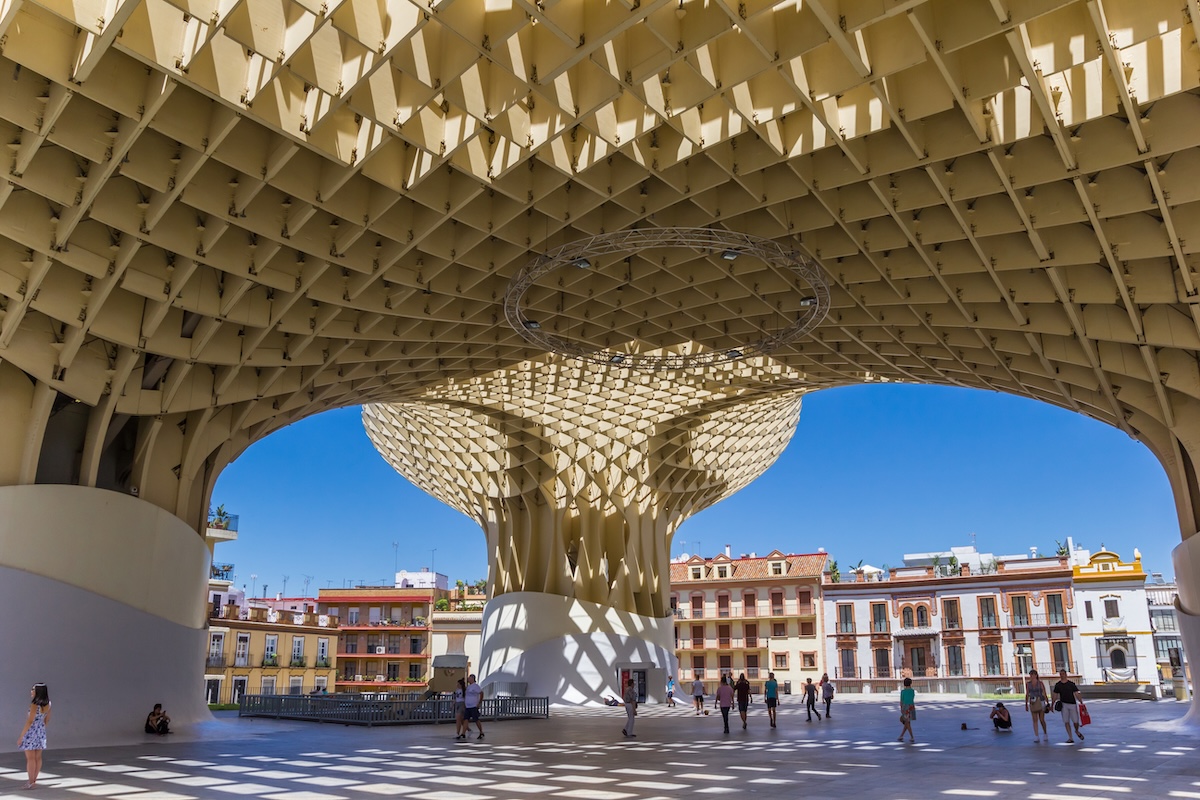
Right in the center of Seville’s old quarter, the Metropol Parasol stretches above Plaza de la Encarnación—a wild, wooden canopy that looks nothing like anything else around. German architect Jürgen Mayer finished it in 2011, and it’s now considered one of the largest wooden structures anywhere. The parasol-shaped forms twist and dip, casting shade and creating a space that’s way more than just a roof.
If you wander through, you can check out an archaeological museum tucked underneath, grab something at the market on the ground floor, or head up in the elevator for the rooftop walkway. Up there, the views across Seville are honestly impressive—you can see the cathedral, the Giralda tower, and a whole lot more. Locals call it Las Setas (“The Mushrooms”) because, well, it kind of looks like a cluster of giant fungi. The structure stretches about 150 meters long, 70 wide, and rises up to 26 meters. It turned a forgotten square into a lively spot where people actually want to hang out.
8. Harpa Concert Hall, Reykjavík, Iceland
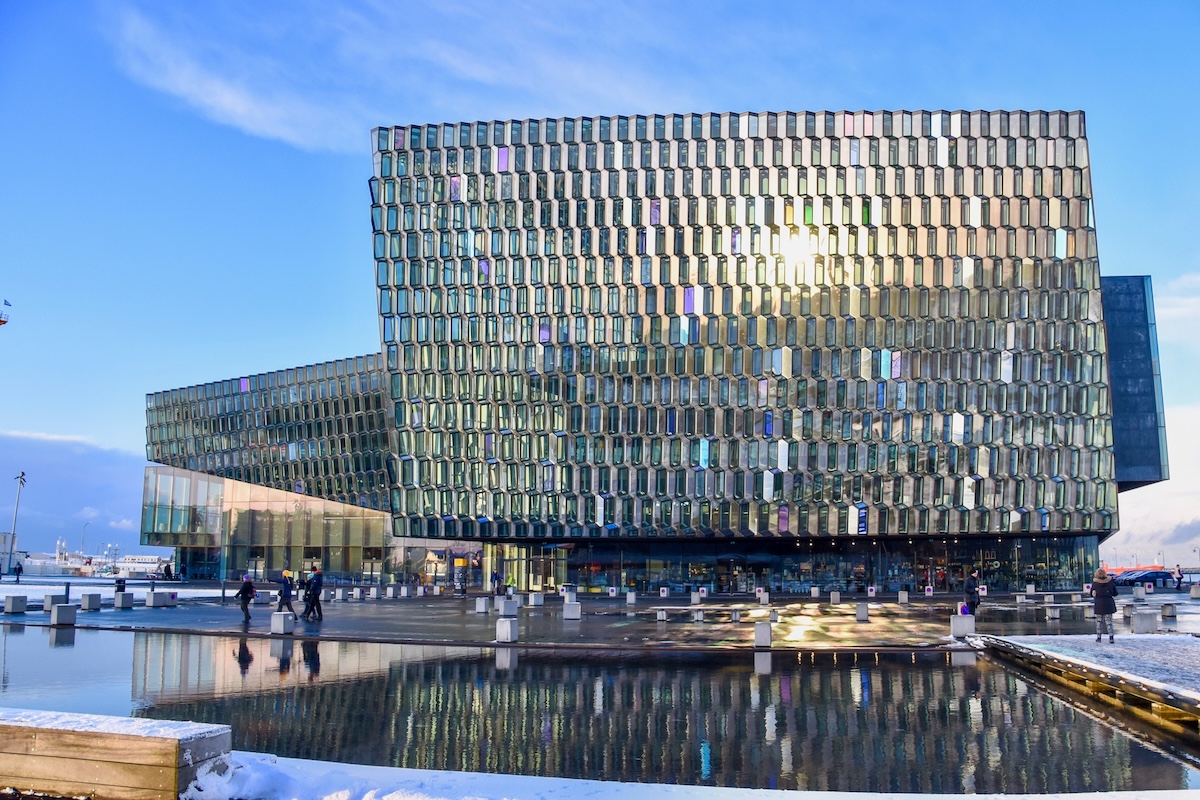
You’ll spot Harpa rising from Reykjavík’s harbor like some crystalline beacon, its glass facade catching your eye right away. Artist Ólafur Elíasson teamed up with Henning Larsen Architects to dream up those geometric glass panels, and honestly, they do wild things with Iceland’s shifting light. The colors on Harpa’s surface change with the sky, the sea, and whatever the weather throws at it—sometimes subtle, sometimes pretty dramatic. If you swing by at night, the whole place glows with LED lights, turning the building into a lantern that really anchors the waterfront.
Step inside, and you’ll find several performance spaces. The Iceland Symphony Orchestra plays here, and it’s also home base for the Icelandic Opera. Since opening in 2011, Harpa has become one of Reykjavík’s most photographed spots—no surprise, really. The interiors keep up the geometric vibe, and the halls are engineered for top-notch acoustics. It’s impressive how Harpa manages to blend into its surroundings while still making a bold statement. That’s Iceland for you: always pushing culture and design forward, but never losing its sense of place.
7. Heydar Aliyev Center, Azerbaijan
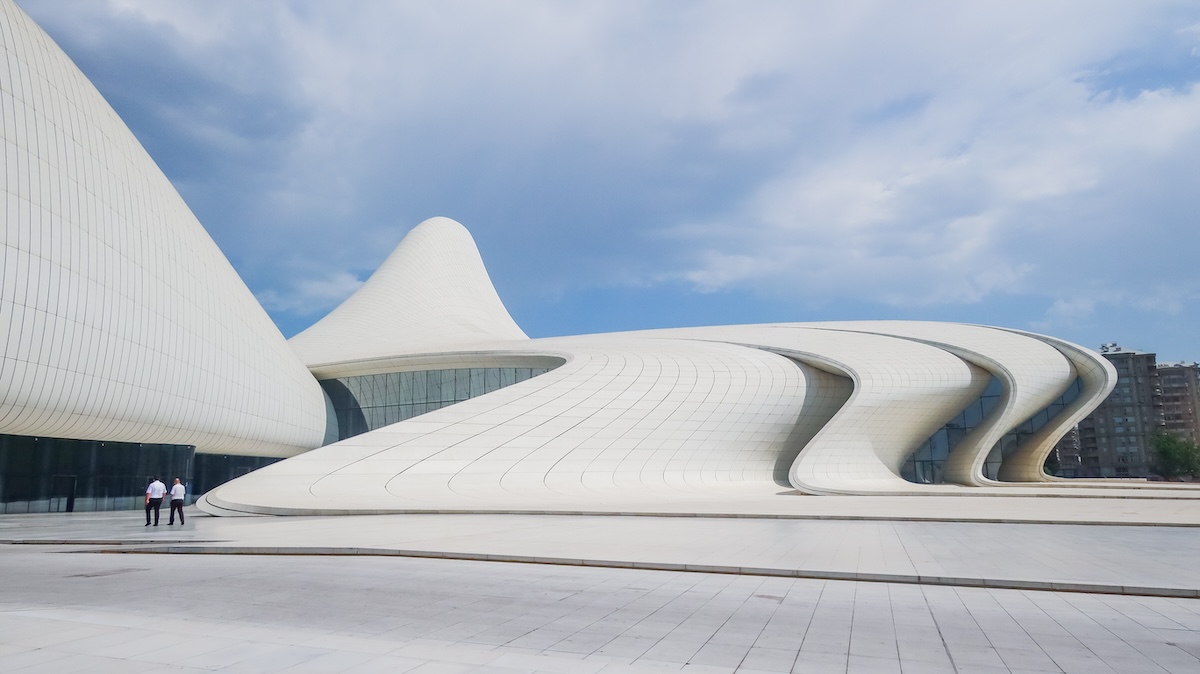
In Baku, the Heydar Aliyev Center rises from the ground like a giant wave frozen in time. Designed by architectural superstar Zaha Hadid, this cultural center completely rejects straight lines and sharp angles in favor of smooth, flowing curves that seem impossible to build. The building appears different from every angle, with a gleaming white exterior that creates a stark contrast against the blue Azerbaijani sky.
Inside, the fluid design continues with walls that flow seamlessly into ceilings, creating spaces that feel organic rather than constructed. The center hosts exhibitions, conferences, and performances in spaces that melt into one another. What makes this structure truly revolutionary is how it challenged the Soviet architectural style that dominated the region for decades. Instead of imposing concrete blocks, Hadid created a building that feels like it’s in constant motion.
6. Louvre Abu Dhabi, United Arab Emirates
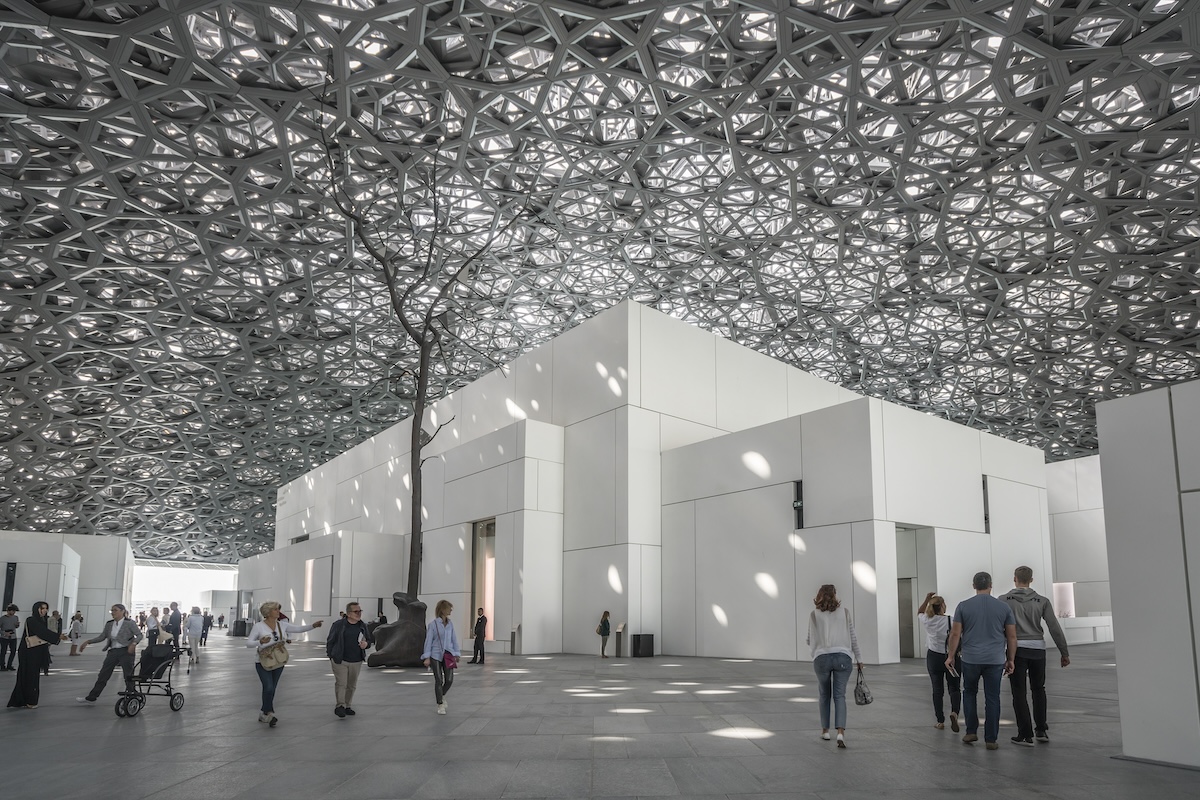
Although its Parisian big sister is incomparably famous, Louvre Abu Dhabi doesn’t hold back. Architect Jean Nouvel created a 180m-wide dome that appears to float over the museum’s galleries, where it brings a “rain of light.” The pattern is so intricate that visitors experience different light shows depending on the time of day – a living artwork covering the actual artworks.
The museum itself has parts of the structure extending into the sea, creating a “museum city” of interconnected buildings and waterways. Unlike its European counterpart, this Louvre embraces its waterfront setting, with the Arabian Gulf becoming part of the visitor experience. The contrast between the ultramodern dome and the traditional Arabic architectural influences creates a space that feels both futuristic and timeless. It’s perhaps the only museum where the building competes with the priceless art collection for your attention – and often wins.
5. World Trade Center Station, USA
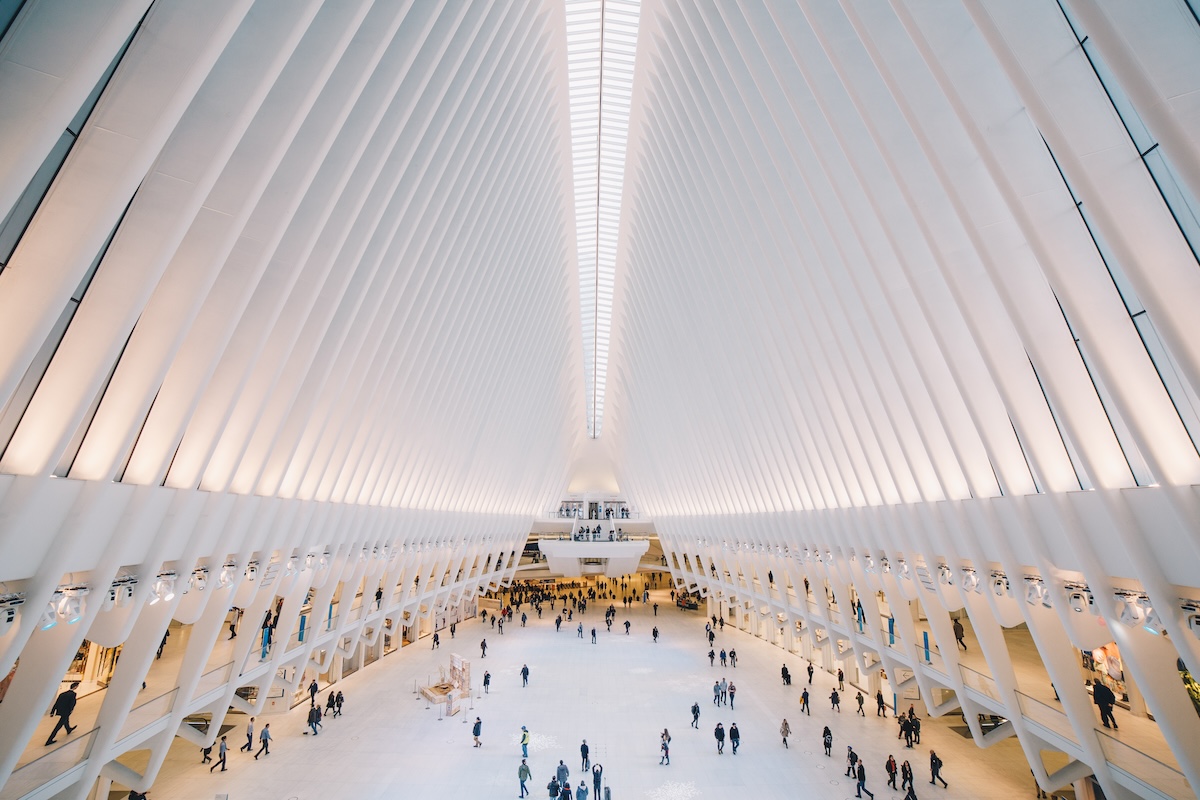
Rising from the sacred ground of Lower Manhattan, the World Trade Center Transportation Hub (nicknamed the Oculus) looks like a giant dove taking flight and was designed by Santiago Calatrava as a memorial and a monument to resilience. The massive white ribs of the structure stretch upward, creating a cathedral-like space that transforms a mundane subway station into something transcendent.
Inside, the soaring central hall is flooded with natural light from the glass spine that runs along the roof. On September 11th each year, this skylight opens creating a dramatic beam of light at the exact time the first plane hit. Though controversial for its hefty price tag, the station offers something rare in bustling New York: a moment of pause and reflection. It proves that even the most utilitarian spaces – like subway stations – can be transformed into something extraordinary.
4. Marina Bay Sands, Singapore
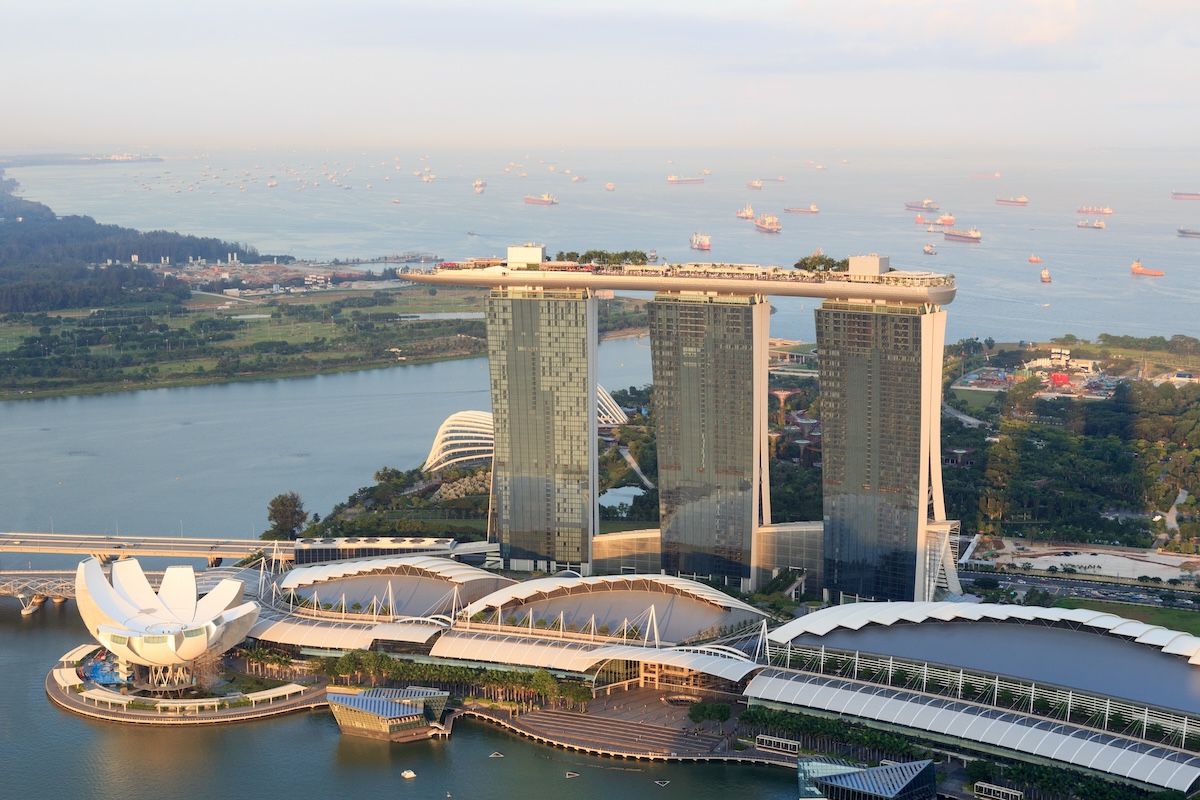
This hotel is to the Singapore skyline what the Burj Khalifa is to Dubai. The structure features three 55-story hotel towers connected at the top by the SkyPark – a 340-metre-long platform that extends beyond the towers, seemingly defying physics. This aerial plaza houses one of the world’s most photographed infinity pools, where swimmers can paddle to the edge and gaze across Singapore’s skyline (no thanks!).
Below, the complex houses a massive casino, luxury shopping mall, convention center, museum, theaters, and countless restaurants. The building completely transformed Singapore’s waterfront and has become the city-state’s defining landmark. What makes Marina Bay Sands truly special is how it created usable space where none should exist; in gaps between towers! It’s architecture that makes you question whether the laws of gravity were merely suggestions all along.
3. Sydney Opera House, Australia
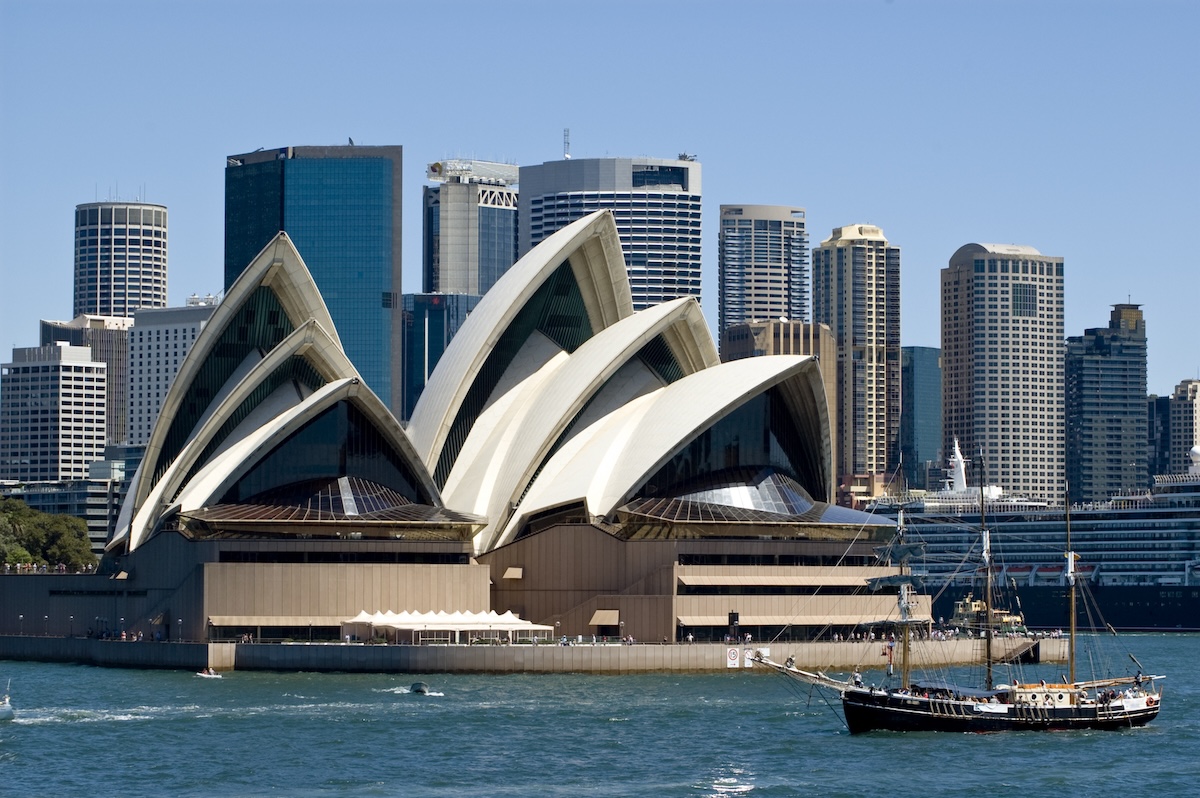
Sometimes a building becomes so iconic that it’s impossible to separate it from its city, and nothing says “Sydney” like those gleaming white sails perched at the edge of the harbor. The Opera House, designed by Danish architect Jørn Utzon, was revolutionary when completed in 1973 and remains just as striking today. Those distinctive shell-shaped sails aren’t just aesthetic and they also solve complex acoustic and spatial challenges while creating one of the world’s most recognizable silhouettes.
What many visitors don’t realize is that the Opera House looks different depending on your vantage point – from some angles, the shells appear as separate elements; from others, they seem to flow together as one cohesive structure. Despite being one of the older structures on this list, the Opera House remains thoroughly modern in its approach to integrating architecture with its dramatic harbor setting, creating a building that feels like it couldn’t possibly exist anywhere else in the world.
2. National Centre for the Performing Arts, China

In Beijing, a giant egg floats on an artificial lake. This is the National Centre for the Performing Arts, locally known as “The Giant Egg,” a titanium-and-glass dome surrounded by water on all sides. Designed by French architect Paul Andreu, this 212-metre-long ellipsoid structure appears to hover above the reflecting pool, accessible only via an underwater corridor that gradually brings visitors from the busy streets of Beijing into a serene artistic space.
What makes this structure particularly striking is its bold placement near the ancient Forbidden City and Tiananmen Square, creating a dialogue between China’s imperial past and its modern ambitions. At night, the transparent dome glows from within, turning the entire structure into a massive lantern reflecting on the surrounding water.
1. Guggenheim Museum, Spain

Before the Guggenheim, Bilbao was a struggling industrial that very few tourists could place on a map. After the Guggenheim, it became architectural shorthand for how one building can transform an entire city’s fortunes. Frank Gehry’s masterpiece looks like no museum you’ve ever seen – a swirling composition of titanium curves that catch the light like fish scales. The structure seems to change shape as you walk around it, with no clear front or back, just continuous flowing forms that somehow work together despite seeming random.
Inside, massive gallery spaces allow for art installations that wouldn’t fit in conventional museums, while the atrium soars nearly 50 meters upward, creating a cathedral-like space for contemporary art. The “Bilbao Effect” has inspired cities worldwide to invest in statement architecture, but few have achieved what the original did: creating a building so extraordinary that people travel thousands of kilometers just to see the container, regardless of what art it contains.