
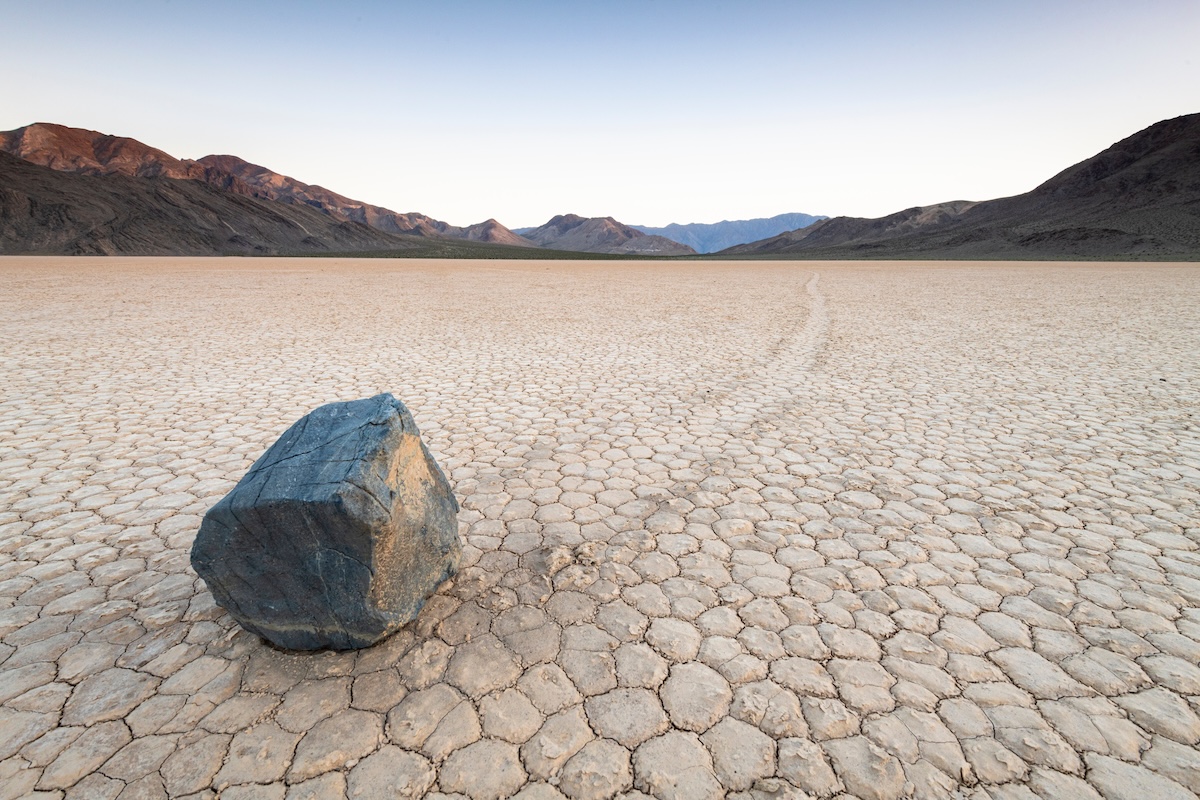
Somewhere in the remote desert, hundreds of rocks sit on a perfectly flat dry lakebed with long trails scratched into the mud behind them. Nobody pushes them. Nobody pulls them. Yet they move—sometimes drifting hundreds of meters across the playa floor, leaving everyone guessing.
Racetrack Playa in Death Valley is one of those rare places that feels like a riddle. The dry lake sits at about 3,700 feet, wedged between the Cottonwood Mountains and the Last Chance Range. It’s about 27 miles down a rough, unpaved road—one that eats up tires and spits out cell service before you really get started. If you get a flat out there, well, you’re on your own. The drive’s a real commitment, and honestly, it’s not for the faint of heart.
Still, thousands of people make the trip every year. They come for the sailing stones, the kind of silence that’s so big it almost feels loud, and the jaw-dropping scale that never quite fits in a photo. If you’re on the fence about braving that long, bone-rattling drive, I’d say Racetrack Playa is a must for anyone who loves strange geology, wide-open solitude, and landscapes that barely feel like Earth.
What Makes The Playa So Unusual
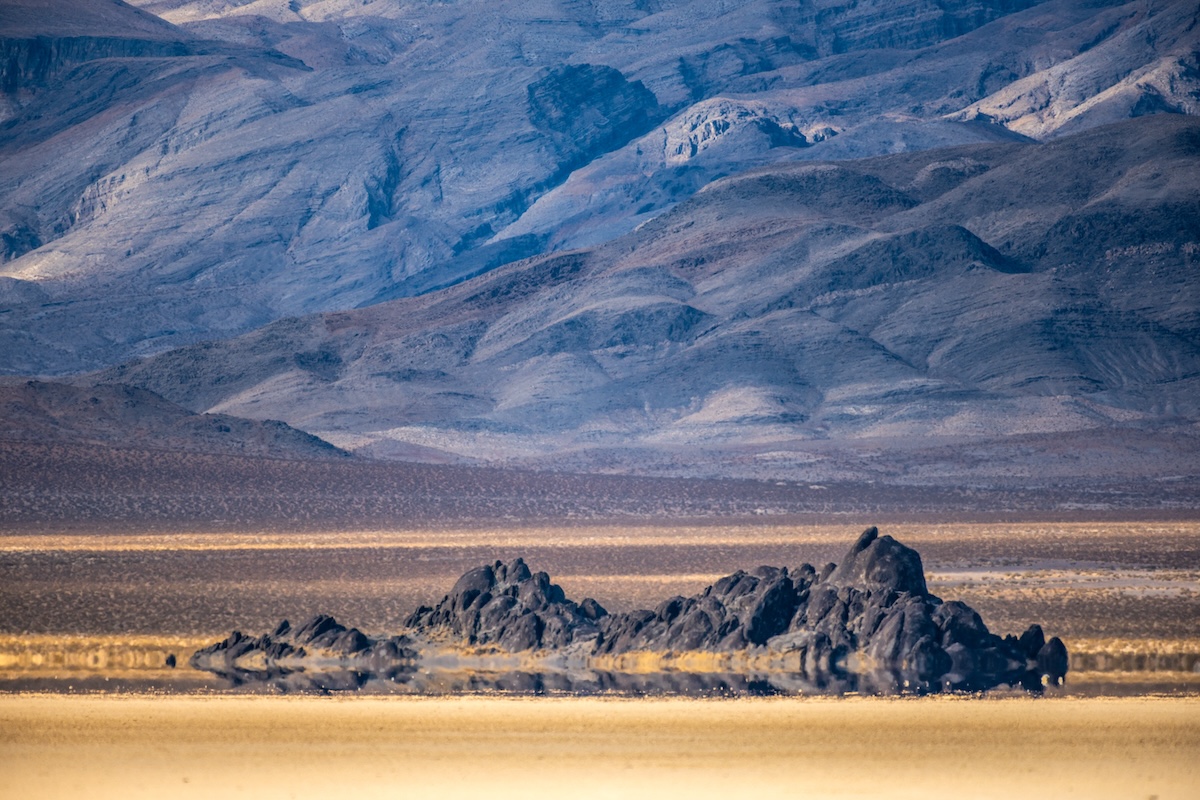
Racetrack Playa stretches about three miles long and two miles wide, and the surface is just ridiculously flat. From north to south, the elevation only changes by around 1.5 inches. When the lakebed dries after one of those rare rains, the mud cracks into a patchwork of polygons that makes the playa look almost like a giant, tiled floor.
Scattered across that surface, you’ll spot rocks of all sizes—some just fist-sized, others boulders tipping the scales at 700 pounds. Each one drags a groove through the dried mud, sometimes straight as an arrow, sometimes curving or looping back on itself. These trails can run for hundreds of meters. Some rocks even seem to glide in parallel, like they’re following some secret cue only they can hear.
What really sets Racetrack Playa apart from other dry lakebeds? It’s this weird mix: the mind-boggling flatness, the cracked geometric surface, and the fact that these heavy stones leave tracks behind with no obvious explanation. You can walk right up to a rock, stare at the groove it carved, and still have no clue how it slid across the ground. The playa sits in a natural wind corridor between two mountain ranges, and that wind is a big piece of the puzzle.
How Scientists Explained The Tracks
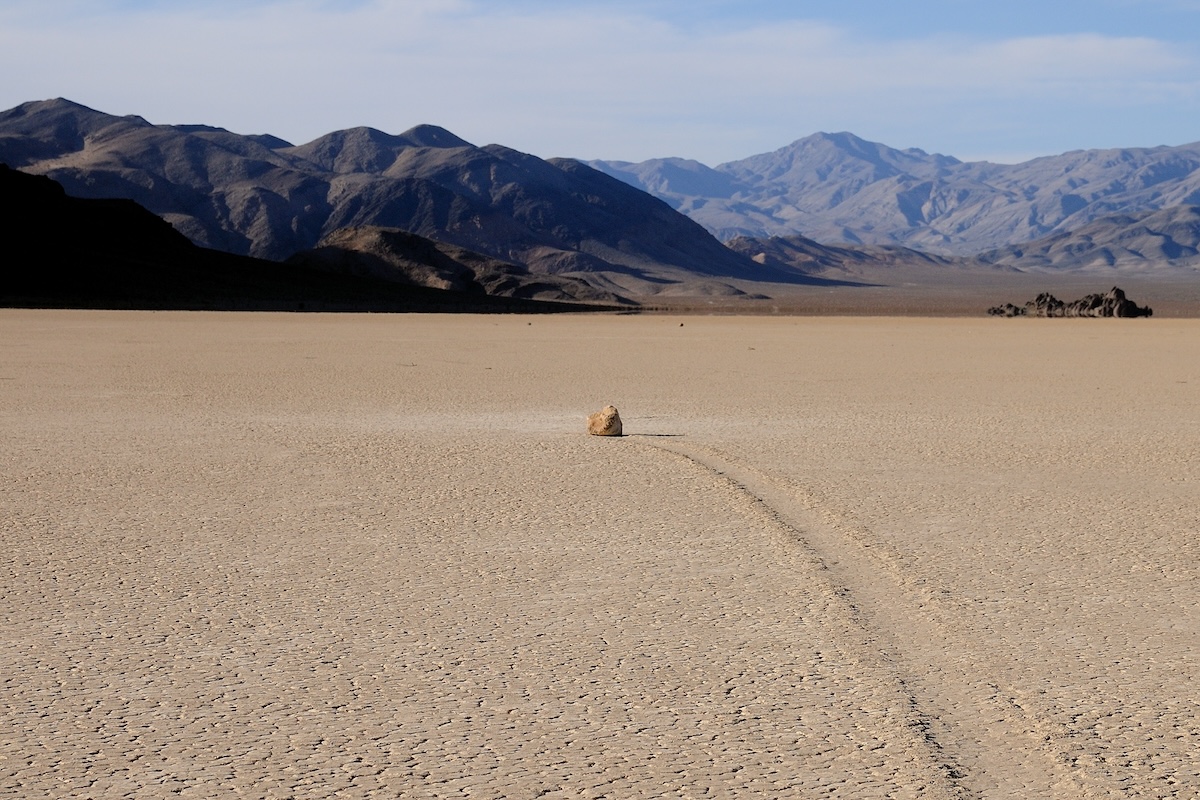
For decades, people tossed around ideas—magnetic fields, dust devils, pranksters with ropes. But in 2014, researchers from Scripps Institution of Oceanography finally caught the rocks in the act. They watched them move and even managed to get it on camera and GPS.
The whole thing depends on a weird, specific chain of events. Rain needs to fill the playa with just a thin layer of water, maybe a couple inches at most. Then, overnight, it gets cold enough for a sheet of ice to form over the surface. When the sun comes up, the ice starts breaking apart into big panels. Even a light breeze, around 10 miles per hour, can push those ice sheets across the slick, muddy ground. The ice bumps into the rocks and nudges them along, scratching out trails in the wet mud underneath.
The rocks don’t exactly zoom. They creep along—maybe a few inches per second. You’d need some patience and probably a bit of luck to actually see it happen. Once the water dries up and the mud hardens, those trails stick around for years.
It’s a rare show. Everything—rain, freezing temps, thin ice, wind—has to line up just right, and that only happens a few times a year, usually in winter. By the time people show up, the ice and water have vanished, leaving only the rocks and their odd, sun-baked tracks behind.