
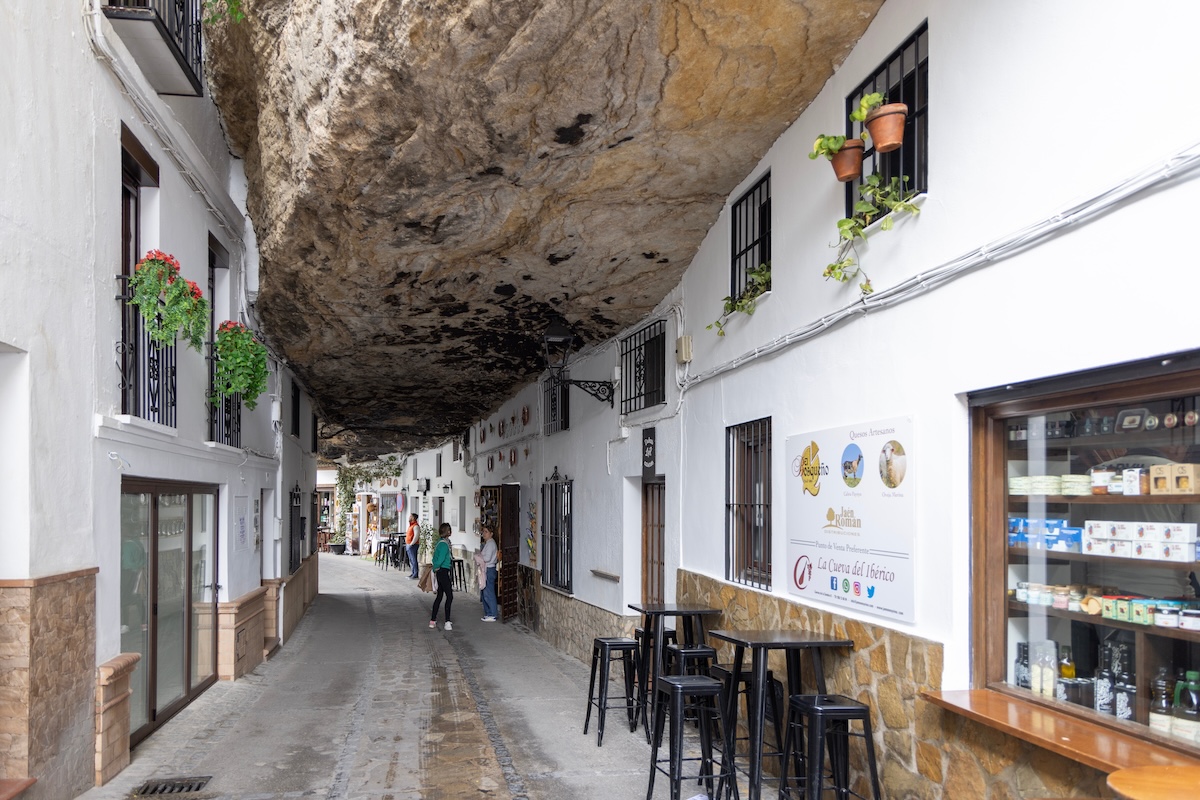
Somewhere in the province of Cádiz, a whole town just melts into the rock. Streets dip beneath huge stone overhangs. Whitewashed houses lean right into the cliff face, and in some spots the basalt ceiling hangs so low you could almost brush it with your hand. This is Setenil de las Bodegas, Spain—a small Andalusian village of roughly 2,600 people that really doesn’t look like anything else on the pueblos blancos route.
Most of Andalusia’s famous white villages perch on hilltops or ridges, their houses stacked high for defense. Setenil went in the opposite direction. Over thousands of years, the Río Guadalporcún carved a deep gorge through the landscape, hollowing out overhangs and natural shelters. Instead of building on top of the rock, people here just built right into it, turning the gorge itself into a lived-in neighborhood. You walk around and honestly, sometimes it’s hard to say where the cliff ends and the house begins—geology and architecture blur together in a way that feels almost accidental.
Chances are, your first look at Setenil will be from above, peering down at a ribbon of white façades tucked beneath a dark slab of stone. It’s a pretty weird, magnetic sight, and it gets even better once you wander inside.
What Makes The Town So Unusual
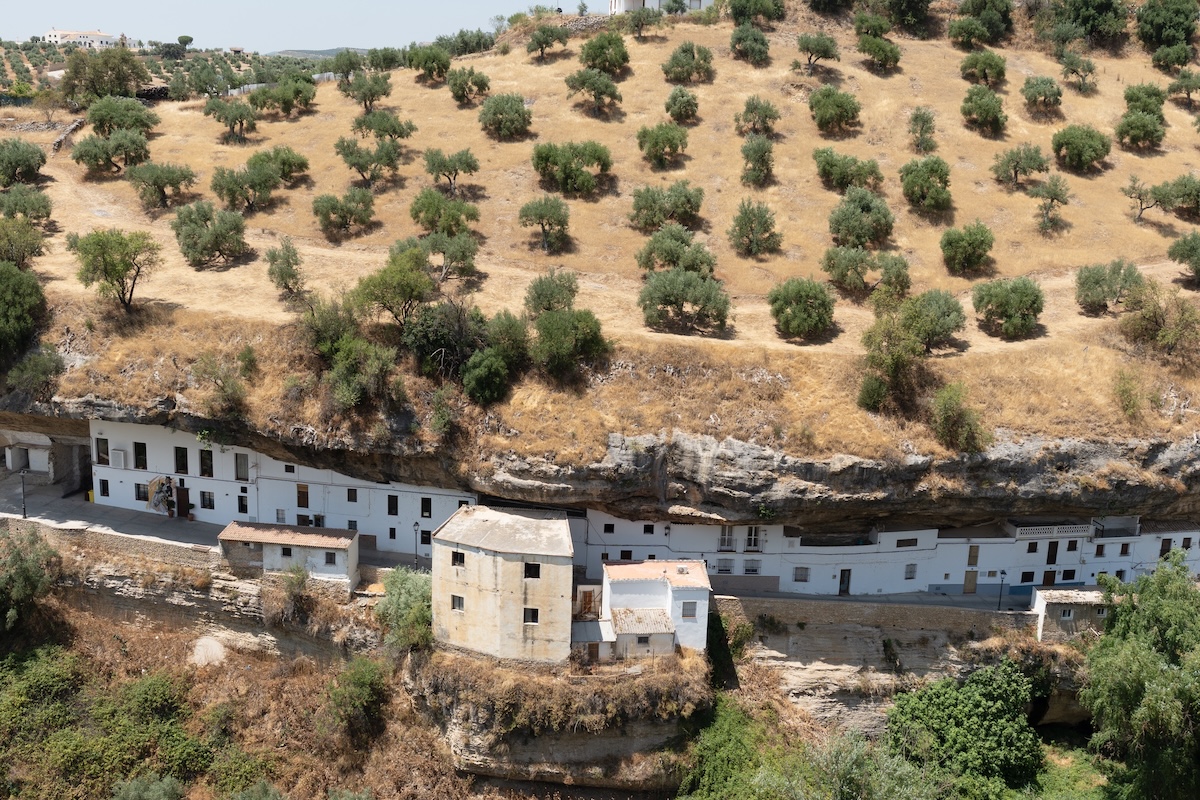
The thing that sets Setenil de las Bodegas apart from other pueblos blancos isn’t just the scenery—it’s how the whole place is put together. In towns like Zahara de la Sierra or Grazalema, whitewashed houses just sit on the land. Here, the terrain is part of the house. Entire rows of homes along the gorge use the rock overhang as a roof, with only a front wall and a door separating the inside from the street. Locals call these places “abrigos bajo las rocas,” or shelters beneath the rocks.
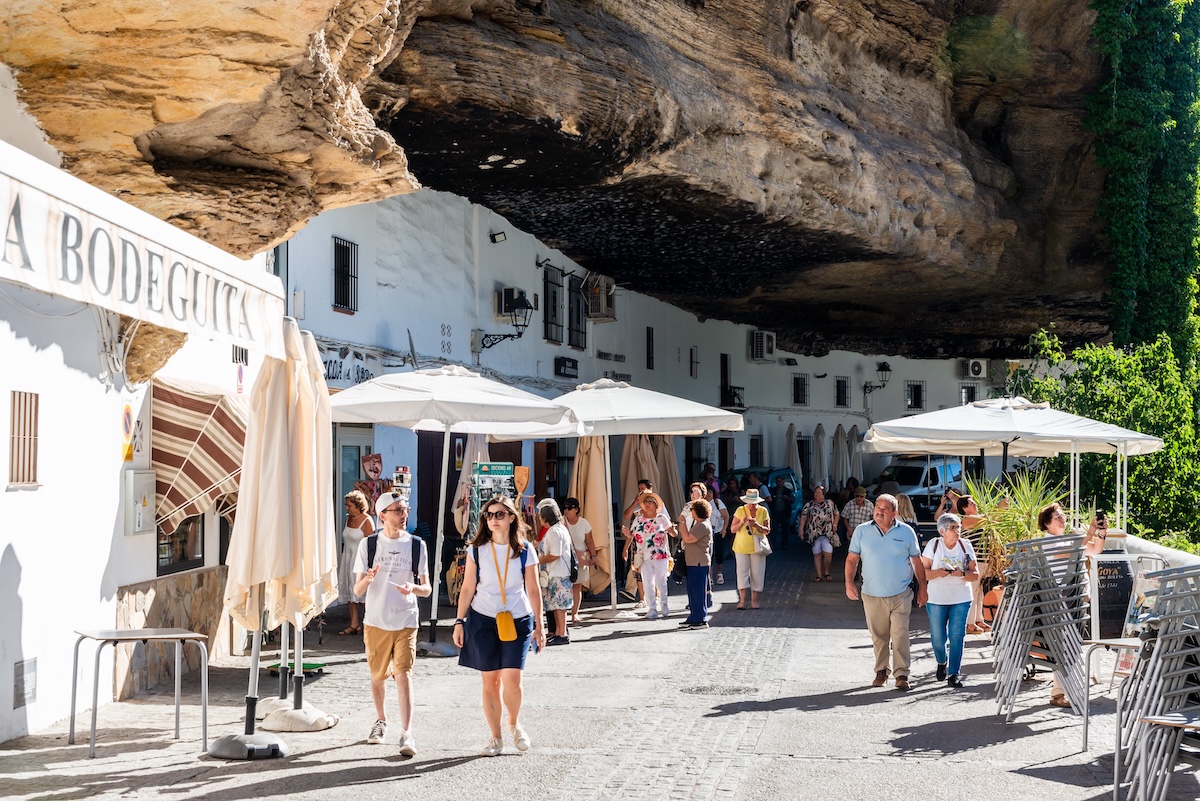
This isn’t some quirky tourist trick or a modern reconstruction. People actually live, cook, and run businesses inside these places. Tapas bars serve plates of local chorizo and almonds under thick ceilings of basalt. Cafés squeeze tables onto narrow lanes where the stone above either blocks out the sun completely or, on the other side, lets it pour in all day. The two most famous streets, Calle Cuevas del Sol and Calle Cuevas de la Sombra, are literally named for that contrast: sun caves and shadow caves, depending on which side of the gorge you’re standing.
The town’s name drops a few hints, too. “Bodegas” means wineries, a nod to a once-busy local wine trade. “Setenil” probably comes from the Latin “Septem Nihil,” or “seven times nothing”—apparently, it refers to the seven failed sieges before Christian forces finally took the town from Moorish defenders in 1484. That kind of stubborn history, mixed with the carved-rock setting, gives the place a weight that feels bigger than its small size.
Walking Through The Old Streets
You can wander through most of Setenil de las Bodegas on foot in an hour or two, but honestly, it’s better to slow down and take it in. Start at the upper part of town near the Torre del Homenaje, the last piece of the old Moorish fortress. From up there, you get a pretty striking view down into the gorge and out over olive groves and almond orchards.
Head down the sloping lanes toward Calle Cuevas del Sol. This is the street you’ve probably seen in a hundred photos—a row of whitewashed houses pressed right up against a massive rock ledge, café chairs scattered along the narrow road. On weekday mornings, it’s mostly locals out and about. Neighbors chat in the doorways, and bar owners set out trays of montaditos. It feels like everyone knows each other.
Cross the river and you’ll find Calle Cuevas de la Sombra, which feels like the shaded twin. The rocky overhang here hangs lower and keeps things cool, almost cave-like, even when the summer sun is relentless. You’ll notice the temperature drop right away—kind of a relief, actually.
Past the famous rock-covered streets, a few small plazas open up with views back toward the gorge. The 16th-century church of Nuestra Señora de la Encarnación anchors one end of the old quarter. Restaurants on the upper streets serve up local favorites like migas, slow-cooked meats, and olive oil from the valley. Grab a midday meal at one of these places—a cold beer, a view over the rooftops—and you get why people fall for this town. It’s small, quiet, and feels honestly lived in. That’s really what makes it worth the detour, isn’t it?