
Cast your mind to a place that looks and feels like Europe but is far cheaper and much less crowded. Europe has that unmistakable charm, with cobblestone streets, pastel buildings, romantic cafes on the sidewalk, and Baroque and Neoclassical cathedrals.
But not all European-esque cities are in Europe. There are plenty of cities across the world that look and feel just like our European favorites. And these places aren’t just arbitrary clones of European cities. Many were shaped by centuries of trade, migration, and colonization, where Europeans settled and left their architectural and cultural marks.
Historically and socially, it’s a little complex. But one thing that isn’t complicated is how beautiful these international cities still are today:
18. Sucre, Bolivia

Sucre sits in South America, but its name comes straight from Europe. It honors Antonio José de Sucre, a Venezuelan general from the independence era. Bolivia calls Sucre its constitutional capital, with about 278,000 residents as of 2018. It’s smaller than La Paz, which handles most government business.
The city perches high in the Andes. Its colonial buildings and whitewashed walls stand out immediately. Many streets could easily pass for old Spanish towns. Spanish colonial roots run deep here. The churches and government buildings echo European designs from centuries ago.
Walking around Sucre feels like wandering through a European city that somehow ended up in the Bolivian mountains.
17. Colónia Tovar, Venezuela

There’s a slice of Germany hiding in Venezuela’s mountains. Colónia Tovar sits 1,800 meters up in Aragua state. German immigrants founded the town in 1843, hoping to build a new farming community far from home.
They brought their culture with them, and it shows. Traditional German architecture lines the streets. Half-timbered houses with red tile roofs make the town feel nothing like the rest of Venezuela.
Spanish mixes with a local German dialect here. Some families have held onto their German traditions for generations. The mountain air stays cool—around 16°C most of the year. It’s a refreshing break from Venezuela’s tropical heat.
Tourism took off in 1964 when the government named it a special interest zone. Now you can grab a pastry at a German bakery or browse local craft shops.
16. Willemstad, Curaçao

One of Europe’s most charming capitals actually sits in the Caribbean. Willemstad, part of the Kingdom of the Netherlands, is nowhere near Europe. This colorful city is Curaçao’s capital. The Dutch built it in the 1600s, and their influence is everywhere.
A stroll through Willemstad might remind you of Amsterdam—if Amsterdam had a beach. Narrow houses in bright yellows, pinks, and blues line the waterfront. The architecture copies classic Dutch style, but with a sunny twist. UNESCO named the city a World Heritage site. The historic downtown shows off centuries of European colonial history in the Caribbean.
You can cross the famous Queen Emma Bridge, which swings open for passing ships. Dutch is still an official language, along with Papiamento and English. Willemstad just proves how far European culture has traveled.
15. Dunedin, New Zealand

One of the most Scottish cities outside Scotland? It’s in New Zealand. Dunedin sits on the southeast coast of the South Island. The city’s name comes from the Gaelic for Edinburgh. Scottish settlers arrived in 1848 and set up shop.
Streets like Princes Street and George Street mirror Edinburgh’s famous roads. The University of Otago could almost pass for a Scottish university. Its Gothic buildings use local stone that echoes Scottish styles.
Scottish street names pop up everywhere, and there’s even a statue of Burns, the legendary poet. Dunedin’s layout follows Edinburgh’s design, with the central Octagon instead of a classic square.
Sometimes you’ll catch a Scottish accent in the local chatter. Plenty of families can trace their roots right back to those first settlers.
14. Villa General Belgrano, Argentina

One of South America’s most authentic German towns sits in Argentina’s Córdoba province. Villa General Belgrano is about 80 kilometers south of Córdoba city, tucked in the Calamuchita Valley. German immigrants founded the town in the early 1900s. They brought their architecture, culture, and traditions along. These days, Bavarian-style buildings line the streets, looking like they were plucked straight from the Alps.
The National Beer Festival is the big event here. You’ll find legit German brews, traditional music, and classic food. Local restaurants serve up schnitzel right alongside Argentine steaks. It really does feel like a European village. The mountains and lakes add to that Alpine vibe. You can wander along streams, hike mountain trails, or just stroll the town center and soak up the blend of German and Argentine life.
13. Montreal, Canada

Montreal honestly feels more European than most cities in North America. The cobblestone streets and French architecture bring Paris to mind. French dominates here. You’ll hear it everywhere—cafes, shops, street corners. Most signs put French first, English second.
Old Montreal could easily pass for a corner of France. Stone buildings line narrow lanes, and church spires poke up between the rooftops. Croissants for breakfast? Absolutely. Sip wine at a sidewalk table and you’ll forget you’re in Canada for a moment.
Montreal’s roots go straight back to France. French settlers founded the city in the 1600s, and that culture stuck. Europe without the jet lag? Montreal gets pretty close. The city mixes French culture with North American ease better than anywhere else I’ve seen.
12. Malacca, Malaysia

You’ll find one of Asia’s most European-feeling cities in Malaysia. Malacca sits on the western coast of peninsular Malaysia. Colonial history jumps out at you everywhere. Portuguese explorers showed up in 1511 and left their fingerprints all over. The Dutch arrived in 1641 and stuck around for more than 150 years.
In the historic center, red Dutch buildings catch your eye. The Stadthuys stands as a prime example. Christ Church could easily fit in Amsterdam. Portuguese flavors pop up in the food and culture. You’ll find dishes that blend European and Asian tastes in ways you probably won’t expect.
The architecture can make you forget you’re in Southeast Asia at all. Colonial shophouses line the streets, and old European-style squares break up the city blocks. Visiting Malacca feels a bit like wandering a European town that somehow drifted into tropical Malaysia. Wild, but true.
11. Valdivia, Chile

Valdivia sits in southern Chile along the Valdivia River. German settlers arrived in the 1850s and left their mark on the city’s culture and architecture. German-style buildings pop up all over the old town. The red-tiled roofs and wooden houses could almost fool you into thinking you’re somewhere in Bavaria.
Every year, the city throws its own Oktoberfest. Local breweries craft German-style beer from old-school recipes. Most folks love dropping by these spots to try a real German lager. German bakeries fill the streets with the smell of pretzels, strudel, and dark bread—honestly, it’s hard to walk by without grabbing something.
Plenty of locals know German as a second language. In some neighborhoods, street signs show up in both Spanish and German, which feels a bit surreal. The countryside nearby rolls with green hills. Dairy farms spread across the land, making cheese and milk the German way.
Hop on a river boat tour and you’ll spot German-built fortresses left from colonial days. It’s a pretty unique slice of history.
10. Stellenbosch, South Africa

Stellenbosch is South Africa’s premier wine-growing region. It’s a small farming town about an hour outside of Cape Town, rimmed by rolling hills and spiraling vineyards. When the Dutch settled in the Western Cape, they brought wine-making techniques and a thirst for good wine with them.
Naturally, Stellenbosch has a huge Dutch influence. You can see it in the whitewashed Cape Dutch architecture, with elaborate gabled homes and farmstead houses that give those in the Netherlands a run for their money. Now a buzzing university town, the streets of Stellenbosch are lined with art galleries and oak trees.
I like to think of Stellies as the perfect blend of European style and African hospitality.
9. Galle, Sri Lanka
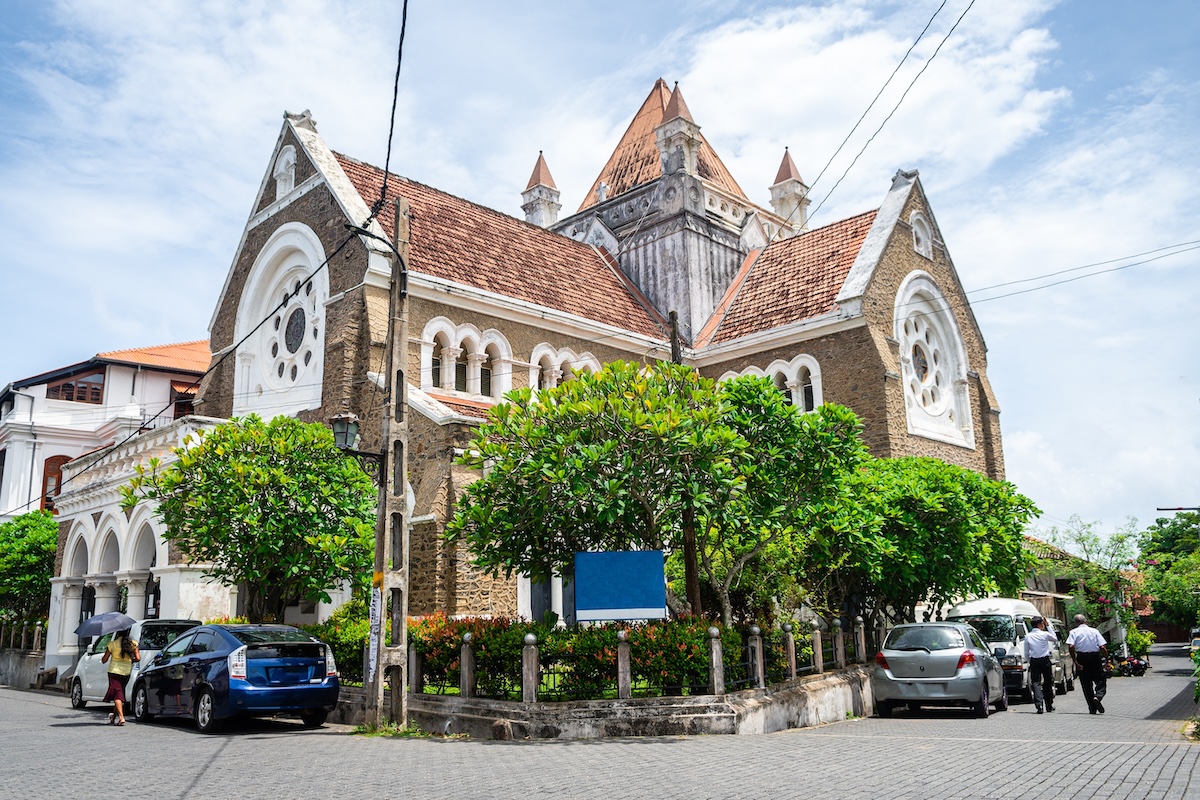
The Portuguese wandered into this trading port in 1589, followed by the Dutch in 1640 and the British in 1796. As a result, the fortified city of Galle draws influence from all corners of the European continent.
The vibe here is peaceful and serene. There is no traffic to speak of, and the locals typically live down-to-earth yet comfortable lives. The cafes and boutique shops feel like they’ve been taken straight from a high street in Europe and planted in the tropical foliage of this south Sri Lankan coastal town.
8. Puebla, Mexico

Mexico’s heritage is intricately connected to Spain, and dozens of cities have a Spanish-colonial core. Puebla is easily one of the most European-esque cities in Mexico, thanks to its ancient pre-columbian structures, which were built by the Spanish as far back as 1531.
Downtown Puebla is a Spanish colonial site with Baroque and Renaissance buildings from the 17th and 18th centuries. Many of these buildings are famous for their azulejos, the glazed ceramic tiles that give the city a traditional Mexican edge.
Another European influence is the city’s grid layout, which was commonplace in European cities at the time. Today, this layout makes it easy to navigate the city on foot.
7. Swakopmund, Namibia

Namibia was colonized by Germany in the late nineteenth century. Back then, the country was called German South West Africa, with a strong German influence seen throughout its architecture, food, language, and culture. However, this German-influenced city has a twist—it’s surrounded by endless sand dunes – a geographic phenomenon not found anywhere on the European continent.
Swakopmund is a coastal town with half-timbered houses, beer halls, and even bratwurst. The Germans originally founded it as a colonial harbor, and eventually, it grew to become a beautiful (although small) city.
6. Bariloche, Argentina

They say Bariloche is the ‘Little Switzerland of South America.’ Located in the depths of Patagonia on the banks of the Nahuel Huapi Lake, this city has a distinctly European feel. In the 1800s, plenty of German, Swiss, and Italian immigrants moved here, bringing with them their architectural styles and fine chocolate-making skills.
You might think you’re in the Swiss Alps until someone hands you a strong cup of mate instead of a Lindt hot chocolate. This mountain city mixes Alpine charm with a distinctly Argentinian soul.
5. Pondicherry, India

Pondicherry, or Puducherry, is a small union territory in India that was a French enclave during India’s colonial past. Although the French entered the country in the 1600s, this little town gained its French influence in 1814. Since then, most of the French speakers and descendants have left town. However, the tree-lined boulevards, faded St. Tropez-inspired villas, and French street names remain.
The town is as laid-back and low-key as Indian cities get. You can still indulge in some of the best French food in India here—from nicoise salad to crepes suzette. The most European part of Pondicherry is the White Town, where cobblestone streets wind through mustard-colored buildings.
4. Holland, Michigan

It’s not common knowledge, but there is a slice of the Netherlands in the American Midwest. Holland, Michigan, might sound like a marketing gimmick, but it’s about as authentically Dutch as it gets in the U.S.
It’s the real deal, complete with classic Dutch-style houses, tulip festivals, and windmills. The town was founded by Dutch immigrants in the 19th century, and it has embraced its European roots ever since.
Holland is connected with typical Amsterdam-inspired canals and plenty of bike paths, all on the shores of Lake Macatawa in Michigan.
3. Blumenau, Brazil
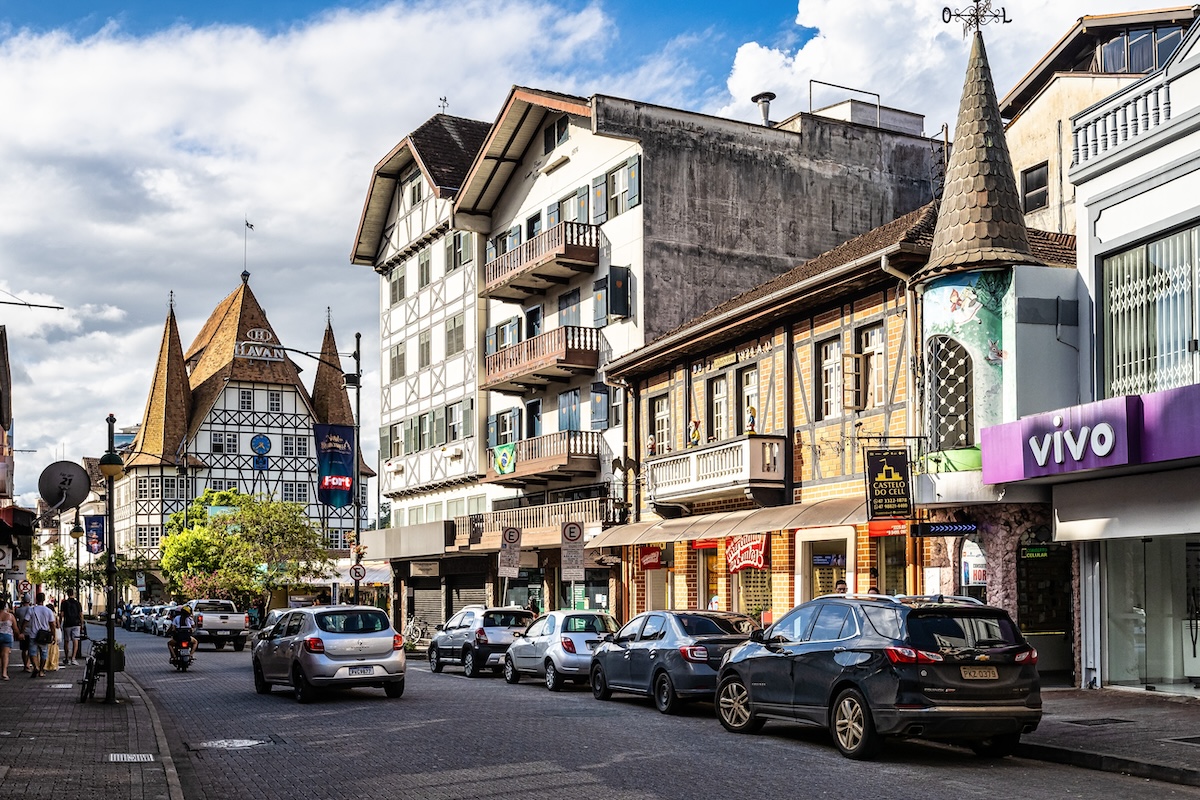
The town of Blumenau in southern Brazil was founded by German immigrants in the 1800s. Today, the city celebrates its German heritage predominantly by hosting the second-biggest Oktoberfest in the world.
Whether you visit for the beer-drinking festivities or not, the city is known as ‘Little Germany,’ boasting half-timbered houses and even German school curriculums.
But by far, the most impressive German influences are in the traditional food and breweries. You can find typical sweets and pastries like Black Forest cherry cake, beer gardens, and various potato dishes with sausages.
2. Macau, China

Picture the streets of Lisbon—but with neon-lit casinos and a Chinese influence. This is what it’s like to visit Macau. Interestingly enough, this territory just east of Hong Kong was controlled by the Portuguese until as recently as 1999.
This Chinese city is a fascinating blend of Portuguese colonial history and modern-day Chinese tech and glitz. Parts of the city are paved with cobblestone streets and pastel neoclassical buildings that look like they belong in Portugal.
Deservedly, Macau was recognized as a UNESCO World Heritage Site in 2005 for its incredible blend of Portuguese and Chinese culture.
1. Quebec City, Canada

A quick stroll through Quebec City might transport your mind straight onto the streets of Paris. This Canadian city has a strong French influence, from the Parisien-style sidewalk cafes to the French language spoken by just about every local. You can really feel the pride that Quebecois have in their French heritage.
The centerpiece of this city is the Chateau Frontenac and the Quartier du Petit Champlain in Old Quebec. One day in this area, and it’s not hard to believe that the entire Old City is considered a UNESCO World Heritage Site. It’s a Francophone gem with a side of Canadian hospitality and sweet maple syrup.