
Both the capital and largest city in Arizona, Phoenix lies at the heart of a massive metropolitan area known as the Valley of the Sun. As it is set in the sun-scorched Sonoran Desert, it is blessed with year-round warm weather makings it a great place to enjoy outdoor activities. In addition to the broad variety of golf courses in the area, other things to do in Phoenix include some great hiking, mountain biking and rock climbing amid the splendid scenery of its numerous parks and mountains.
Acting as an economic and cultural center for not just the state but the whole of the Southwest, the sprawling city has lots of excellent art galleries and magnificent museums to check out. Besides this, it also boasts an exquisite culinary scene to delve into with a wealth of superb restaurants and bars. Home to everything from gorgeous gardens and interesting historic tourist attractions to major sports teams and lively nightlife, Phoenix certainly has a lot to offer.
12. Wrigley Mansion
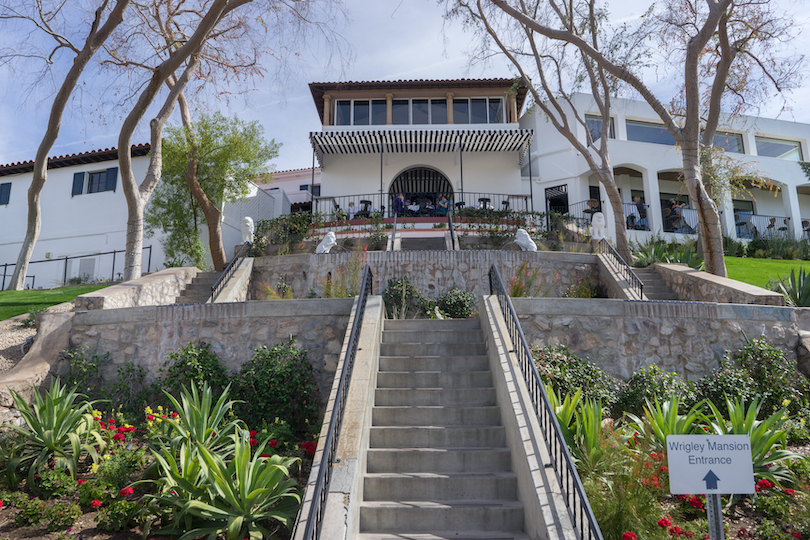
Set just a short drive to the northeast of the city center is the wonderful Wrigley Mansion which lies atop of a prominent knoll overlooking Phoenix. Built between 1929 and 1931 by the chewing-gum magnate William Wrigley Jr, the mansion exhibits astounding architecture with terrific tours taking you around all of its sumptuously decorated rooms.
Besides showcasing some splendid Spanish Colonial style architecture, the marvelous mansion is particularly known for its exquisite tile work. While exploring all of its elegant rooms that number more than twenty in total, you’ll learn all about the history of the beautiful building and the famous families that lived here. Now a private club, Wrigley Mansion hosts lots of meetings and weddings at its fine-dining restaurant and bar with phenomenal views to be enjoyed from its outdoor veranda.
11. Goldfield Ghost Town
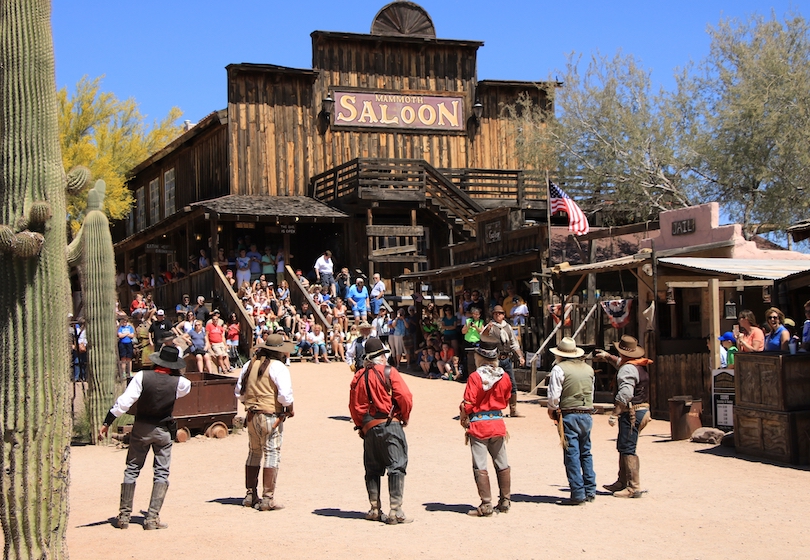
Lying on the eastern outskirts of Phoenix is the Goldfield Ghost Town which is set at the foot of the soaring Superstition Mountains. This popular tourist attraction was once a thriving mining town. Today, visitors can enjoy tours of the mine and town alongside gunfights, ziplines and a ride on the town’s narrow gauge railroad.
Founded in 1893 when gold was discovered in the nearby mountains, the town’s population slowly dwindled and died as the shining seams ran out. Nowadays, the reconstructed town is a very fun and family friendly place with its corral and county jail, saloons and shacks taking you right back to the times of the Wild West. Besides strolling around its sizeable site, you can also pan for gold, try out its shooting range and learn a bit about the history of the ghost town at its small museum.
10. South Mountain Park

One of the largest urban parks in not just the States but the world, the sprawling South Mountain Park is located just to the south of the city center. Very mountainous, it encompasses three rearing ranges with their scenic slopes boasting an incredible array of outdoor activities for you to enjoy.
Protected and preserved as part of a park since 1924, its colossal confines are home to lots of native desert vegetation with it being particularly known for its large lizard population of chuckwallas. In total, it has eighty kilometers of tantalizing trails for you to hike, mountain bike or horseback ride in and among its spellbinding scenery. A very popular place to visit is Dobbins Lookout which exhibits the highest point in the park from where visitors can take in breath-taking views of all of Phoenix.
9. Papago Park
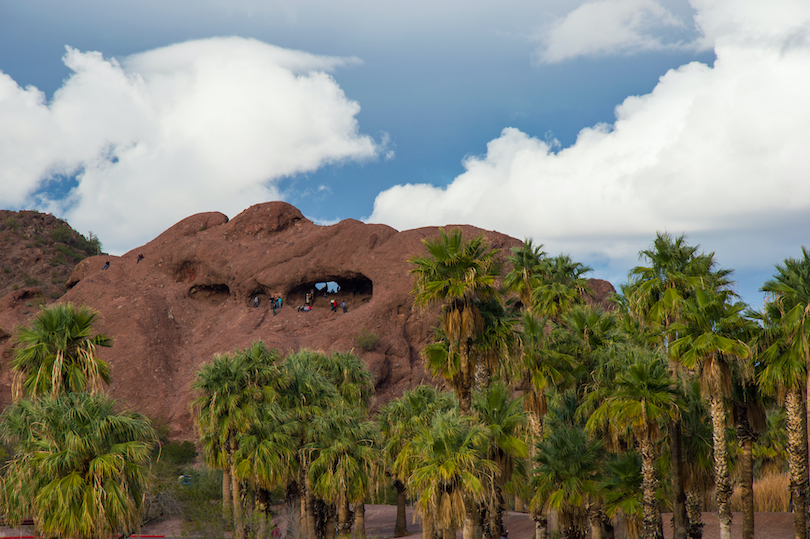
Yet more of the city’s delightful desert landscapes can be found in the pretty and peaceful Papago Park which is also home to lots of enticing attractions and recreational opportunities. Part of both Phoenix and Tempe, it includes everything from fishing lakes and golf courses to picturesque paths, picnic areas and playing fields as well as the Desert Botanical Garden and Phoenix Zoo.
Dotted with distinctive red rock formations, the hilly desert park is a treat to hike or bike around with the huge Hole in the Rock and beautiful Big Butte counting among its finest features. Hidden away amidst its cacti-dotted domain are lovely lakes and state-of-the-art sports facilities for you to stop off at. In addition, one of its standout sights is Hunt’s Tomb – a small white pyramid in which Arizona’s first governor is buried.
8. Japanese Friendship Garden
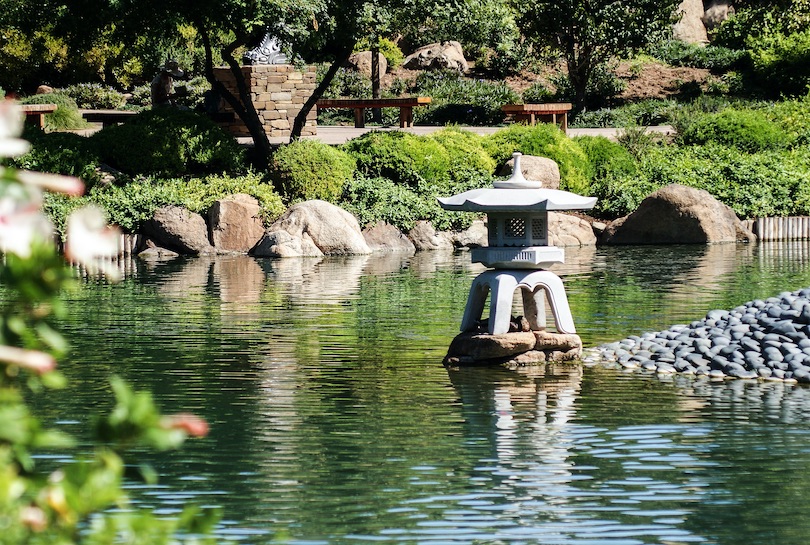
The gorgeous Japanese Friendship Garden lies just to the north of Downtown Phoenix, and it is a very scenic and serene space to stroll around. Centered on a charming koi pond are pretty paths and plants for you to wander past as well as tiny streams, stone lanterns and a traditional teahouse.
The tranquil garden was opened to the public in 1996 after nearly a decade spent designing and perfecting its layout. In fact, it was a joint venture by Phoenix and Himeji, its sister city in Japan. Besides basking in its beauty, you can also attend one of the many Japanese cultural events that regularly take place in the quiet and peaceful garden. These range from tea ceremonies and tai chi classes to wabi sabi pottery workshops and ikebana art demonstrations.
7. Lost Dutchman State Park
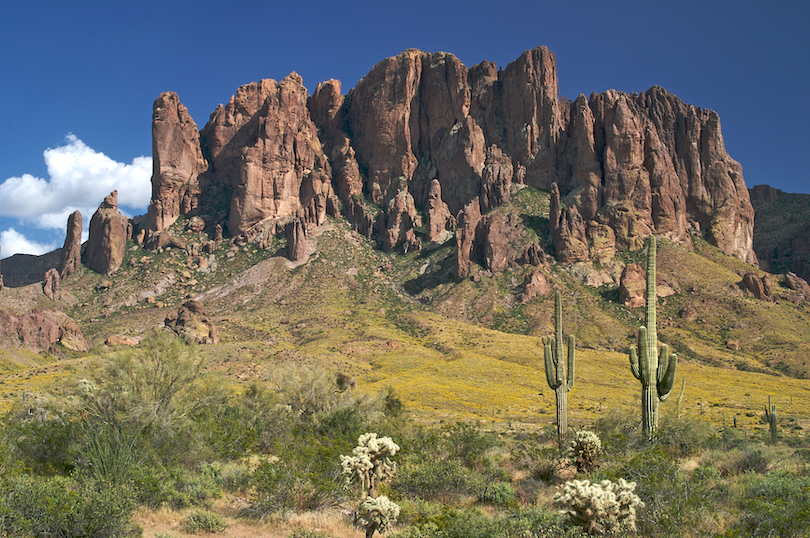
Set right at the foot of the stunning Superstition Mountains is the Lost Dutchman State Park which is very popular among both nature lovers and outdoor enthusiasts alike. Named after a legendary lost gold mine, it has lots of terrific trails and splendid Sonoran Desert scenery for you to explore. You’ll find the Goldfield Ghost Town right beside it.
Established in 1977 by the state as a recreation area, the park has cosy cabins and campsites for visitors to stay in as well as parking and picnic areas to make use of. Rearing above its scenic confines is the majestic mountain range that just begs to be explored. Many of its mountain bike paths and hiking trails wind their way in and among the lush wilderness before slowly snaking their way up the steep slopes of the Superstitions.
6. Roosevelt Row District

What was once a dilapidated, decaying and even dangerous district just a few short decades ago is now one of the most dynamic areas in downtown. Home to lots of incredible art galleries, local restaurants and boutiques, the revitalized Roosevelt Row now lies at the center of the city’s thriving arts and culture scene.
Thanks to its creative character and pedestrian-friendly nature, the district is a treat to explore with marvelous murals and innovative artists’ studios wherever you look. On top of all its superb shops and restaurants, the area also hosts lots of fun festivals and cultural events as well as a huge art market on the first Friday of every month. With a lively yet laidback feel to it, the vibrant Roosevelt Row District is not to be missed when in Phoenix.
5. Heard Museum
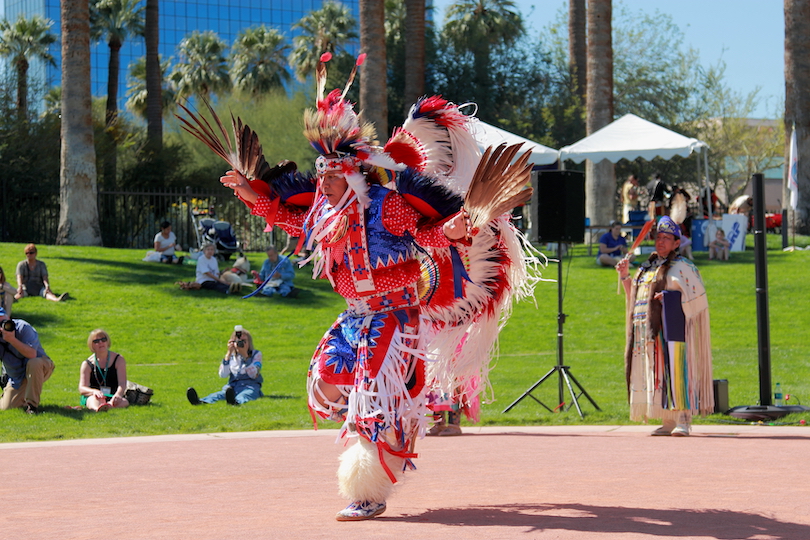
Located just a short drive to the north of the city center is the humongous Heard Museum which boasts a captivating collection of Native American artworks, artifacts and archaeological findings. While the main focus is on indigenous art from the American Southwest, its award-winning exhibits also look at everything from their history and heritage to their culture and livelihoods.
Since being founded all the way back in 1929, its colossal collection has continued to grow, and it now includes more than 40,000 items. In its gorgeous galleries, visitors can peruse beautiful beadwork and basketry with textiles and traditional arts also being on display. Of particular interest is its huge collection of historic Hopi kachinas – small spirit dolls – and its splendid seven metre-long mural. In addition to this, the museum hosts several cultural events and festivals over the course of the year which feature Native American artists and performers.
4. Camelback Mountain
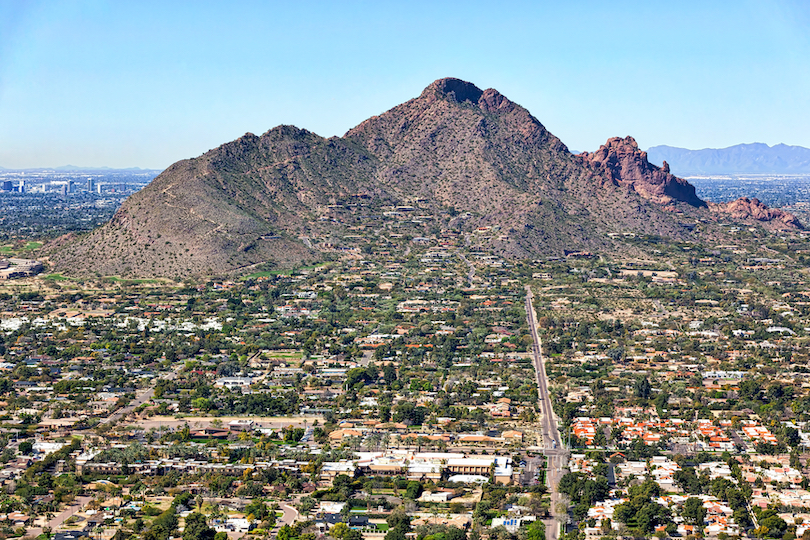
One of the most renowned and recognized landmarks in the region, Camelback Mountain lies to the northeast of the city in between Phoenix and Paradise Valley. The mountain gets its due to its uncanny resemblance to the head and hump of a kneeling camel. The massive mountain has many outstanding outdoor activities for you to enjoy as well as phenomenal panoramas from both its steep slopes and soaring summit.
Rising up to 825 meters in height, its rugged reaches and red rock formations are lots of fun to explore and are protected and preserved as part of a recreation area. Besides basking in its beauty or bouldering around its base, visitors can hike along its trails and climb within Echo Canyon. Although climbing up to the top of Camelback Mountain is a challenge, it is well worth it for the fantastic views on offer over both Phoenix and Scottsdale.
3. Scottsdale Old Town
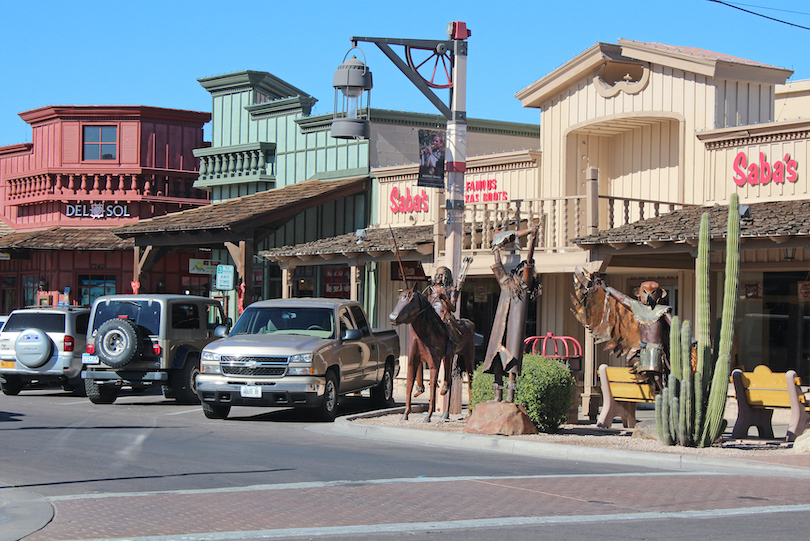
Part of the Greater Phoenix Area, Scottsdale is home to a lovely Old Town that is full of fun things for you to see and do. As the city bills itself as ‘The West’s Most Western Town’, many of its shops and restaurants are cowboy themed with excellent art galleries and exquisite museums also dotted here and there.
As the area dates back all the way to the 1920s, several interesting historic sights and beautiful old buildings can be found scattered around its streets. Most of its space, however, is taken up with either souvenir shops or Wild West-themed saloons and restaurants. In addition, a number of chic boutiques and swanky nightclubs are also on offer. Lively yet laidback, Scottsdale Old Town certainly has a lot going for it, and it is very popular with both locals and tourists alike.
2. Musical Instrument Museum
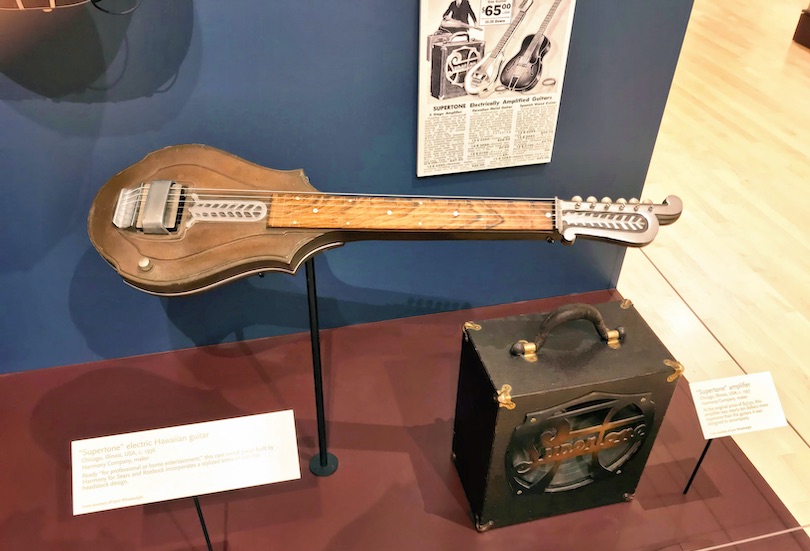
Set just twenty minutes’ drive to the north of the city center is the magnificent Musical Instrument Museum which is one of the biggest and best museums of its kind. It has lots of fascinating exhibits on the history and heritage of music to enjoy with its colossal collection remarkably including over 15,000 musical instruments from almost 200 countries and territories.
Since opening in 2010, it has been a firm favorite among visitors to Phoenix, as its grand galleries are crammed with impressive instruments from around the globe. While wandering around the museum you can see and listen to everything from Chinese sanxians and Indian surbahars to Indonesian boat lutes and Nepalese phet banams. In addition to banging drums and gongs in its Experience Gallery, there are lots of photos, prints and performance outfits from around the world for you to peruse.
1. Desert Botanical Garden
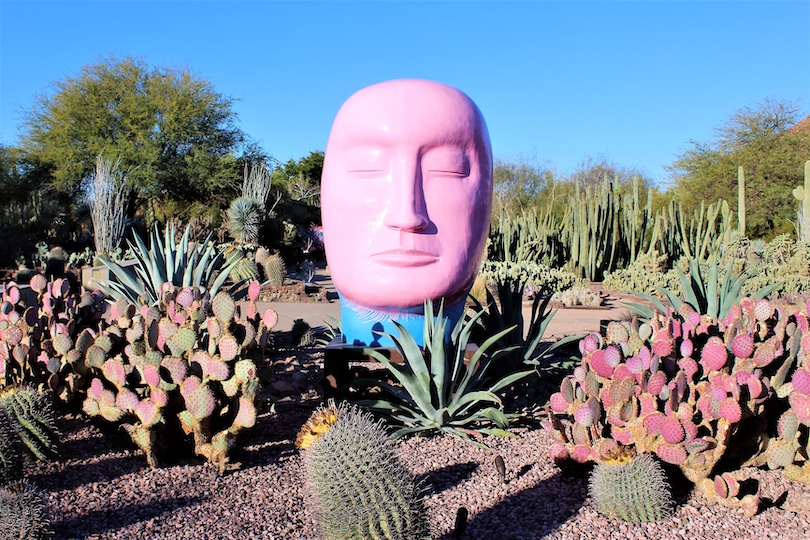
One of the most popular, peaceful and picturesque places to visit in Phoenix is the delightful Desert Botanical Garden which lies at the north end of Papago Park. Now home to over 50,000 plants, the gorgeous garden has a plethora of pretty paths to explore which take you through lots of arid yet attractive desert landscapes and nature from around the world.
Founded way back in 1939 to protect fragile desert ecosystems, the beautiful botanical garden has since grown in scope and now includes flowers, plants and shrubs from as far away as Australia and South America. With many wildflowers, cacti and interesting art installations on show, the Desert Botanical Garden is definitely well-worth checking out when in Phoenix.