Steeped in romance and history, this elegant northern Italian city is famed for its timeless charm and literary connections. While closely associated with one of Shakespeare’s most famous love stories, it also offers a remarkable blend of Roman heritage, medieval architecture, and Renaissance beauty.
Verona is best known as the setting of Romeo and Juliet, with visitors flocking to landmarks linked to the legendary lovers, including Juliet’s house and tomb. Yet the city’s appeal stretches far beyond its literary fame.
Among the many attractions in Verona are majestic churches, grand palazzos, medieval castles, ancient Roman bridges, and beautifully designed Renaissance gardens. The city’s historic center is filled with Roman ruins and striking Gothic architecture that reflect its long and fascinating past.
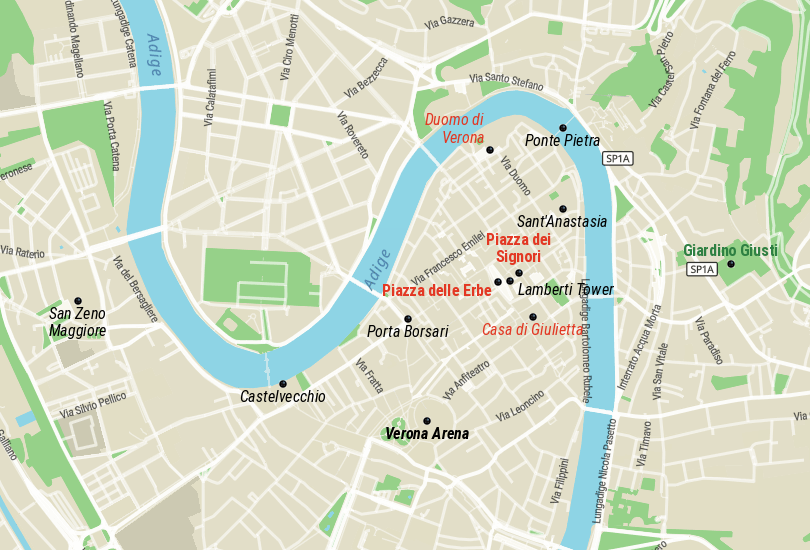
Piazza delle Erbe
 © Claudiodivizia / Dreamstime
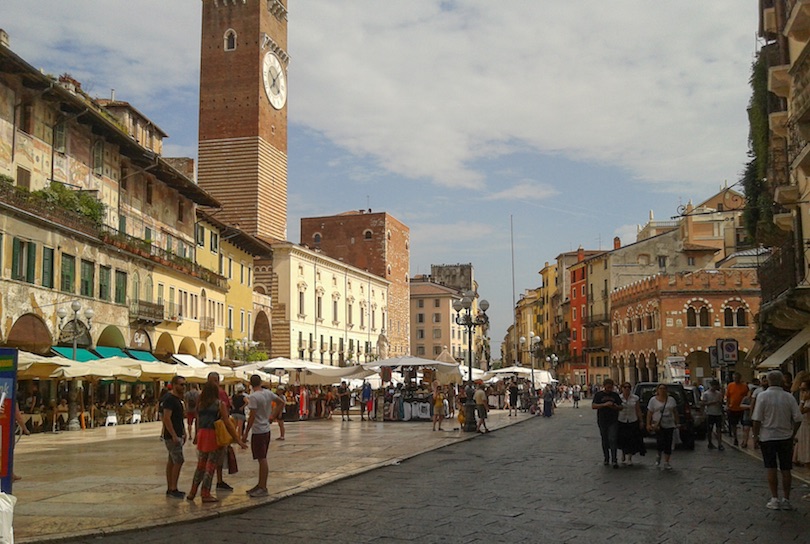
Piazza delle Erbe has been around since the days of the ancient Romans when it served as a forum complete with chariot races. Then it became a market that specialized in selling herbs. Today it’s a bustling market where shoppers can buy not only herbs but other produce fresh from the farm.
It’s a good place for travelers to put together a picnic lunch before visiting nearby Lamberti Tower. Visitors will find a medieval fountain in the middle of the square; it is topped by a statue of the Virgin of Verona. Some buildings have frescoes on their facades.
Verona Arena
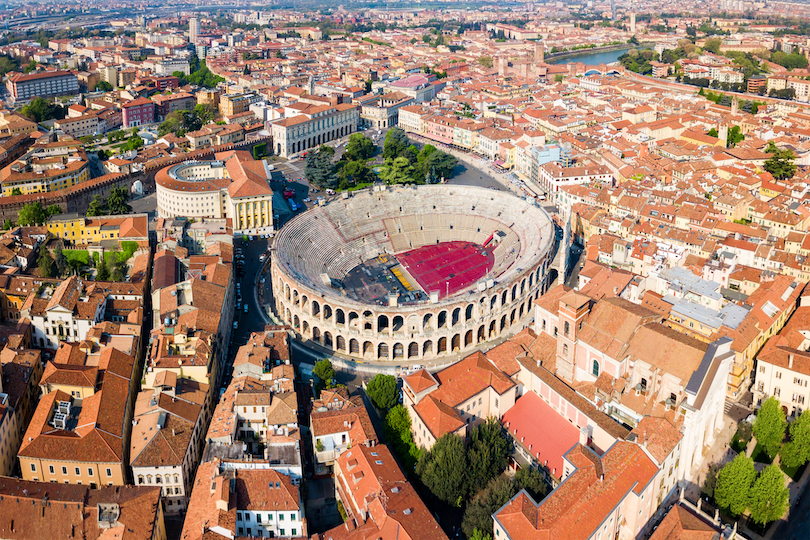
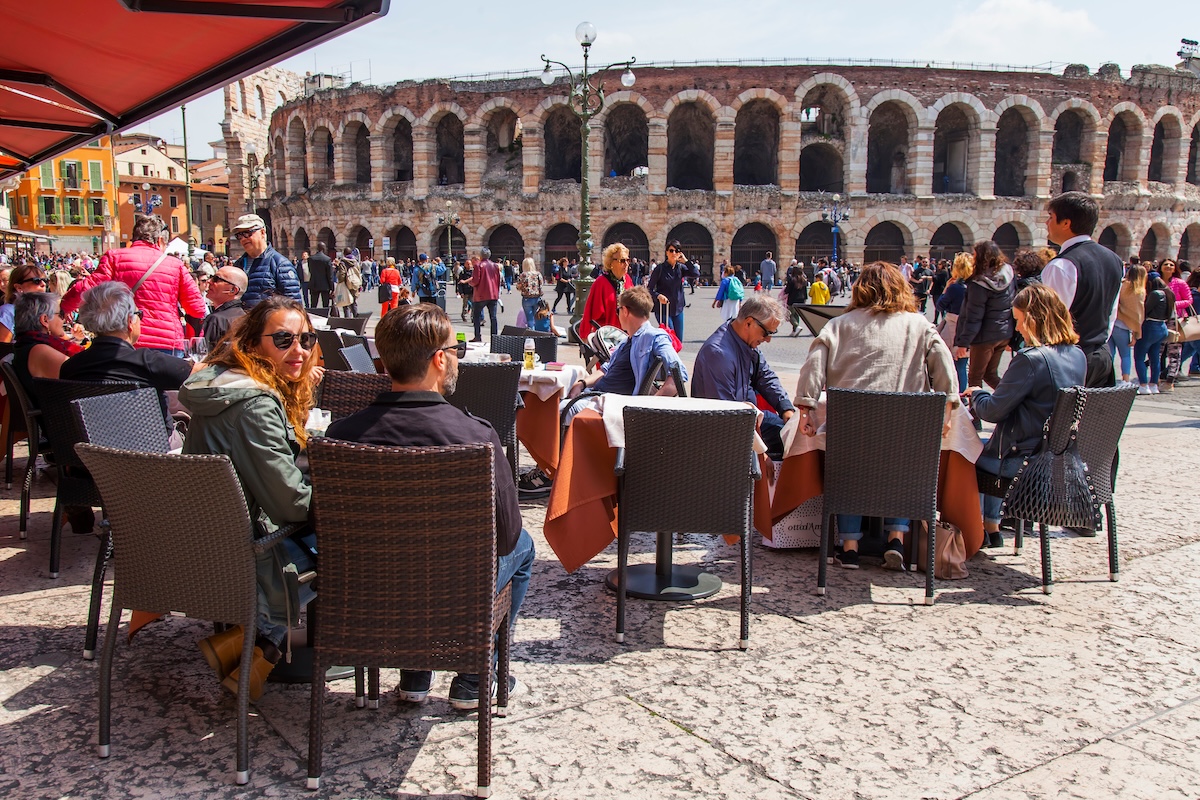
Not too many travelers can say they attended an event at a 2,000-year-old Roman amphitheater, but visitors to Verona can. This open-air amphitheater, the third largest in Italy, has been a venue for events since the year 30. It was originally built to hold 30,000 spectators at gladiator contests, but now only 15,000 are allowed at events.
Its elliptical shape enhances acoustics, making it ideal for music events from pop concerts to Puccini operas. Every summer, the arena hosts a world-famous opera festival where opera aficionados light up the arena with small candles.
Porta Borsari
 © Thevirex / Dreamstime
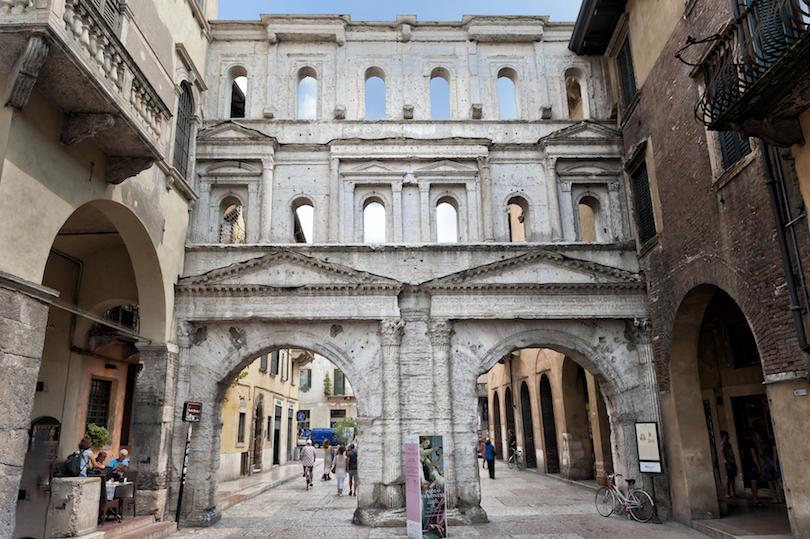
In the days of the ancient Romans, Porta Borsari was the gate through which travelers entered the city of Verona. It also was the point where these travelers paid a tax to enter and leave the city. Since it was the city’s main entrance on Via Postumia, it was ornately decorated with columns and arched windows.
Today, this first century gate, which also served as a fort with look-out towers, is somewhat in ruins today. There’s still enough left of it, however, for visitors to imagine how grand it must have been. Only the limestone façade is visible today since visitors aren’t allowed inside.
Giardino Giusti
 © Olena Roma / Dreamstime
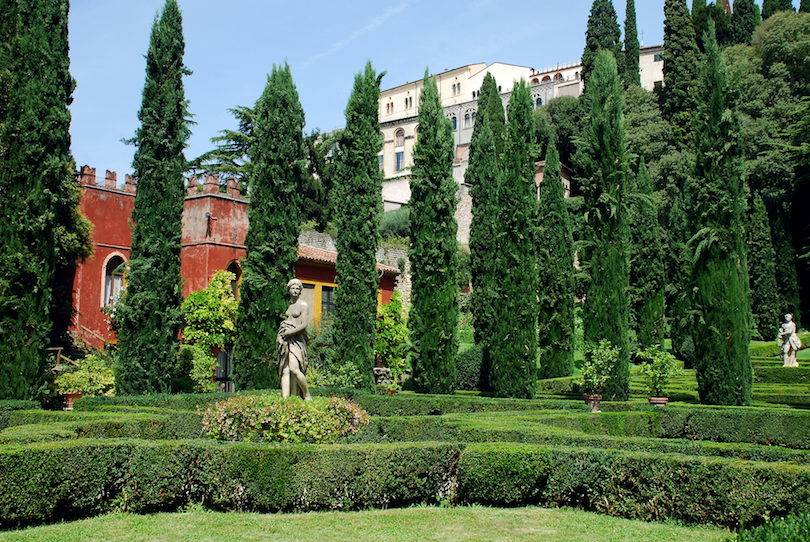
Low hedges neatly trimmed into symmetrical shapes are interspersed with tall slender trees, fountains, grottoes that echo and statues at the Giardino Giusti. This 16th century garden is an awesome sight to behold. It’s so awesome, in fact, that Giardino Giusti is considered one of the best examples of an Italian Renaissance garden in the country.
It’s a reason why the garden, built by the Giusti family for their palazzo, is one of the city’s top attractions. Even visitors who don’t have green thumbs can appreciate that some of the original plants are still flourishing.
Piazza dei Signori
 © Thejipen / Dreamstime
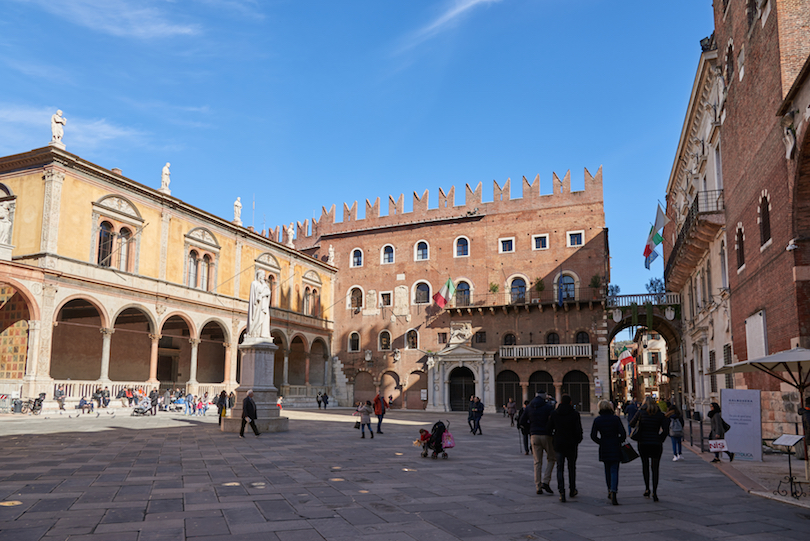
Piazza dei Signori is a key square in Verona’s historic center that is surrounded by notable buildings, including the palazzos of Ragione and Consignorio, and the Church of Santa Maria Antica. In the beginning, it served as Verona’s political and administrative hub.
The square is also known as Piazza Dante because of the statue of the great Italian author Dante, who lived in Verona for awhile. Piazza dei Signori also is the main place to see and be seen in Verona, especially on Wednesday nights. A flurry of activities such as guitar playing and flamenco dancing takes place then.
Duomo di Verona
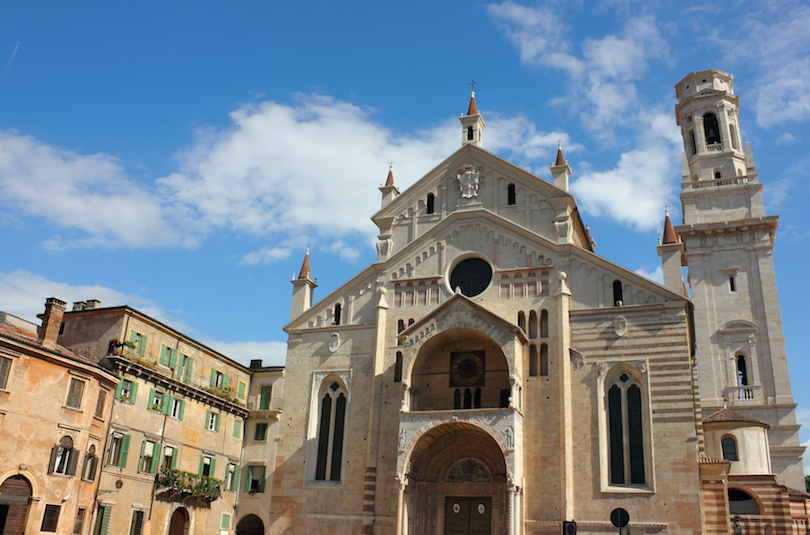
Simple is in the eye of the beholder, but simple can get complicated when it is applied to the Duomo di Verona. The white and rose marble exterior is Romanesque, so it is simpler than many other major cathedrals.
It features a clock over the front entrance. The interior, with its five bays, three naves, and white and rose marble floors, seems cavernous and ornate, but, again, not as ornate as some cathedrals. Still, it has its fair share of frescoes and paintings in the chapels. The Duomo di Verona, formally known as the Cathedral of Santa Maria Matricolare, was consecrated in 1187.
Lamberti Tower
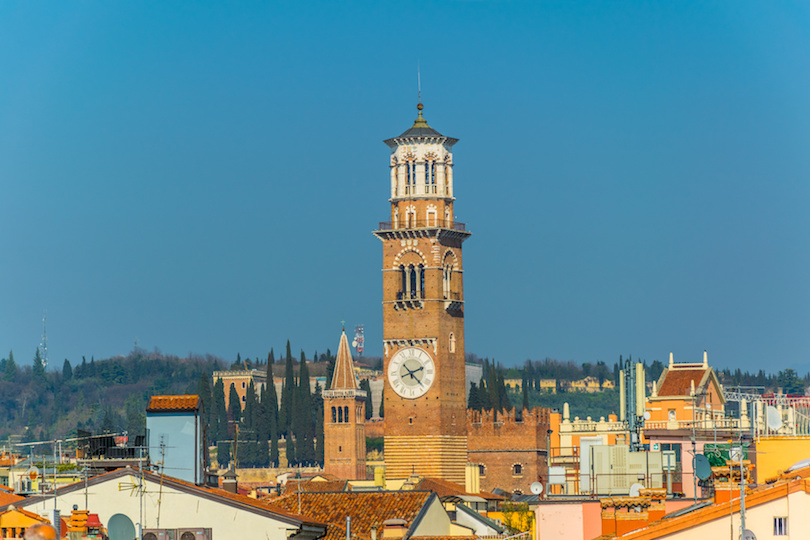
Who could ever have imagined that something built in 1172 would continue to today to be the tallest structure in Verona. That honor goes to the Lamberti Tower, which, at 84 meters (275 feet) tall, provides panoramic views of the city. Only the height of the tower was unique when it was built as towers were common additions to the medieval homes.
Lamberti Tower is famous for its two bells: Matangona, which rang when the work day was over and also served as a fire alarm, and Rengo, which rang in times of war. Visitors today have two ways to ascend the tower: traditional steps or an elevator.
Castelvecchio
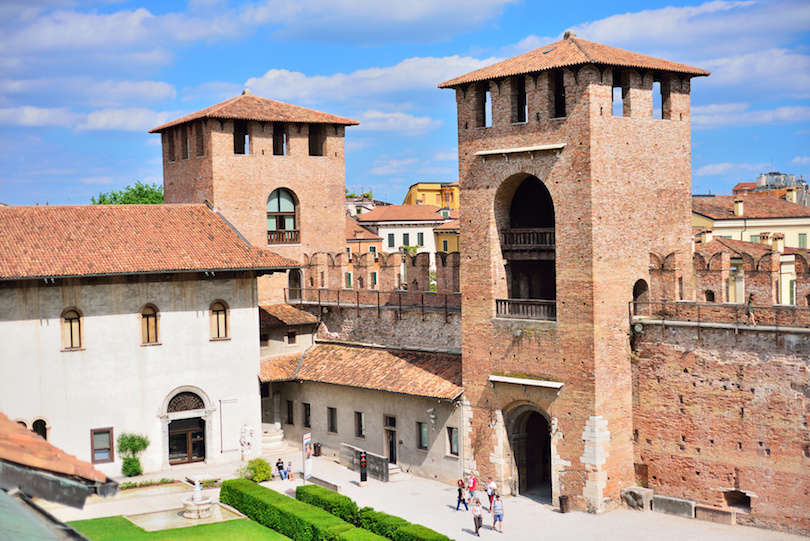
Designers of the Castelvecchio built it with three purposes in mind. First, it was to be a fortress to protect the people of Verona. Secondly, it was a palazzo for a wealthy family and, finally, since it was built on a river, it was to provide an escape route if the fortress fell. Castelvecchio is a massive red brick symmetrical structure with seven towers and crenellated roofs situated on the Adige River.
The connecting bridge over the river was destroyed in WWII, but later rebuilt. It’s a museum today, with 29 rooms filled with paintings, weapons and sculptures from 1300 to 1700.
Casa di Giulietta
 © Wieslaw Jarek / Dreamstime
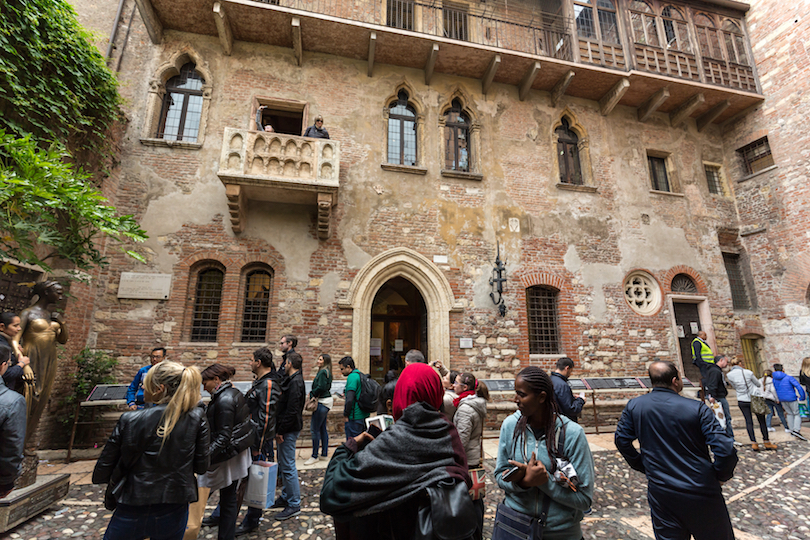
In a country known for romance, romance is what draws most visitors to Casa di Giulietta, the 13th century house where Shakespeare’s Juliet reportedly was born. There is some speculation as to whether the real-life Juliet lived in the house, though it did once belong to a Cappello family.
This doesn’t deter tourists from flocking to the house where they’ve made the balcony where Shakespeare’s Romeo pledged undying love to Juliet undoubtedly the most photographed balcony on earth. The fact that the balcony was added in the 20th century also doesn’t bother tourists. Inside the house, visitors will find the bed and costumes from Franco Zeffirelli’s lavish 1968 Romeo and Juliet, but not much else.
Ponte Pietra
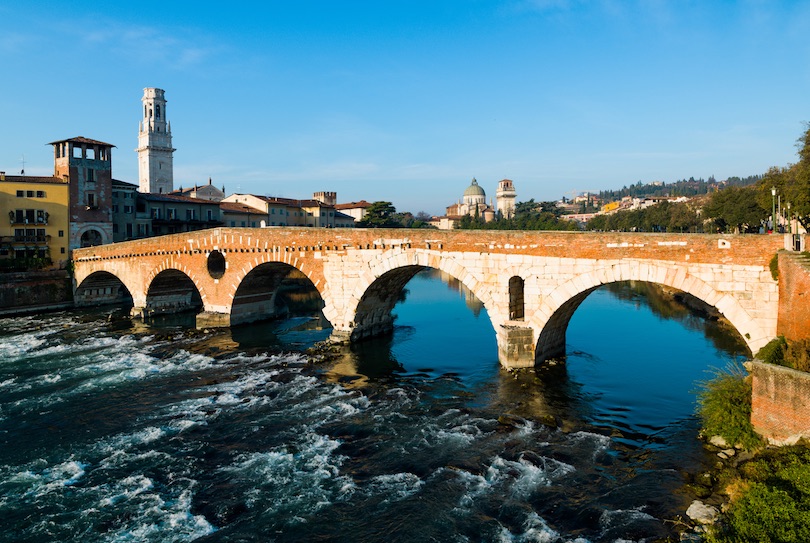
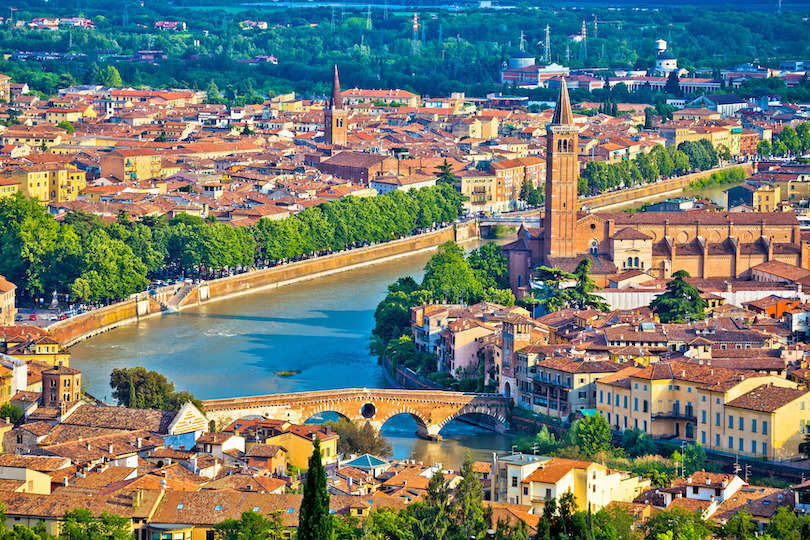
Florence has its Ponte Vecchio and Venice, the Rialto Bridge. In Verona, the not-to-be-missed bridge is Ponte Pietra across the Adige River. Built around 100 BC, this bridge is considered one of the most important Roman monuments in Verona.
The bridge is colorfully made with red brick and white stones, and reflects various architectural styles depending on when it was worked on. It has several arches, but only one of its towers stands today. Original arches can be seen today on the river’s left bank. Some of the bridge was destroyed by Germans during World War II, but later restored using original materials.
Chiesa di Sant’Anastasia
 © Vvoevale / Dreamstime
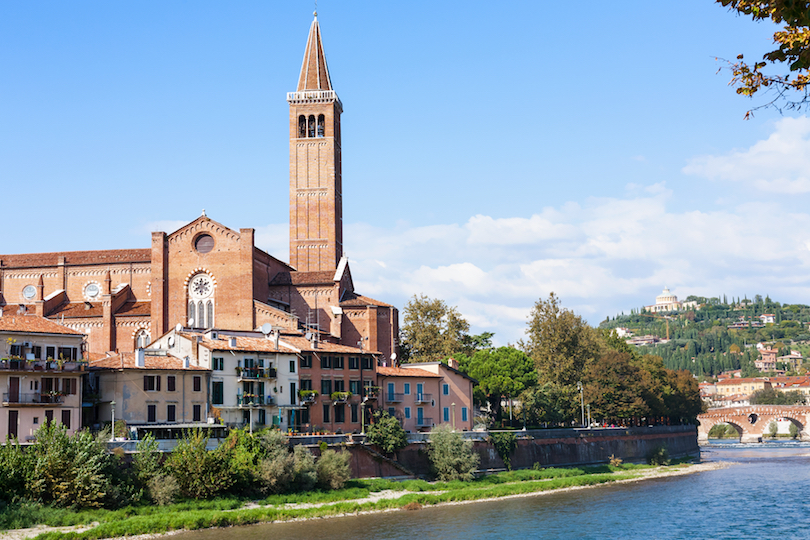
Not too far away from the Ponte Pietra is the most famous and important religious Gothic building in Verona: Chiesa di Sant’Anastasia. Construction took 100 years, beginning in 1280, but the exterior façade remains unfinished today. The inside of the basilica is nothing short of majestic with 12 huge marble columns supporting the ceiling.
Works by some of Verona’s best painters grace the interior, which features 16 altars and chapels. Be sure to look for the famous Pisanello fresco, “St. George and the Princess” in the Pellegrini chapel. A bell tower started with four bells, it has nine pealing today.
Basilica di San Zeno Maggiore
 © Erix2005 / Dreamstime
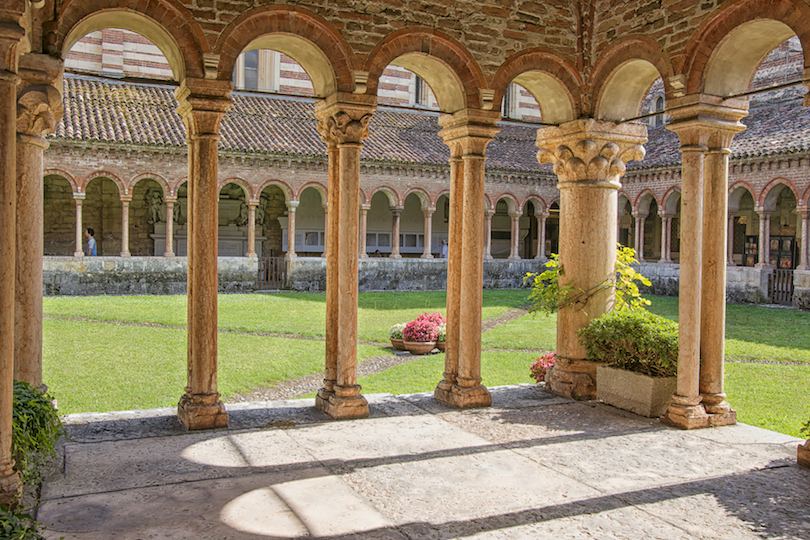
Basilica di San Zeno Maggior isn’t the biggest or the most important Catholic church in Verona, but it may be the most visited. Its crypt is where, according to Shakespeare, Romeo and Juliet were married. This Romanesque church, the model for later Veronese Romanesque churches, also does well on its own.
Its bronze doors are famous in Verona, and has a large rose window dubbed the “wheel of fortune.” Inside, visitors will find 13th and 14th century frescoes and a crypt containing the remains of San Zeno, the fourth century saint for whom the basilica is named.