
The Ellora Caves, one of the most extensive monastic sites in the world, are located 30 km (20 miles) north-northwest of Aurangabad, near the village of Ellora in India. Followers of Buddhism, Hinduism and Jainism built this complex between the sixth and 10th centuries A.D. There are 12 Buddhist caves, 17 Hindu caves and five Jain caves. The fact that these groups built their structures so close to one another, and sometimes at the same time, is proof of the religious harmony that existed during this time in Indian history.
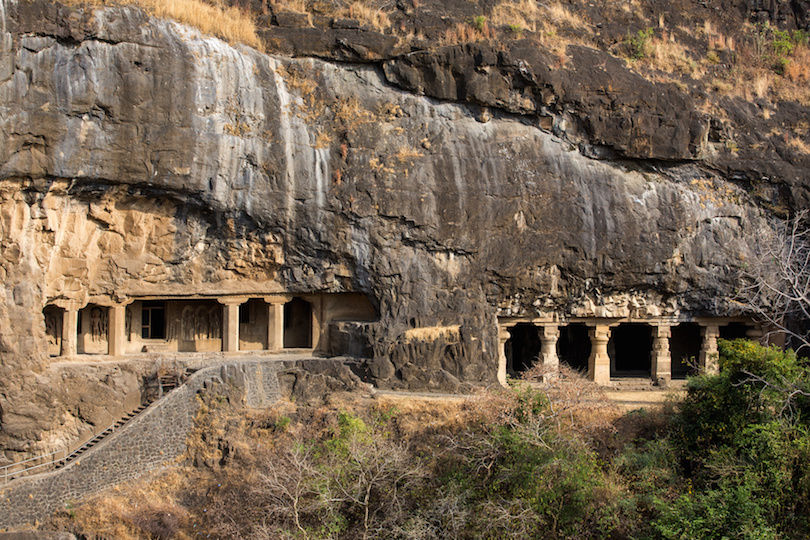
Builders cut the Ellora Caves out of the face of the Charanandri hills, a volcanic basaltic formation. They began the work around 500 A.D. The work on the Buddhist caves took from approximately 500-750 A.D. Chiseling of the Hindu caves occurred from approximately 600-870 A.D., while the work on the Jain caves took place from approximately 800-1000 A.D. The temples and monasteries were carved next to each other in the wall of the basalt cliff. There are 34 caves in all, and they are numbered chronologically, beginning with the oldest Buddhist cave at the southern end of the site.
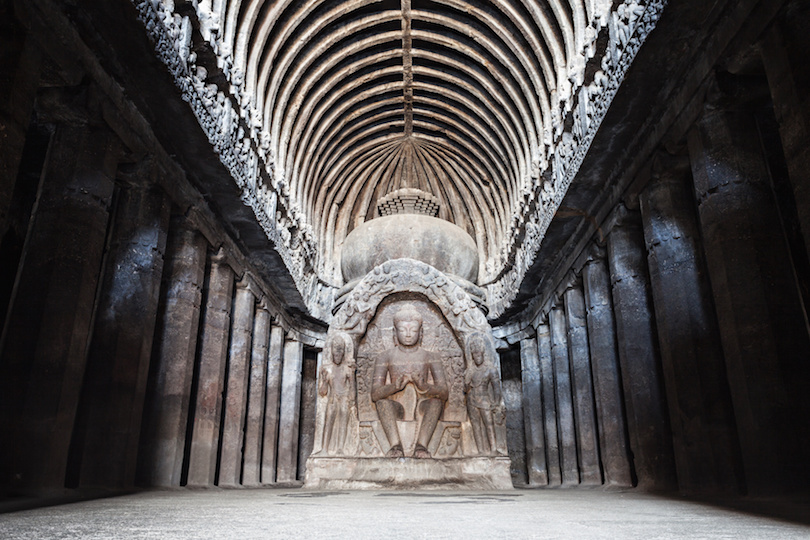
The Buddhist caves were the earliest. All of these caves, except Cave 10, were monasteries used for activities such as eating, sleeping and meditating. As the caves progressed northward, they became larger. For instance, Cave 1 is very plain, with little sculpture and eight small monastic cells, while Cave 11 has three floors with a large upper hall. In the shrine room, the walls contain five bodhisattvas (Buddhas remaining in the earth realm) as well as seven Buddhas representing previous incarnations.
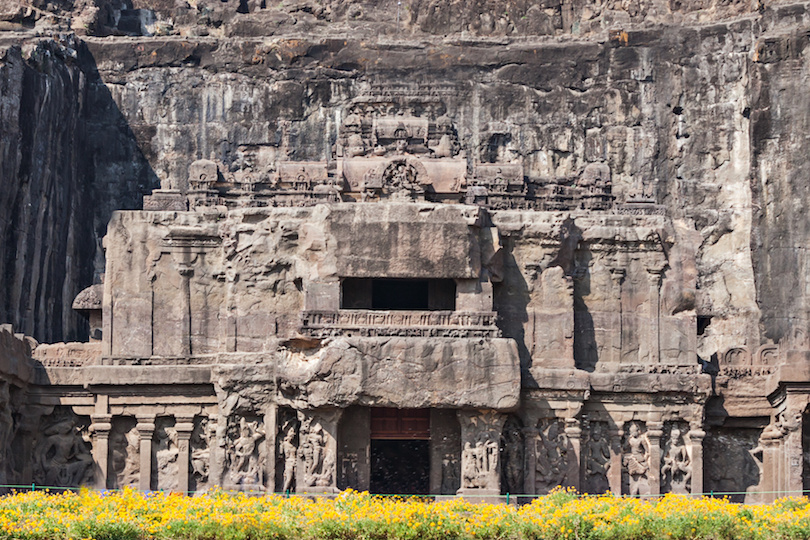
The 17 Hindu caves lie in the center of the cave complex. Unlike the earlier serene Buddhist caves, bas-reliefs cover the walls of the Hindu caves, which are dedicated to the god Shiva. The reliefs depict various events from Hindu scriptures. Builders converted Cave 14 from a Buddhist monastery to a Hindu temple. Magnificent friezes adorn the walls, and an alcove covers fertility goddesses and their young. Cave 15 looks very plain at first, but the top floor contains some of the most exquisite sculptures at Ellora.
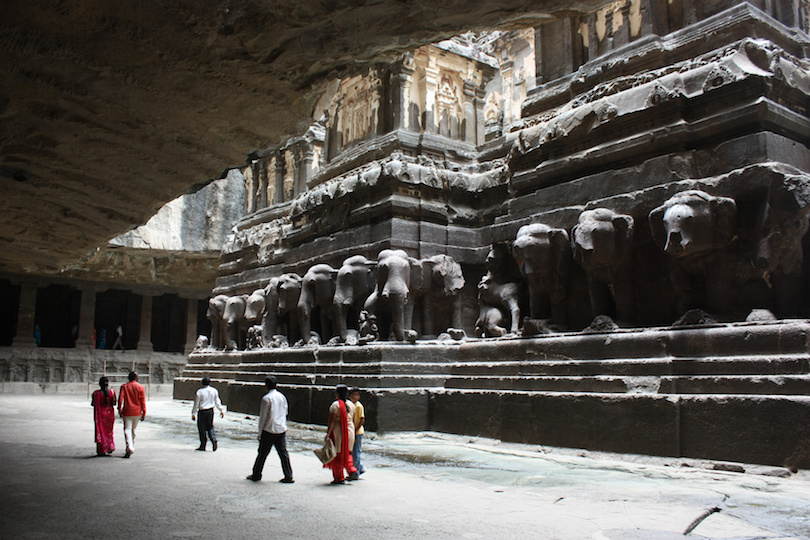
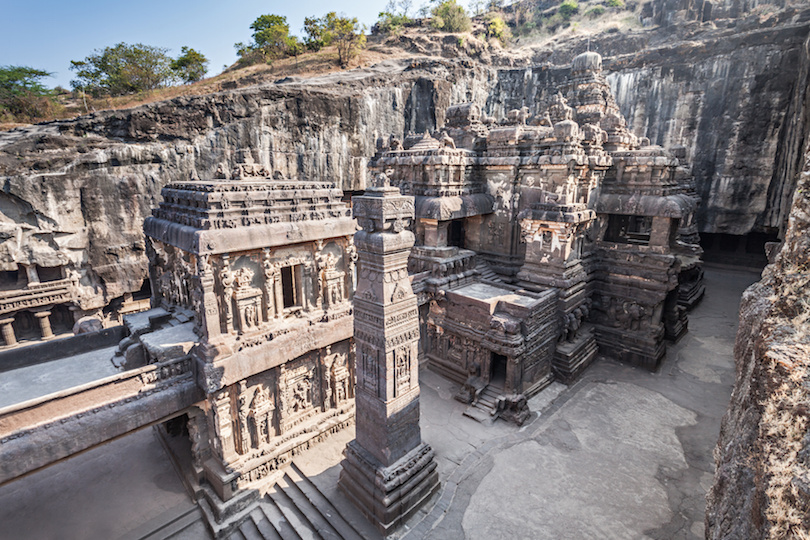
The unrivaled centerpiece of Ellora is cave 16. Known as the Kailasa Temple it is not actually a cave but rather a freestanding temple carved entirely from the solid rock. This enormous structure covers an area double the size of the Parthenon in Athens. It represents the home of Lord Shiva, Mount Kailash. It was originally covered with white plaster to make it look like the snow-topped mountain.
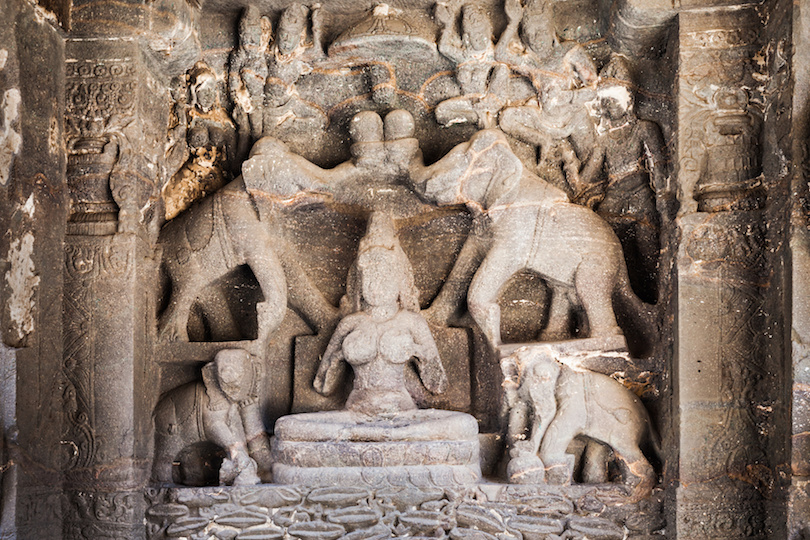
Archaeologists believe that Cave 21 is the oldest Hindu cave at Ellora. It also contains fine sculptures such as door guardians and river goddesses. Cave 29, carved in the late 500s, has three staircases guarded by pairs of lions. Like the other Hindu caves, magnificent friezes cover the walls.
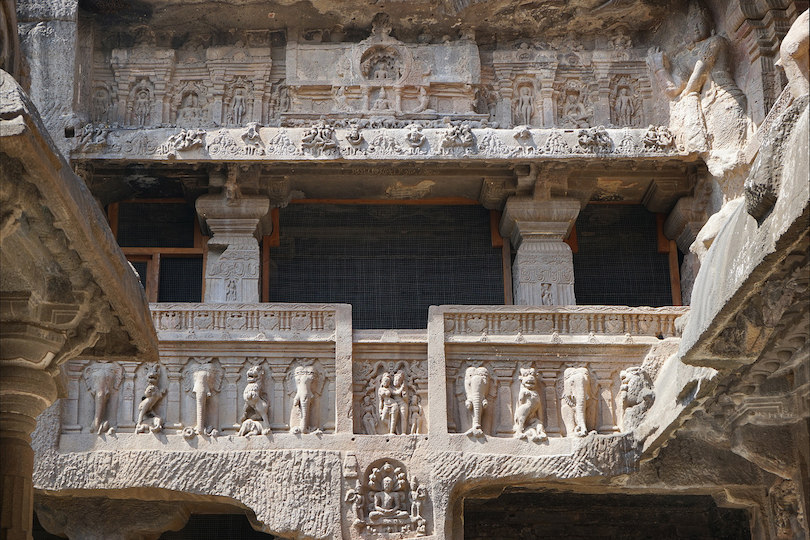
The Jain caves, carved in the late 800s and 900s, exhibit the distinct Jain tradition of austerity combined with elaborate decoration. They are not as large as the other caves, but the artwork contained in them is exceptional. Some of the Jain caves had colorful paintings on the ceilings, and some fragments are still visible. The most spectacular of the Jain caves is Cave 32, the Indra Sabha. It is a miniature of the Kailash Temple. The first level is unadorned, but the second level contains elaborate carvings, such as a lotus flower on the ceiling. Two carved holy men guard the entrance to the shrine. To the right is Gomatesvara, another holy man, meditating in the forest. He is meditating so deeply that vines have grown up his legs and animals and snakes crawl around his feet.
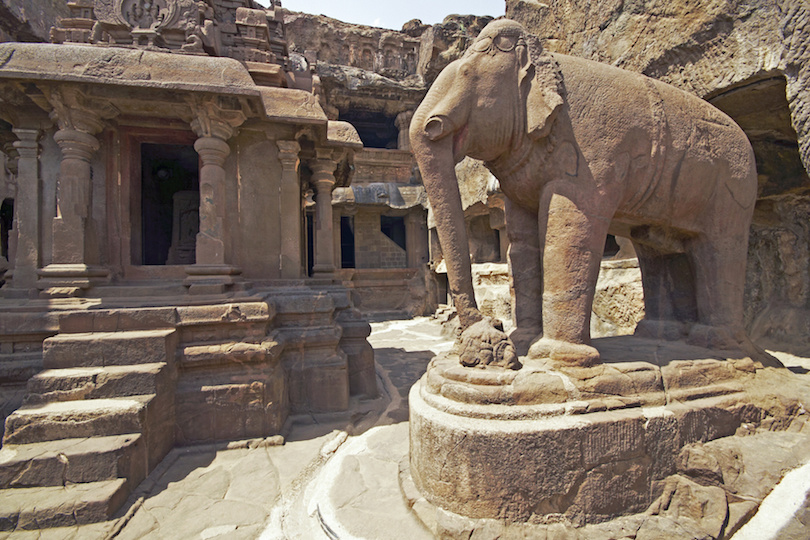
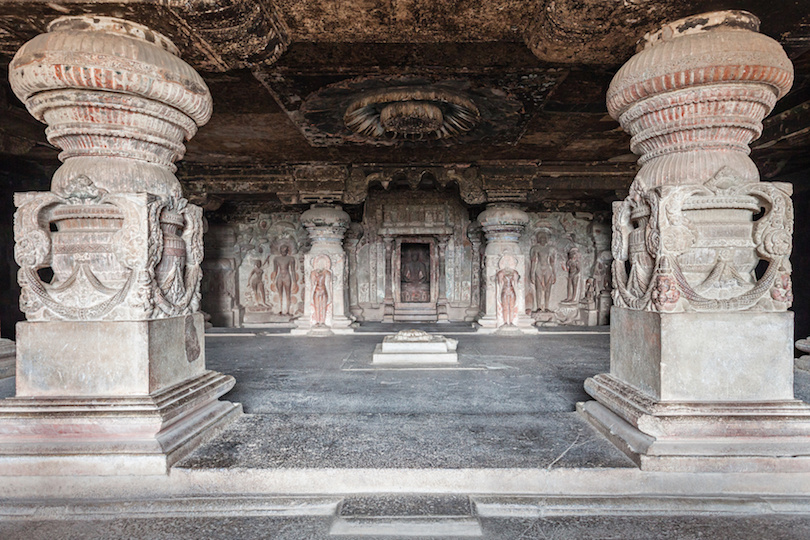
A visit to the Ellora Caves can sometimes be overwhelming due to the vast amount of artistry and architecture available for viewing. It is best to reserve enough time when exploring these caves in order to be able to appreciate the site and all that it represents.






Leave a Reply