
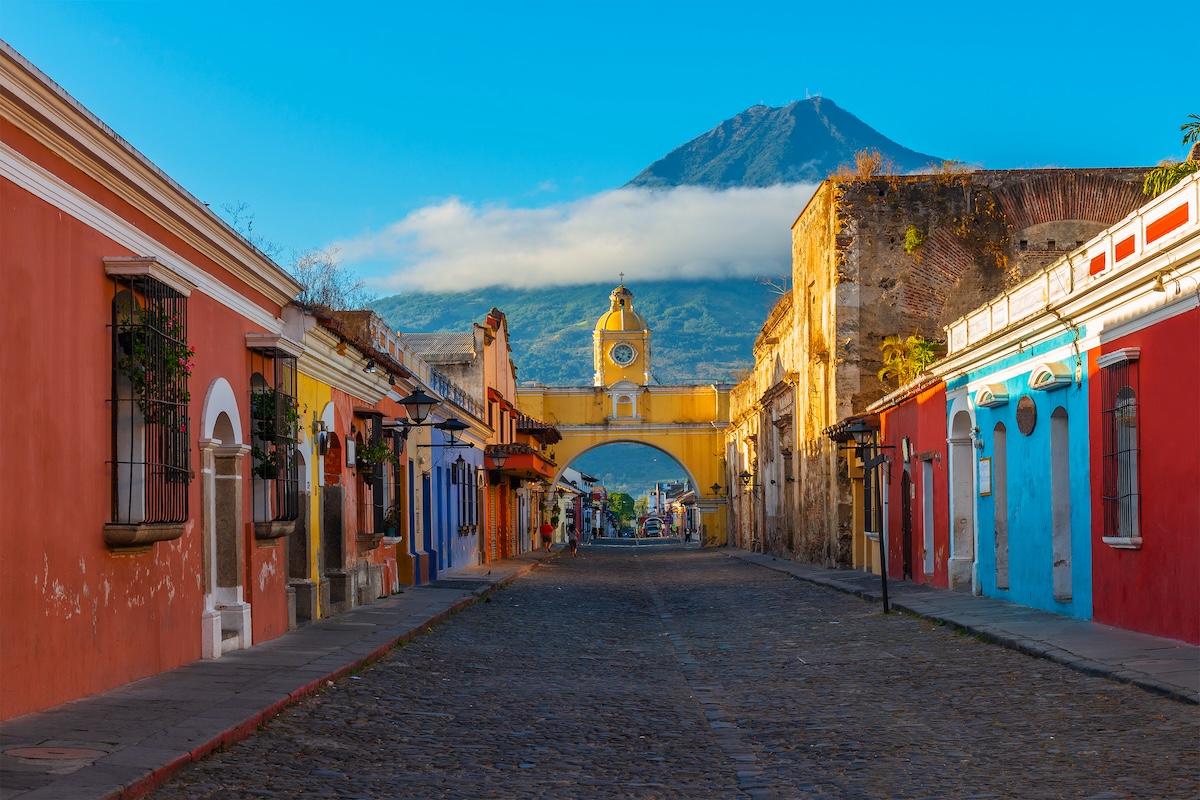
Ancient churches, colorful colonial streets, and a spectacular volcanic backdrop combine to create one of Central America’s most enchanting destinations. Rich in history and overflowing with character, it’s a place where every cobbled street seems to tell a story.
Nestled in the central highlands of Guatemala, Antigua Guatemala is celebrated for its beautifully preserved Spanish colonial architecture and designated a UNESCO World Heritage Site. Surrounded by towering volcanoes, it serves as both a cultural treasure and a gateway to some of the country’s most rewarding outdoor adventures.
Whether you’re wandering centuries-old streets, admiring magnificent churches and plazas, shopping colorful markets, or hiking one of the nearby volcanoes, Antigua offers an unforgettable blend of history, culture, and natural beauty.
Explore the Cobblestone Streets
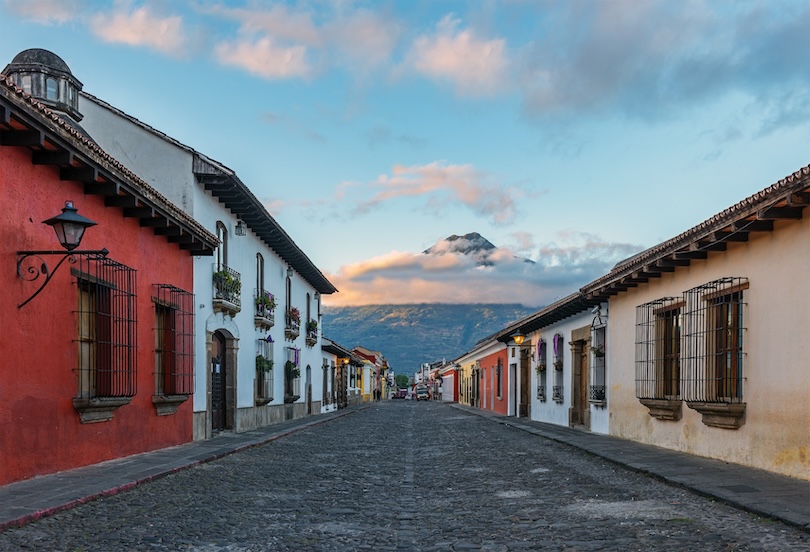
When you first catch a glimpse of the colourful buildings that line the bewitching cobblestone streets, you’ll quickly learn that the best way to explore Antigua is to spend a few hours ambling on foot.
Although compact in size, Antigua has no shortage of picture-perfect architecture that’ll have you snapping pictures at every corner. With this in mind allow yourself to get a little lost along the way. This is especially worthwhile early in the morning, as you’ll have a chance to see the city come to life gradually as the streets begin to fill up.
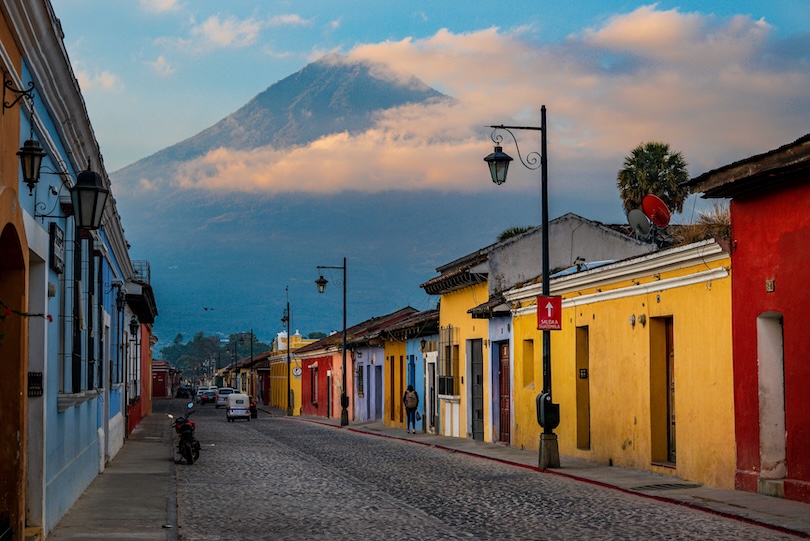
Some highlights to keep an eye out for include the famous Union Tank, which locals commonly used in Colonial times to wash their clothes, El Calvario Church, and San Pedro Apostol Church.
It’s worth noting that Antigua has seen an influx of international chains over the years, with Starbucks, McDonald’s and Taco Bell being just a few examples. Luckily, such establishments have been built into the old-school buildings, ensuring the city retains all its allure and picturesque qualities.
Visit the Santa Catalina Arch
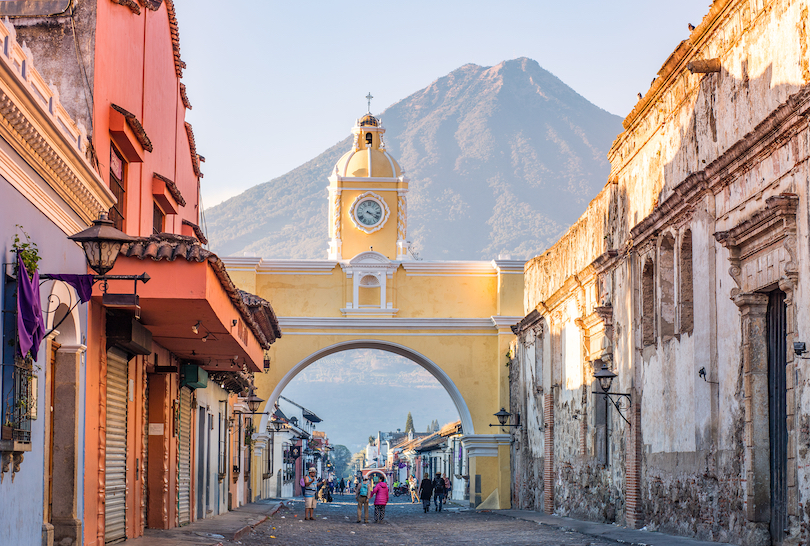
If there’s one landmark that Antigua is renowned for, it has to be the Santa Catalina Arch. This famous yellow structure has got to be the most photographed spot in the city and is a must-visit no matter how crowded the streets around it get!
Chances are, you might even stumble upon this distinguished archway with little to no effort, like I did, as many buses and shuttles disembark just a few minutes’ walk away.
The story behind the Santa Catalina arch is a fascinating one. During the latter end of the 17th century, the arch was constructed so that nuns could move between the convents on either side of the street without being seen in public.
As these nuns had vowed to live a life of seclusion, they were unable to cross the street while other passersby were in the area, which led to the formation of the archway.
Though built for practical reasons, this spot has become Antigua’s most acclaimed monument, thanks to its postcard-perfect design and how it frames the imposing Volcan de Agua in the background.
Admire the La Merced Church
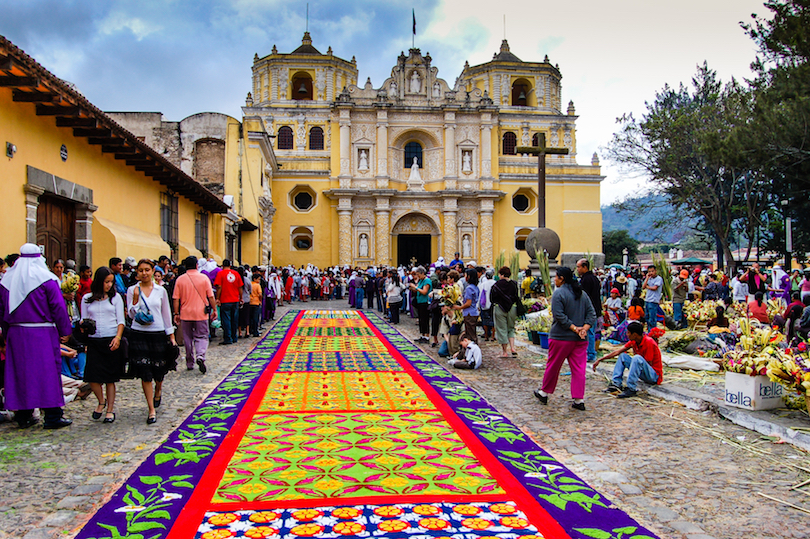
A short walk north of the arch brings you to La Merced Church, one of Antigua’s most impressive religious buildings.
Originally founded in the 16th century, the church has survived numerous earthquakes thanks to repeated rebuilding and innovative architectural design. Thick walls and lower bell towers were incorporated to better withstand future tremors.
Its elaborate Baroque façade is among the finest in Guatemala, featuring intricate white decorative carvings that contrast beautifully with the bright yellow exterior.
Admission to the church is free, and for a small additional fee, you can usually access the rooftop for panoramic views over Antigua and the surrounding volcanoes.
Do Some People-Watching at the Public Parks
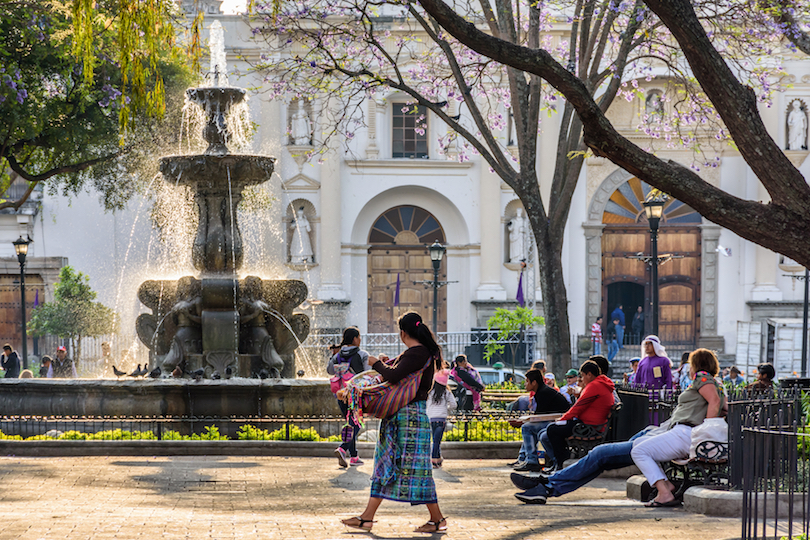
After a busy morning of sightseeing, make your way to one of Antigua’s public parks and enjoy some downtime. Many of the parks are also hubs for street food, making them excellent spots for those of you keen to dabble in authentic Guatemalan cuisine during your visit.
Central Park is the city’s beating heart. It’s a bustling square filled with vendors, benches, and trees that provide much-needed shade from the often sweltering sunshine. Grab a seat near the water fountain around which the park centers and spend some time watching the world go by.
While you’re here, you’ll likely notice the San Jose Cathedral standing along the eastern edge of the park. Now primarily in ruins, this cathedral was only partially rebuilt after being devastated by an earthquake in the 18th century.
Some smaller parks that also make for great pitstop locations are Union Park towards the south of Antigua or Santa Rosa Park if you find yourself in the city’s north.
Learn How Coffee Is Produced at Finca la Azotea

Coffee has long been one of Guatemala’s most important exports, and a visit to Finca la Azotea offers an excellent introduction to the country’s coffee-growing traditions.
Located just outside the city center, the estate combines a working coffee plantation with a museum that explains every stage of production, from cultivation and harvesting to roasting and export.
You’ll also gain insight into the history of Guatemala’s coffee industry and the challenges faced by many coffee-growing communities.
Beyond coffee, the estate offers several cultural experiences, including chocolate-making workshops, traditional weaving demonstrations, horseback riding, and artisan craft activities, making it a rewarding destination even if you’re not a coffee enthusiast.
Climb Volcan Pacaya
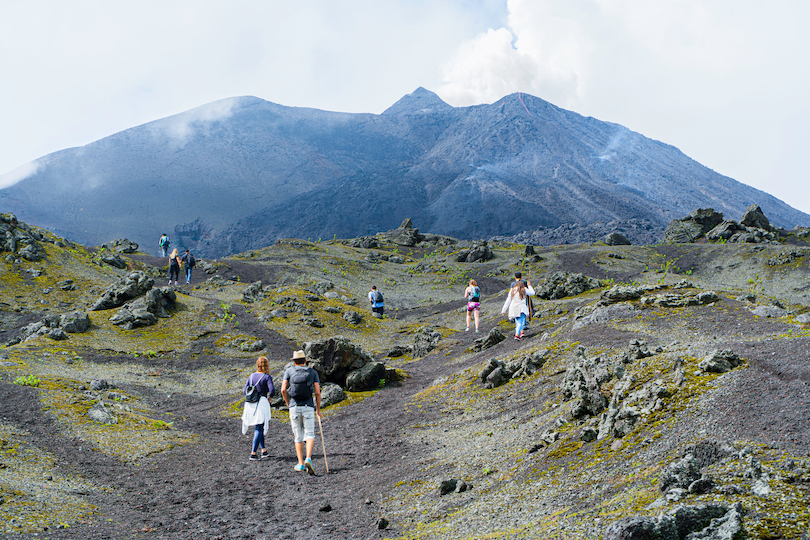
Located in Pacaya National Park, Volcan Pacaya rises to a height of 2,552 meters and is a very popular trek amongst tourists. It only takes around half a day to complete and the views from the top are absolutely stunning.
Part of a chain of volcanoes, Pacaya is still active and last erupted in 2014, when it covered Antigua in ash.
With lots of fauna and flora on show alongside the barren, lava-scarred terrain, the hike to the top makes for an interesting and rewarding experience; the scenery and panoramas are awe-inspiring.
Hike Volcan Acatenango
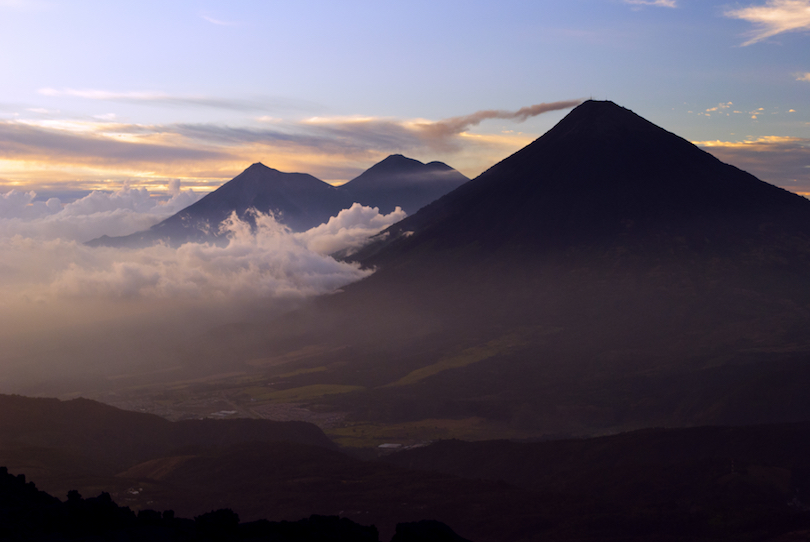
While it is possible to hike Volcan Acatenango in just one day, many people choose to camp overnight to spend as much time as possible on the magnificent volcano.
Its two peaks, Pico Mayor and Yepocapa, respectively reach a height of 3976 and 3880 meters. From their summits, you can watch the active Volcan de Fuego erupt and bubble away from a safe distance. The trek is quite challenging due to the altitude.
While the hike through a barren and desolate wasteland isn’t particularly beautiful, the views from the top more than make up for the arduous climb.
Learn about Cacao at the ChocoMuseo
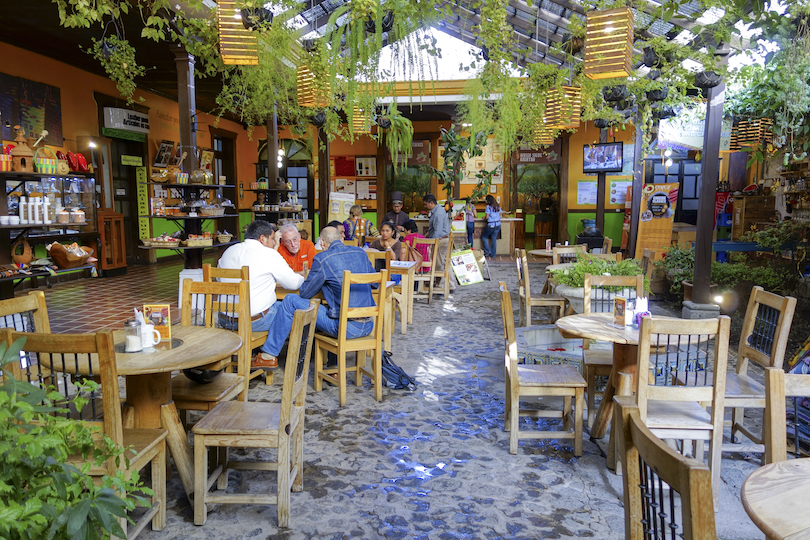
As the self-proclaimed birthplace of chocolate, it stands to reason that Guatemala knows a thing or two about the delicious cacao treat; the ChocoMuseo will teach you all there is to know about it.
Taking you through the history of cacao, its cultivation, and how it is turned into chocolate, the museum is very interesting to visit. You may even get to taste a sample or two as well as try your hand at making chocolate yourself.
With a gift shop on hand for when you’ve finished your tour, you may find yourself coming away with more than you bargained for; rich chocolate liqueur and local Guatemalan chocolates prove too hard to turn down.
Enjoy the view at Cerro de la Cruz
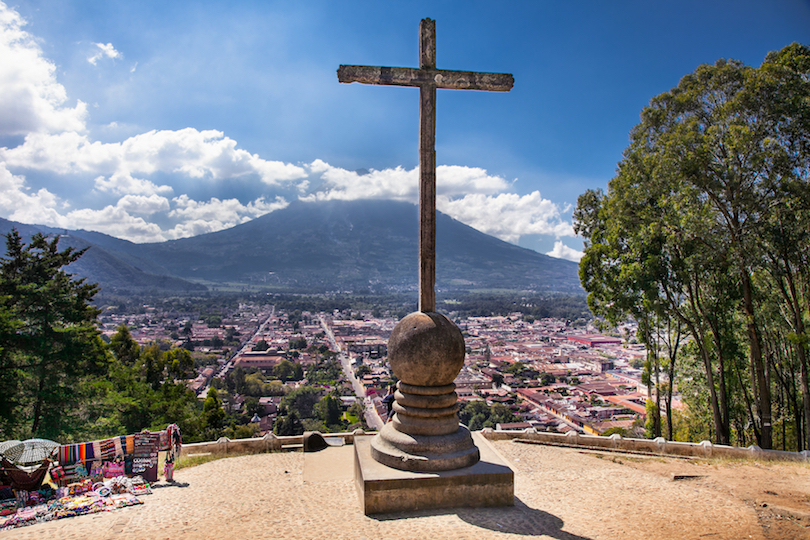
Meaning ‘Hill of the Cross’ in English, Cerro de la Cruz overlooks Antigua Guatemala. From its summit, you have the best views of the city below.
The short climb only takes about half an hour. At the top, you have a picture-perfect photo before you; Antigua is so beautifully framed by Volcan de Agua that towers behind it.
Cerro de la Cruz is a peaceful spot and many people bring a picnic with them to enjoy while taking in the stunning panorama.
Santo Domingo Monastery
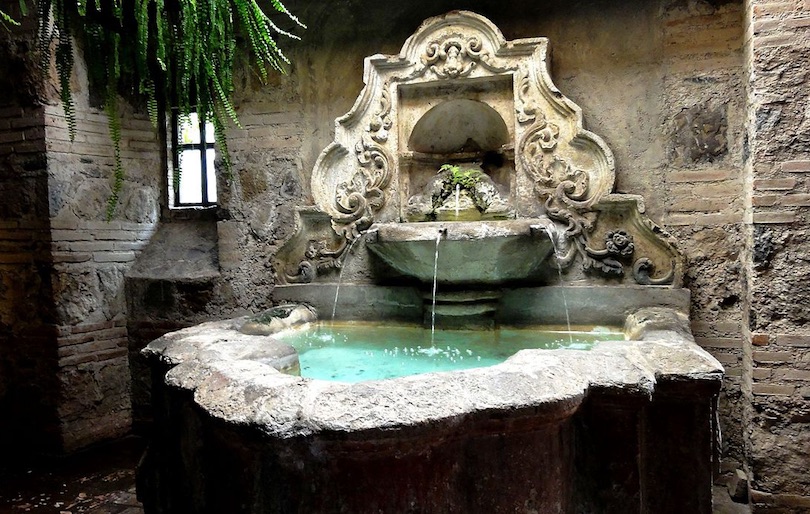
Once one of the largest and most important religious institutions in Antigua Guatemala, the Santo Domingo Monastery was sadly destroyed by an earthquake in 1773.
In recent years, the ruins of the monastery have been transformed into a delightful route which you can peacefully amble along. Alongside the archaeological site are six fascinating museums. The Museo Arqueologico and Museo Colonial, for example, showcase different artworks, artefacts, and sculptures from Antigua Guatemala and further afield.
The monastery’s ruined church and cloisters are particularly stunning, and Calvary Crypt houses a beautiful 17th century mural of the crucifixion.
Catedral de San Jose
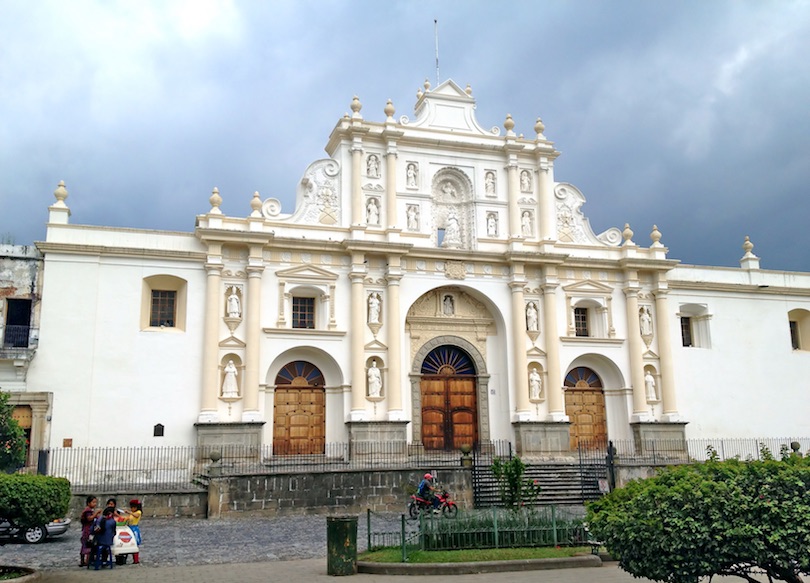
Although much restoration work has been undertaken to rebuild the cathedral, some parts of San Jose still lie in ruins due to the earthquake that devastated the city in 1773.
The dazzlingly white façade, however, is in almost perfect condition and is the highlight, with numerous fine sculptures of religious figures adorning it.
While the interior is less impressive, Quirio Catano’s Christ statue is definitely worth checking out, as are the ruins of the cathedral itself.
Convento de las Capuchinas
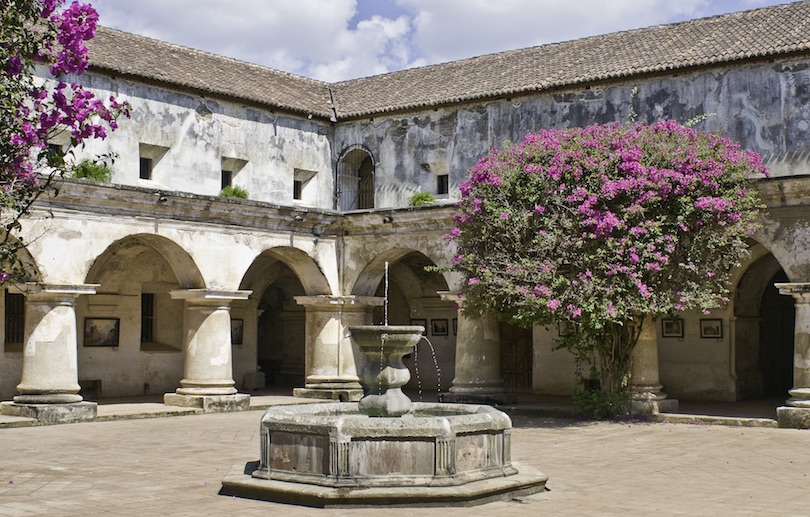
Over the course of its history, the Convento de las Capuchinas has been heavily damaged by an earthquake and abandoned for over 200 years. Consequently, it is almost a miracle that the convent has been successfully rebuilt and renovated to its current state.
Nowadays, las Capuchinas offers a fascinating look at what life was like for the nuns who lived here; perusing the rooms and exhibits is very interesting.
The nuns were a very important part of their community; they ran an orphanage and a women’s hospital as well as the convent itself.
San Francisco Church
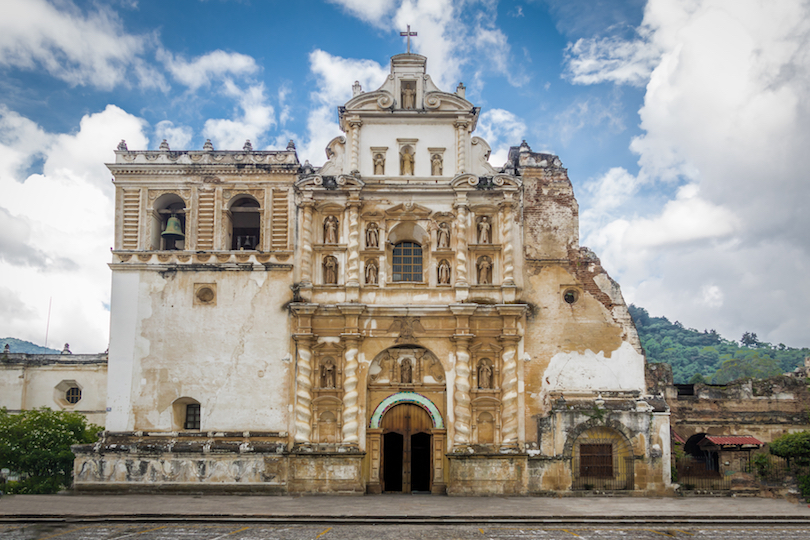
The oldest active church in Antigua, San Francisco was consecrated in 1542 and is a very picturesque place to visit due to its wonderful colonial architecture and delightful Baroque facade.
While the church itself is marvelous, the courtyard in front of it only adds to its splendor, as does the ruined Franciscan convent next to it.
With an interesting museum about Saint Hermano Pedro also on hand, San Francisco Church certainly has a lot to offer.
Convento Santa Clara
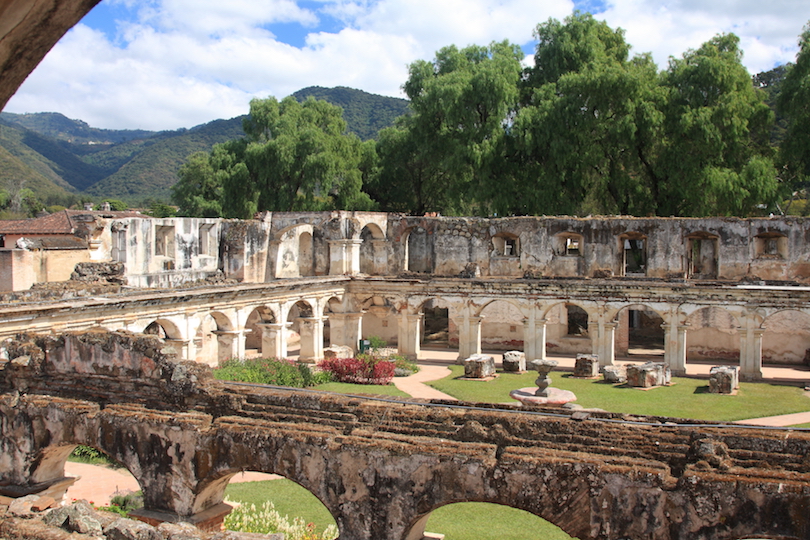
Fascinating to wander around, the ruins of the Convento Santa Clara attest to the frequent earthquakes that plague the region. Opened in 1734, the convent was only in use for four decades before it was destroyed.
At the heart of the complex are the magnificent cloisters, which are particularly delightful to explore. A fountain and peaceful gardens lie at their center.
With some great stonework on show as well as well-preserved arches and an impressive facade, this historical site is well worth a visit and there are loads of great photos to be shot here.