
You can find small towns all over the world with streets and buildings that stand frozen in time. These places once stood at the crossroads in history but now sit quiet, almost untouched for years.
Learning about these forgotten towns gives you a peek into what life was like far away from the busy cities you know. When you look at these places, you get to see how history, nature, and time can shape and change a community.
12. San Leo, Italy

If you’ve read Dante’s Divine Comedy, San Leo in Marche may be familiar to you. That’s because the renowned poet based purgatory on this small mountain village, particularly the fortress, parts of which were built by the Romans.
The village is famous for this castle that sits on a steep cliff above it. Listed as one of the most beautiful villages in Italy, you won’t want to miss the 7th century Parish Church on Piazza Dante nor the 12th century Romanesque San Leo Cathedral.
11. Nora, Sweden
 © Tom Pilgrim / Dreamstime
Arriving at Nora is like stepping back through time: it is home to more of Sweden’s characteristic traditional wooden houses, spared destruction by fire or demolition. 18th century Swedish poet Anna Maria Lenngren once said of the town, “Så liten stad, så mycket smak” – or in English, “Such a small town, so much flavor.”
The iconic houses are tucked away in picturesque cobbled streets that make exploring the 17th-century town a joy. In its central location (near the town of Örebro), and just two-and-a-half hours by train from Stockholm, Nora is a popular destination for tourists.
10. Xijiang Qianhu, China

The Miao people are one of China’s 56 ethnic minorities. They are a colorful people, known for their singing and dancing, intricate embroidery and houses built on wooden stilts. The best place to experience the Miao culture is Xijiang Town, 35 km (22 miles) from Kaili, Guizhou Province. Xijiang Qianhu is one of 10 villages making up the town.
A good place to start your visit is the Miao Nationality Museum where you’ll learn everything you ever wanted to know about the Miao culture but was afraid to ask.
9. Gordes, France
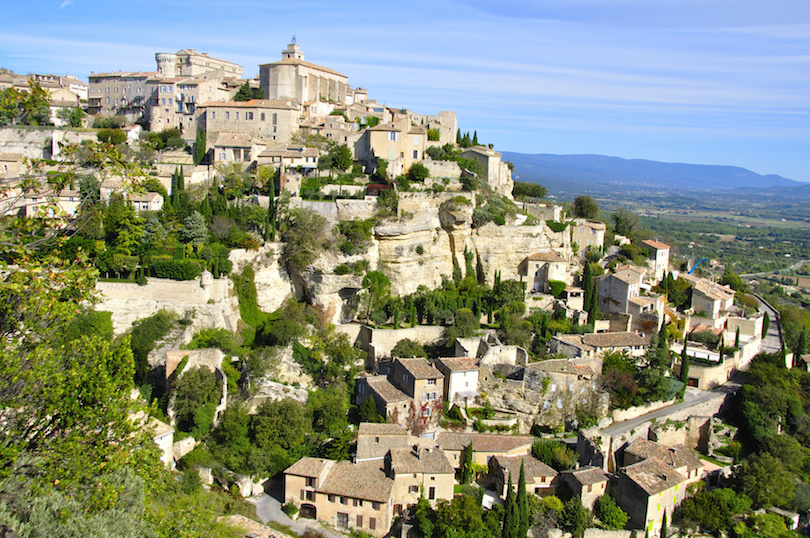
Wandering at will is the best way to see Gordes, another one of France’s beautiful villages. Located in Provence’s Luberon region, the gray and white stone houses spiral up a rock hill that is topped by a church and medieval castle.
The best place to photograph this picturesque village is from Bel-Air rock on road D15. A top sight is the 12th century Semanque Abbey where monks still make honey, lavender and liqueurs. You may also see bories, round stone huts, used by shepherds.
8. Fiskardo, Greece
 © Gordon Bell / Dreamstime
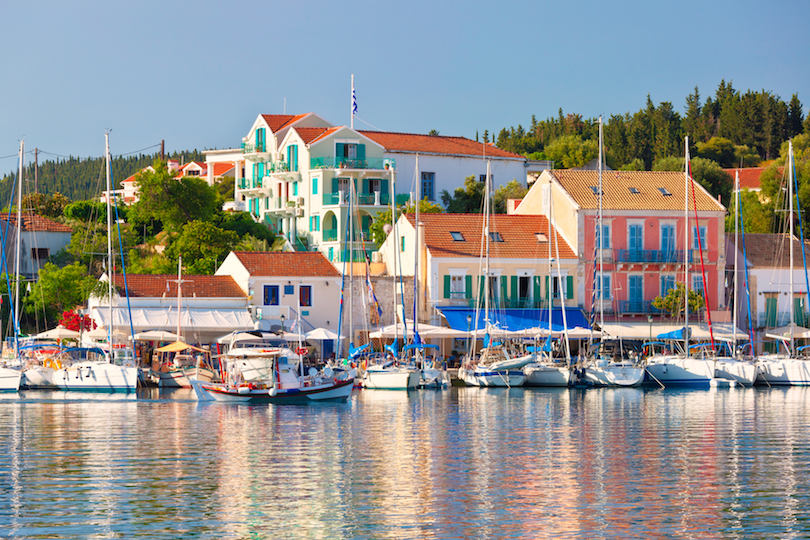
Picturesque is perhaps the best word to describe Fiskardo, a fishing village on the Ionian island of Kefalonia. Besides fishing boats, you’ll also find large yachts moored in the harbor. Fiskardo was once ruled by Venetians who left their architectural style stamped on the village. One of 365 villages on Kefalonia, Fiskardo is home to pebble beaches and sun-kissed coves, with trees down to the waterline. Fiskardo is a traditional Kefalonian village, made more special because it was untouched by a 1953 earthquake that destroyed most island villages.
7. Oudewater, Netherlands
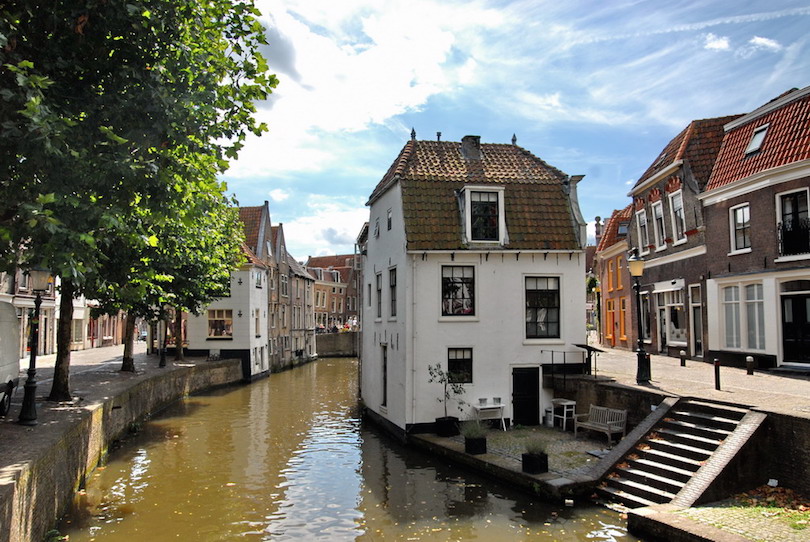
If you think your body is out of whack, head to Oudewater where you can get a certificate saying your weight is in proportion to your height. This practice dates back to the 16th century witch trials in Europe. People would flock there to be certified they weren’t witches. You, too, can be weighed today at Heksenwaag or witches scales. Sorcery aside, Oudewater is a charming old town (it was founded in 1265) with medieval houses lining canals.
6. Malinalco, Mexico

Malinalco is a town that’s always been associated with mystery and sorcery. Legend says it was the home of the goddess Malinalxóchil, but it’s also where a Black Christ appeared in a cave near here. It’s the second most visited shrine in Mexico.
Malinalco was once the home of the Aztecs, and you can see some of these ruins in the Cuauhtinchan Archeological Zone west of town. You may also enjoy a visit to a 16th century Augustine monastery dedicated to the Divino Salvador (Divine Savior).
5. Monhegan, Maine
 © Nancy Kennedy / Dreamstime
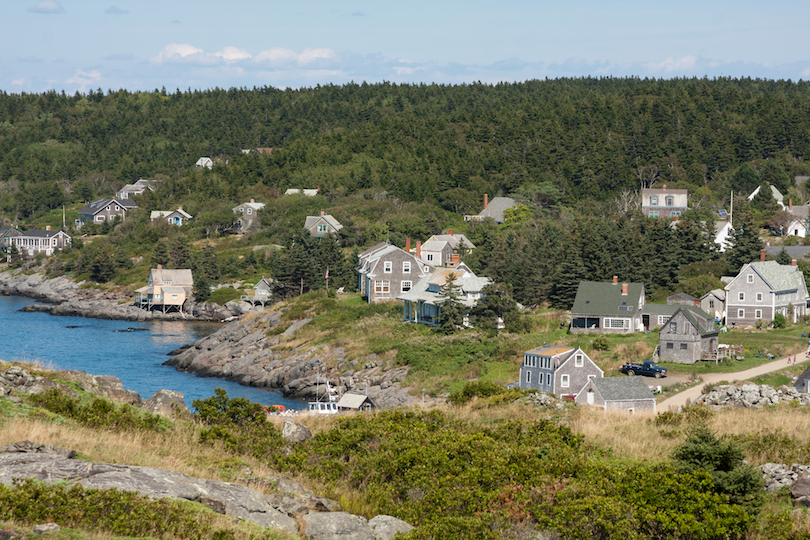
Tiny Monhegan is a settlement located on an island off Lincoln County. Monhegan actually means ‘out-to-sea island’ in Algonquian, which is apt, since the island is 12 nautical miles from the mainland. Beginning as an English fishing camp even before the Plymouth Colony was established in 1620, Monhegan has been through pirates, trade, wars and fishing, which is still its main economy.
Given its remote location, the stark sea views from Monhegan, and the jagged and green island itself, you might be able to understand why this truly charming town became a thriving artist’s colony. Already well-established by the early 1900’s, the dramatic cliffs and pine woods continue to attract artists to this day.
4. Castelo Rodrigo, Portugal

This small, northeastern Portuguese town has quite an interesting historical story. The castle, wearing scars from years of siege, displays Portugal’s coat of arms upside down. The town must do so forever under the orders of D. João, the former King of Portugal. The orders came in 1385 after D. João defeated the lords of Castelo Rodrigo at the Battle of Aljubarrota.
Castelo Rodrigo sided with the king of Castile who had just married D. Beatriz, the only daughter of King D. Fernando of Portugal, and he stood by her claim to the throne after her father’s death. Now, this peaceful town has a beautifully restored center sprawling out from the historical castle.
3. Wickenburg, Arizona
 © Paul Mckinnon / Dreamstime
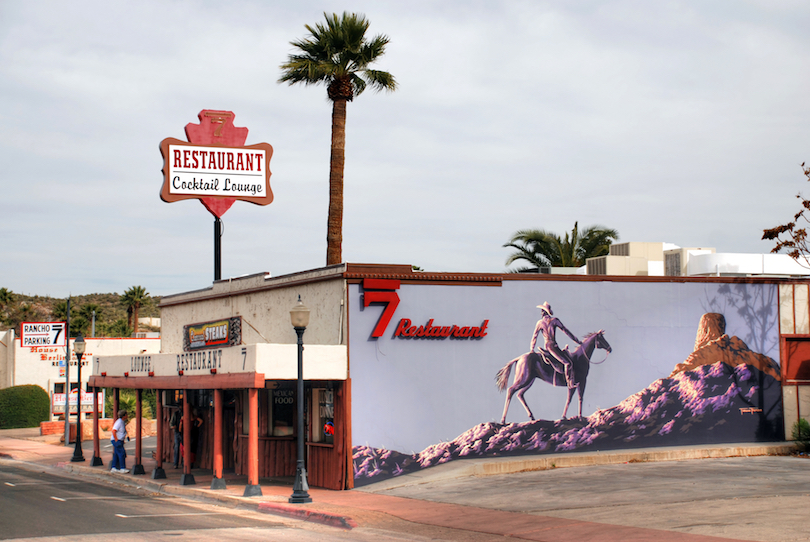
Visiting this small town feels like a trip to the past, with its aptly named Pioneer Street and the old facades of buildings. In 1862, there was a gold strike on the Colorado River which brought many prospectors to the surrounding area hoping to make their fortunes. A German named Henry Wickenburg was one of the first prospectors; he founded the very successful Vulture Mine – which has earned over $30 million over the years.
Also in Wickenburg is the semi-notorious Jail Tree. Was it a makeshift jail used for outlaws in the Wild West? It may just be a legend. Elsewhere, getting out into nature is easy in Wickenburg; the Hassayampa River Preserve is a good place for birdwatching and soaking up the tranquility.
2. Cochem, Germany

If you’re like many people, you probably think hillsides are too steep for farming. You may change your mind when you visit Cochem. This small town stretches along the Moselle River, a very scenic picture indeed. Steep hills arise behind the town and on them you’ll find neatly tended farm fields with forests above them. But wander the streets, where you’ll find excellent examples of Baroque architecture, including timbered houses that blend into the townscape so well.
1. Mojacar, Spain
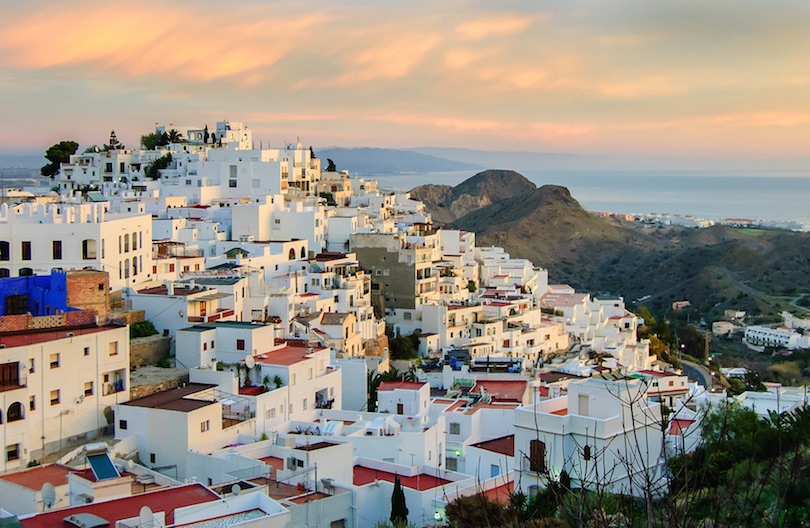
If you want to explore a small town in Spain that manages to combine the feel of a Spanish beach resort with the history and scenery of a mountain village, then head to Mojácar in the province of Almeria. For more than 4,000 years, Mojácar has been settled, although much of the bright white architecture that now stands dates back to the 14th century.
Be sure to visit Torre Pirulico, a watchtower from the 13th century from which you can see the coast, as well as the vantage point of El Mirador del Castillo. Venture down to the beach, known as Mojacar Playa, for some fun at the coastal resort.