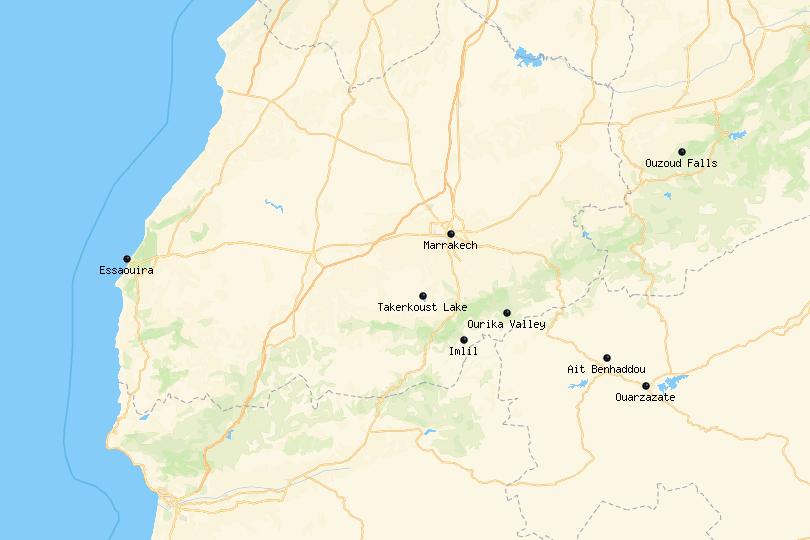

Sometimes the exotic sights, sounds and smells of a city like Marrakesh can overwhelm us. When this happens it’s time to get out of the city for a few hours and recharge our batteries.
While you won’t find the fairy tale castles of Europe on these day trips from Marrakesh, you will find deserts and mountains that have a scenic beauty all of their own. You’ll also find picturesque Berber villages with their multi-colored adobe buildings as well as some good fishing and beaches, and even spectacular waterfalls.
7. Takerkoust Lake

If you want to experience a desert environment, Takerkoust Lake is a good place to visit. The Agafay Desert, where the lake is located, is a lot closer than the Sahara Desert. Takerkoust Lake was built by the French in the 1920s to provide water and electricity to Marrakesh.
The lake is a good place to spend the day outdoors. You can go fishing – perch and black bass are trophy-size, paddle boating or jet skiing. You can take a hike or ride a horse. Couch potatoes can indulge in massage, soak tired traveling feet in an outdoor foot spa, or practice yoga in a room with a view.
Getting to Takerkoust Lake
- The easiest option for visiting the beautiful Takerkoust Lake is to take a guided tour. These are particularly memorable as they also take you through the four valleys that the region is renowned for – each more beautiful than the last. (More info and bookings)
6. Imlil

If you like to hike in the mountains, Imfil offers the perfect opportunity for you. Located in a valley in the High Atlas Mountains, it’s a good point to begin your trek to Mt. Toubkal, northern Africa’s highest mountain.
About 60 km (37 miles) south of Marrakesh, Imfil caters to hikers and climbers, but it’s easy enough to find other things to do: wander around a small Berber village with its tiny adobe houses, watch women wash clothes n the river, shop for handicrafts in stores or sip tea atop the Kasbah. In other words, Imfil is a great place to chill out and relax after the busyness of Marrakesh.
Getting to Imlil
- From Marrakesh, it takes about two hours to drive to Imlil which lies to its south.
5. Ouarzazate

If you’ve seen Lawrence of Arabia, Game of Thrones or Gladiator, then you’ve seen Ouarzazate on the screen. This old Berber town has been featured in many movies and has even stood in for Tibet, half a world away. Visiting the famous movie studios is just one thing you can do here.
Nestled between the desert and the mountains, Ouarzazate projects a stunning profile with adobe buildings that match the color of the mountains. Take some time to wander through the town, once a stop on the camel trade route.
Getting to Ouarzazate
- A memorable way to explore this enthralling part of Morocco is to take a guided tour; this includes stops at both Ouarzazate and Ait Benhaddou. Both are beautiful to behold, and in addition to visiting their main sights, you’ll get to learn about Berber life when you visit a traditional family house. (More info and bookings)
4. Essaouira

Essaouira is an anomaly among coastal towns: It doesn’t get a lot of beachcombers or sunbathers for much of the year. It does, however, get a lot of windsurfers. High winds have earned this former Portuguese fortress town the title of “Wind city of Africa.” But there’s plenty to do away from the Atlantic coast beaches.
You can wander through the old medina, take in the 18th century European architecture for which the city is known, or buy some locally made wood carvings. Take in the annual Gnaoua World Music Festival or watch goats climb the argan trees.
Getting to Essaouira
- Located on Morocco’s western coastline, Essaouira is around a three-hour journey away by bus. From the center of Marrakesh, head to the main train station, which is where buses depart for Essaouira every couple of hours.
- One of the best ways to see as much of Essaouira as is possible in one day is to take a guided tour from Marrakesh. In addition to taking you there and back, the day trip also includes a sightseeing tour of its gorgeous harbor and sea fort, as well as free time to explore the bustling souk. (More info and bookings)
3. Ouzoud Falls

Located in the Grand Atlas Mountains about 150 km (90 miles) northeast of Marrakesh, Ouzoud Falls is one of Morocco’s natural wonders. The picturesque falls tumble 110 meters (360 feet) over the cliffs, so be prepared to see pretty rainbows.
Some say Ouzoud means “the art of grinding grain” in Berber so you’ll see old grist mills still in use if you go into the caves. Others say Ouzoud means “olives,” which is reasonable, too, since you walk through olive trees to the falls. It’s possible you’ll see macaque monkeys as you make the hour-long walk to the falls.
Getting to Ouzoud
- Many people who want to visit Ouzoud Falls opt to take a guided tour. As well as taking you around the falls, your guide will teach you about Berber culture. You can even decide to go on a hike around the magical landscape if you feel like it. (More info and bookings)
2. Ourika Valley

If you need to escape the searing heat of Marrakesh summers, do what the locals do: visit the very scenic Ourika Valley Temperatures are much cooler in this High Atlas Mountains valley. The prettiest time to visit, however, is February through April when the valley is abloom with wildflowers, and cherry and almond blossoms.
Sitti Fatma is a popular weekend resort and close enough to Marrakesh that many visitors ride out on motor scooters where they’ll picnic by scenic waterfalls and streams. The best skiing in Morocco is at Oukaïmeden, which is also known for prehistoric rock carvings.
Getting to Ourika Valley
- The easiest way to visit the scenic valley is to take a guided tour to Ourika. The trip also takes you to explore the Atlas Mountains, stopping off at Berber villages on the way. A stop at Oukaimeden is included, and the popular ski resort offers fantastic views over the countryside surrounding the mountains. (More info and bookings)
1. Ait Benhaddou

With a day trip from Marrakesh to Ait Benhaddou, you can relive the days when caravans of camels carried trade goods between the Sahara and Marrakesh. This ancient city is known for its earthen clay architecture of terraced housing built on a hillside and surrounded by a wall.
Ait Benhaddou is so scenic, it’s been featured in many films, including The Man Who Would be King and Jewel of the Nile. Ait Benhaddou Is the most famous ksar (fortified village) in the Ourila Valley. Words such as “awesome” and “spectacular” are not adequate to describe this very picturesque old city.
Getting to Ait Benhaddou
- If you don’t fancy doing the long drive yourself, you may be better off taking a sightseeing tour to Ait Benhaddou. You’ll get to see all the fortified village’s main sights as well as visit a traditional Berber house. (More info and bookings)