
Set on a hillside of winding cobblestone streets and terracotta rooftops, this charming colonial city captivates with its timeless beauty. Draped in bougainvillea and filled with striking architecture, it offers a picturesque glimpse into Mexico’s past.
Taxco, officially known as Taxco de Alarcón, is a former silver-mining center renowned for its Spanish colonial heritage. Despite its small size, it draws visitors from far and wide who come to explore its narrow alleyways and atmospheric historic center.
Highlights include visiting local museums, admiring traditional arts and crafts, and shopping for finely crafted silverware, for which the city is especially famous. With its unique setting and rich character, Taxco is a truly enchanting destination to explore.
9. Christ the Redeemer Statue
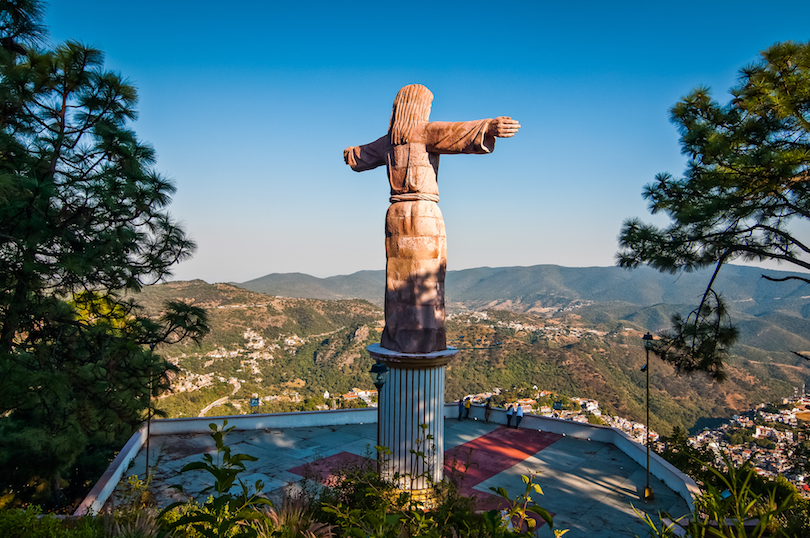
Towering above the city on the Cerro del Atache hill, the Christ the Redeemer Statue is one of Taxco’s main tourist attractions. Built in 2002 over eight months, it offers some of the best bird’s eye views of the city from the El Cristo Panoramico (the Christ View Point).
Similar to Brazil’s Christ the Redeemer statue in Rio de Janeiro but on a much smaller scale, this national monument watches over the city with open arms. The best time to climb the hill to see the view and the statue is just before the sun sets, so plan accordingly.
8. Silver Shopping
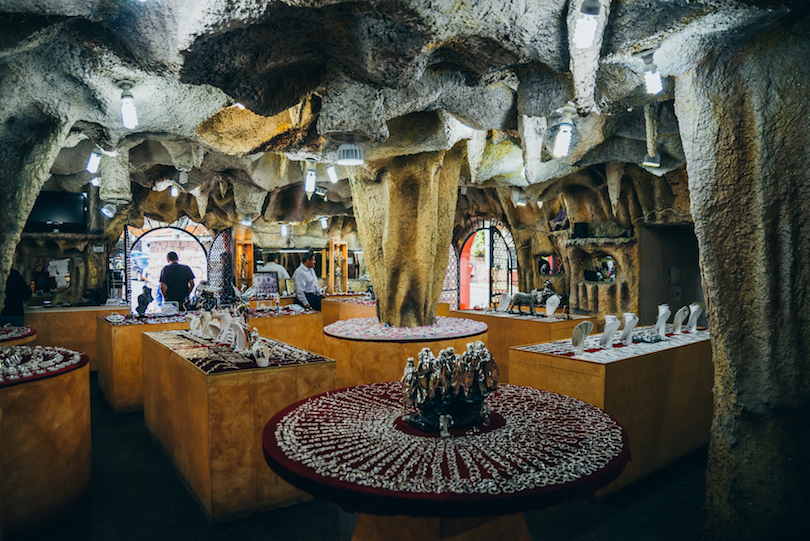
Once a booming silver mining town, the Mexican city of Taxco is renowned for its silver. In fact, it’s been dubbed Mexico’s silver capital, despite the fact that its resources are now dwindling. Visitors travel from far and wide to shop the high-quality sterling silver jewelry and trinkets for sale here.
Most of the silver workshops in Taxco are reputable, offering everything from handcrafted individual pieces to mass-produced souvenirs for tourists. The items are priced by weight, depending on the quality of the silver.
Make sure that you’re paying for the real deal by checking that the silver is marked with a .925 stamp, which proves that it’s indeed Sterling Silver, made up of 92.5% silver and 7.5% copper for strength. If you’re lucky, you may find something with a .950 stamp, which means it contains 95% silver, but these items are rare and will cost more.
Visit the Museo de la Plateria (the Silver Museum), where you can watch the silversmiths go about their expert ancient craft. The Tianguis de la Plata (Silver Street Market) is worth a visit for affordable silverware and trinkets, and if you’re looking for something special, head to the Spratling workshop in Taxco Viejo.
7. Semana Santa
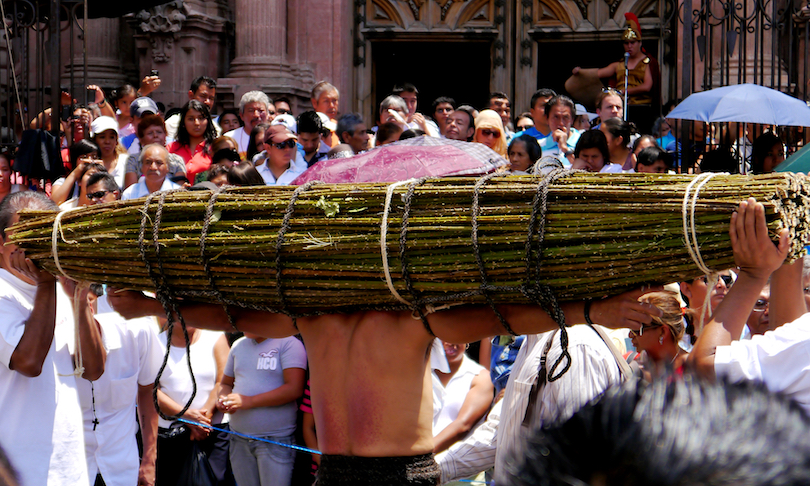
The Semana Santa (Easter Holy Week) is a famous religious festival running for a week over the Easter holidays in Mexico. Held from Palm Sunday until Easter Sunday – the exact dates vary each year – Semana Santa is one of Mexico’s most important events on the religious and social calendar.
While most of the Semana Santa events have mellowed over the years in other places in Mexico, Taxco still clings to the original celebrations – marking the week with rather brutal reenactments of Biblical events.
Taxco is a particularly special place to experience the Semana Santa parades. Holy wooden crosses and sculptures from the churches in Taxco and nearby villages are carried through the city by men in black robes as part of the Procession of the Souls of Purgatory.
The Procession of the Virgins includes hundreds of Virgin Mary sculptures paraded through the streets by young, veiled women in white and kids dressed as angels. Other parades include the Procession of the Santisima Trinidad (the Holy Trinity) and the Procession of Jesus Christs. The locals all hold palm weavings and burn incense. Folk dance performances are common in the evenings.
6. Museo de la Plateria
The Museo de la Plateria (the Silverware Museum) is a silver factory that’s dedicated to showcasing Taxco’s impressive silver and interpreting the mysteries of the industry.
Located in the center of Taxco, the exhibits feature a rather impressive silverware collection, including silver that once belonged to Don Antonio Pineda himself – a well-known Mexican modernist and silversmith.
Visitors can explore the museum’s many exhibits and take a tour of the silver mine and factory to learn how the silver is made. You’ll be able to see how it goes from being mined to fine-crafted into remarkable pieces of jewelry.
5. Teleferico de Taxco
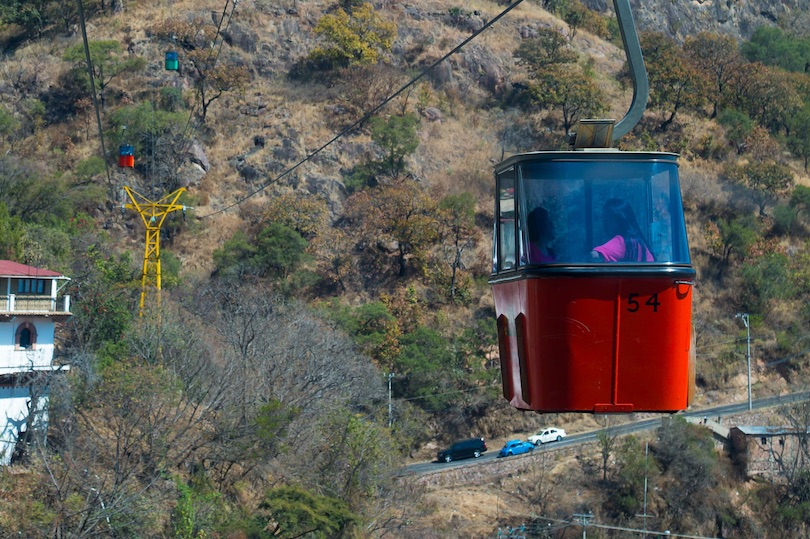
The Teleferico de Taxco (the Taxco Cableway) is a mountain cable car in Mexico, and one of the best things to do when you’re visiting Taxco. The ride on this scenic Swiss-built gondola takes you to and from Hotel Montetaxco at the top of the mountain and Taxco town in about ten minutes (one way).
Whether you’re staying at the hotel or not, this cable car is well worth the trip. It offers some of the best views of the city of Taxco from above, and its lush surrounding mountains.
Stop for an afternoon drink on the hotel terrace – the menu is more affordable than most places in Taxco’s Zocalo square – but make sure you head down before 7 p.m. as the cable car stops running in the early evenings during the week.
4. Museo Guillermo Spratling
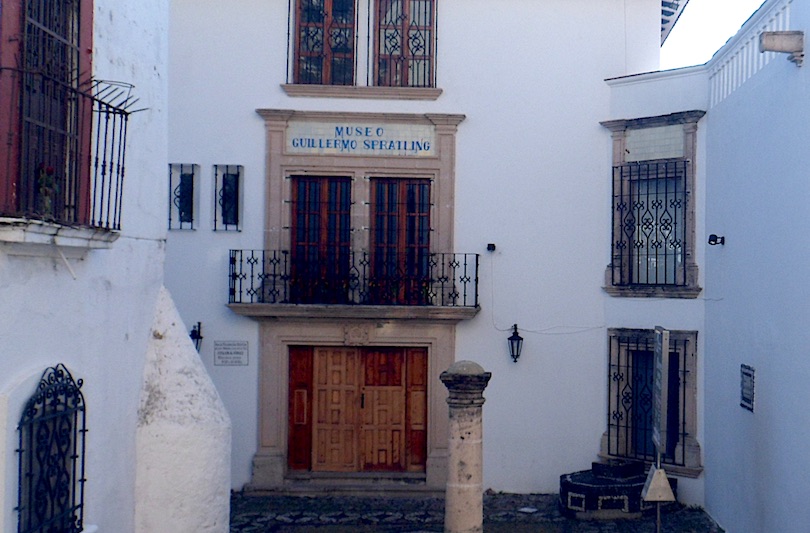
The Museo Guillermo Spratling, also known as the William Spratling Museum, is a historical and anthropological museum that features an extraordinary collection of pre-Hispanic jewelry, artwork, pottery, silverware, and handcrafted sculptures spread across three floors.
Visitors can explore over 200 archaeological artifacts from Mesoamerica that formed part of famous silversmith William Spratling’s personal collection. Browse the exhibits showcasing everything from fractured bones to semi-precious stones. The highlight is the skull adorned in jade green mosaics.
Other interesting exhibits include a collection of counterfeit articles and a range of silverwork designs Spratling himself created in Taxco and Taxco el Viejo.
3. Casa Borda
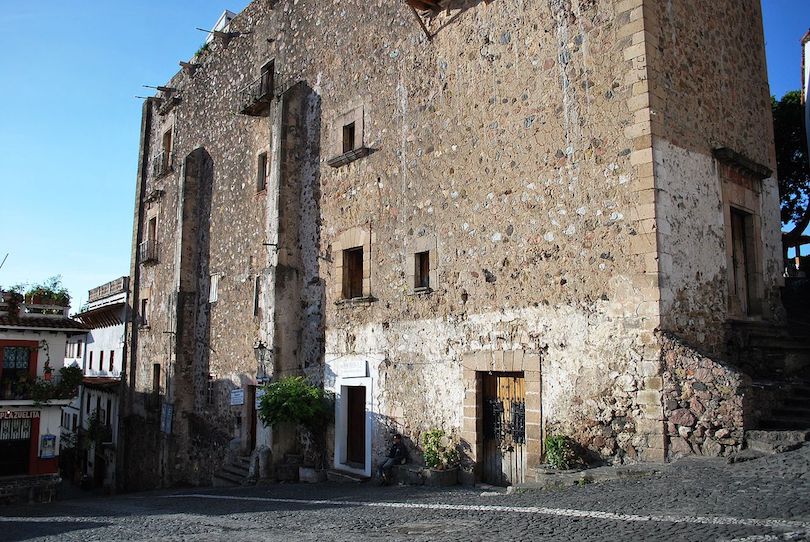
If you’re interested in arts and culture, don’t miss the Casa Borda, an authentic cultural center in Taxco. Built in 1759 overlooking the Borda Square and the gorgeous Santa Prisca Temple, this 18th-century colonial building features 14 exhibition rooms spread across four floors. You can spend hours exploring the paintings, contemporary sculptures, and historic photographs if you choose to.
Impressive architecture and artifacts aside, the center is also used as a venue for experimental theater performances, musical shows, book presentations, and various competitions, such as the National Silver Contest and the International Guitar Competition and Festival.
2. Zocalo
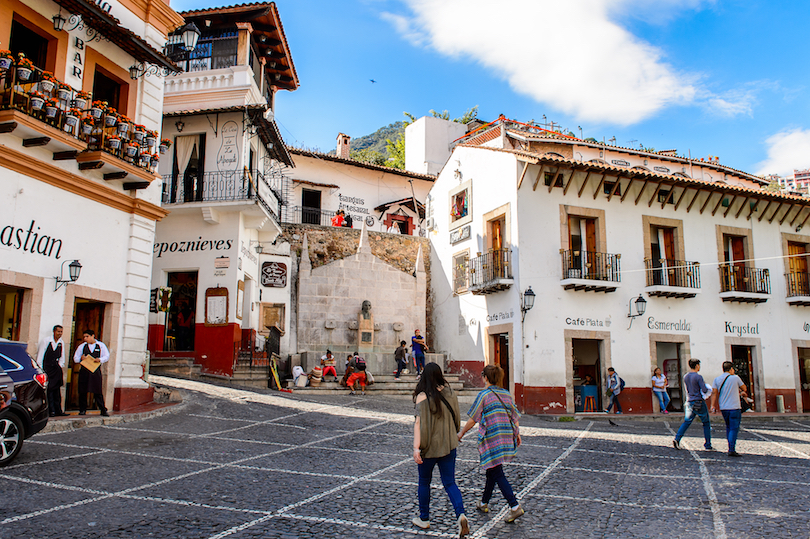
The Zocalo square is a small, tree-lined plaza that forms the beating heart of Taxco. This central square is a fantastic place to soak up the unhurried lifestyle of this Mexican city, and people-watch from one of the many side cafés and coffee shops.
The city’s steep cobblestone streets and ‘callejones’ (stairways) all lead off from this plaza, so it’s a great place to orient yourself on a walking tour of Taxco. The most famous landmark in the Zocalo is the famous Santa Prisca Church and the authentic pottery and silverware stalls just behind it.
Hang out in the Zocalo square with a churro in hand or watch one of the pop-up folk dance and musical performances often held here in the evenings. It’s a hive of activity!
1. Templo de Santa Prisca
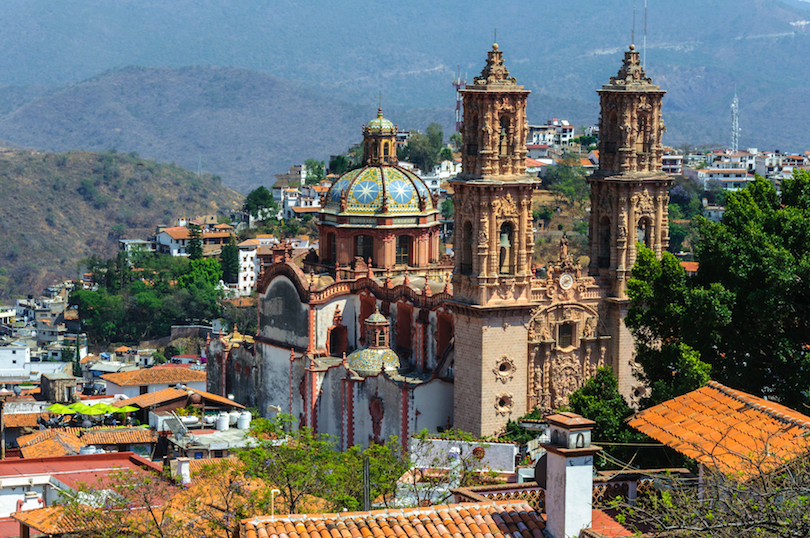
The Templo de Santa Prisca, also known as the Santa Prisca Church, is one of the most beautiful churches in Mexico. Located on the eastern edge of the Zocalo, Taxco’s main square, this rose-colored Baroque cathedral towers above the city.
The cathedral’s architecture is especially impressive and a bit unusual – it’s a mix of Spanish colonial Baroque architecture known as ‘Churrigueresque.’ It was built between 1751 and 1758 by Jose de la Borda – a wealthy silver mining mogul – in the same location as a working silver mine. At the time it was built, the Templo de Santa Prisca was the tallest building in Mexico.
Highlights include the Churrigueresque twin towers, a chapel decorated with Spanish Talavera tiles, the colorful cupola, and the depiction of the Assumption of Mary on the cathedral portal. Don’t miss the nine floor-to-ceiling altarpieces decorated with gold, particularly the main one that honors the town’s patron saints, San Sebastian and Santa Prisca, as well as the famous paintings by Mestizo painter, Miguel Cabrera.