
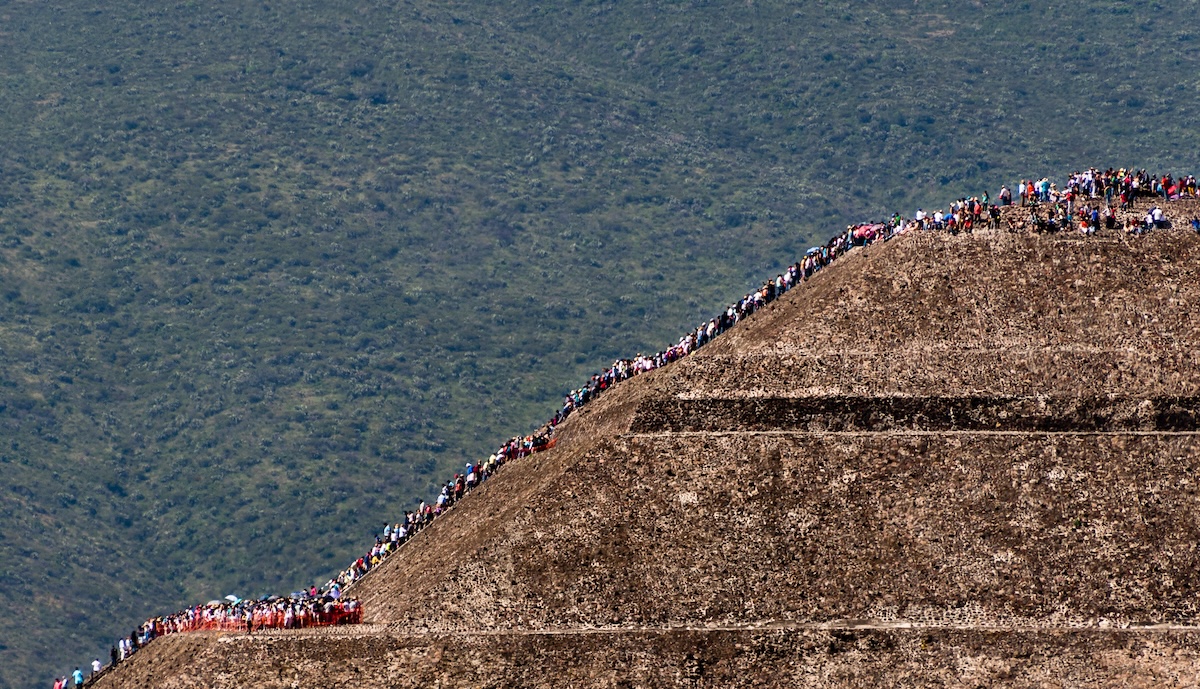
Towering pyramids, ancient ceremonial avenues, and centuries of unanswered questions make this one of the most fascinating archaeological sites in the Americas. Few places offer such a powerful glimpse into a civilization that remains shrouded in mystery.
Located just northeast of Mexico City, Teotihuacan was once one of the largest and most influential cities in the ancient world. At its height, it was home to a thriving urban population, though much about its origins and eventual decline remains unknown.
Today, visitors come to marvel at its immense pyramids, explore the vast ruins, and uncover the story of a city that flourished long before the arrival of the Aztecs. Remarkably well preserved and monumental in scale, Teotihuacan remains one of the most extraordinary historic sites in Mexico.
What are the Teotihuacan Pyramids?
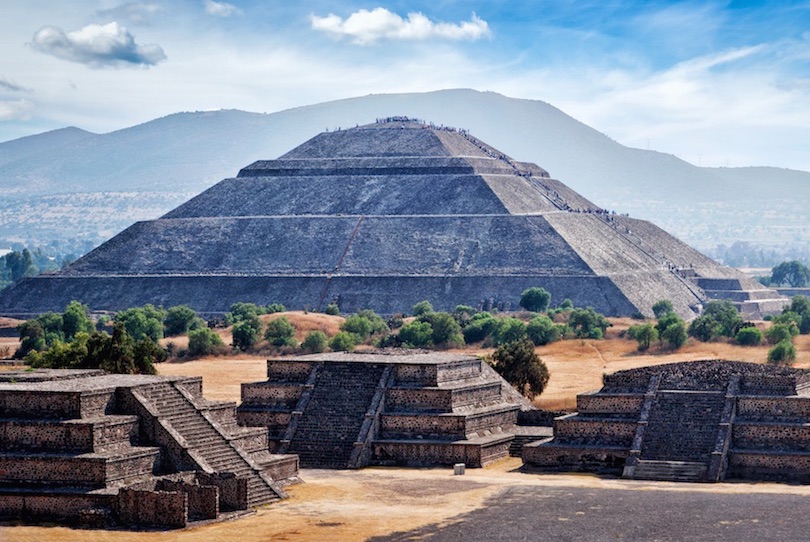
Often referred to as the “City of the Gods,” Teotihuacan remains one of the greatest mysteries of the ancient world. The name itself was given by the Aztecs centuries after the city had been abandoned. They believed it was the place where the gods gathered to create the sun and moon and used it as an important pilgrimage destination.
Archaeologists believe the area was inhabited as early as 600 BC, with major construction taking place between the 1st and 7th centuries AD. Unlike many ancient cities, Teotihuacan was a multicultural center influenced by several groups, including the Totonac, Maya, Mixtec, Toltec, and Zapotec peoples.
The reasons behind the city’s decline remain uncertain. Theories range from political unrest and social upheaval to prolonged droughts and environmental changes. Despite the absence of defensive walls or fortifications, many temples contain military imagery, adding another layer to the city’s enduring mystery.
Pyramid of the Sun
Dominating the landscape at approximately 65 meters (213 feet) tall, the Pyramid of the Sun is one of the largest pyramids in the world.
Built from stone and rising through multiple stepped levels, the pyramid was likely constructed as a ceremonial monument dedicated to an important deity. Although visitors can no longer enter the interior chambers, archaeological excavations have revealed an extensive network of tunnels and chambers beneath the structure.
Researchers have uncovered animal remains, obsidian tools, ceremonial offerings, and the distinctive greenstone masks associated with Teotihuacan culture. Despite decades of study, the pyramid’s original purpose remains uncertain. Even its modern name was assigned centuries later by the Aztecs, making its true significance one of the site’s greatest mysteries.
Standing before the Pyramid of the Sun offers a powerful reminder of the engineering skill and cultural sophistication of the civilization that built it.
The Palace of the Quetzal Butterfly
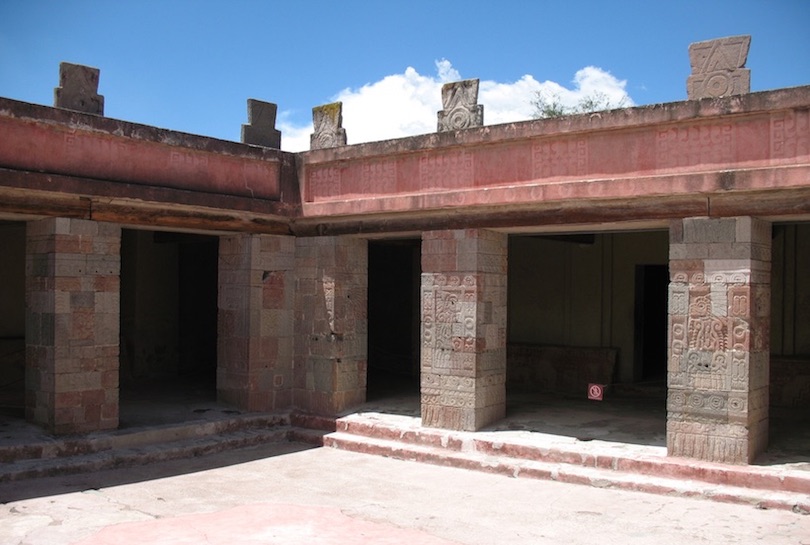
One of the most visually striking structures in the city is the Palace of the Quetzal Butterfly.
Although its original purpose is still debated, archaeologists believe it may have served as a residence for priests or members of the elite. The palace is centered around an elegant courtyard decorated with carved birds, butterflies, and other symbolic imagery.
What makes the palace particularly remarkable is the preservation of its original colors. Thanks to its partially sheltered design, many of the painted surfaces have survived for centuries despite exposure to the elements.
Intricately carved pillars surround the courtyard, while nearby murals depict owls, deities, and other important figures from Teotihuacan belief systems. These artworks provide some of the best surviving examples of the city’s artistic and religious traditions.
Pyramid of the Moon
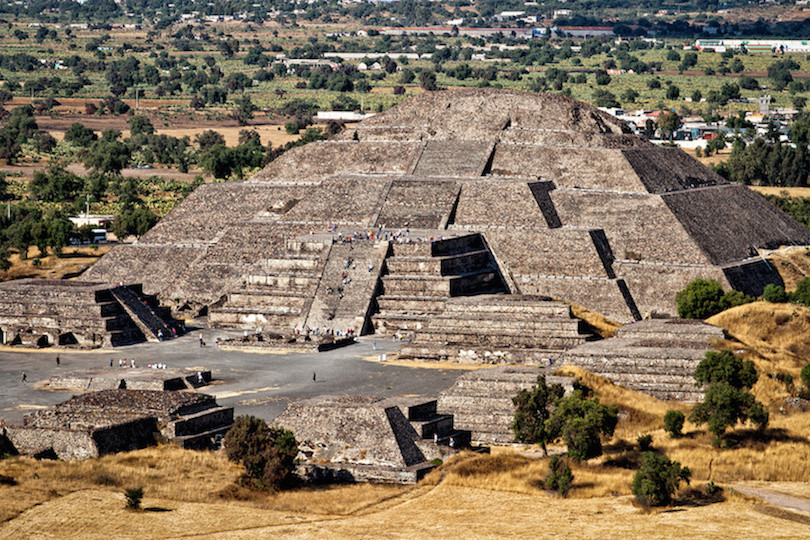
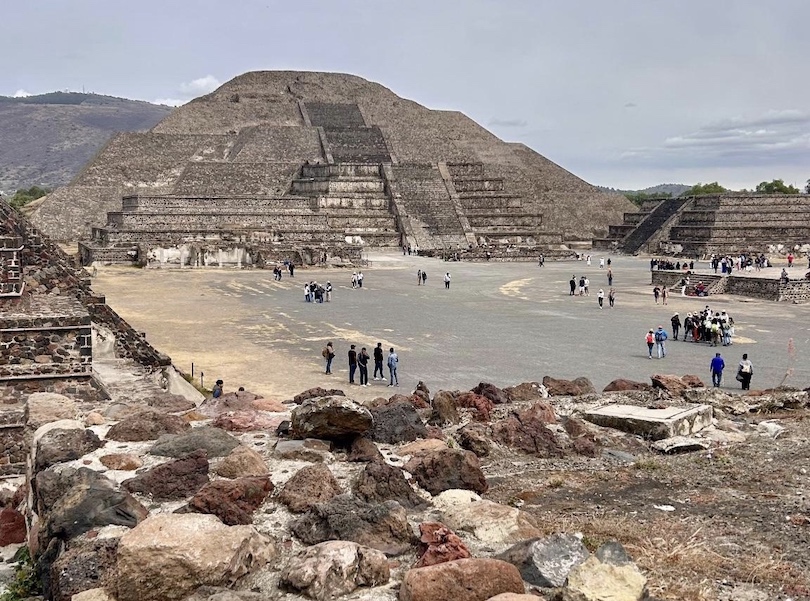
At the northern end of the Avenue of the Dead stands the impressive Pyramid of the Moon.
At approximately 43 meters (141 feet) tall, it is smaller than the Pyramid of the Sun but equally captivating. Positioned against the backdrop of Cerro Gordo, the pyramid was intentionally designed to mirror the mountain’s silhouette.
Researchers believe the structure may have been dedicated to a goddess associated with water, fertility, and creation. Excavations beneath the pyramid have uncovered ritual offerings, burial sites, and evidence of ceremonial sacrifices, suggesting it played an important religious role within the city.
The pyramid sits within a large ceremonial plaza and marks the end of the famous Avenue of the Dead, the main thoroughfare that runs through the heart of Teotihuacan.
While access to the upper levels is now restricted, the surrounding viewpoints provide excellent perspectives of the ancient city and its monumental architecture. Walking through this vast archaeological complex offers a rare opportunity to experience one of the most influential urban centers of the ancient Americas and explore a civilization that remains, even today, shrouded in mystery.
Temple of Quetzalcoatl
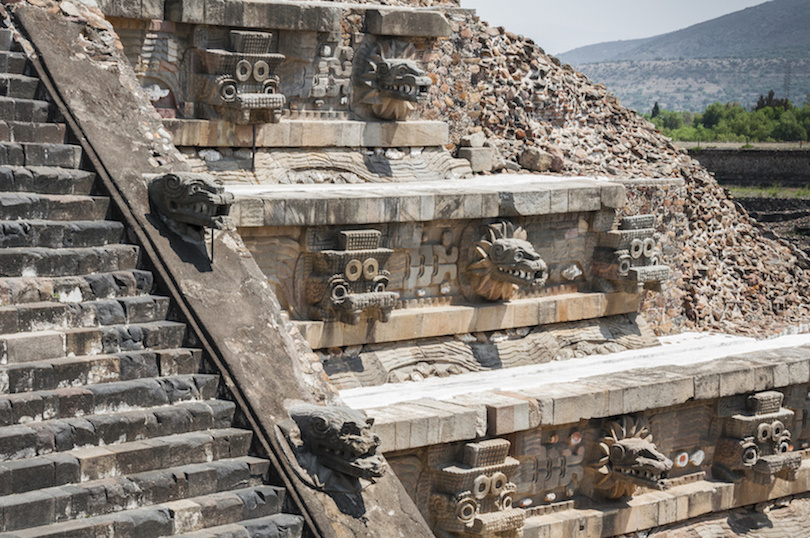
The Ciudadela or Citadel anchors the southern end of the Avenue of the Dead and received its name from the Spanish because of its impressive walls. However, it was actually a large sunken plaza that was big enough to house almost all of Teotihuacán’s residents. La Ciudadela centers around the Temple of Quetzalcoatl or Feathered Serpent. Completed in the third century, apartment complexes stand on two sides of the pyramid; archaeologists believe the city’s rulers may have lived in them.
The Temple of the Feathered Serpent is the smallest of the three pyramids at Teotihuacán. It’s built on six levels with the outside of each level featuring feathered serpent heads and other snake heads; these serpent heads may be symbolic of war. Obsidian was used for eyes, making them glimmer when the sun struck them. A bas relief of the full serpent is below the heads.
The temple’s construction features the talud-tablero architectural style where a rectangular panel sits atop a sloping panel. It is believed this is the first time this style was used, and it was later found in other Mesoamerican cultures. A platform called Asodada is on the front of the pyramid, hiding much of it from view at this angle.
Avenue of the Dead
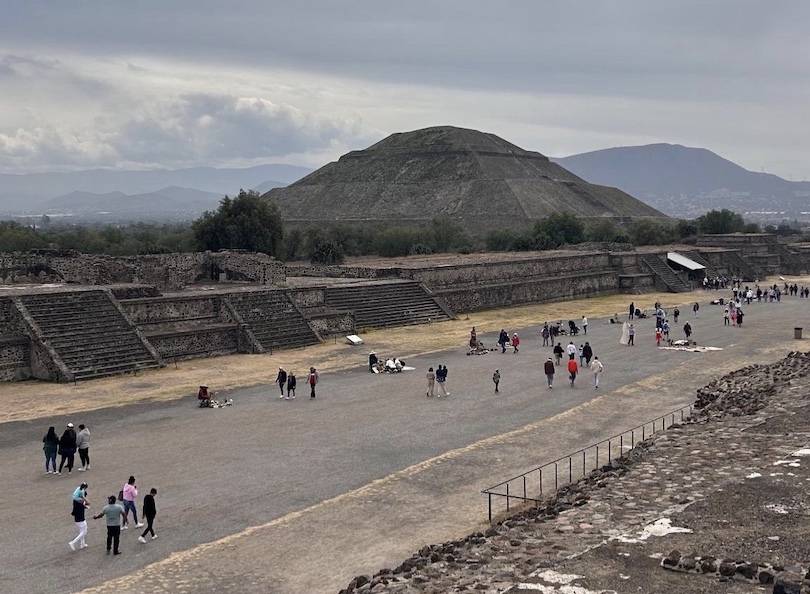
The main street through ancient Teotihuacán may have been called the Avenue of the Dead, but that doesn’t mean dead people are buried on it or along the road sides. The Aztecs so named it because the mounds on the sides of the road looked like tombs. Archeologists have now established that these were ceremonial platforms that were topped with temples.
The avenue was several kilometers long in its prime, but only a kilometer or two has been uncovered and restored. At 40 meters (131 feet) wide, this road would be considered wide by our standards today. Teotihuacán is in ruins now, but walking the Avenue of the Dead provides a glimpse of the city’s glorious past. You’ll walk by huge housing complexes and temples, some of which date back to before the birth of Christ.
At the southern end of the Avenue of the Dead, is a sprawling ceremonial plaza that Spanish conquistadors named La Ciudadela (the Citadel). Looking from a distance like a fortress, it was likely the home of the city’s high rulers.
Heading north along the Avenue of the Dead, you’ll see exquisite examples of the housing complexes and temples. On the right side is the enormous Pyramid of Sun while at the northern end is the Pyramid of the Moon.
Museo Teotihuacan
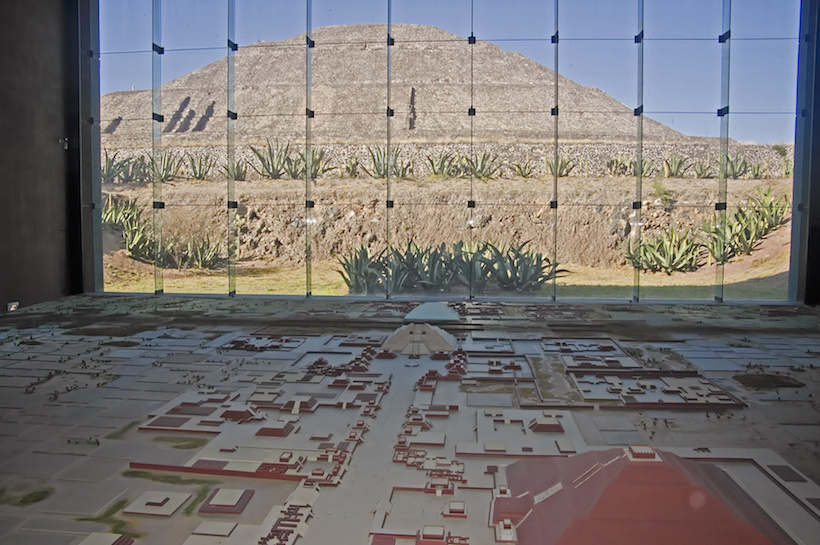
The Museo Teotihuacán, located south of the Pyramid of the Sun, is a good introduction to what you’ll see as you wander around Teotihuacán. In addition to learning about the monuments, you’ll find artifacts made from shell, bone and obsidian that were used by this ancient people.
The museum boasts more than 600 religious and art artifacts on display, as well as handmade necessities of daily life. In the museum’s eight halls, you can learn more about the Teotihuacán economy, society, technology, religion and politics.
Palace of the Jaguars
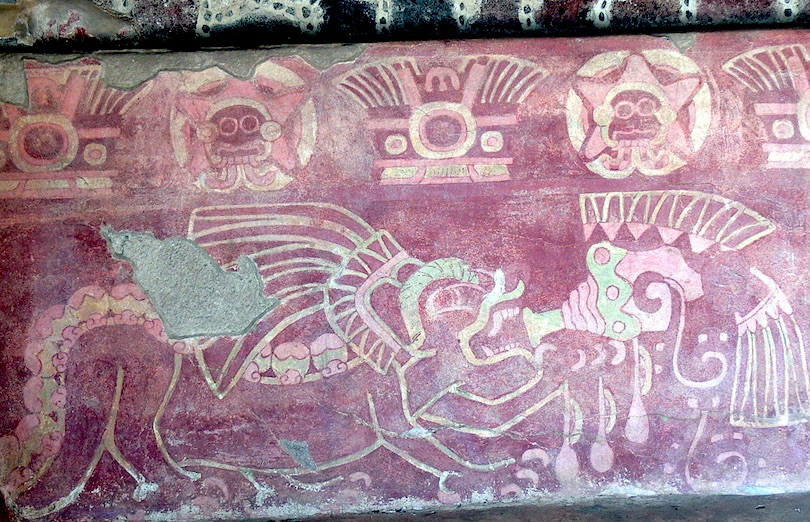
The Palace of the Jaguars exudes wow-ness, with red murals, now faded, embellished with white drawings and carvings. The drawings represent jaguars and elements of sea life, such as shells, including conches. Even today this exquisite art doesn’t fail to impress.
Key among the murals is a jaguar blowing a feathered conch that drips with blood. This is believed to be a symbol of war, since conch shells were blown before warriors went into battle. Atop the jaguar’s head is a snake with feathers jutting out from it.
The Palace of the Jaguars is considered one of the most sacred sites in Teotihuacán, a city that is filled with religious buildings. The imagery depicted in the murals is stronger than at any of the other sites. Some images were later found depicted in other Mesoamerican cultures.
Because of its closeness to the Temple of the Moon, archaeologists believe priests and warriors planned events here that would take place later at the temple.
Palace of Tetitla & Palace of Atetelco
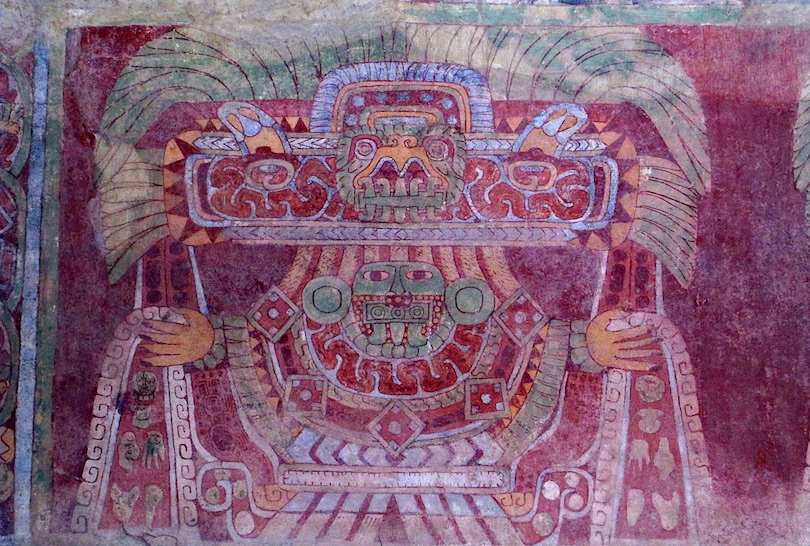
The palaces of Tetitla and Atetelco, located west of the Avenue of the Dead, are a treasure trove of Teotihuacán murals. Discovered in the 1940s, the palaces contain some of the best preserved murals in the ruins. You’ll see 120 walls covered in murals in the Palace of Tetitla alone. One of the most famous murals shows the Great Goddess or Spider Woman wearing a headdress that features an owl bordered by a snake.
Other murals depict eagles, serpents and jaguars. The Palace of Atetelco, located about 100 meters (1,200 feet) away, showcases murals that depict jaguars and coyotes. Some of these animals are painted red and in a processional format that has been linked to war orders.
Palace of Tepantitla
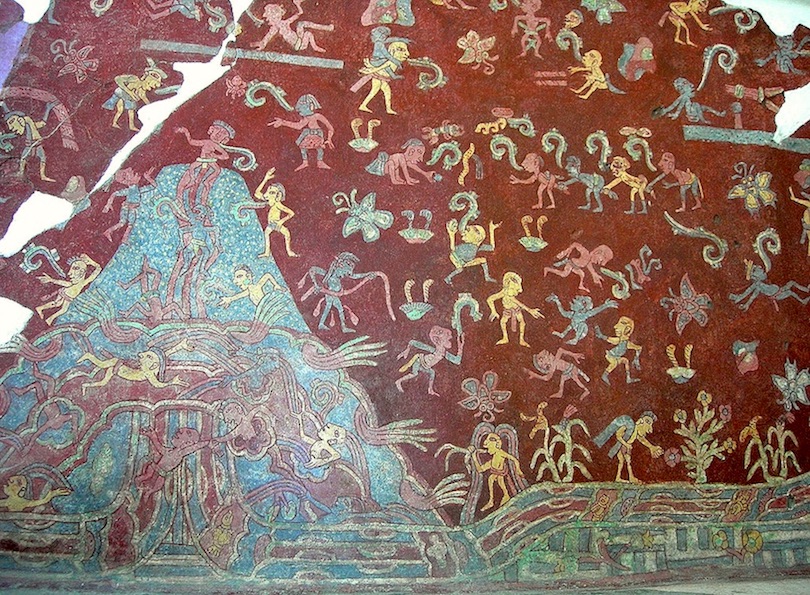
The Palace of Tepantitla is a priests’ residence found northeast of the Temple of the Sun. It contains the Paradise of Tlaloc, the most famous mural in Teotihuacán. This mural recreates daily life residents playing and picking flowers while water running down a mountain depicts their irrigation system.
Study the mural longer, and you’ll see people falling into the mountain as their blood changes into water. The people are different colors, which could represent the classes of society. Other murals consist of thousands of small drawings that are believed to show how Teotihuacáns thought the world worked.