
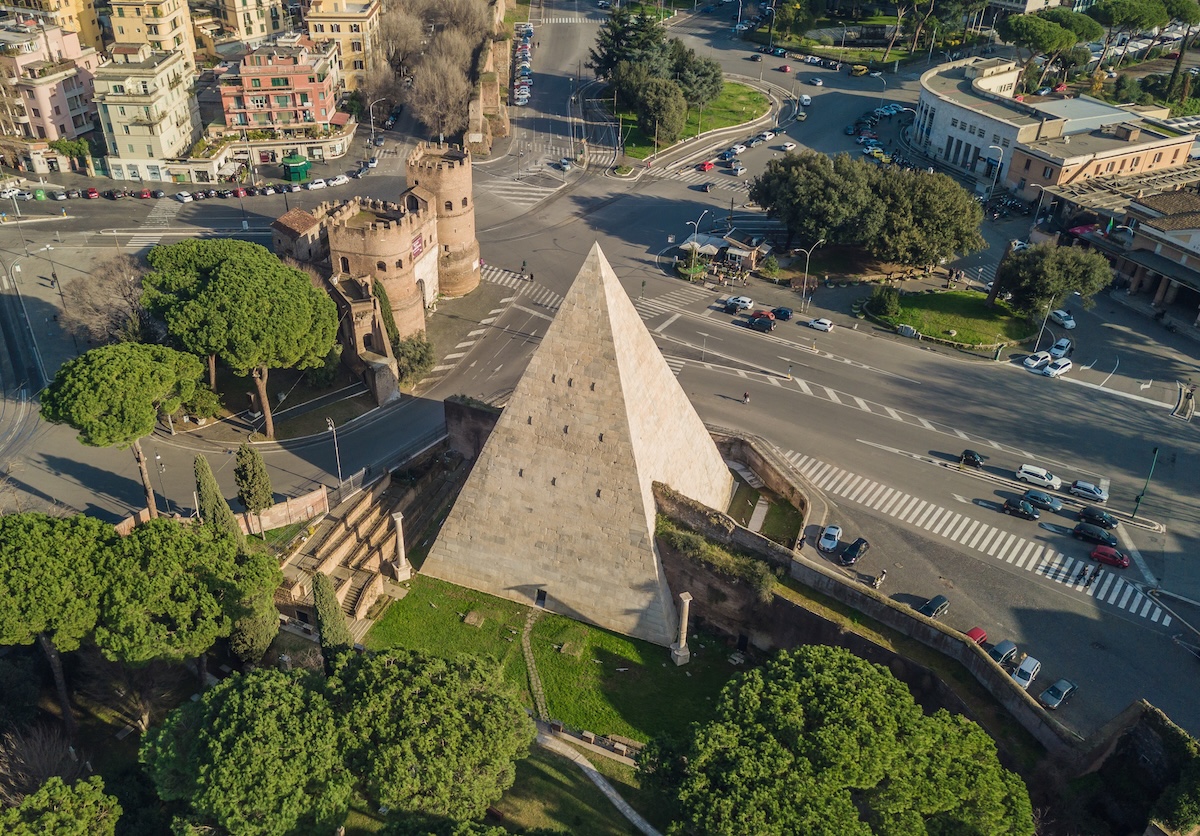
Most visitors to Rome stick to the usual loop: the Colosseum, the Forum, the Trevi Fountain, St. Peter’s. It’s a lot of marble, a lot of crowds, and honestly, it gets exhausting. But then, maybe you’re glancing at a map and—wait, what’s that near the southern edge of the centro storico? A pyramid. In Rome. Really.
The Pyramid of Cestius sits at a hectic intersection by Porta San Paolo, half-swallowed by the Aurelian Walls. Trams rattle by, locals cut across the piazza heading for the Testaccio market, and out of nowhere, there’s this sharp, white, 36-meter-tall Egyptian-style tomb. It stands there, wedged between ancient fortifications and a neighborhood that’s more famous for supplì and coda alla vaccinara than for anything remotely Egyptian.
If you’ve already ticked off the big sights, or you just want a morning that feels a bit more like the Rome people actually live in, this corner hits different. The pyramid is the anchor, but really, it’s the blocks around Testaccio and Ostiense that give the visit its flavor. You can wander through the Protestant Cemetery, grab a coffee on Via Marmorata, and maybe settle in for lunch at a trattoria where the menu still leans into quinto quarto cooking. It’s a detour—maybe two hours, tops—and you barely see a tourist.
What Makes The Monument So Unusual
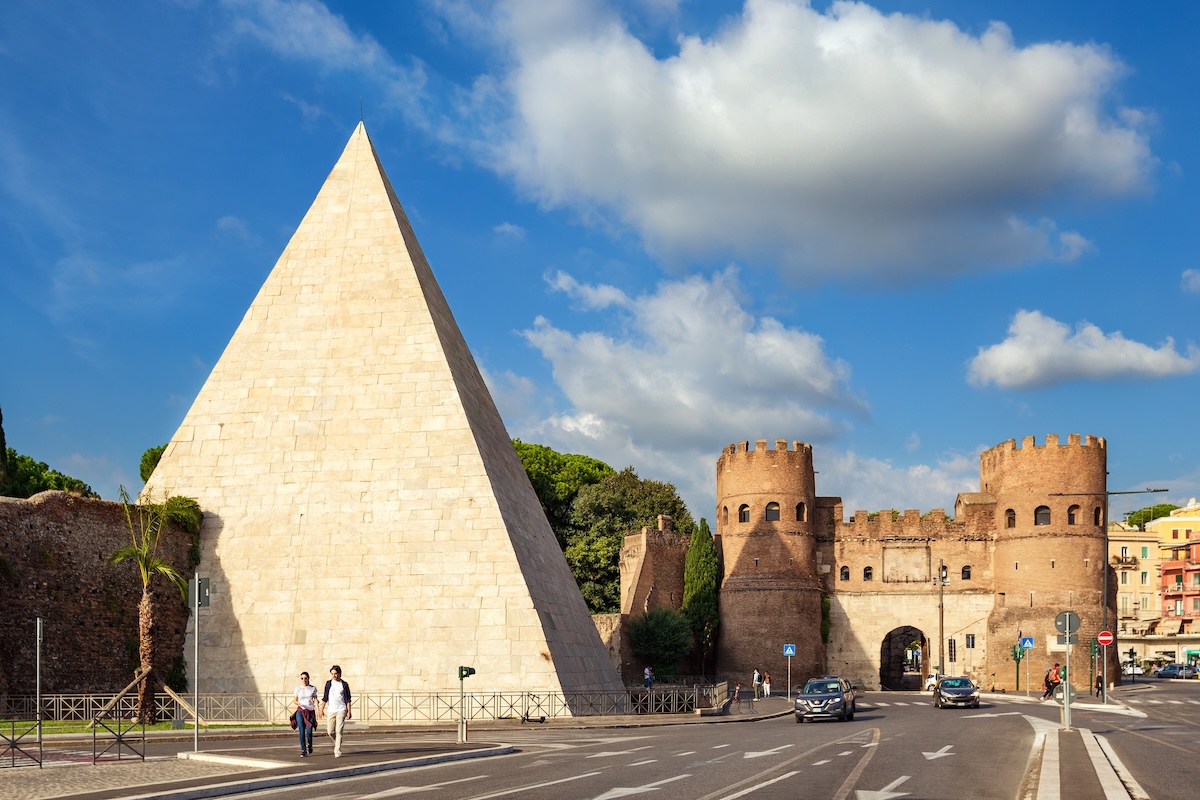
Columns? Sure. Arches, domes, those creamy travertine facades—classic Rome. But a pyramid clad in white Carrara marble, just rising up out of the pavement near a metro stop? That’s just weird, in the best way.
The proportions jump out at you first. Unlike the broad, low pyramids at Giza, this one is steep and narrow, with sides pitched at about 36 degrees. Turns out, the design takes its cue from Nubian pyramids in what’s now Sudan, not the Egyptian ones everyone pictures. That sharper silhouette fooled European artists for centuries—they copied it, thinking that’s what Egyptian pyramids looked like, and got it wrong over and over.
It’s not huge, but it’s striking—about 30 meters along each base, and almost 36 meters tall. Builders used a concrete core and faced it with Lunense marble, which still catches the light and makes the monument pop against all those ochre walls. For something that’s been standing around for two thousand years, the surface looks pretty fantastic.
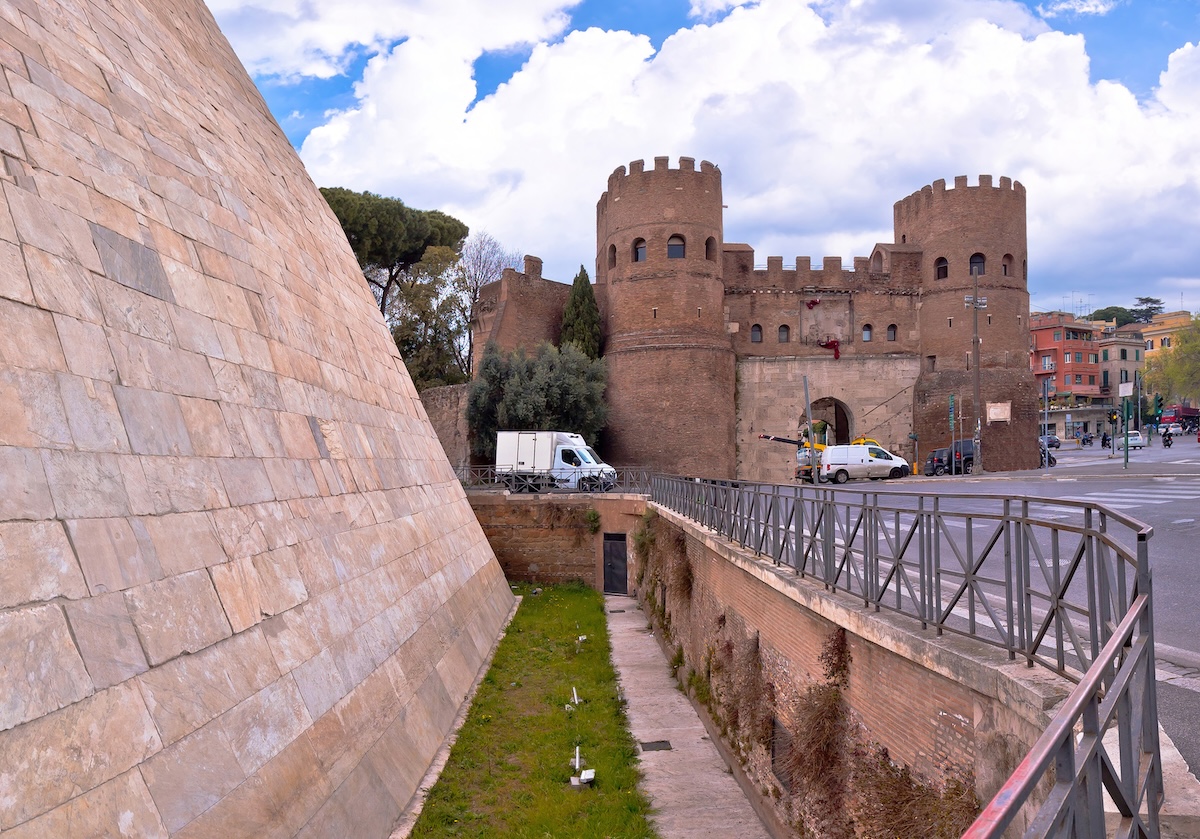
The location just adds to the oddness. The pyramid’s jammed into the third-century Aurelian Walls, which came long after the tomb itself. On one side, traffic swirls around Piazzale Ostiense. On the other, the Non-Catholic Cemetery winds quietly between cypresses and old gravestones. You get this odd collision—Roman engineering, Egyptian inspiration, and modern city buzz, all crammed together within a few steps. It’s honestly a little surreal.
Origins And Historical Background
They built the Pyramid of Cestius in Rome between 18 and 12 BC as a tomb for Gaius Cestius Epulo, a Roman magistrate and member of the Epulones, one of the Republic’s four big religious colleges. According to his will, the monument had to be finished in just 330 days, so it ended up with a pretty compact design and some impressively quick construction.
The timing’s no coincidence. Rome had just conquered Egypt in 30 BC under Octavian, who was about to become Augustus. Suddenly, Egyptian art, obelisks, and even burial customs turned into the must-have status symbols for Rome’s elite. Cestius wasn’t alone in chasing the trend. At least two other pyramid tombs popped up in Rome—one near today’s Piazza del Popolo, another somewhere along Via della Conciliazione. Those are long gone . Only this one survived, mainly because the Aurelian Walls, thrown up in the 270s AD, swallowed it up as part of the city’s defenses.
Step inside and you’ll find a small burial chamber, about 6 by 4 meters. Frescoes once covered the walls, and if you squint, some faded fragments are still there. Looters broke in at some point way back, and when restorers under Pope Alexander VII pried it open again in the 1660s, they found the chamber empty except for those painted walls.
On the outside, two inscriptions name Cestius and list his public offices. They even mention the short construction deadline, which, honestly, says a lot about his ambition—and just how competitive Romans could get about showing off their status.