
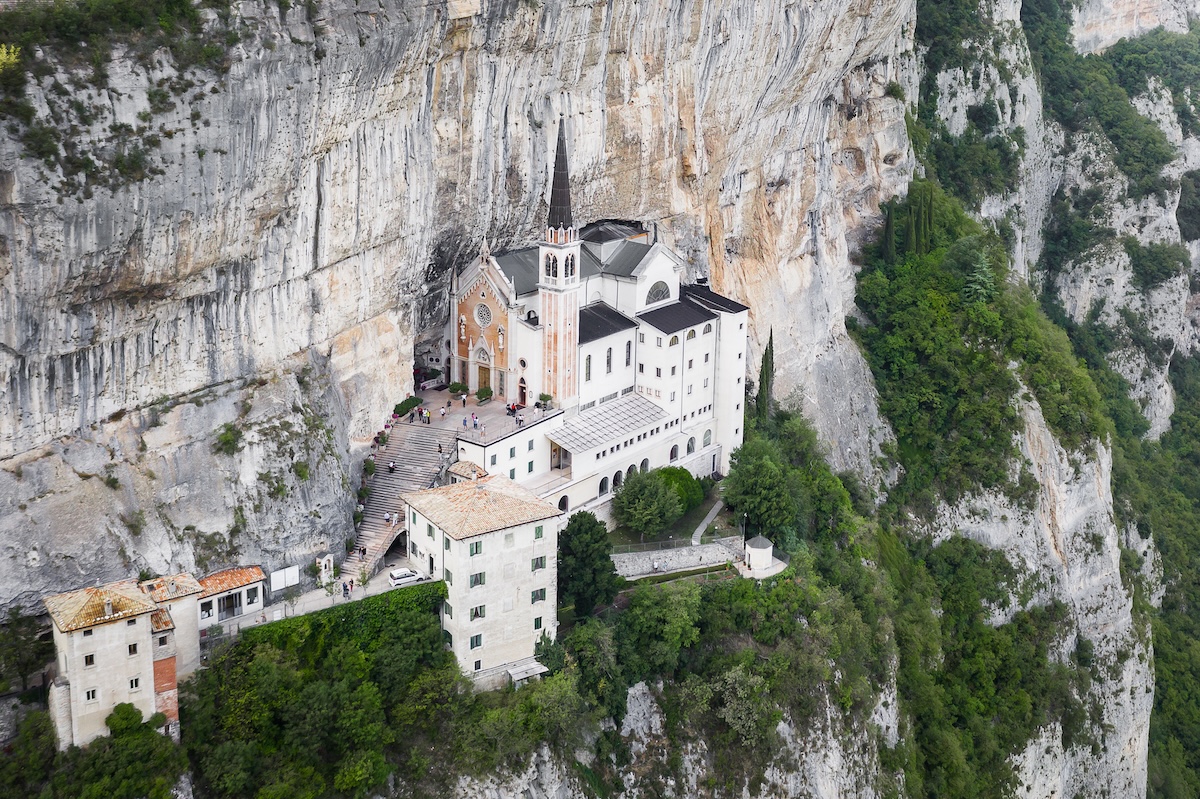
Most visitors to northern Italy stick to the well-beaten track between Lake Garda’s lakeside towns and the busy streets of Verona. But right between those two, a narrow mountain road climbs up to one of Italy’s most quietly dramatic spots. Santuario della Madonna della Corona sits wedged into the sheer rock face of Monte Baldo, 774 meters above the Adige Valley. Honestly, it looks more like the cliff just decided to grow a sanctuary than anything people built.
You can reach it from the tiny village of Spiazzi—either hop on a 10-minute shuttle or walk the path that drops steadily through forest and stone. If you start from Brentino Belluno below, the old pilgrim route climbs about 1,800 steps through the woods. No matter which way you go, the sanctuary doesn’t reveal itself all at once. That first glimpse against the grey rock? Definitely worth the climb.
This place doesn’t feel crowded or commercial at all. You won’t find ticket lines or endless gift shops. Just walk in, stare out over the valley, and let the quiet settle in. If you’re piecing together a northern Italy road trip and want something off the usual list, this half-day detour lingers in your memory much longer than you might expect.
Cliffside Setting Above The Valley
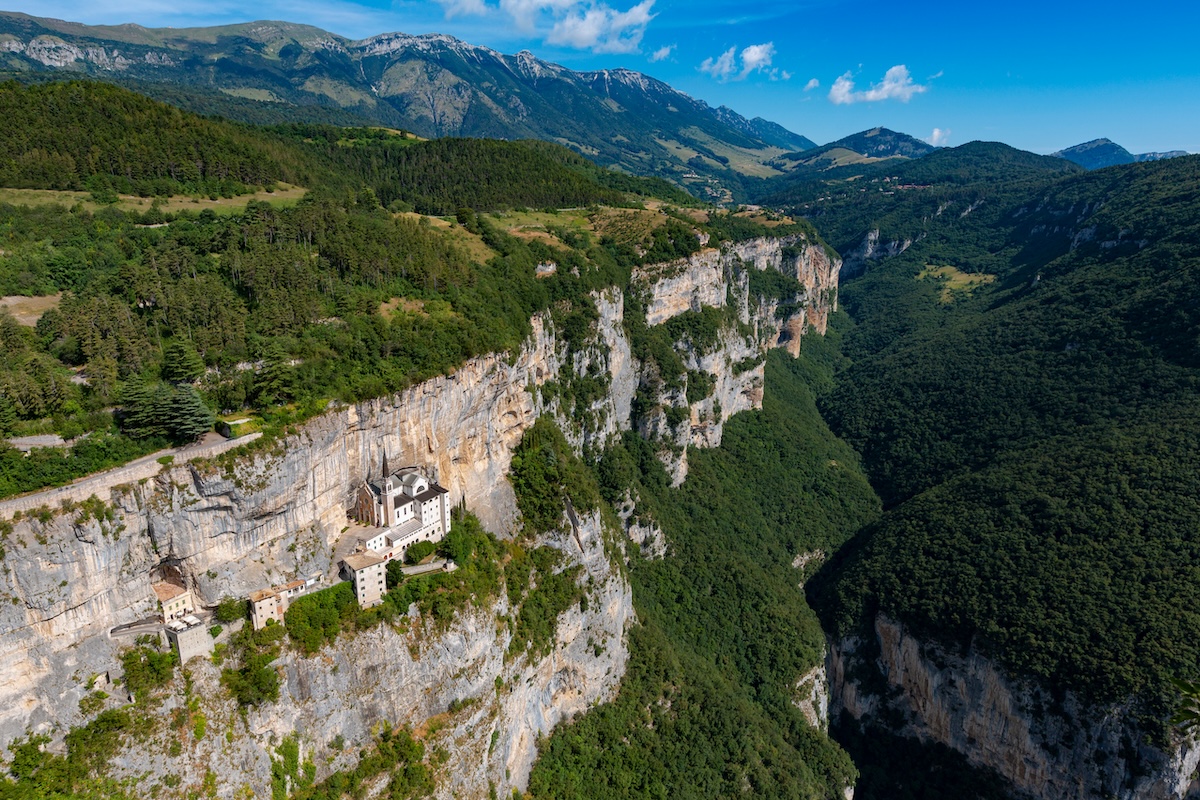
The sanctuary clings right to a narrow ledge on Monte Baldo’s western face, perched above the Adige Valley. Step onto the terrace and you’ll find yourself looking straight down more than 2,000 feet. It’s honestly hard to wrap your head around at first. Across the gap, the Lessinia mountains fill the horizon, and the whole scene feels way more alpine than you’d expect from this part of the Veneto.
If you walk from Spiazzi, the path winds downhill through the trees, then suddenly opens onto stone walkways with sweeping views of the valley and peaks. When the weather’s good, I’d pick this approach over the shuttle every time. The 2.5-mile loop trail from Spiazzi weaves through forest and hits several viewpoints, so you really get a sense of how the sanctuary fits into the bigger landscape.
Start from Brentino Belluno below, and the Sentiero della Speranza leads you up medieval cobblestone steps through thick woodland. It takes about 90 minutes to two hours and, yeah, you’ll want to be reasonably fit. But reaching the sanctuary from below, where it just seems to hang in the air above you, is something else.
The lakeside villages around Garda and the scenic roads across Monte Baldo make this an easy stop to work into a longer drive. Spiazzi itself is tiny and relaxed, with free parking near the trailhead. You can visit the sanctuary, soak up the views, and be back on the road in a couple of hours—feeling like you stumbled onto something most travelers never see.
History And Architecture In The Rock Face
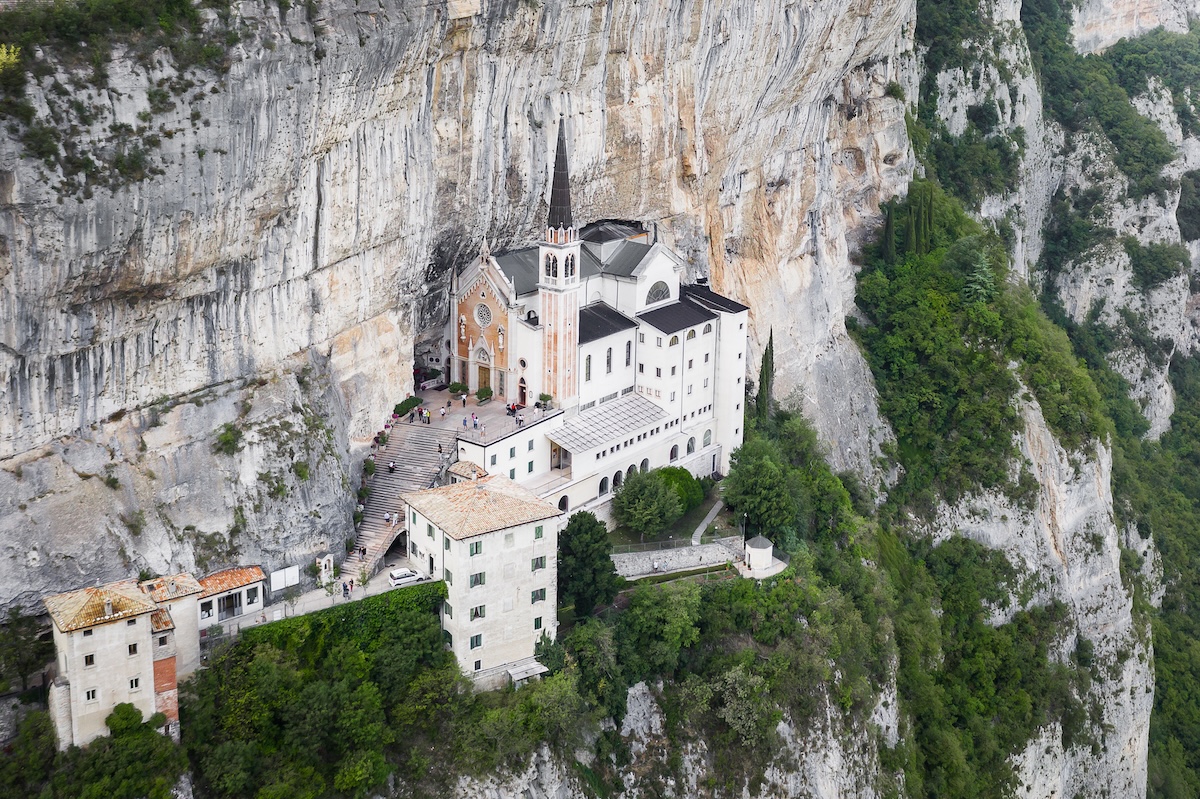
The site’s origins go back to the 15th century, though locals say hermits and small devotional spaces appeared on this ledge even earlier. Builders put up a formal church here in the 1500s, and over the years, people kept expanding and renovating it to fit the rock’s contours. Most of what you see now, with its pale facade pressed against dark stone, comes from reconstruction work in the mid-20th century.
Step inside and the first thing you notice is that the rear wall is just raw mountain. The architects didn’t bother to hide the cliff—they worked with it. There’s this quiet clash where carved stone meets the natural rock, vaulted ceilings bumping up against the rough face of Monte Baldo at the back of the nave. Above the altar, a statue of the Madonna sits in a small shrine, and for centuries, that’s drawn pilgrims up here.
The sanctuary holds the title of minor basilica, and it still draws pilgrims. You’ll probably see a few people lighting candles or just sitting in the pews, but the mood stays calm, not really ceremonial. Stations of the Cross line the walking path from Spiazzi, which adds a sense of purpose to the climb.
If you’re more into architecture than devotion, the real fascination is how the building deals with the cliff. Every angle shows a new relationship between structure and stone, and that tension gives the place a personality you just don’t get in churches built on flat land.