
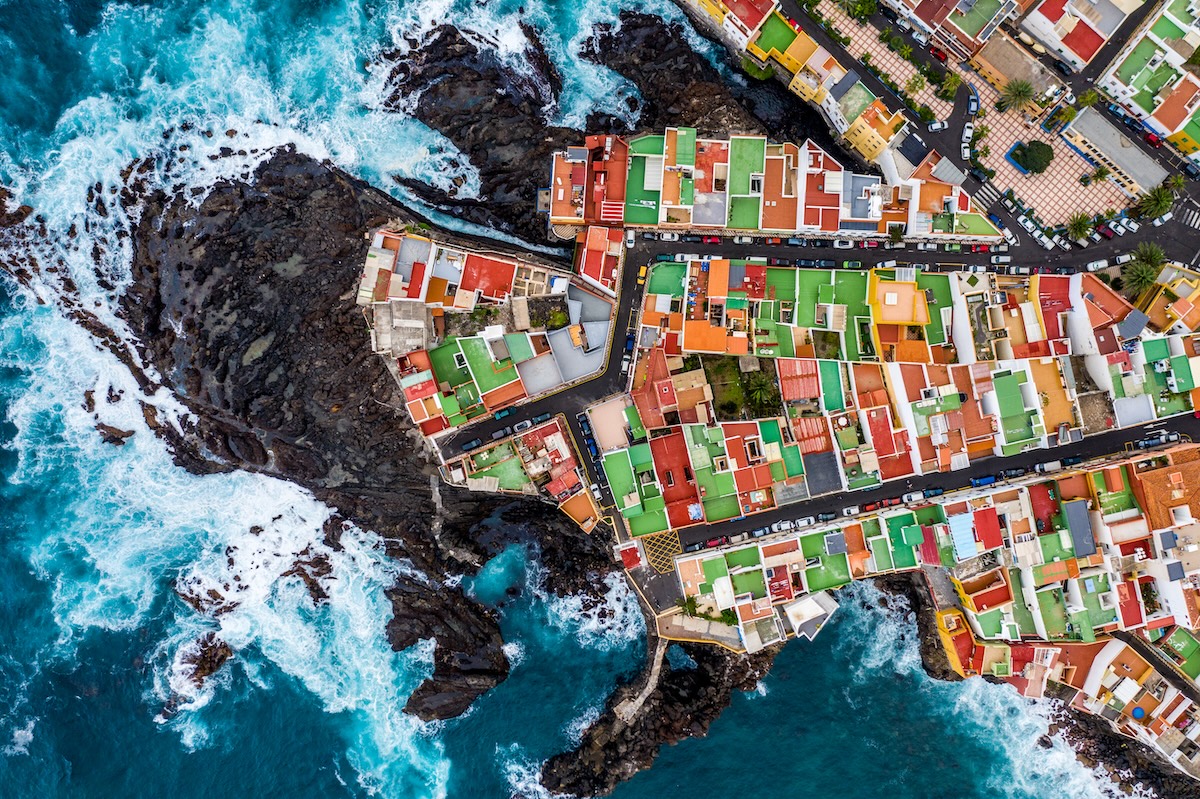
Seen from above, this town looks almost painted onto the coastline. Flat roofs in faded reds, bright blues, yellows, and sea-worn whites stack tightly together against the dark volcanic rock and the Atlantic beyond. It’s one of the most unexpectedly photogenic corners of northern Tenerife, especially in the soft morning light or just before sunset.
What makes the rooftops here so striking isn’t perfection. It’s the texture. Satellite dishes, rooftop terraces, laundry lines, peeling paint, and splashes of bold color all blend into a scene that feels unmistakably lived in. While much of Tenerife’s coastline has shifted toward resorts and apartment blocks, this little barrio still feels local, compact, and authentic.
If you’re road-tripping the north coast or staying anywhere near Puerto de la Cruz, Punta Brava is the kind of place that turns a pretty drive into a memory worth keeping. It’s one of those spots that rewards you if you slow down and look around for a while.
Colorful Rooftops And Low-Rise Streets
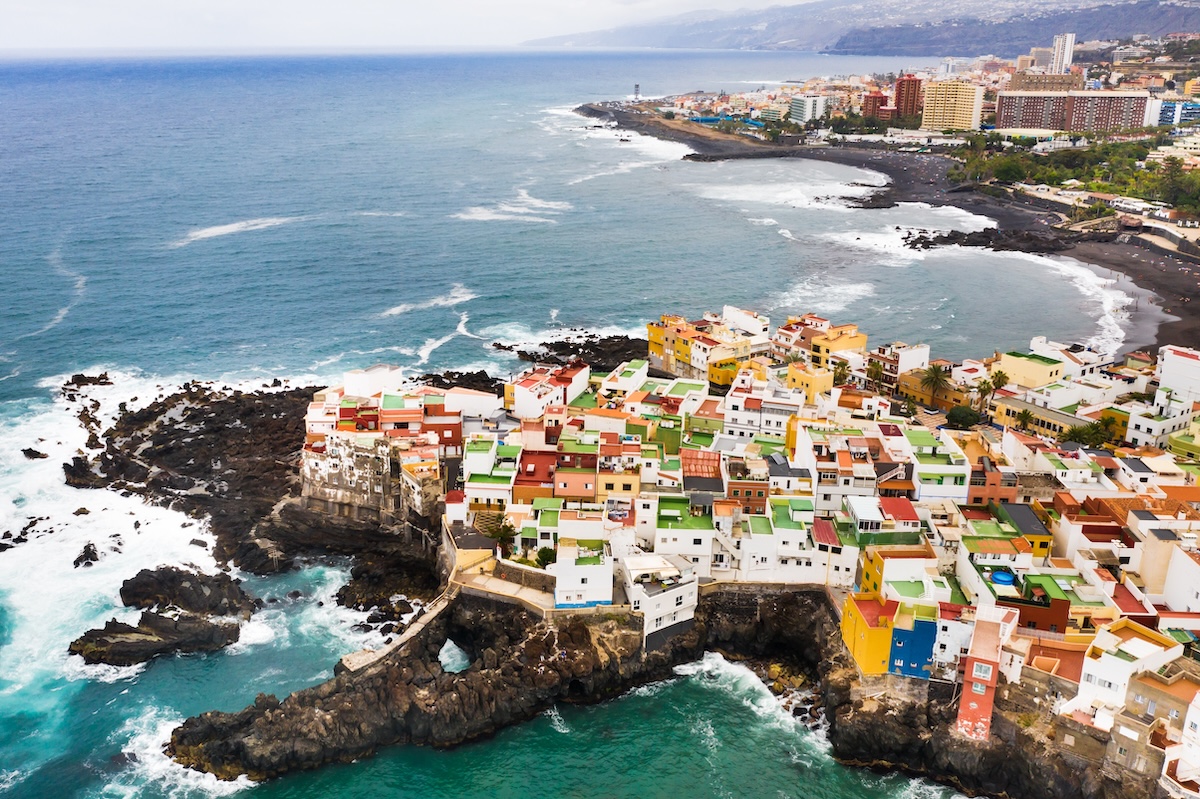
The color hits you first when you walk into Punta Brava. Facades in terracotta, sea blue, pale yellow, and faded green line streets barely wide enough for a single car. Balconies overflow with potted plants and the occasional line of drying laundry. Most buildings stand just two stories, sometimes three, so the sky feels bigger and the afternoon light pours straight onto the walls.
This isn’t some polished heritage quarter or a tourist set piece. People actually live here. Neighbors hang out on front steps, stroll to the corner bar for a cortado, and you’ll spot fishing nets bunched near doorways. Cats nap on warm stone. The pace drifts along, a good bit slower than central Puerto de la Cruz, even though you’re just minutes away.
You get the best rooftop views from the elevated path along the neighborhood’s western edge, looking back east toward the water. From up there, the stacked colors of the buildings pop against the dark ocean and, if you’re lucky, a distant slice of Mount Teide. Sunset’s the obvious time to go, but honestly, early morning light gives the walls a softer glow that photographs beautifully too.
For food, Restaurante Punta Brava sits close to the seafront and dishes up local seafood—simple, fresh, and fairly priced. Bar Punta Brava is a go-to for grilled octopus, paella, and a glass of house wine after you’ve wandered the streets. Neither place is fancy. Both just fit, like they couldn’t exist anywhere else.
Black Volcanic Coastline And Ocean Views
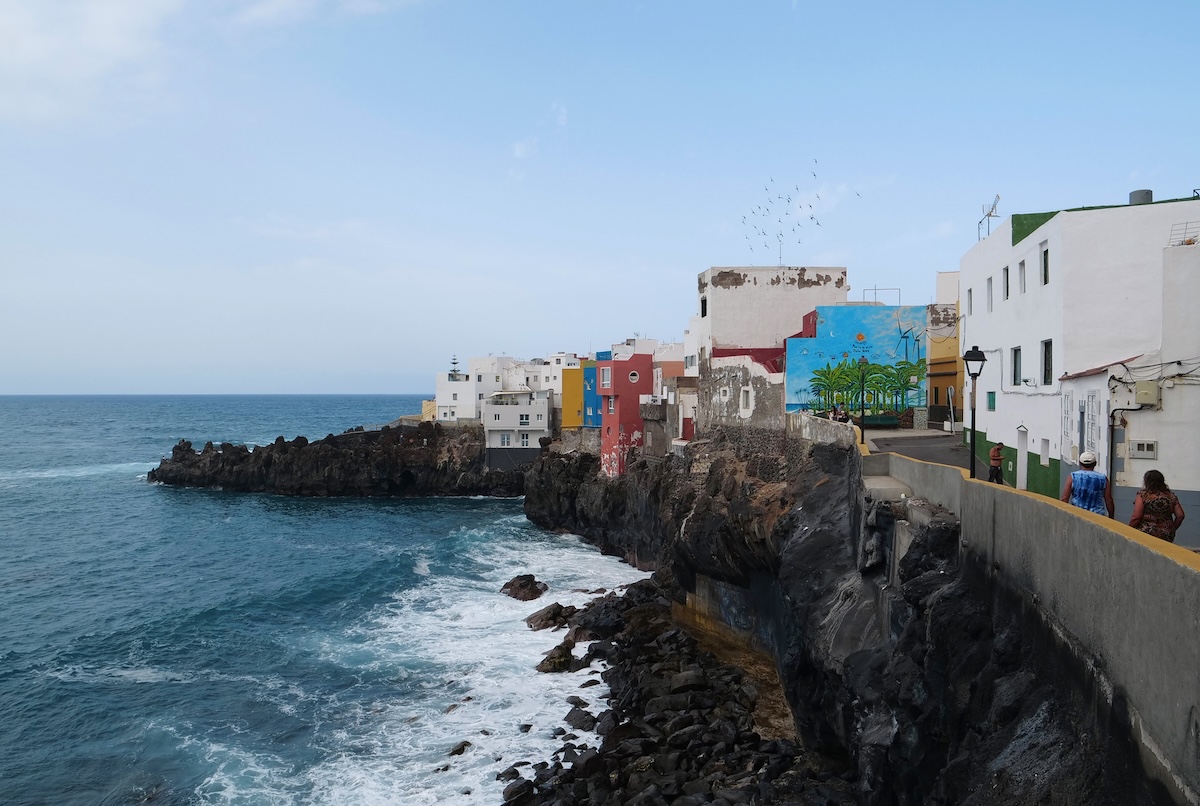
The shoreline at Punta Brava throws you right up against the Atlantic. Dark volcanic rock juts out into the water in rough, uneven shelves, and the sand on the small beach stays black no matter how strong the sun. Most days, waves slam against the rocks, spraying the lower walkways and sending up a salty mist. This isn’t a gentle swimming spot—honestly, you need to respect the surf here, especially in winter when the swell gets wild.
That wildness is honestly part of what makes it great. You can stroll along the rocky seafront path, feel the salt on your skin, and watch local surfers and bodyboarders trying to read the breaks just offshore. The water’s a deep, cold blue, and it pops against all that black stone. It really drives home that Tenerife’s a volcanic island, not just a sun-and-sand resort.
From the waterfront, you might glance east along the coast toward the pools and promenades of Puerto de la Cruz, or west toward stretches of wilder, less developed shoreline. Playa Jardín, the bigger landscaped beach designed by César Manrique, sits just a short walk away. It’s worth checking the conditions before heading over, though—sometimes it closes without much warning.
If you’ve got an hour, the coastal walk between Punta Brava and central Puerto de la Cruz is one of the easiest and most rewarding bits of the north coast. No need for hiking boots. Just take it slow and let the ocean set the pace.