
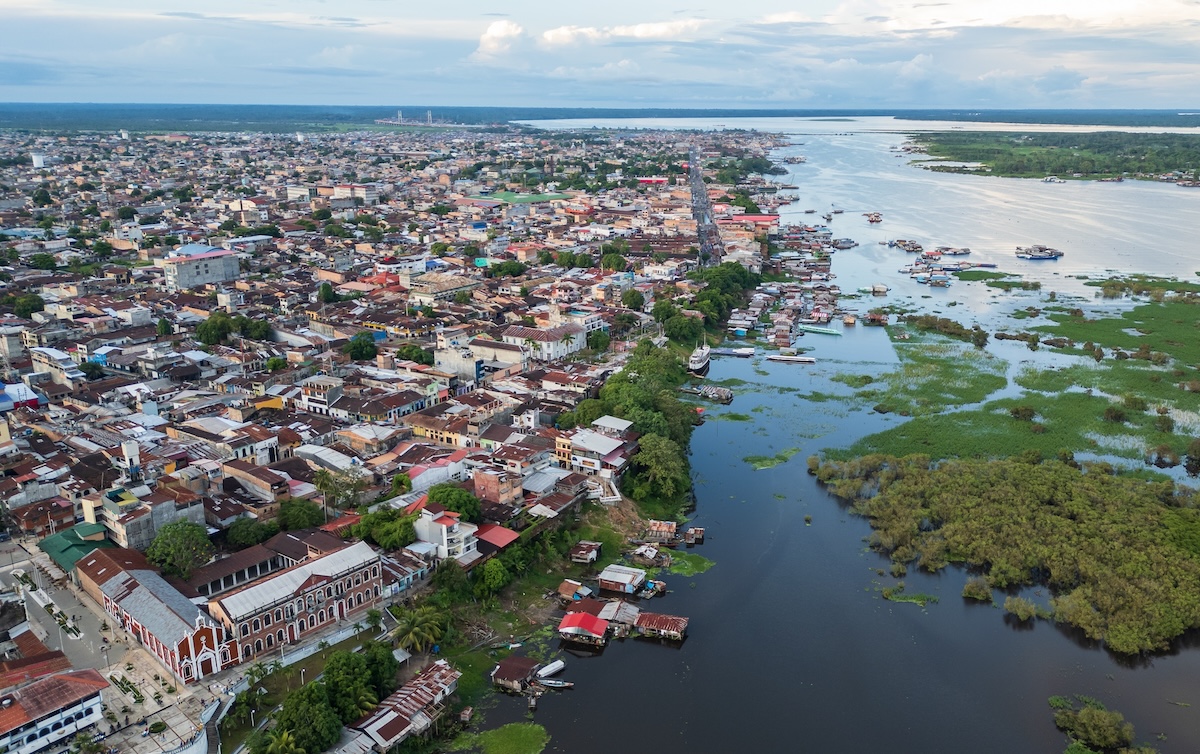
There’s a city in the jungle that you can’t reach by road. No highways connect it to the rest of the country. To get there, you either fly over endless rainforest or spend days arriving by boat along the Amazon’s muddy waterways. That isolation shapes everything about the place — how it looks, how it moves, and how people live.
Iquitos sits about 600 miles northeast of Lima, deep in the Amazon basin and surrounded by rivers and jungle on every side. Despite its remoteness, it’s a real city of nearly half a million people, full of busy streets, concrete buildings, and moto-taxis buzzing through traffic. Along the riverfront, sprawling markets spill across entire blocks.
If you’re thinking about heading into the Peruvian Amazon, odds are you’ll start in Iquitos. People use it as a base for river cruises, jungle lodges, and wildlife trips into some of the world’s richest ecosystems. But honestly, the city is more than just a jumping-off point. It’s got its own texture, stories, and a food scene built around Amazonian ingredients you won’t find anywhere else in Peru.
Isolation Without Roads
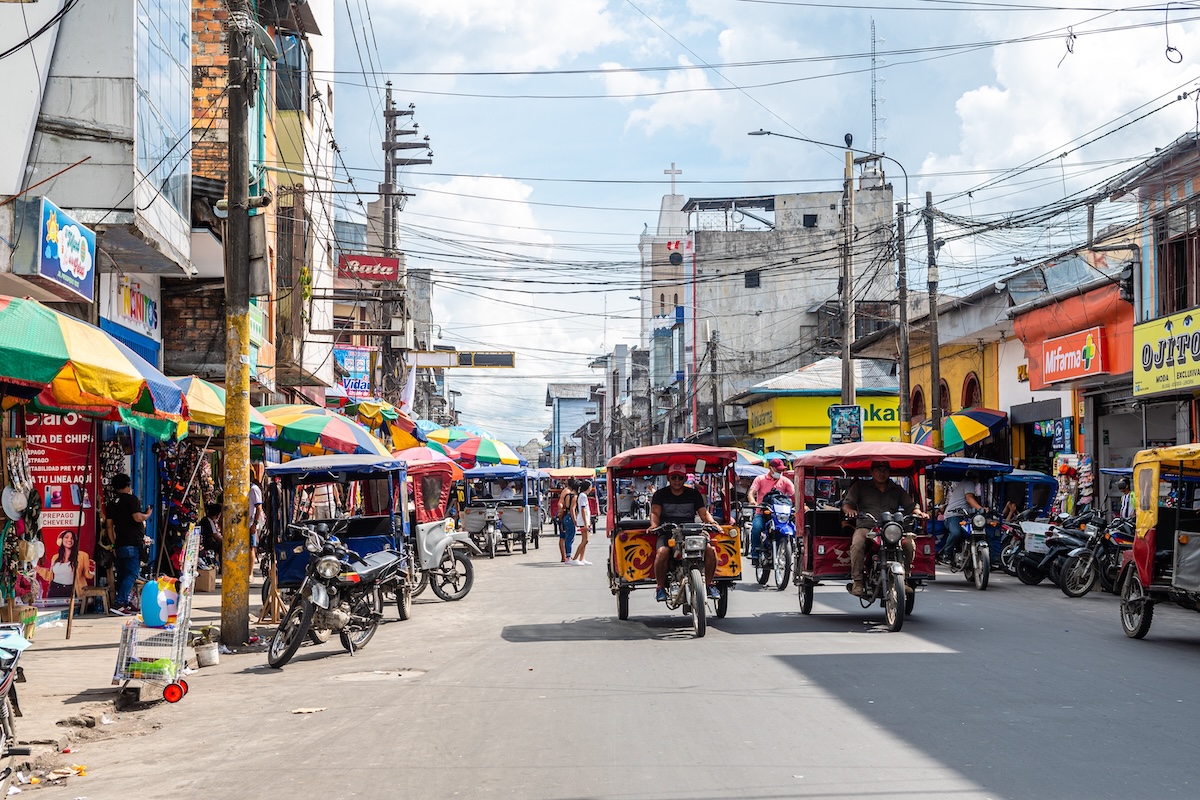
The big thing to know about Iquitos is its isolation. No paved road leads here from Lima, Cusco, or any other major Peruvian city. The whole Amazon basin is a tangle of rivers, wetlands, and thick forest—building a road just hasn’t made sense, even after a century of trying.
Getting here is pretty straightforward. Flights from Lima land at Coronel FAP Francisco Secada Vignetta International Airport in about two hours. Several Peruvian airlines run daily flights. Or, if you’re up for it, you can take a multi-day river trip from Yurimaguas or Pucallpa on a cargo-passenger boat, sleeping in a hammock on the deck. That appeals to some, but most folks just fly.
Once you arrive, the city runs on water and engines. Moto-taxis swarm the streets in tight packs. Boats of every size crowd the Itaya River port, hauling bananas, fuel, timber, and people to nearby villages. Everything that would come by truck elsewhere gets here by barge.
This isolation isn’t just a quirk. It affects daily life—what things cost, how buildings look, even how people eat and do business. Iquitos developed its own rhythm because outside influences showed up slowly, drifting in on the river. The rubber boom in the late 1800s left behind ornate tiled buildings on the main boulevard, reminders of a brief time when the world suddenly cared about this remote port. These days, the isolation doesn’t feel dramatic—it’s just how things work here. The city has its own way of moving, and honestly, that’s part of the charm.
Gateway To The Peruvian Amazon
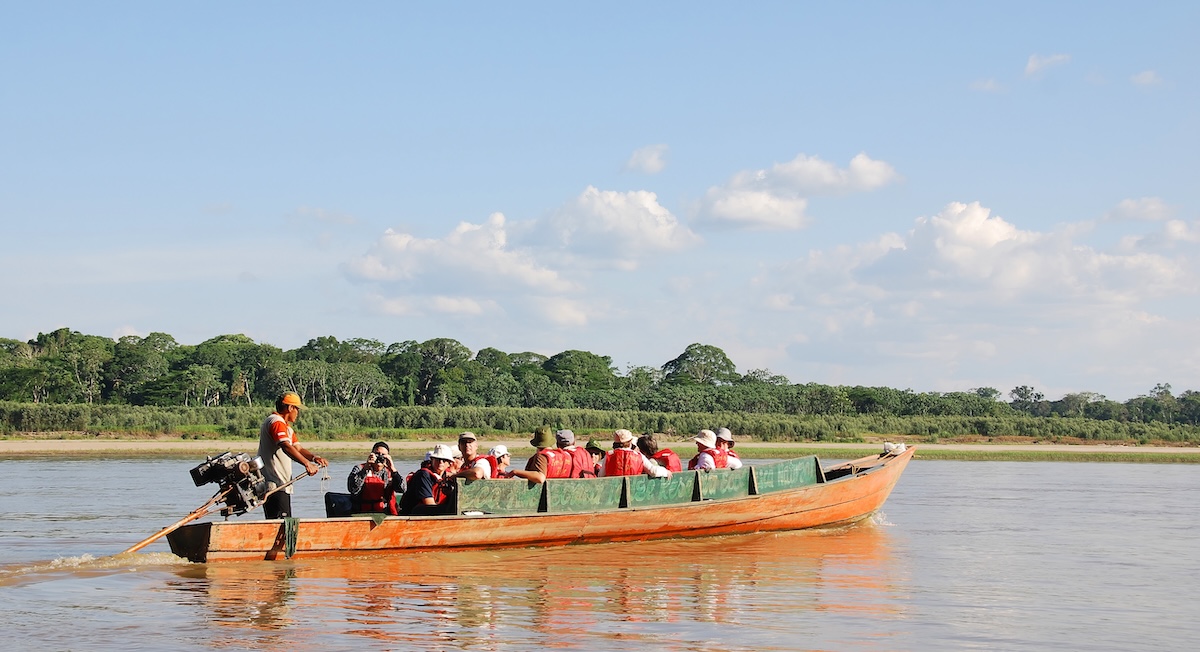
From Iquitos, you can get into the jungle fast. Most tour operators swing by your hotel, drive you out to the river port, and before you know it, you’re on a boat gliding toward protected rainforest. The Pacaya-Samiria National Reserve—one of Peru’s biggest protected areas—sits within reach by multi-day river cruise that leaves right from the city’s docks.
If you’re short on time, you can opt for a quicker trip to a jungle lodge, usually a two to four hour ride downriver. Guides lead you along trails where you’ll spot towering ceiba trees, listen for howler monkeys, and stare up at that wild, layered canopy. At night, you might paddle out in a canoe to drift near caimans. If you’re lucky and up early, you could catch pink river dolphins surfacing beside your boat. It’s hard to predict what you’ll see, but that’s half the fun, isn’t it?
Back in town, the Belén Market kind of pulls you in whether you planned to visit or not. Vendors hawk jungle fruits like camu camu and aguaje, dried fish, wild herbal concoctions, and dishes built around river fish and plantains. The flavors hit different here—definitely Amazonian, not what most folks picture when they think of Peruvian food.