
Full of amazing old tombs, temples, burial mounds, and rock carvings, South Korea’s Gyeongju fully earns its nickname as ‘the museum without walls,’ and will astound visitors with all it’s amazing tourist attractions. As it was once the capital of Silla – an ancient kingdom on the Korean Peninsula – many of its monuments date back over a thousand years, and one of the best things to do in Gyeongju is exploring ithe impressive architecture and old buildings cthat an be seen around town.
Located in the southeast of the country, Gyeongju is often overlooked in favor of Seoul, Busan, or Jeju. This means it is a great place to visit if you want to delve into South Korea’s rich history, culture, and heritage without the crowds.
Wandering around its ancient streets and well-preserved archaeological sites will make you feel like you’ve stepped back in time, and the gorgeous rolling hills and mountains that lie around Gyeongju are just the cherry on the cake.
10. Bomun Lake
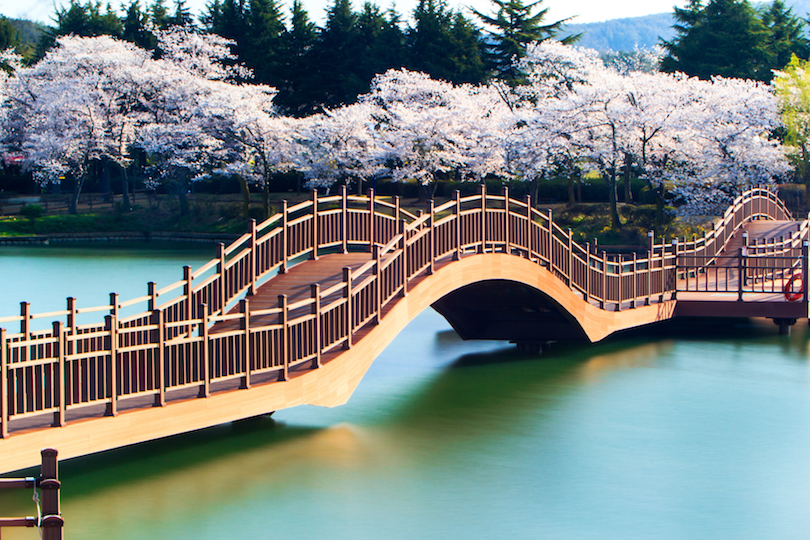
Surrounded by fancy hotels, shops, and restaurants as well as extensive parks and gardens, the human-made Bomun Lake is where many people in Gyeongju come to relax and unwind. Lying just five kilometers from the center of the city, Bomun Lake has lots of lovely walks and cycle rides that you can do around the lake. You can even go boating on its tranquil waters or enjoy a round of golf at one of its resorts.
From April to August, the Bomun Outdoor Performance Theater hosts regular shows on its shores, and the permanent exhibitions at the nearby Seonjae Art Gallery are well worth checking out if you have the chance. While Bomun Lake is very picturesque and peaceful at any time of year, it is particularly popular to visit during the summer months or in spring when the cherry blossoms are in bloom.
9. Gyeongju National Park
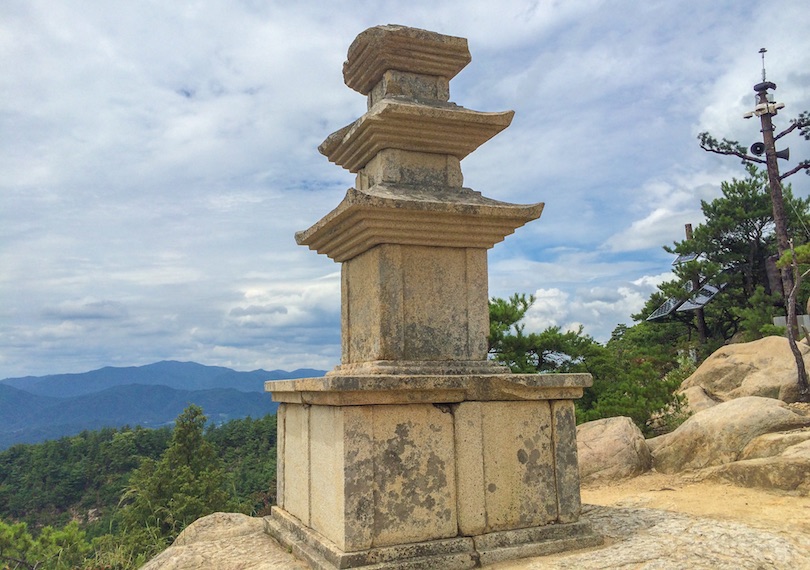
Established all the way back in 1968, Gyeongju is unique among the country’s national parks as it is the only one that is dedicated to preserving, protecting, and promoting the wealth of historical sights that lie within in.
This means that while some sections of the national park are to be found surrounding Gyeongju, others are actually located right in the center of the city itself. As such, you may unwittingly find yourself in the national park without even knowing it when visiting one of the breathtaking burial mounds, temples, or tombs that are scattered around town.
Further afield, Gyeongju National Park has some absolutely gorgeous landscapes for you to explore, and there are lots of fabulous hikes you can do in its hills and mountains. The view from atop of Tohamsan Peak, for instance, is simply awe-inspiring, and on its slopes, you can find Bulguksa and Seokguram – two of the most famous temples in Gyeongju.
8. Daereungwon Burial Mound
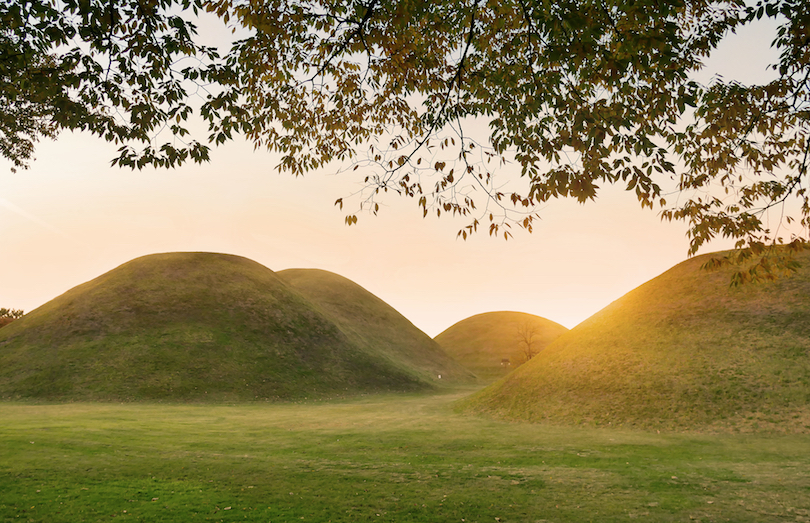
One of the most popular tourist destinations in Gyeongju, the Daereungwon Burial Mound complex lies in the center of the city and encompasses 30 royal tombs that date back to the times of the Silla Kingdom.
Set among a couple of pretty parks, the large grassy mounds are very distinctive. As some of them reach over 20 meters in height, you can hardly fail to notice the tombs while wandering around town.
The most impressive of them are those of Hwangnam Daechong and King Michu, both of which date back over a thousand years. Besides taking a peaceful stroll around the complex, you can actually venture inside Cheonmachong Tomb – the most famous of the mounds – to take a peek at some of the many artifacts that were excavated from the site.
7. Gyeongju National Museum
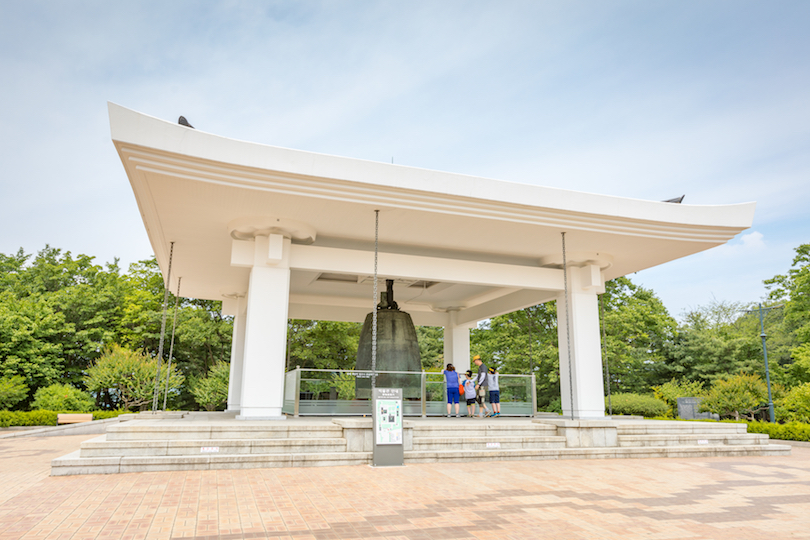
Widely considered to be one of the best museums in the country, Gyeongju National Museum is the place to go if you want to learn all there is to know about the Silla Kingdom and the rise of civilization in South Korea.
Located right next to the Daerungwon Burial Mound complex, its various buildings are packed full of informative and interesting exhibitions and displays, with lots of dazzling jewelry, age-old weaponry, and important religious works on show.
Among its many wonders, the undoubted highlight is the fifth-century gold crown of Geumgwanchong, which shimmers and shines and is so intricately designed and decorated. With a number of stupas, sculptures, and statues scattered around the museum’s buildings and grounds, one could easily spend a whole afternoon or more exploring all the delights that Gyeongju National Museum has to offer.
6. Yangdong Folk Village
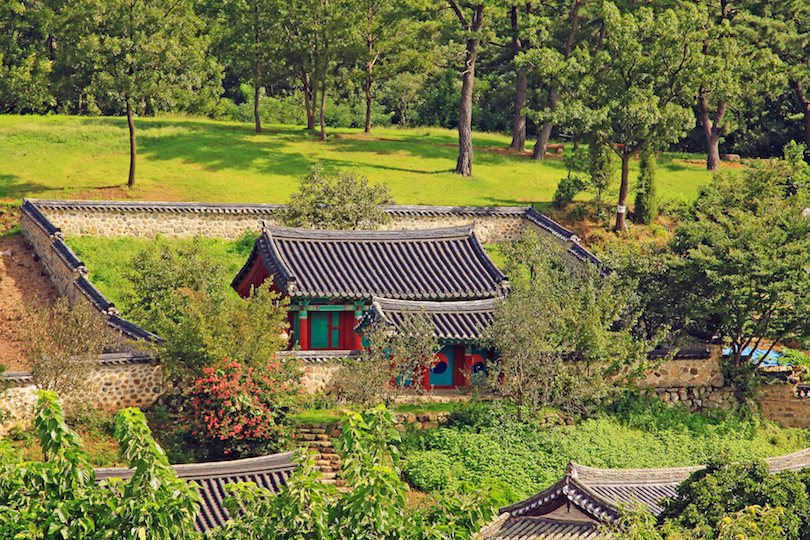
Full of beautiful old houses and buildings that date back to the Joseon-era, Yangdong Folk Village is simply marvelous to wander around. Its scenic setting in a verdant valley with mountains all around it only adds to the perfect scene.
Built in the traditional Joseon Dynasty architectural style, its cluster of buildings are very picturesque to behold, with lush gardens all around them; the vast majority of them are still lived in to this day. Although it is quite hard to reach the village, as it lies some 20 kilometers to the north of Gyeongju, it is well worth the effort if you want to experience traditional ways of life in an authentic setting.
5. Cheomseongdae Observatory
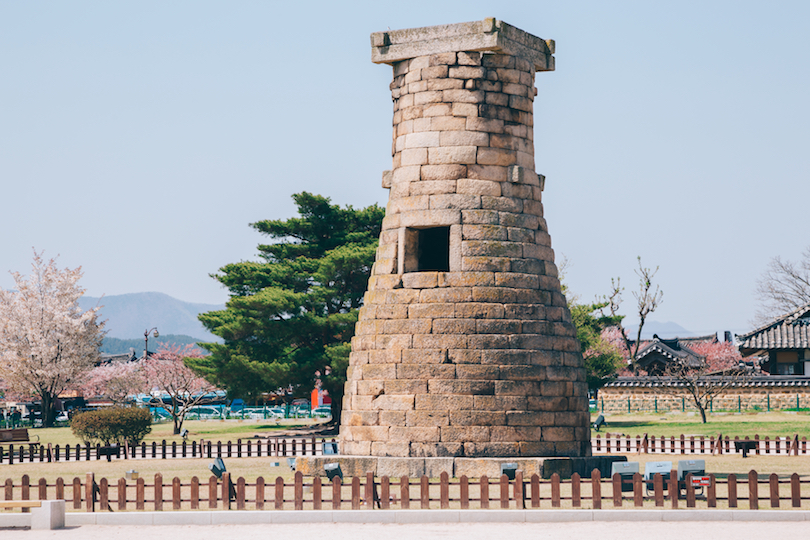
Although it is not all that impressive to gaze upon, Cheomseongdae’s significance is without compare; it is remarkably the oldest surviving astronomical observatory in not only the whole of Asia but possibly even the world. Built in 632 AD during the reign of Queen Seonduk, the ancient structure stands at just over nine meters tall. Nowadays, lots of lovely gardens can be found all around it.
Said to have been built out of 365 stones – one for each day of the year – Cheomseongdae Observatory was used for centuries by astronomers, who came to gaze out at the stars and planets above. It is particularly worthwhile stopping by in the evening when the observatory is spectacularly lit up, and its tower stands out against the night sky.
4. Seokguram
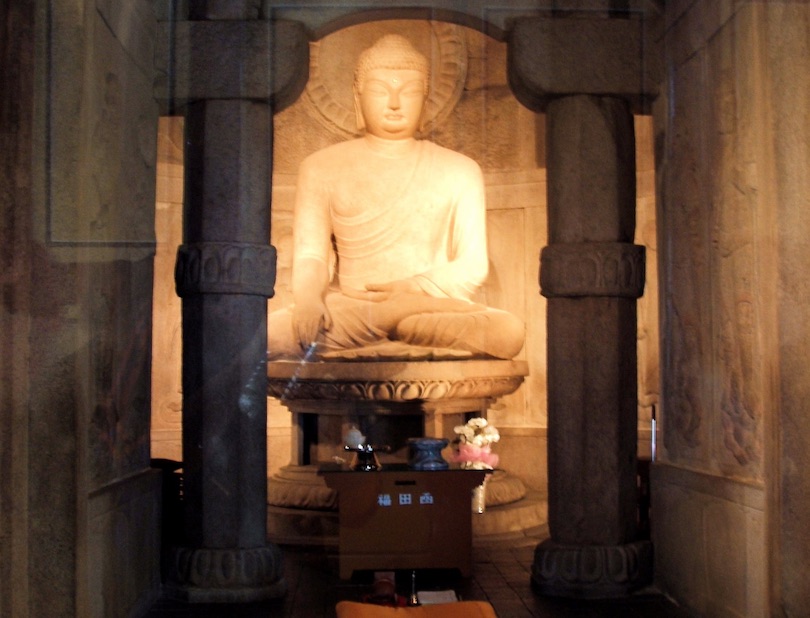
Designated a national treasure in 1962, Seokguram is one of the nation’s most important historical, cultural, and religious sites. Part of the Bulguksa Temple complex, the Seokguram Grotto, as it is commonly known, is nestled away on the slopes of Mount Tohamsan overlooking the East Sea off in the distance.
Completed in 774 AD, the grotto houses one of the finest examples of Asian art in the shape of its breathtaking Buddha sculpture; the deity is said to look over and protect South Korea. While the art and architecture are astounding, the magnificent mountain scenery is no less alluring, and the grotto is the perfect spot for some quiet contemplation and meditation.
3. Cheonmachong Tomb
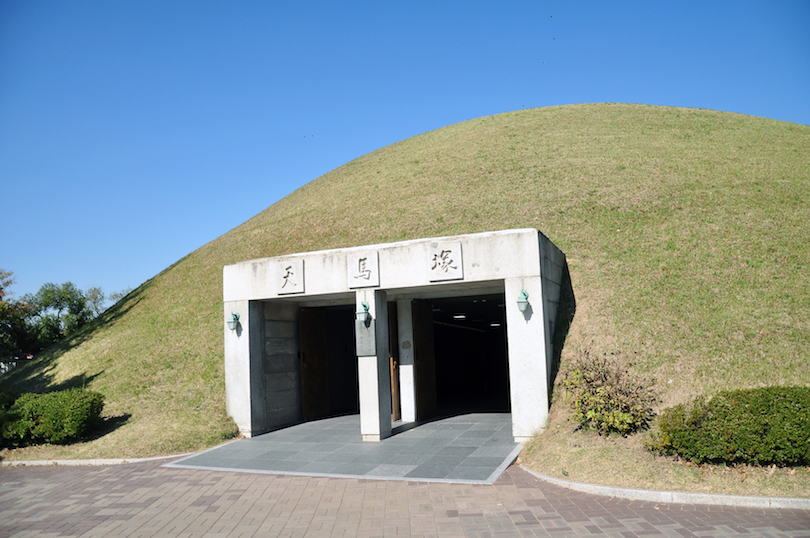
Meaning ‘sky horse,’ Cheonmachong is so named because a spectacular painting of a white horse was unearthed when the tomb was excavated in 1973. Remarkably, over 11,500 artifacts were found in the tomb. While these offered up a fascinating look at society in the Silla Kingdom, they unfortunately didn’t shed any light on which king was buried in the mound.
Believed to date to the fifth century, Cheonmachong is the only tomb that you can enter in the Daerungwon Burial Mound complex, and it is well worth doing so if you have the opportunity. Inside are lots of interesting artifacts for you to check out, as well as the wooden coffin and royal accessories in which the king himself was buried. Despite its small size, Cheonmachong Tomb offers an invaluable look at an important part of South Korea’s illustrious history.
2. Anapji Pond

Created in 674 AD by King Munmu to celebrate the unification of the Korean Peninsula under Silla rule, the human-made Anapji Pond is now one of the most popular tourist attractions in the city and is a part of Gyeongju National Park. Surrounded by beautiful gardens and wonderfully reconstructed pavilions and palaces, Anapji Pond certainly makes for a fine sight and is best viewed at night when the grounds are so magically illuminated.
Donggung Palace, in particular, looks incredible reflected in its waters. In autumn, lots of newlyweds come here to have their photo taken amidst the colorful lotus blossoms blanketing the pond.
1. Bulguksa Temple
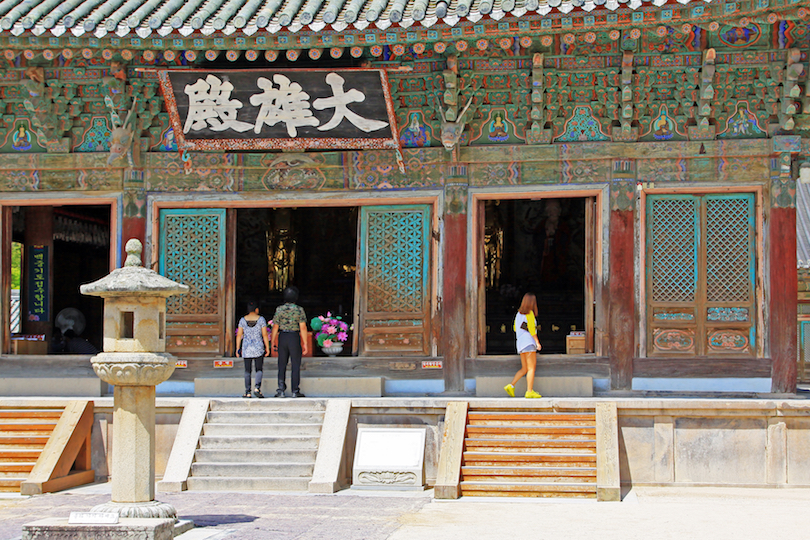
Lying on the slopes of Mount Tohamsan, Bulguksa Temple is an absolute masterpiece of Buddhist art and architecture. It is widely considered to be the most impressive temple in the whole of South Korea. Built in the eighth century, the temple boasts some astounding stone pagodas and statues of the Buddha, and seven of the country’s National Treasures are to be found scattered around its complex.
Perfectly at harmony with the majestic mountain scenery all around it, the temple’s many courtyards and gardens are mesmerizing to wander around, with beautiful architecture on show wherever you look.
While Bulguksa Temple certainly holds great historical and cultural importance, it still functions as a site of worship, so you will often see monks and pilgrims chanting or performing rituals. The highlight of many people’s visit to Gyeongju, no trip to the city can be complete without stopping by this fantastic old temple, which is remarkably still in use over a thousand years after it was built.