
Some people see airports as glorified waiting rooms with overpriced snacks and endless hallways. Others think they’re fascinating spaces of human activity and hubs of excitement—part travel hub, part art gallery, part mall, and sometimes architectural masterpieces.
Sure, airports have a purpose: to comfortably transport people from A to B. But some airports that manage to break the mold with jaw-dropping designs, indoor gardens, or breathtaking locations can transform a simple transit into an experience in its own right.
Between security checks, passport control, and anticipations of turbulence, traveling can be stressful. These eleven unique airports will have you wondering why every travel hub isn’t this spectacular.
11. Madrid–Barajas Airport, Spain
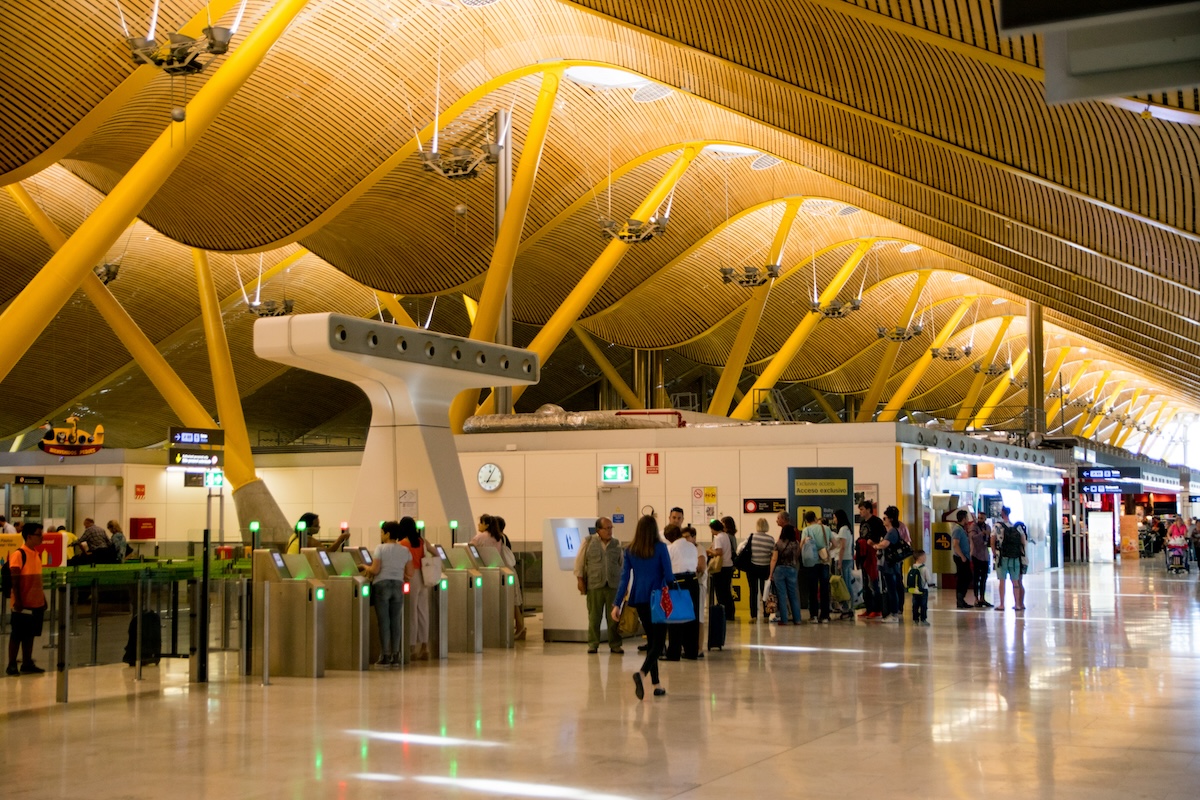
Madrid’s Barajas Airport was first inaugurated in 1931 as the city’s main international airport. Designed by Richard Rogers and Antonio Lamela, this architectural gem showcases a stunning dome-shaped roof over Terminal 4.
The terminal is overflowing with natural light, which creates a relaxing ambiance for travelers. The wavy ceiling, supported by central pillars that resemble modern trees, not only adds beauty to the building but also helps reduce the airport’s energy consumption.
It’s Spain’s busiest airport, serving as a hub for the local Iberian Airlines. Passengers cruise through this sunny terminal en route across Europe and beyond.
10. Beijing Daxing International Airport, China
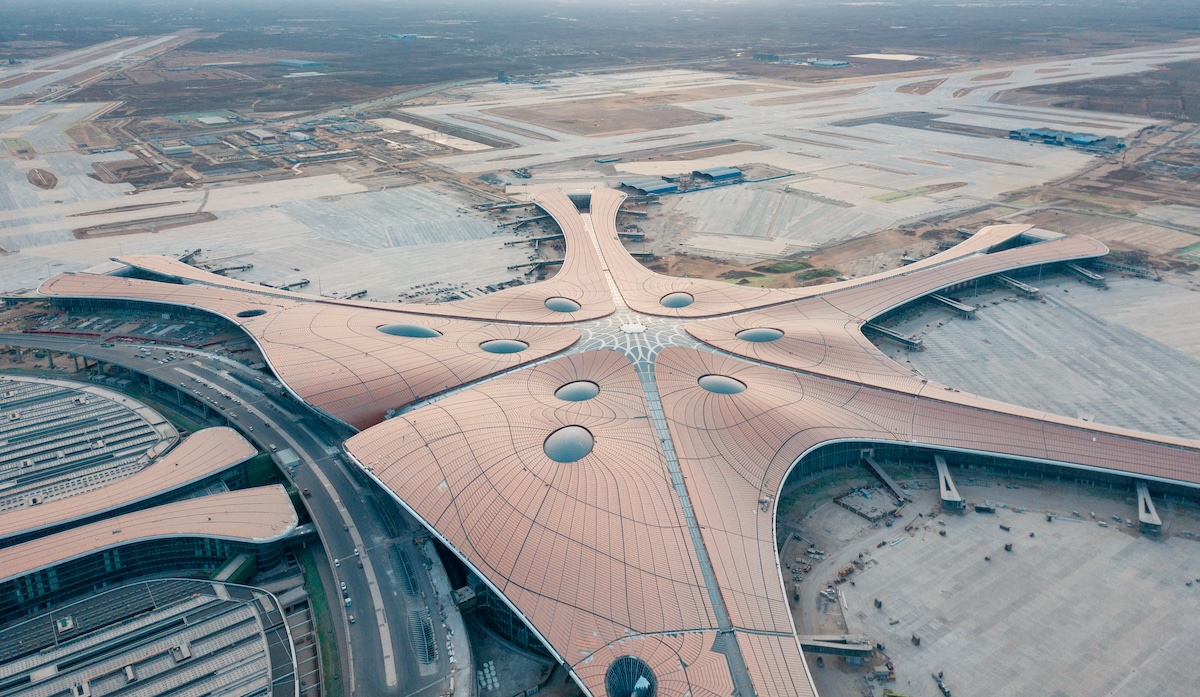
From a bird’s eye view (or a plane’s view), the Beijing Daxing International Airport looks like a six-pointed star. Opened in 2019, it is a masterpiece of modern architecture designed by the late Zaha Hadid. Its starfish-shaped terminal is both futuristic and functional, minimizing the usual long walking distances for passengers with a centralized atrium format.
From inside, the ergonomically inspired space feels enormous. It has vast open spaces and, thanks to its many skylights, plenty of natural light.
It’s a major hub for Air China and Hainan Airlines, connecting Beijing with just about every domestic Chinese and international destination.
9. Denver International Airport
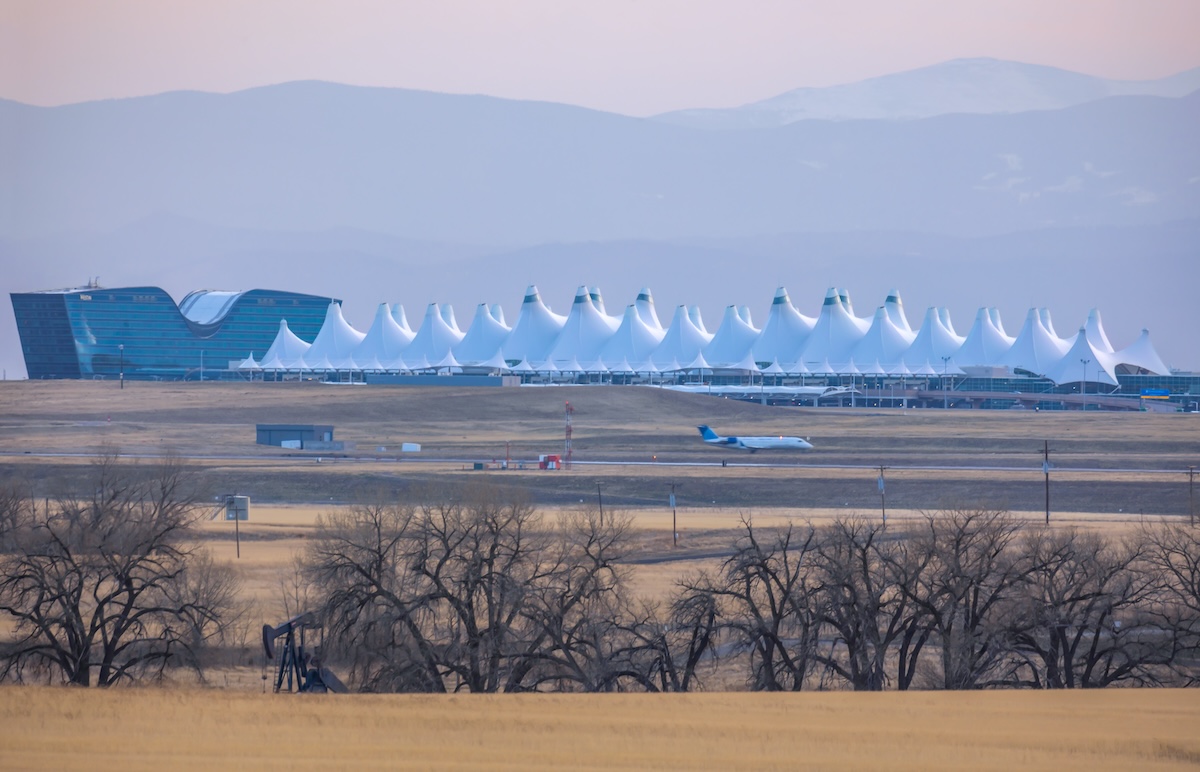
Denver International Airport is easily recognizable for its tent-shaped roof, designed to resemble the snow-capped mountains of Colorado’s Rocky Mountains. The unique design pays homage to the region’s natural beauty (and the reason a bulk of passengers fly into this airport in the first place).
And the ceiling isn’t just impressive in the daylight. It’s illuminated at night to look like the warm light shining through the canvas of a tent.
The interior also has some impressive feats, with interesting art murals and rotating exhibitions covering the terminal walls.
8. Samui Airport, Thailand
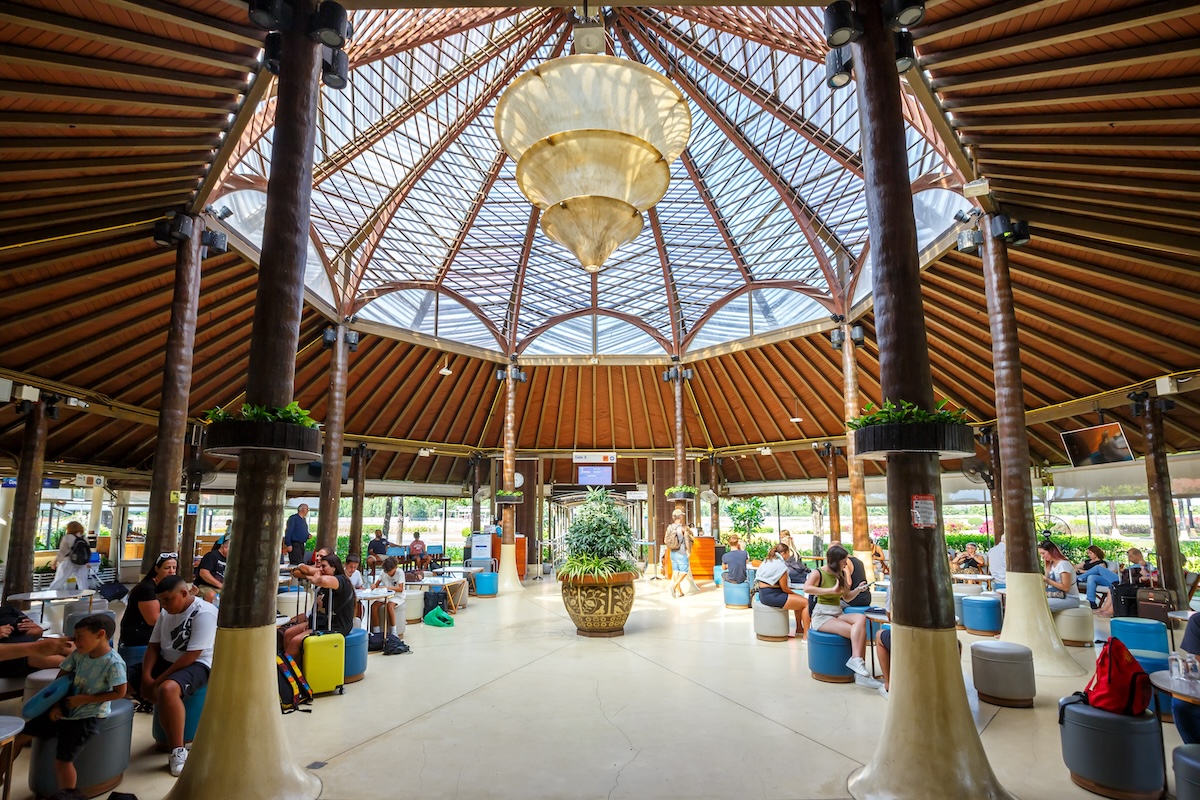
The airport in Koh Samui, Thailand, looks more like the lobby of a tropical resort than an airport at all. Opened in 1989 and privately owned by Bangkok Airways, it’s a breath of fresh air compared to traditional stuffy airports—literally. It’s designed using traditional Thai building techniques, with an open-air terminal that makes you feel as if you’re sitting in a calming tropical garden.
It’s built using local natural materials like palm wood and rattan and is minimally furnished for extra effect. The lack of walls really lets passengers get into the tropical vibe from the moment they step off the plane.
7. Tenzing-Hillary Airport, Nepal
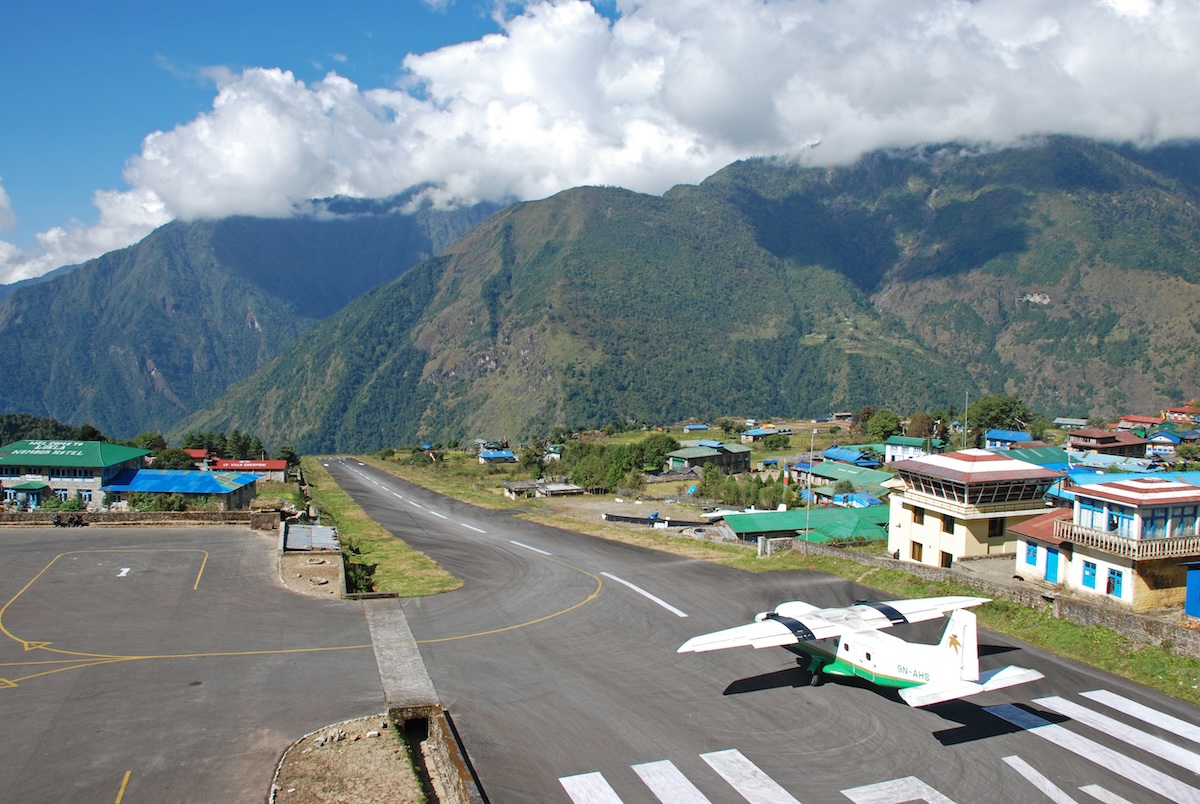
Sitting at an impressive elevation of 2845 meters above sea level, Nepal’s Tenzing-Hillary Airport (sometimes called Lukla Airport) is not for the faint of heart. It’s one of the world’s most dangerous airports to fly into, because of its incredibly short runway that ends with a steep cliff drop. On top of this, it often gets battered by extreme weather because of its high elevation.
It’s pretty much an airport on the edge of a mountain. But as the gateway to Everest, over 100 thousand people still fly into this airport every year. Only small aircraft can land here, and each flight usually carries less than twenty passengers.
6. Kansai International Airport, Japan
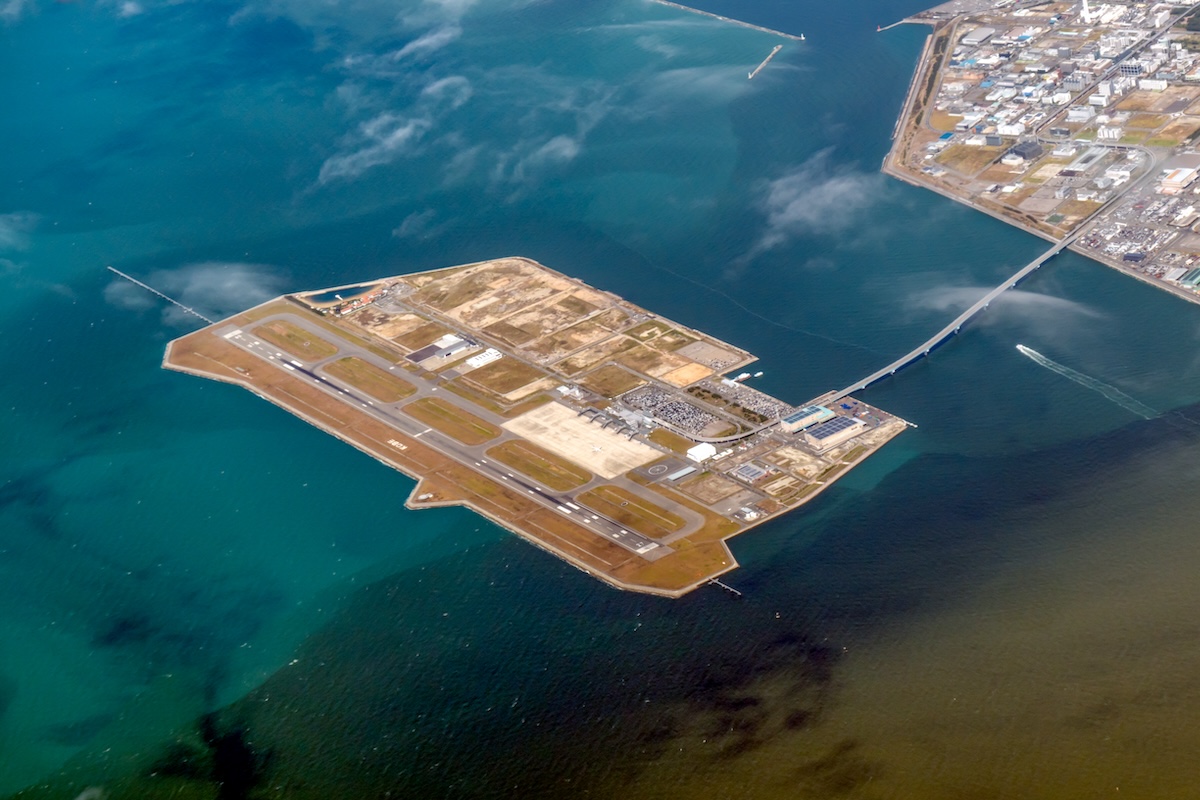
Kansai International Airport in the Greater Osaka Area services Osaka, Kyoto, and Kobe. It’s a pretty large airport, but what makes it unique is that it’s the world’s first ocean airport. And what I mean by that is that it’s literally built on an artificial island in Osaka Bay.
The terminal itself is an engineering marvel designed by Renzo Piano. Its elegant curved roof, made of aerofoil, is not only beautiful to look at but also functional, helping with natural ventilation.
Kansai is a hub for All Nippon Airways and Japan Airlines. Plus, reaching 1.7km long from one end to the other, it’s also one of the longest airports in the world.
5. Wellington International Airport, New Zealand

Wellington International Airport, sometimes known as The Rock, underwent huge construction in 2010. The terminal interior is inspired by the rugged coastline of Wellington, which is just feet from the airport, as well as Middle Earth.
And by this, I mean the mythical land from The Lord of the Rings. As a tribute to the magical novel, the airport has several Hobbit-themed installations, including a statue of Gollum, two great eagles with 15-meter wing spans, and even some props from the film.
It was once temporarily renamed as ‘The Middle of Middle Earth’, to pay homage to the new movie releases.
4. Heydar Aliyev International Airport, Azerbaijan
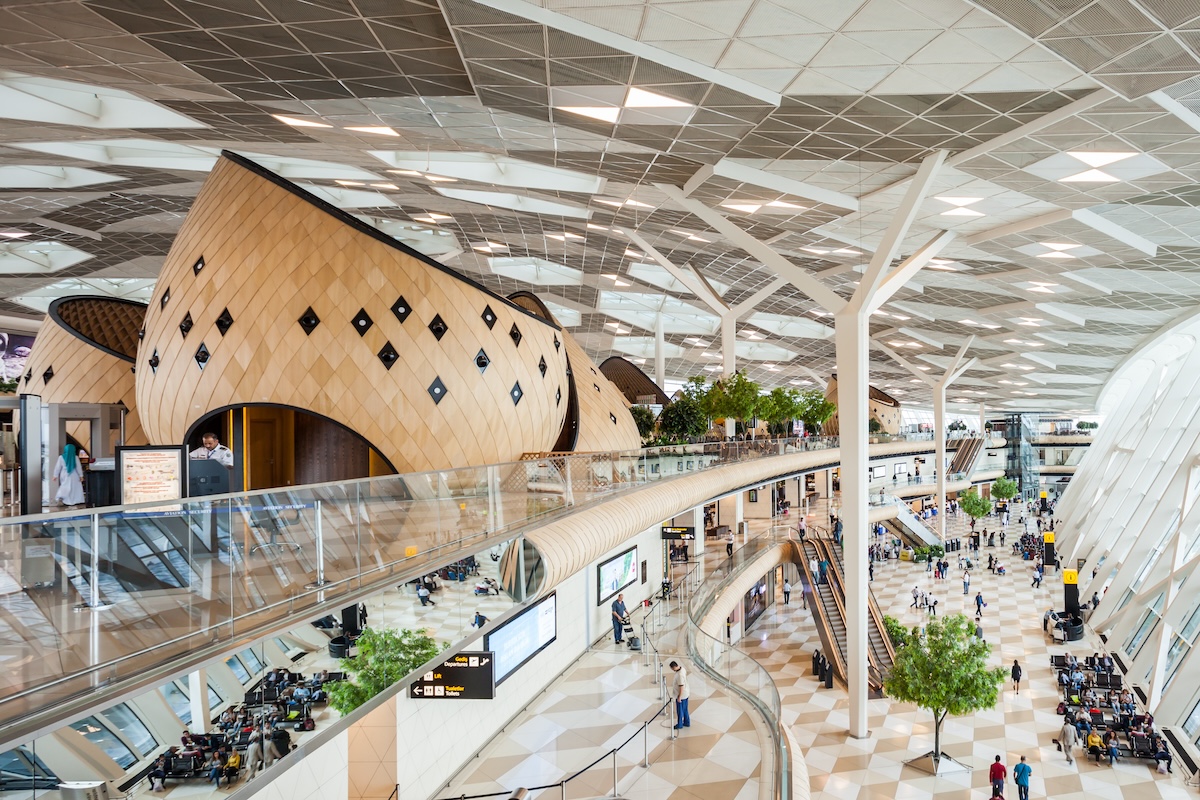
Heydar Aliyev International Airport is the busiest airport in Azerbaijan and the post-Soviet region. Located in Baku, it opened in 1999 and underwent a massive redesign in 2014.
The terminal is huge, serving as a hub for Azerbaijan Airlines. It’s designed by an Arabian theme with the intention of being comfortable, luxurious, and efficient, all while breaking the norm of traditional airports.
A good example are the large organic-shaped cocoons made of wood, latticework, and geometric intricacies. Some of these cocoons house shops, restaurants, and private resting spaces, and they are designed to make the huge airport feel more homey and contained.
3. Gibraltar International Airport

As far as interiors go, Gibraltar International Airport is relatively traditional. But where this airport stands out is out on the runway. It’s one of the few airports in the world where the airport intersects a major road.
Opened in 1939, this unique setup requires road traffic to be halted when planes take off and land on the runway. It shows an interesting blend of aviation and urban city life, showing us that having airports in small, shared spaces is possible.
2. Princess Juliana International Airport, Saint Martin
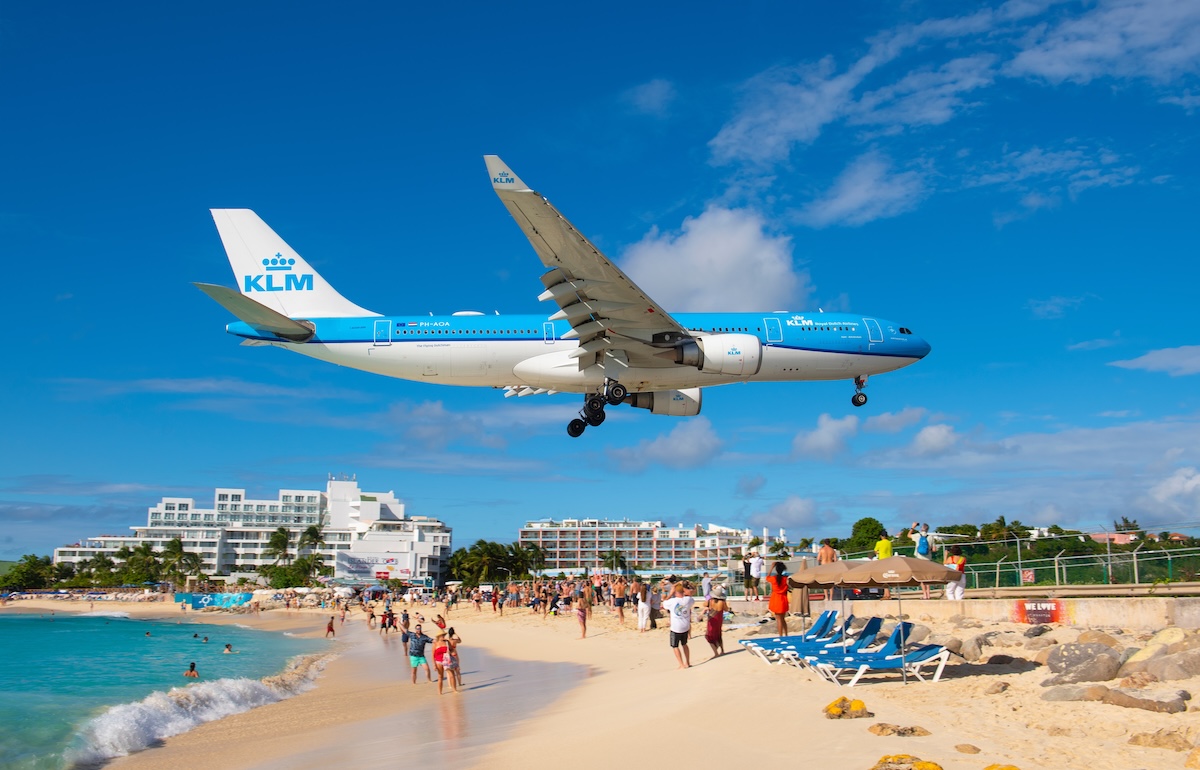
Like Gibraltar, Princess Juliana International Airport in Saint Martin in the Caribbean is famous for its runway, which begins meters away from the public Maho Beach. It makes sense, considering the entire island is only 33 square miles big.
You’ve likely seen videos of people lounging on the beach with planes flying low over beachgoers as they approach the runway. The airport is an important hub of the Caribbean, serving as a gateway to smaller islands like Anguilla, Saba, Saint Barthelemy, and Sint Eustatius.
1. Changi Airport, Singapore
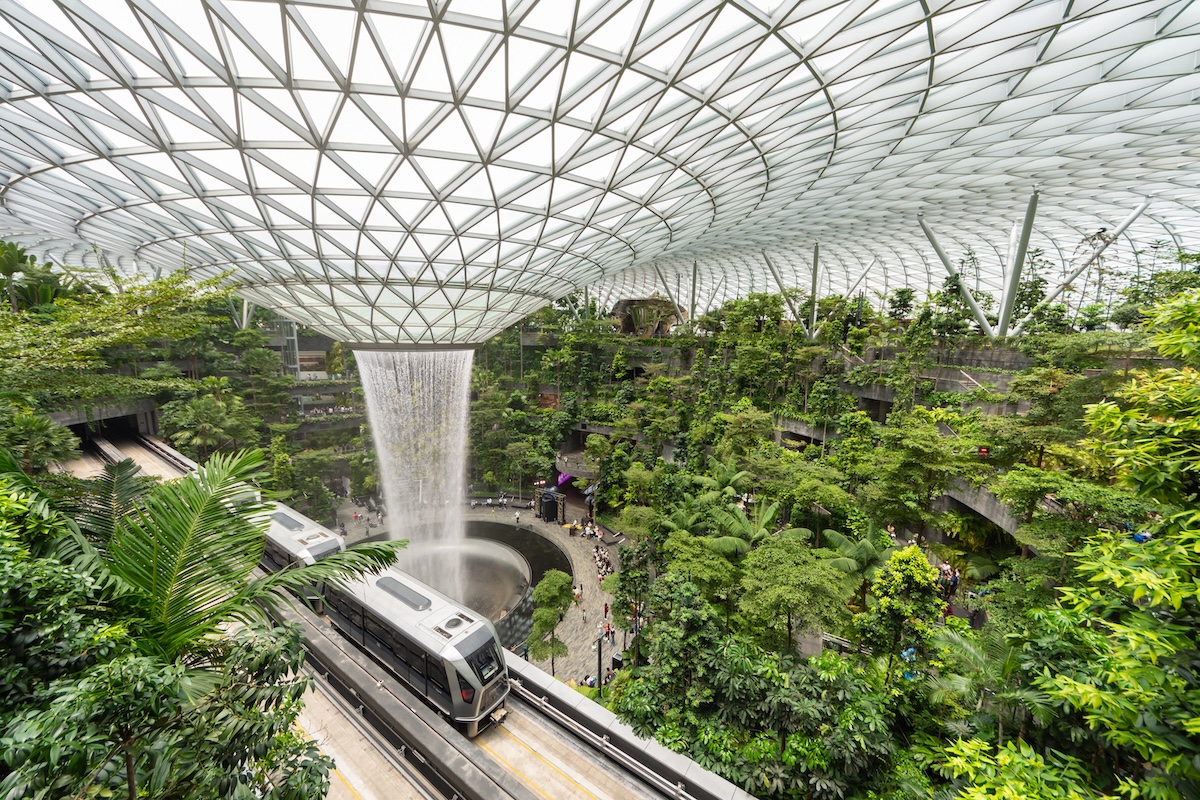
Singapore’s Changi Airport consistently ranks as one of the world’s best in terms of efficiency and beauty. With its futuristic interior and incredible gardens, it feels like much more than just an airport.
The airport is basically one large greenhouse with lush gardens, walking trails, and even an incredible floating waterfall called the Rain Vortex. Among others, the airport is home to a cactus garden, a water lily garden, a butterfly garden, and an orchid garden.
Changi Airport is one of the world’s busiest. It serves as the hub of Singapore Airlines and connects close to 70 million passengers each year.












Leave a Reply