
Where two rivers meet, this lush riverside destination is framed by mountains, waterfalls, and wide stretches of tropical greenery. Its tranquil setting makes it feel worlds away from modern life, yet the landscape hides layers of powerful history beneath its beauty.
Kanchanaburi, in western Thailand, is known for both its stunning natural surroundings and its connection to the infamous Death Railway built during World War II. During Japanese occupation, thousands of prisoners of war and forced laborers suffered here, and today museums, memorials, and monuments stand in their memory.
Alongside its moving historical sites, the area also offers access to national parks, scenic viewpoints, and forested trails, making it a destination that appeals equally to nature lovers and history enthusiasts.
12. Safari Park Open Zoo
 © Jjspring / Dreamstime
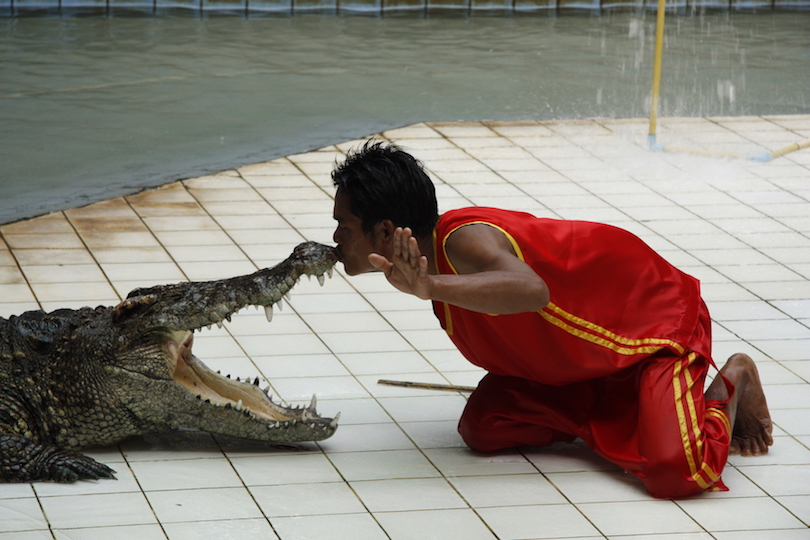
With a wide variety of exotic animals, the Safari Park Open Zoo is a great place for families to visit; it is both entertaining and educational. Located in what was once a mining pit, the zoo is absolutely huge, with eight different zones on offer featuring animals living in natural-style habitats.
Highlights include the entertaining crocodile show and you can even have up-close encounters with giraffes, tigers and more. A fun day out, the Safari Park Open Zoo is definitely worth checking out if you’re an animal lover.
11. JEATH War Museum
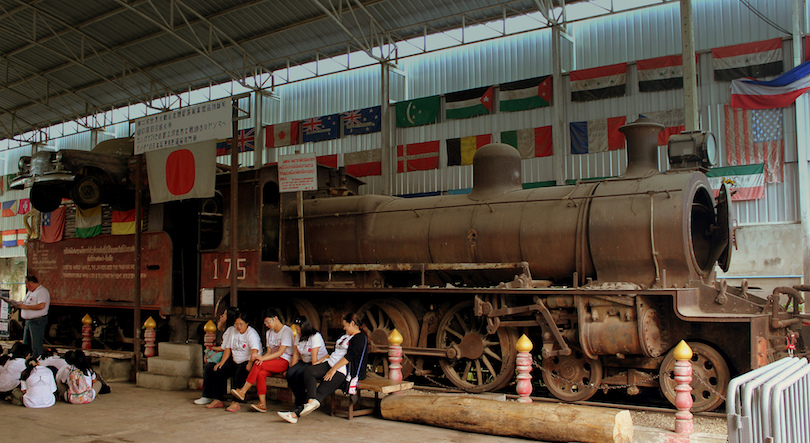
Devoted to telling the story of the Prisoners of War who suffered so much while building the Death Railway, the JEATH War Museum displays harrowing accounts from the laborers themselves and also showcases former Detention Huts and memorabilia and photos from the time.
Standing for Japan, England, America, Australia, Thailand and Holland, the abbreviation ‘JEATH’ highlights the countries involved in the construction of the railway. While overall it is perhaps a bit tatty and amateurish, there are enough interesting items to warrant a visit and the entrance fee won’t set you back much at all.
10. Tham Kra Sae Bridge

Part of the Thailand-Burma Railway, this wooden trestle bridge that looks as if it is about to fall apart at any moment is located at one of the most scenic parts of the railway line. While it is indeed as old as it looks, it is very well looked after and is one of the most popular tourist attraction in Kanchanaburi.
The train stop of the same name is a perfect place to get off at and take in the wonderful views of the river and surrounding countryside. After having stopped off for a bite to eat and to take in the view, head to the nearby Amphoe Sai Yok cave, which is very atmospheric and houses a delightful Buddha statue.
9. Wat Tham Sua
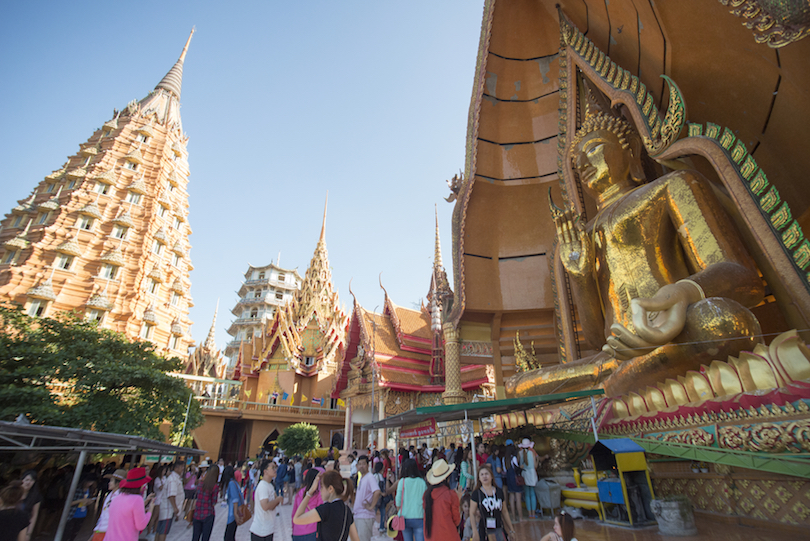
Also known as the ‘Tiger Cave Temple’, this wonderful monastery lies on top of a hill and the views from its summit are stunning. While the panoramas on show definitely make the climb worth it, it is the enormous golden statue of the Buddha which is the undoubted highlight.
Gorgeous to behold, the statue and chedi that protect its tower above, and the adjacent monastery after which the site is named, is just as beautiful for the fantastic architecture on display. A very impressive place, the temple lies around 14 kilometers from Kanchanaburi and is definitely worth visiting.
8. Chungkai War Cemetery
 © Yongkiet / Dreamstime
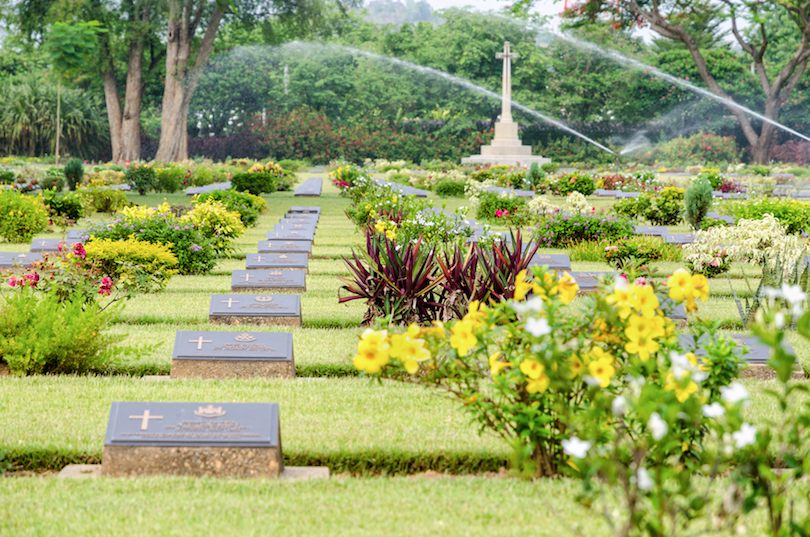
Once the site of one of the largest Prisoner of War camps in the area, Chungkai War Cemetery is now the location at which many of these victims are buried. A moving place to visit, well-maintained graves stretch before you and it is a sobering experience to witness the last resting place of so many victims of war.
A peaceful spot, the war cemetery is pleasant to walk around and the rows of graves really highlight just how wasteful and tragic war is.
7. Sai Yok National Park
 © Boonprasongthan / Dreamstime
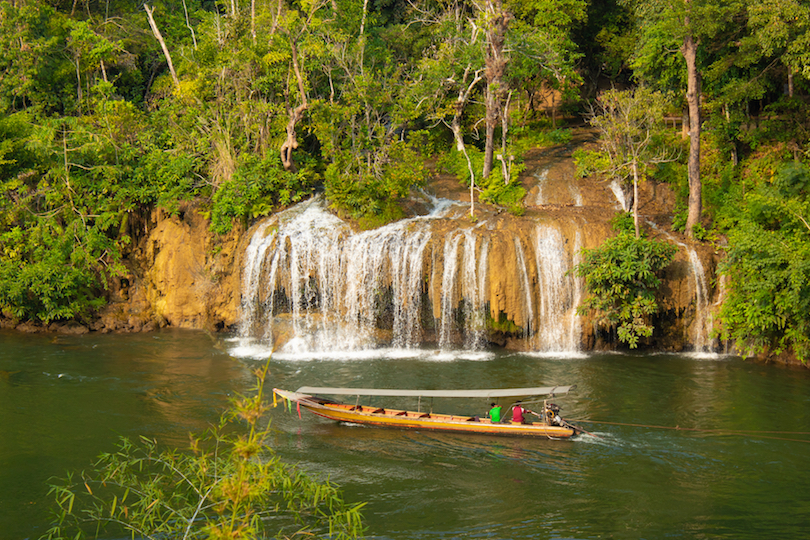
Located around 100 kilometers from Kanchanaburi, Sai Yok National Park is a lovely place full of waterfalls, caves, and wildlife. It is a great day trip option if you’re staying in the city. The park is very mountainous and much of it is coated in dense forest, which hides such a rich array of fauna and flora.
A very popular place to visit, the Kwai River runs through it and there are loads of great trails that twist their way through the forest. With Sai Yok Yai waterfall and the huge Tham Lawa cave on offer, this national park will delight nature lovers with all the amazing scenery.
6. Hellfire Pass
 © Stuart456 / Dreamstime
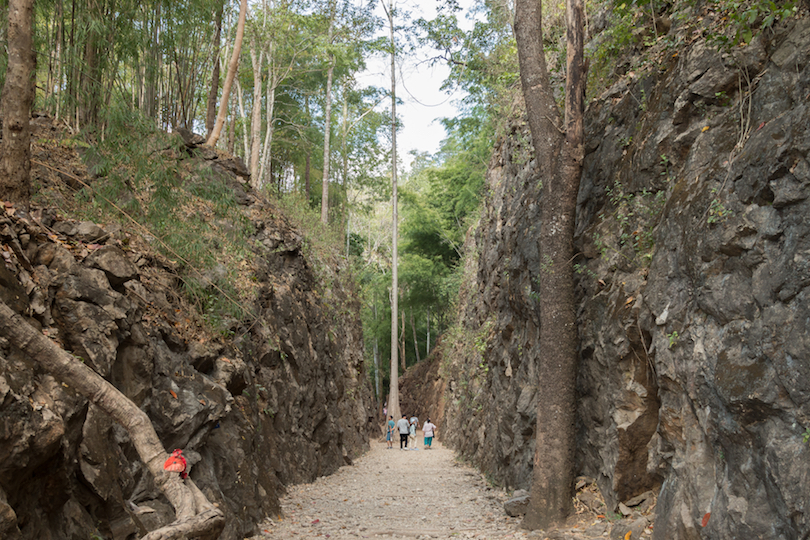
Built using forced labor during the Second World War, Hellfire Pass is so named because it was the hardest part of the railway line to build; it cut through solid rock and many of the slaves and prisoners lost their lives in the process.
Located in the Tenasserim Hills, it is around an hour from Kanchanaburi. It is a good idea to make a day trip out of it as there is a great museum on hand that documents the history and tragedies surrounding the pass.
After visiting the museum, there is a wonderful path that takes you to Hellfire Pass itself, and a memorial to the fallen laborers offers spectacular views of the hill.
5. Erawan National Park
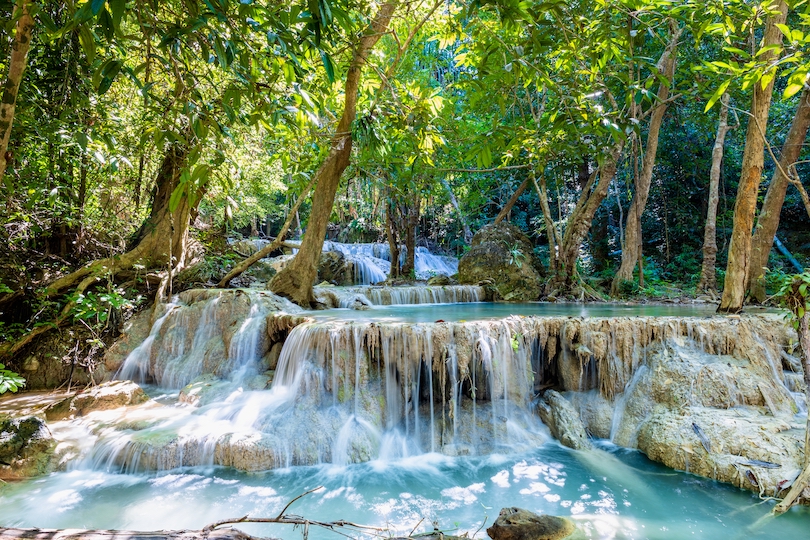
Founded in 1975, this wonderful national park is located around an hour’s drive from Kanchanaburi and is full of lovely waterfalls, gloomy caves, and stunning scenery. Named after the three-headed white elephant that is an important figure in Hindu mythology, Erawan’s main draw is its seven incredible waterfalls, which each have their own look and feel.
Pouring over limestone cliffs, the falls are absolutely beautiful and the turquoise pools around them stand out delightfully against the dense forest lining their shores. With so much nature and wildlife on offer, exploring Erawan’s sights makes for a great day trip.
4. Thailand-Burma Railway Centre
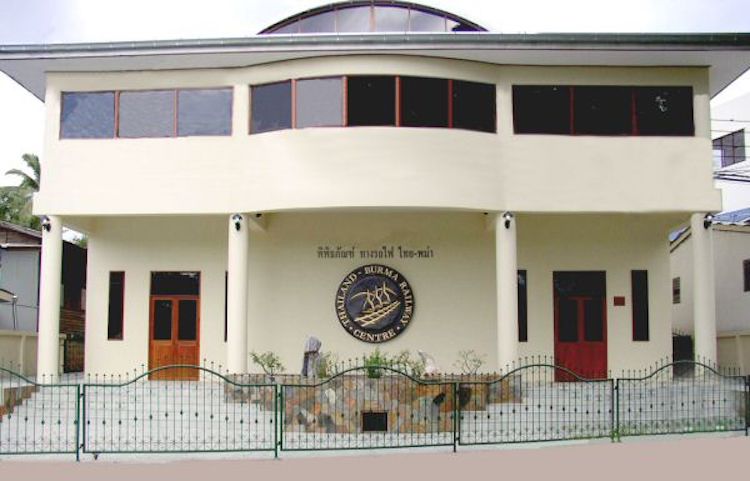
Dedicated to the victims who helped build the ‘Death Railway’, this fantastic, interactive museum will really help you come to grips with what went on in Kanchanaburi during the Second World War.
A harrowing experience, the exhibitions are very well done and will take you right from the railway’s conception up to the aftermaths of the war. Full of facts and figures, interesting displays and moving letters from the prisoners themselves, the Thailand-Burma Railway Centre is an informative and educational yet sobering place to visit.
3. Death Railway
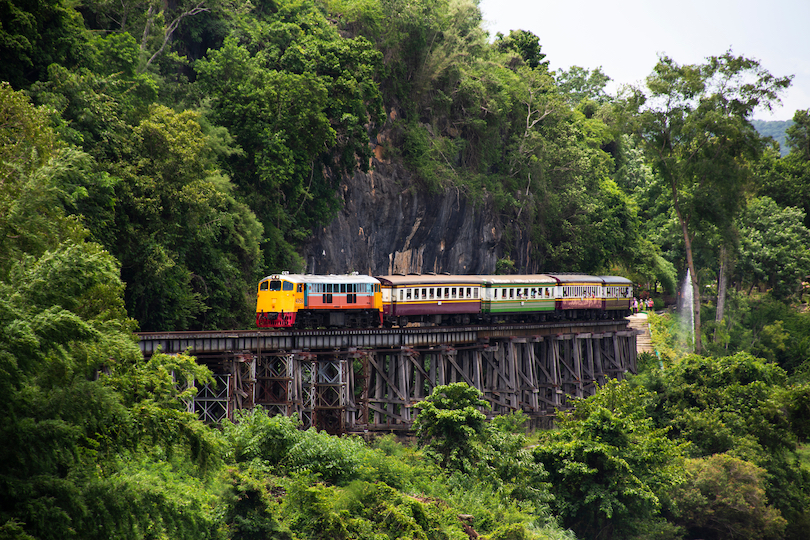
While the Thai-Burma Railway was party to such tragic scenes and brutality during the Second World War, nowadays, it is an absolutely lovely stretch of railway to travel along and is well worth visiting when in Kanchanaburi.
Hugging the mountainside, the train passes alongside rivers and forests and you can see rice fields and small villages as you pass by on the rickety rails to Nam Tok. A two-hour train memorable journey, you can download an audio guide that tells you the story of the Death Railway and watch the world go by as you learn about the history of the place.
2. Kanchanaburi War Cemetery
 © Tuayai / Dreamstime
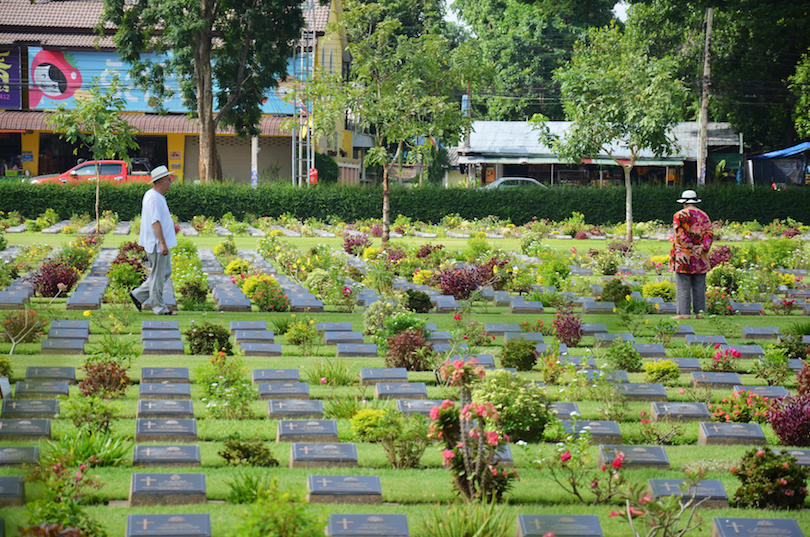
Established in 1956, this cemetery houses the graves of innumerable prisoners of war who were captured by the Japanese and forced to build the Burma Railway during the Second World War. Such was the brutality and cruelty meted out to those building the railway, it soon became known as the ‘Death Railway,’ as so many people died building it.
A moving place to visit, the Kanchanaburi War Cemetery is very well-maintained and it is quite shocking to see the row upon row of graves stretching away before you. While not everyone’s idea of a great day out is visiting a cemetery, it is one of the main tourist attractions in Kanchanaburi and will help you to understand the sheer scale of the atrocities that were committed here.
1. Bridge Over the River Kwai
 © Presse750 / Dreamstime
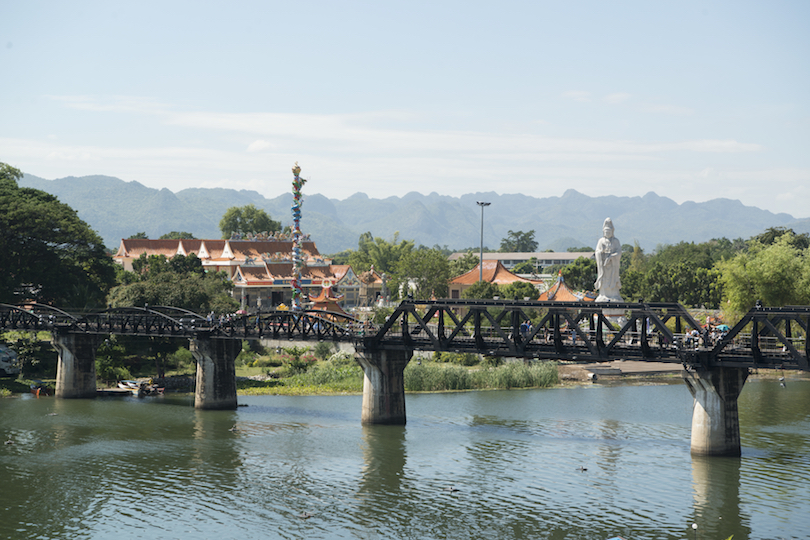
Immortalized in both books and film, this bridge is renowned throughout the world and is the most famous stretch of the Thailand-Burma Railway. Very difficult to build due to the surrounding terrain, prisoners of war and slaves were forced to work on its construction; over half of them died due to the horrendous conditions.
While the bridge’s harrowing past is very much still present in the war memorials, museums, and monuments around Kanchanaburi, its setting is still beautiful to behold; it spans the scenic Mae Klong River.
You can cross the bridge on foot on the central steel-plated walkway though it’s still in use; just stand in a safety point if a train appears. A must-see when in Kanchanaburi, watch ‘The Bridge on the River Kwai’ before going to really understand why it is such an important historic site.