
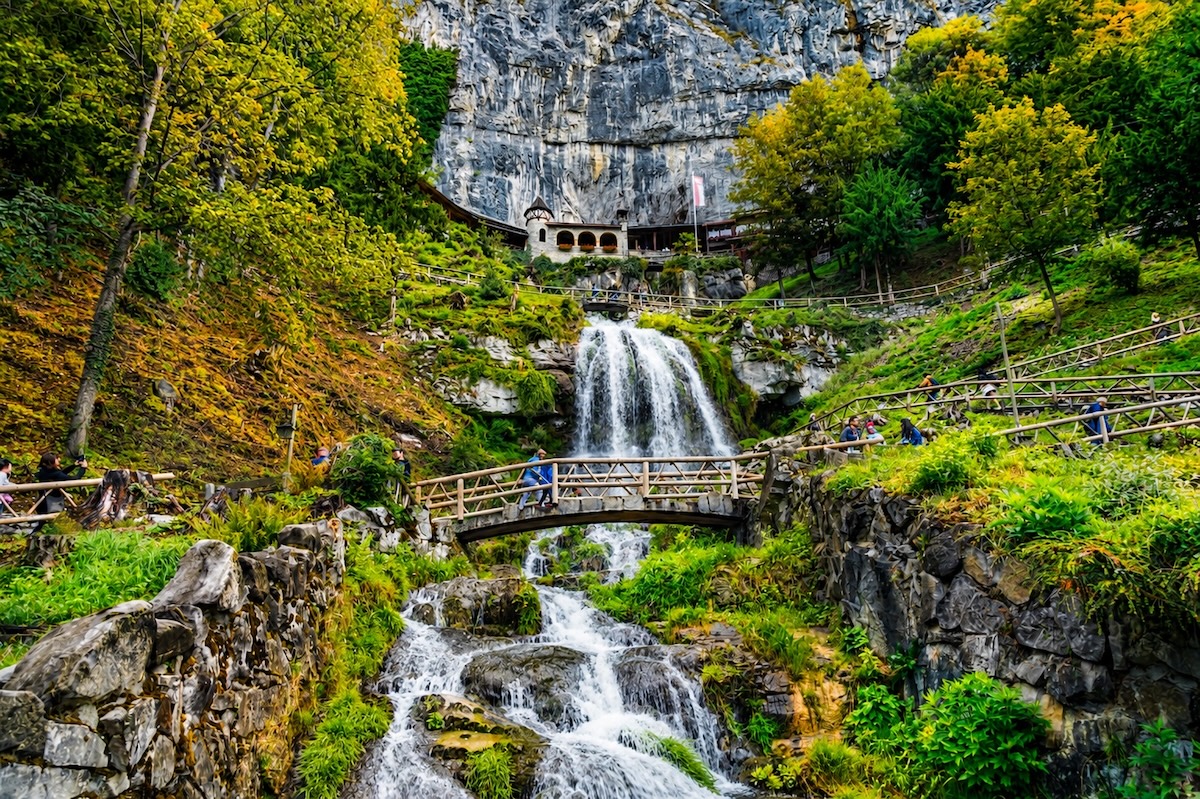
Somewhere along the north shore of Lake Thun, between Interlaken and the quiet village of Beatenberg, a waterfall spills from a limestone cliff into the trees below. Most people driving the lakeside road spot it before they even notice the parking lot. That cliff hides the entrance to St. Beatus Caves Switzerland—a sprawling cave system that stretches over 14 kilometers into the mountain, though only about one kilometer of lit, walkable passages are open to visitors year-round.
These caves sit in the Bernese Oberland, just 10 minutes by car from Interlaken or a quick hop on bus 21 from Interlaken West. You get an underground stroll through tunnels thick with stalactites, plus an outdoor setting with waterfalls, forest trails, and wide-open views across the lake. If you’re already bouncing between Thun, Grindelwald, and the Jungfrau region, St. Beatus Caves slip easily into a half-day itinerary—no serious planning required.
Clifftop Setting Above Lake Thun
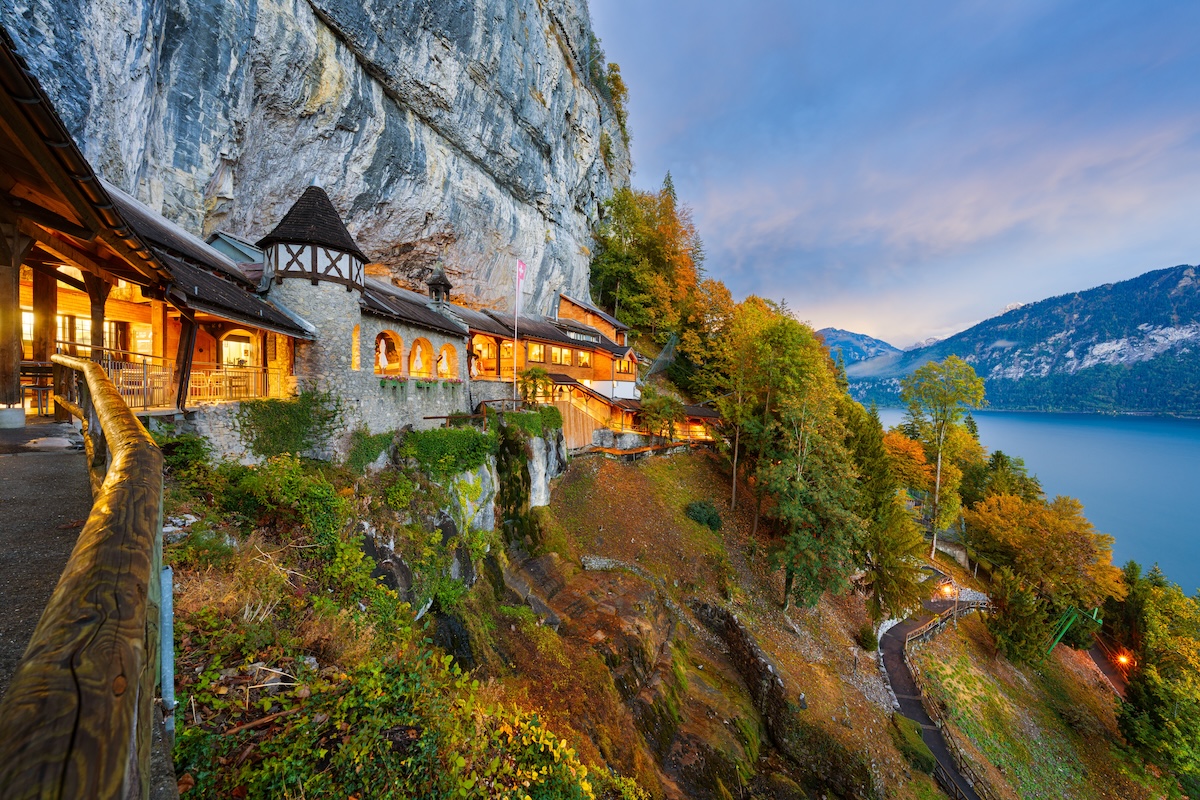
The approach shapes the visit as much as the caves themselves. From the Beatenbucht parking area, you follow a paved path that climbs through the forest along the cliff. It takes about 20 minutes at a relaxed pace, with the trail running right beside the waterfalls pouring from the cave system above. You’ll probably hear the water before you see the entrance.
At the cave mouth, you’re about 50 meters above Lake Thun, and the view opens south across the water toward the Niederhorn ridge and distant peaks. On a clear day, the turquoise lake stands out against the gray limestone underfoot. It’s an impressive spot—not so much for the altitude, but for how close everything feels. Water, rock, and forest all crowd in.
The Panorama Restaurant sits on a terrace near the entrance, and it lives up to the name. You can grab a simple meal here and look straight out over the lake. The food sticks to Swiss classics, nothing fancy, but the setting does most of the work.
If you’re hiking the Via Jacobi pilgrimage route, the caves land right on the trail between Merligen and Interlaken. That lakeside path from Beatenbucht takes about an hour or a bit more and links the cave stop with a longer walk. For drivers, the parking lot and bus stop at the base keep things easy.
Cave Atmosphere And Rock Formations
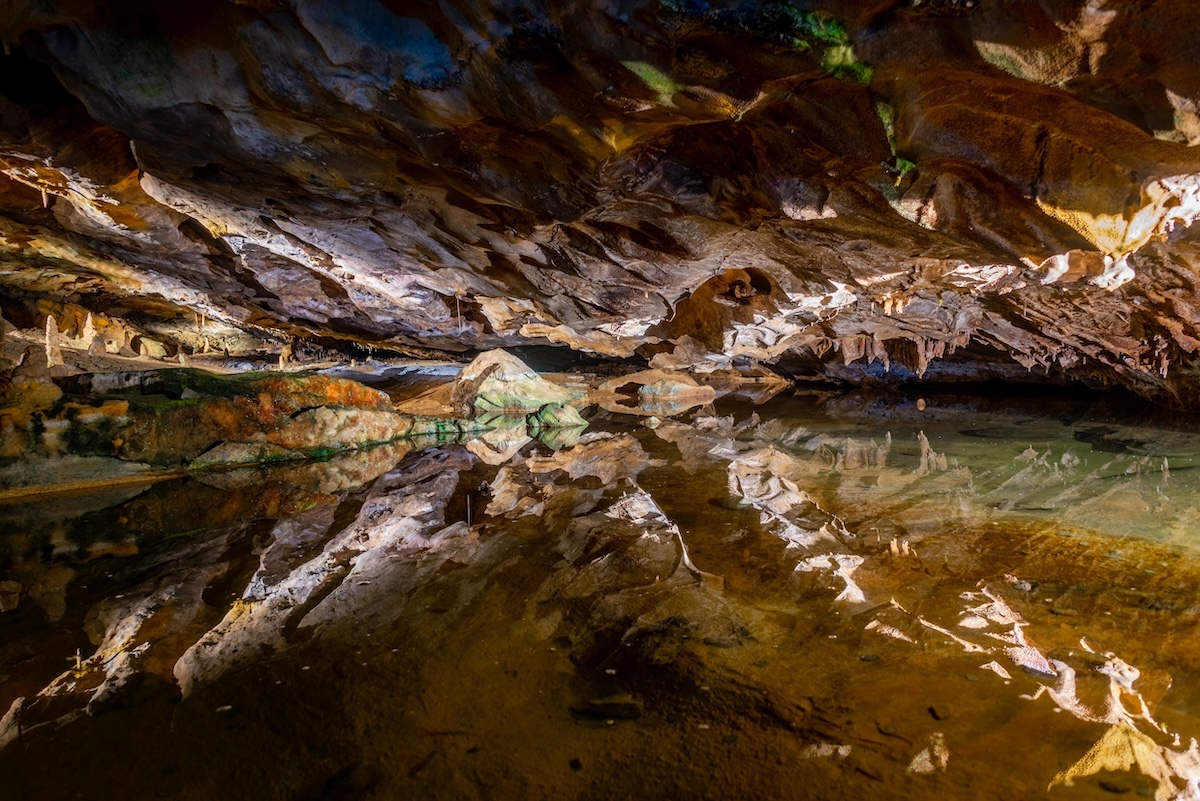
Inside, the temperature drops to about 8 to 10 degrees Celsius no matter the season—so bring a light jacket, even if it’s the middle of July. The secured path stretches about 926 meters into the mountain, following a single route that winds through narrow passages, low corridors, and the occasional wider grotto. If you keep a steady pace, the walk takes around 75 minutes, but honestly, you’ll probably want to pause at the lit-up formations here and there.
Stalactites cluster densely overhead—some so thin they look like pencils, others thick and ridged from what must be centuries of mineral buildup. Stalagmites jut up from the floor in rounded columns, and in a few places, they’ve even fused into full-on pillars. The lighting feels minimal, almost shy, just enough to show off the textures and shapes without turning it into some kind of spectacle. You’ll hear water dripping most of the way, and sometimes a small underground stream runs right alongside the path.
The cave never really opens into one of those massive chambers you might expect. Instead, it stays close and a bit mysterious, so you’re surrounded by rock the whole time. If you pay attention, the details in the formations start to stand out—way more than any wide-angle view could ever show.
Local legend claims Saint Beatus, an Irish monk, once drove a dragon out of these caverns back in the 6th century. There’s a small museum near the entrance that shares this story and dives into the cave’s geology. It’s interesting, and you don’t have to carve out extra time to check it out.