
Some countries barely crack a few thousand residents. These places show a side of the world where daily life is quieter, more personal—sometimes even a bit lonely if you’re used to the city buzz.
If you’re curious about places with small populations, you’ll find these countries have their own unique cultures, landscapes, and rhythms. Maybe it’s the remote location, or just the limited land, but the least populated countries always seem to have a story or two that’ll surprise you.
10. Dominica (67,408)
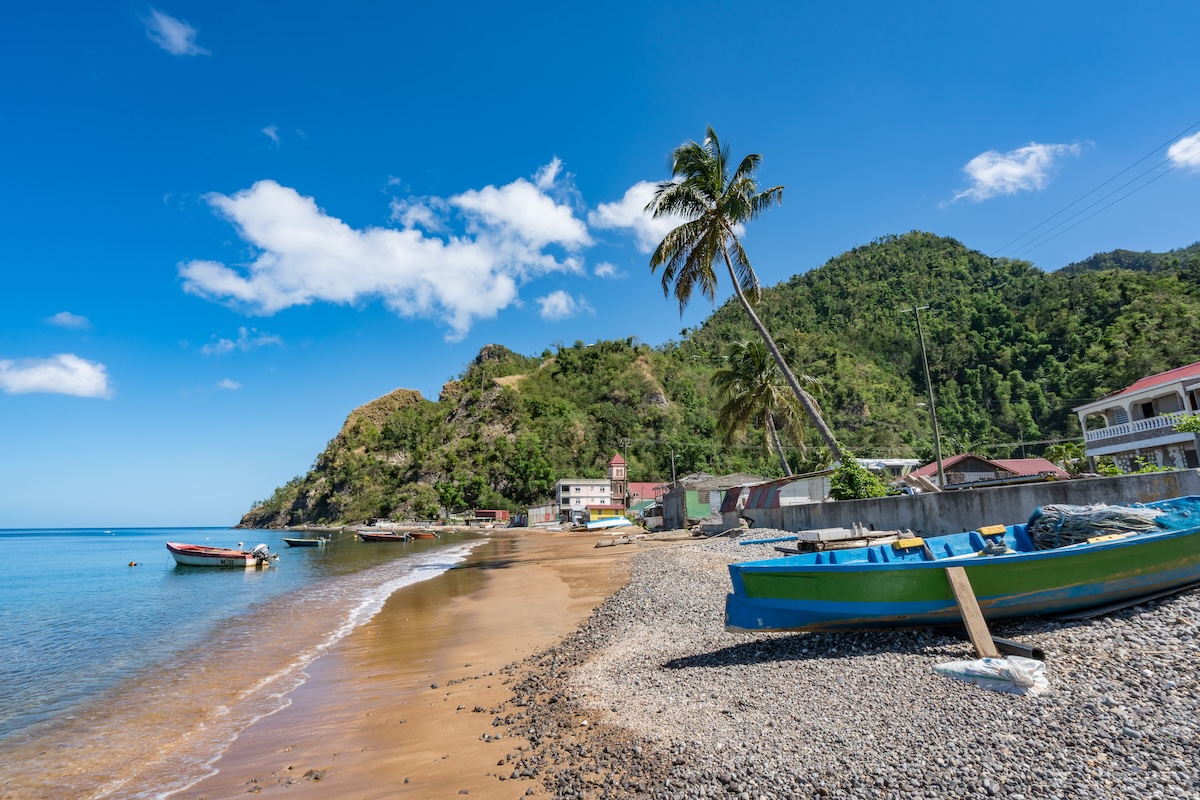
Dominica, with about 67,408 people, is one of the least populated countries in the Caribbean. It sits between Guadeloupe and Martinique and covers just 750 square kilometers.
Travelers notice the tight-knit community vibe right away. Most folks live in the capital, Roseau, or along the coast, but the island never feels crowded.
They call Dominica the “Nature Isle” for a reason—rainforests, rivers, and wildlife are everywhere. Instead of big cities, you get small towns and a lot of green.
If you’re after quiet and natural beauty, Dominica’s slow pace might be exactly what you want. It really feels like everyone knows each other, and life just moves at its own laid-back pace.
9. Saint Kitts and Nevis (51,320)

Saint Kitts and Nevis—those two little islands in the eastern Caribbean—have only about 51,320 people between them.
Basseterre, the capital, sits on Saint Kitts. These islands joined up as a nation back in 1967 and finally broke away from the UK in 1983.
Saint Kitts is the bigger sibling; Nevis is smaller, separated by just a narrow channel. Sugarcane used to be everything here, though times have changed.
With so few people, you never feel crowded. It’s one of the world’s tiniest countries, both in size and population. If you want to ditch the big city, this is about as far as you can get.
8. Marshall Islands (42,418)

The Marshall Islands—just over 42,000 people scattered across a thousand-plus islands and atolls in the Pacific. That’s a lot of ocean for not many folks.
Most people live on two main islands, Majuro and Ebeye. Majuro doubles as the capital and the biggest urban spot. Life’s slow, and it seems like everyone knows everyone.
Fishing and a bit of tourism keep things going. The remoteness keeps the population down, and honestly, that’s probably just how locals like it.
People here face tough stuff—rising sea levels, limited resources. But for them, this is just life.
7. Liechtenstein (40,900)

Liechtenstein sits tucked between Switzerland and Austria, but not many people actually visit. Only about 40,900 residents call it home.
Mountains dominate the landscape—Grauspitz is the highest. The country’s so small you can drive through in less than an hour.
You’ll notice clean towns, green hills, and a surprisingly strong economy. German’s the language, and banking and tourism are everywhere.
It’s a peaceful place. No crowds, just hiking, skiing, and a slower kind of living.
6. Monaco (38,367)

Monaco almost feels unreal—just two square kilometers wedged onto the Mediterranean. That’s smaller than some city neighborhoods, honestly.
But over 38,000 people squeeze in, making it the most densely packed country on the planet. Not much room to stretch out here.
The capital’s also Monaco, so that’s easy enough. Everything screams luxury—fancy cars, yachts, you name it.
Monaco runs on the Euro, even though it’s not in the EU. It’s famous for casinos, Formula 1 races, and a lifestyle that’s, well, pretty flashy. For such a tiny spot, it makes a huge impression.
5. San Marino (34,059)

San Marino’s so small you might miss it on a map—just 34,059 people, entirely surrounded by Italy. It feels more like a small town than a country.
You can walk across it in a day; it’s only about 60 square kilometers. That’s less than many cities.
Castles, hills, views—San Marino’s got them. Most folks are Sammarinese, but you’ll bump into some Italians, too.
It’s one of those places where running into the same faces happens a lot. If you visit, don’t be shocked if people recognize you by day two.
4. Palau (16,733)

Palau doesn’t get much press, but it’s one of the least populated countries—just about 16,733 people. It’s scattered across hundreds of islands in the western Pacific.
Most live on Babeldaob and nearby Koror. The vibe is peaceful, and neighbors actually know each other.
Palau’s famous for gorgeous beaches, coral reefs, and clear blue water. Tourism matters, but things never get hectic.
Nature is woven into daily life—fishing, family, and the ocean. You don’t have to go far for amazing marine life or lush forests.
3. Nauru (11,680)

Nauru? Most people barely know it exists. It’s a tiny island nation in the Pacific, with only about 11,680 people.
Just 21 square kilometers—blink and you’ll miss it. No big city energy, just neighbors and a relaxed pace.
Phosphate mining used to make Nauru wealthy, but those days are long gone. Now, economic struggles are real, and a lot of folks depend on government jobs.
It’s tropical, with ocean views everywhere. Getting there isn’t easy—only a handful of flights each week. Life’s quiet, and honestly, everyone seems to know everyone else.
2. Tuvalu (10,643)

Tuvalu doesn’t show up in the news much. With about 10,643 people, it’s one of the world’s smallest countries.
Nine islands make up Tuvalu, out in the Pacific. The main island, Funafuti, is where most people settle.
Life’s peaceful and slow. No big cities, no highways—just villages and neighbors who all know your name. It’s a simple way to live.
Because it’s so remote, resources run thin. Fishing and small-scale farming keep people going.
Rising sea levels and climate change threaten Tuvalu, but the community sticks together, holding onto their traditions and way of life.
1. Vatican City (882)

You won’t find a country smaller or less crowded than Vatican City. Tucked inside Rome, it has about 882 residents in 2024, making it the least populated country in the world.
This city-state covers less than half a square kilometer. Almost everyone here works for the Catholic Church or its government.
Tourists flock here for the famous St. Peter’s Basilica, but living in Vatican City? That’s pretty much off the table for most people. Most of the place is packed with church offices, museums, and jaw-dropping art.
You can walk across the country in just a few minutes. Every day, clergy, Swiss Guards, and visitors from all over the world fill the streets. Even with such a tiny population, Vatican City somehow keeps its own post office running, broadcasts from its radio station, and prints its own stamps. Kind of wild, honestly.