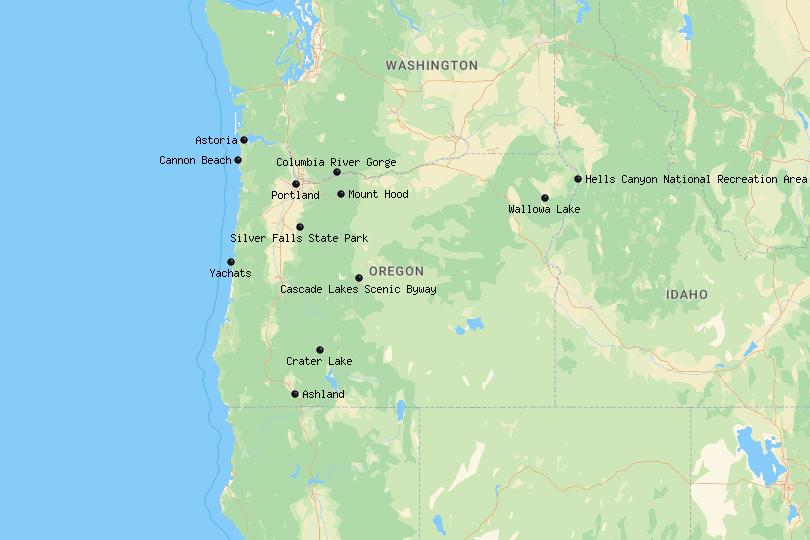
The tenth largest state in the United States, Oregon exemplifies the beauty and wildness of America’s Pacific Northwest. While there are many cultural venues in Oregon worth exploring, it’s the state’s diverse landscapes that draw many travelers to this corner of the country. From rugged shorelines and thick verdant forests to towering volcanic mountains and steep river gorges, the best places to visit in Oregon are simply breathtaking.
Whether rambling along a rocky beach, strolling through a rose garden in high bloom or hiking up the side of a mountain, visitors will find a broad range of outdoor activities to enjoy in Oregon wherever their travels take them. Amidst its untouched nature you can find lively cities such as Portland, Eugene, and Salem while historic monuments and sites relating to the famous Lewis and Clark Expedition are strung out across the state.
12. Ashland
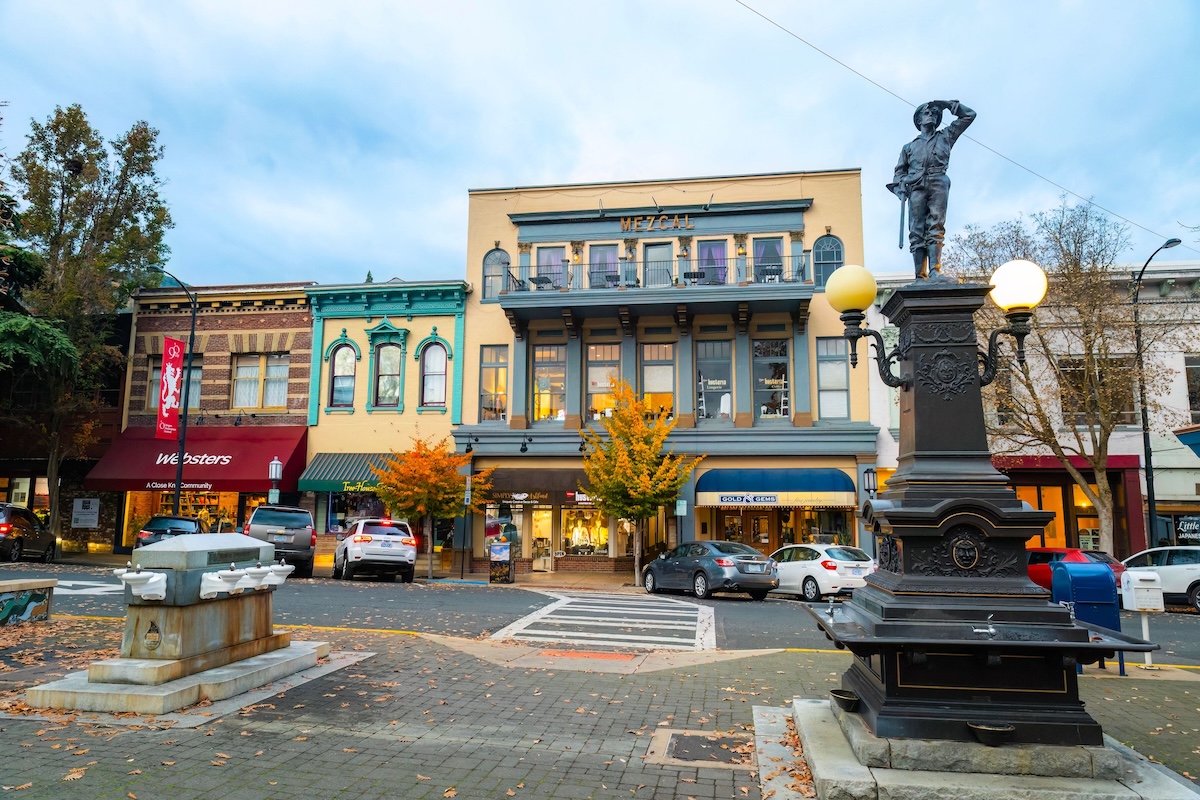
Set in a very scenic spot in the southern part of the state, Ashland is a lovely place to visit that acts as a cultural capital for the surrounding area. While it is most known for hosting the internationally renowned Oregon Shakespeare Festival, the small city has much, much more for guests to discover with history, nature, and nightlife all on offer.
Located in the Rogue Valley, it lies not far from vast forests and twinkling lakes while the majestic Mount Ashland and its snowy peak rises in the distance. Although its natural riches just beg to be explored, the center of town has lots of brilliant galleries and restaurants to try and a lively, youthful feel due to its sizeable student population.
While there are some interesting museums, most come to attend an unforgettable play at one of Ashland’s many theaters. As the Shakespeare Festival runs for nine months, thrilling productions constantly take place alongside lectures, workshops, and readings of the famous playwright’s works.
11. Silver Falls State Park
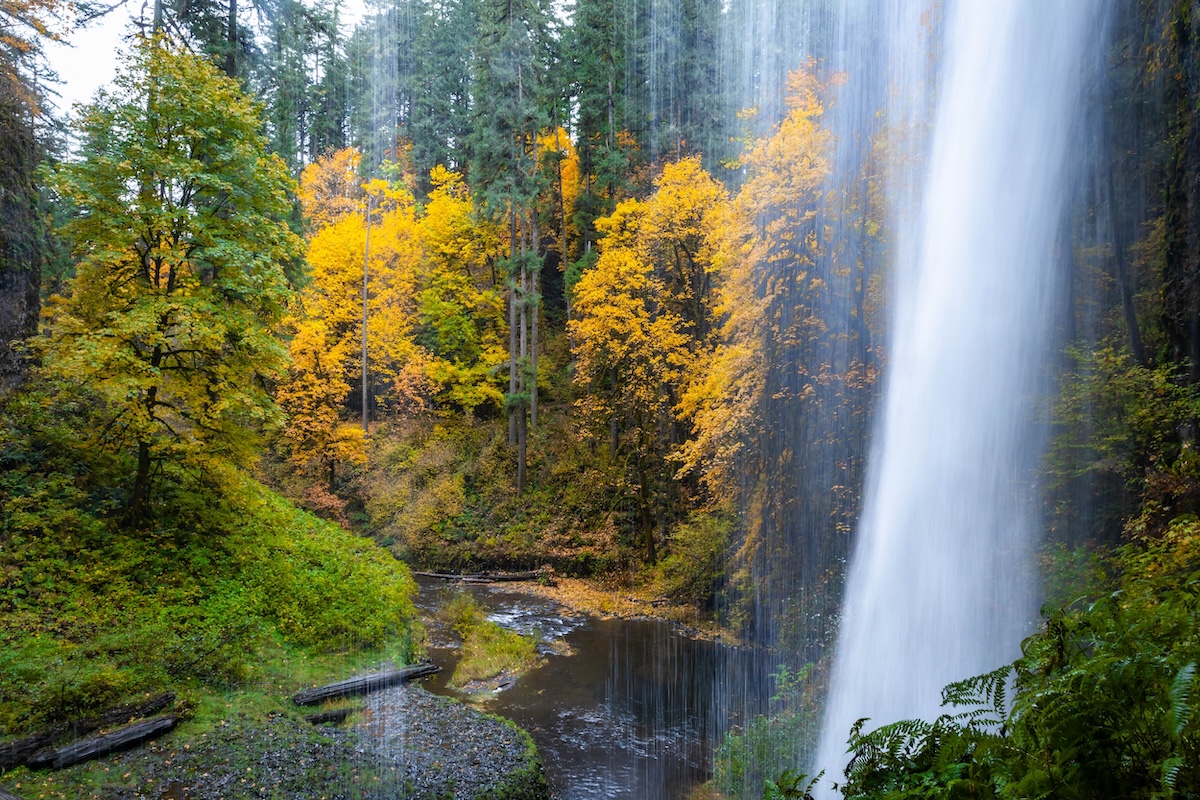
One of Oregon’s prettiest state parks, the phenomenally popular Silver Falls can be found just outside of Salem. Nestled amidst the rolling foothills of the Cascade Range, it has a wealth of wonderful waterfalls as well as some excellent hiking, horseback riding and camping.
Founded back in 1933, the picturesque park encompasses fifteen falls in total and is now the largest protected area in all Oregon. Of these, the 177-foot South Falls is the most visited and photographed with North and Winter Falls also attracting lots of people due to their striking size and splendor.
A great way to see as many of them as possible is to hike along the terrific Trail of Ten Falls Loop which takes you through lush woodlands and winding canyons with sparkling waterfalls wherever you look. Asides from visiting its many falls, you can also camp overnight with playgrounds, picnic areas, and a serene swimming spot to be found amidst the pristine wilderness.
10. Columbia River Gorge
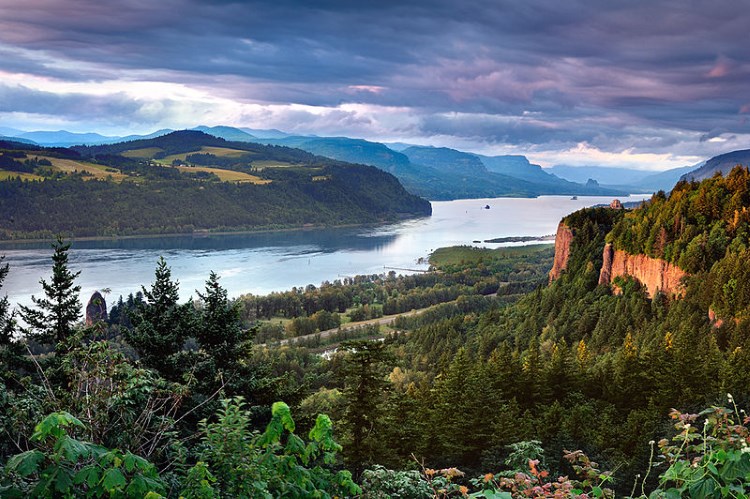
Just a few miles east from Portland lies the vast U-shaped corridor known as the Columbia River Gorge. Formed by cataclysmic Ice-Age floods, the miles-wide valley stretches for more than 70 miles (110 km) along the Columbia River on Oregon’s northern border.
Built in the early 1900s, the Historic Columbia River Highway takes visitors past dozen of waterfalls tumbling down the valley’s steep walls. Whether visiting in the autumn when the surrounding forests are draped in fall color or during the spring when wildflowers burst into bloom, the Columbia River Gorge offers spectacular vistas in every season.
9. Wallowa Lake
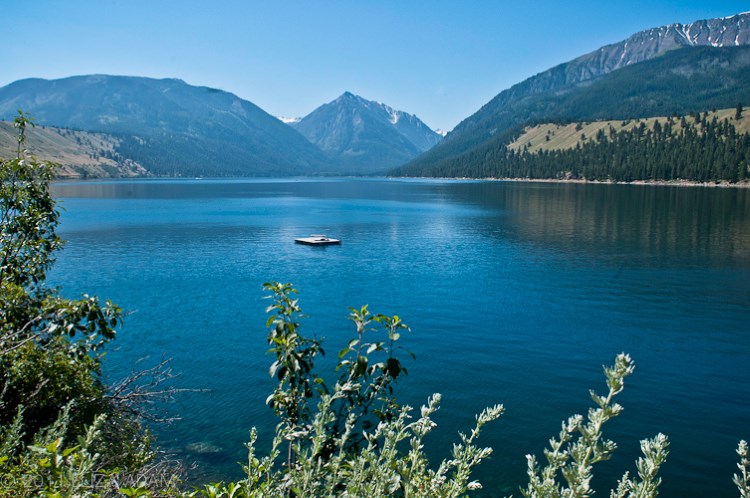
Located in the northeastern corner of Oregon, Wallowa Lake is nestled within the soaring Wallowa Mountains, also known as “The Little Switzerland of America.” The Wallowas were once home to the Nez Perce Indians until Gold Rush prospectors drove them out, and the nearby town of Joseph is named after their famous chief.
A swimming beach, a boat launch and a broad array of cabins and campgrounds make the lake a favorite summer vacation spot for families. Located near Wallowa Lake is an aerial gondola that visitors can ride to the 8,000-foot (2,400 meters) peak of Mount Howard.
8. Yachats
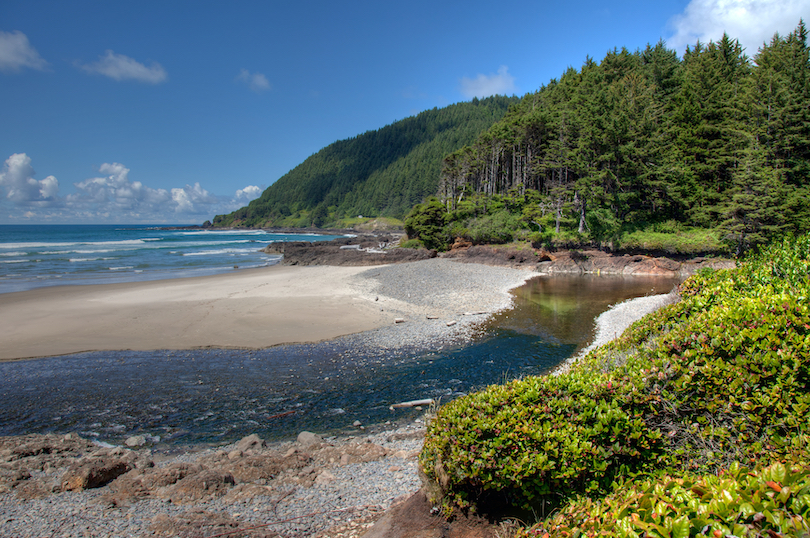
Pronounced “yah-hots,” the small town of Yachats is situated at the foot of the 800 foot (250 meter) high Cape Perpetua on the Northern Oregon Coast. The tiny village is a popular destination for travelers who want to enjoy all of the unspoiled beauty that Oregon’s coastline offers, minus the crowds.
Rocky tidal pools and small pocket beaches lie just outside the city’s boundaries, and visitors can often spot gray whales swimming close to shore in the spring. Within the Cape Perpetua Scenic Area above Yachats are 26 miles (42 km) of hiking trails and a public campground.
7. Hells Canyon National Recreation Area
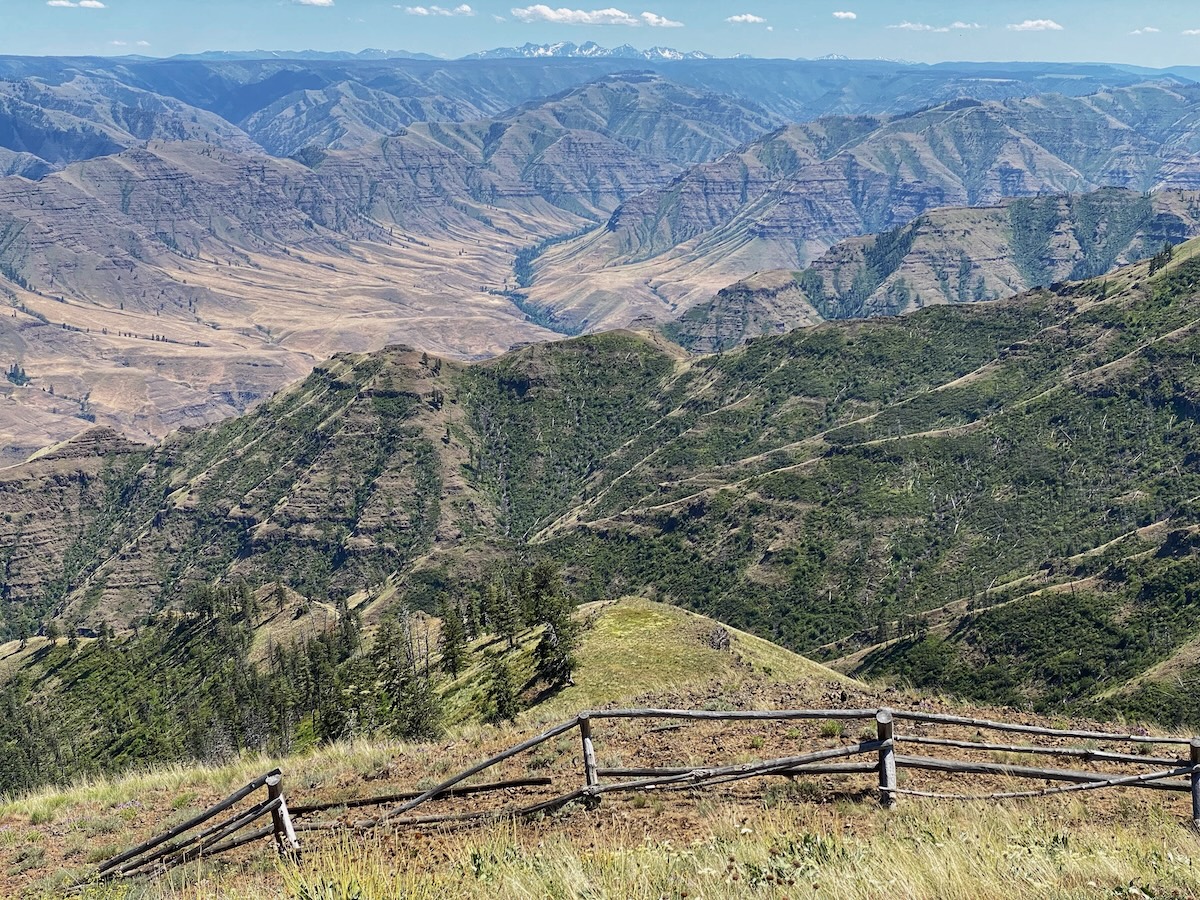
Located near the small town of Joseph in northeast Oregon, the Hells Canyon Recreational Area outranks the Grand Canyon when it comes to depth. Parts of the canyon surrounding the Snake River are as deep as 8,000 feet (2,400 meters).
With few paved roads leading into the area, most visitors opt to enter the canyon by jet boat, although some trails are accessible with four-wheel-drive vehicles. Touring the canyon on a whitewater raft is a popular activity. Overnight horseback trips into the canyon are available as well.
6. Mount Hood
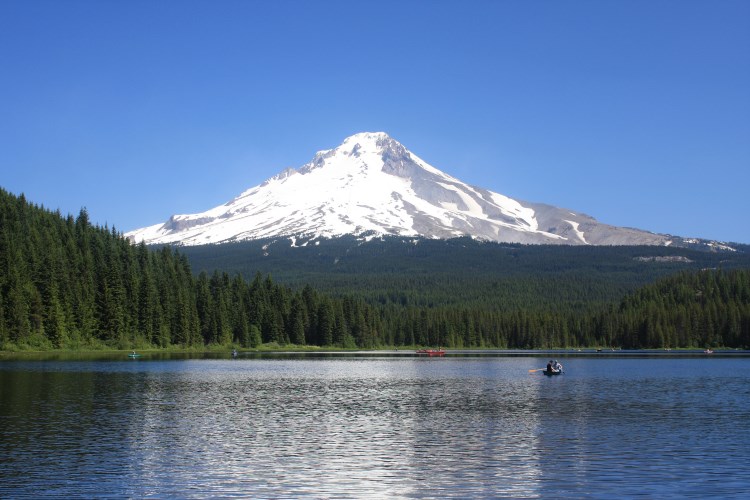
The tallest peak in Oregon, Mount Hood is much more than just a stunning backdrop for the city of Portland 60 miles (100 km) away. It’s a travel destination that attracts visitors all year long.
Five downhill ski areas and miles of cross-country trails keep the slopes of Mount Hood packed during the winter, and summer snowfall attracts visitors to Mount Hood for off-season skiing as well.
For experienced mountaineers, climbing to the summit of Mount Hood is another popular activity. The historic Timberline Lodge, which was used for exterior shots in the movie “The Shining,” offers great views of the Southern Cascades.
5. Cascade Lakes Scenic Byway
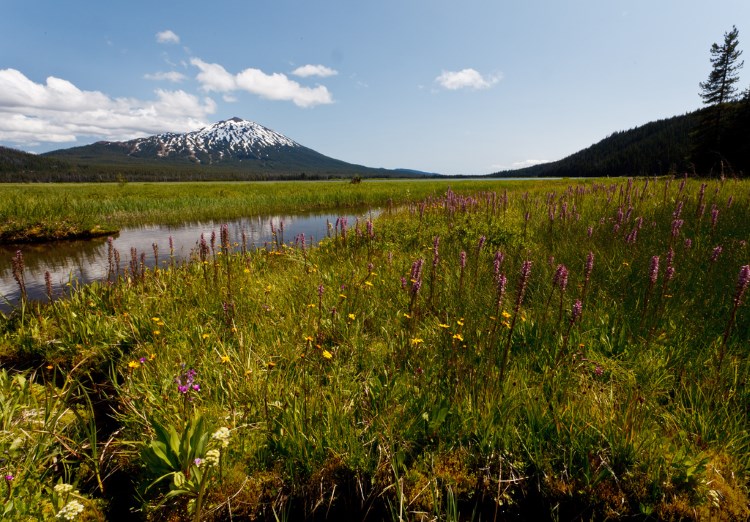
One of the best ways to experience the beauty and splendor of Oregon’s Cascade Mountains is by touring the Cascade Lakes Scenic Byway. The 66-mile (106 km) route winds along river valleys, up mountains and past scenic lakes, offering visitors picturesque vistas and an abundance of recreational opportunities along the way.
The route begins in the city of Bend, climbing into forests of ponderosa pine towards Mount Bachelor. Views of lakes formed by ancient lava flows quickly come into view, each offering activities like swimming, fishing or boating. The route ends at the winter resort community of Sunriver.
4. Astoria
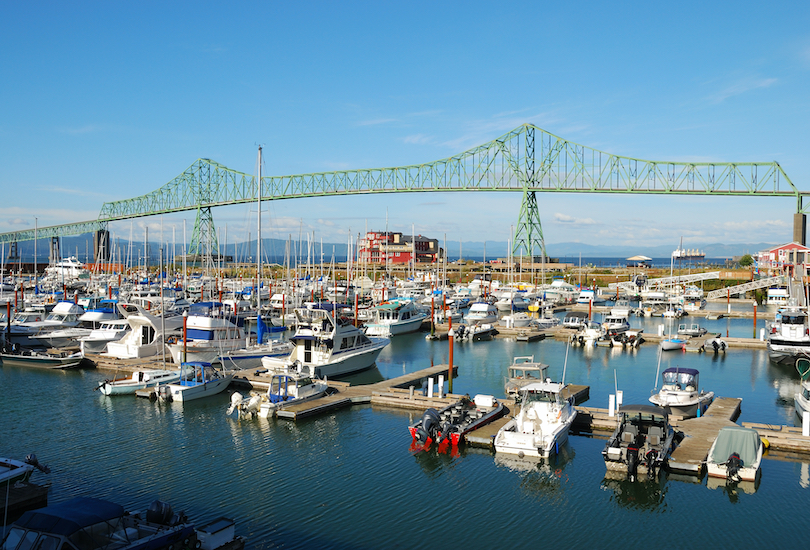
The historic city of Astoria lies just a few miles southwest of the spot where explorers Lewis and Clark spent the winter of 1805-06 before returning to the East. Five years later, John Jacob Astor founded Astoria, making it the first United States settlement on the West Coast.
Situated at the mouth of the Columbia River, the city’s backdrop is the scenic Astoria-Megler Bridge, the country’s longest continuous truss bridge. Attractions in Astoria include the wave-shaped Columbia River Maritime Museum, which features 30,000 artifacts of the Pacific Northwest’s seafaring history. The region’s unique Victorian architecture is best represented by the multicolored Flavel House built during the 1880s.
The city of 10,000 people is popular with seasonal sports fishermen, with fishermen coming from Alaska and throughout the Pacific Northwest for the annual Fisher Poets Gathering. Dominating the city’s skyline is the Astor Column; it’s a steep climb to the top but the view is worth it. Astoria also is the western end of the 4,250-mile coast-to-coast TransAmerica Bicycle Trail.
3. Portland
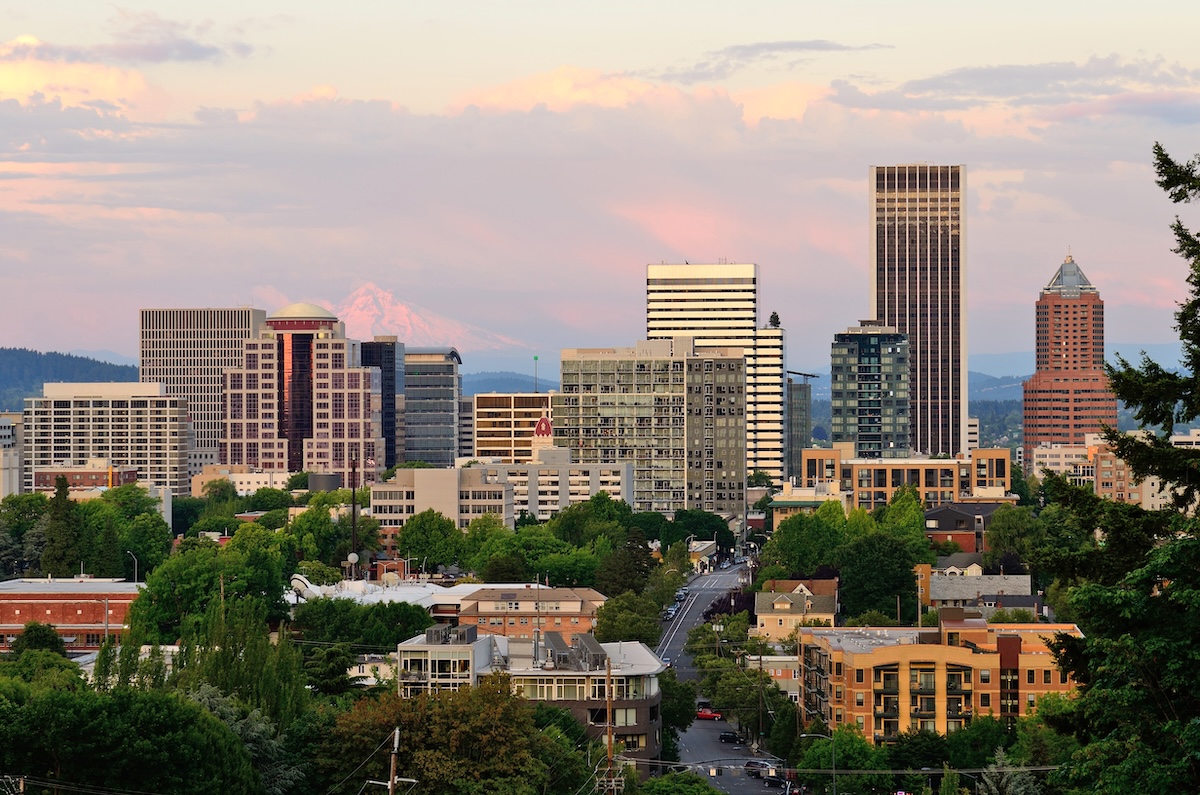
Oregon’s largest city straddles the Willamette River near the point where it meets the mighty Columbia. With Mount Hood in the distance and the Pacific Ocean just a short drive away, Portland is surrounded by natural beauty, and it’s clear by the sheer number of parks, gardens and green spaces in Portland how much the city’s inhabitants value the outdoor life.
The city’s ever-changing dining, music and art scenes are worth experiencing, and visits to the city’s quirky museums are fun too, but for many visitors, it’s venues like Forest Park and the International Rose Garden that make “The City of Roses” one of the best places to visit in Oregon.
2. Crater Lake National Park
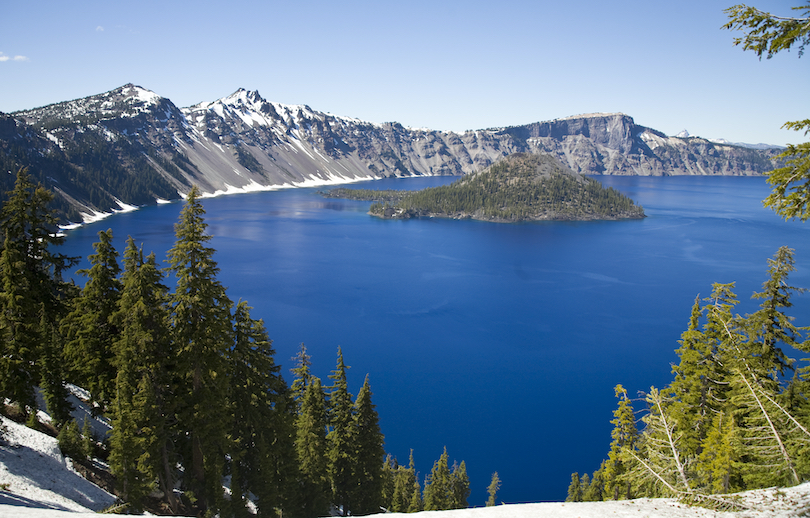
The most popular natural attraction in Southern Oregon, Crater Lake is what remains of a volcanic eruption that occurred on Mount Mazama 7,700 years ago. With a depth of nearly 2,000 feet, (600 meters) it’s the deepest lake in the United States, and its tranquil sapphire-blue waters are a sight to behold.
With 90 miles (150 km) of trails winding through the national park, the area is a hiker’s paradise. The 33 mile (53 km) long Rim Drive offers less adventurous visitors many scenic overlooks. A guided boat tour of the lake and its central island is a must.
1. Cannon Beach
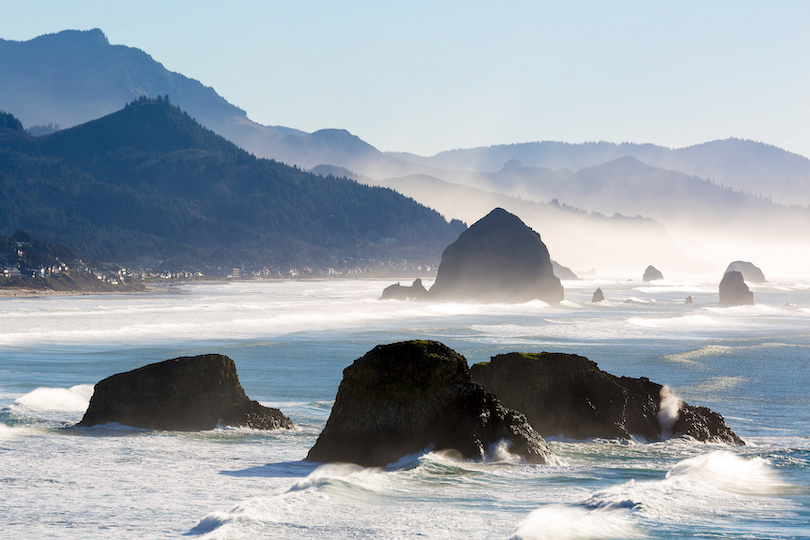
Named after a cannon that washed ashore after a shipwreck, Cannon Beach is one of the most popular of the seaside resorts that stretch along Oregon’s 300 mile (480 km) long coast.
Located around 80 miles (130 km) to the west of Portland, the once-rustic artist community has grown into an upscale resort filled with restaurants, boutique shops and art galleries. In-town attractions include the Cannon Beach History Center, which features an authentic reproduction of a Native American longhouse.
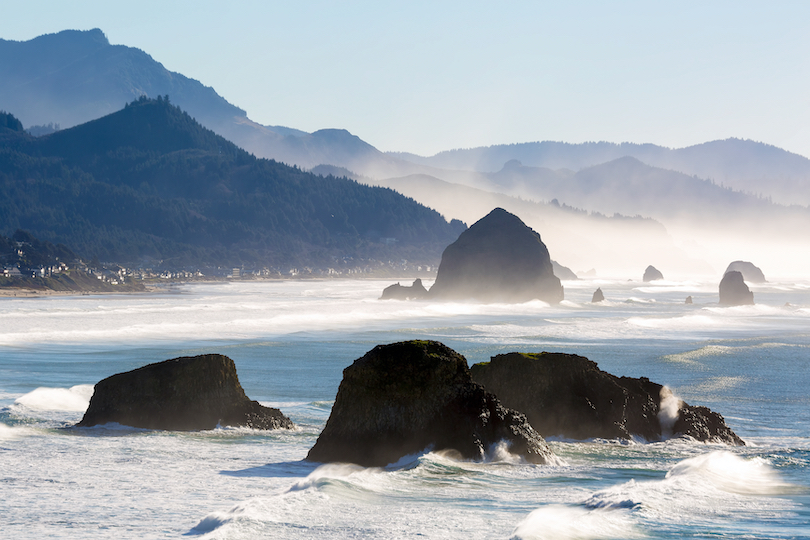
The most striking feature about the beach itself is the 235 foot (72 meter) high Haystack Rock, the largest of the monolithic rocks that dot the sandy shoreline and provide a nesting ground for sea birds. To the north of Cannon Beach is Ecola State Park which offers a multitude of hiking trails of all levels and some of the most stunning Oregon Coast views anywhere.